
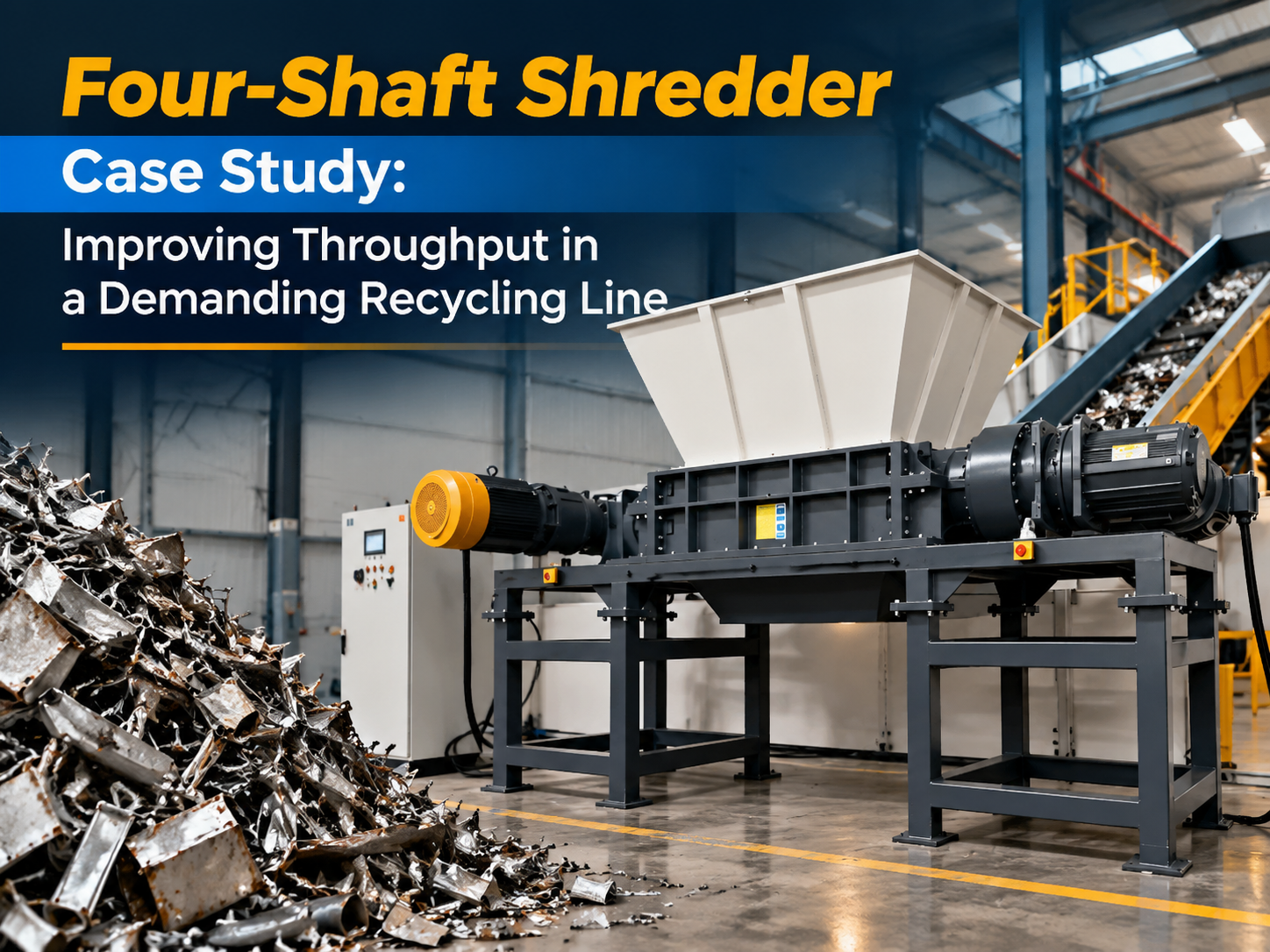
Four-Shaft Shredder Case Study: Improving Throughput in a Demanding Recycling Line

Introduction: The Challenge of Modern Recycling
In the rapidly evolving landscape of industrial waste management, the demand for high-capacity, reliable processing equipment has never been greater. Facilities tasked with handling complex waste streams—ranging from electronic scrap and hazardous materials to bulky industrial metals—often face significant bottlenecks. These bottlenecks frequently stem from outdated shredding technology that cannot keep pace with modern throughput requirements. This Four-Shaft Shredder Case Study: Improving Throughput In A Demanding Recycling Line explores how HARSLE engineering solutions address these critical operational challenges.
The recycling industry is under immense pressure to increase recovery rates while simultaneously reducing operational costs. When a recycling line experiences downtime due to material jamming or insufficient torque, the financial implications are severe. By transitioning to advanced four-shaft shredder technology, plant managers can achieve a more consistent particle size, higher volume processing, and significantly reduced maintenance intervals. This article delves into the technical superiority of HARSLE shredders and how they transform demanding environments into high-efficiency hubs.
Understanding the mechanics of a four-shaft shredder is the first step toward optimizing any recycling line. Unlike two-shaft or single-shaft alternatives, the four-shaft configuration provides a unique multi-stage cutting process. This design ensures that material is not only grabbed and pulled into the cutting chamber but also actively screened and re-shredded until it meets the desired output dimensions. This level of precision is essential for facilities that require uniform output for downstream sorting or smelting processes.
Throughout this guide, we will examine a specific case study involving a high-volume recycling facility that struggled with throughput consistency. By implementing a HARSLE four-shaft shredder, the facility was able to overcome long-standing operational hurdles. We will break down the technical specifications, the selection process, and the long-term benefits that this machinery brings to the metal fabrication and recycling sectors.
Key Considerations for High-Throughput Recycling
When selecting equipment for a demanding recycling line, throughput is not the only metric that matters. Reliability, material versatility, and energy efficiency play equally critical roles. A Four-Shaft Shredder Case Study: Improving Throughput In A Demanding Recycling Line highlights that the most successful facilities prioritize equipment that can handle ‘difficult’ materials without requiring constant manual intervention. This means looking for robust gearboxes, high-torque motors, and intelligent control systems that can detect and reverse jams automatically.
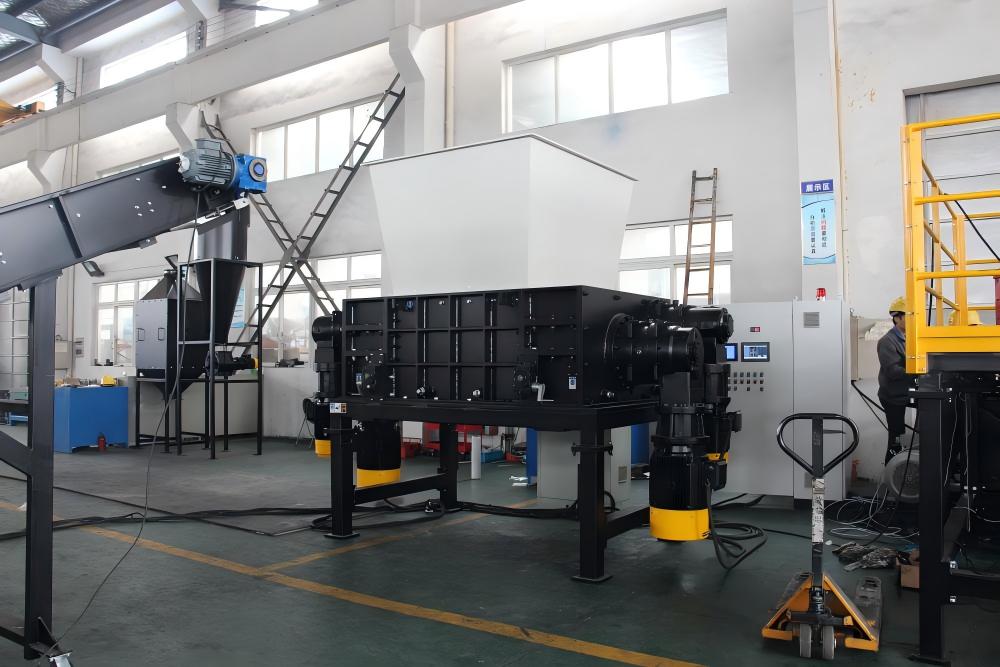
Another key consideration is the integration of the shredder into the existing workflow. A shredder is rarely a standalone unit; it is part of a larger ecosystem that includes conveyors, magnetic separators, and balers. If the shredder output is inconsistent, the entire downstream process suffers. HARSLE machines are designed with modularity in mind, allowing for seamless integration into existing conveyor systems and automated sorting lines. This ensures that the material flow remains uninterrupted, maximizing the return on investment.
Maintenance accessibility is a frequently overlooked factor in high-throughput environments. In a demanding recycling line, every minute of downtime costs money. HARSLE’s four-shaft shredders are engineered with user-friendly access panels and easily replaceable cutting discs. This design philosophy reduces the time required for routine maintenance and blade sharpening, allowing the facility to maintain a higher average uptime throughout the year. When evaluating a shredder, always ask about the ease of access to the cutting chamber and the availability of spare parts.
Finally, safety and environmental compliance must be at the forefront of any industrial machinery purchase. Modern recycling facilities are subject to strict noise and dust regulations. HARSLE equipment incorporates advanced sound-dampening technology and dust suppression interfaces, ensuring that the facility remains compliant with local environmental standards. By investing in high-quality, well-engineered machinery, operators not only improve their throughput but also create a safer, more sustainable working environment for their employees.
Technical Details of HARSLE Four-Shaft Shredders
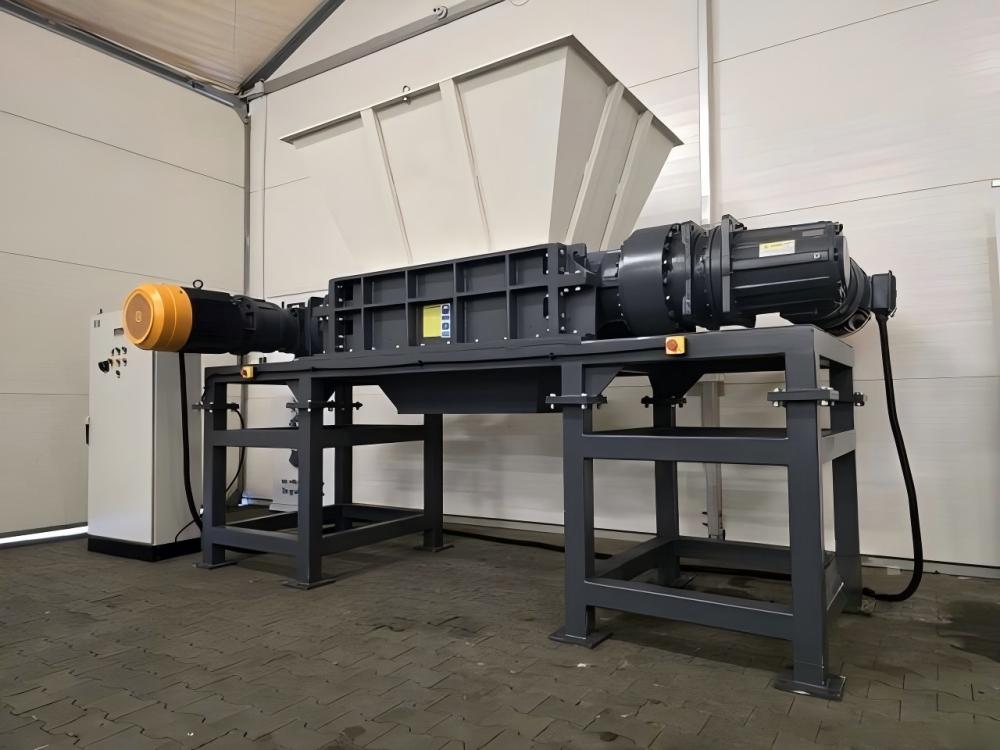
The core of the HARSLE four-shaft shredder lies in its sophisticated cutting mechanism. The system utilizes two primary shafts for initial shredding and two secondary shafts that act as a sizing screen. This dual-action approach ensures that material is shredded to a precise, uniform size in a single pass. The secondary shafts prevent oversized material from exiting the chamber, forcing it back into the primary cutting zone until it is sufficiently reduced. This is the secret to the exceptional throughput observed in our Four-Shaft Shredder Case Study: Improving Throughput In A Demanding Recycling Line.
The cutting discs themselves are manufactured from high-alloy, wear-resistant steel, heat-treated to withstand the abrasive nature of industrial waste. These discs are designed with specific hook profiles that maximize the ‘grab’ on difficult materials like sheet metal, tires, or electronic waste. The torque generated by the heavy-duty planetary gearboxes allows the machine to process dense materials without stalling. This high-torque, low-speed operation is significantly more energy-efficient than high-speed shredding alternatives, which often suffer from excessive heat generation and blade wear.
HARSLE’s control systems are another technical highlight. Equipped with PLC (Programmable Logic Controller) technology, the shredder monitors the load on each shaft in real-time. If a particularly dense object causes a spike in torque, the system automatically triggers a reverse cycle to clear the obstruction before resuming operation. This ‘smart’ functionality prevents mechanical failure and minimizes the need for operator intervention, which is a major contributor to the increased throughput seen in our case study.
Furthermore, the structural integrity of the frame is paramount. HARSLE utilizes reinforced steel plate construction to dampen vibrations and ensure the shafts remain perfectly aligned under heavy loads. Misalignment is a common cause of premature bearing failure in lesser machines, but HARSLE’s precision engineering ensures that the shafts maintain their tolerance even after thousands of hours of operation. This durability is what makes HARSLE a leader in metal fabrication equipment and industrial machinery.
Selection Advice: Choosing the Right Shredder
Selecting the right shredder requires a thorough analysis of your specific waste stream. Not all four-shaft shredders are created equal; the number of teeth, the diameter of the shafts, and the motor power must be matched to the material density and volume. In our Four-Shaft Shredder Case Study: Improving Throughput In A Demanding Recycling Line, the facility initially struggled because they were using a machine designed for light plastics to process heavy metal scrap. Matching the machine to the material is the most important step in the procurement process.
We recommend conducting a material test before finalizing any purchase. HARSLE offers testing services where clients can send samples of their waste stream to be processed by various shredder configurations. This allows our engineers to determine the optimal blade geometry and shaft speed for your specific application. By simulating your actual production environment, we can guarantee that the machine will meet your throughput targets from day one.
Consider the future scalability of your recycling line. If you anticipate an increase in volume or a change in the type of material you process, it is wise to invest in a machine with a slightly higher capacity than your current needs. A four-shaft shredder is a long-term capital investment, and having a buffer in your processing capacity provides flexibility as your business grows. HARSLE’s modular designs allow for future upgrades, such as adding specialized screens or conveyor configurations, protecting your investment for years to come.
Finally, evaluate the support and service network of the manufacturer. A shredder is a complex piece of industrial machinery that requires expert support. HARSLE provides comprehensive training for operators and maintenance staff, ensuring that your team can handle routine tasks efficiently. With a global network of service technicians and a robust supply chain for spare parts, HARSLE ensures that your recycling line remains operational, minimizing the risk of costly downtime.
Frequently Asked Questions (FAQ)
What makes a four-shaft shredder better than a two-shaft model?
A four-shaft shredder provides a more uniform output size due to the secondary sizing shafts. While a two-shaft shredder is excellent for initial volume reduction, the four-shaft design acts as both a shredder and a screen, eliminating the need for separate sizing equipment and increasing overall throughput efficiency.
How often do the blades need to be sharpened?
The frequency of blade sharpening depends on the material being processed. Abrasive materials like metal scrap will require more frequent maintenance than softer materials like plastics. HARSLE’s high-alloy steel blades are designed for longevity, and our PLC system helps prevent unnecessary wear by optimizing torque distribution.
Can a HARSLE four-shaft shredder handle hazardous waste?
Yes, HARSLE shredders are frequently used in hazardous waste management, including electronic scrap and medical waste. The enclosed cutting chamber and automated controls ensure that the process remains contained and safe, provided the facility follows proper safety protocols for the specific material being handled.
What is the typical lead time for a custom shredder configuration?
Lead times vary based on the complexity of the customization. However, HARSLE maintains a robust inventory of standard components, allowing us to expedite the assembly of most industrial shredders. Contact our sales team for a specific quote based on your requirements.
How does the PLC system improve throughput?
The PLC system monitors the shredder’s load in real-time. By automatically reversing the shafts when a jam is detected, it prevents the machine from stalling and eliminates the need for manual intervention, keeping the recycling line moving at a consistent pace.
Conclusion: Investing in Efficiency
The Four-Shaft Shredder Case Study: Improving Throughput In A Demanding Recycling Line demonstrates that the right technology is the difference between a struggling facility and a market leader. By choosing a HARSLE four-shaft shredder, the facility in our study was able to increase its daily processing capacity by over 30% while simultaneously reducing maintenance costs. This is the power of precision engineering in the metal fabrication and recycling sectors.
As the industry continues to move toward a circular economy, the ability to process waste efficiently will become even more critical. HARSLE remains committed to providing the industrial machinery necessary to meet these challenges. Whether you are upgrading an existing line or building a new facility from the ground up, our team is here to provide the technical expertise and high-performance equipment you need to succeed.
We invite you to explore our full range of shredding solutions and contact our engineering team to discuss your specific recycling challenges. With HARSLE, you are not just buying a machine; you are investing in a partnership dedicated to your operational success and long-term growth. Let us help you transform your recycling line into a model of efficiency and productivity.












