
High-Speed Impact Size Reduction
Hammer Shredder High-Throughput Impact
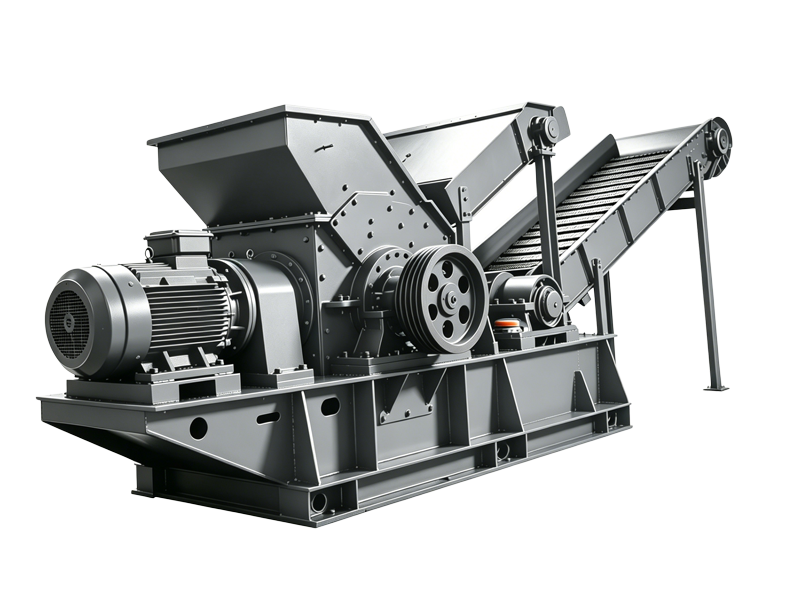
An industrial hammer shredder built around a high-speed rotor fitted with rows of freely swinging hardened-steel hammers — engineered for high-throughput fine size reduction of wood, biomass, municipal solid waste, plastic, organic and agricultural residues, and RDF/SRF fuel fractions, with screen-controlled output and minimal maintenance footprint.
10–100 mm
Screen-Controlled Output Size
15–800 kW
Installed Motor Power
500–1800 RPM
High-Speed Rotor
Up to 80 t/h
High-Throughput Capacity
Product Overview
Built for High-Throughput Fine Reduction
The hammer shredder is the preferred machine wherever high throughput, fine output, and low-maintenance operation matter most — wood processing, biomass energy, MSW light-fraction reduction, RDF/SRF fuel preparation, and organic waste processing. Its freely swinging hammer design delivers massive impact energy at minimal wear-part cost, and its interchangeable bottom screen gives operators precise control over output particle size.
High-Speed Hammer Rotor
A heavy-duty rotor disc assembly spinning at 500–1800 rpm carries multiple rows of freely swinging hammers. The high peripheral speed generates exceptional impact energy — sufficient to shatter, fracture, and abrade wood, biomass, and light waste fractions at industry-leading throughput rates.
Freely Swinging Hammer Design
Each hammer swings freely on a hardened pin, allowing it to deflect and recover when it contacts an unshredable object — absorbing shock without transferring the full overload to the rotor shaft or gearbox. This self-protecting geometry dramatically extends both hammer and rotor service life.
Interchangeable Bottom Screen
A replaceable perforated screen wraps around the lower arc of the crushing chamber. Only particles fine enough to pass the aperture exit the machine; all others continue to be struck by the hammers. Swapping the screen repositions the output target from coarse wood chip to fine biomass powder — in minutes.
Reinforced Crushing Chamber Liner
The crushing chamber is lined with replaceable hardened-steel wear plates that absorb the continuous high-energy impact of the hammers. Liner geometry is engineered to maximize the deflection and re-circulation of particles back into the hammer impact zone, improving efficiency and uniformity.
Individual Hammer Replacement
Hammers are individually pinned to rotor disc rows and can be flipped, rotated, or replaced one at a time without rotor removal. Multiple wear positions per hammer maximize service intervals. Systematic rotation schedules ensure balanced rotor mass and consistent impact energy across the full rotor width.
Tramp-Metal Discharge Door
A spring-loaded or hydraulic relief door at the rear of the crushing chamber opens automatically when an unshredable object causes an extreme impact overload — expelling the object without damage to the rotor, hammers, or drive. A drive-shaft shear bolt provides a final safeguard for the motor and gearbox.
Technical Data
Representative Specifications
The figures below represent typical configuration ranges for industrial hammer shredders deployed in wood processing, biomass energy, MSW and RDF/SRF fuel preparation, organic waste reduction, and plastic fine shredding. Final specifications depend on feedstock type, moisture content, target output size, and required throughput.
| Model | Rotor Size | Hammer Count | Motor Power | Screen Size | Capacity |
|---|---|---|---|---|---|
| ARZIR HS-800 | Ø800mm × 800mm | 48 pieces | 110 kW | 20–80 mm | 5–15 t/h |
| ARZIR HS-1000 | Ø1000mm × 1200mm | 72 pieces | 220 kW | 15–80 mm | 10–30 t/h |
| ARZIR HS-1200 | Ø1200mm × 1600mm | 96 pieces | 400 kW | 10–100 mm | 20–50 t/h |
| ARZIR HS-1500 | Ø1200mm × 2000mm | 120 pieces | 630 kW | 10–100 mm | 35–80 t/h |
Operating Cycle
How a Hammer Shredder Works
The hammer shredder operates a continuous impact-reduction cycle. Material entering the crushing chamber is struck repeatedly by the high-speed rotating hammers until every particle is fine enough to pass through the bottom screen — combining the energy of impact, abrasion, and particle-on-particle collision for rapid, efficient size reduction.
01
Feed Loading
Feedstock is loaded into the inlet hopper by conveyor belt, grab crane, or wheel loader. Gravity or a feed roller guides material down onto the high-speed rotor below. No press ram or metering device is required for most feedstocks.
02
High-Speed Hammer Impact
The rotor spins at 500–1800 rpm. The freely swinging hammers strike the incoming feedstock with high peripheral velocity, shattering, fracturing, and abrading the material into progressively smaller particles with each pass through the hammer circle.
03
Chamber Recirculation & Screen
Struck particles are propelled outward against the reinforced chamber liner, which deflects them back into the rotating hammer zone for further reduction. Only particles fine enough to pass through the bottom screen aperture exit the crushing chamber.
04
Screened Discharge
On-spec particles pass through the screen and fall onto the discharge conveyor below. The PLC monitors motor amperage and rotor speed; the tramp-metal relief door expels unshredable objects automatically, protecting the rotor and drive train from catastrophic overload.
Feedstock
Materials Processed by a Hammer Shredder
The hammer shredder excels at high-throughput fine reduction of soft to medium-hard materials where impact and abrasion are the most efficient reduction mechanisms — wood, biomass, organic waste, light plastics, fibrous agricultural residues, and pre-sorted municipal waste fractions.
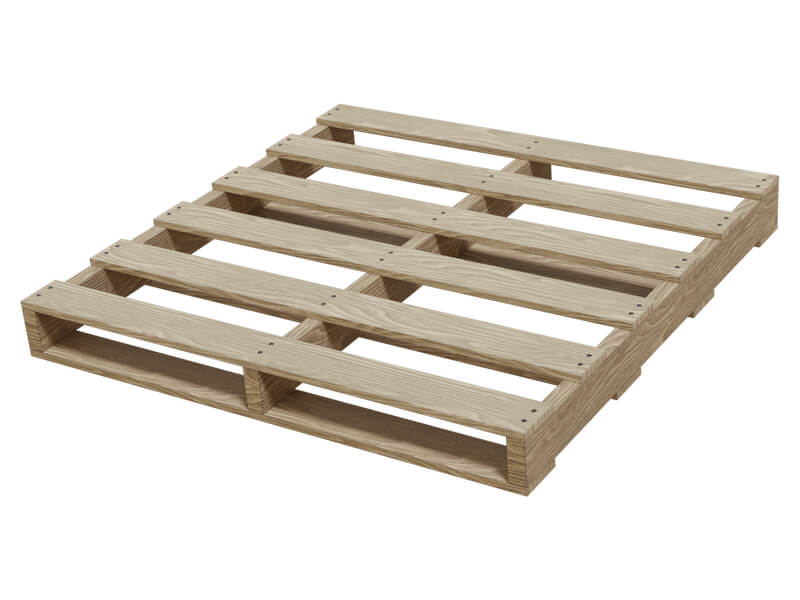
Wood Pallets & Timber

Biomass & Agricultural Residues

MSW Light Fractions

Plastic Film & Rigid Plastic

Organic & Food Waste

Cardboard & Paper Bales
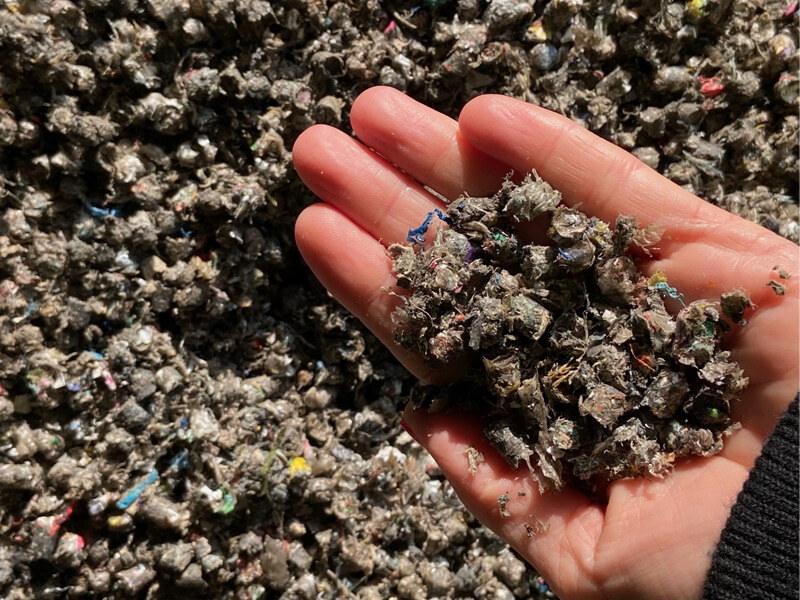
RDF & SRF Pre-Shredded Fractions

Demolition Wood & Railway Sleepers
Deployment Context
Where Hammer Shredders Add Value
Hammer shredders are deployed wherever the process demands high-throughput fine size reduction of soft to medium-hard feedstock — biomass energy plants, wood processing facilities, RDF/SRF fuel lines, organic waste treatment centers, and MSW pre-treatment operations where output particle size governs downstream process efficiency.
Wood Processing & Biomass Energy
Fine reduction of wood pallets, timber offcuts, demolition wood, and forest residues into chips, hog fuel, or fine biomass fractions for biomass boilers, pellet mills, gasifiers, and wood-panel board production lines.
RDF & SRF Fuel Preparation
Secondary fine shredding of pre-sorted municipal and industrial waste fractions to a tight particle-size distribution that meets calorific consistency and particle-size specifications for cement kilns, waste-to-energy boilers, and co-firing facilities.
Organic & Agricultural Waste Treatment
High-throughput reduction of food waste, crop residues, straw, corn stalks, sugarcane bagasse, and green waste into a homogeneous fine fraction for composting, anaerobic digestion, biogas plants, or soil-amendment applications.
MSW Pre-Treatment Lines
Fine shredding of the light fraction from municipal solid waste after primary separation — opening bags, reducing bulky soft waste, and producing a consistent feed for downstream optical sorters, air classifiers, and biological treatment systems.
Plastic Film & Rigid Plastic Reduction
Secondary fine shredding of plastic film bales, rigid plastic containers, and mixed polymer fractions into uniform flakes or granules suitable for washing lines, extrusion feed, or compounding without a separate downstream granulator.
Paper & Cardboard Recycling
Fine reduction of cardboard bales, mixed paper, and paper-board offcuts into a uniform pulpable fraction for paper-mill infeed, pulping lines, and biomass co-firing — at significantly higher throughput than alternative shredder geometries.
Rubber & Tire Crumb Production
Secondary reduction of pre-shredded tire shreds into fine rubber crumb fractions for sports surface infill, rubberized asphalt, and industrial compound applications — with screen aperture selection controlling the crumb particle distribution.
Compost & Anaerobic Digestion Infeed
Reducing mixed organic waste, green waste, and food processing by-products to a small, homogeneous particle size that maximizes surface area, accelerates biological decomposition rates, and improves biogas yield per tonne of input.
Use Cases
Application Scenarios
Hammer shredders operate as high-throughput fine-reduction machines in energy, recycling, and waste-treatment plants — typically downstream of a primary shredder or upstream of pelletizers, boilers, and biological treatment processes.
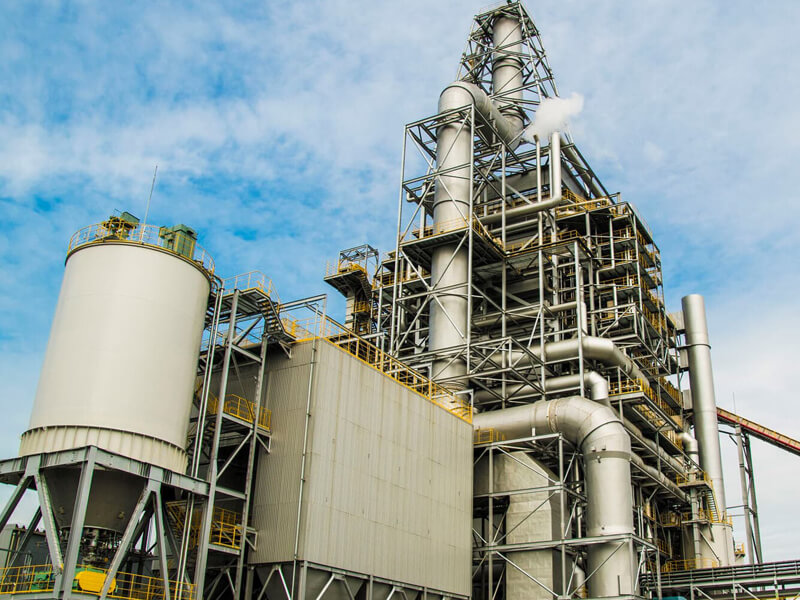
Biomass Energy Plants
Producing fine wood chips and biomass fractions for pellet mills, biomass boilers, and gasifiers — with screen-controlled particle size meeting fuel quality and combustion efficiency specifications.
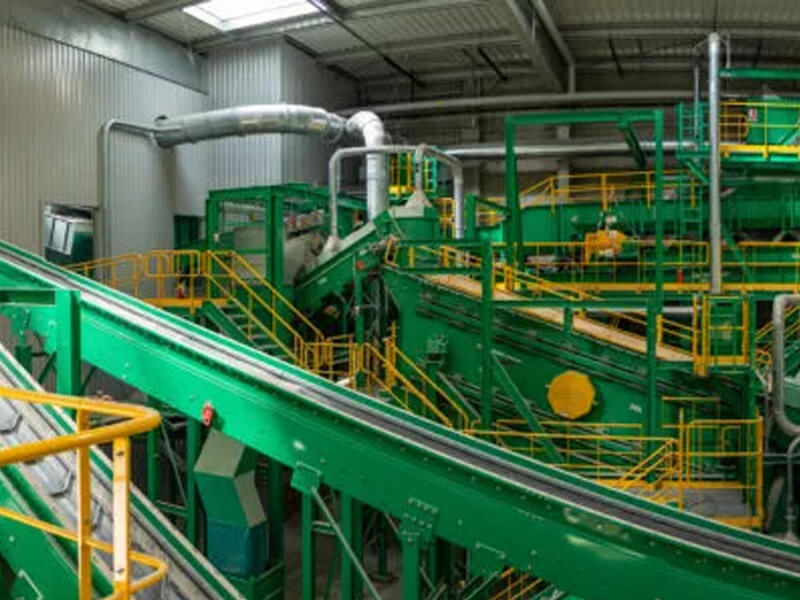
RDF / SRF Fuel Facilities
Fine shredding of pre-sorted waste fractions to a tight particle-size distribution meeting calorific consistency and co-firing specifications for cement kilns and waste-to-energy installations.

Organic Waste & Composting
High-throughput reduction of food waste, green waste, and crop residues into a homogeneous fine fraction that accelerates composting, improves biogas yield, and optimizes anaerobic digestion performance.
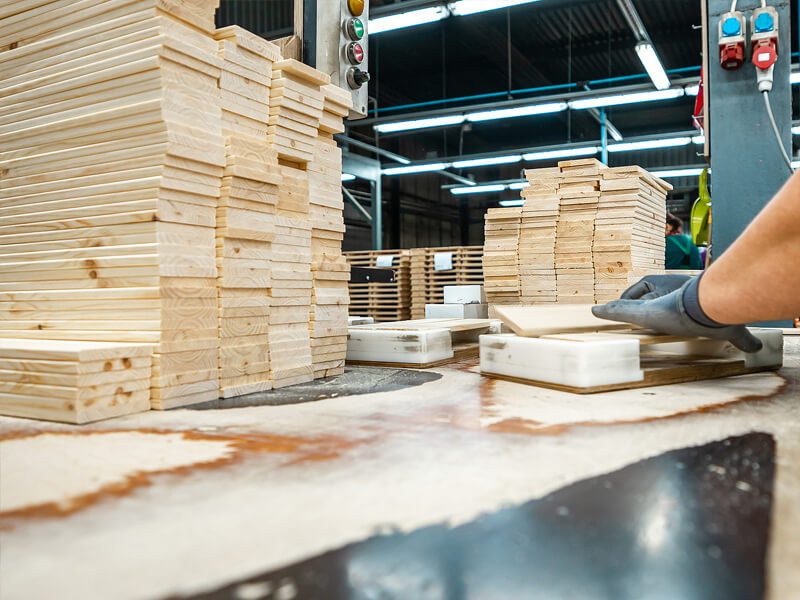
Wood Processing & Panel Board
Reducing wood pallets, timber offcuts, and demolition wood into fine chips or fibre fractions for MDF, particleboard, and OSB production lines — with consistent particle-size distribution for resin-uptake uniformity.
Knowledge Base
Frequently Asked Questions
What is a hammer shredder?
A hammer shredder, also called a hammer mill shredder or hammer crusher, is an industrial size-reduction machine that uses a high-speed rotor fitted with rows of freely swinging hardened-steel hammers to impact, strike, and abrade material inside a reinforced crushing chamber. The rotor spins at high speed, and the hammers repeatedly strike the feedstock until particles are small enough to pass through a replaceable bottom screen. The result is fine, high-throughput size reduction of soft to medium-hard materials such as wood, biomass, MSW, plastics, organic waste, cardboard, and fibrous agricultural residues.
What materials can a hammer shredder process?
Typical feedstock for a hammer shredder includes wood pallets, timber offcuts, demolition wood, railway sleepers, biomass chips and logs, agricultural residues such as straw, corn stalks, and sugarcane bagasse, organic food waste, municipal solid waste light fractions, cardboard and paper bales, plastic film and rigid plastics, fibrous industrial waste, rubber crumb, and RDF/SRF pre-shredded fractions requiring further size reduction. Hammer shredders are not recommended for hard metals, wire, or heavily contaminated feedstock containing large tramp metal.
How does a hammer shredder differ from a twin-shaft shredder?
A twin-shaft shredder uses two counter-rotating shafts with low-speed, high-torque hook cutters to tear and shear tough, bulky, and heavily contaminated feedstock — producing coarse, irregular output with no screen. A hammer shredder uses a single high-speed rotor with freely swinging hammers and a bottom screen to impact and abrade softer, pre-sized, or fibrous feedstock into fine, uniform output at much higher throughput rates. Twin-shaft shredders excel at primary reduction of tires and scrap metal; hammer shredders excel at high-throughput fine reduction of wood, biomass, and light-fraction waste.
What output particle size does a hammer shredder produce?
Output particle size is controlled by the replaceable bottom screen aperture. Typical screen apertures range from 10 mm to 100 mm, producing fine chips, flakes, or granules depending on feedstock type and hammer configuration. Smaller screen apertures increase dwell time and energy consumption but produce finer output suitable for biomass pelletizing, compost, or RDF/SRF quality requirements. Larger apertures increase throughput for wood chip or coarse biomass applications.
What rotor speed and motor power range is typical?
Industrial hammer shredders typically operate rotor speeds between 500 and 1800 rpm, far higher than shaft shredders, to generate the impact force needed for fine size reduction. Installed motor power ranges from 15 kW on small agricultural and food-waste units up to 800 kW on large-scale biomass, wood, and MSW hammer mills. The rotor diameter typically ranges from 400 mm to 1200 mm, and the rotor length from 600 mm to 2500 mm depending on the required throughput.
Are hammer shredder hammers replaceable?
Yes. Hammers are individually pinned or bolted to the rotor disc rows and can be flipped to expose a fresh impact face, rotated to the next wear position, or replaced individually without removing the rotor. Hardened-steel or manganese-steel hammers are available in multiple grades matched to feedstock abrasiveness. Hammer tip wear is the primary wear mechanism, and systematic rotation schedules maximize hammer life and maintain consistent impact energy across the full rotor width.
How does the bottom screen work in a hammer shredder?
The bottom screen in a hammer shredder wraps around the lower arc of the rotor inside the crushing chamber. Material struck by the hammers is driven outward and downward; particles fine enough to pass through the screen aperture exit immediately onto the discharge conveyor. Oversized particles remain in the crushing zone and continue to be struck by the hammers until they are reduced below the aperture. Swapping the screen for a different aperture changes the output size target and adjusts the machine for different products or downstream process requirements.
Can a hammer shredder be used for biomass and RDF/SRF fuel preparation?
Yes. The hammer shredder is one of the most widely used machines for biomass size reduction — producing wood chips, hog fuel, or fine biomass fractions for boiler feed, pellet-mill infeed, and gasification feedstock. For RDF/SRF, the hammer shredder reduces pre-sorted light fractions to a tight particle-size distribution that meets caloric consistency and particle-size specifications for cement kilns, waste-to-energy boilers, and biomass co-firing plants. The replaceable screen ensures that output consistently meets fuel-quality contracts.
How does a hammer shredder protect itself from tramp metal?
Most industrial hammer shredders incorporate one or more tramp-metal protection systems: a rotor-mounted overload relief door or trap-door at the rear of the crushing chamber that opens under extreme impact to discharge unshredable objects; a magnetic separator or metal detector upstream to remove ferrous tramp before it enters the machine; and shear-bolt or hydraulic torque-limiting devices on the drive coupling to protect the rotor and motor from sudden shock overloads. Operating the hammer shredder downstream of a primary twin-shaft shredder significantly reduces tramp-metal risk.
What maintenance does a hammer shredder require?
Routine maintenance includes daily inspection of hammer wear and tip profiles, hammer rotation or replacement on a scheduled hours-based interval, screen inspection for wear, cracking, and blinding, rotor bearing lubrication and temperature monitoring, drive belt tension and alignment checks, motor amperage trend analysis, inspection of the crushing chamber liner plates for wear, and periodic rotor balancing after hammer replacement to prevent vibration. Maintaining hammer tip geometry is critical — blunt hammers increase energy consumption, reduce throughput, and accelerate screen wear.
Get the Right Machine for Your Operation
Tell us about your material type, throughput requirements, and site conditions — our engineers will recommend the ideal equipment and provide a competitive quote within 24 hours.
- Response within 24 hours
- Free technical consultation & quotation
- ISO-certified factory & strict quality control
- Shipped to 100+ countries worldwide