The Ultimate Container Shear Purchase Checklist for Fabricators and Scrap Yards

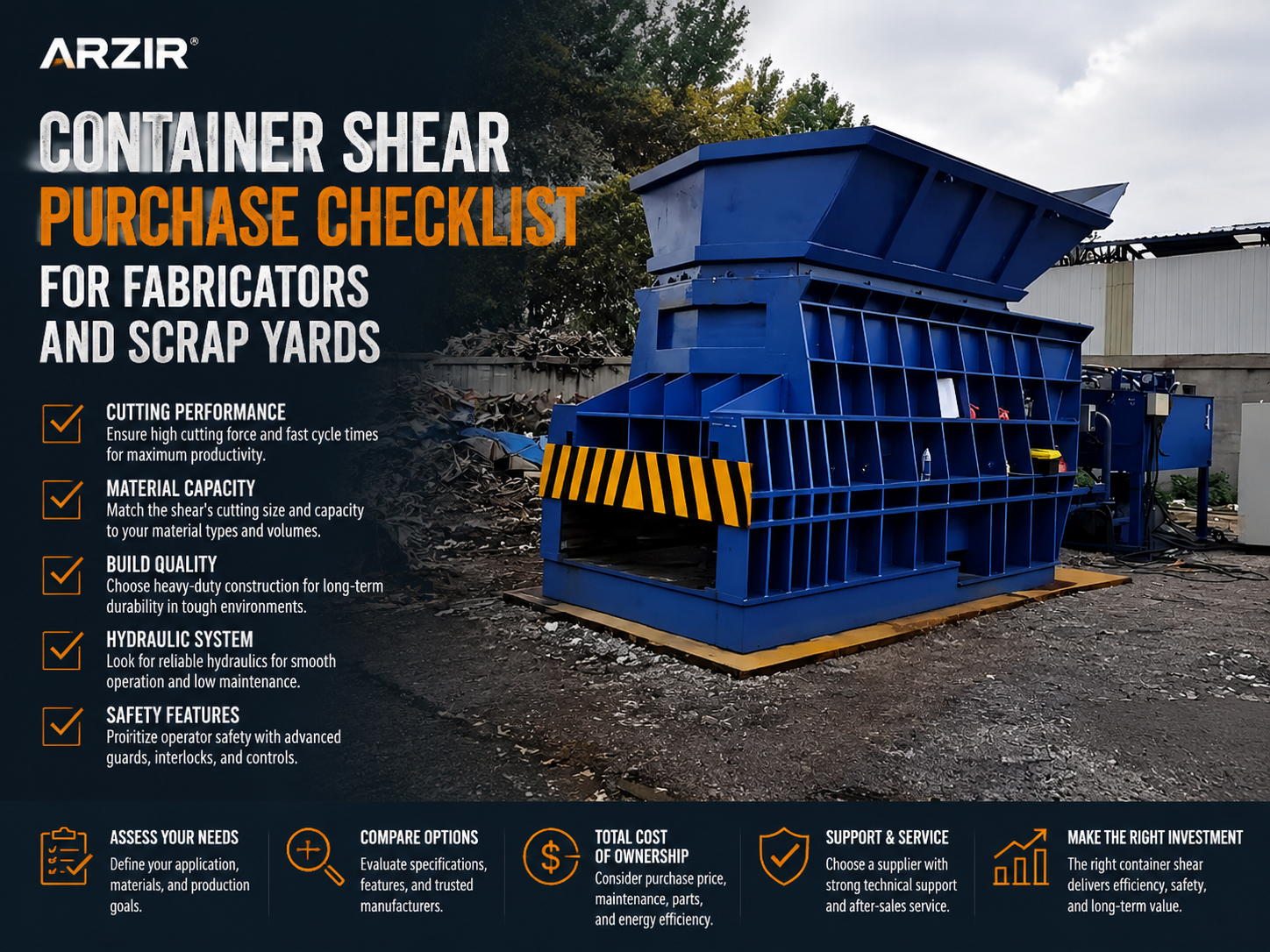
Introduction to Container Shear Procurement
In the modern metal recycling and fabrication industry, efficiency is the primary driver of profitability. As scrap volumes increase and labor costs rise, the transition from manual sorting and small-scale cutting to industrial-grade automation becomes inevitable. The container shear has emerged as a revolutionary piece of equipment, bridging the gap between portable alligator shears and massive, stationary guillotine shears. Designed to mimic the dimensions of a standard shipping container for ease of transport, these machines offer high-tonnage shearing force combined with a relatively small footprint.
For fabricators dealing with significant offcut volumes and scrap yards processing diverse metal streams, selecting the right container shear is a high-stakes decision. A well-chosen machine can process hundreds of tons of material per month, turning bulky waste into high-value HMS (Heavy Melting Scrap). Conversely, a poor investment can lead to frequent downtime, high maintenance costs, and safety hazards. This guide provides a comprehensive Container Shear Purchase Checklist for Fabricators and Scrap Yards to ensure your investment delivers long-term value.
Price Range Overview: What to Expect
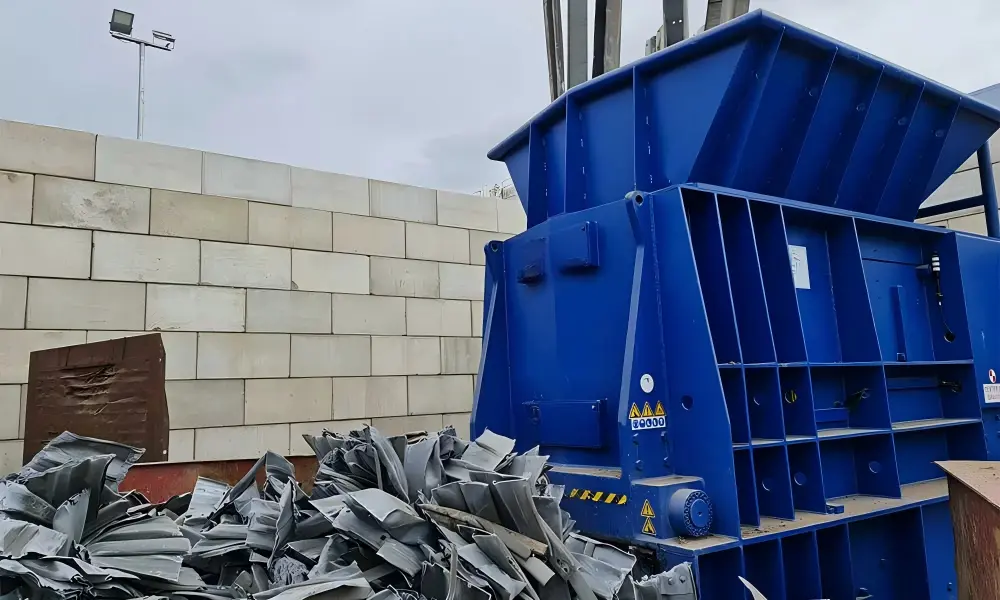
The price of a container shear varies significantly based on its shearing force, automation level, and build quality. Generally, the market is divided into three main tiers. Entry-level machines, typically offering 400 to 500 tons of shearing force, are priced between $60,000 and $90,000. These are ideal for smaller scrap yards or fabrication shops that process light to medium-gauge structural steel and non-ferrous metals. They offer a balance of affordability and performance but may lack the high-speed cycle times of more expensive models.
Mid-range container shears, often the most popular choice for established scrap yards, provide 630 to 800 tons of force. These machines usually cost between $100,000 and $180,000. At this level, you begin to see more robust hydraulic systems, faster cycle times, and enhanced cooling systems that allow for multi-shift operations. These units are capable of handling thicker beams, pipes, and heavy plate scrap with ease.
High-end industrial container shears, exceeding 1000 tons of force, can cost upwards of $250,000 to $500,000. These are massive installations designed for 24/7 operation in large-scale recycling centers. They feature advanced PLC controls, remote monitoring, and specialized wear-resistant liners (like Hardox 500). When evaluating the price, it is crucial to look beyond the initial sticker price and consider the total cost of ownership, which includes energy consumption and maintenance intervals.
Main Cost Drivers in Container Shear Manufacturing
Several technical factors dictate the final price of a container shear. Understanding these drivers helps buyers distinguish between a “cheap” machine and a “high-value” machine. The most significant driver is the hydraulic system. High-pressure piston pumps from reputable brands like Rexroth or Vickers are more expensive than domestic alternatives but offer significantly higher reliability and efficiency. The hydraulic block design also matters; a well-engineered manifold reduces heat generation and potential leak points.
The quality of the steel used in the frame and the shearing box is another critical factor. A container shear undergoes immense structural stress during every cycle. Manufacturers like HARSLE use high-tensile Q355B or Q345B steel for the main structure, with critical wear areas lined with replaceable manganese or Hardox plates. The thickness of these plates and the precision of the welding (often verified by X-ray or ultrasonic testing) directly impact the machine’s lifespan.
Automation and electronics also play a role. A machine equipped with a Siemens PLC, a user-friendly HMI (Human Machine Interface), and integrated sensors for pressure and temperature will command a higher price. However, these features allow for automated cycles, where the machine pre-compresses the scrap, shears it, and resets without constant operator intervention, significantly increasing throughput and reducing labor costs.
Configuration Impact: Tailoring the Machine to Your Needs
When reviewing your Container Shear Purchase Checklist for Fabricators and Scrap Yards, configuration is where you customize the machine for your specific material stream. The size of the feeding box is paramount. If you process long structural beams or large automotive parts, a longer feeding box (e.g., 5 or 6 meters) is necessary to avoid the need for pre-cutting. A larger box allows for more material to be loaded per cycle, improving efficiency.
Blade configuration is another vital aspect. Standard blades are suitable for general scrap, but if you are processing high-alloy steels or particularly abrasive materials, you may need specialized heat-treated blades. The ease of blade rotation and replacement is a configuration detail that often gets overlooked. Look for designs that allow blades to be flipped (4-sided use) to maximize their lifespan before requiring a full replacement.
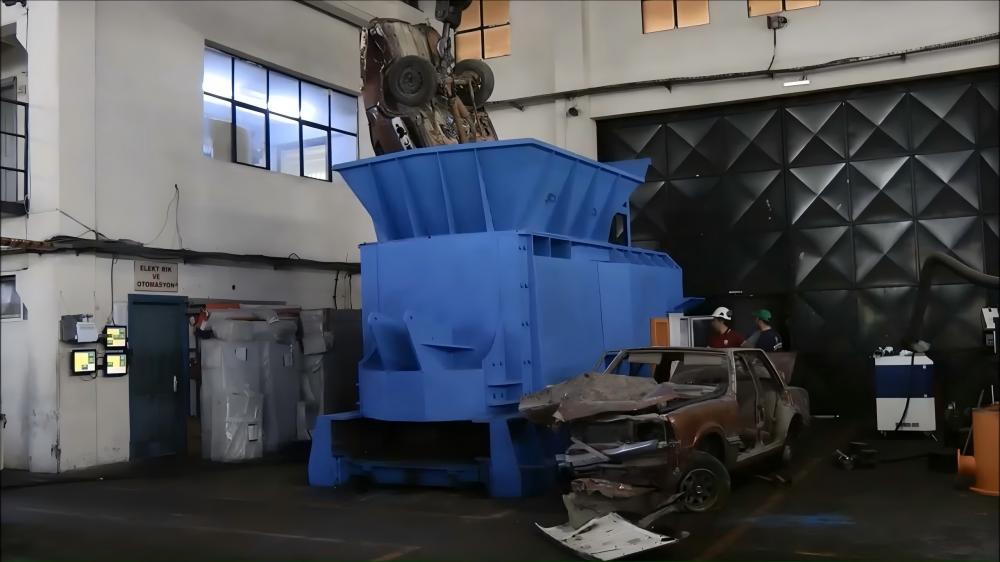
Cooling systems are essential for machines operating in warm climates or under heavy loads. Air-cooled systems are simpler, but water-cooled or industrial-grade oil chillers are more effective at maintaining hydraulic oil viscosity during continuous operation. Furthermore, consider the mobility configuration. While most container shears are “stationary,” some are designed with a hook-lift frame or integrated legs, allowing them to be moved around a large yard or between job sites using a standard container truck.
Hidden Costs of Owning a Container Shear
The purchase price is only the beginning. One of the most significant hidden costs is the initial hydraulic oil fill. A 630-ton container shear can require between 2,000 and 4,000 liters of high-quality anti-wear hydraulic oil. Depending on the grade and brand, this can add several thousand dollars to the startup cost. Additionally, the electrical infrastructure of your facility must be capable of handling the high peak currents required by the large electric motors (often 45kW to 90kW or more).
Installation and foundation work are also critical. While container shears are designed to be relatively “plug-and-play,” they still require a level, reinforced concrete pad to prevent the frame from twisting under load. Shipping costs for a machine weighing 20 to 50 tons can be substantial, especially if specialized heavy-lift transport is required from the port to your facility. Buyers should also budget for operator training and the first year of consumable parts, such as filters and seal kits.
ROI Calculation: Turning Scrap into Profit
Calculating the Return on Investment (ROI) for a container shear involves comparing the cost of processing scrap versus the increased value of the processed material. For example, loose, unprepared scrap might sell for $200 per ton. Once sheared into 2-foot sections (HMS 1/2 grade), the value can jump to $280 per ton. If your machine processes 5 tons per hour and operates for 160 hours a month, that is an additional $64,000 in monthly revenue.
Subtract the operating costs—electricity, labor, and maintenance—from this increased revenue to find your monthly profit. A well-utilized container shear in a busy scrap yard can often pay for itself within 12 to 18 months. For fabricators, the ROI also comes from reduced waste disposal fees and the ability to recycle internal scrap more efficiently, potentially feeding it back into their own production processes or selling it directly to mills at premium prices.
| Feature | Entry-Level (400-500t) | Mid-Range (630-800t) | High-End (1000t+) |
|---|---|---|---|
| Shearing Force | 4000 – 5000 kN | 6300 – 8000 kN | 10000+ kN |
| Max Cutting Cap (Steel) | Up to 40mm Plate | Up to 60mm Plate | 80mm+ Plate |
| Cycle Time | 40-60 Seconds | 30-45 Seconds | <30 Seconds |
| Motor Power | 30-45 kW | 45-90 kW | 110+ kW |
| Best For | Small Yards / Fabricators | Commercial Scrap Yards | Industrial Processors |
Buying Advice: How to Choose the Right Manufacturer
When you are ready to finalize your Container Shear Purchase Checklist for Fabricators and Scrap Yards, the choice of manufacturer is as important as the machine’s specs. Start by requesting a detailed component list. Ensure that the motors, pumps, and valves are from recognized international brands or high-quality domestic manufacturers with a proven track record. Ask for videos of the machine processing material similar to what you intend to cut.
Check the manufacturer’s after-sales support capabilities. Do they have a local distributor? Can they ship replacement blades and seal kits within 48 hours? A machine that is down for three weeks waiting for a part from overseas is a massive liability. Furthermore, look for a manufacturer that offers a comprehensive warranty (at least 12 months) covering the main structure and the hydraulic system. If possible, visit the factory or a customer site to see the machine in person and evaluate the build quality, specifically the weld consistency and the layout of the hydraulic hoses.
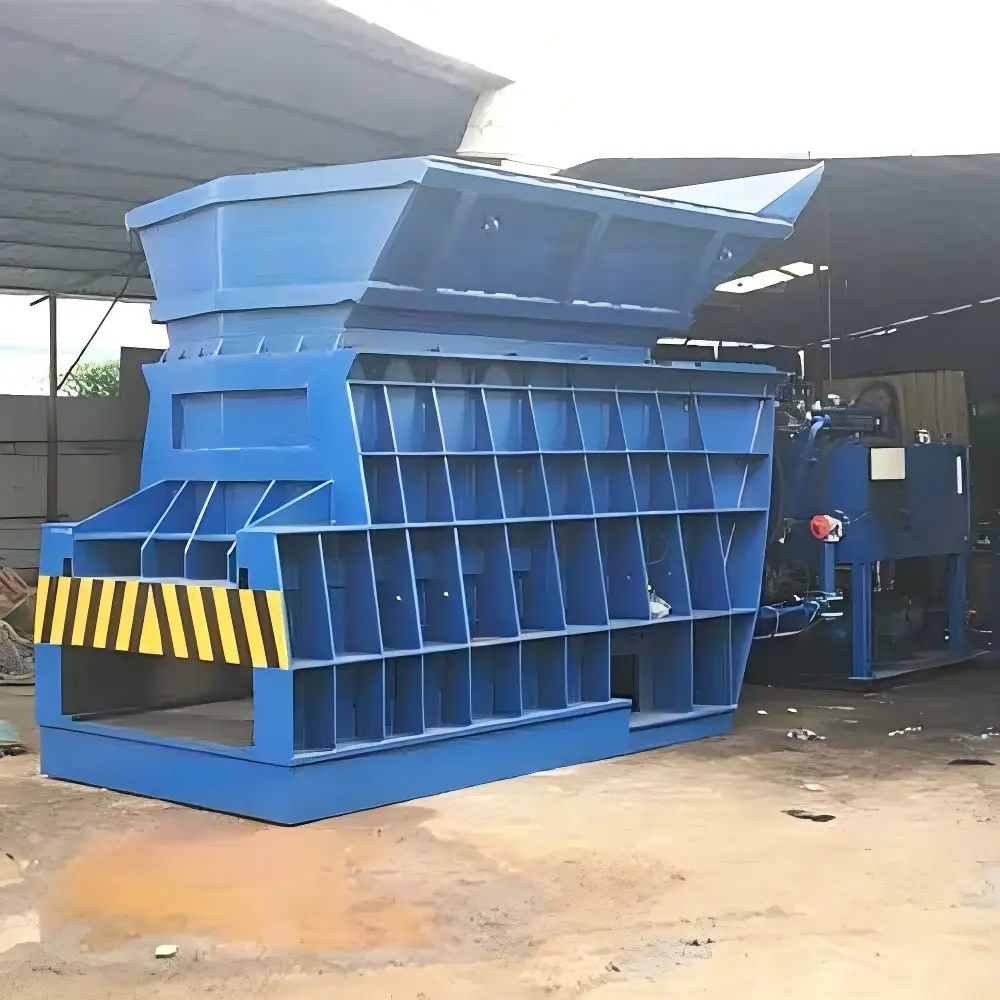
Container Shear Purchase Checklist for Fabricators and Scrap Yards
- Tonnage Requirement: Have you accurately assessed the maximum thickness and hardness of the material you process?
- Feeding Box Dimensions: Will your typical scrap fit without extensive pre-cutting?
- Hydraulic Component Brands: Are the pumps and valves from reputable manufacturers?
- Wear Plate Quality: Does the machine use Hardox or equivalent manganese steel in high-friction areas?
- Cycle Speed: Does the hourly throughput meet your production goals?
- Electrical Compatibility: Does your facility have the necessary voltage and amperage to run the motors?
- Safety Features: Are there emergency stops, safety cages, and pressure relief valves?
- Maintenance Access: Are the grease points and filters easily accessible for daily checks?
- Blade Versatility: Are the blades 4-sided and easy to rotate?
- Manufacturer Reputation: Have you checked references and after-sales service reviews?
Frequently Asked Questions (FAQ)
1. How long do the blades on a container shear last?
Blade life depends entirely on the material being cut. For clean, mild steel, blades can last for 500 to 1,000 tons per edge. Since most blades are 4-sided, a single set can process 2,000 to 4,000 tons before needing replacement or professional regrinding. Processing sandy, rusty, or high-alloy scrap will shorten this lifespan significantly.
2. Can a container shear be used for non-ferrous metals like aluminum and copper?
Yes, container shears are excellent for non-ferrous metals. In fact, they are often more efficient than alligator shears for processing large volumes of aluminum extrusions, copper busbars, or insulated cable. The high force ensures clean cuts even through bundled materials.
3. What is the difference between a container shear and a guillotine shear?
A guillotine shear is typically a massive, stationary vertical machine that requires a deep foundation and a large footprint. A container shear is a horizontal, self-contained unit that is easier to install, transport, and maintain. While guillotines can offer higher tonnages (up to 2000t+), container shears are more versatile for most scrap yards.
4. How much maintenance does a container shear require?
Daily maintenance includes checking oil levels, inspecting hoses for leaks, and greasing moving parts. Weekly, you should check the tightness of the blade bolts and inspect the wear plates. Monthly, hydraulic filters should be checked and replaced if necessary. Proper maintenance is the key to a 10-15 year machine lifespan.
5. Is it better to buy a diesel-powered or electric-powered container shear?
Electric motors are generally more cost-effective and require less maintenance if you have a stable power grid. Diesel engines are preferred for remote locations or yards without sufficient electrical infrastructure, but they come with higher fuel costs and more complex engine maintenance requirements.
6. Can the machine handle oversized scrap like car bodies?
While a container shear can process parts of a car, it is not a car baler or shredder. For automotive scrap, the car usually needs to be flattened or partially dismantled first to fit into the feeding box. For high-volume car processing, a dedicated car baler-shear is a better choice.