Common Alligator Shear Problems and How to Troubleshoot Cutting Force, Noise, and Blade Wear

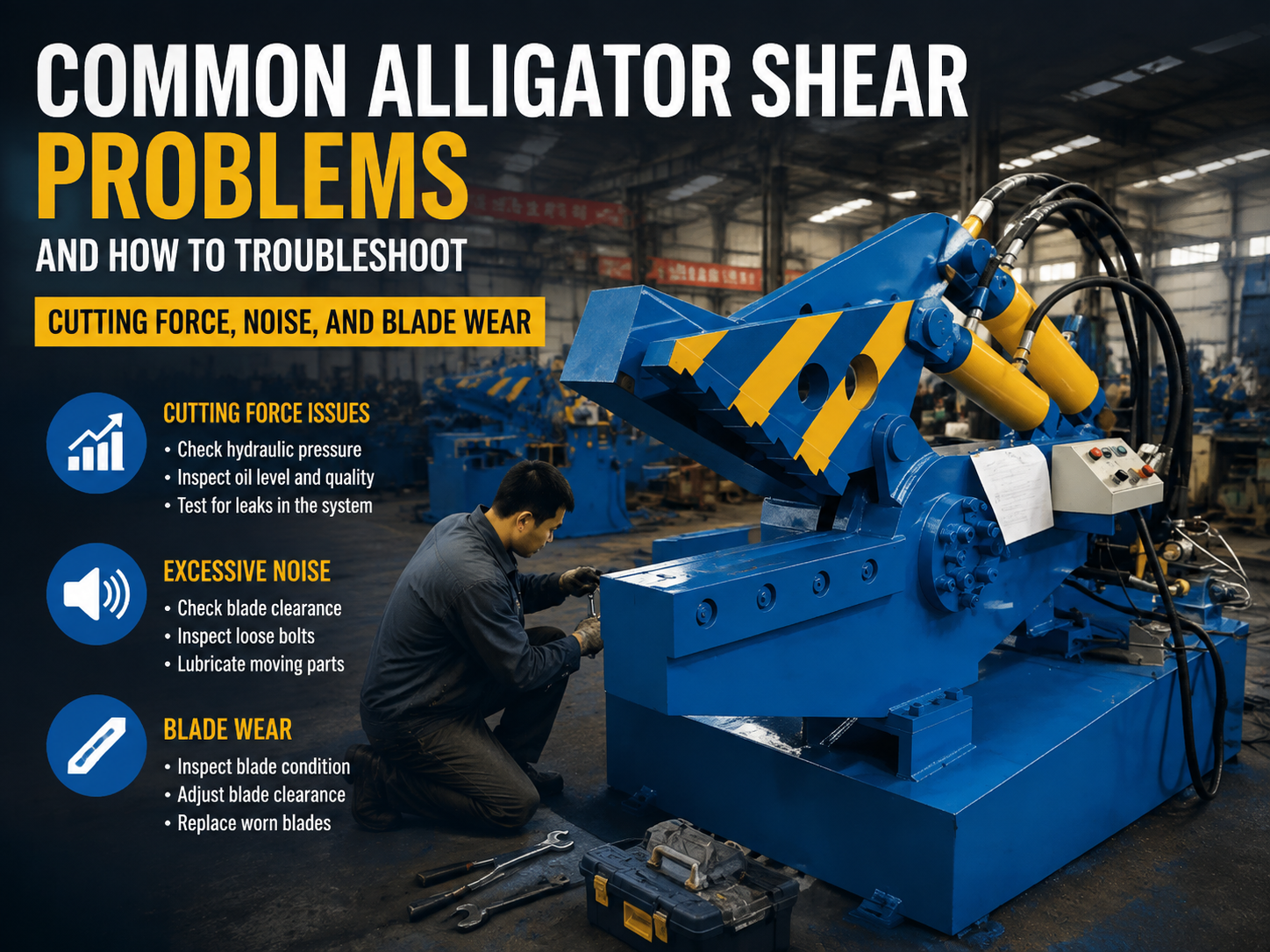
Technical Overview of Alligator Shear Mechanics
The alligator shear, a staple in the scrap metal recycling and metal fabrication industries, operates on a relatively simple yet powerful mechanical principle. Named for its characteristic jaw-like movement, the machine utilizes a hydraulic cylinder to drive a pivoting upper blade against a fixed lower blade. This lever-action design allows for the generation of immense cutting force, making it ideal for processing various metal profiles, including steel bars, pipes, and non-ferrous scrap. At HARSLE, we design these machines to withstand the rigors of continuous industrial use, but like any heavy-duty equipment, they are subject to mechanical and hydraulic stresses that can lead to operational issues.
Understanding the technical foundation of an alligator shear is the first step in effective troubleshooting. The system comprises three primary subsystems: the structural frame, the hydraulic power unit (HPU), and the cutting assembly. The frame must provide absolute rigidity to prevent deflection during high-pressure cycles. The HPU consists of a motor, a high-pressure pump, a reservoir, and a series of control valves that direct fluid to the main cylinder. Finally, the cutting assembly includes the blades, the pivot pin, and the adjustment mechanisms for blade clearance. When any of these components deviate from their calibrated state, the machine’s efficiency drops, leading to the common alligator shear problems we will discuss in this guide.
Modern alligator shears often incorporate automatic hold-down devices and PLC-controlled cycles to enhance safety and productivity. However, the core physics remains the same: converting hydraulic pressure into mechanical torque. The efficiency of this conversion is highly dependent on the condition of the hydraulic seals and the sharpness of the blades. A well-maintained HARSLE alligator shear can operate for decades, but neglecting the signs of wear in the cutting force, noise levels, or blade condition can lead to catastrophic failure and expensive downtime.
In this comprehensive guide, we will delve into the specifics of Common Alligator Shear Problems Troubleshoot Cutting Force, Noise, Blade Wear. By identifying the root causes of these issues, operators and maintenance engineers can implement proactive strategies to ensure the longevity and performance of their metal fabrication equipment. Whether you are dealing with a sudden loss of power or an annoying high-pitched whine from the pump, the following sections provide the technical depth required to resolve these challenges effectively.
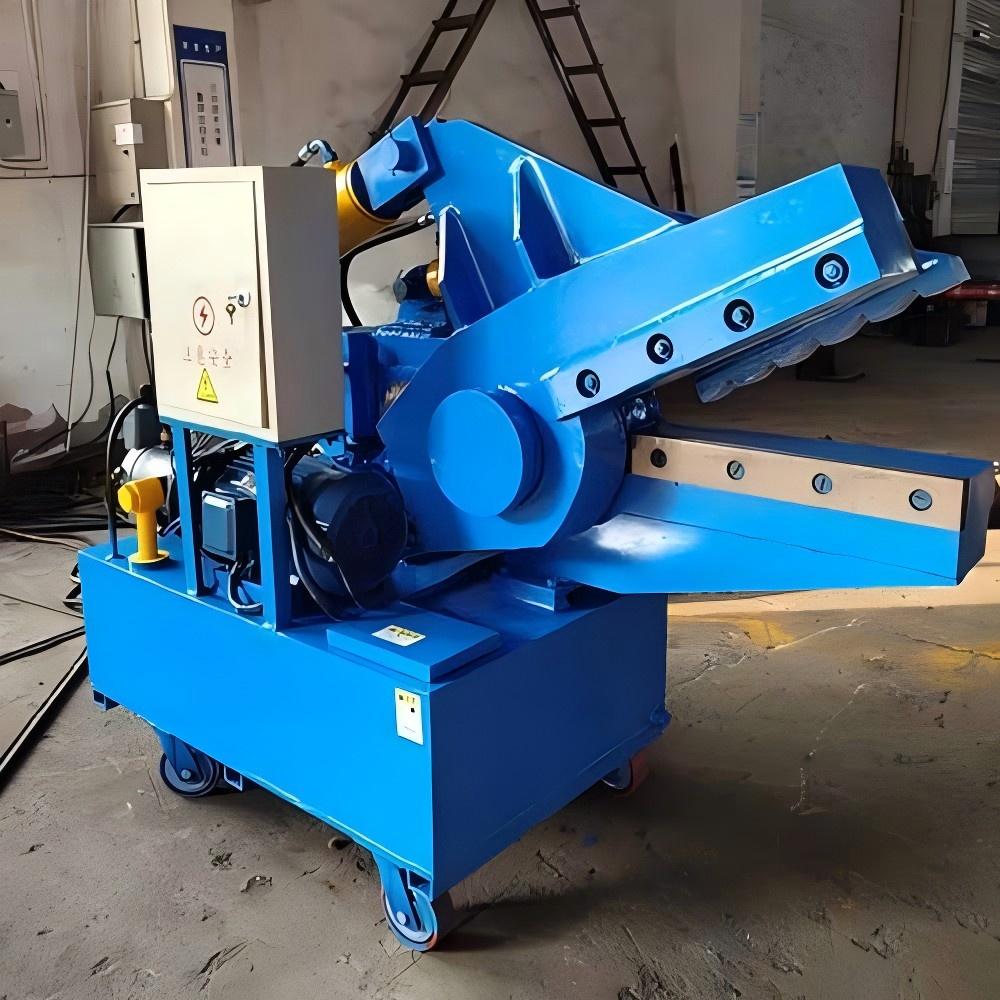
Core Parameters of Alligator Shears
When evaluating the performance of an alligator shear or troubleshooting its failures, one must first understand the core parameters that define its operational envelope. The most critical parameter is the Shear Force, usually measured in kilonewtons (kN) or tons. This force is a product of the hydraulic pressure and the surface area of the cylinder piston, multiplied by the mechanical advantage provided by the lever arm. If the shear force is insufficient, the machine will stall when attempting to cut materials within its rated capacity.
Another vital parameter is the Blade Length. This determines the maximum width of the material that can be processed in a single stroke. However, it is important to note that the maximum cutting force is typically concentrated near the pivot point (the “throat” of the shear). As the material moves further away from the pivot, the effective cutting force decreases. Operators must be trained to position thick materials as close to the pivot as possible to maximize the machine’s mechanical advantage and reduce stress on the frame.
The Stroke Frequency (cuts per minute) and Motor Power (kW) are also essential. Stroke frequency dictates the throughput of the machine, while motor power ensures the hydraulic pump can maintain the necessary flow rate under high pressure. A mismatch between the motor power and the required hydraulic load can lead to overheating and premature motor failure. Additionally, the Blade Gap (clearance) is a precision parameter that must be adjusted based on the thickness and type of metal being cut. Incorrect blade gap is a leading cause of both poor cut quality and accelerated blade wear.
Finally, the Hydraulic System Pressure is the lifeblood of the machine. Most industrial alligator shears operate at pressures between 20 MPa and 31.5 MPa. Monitoring this pressure via integrated gauges is the most direct way to diagnose issues with the pump or relief valves. If the pressure fails to reach the setpoint during a cut, it indicates a leak or a component failure within the hydraulic circuit. Understanding these parameters allows for a data-driven approach to troubleshooting Common Alligator Shear Problems Troubleshoot Cutting Force, Noise, Blade Wear.
Calculation Method for Shear Force Requirements
To accurately troubleshoot cutting force issues, it is necessary to calculate whether the machine is being asked to perform beyond its theoretical limits. The required shear force ($F$) for a given material can be estimated using the following formula: F = L × S × τ, where L is the length of the cut (or the width of the material), S is the thickness of the material, and τ is the shear strength of the material.
For example, if you are cutting a mild steel plate with a shear strength of approximately 350 MPa, a thickness of 20mm, and a width of 100mm, the required force would be: 100mm × 20mm × 350 N/mm² = 700,000 N, or 700 kN. If your alligator shear is rated for 630 kN, attempting this cut will cause the relief valve to bypass, resulting in a “loss of cutting force” that is actually an application error rather than a machine fault.
Furthermore, the mechanical advantage of the alligator jaw must be factored in. The force exerted at the tip of the blade is significantly lower than the force exerted near the pivot. The ratio is typically determined by the distance from the pivot to the cylinder attachment point versus the distance from the pivot to the cutting point. If an operator reports that the machine “can’t cut,” the first step in troubleshooting should always be to verify the material dimensions and strength against the machine’s leverage-adjusted force curve.
It is also important to consider the “shear angle” of the blades. Most alligator shears have a fixed angle between the upper and lower blades. A higher angle reduces the required peak force because it shears the material gradually rather than all at once. However, a higher angle can also cause the material to slide forward during the cut if the hold-down device is not functioning correctly. Calculating these variables ensures that the troubleshooting process is grounded in physics rather than guesswork.
Technical Parameter Table for HARSLE Alligator Shears
The following table outlines the typical specifications for various models of HARSLE alligator shears. Use this as a reference point when diagnosing performance deviations in your equipment.
| Model Series | Nominal Force (kN) | Blade Length (mm) | Max Opening (mm) | Motor Power (kW) | Stroke Rate (min⁻¹) |
|---|---|---|---|---|---|
| Q43-630 | 630 | 600 | 320 | 7.5 | 8 – 12 |
| Q43-1000 | 1000 | 700 | 350 | 11 | 8 – 12 |
| Q43-1600 | 1600 | 800 | 400 | 18.5 | 8 – 15 |
| Q43-2500 | 2500 | 1000 | 450 | 30 | 6 – 10 |
| Q43-4000 | 4000 | 1200 | 550 | 45 | 5 – 8 |
Note: Specifications may vary based on custom configurations and material types. Always refer to the specific manual provided with your HARSLE machine for the most accurate data.
Troubleshooting Cutting Force Issues
A decrease in cutting force is one of the most frequent Common Alligator Shear Problems. When the shear fails to cut through material it previously handled with ease, the investigation should begin with the hydraulic system. The most common culprit is a misadjusted or failing relief valve. The relief valve is designed to protect the system from overpressure by diverting fluid back to the tank. If the internal spring weakens or debris gets lodged in the valve seat, it may open at a lower pressure than required, preventing the cylinder from reaching full force.
Internal leakage within the hydraulic cylinder is another major cause of force loss. Over time, the piston seals can wear out or become brittle due to heat. When this happens, high-pressure fluid leaks from the cap end to the rod end of the cylinder, bypassing the work cycle. This can often be diagnosed by checking if the cylinder “drifts” under load or by performing a bypass test. If the cylinder temperature is significantly higher than the rest of the system, it is a strong indicator of internal friction and seal failure.
The hydraulic pump itself may also be the source of the problem. Vane pumps and gear pumps commonly used in shears can experience internal wear, leading to a drop in volumetric efficiency. As the pump wears, it can still produce flow at low pressures, but as the resistance (the metal being cut) increases, the internal clearances allow fluid to slip back to the inlet, resulting in a failure to build the necessary pressure. Regular pressure testing at the pump outlet can confirm if the pump is meeting its rated output.
Lastly, check the hydraulic oil quality. Oil that has oxidized or is contaminated with water and particulates will have a lower bulk modulus and inconsistent viscosity. This can lead to “spongy” operation and a perceived loss of power. Ensuring that the oil is clean and at the correct viscosity for the operating temperature is a fundamental part of troubleshooting Common Alligator Shear Problems Troubleshoot Cutting Force, Noise, Blade Wear.
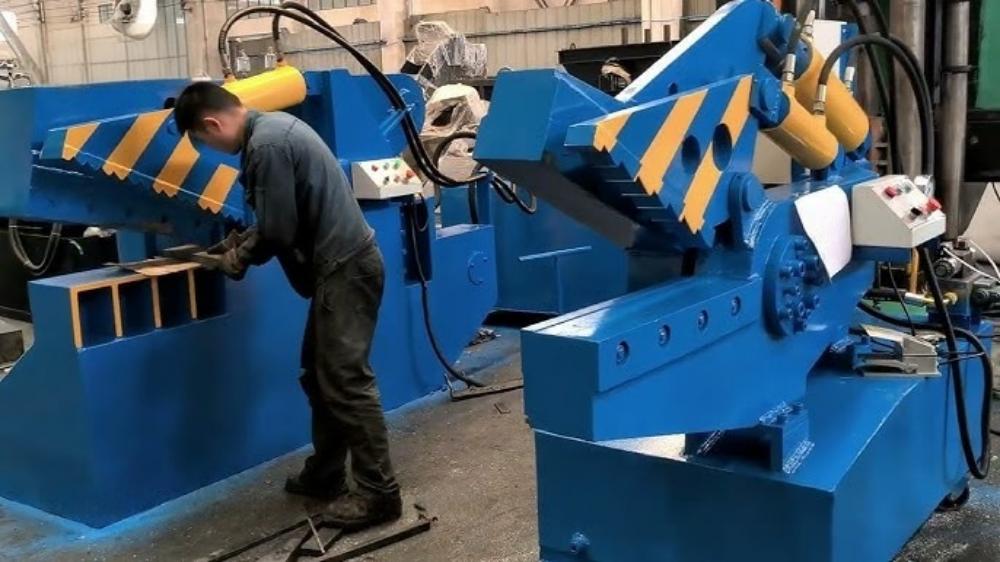
Troubleshooting Excessive Noise
Excessive noise in an alligator shear is rarely just an annoyance; it is usually a symptom of an underlying mechanical or hydraulic issue. One of the most common sounds is a high-pitched whine, which often indicates cavitation in the hydraulic pump. Cavitation occurs when the pump cannot draw enough oil from the reservoir, causing vacuum bubbles to form and then implode violently against the pump internals. This is usually caused by a clogged suction filter, a restricted intake line, or oil that is too thick for the ambient temperature.
A loud “banging” or “knocking” sound during the cutting stroke often points to mechanical looseness. The pivot pin and its associated bushings are under extreme stress. If the lubrication system fails, these components will wear, creating play in the jaw. When the blades engage the metal, the jaw shifts abruptly, creating a heavy impact sound. This not only produces noise but also ruins the blade alignment and can lead to frame cracking if left unaddressed. Regular greasing of the pivot point is the primary defense against this issue.
Hydraulic shocks, characterized by sharp “cracking” sounds when valves shift, can indicate that the system’s accumulators (if present) have lost their pre-charge or that the directional control valves are shifting too quickly. This puts immense stress on the pipe fittings and seals. Furthermore, if the motor and pump are misaligned, a constant vibration and low-frequency hum will be present. Using a laser alignment tool to ensure the coupling is perfectly centered can eliminate this source of noise and extend the life of the pump bearings.
Finally, air trapped in the hydraulic circuit can cause erratic noise and jerky movements. This usually happens after a seal replacement or oil change. Bleeding the system by cycling the cylinder to its full extensions several times without load usually resolves this. If the noise persists, check for air leaks on the suction side of the pump, where air can be drawn in without oil leaking out. Troubleshooting noise is a critical aspect of Common Alligator Shear Problems Troubleshoot Cutting Force, Noise, Blade Wear because it often provides the earliest warning of impending failure.
Troubleshooting Blade Wear and Cut Quality
Blade wear is an inevitable part of metal shearing, but premature or uneven wear indicates a problem with the machine’s setup or operation. The most common cause of accelerated blade wear is incorrect blade clearance. If the gap between the upper and lower blades is too large, the metal will tend to bend or “fold” between the blades rather than shearing cleanly. This creates massive lateral forces that rub the sides of the blades together, causing rapid dulling. Conversely, if the gap is too small, the blades may actually touch during the stroke, leading to chipping and catastrophic edge failure.
The material being cut also plays a significant role. Alligator shear blades are typically made from high-carbon, high-chromium tool steel (like D2 or H13), heat-treated to a specific hardness. If you are shearing hardened alloy steels or materials with high surface scale (like rusted rebar), the abrasive nature of the material will wear the cutting edge quickly. In such cases, more frequent blade rotation or the use of specialized coatings may be necessary. Most HARSLE blades are four-sided, meaning they can be rotated four times before requiring regrinding, which significantly extends their service life.
Heat is another enemy of blade longevity. While alligator shearing is a cold-cutting process, the friction generated during high-speed, continuous operation can raise the temperature of the blade edges. If the blades become too hot, they lose their tempered hardness and soften, leading to rapid deformation. Allowing the machine to cool during intense shifts or implementing a cooling spray can help. Additionally, ensure that the material is free from contaminants like sand or concrete, which act as abrasives and can ruin a fresh set of blades in a single shift.
To troubleshoot blade wear, perform a visual inspection daily. Look for rounding of the edges, heat discoloration, or micro-cracks. If the cut quality shows excessive burrs or a “torn” appearance rather than a clean shear, it is time to adjust the clearance or rotate the blades. Proper blade maintenance is the third pillar of addressing Common Alligator Shear Problems Troubleshoot Cutting Force, Noise, Blade Wear, ensuring that the machine remains productive and the output meets quality standards.
Common Engineering Mistakes in Alligator Shear Operation
- Overloading the Machine: Attempting to cut materials that exceed the rated diameter or thickness. This causes the frame to flex and the hydraulic system to run at peak relief pressure constantly, leading to overheating and structural fatigue.
- Neglecting Hydraulic Filtration: Failing to change the return line and suction filters. Contaminated oil is the #1 killer of hydraulic pumps and valves in scrap environments.
- Improper Blade Gap Adjustment: Using the same blade clearance for thin sheet metal and thick structural beams. Clearance must be adjusted (typically 5-10% of material thickness) for optimal results.
- Ignoring the Hold-Down Device: Operating without a functional hold-down allows the material to kick up during the cut, which is a major safety hazard and causes uneven blade wear.
- Inadequate Lubrication: Forgetting to grease the main pivot pin and the cylinder clevis pins. Metal-on-metal contact in these high-load areas leads to rapid seizure and expensive repairs.
- Using Incorrect Hydraulic Oil: Using low-quality oil or the wrong viscosity grade for the climate, which leads to pump cavitation in winter or thinning and leakage in summer.
- Bypassing Safety Interlocks: Disabling guards or foot-pedal safeties to increase speed, which invariably leads to accidents and machine damage.
Selection Checklist for Buying an Alligator Shear
Choosing the right machine is the best way to avoid Common Alligator Shear Problems. Use this checklist when evaluating your next purchase:
- Material Type and Volume: Determine the hardest and thickest material you will cut. Choose a machine with a nominal force at least 20% higher than your maximum calculated requirement.
- Blade Length Requirements: Ensure the blade is long enough to handle your widest scrap profiles but remember that shorter blades offer higher concentrated force.
- Hydraulic Component Brand: Look for reputable brands for pumps and valves (like Rexroth or Yuken) to ensure parts availability and reliability.
- Frame Construction: Prefer welded steel plate construction over cast iron for better shock resistance and repairability.
- Cooling System: If you operate in a hot climate or run multiple shifts, ensure the machine has an integrated air or water oil cooler.
- Ease of Maintenance: Check how easy it is to access the blades for rotation and the filters for replacement.
- Safety Features: Ensure the machine has a robust hold-down mechanism, emergency stop buttons, and protective shielding for the operator.
Frequently Asked Questions (FAQ)
1. Why is my alligator shear losing power mid-cut?
This is usually due to the hydraulic relief valve opening too early or internal leakage in the cylinder. Check the pressure gauge during the cut; if it doesn’t reach the rated pressure, the relief valve needs adjustment or replacement. If it reaches pressure but doesn’t cut, the material may be too thick or the cylinder seals may be bypassed.
2. How often should I rotate the blades?
Blade rotation frequency depends on the material being cut. For clean mild steel, you may get weeks of use per edge. For abrasive or hardened scrap, you might need to rotate them every few days. Inspect the edges daily; if you see rounding or the cut quality drops, rotate the blades immediately.
3. What causes the loud ‘screaming’ noise from the pump?
A screaming or high-pitched whining noise is almost always pump cavitation. Check the suction filter for clogs and ensure the intake hose isn’t collapsed. Also, verify that the hydraulic oil level is sufficient and that the oil is not too thick for the current ambient temperature.
4. Can I sharpen alligator shear blades myself?
Yes, but it requires a precision surface grinder. The blades must remain perfectly flat and square to maintain the correct clearance. Hand-grinding with a portable tool is not recommended as it creates uneven surfaces that will ruin the cut quality and potentially damage the machine.
5. Why does the material ‘kick up’ when I try to cut it?
This happens when the hold-down device is not properly adjusted or is missing. The shearing action creates a natural tendency for the material to pivot. Without a firm hold-down force, the material will lift, which is dangerous and results in a poor, angled cut.
6. What is the ideal hydraulic oil temperature?
The ideal operating temperature for hydraulic oil is between 40°C and 55°C (104°F – 131°F). If the temperature exceeds 65°C (150°F), the oil begins to break down, seals soften, and the risk of pump damage increases significantly. If your machine runs hot, consider installing an oil cooler.
7. How do I adjust the blade clearance?
On most HARSLE alligator shears, blade clearance is adjusted via shim plates behind the blades or adjustment bolts on the side of the jaw. Use a feeler gauge to ensure the gap is consistent along the entire length of the blade. Refer to your manual for the specific clearance settings for your material thickness.