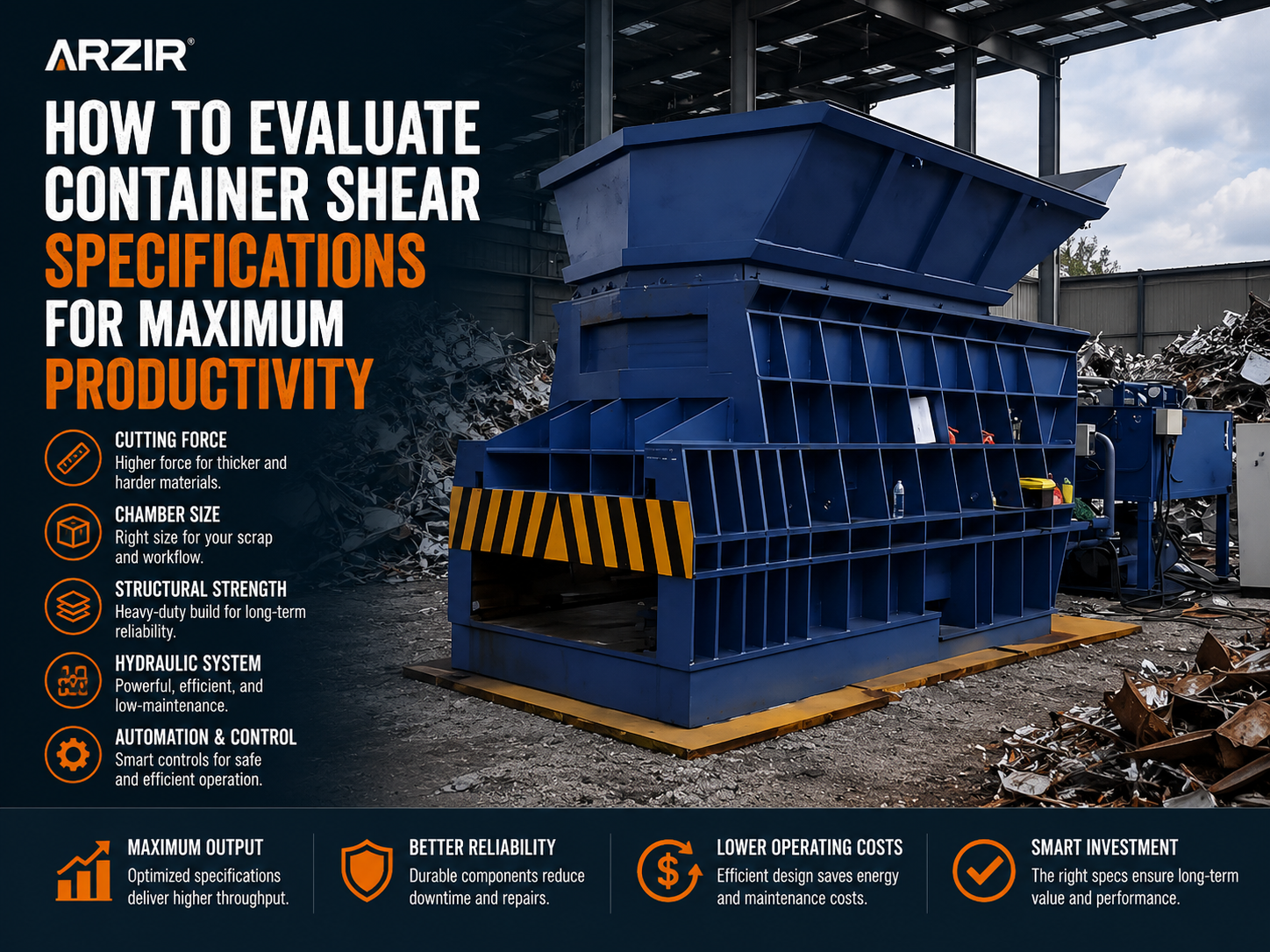
How to Evaluate Container Shear Specifications for Maximum Productivity

Introduction to Container Shear Evaluation
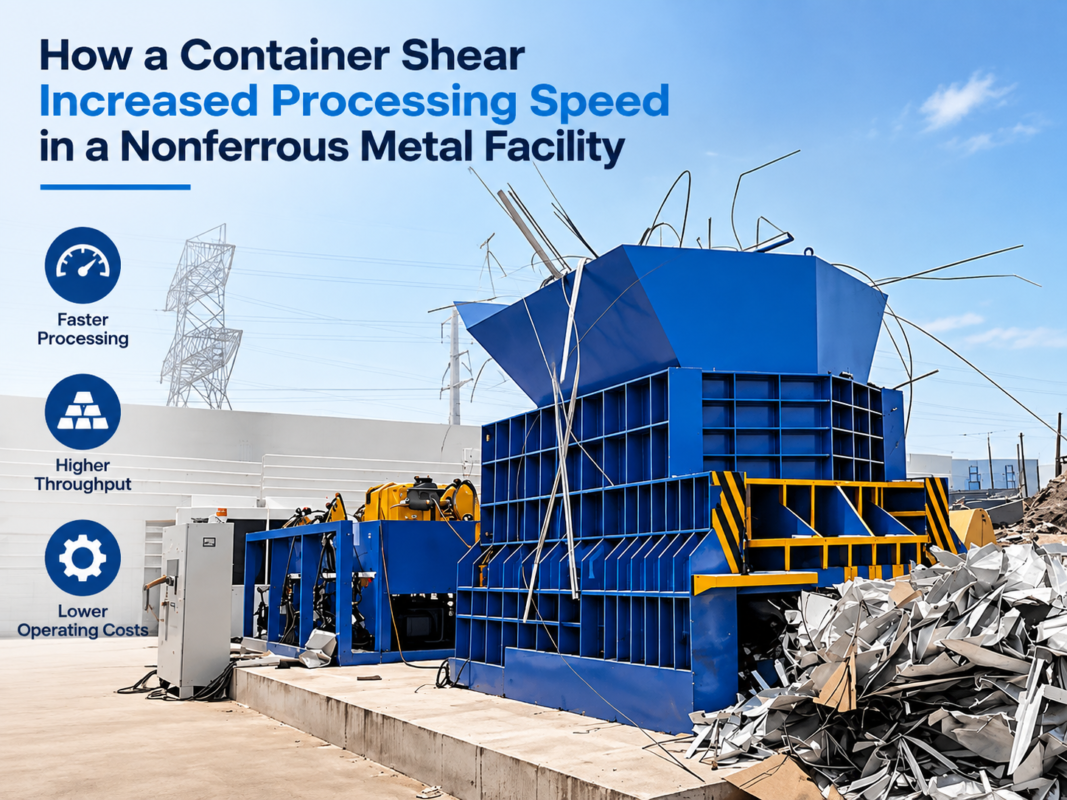
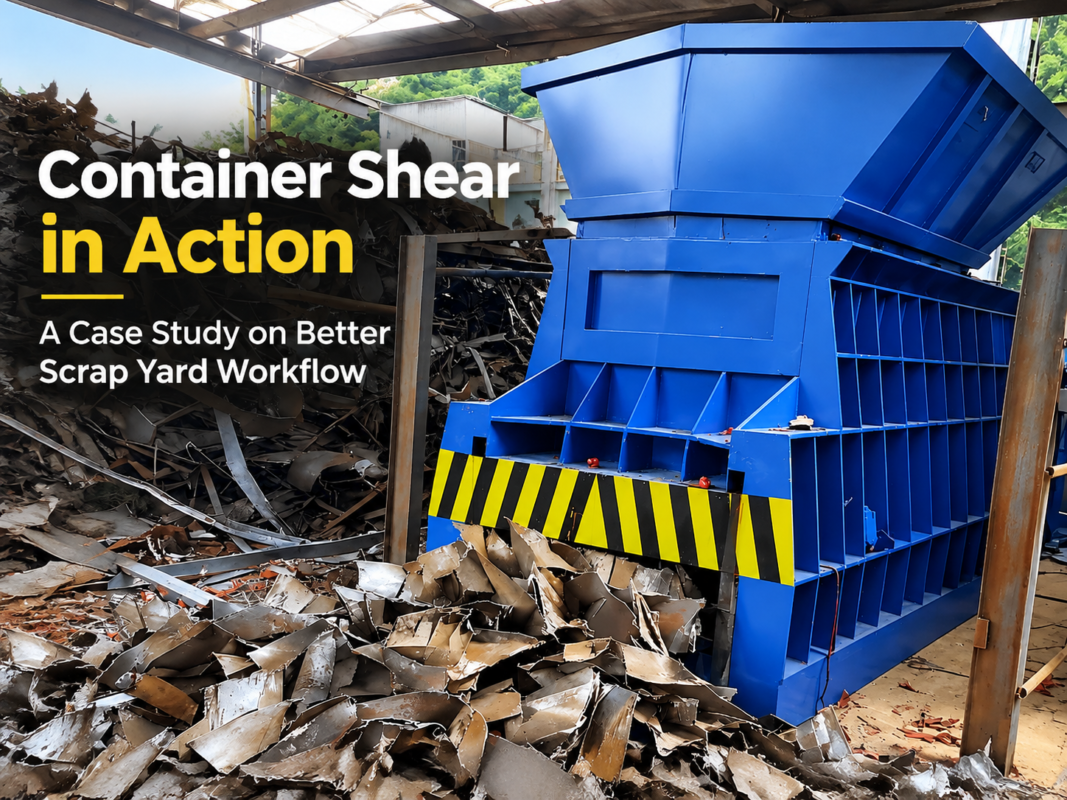
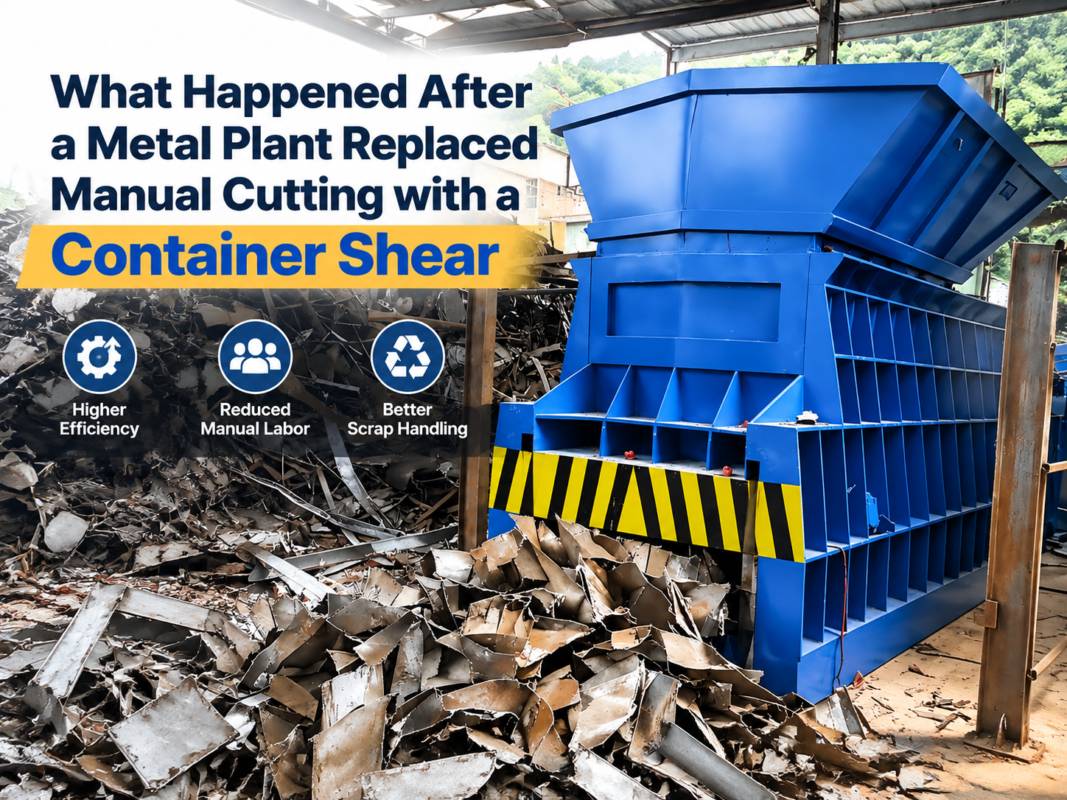
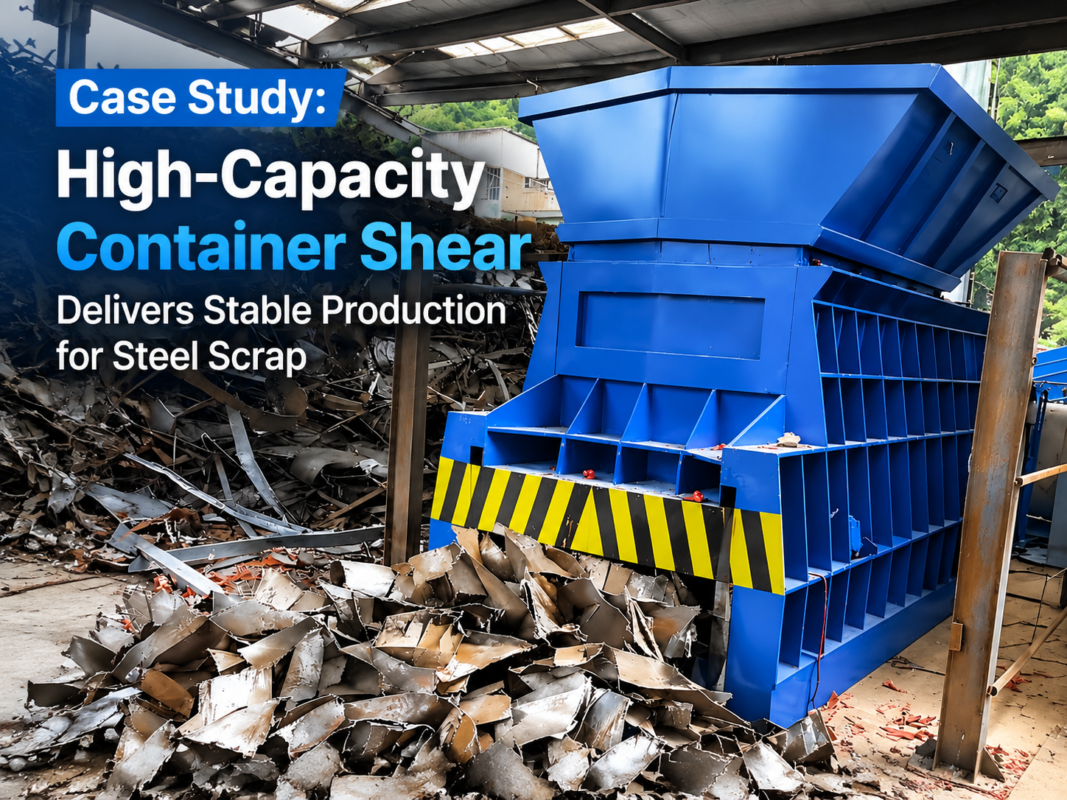
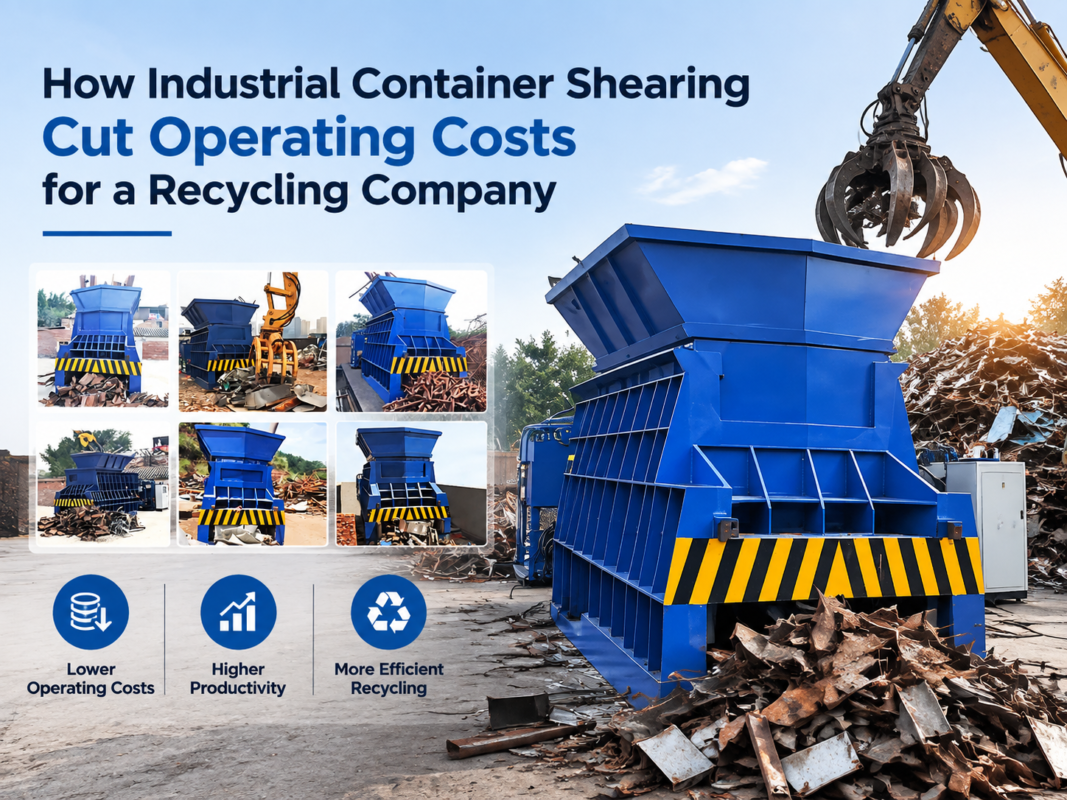
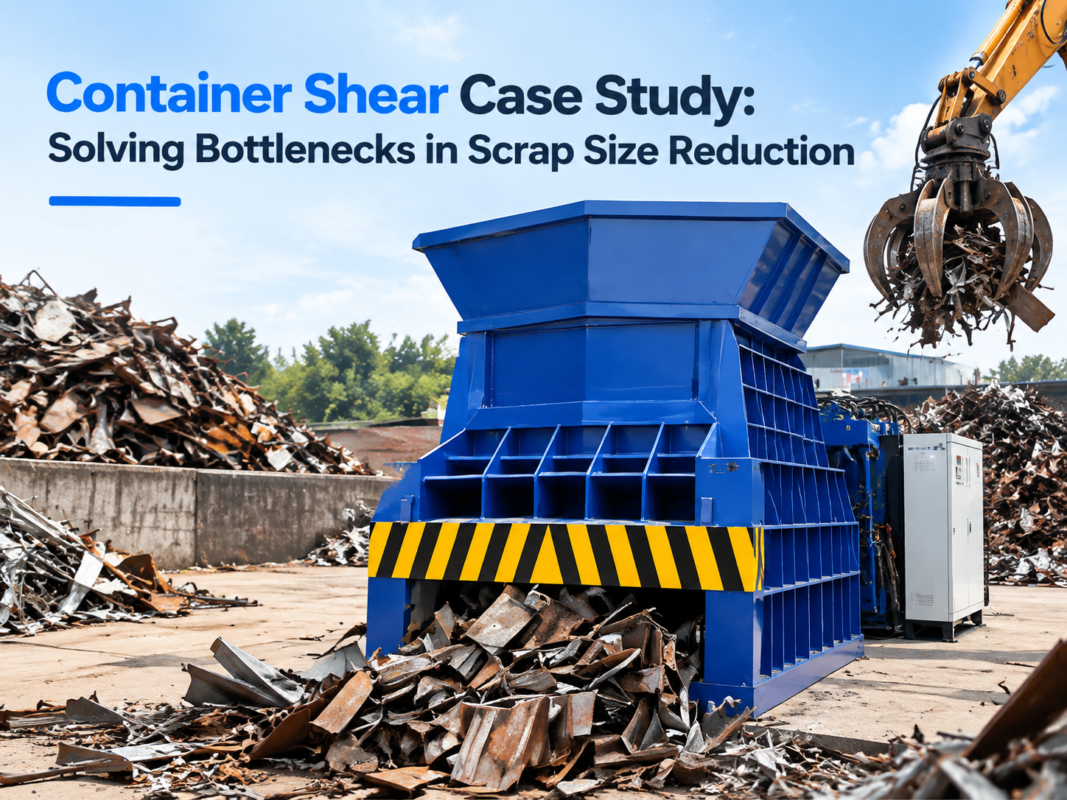
In the high-stakes world of scrap metal recycling, the efficiency of your processing equipment directly dictates your profit margins. Among the various types of machinery available, the container shear has emerged as a revolutionary tool for medium to large-scale operations. Unlike traditional stationary guillotine shears that require extensive civil engineering and foundations, container shears offer a semi-mobile, integrated solution that can be deployed quickly. However, to evaluate container shear specifications for maximum productivity, one must look beyond the surface-level tonnage and delve into the nuances of hydraulic flow, cycle times, and structural integrity.
Maximizing productivity isn’t just about buying the biggest machine; it’s about matching the machine’s capabilities to your specific material stream. Whether you are processing HMS1, HMS2, or light bulky scrap, the configuration of the shear box and the speed of the cutting stroke will determine how many tons you can move per hour. This guide provides a deep dive into the technical specifications that matter most, helping you make an informed investment that yields the highest possible return.
HARSLE, a leader in metal fabrication machinery, understands that a container shear is a significant capital investment. By focusing on the right metrics—such as shear force, blade quality, and automation features—recycling yard managers can ensure they are not just buying a machine, but a long-term productivity partner. In the following sections, we will break down the costs, configurations, and ROI factors essential for any professional buyer.

Price Range Overview: What to Expect
The market for container shears is broad, with prices varying significantly based on capacity, brand reputation, and technological sophistication. Generally, container shears are categorized by their shearing force, typically ranging from 400 tons to over 1250 tons. For a standard 400-ton to 600-ton unit, prices usually start around $60,000 and can go up to $120,000 for entry-level to mid-tier models. These machines are ideal for smaller yards or those processing lighter structural steel and automotive scrap.
As you move into the high-productivity range—800 tons to 1250 tons—the price increases to between $150,000 and $350,000. These units are designed for 24/7 operation and can handle heavy melting scrap (HMS) with ease. The higher price point reflects not just the increased steel weight of the machine itself, but also the more powerful hydraulic systems and advanced PLC controls required to manage such immense forces safely and efficiently.
It is important to note that the “sticker price” is only the beginning. When you evaluate container shear specifications for maximum productivity, you must also consider the regional variations in pricing, which are often influenced by shipping costs, import duties, and the level of after-sales support provided. HARSLE offers competitive pricing by optimizing manufacturing processes without compromising on the quality of critical components like the main cylinders and the shearing blades.
Main Cost Drivers in Container Shear Manufacturing
Several key factors drive the manufacturing cost of a container shear. Understanding these will help you identify where your money is going and whether a specific specification is worth the extra investment. The primary driver is the Hydraulic System. High-end shears utilize pumps from reputable brands like Rexroth or Parker. These pumps are more expensive but offer superior reliability and higher flow rates, which are essential for fast cycle times.
The second major cost driver is the Steel Quality and Frame Construction. A container shear undergoes massive stress during every cycle. Machines built with high-tensile Q345B or Q460 steel plates are more durable but cost more to produce. Furthermore, the thickness of the wear-resistant liners inside the feeding box (often made of Hardox or equivalent materials) significantly impacts the machine’s lifespan and its ability to handle abrasive scrap without frequent maintenance.
- Cylinder Quality: The main shearing cylinder is the heart of the machine. High-pressure, large-bore cylinders with specialized seals prevent leaks and maintain force over years of use.
- Blade Material: Blades made from 6CrW2Si or H13 tool steel are standard. Higher-grade alloys that maintain their edge longer under high heat and pressure will increase the initial cost but reduce long-term sharpening expenses.
- Automation and PLC: Integration of Siemens or Omron PLC systems allows for automated cycles, remote diagnostics, and safety interlocks, adding to the cost but drastically improving safety and ease of use.
Finally, the Motor Power plays a significant role. A dual-motor or triple-motor setup provides the necessary kilowatts to drive the high-pressure pumps. While more motors increase the price and electrical consumption, they also provide redundancy; if one motor fails, the machine can often continue to operate at a reduced speed, preventing total downtime.
Configuration Impact on Productivity
To truly evaluate container shear specifications for maximum productivity, you must analyze how the machine’s configuration aligns with your operational workflow. The most critical configuration element is the Feeding Box Dimensions. A longer and wider box (e.g., 6 meters vs. 5 meters) allows you to load larger pieces of scrap without pre-cutting, saving labor and time. If your scrap consists of long beams or pipes, a larger box is non-negotiable for high throughput.
Another vital aspect is the Cycle Time. This is the time it takes for the shear to complete one full stroke and return to the starting position. A machine with a 30-second cycle time is significantly more productive than one with a 50-second cycle. This is achieved through high-flow hydraulic valves and “fast-down” technology, where the cylinder moves quickly under low pressure until it meets resistance, at which point it switches to high-pressure shearing mode.
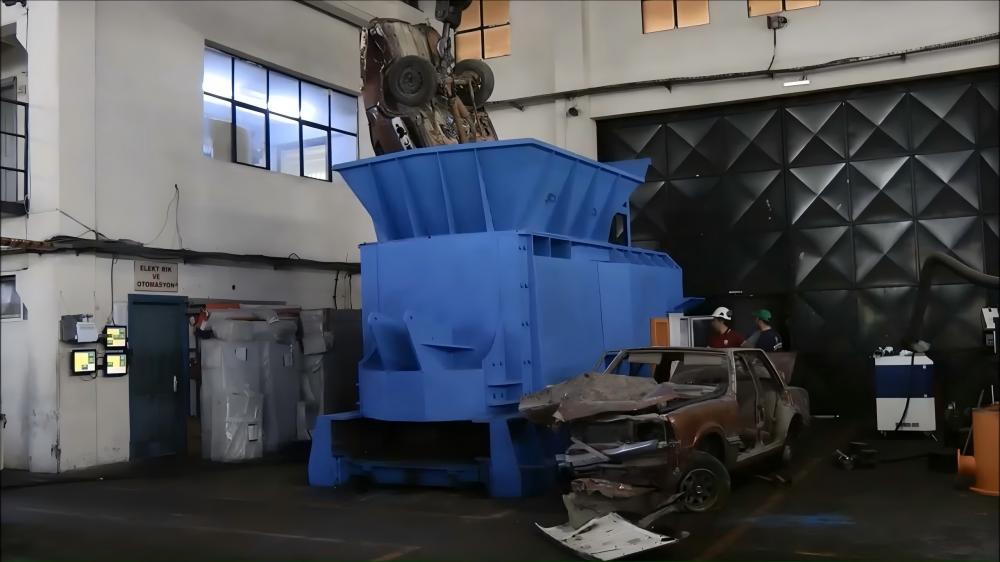
The Cooling System is often overlooked but is crucial for productivity in hot climates or during multi-shift operations. Industrial-grade air or water coolers keep the hydraulic oil at an optimal temperature. If the oil overheats, its viscosity drops, leading to sluggish performance and potential damage to the pumps and seals. Therefore, a robust cooling configuration is essential for maintaining maximum productivity throughout the day.
Hidden Costs of Owning a Container Shear
While the purchase price is the most visible expense, several hidden costs can affect the total cost of ownership (TCO). One of the most significant is Site Preparation. Although container shears don’t require deep foundations like stationary shears, they still need a level, reinforced concrete pad to support their weight (often 30 to 80 tons) and to prevent the machine from sinking or shifting during operation.
Electricity Consumption is another ongoing cost. A 600-ton shear might use two 45kW motors. Depending on your local utility rates and the number of hours the machine runs, the monthly power bill can be substantial. Evaluating the energy efficiency of the hydraulic system—such as the use of variable frequency drives (VFDs)—can help mitigate these costs over time.
- Hydraulic Oil: A large container shear can require 1,000 to 2,000 liters of hydraulic oil. This oil needs to be filtered regularly and replaced periodically, which is a significant maintenance expense.
- Blade Maintenance: Blades are consumable items. Depending on the material being processed, they may need to be rotated every few weeks and sharpened or replaced every few months. The cost of spare blades and the labor for changing them should be factored into your budget.
- Transportation and Rigging: Moving a 50-ton machine requires specialized heavy-haul trucking and large cranes for offloading. These logistics can add thousands of dollars to the initial setup cost.
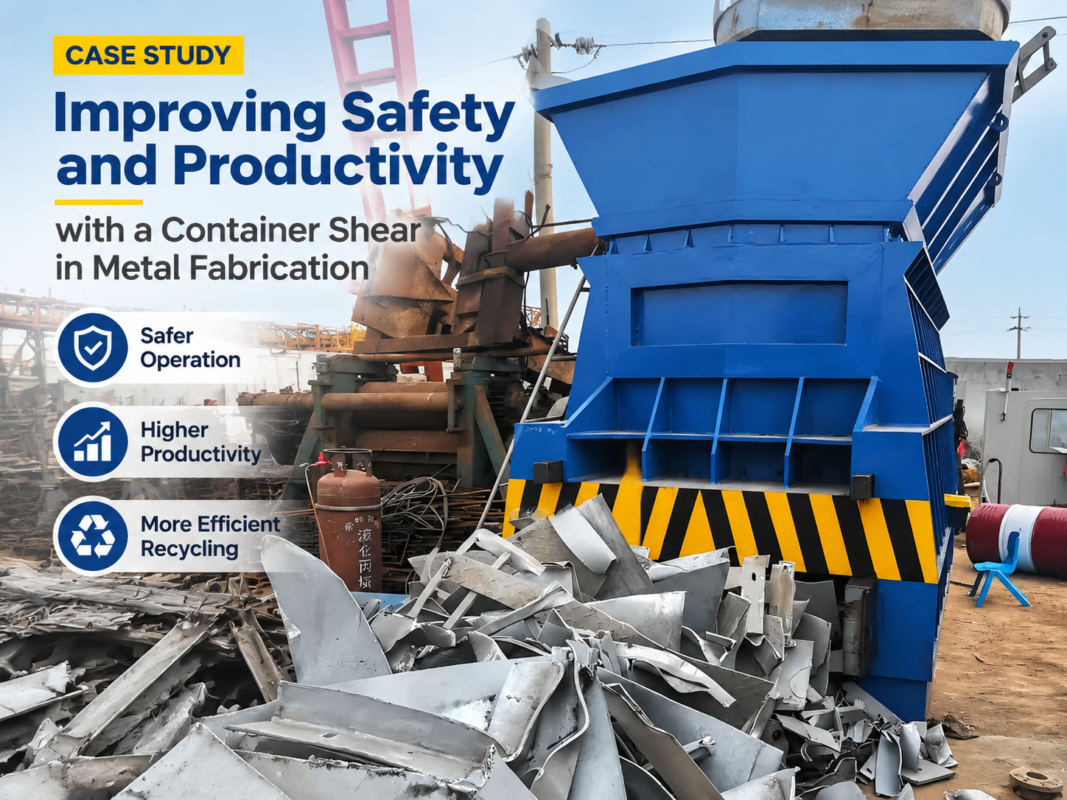
Lastly, consider Operator Training. A container shear is a powerful and potentially dangerous machine. Investing in professional training for your staff ensures that the machine is operated within its design limits, reducing the risk of accidental damage and extending the equipment’s life.
ROI Calculation: Measuring Success
Calculating the Return on Investment (ROI) for a container shear involves comparing the total cost of ownership against the increased revenue generated by processed scrap. Processed scrap (cut to size) commands a much higher market price than “unprepared” scrap. For example, if the price difference between unprepared scrap and HMS1 is $50 per ton, and your container shear processes 10 tons per hour, you are generating an additional $500 of value every hour.
To evaluate container shear specifications for maximum productivity in terms of ROI, use the following formula: (Monthly Revenue Increase – Monthly Operating Costs) / Monthly Financing Payment. Operating costs must include labor, electricity, maintenance, and blade wear. If the resulting ratio is significantly above 1.0, the investment is sound. Most high-efficiency yards aim for a full payback period of 12 to 24 months.
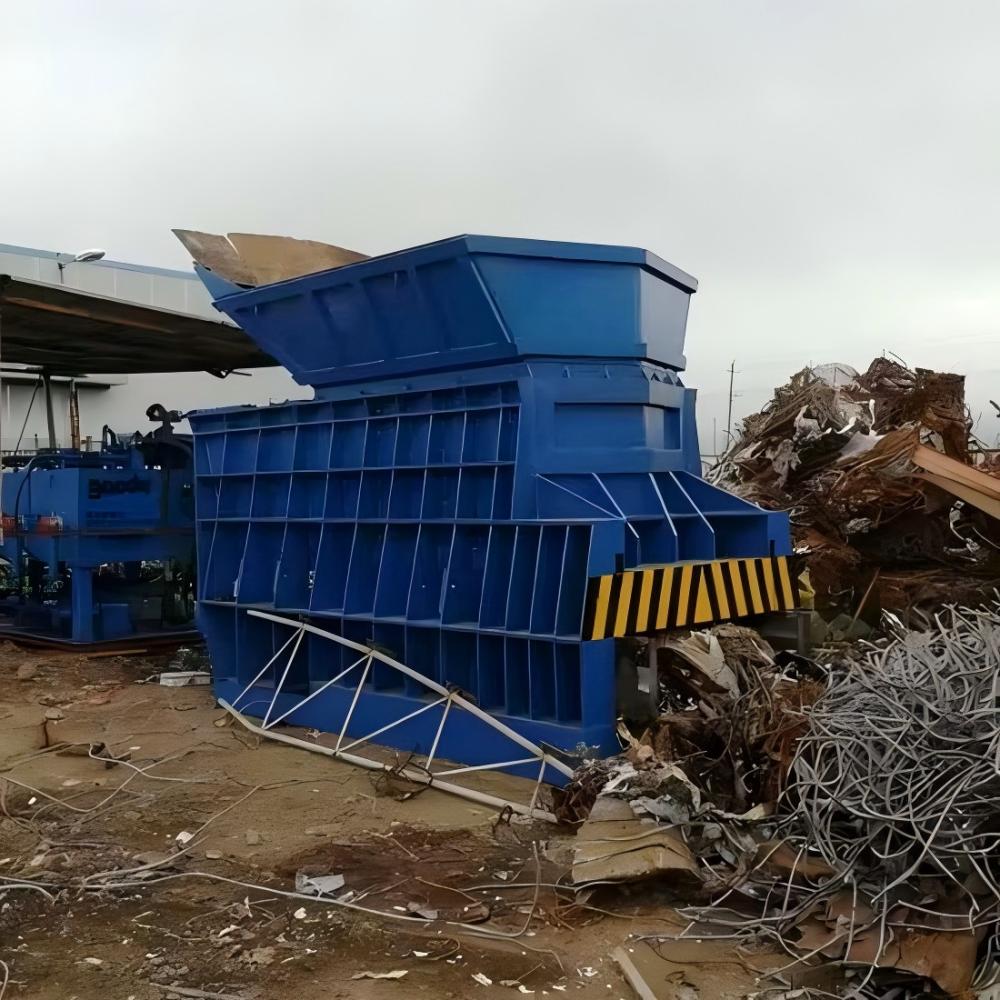
Furthermore, consider the Volume Capacity. A more expensive machine with a higher tonnage and faster cycle time might process 15 tons per hour compared to 8 tons for a cheaper model. Even if the high-end machine costs $100,000 more, the extra 7 tons per hour will pay for that price difference in just a few months of full-time operation. This is why evaluating specifications based on productivity rather than just price is vital for long-term success.
Buying Advice for Industrial Professionals
When you are ready to purchase, start by conducting a thorough Material Audit. What is the thickest material you need to cut? What is the average length of your incoming scrap? This will define your required tonnage and box size. Don’t buy a 1000-ton shear if 90% of your material is light gauge, but don’t under-spec either, as overloading a small shear will lead to premature structural failure.
Next, Vet the Manufacturer. Look for companies like HARSLE that have a proven track record in hydraulic machinery. Ask for videos of the machine running, or better yet, visit a site where the machine is in operation. Pay close attention to the quality of the welds, the routing of the hydraulic hoses, and the responsiveness of the control system. A well-built machine will have clean, organized components that are easy to access for maintenance.
Finally, negotiate a Comprehensive Spare Parts Package. Ensure you have at least one extra set of blades, a full set of filters, and critical seals on hand from day one. Downtime is the enemy of productivity; waiting two weeks for a part to ship from overseas can cost you more in lost production than the part itself is worth. A reliable supplier will offer a robust warranty and have a service team capable of providing remote or on-site technical support.
Frequently Asked Questions (FAQ)
1. What is the difference between a container shear and a guillotine shear?
A container shear is an integrated, semi-mobile unit that includes the feeding box and the shearing head in one frame, requiring no permanent foundation. A traditional guillotine shear is usually a stationary, larger installation that requires significant civil engineering and a separate feeding mechanism.
2. How often do the blades need to be changed?
Blade life depends entirely on the material being processed. For average scrap, blades can be rotated (most have 4 usable edges) every 200-400 hours of operation. A full replacement may be needed after 1,500-2,000 hours, depending on the hardness of the scrap and the quality of the blade material.
3. Can a container shear handle cast iron?
Yes, but with caution. Cast iron is brittle and can “shatter” rather than cut, which sends shockwaves through the hydraulic system. It is important to ensure the shear has a “cast iron mode” or that the operator is trained to handle such materials to avoid damaging the blades or cylinders.
4. What kind of hydraulic oil should I use?
Most container shears use anti-wear hydraulic oil, typically ISO VG 46 or 68, depending on the ambient temperature of your location. Always refer to the manufacturer’s manual for specific grade requirements to maintain warranty coverage.
5. Is it better to choose a diesel or electric drive?
Electric drives are generally more cost-effective and easier to maintain if you have a stable power supply at your yard. Diesel drives offer maximum mobility for remote sites but come with higher fuel costs and more intensive engine maintenance requirements.
6. How do I know if the tonnage is sufficient for my needs?
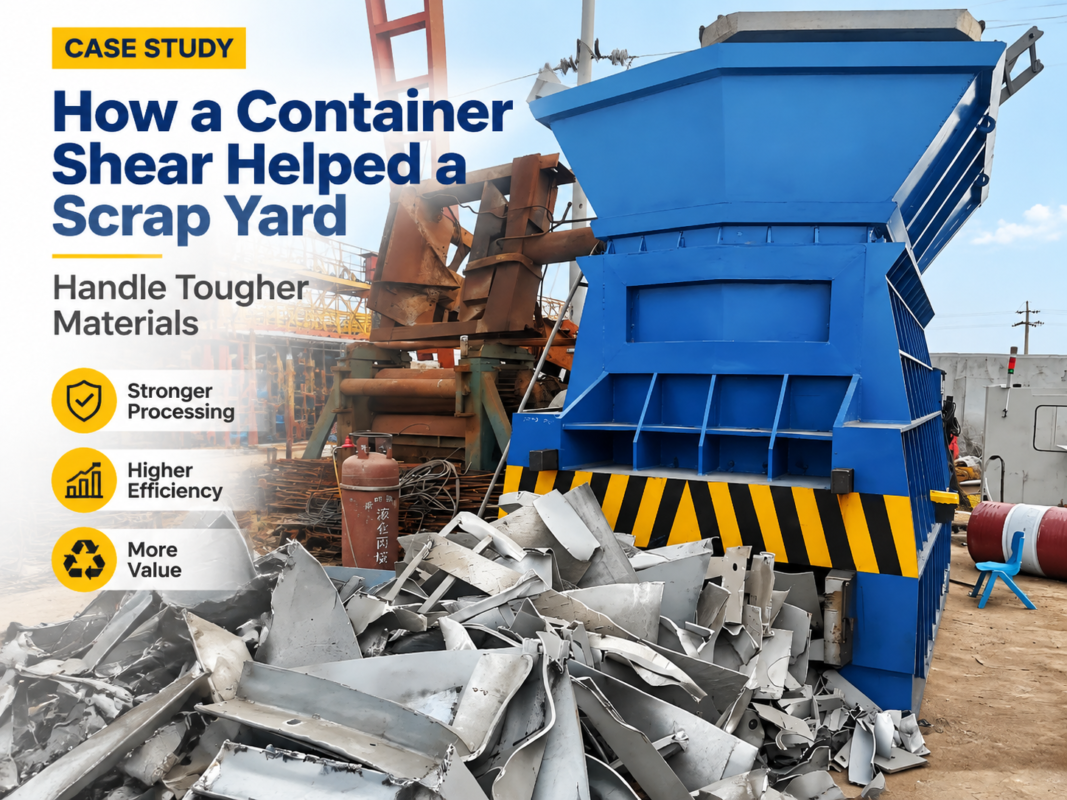
As a rule of thumb, a 400-600 ton shear is suitable for light to medium scrap (up to 20-30mm thickness), while 800-1250 ton shears are required for heavy structural steel and thick plate (40mm+). Always consult with the HARSLE technical team to match the tonnage to your specific scrap profile.