
Four-Shaft Shredder Energy Consumption Guide: How to Optimize Power Use

Introduction to Four-Shaft Shredder Energy Consumption
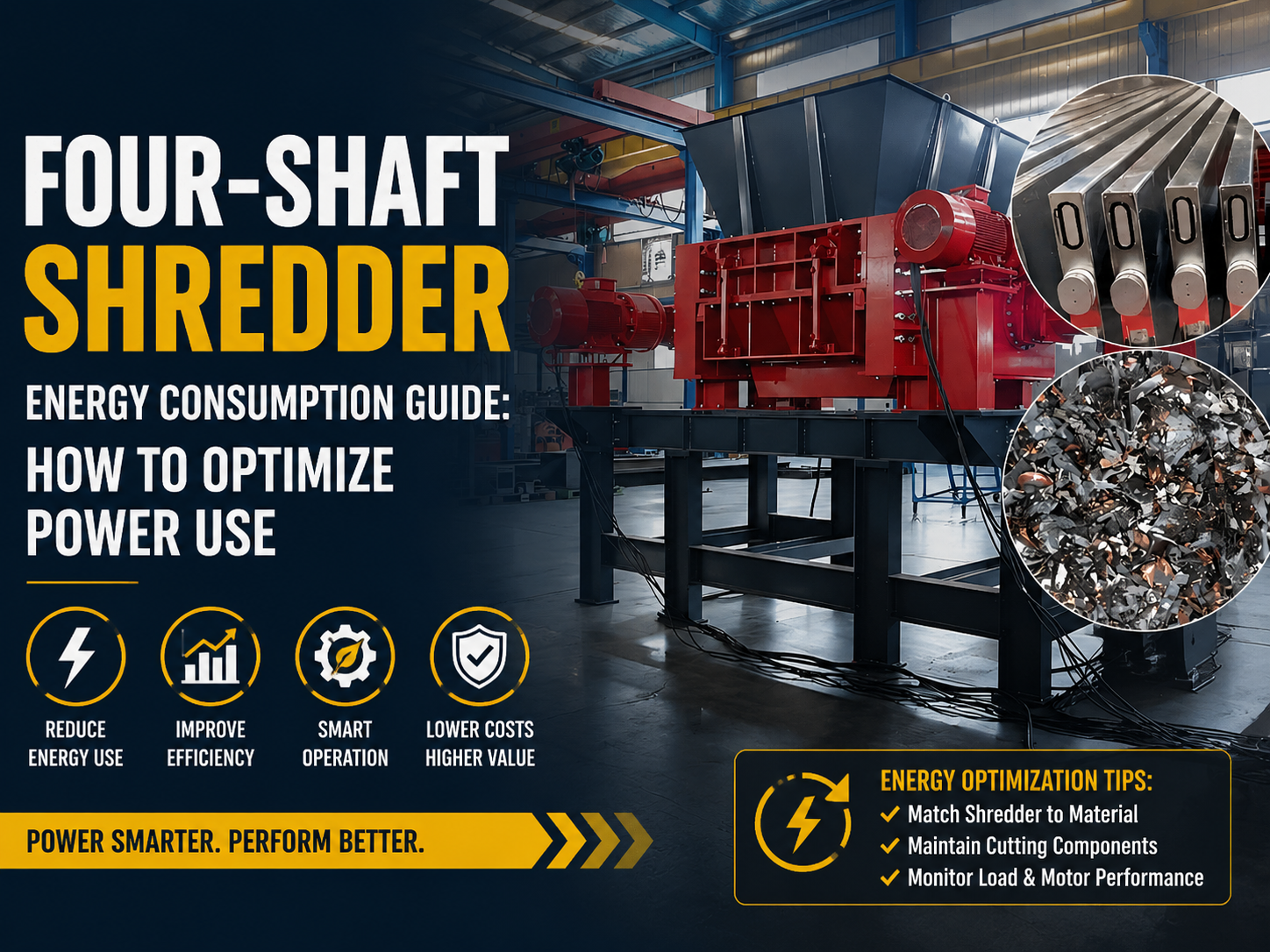
In the modern industrial landscape, where sustainability and operational costs are paramount, understanding Four-Shaft Shredder Energy Consumption: Optimize Power Use has become a critical priority for facility managers and engineers. Four-shaft shredders are the workhorses of the recycling and waste processing industries, capable of handling everything from electronic waste (e-waste) and plastics to bulky metal scraps. However, their high-torque capabilities often come with significant power requirements. Optimizing this energy use is not just about reducing the monthly utility bill; it is about extending the lifespan of the machinery, reducing thermal stress on components, and achieving a lower carbon footprint for the entire production line.
The efficiency of a four-shaft shredder is determined by how effectively it converts electrical energy into mechanical shearing force. Unlike single-shaft shredders that rely on high speeds, four-shaft models utilize high torque at lower rotational speeds. This fundamental design choice inherently offers certain energy advantages, particularly when dealing with heterogeneous materials that require consistent grabbing and tearing actions. By focusing on the nuances of power distribution across the four shafts, operators can unlock significant savings and improve the overall throughput-to-power ratio.
Technical Overview: The Mechanics of Four-Shaft Shredding
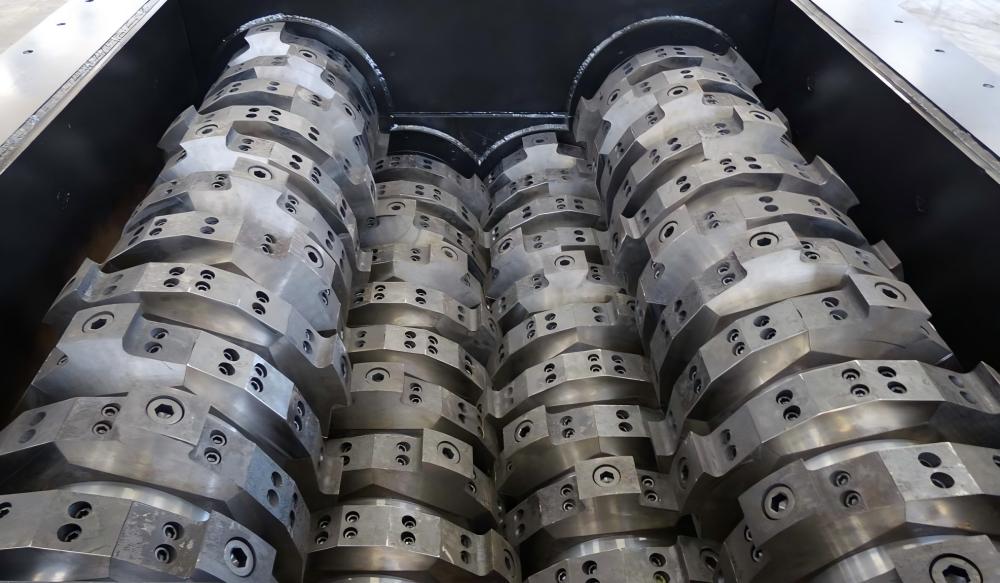
A four-shaft shredder consists of two main drive shafts and two secondary shafts, often referred to as cleaning or auxiliary shafts. The primary drive shafts are equipped with heavy-duty cutting disks, while the secondary shafts assist in feeding material into the cutters and cleaning the spaces between the main blades. This complex interaction ensures that material is processed efficiently without frequent jams, which are a major source of energy spikes in industrial shredding operations.
From an energy perspective, the four-shaft design is superior for processing bulky items because it minimizes “idling” time. In many shredding setups, energy is wasted when the machine runs but fails to grab the material effectively. The four-shaft configuration creates a positive feed mechanism, ensuring that every rotation of the motor contributes to material reduction. This mechanical advantage allows for the use of slightly smaller motors compared to what might be required for a single-shaft machine attempting the same task, provided the system is tuned correctly.
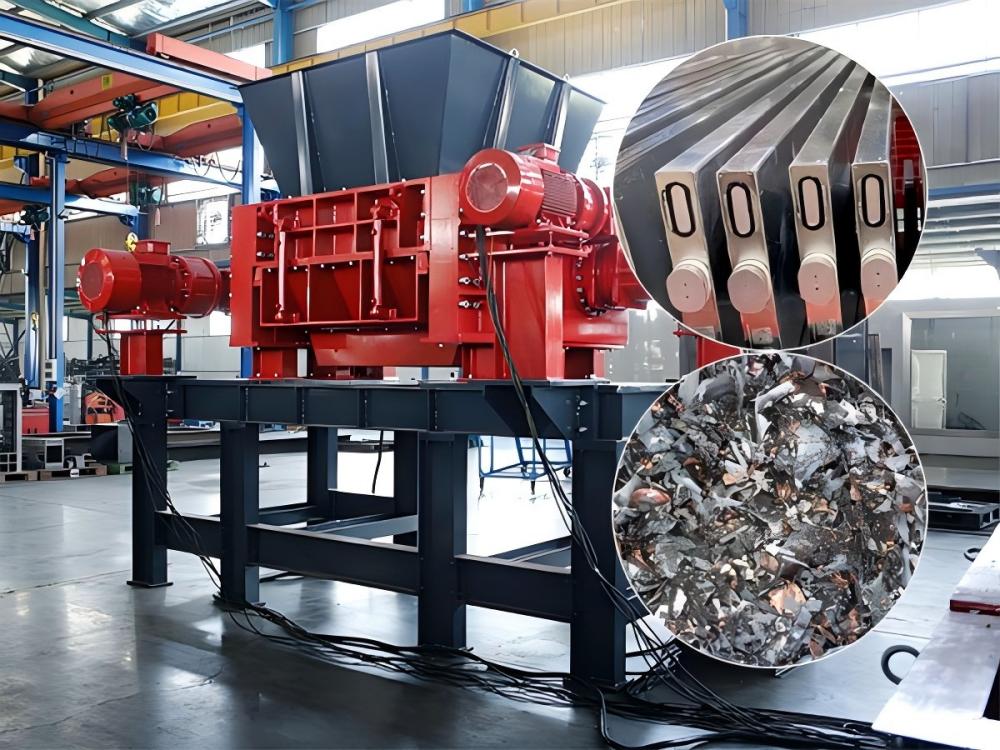
The integration of Variable Frequency Drives (VFDs) is perhaps the most significant technical advancement in optimizing Four-Shaft Shredder Energy Consumption. A VFD allows the motor to adjust its speed and torque output based on the resistance encountered by the blades. Instead of running at a constant 100% power, the machine can scale down during lighter loads and ramp up only when necessary. This dynamic adjustment prevents the massive inrush currents typically associated with starting heavy industrial motors and reduces the total kilowatt-hours (kWh) consumed per ton of processed material.
Core Parameters Influencing Power Use
Several technical parameters dictate the energy profile of a four-shaft shredder. Understanding these is the first step toward optimization. The most obvious is the Motor Power Rating, usually measured in kilowatts (kW) or horsepower (HP). However, the rated power is only a ceiling; the actual consumption depends on the load factor. A machine with two 45kW motors (90kW total) might only draw 50kW during steady-state processing of light plastics but could peak at 110kW during a momentary jam or when processing dense metal blocks.
Shaft Speed (RPM) and Torque are inversely related. For energy optimization, the goal is to find the “sweet spot” where the torque is sufficient to shear the material without requiring excessive RPM. Higher speeds increase friction and heat generation, both of which represent wasted energy. Conversely, if the speed is too low, the throughput drops, meaning the machine must run for longer periods to process the same volume of material, potentially increasing the total energy consumed per job.
The Screen Size also plays a vital role. The screen determines the final particle size. A smaller screen means the material stays in the shredding chamber longer, undergoing more cutting cycles. This “over-shredding” is a common energy drain. If the downstream process does not strictly require a 20mm particle, using a 40mm screen can reduce energy consumption by as much as 30% while significantly increasing throughput. Balancing the output requirements with the energy cost of finer shredding is a hallmark of an efficient operation.
Calculation Method: Measuring Shredder Efficiency
To effectively Optimize Power Use, one must be able to measure it. The most common metric used in the industry is Specific Energy Consumption (SEC), which is expressed as kilowatt-hours per ton (kWh/t). The formula is straightforward: SEC = Total Power Consumed (kWh) / Total Weight of Material Processed (tons). By tracking this metric over time, operators can identify when the machine is becoming less efficient, often due to blade wear or mechanical friction.
Another important calculation involves the Power Factor (PF). In large industrial motors, the relationship between real power (kW) and apparent power (kVA) is crucial. A low power factor means the system is drawing more current than it effectively uses, leading to higher charges from utility companies and increased heat in the electrical distribution system. Installing power factor correction capacitors can often pay for themselves in energy savings within months.
Engineers also use the Torque-to-Power Formula: Power (kW) = (Torque (Nm) × Speed (RPM)) / 9550. This formula helps in selecting the right gearbox ratio. By optimizing the gearbox, you can ensure the motor operates in its most efficient range (typically 75-90% of its rated load) while providing the necessary shearing force at the shafts. Operating a motor at very low loads (under 30%) is highly inefficient due to fixed magnetic losses within the motor itself.
Four-Shaft Shredder Energy Parameter Table
The following table provides a comparative look at typical energy consumption patterns for various materials processed by a standard industrial four-shaft shredder (e.g., a dual 37kW motor setup).
| Material Type | Throughput (kg/h) | Avg. Power Draw (kW) | Specific Energy (kWh/t) | Optimization Potential |
|---|---|---|---|---|
| Mixed Plastics | 1,500 – 2,000 | 45 – 55 | 25 – 35 | High (Screen size adjustment) |
| Electronic Waste (E-Waste) | 800 – 1,200 | 60 – 75 | 60 – 85 | Medium (Blade geometry) |
| Aluminum Scrap | 1,000 – 1,500 | 55 – 70 | 45 – 60 | Medium (Lubrication) |
| Tires (Pre-shredded) | 600 – 900 | 70 – 85 | 90 – 120 | Low (High torque required) |
| Paper/Cardboard | 2,500 – 4,000 | 35 – 45 | 10 – 15 | High (Feed rate control) |
Common Engineering Mistakes in Power Optimization
One of the most frequent mistakes is Oversizing the Motor. While it might seem safer to have “extra power,” an oversized motor running at low load is significantly less efficient than a correctly sized motor running at its peak efficiency point. Furthermore, larger motors have higher starting currents, which can lead to peak demand charges from the utility provider. It is always better to match the motor to the specific material density and throughput requirements.
Neglecting Blade Maintenance is another major energy drain. As blades dull, they stop cutting and start crushing or tearing. This requires significantly more force, which translates directly into higher current draw. Studies have shown that operating with dull blades can increase energy consumption by 20% to 40% before the machine even reaches a point of failure. Regular sharpening and maintaining the correct blade gap (clearance) are essential for keeping the SEC low.
Improper Feeding Strategies also contribute to waste. “Batch feeding”—dumping a massive amount of material into the hopper all at once—causes the shredder to struggle, leading to frequent reversals and high-current spikes. A steady, metered feed ensures the motor stays in a consistent power band. Automated conveyor systems synchronized with the shredder’s load sensors can effectively eliminate the human error associated with inconsistent feeding.
Selection Checklist for Energy-Efficient Shredders
When purchasing or upgrading a four-shaft shredder with an eye on Four-Shaft Shredder Energy Consumption: Optimize Power Use, use the following checklist to ensure maximum efficiency:
- Motor Efficiency Class: Ensure the motors are rated IE3 (Premium Efficiency) or IE4 (Super Premium Efficiency). The long-term energy savings far outweigh the initial cost difference.
- VFD Integration: Does the machine come with a Variable Frequency Drive? This is the single most effective tool for power optimization.
- Intelligent Control System: Look for PLC-based controls that feature “Auto-Reverse” on overload and “Auto-Stop” when idling. This prevents the machine from running unnecessarily.
- Gearbox Efficiency: High-quality planetary gearboxes offer better mechanical efficiency (up to 96-98%) compared to older spur gear designs.
- Blade Material and Coating: Specialized coatings can reduce friction between the blades and the material, lowering the energy required for each cut.
- Ease of Maintenance: A machine that is easy to maintain is more likely to be kept in peak condition, ensuring it continues to operate efficiently over its lifespan.
- Power Factor Correction: Check if the electrical cabinet includes capacitors to maintain a high power factor.
Frequently Asked Questions (FAQ)
How does material moisture content affect energy consumption?
Moisture significantly increases energy consumption. Wet material is heavier and often more “sticky,” which increases friction within the shredding chamber. For materials like wood or biomass, a 10% increase in moisture can lead to a 15-20% increase in the energy required to shred it to the same size.
Can I reduce power use by slowing down the shafts?
Not necessarily. While slowing down the shafts increases torque, it also reduces throughput. If the throughput drops faster than the power draw, your Specific Energy Consumption (kWh/ton) will actually increase. The goal is to find the optimal speed where the motor is efficient and the material is processed quickly.
What is the role of the “Auto-Reverse” function in energy saving?
The auto-reverse function is primarily a safety and anti-jam feature. However, from an energy standpoint, it prevents the motor from stalling and drawing massive “locked-rotor” current. A well-tuned auto-reverse system clears jams quickly so the machine can return to its efficient operating state with minimal downtime.
Is it better to have one large motor or two smaller motors?
In four-shaft shredders, dual-motor setups are common. This provides better balance and allows for more granular control. In some advanced systems, one motor can even be throttled down if the load on its respective shafts is low, though this requires sophisticated control logic.
How often should I check the energy consumption of my shredder?
Energy consumption should be monitored in real-time via the control panel. A weekly review of the kWh/ton metric is recommended. A sudden spike in this number is often the first warning sign of dull blades, bearing failure, or a change in the quality of the incoming raw material.
Conclusion: The Path to Sustainable Shredding
Optimizing Four-Shaft Shredder Energy Consumption is a multi-faceted challenge that requires a combination of high-quality hardware, intelligent software, and disciplined maintenance. By focusing on the Specific Energy Consumption (SEC) and implementing technologies like VFDs and IE4 motors, industrial facilities can significantly reduce their operational costs. Furthermore, the reduction in energy use often goes hand-in-hand with reduced mechanical wear, leading to fewer breakdowns and a longer equipment lifecycle. As energy prices continue to fluctuate and environmental regulations tighten, the ability to Optimize Power Use will remain a key competitive advantage in the metal fabrication and recycling industries. HARSLE remains committed to providing the technical expertise and advanced machinery necessary to meet these efficiency goals, ensuring that your production line is as green as it is productive.


