Choosing the Right Car Body Baler: Capacity, Power, and Safety Factors

Introduction to Car Body Baler Selection
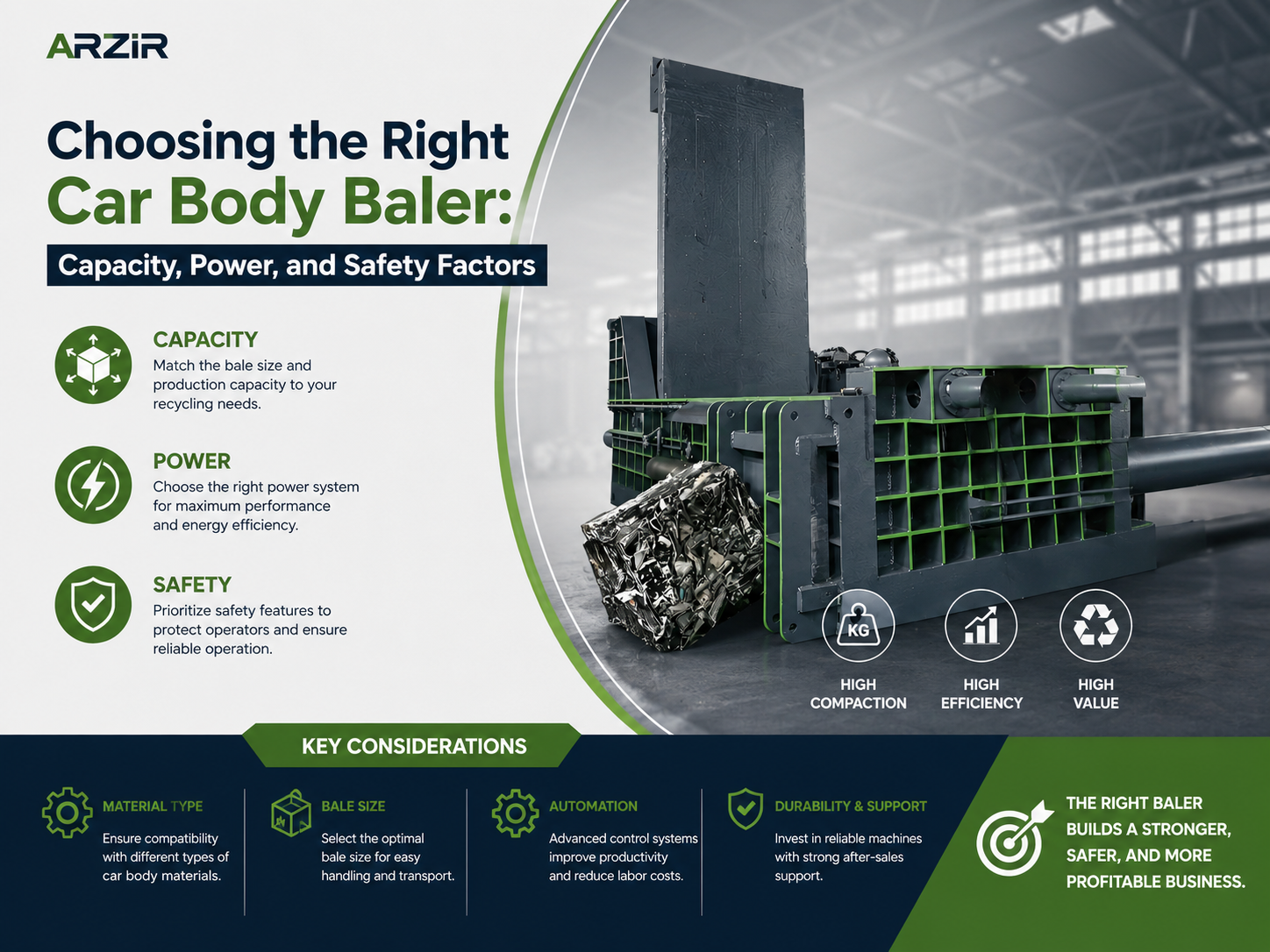
In the rapidly evolving world of scrap metal recycling, the efficiency of your operations often hinges on the quality and suitability of your heavy machinery. For scrap yard owners and metal processing facilities, a car body baler is one of the most significant investments they will ever make. Choosing the right machine is not merely about finding the lowest price; it is about balancing throughput capacity, hydraulic power, and essential safety features to ensure long-term profitability and operator security. This guide explores the critical elements of Choosing Car Body Baler: Capacity, Power, Safety Factors to help you make an informed decision for your business.
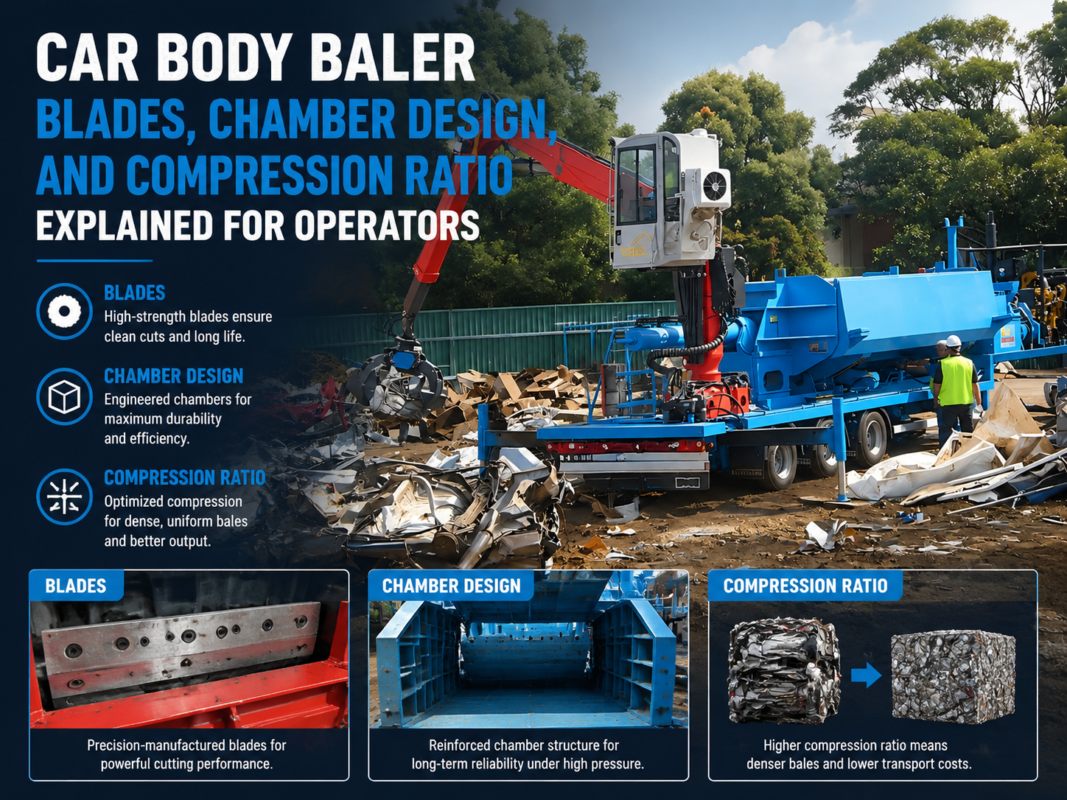
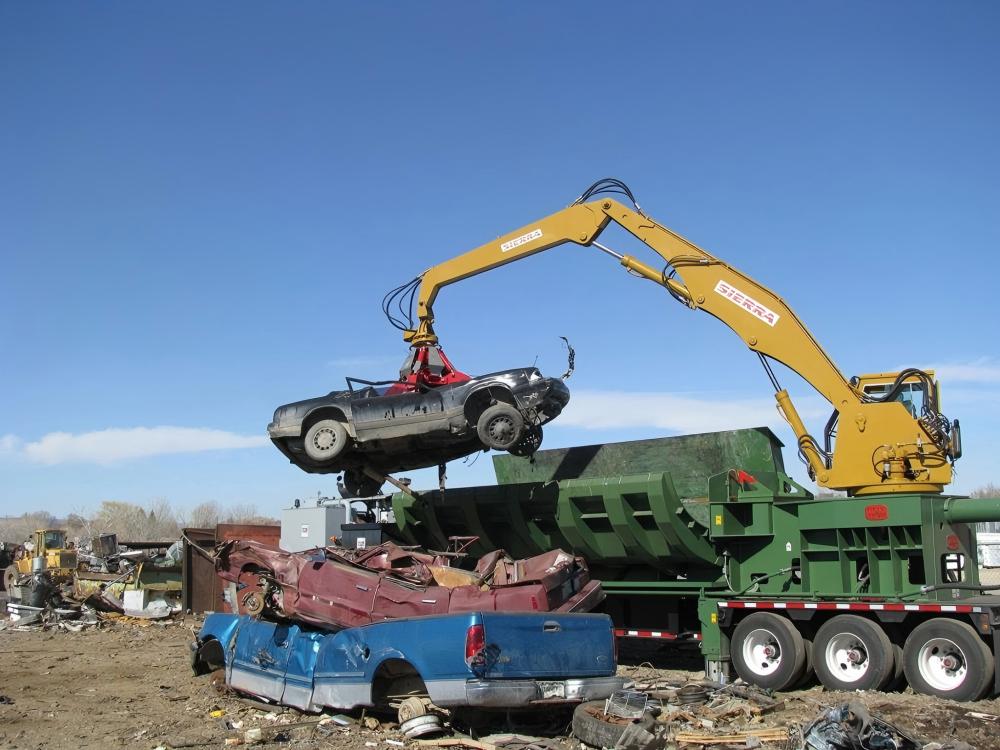
A car body baler is designed to compress end-of-life vehicles (ELVs) into dense, manageable blocks or ‘bales.’ This process is vital for reducing transportation costs, as loose car shells take up immense volume with very little weight. By densifying the material, recyclers can maximize truckloads and improve the efficiency of the smelting process. However, the market is flooded with various models, ranging from small mobile units to massive stationary installations. Understanding the nuances of these machines is the first step toward optimizing your scrap yard’s workflow.
Price Range Overview: What to Expect
The cost of a car body baler can vary significantly based on its design, mobility, and pressing force. Generally, the market is divided into three primary price tiers. Entry-level machines, often refurbished or smaller stationary units, typically start around $40,000 to $70,000. These are suitable for low-volume yards that process only a few cars per day. While they offer a lower barrier to entry, they may lack the speed and durability required for scaling operations.
Mid-range balers, which are the most common choice for established recycling centers, fall between $80,000 and $180,000. These machines often feature semi-automatic controls, larger press boxes, and higher hydraulic pressure. They are built to handle consistent daily use and can process dozens of vehicles per shift. In this range, you often see a mix of stationary and portable models, allowing for flexibility in yard layout.
High-end, heavy-duty industrial balers can exceed $250,000. These units are designed for 24/7 operation and high-throughput environments. They feature advanced automation, remote monitoring, and massive press boxes capable of handling SUVs and light trucks without extensive pre-cutting. When considering the price, it is essential to look beyond the initial sticker cost and evaluate the total cost of ownership over the machine’s lifespan.
Main Cost Drivers in Car Baler Manufacturing
Several technical factors influence the final price of a car body baler. The most prominent driver is the hydraulic system. High-quality pumps, valves, and cylinders sourced from reputable global brands (such as Rexroth or Vickers) increase the initial cost but significantly reduce downtime and maintenance expenses. The complexity of the hydraulic circuit—whether it uses a single, double, or triple compression system—also plays a major role in pricing.
Material quality is another critical factor. The press box is subjected to immense friction and pressure. Machines built with high-tensile steel and lined with replaceable wear plates (like Hardox) will cost more but will last years longer than those made with standard mild steel. The thickness of the chamber walls and the reinforcement of the structural frame are indicators of a machine’s build quality and its ability to withstand the rigors of scrap processing.
Automation and control systems also add to the cost. Modern balers equipped with PLC (Programmable Logic Controller) systems allow for precise control over the baling cycle, diagnostic monitoring, and even remote troubleshooting. While a manual lever-operated system is cheaper, it is slower and more prone to operator error. Investing in automation often pays for itself through increased cycle speeds and reduced labor requirements.
Configuration Impact: Capacity and Power
When Choosing Car Body Baler: Capacity, Power, Safety Factors, the configuration of the press box and the motor power are paramount. The capacity of a baler is usually measured by the dimensions of its charging box and its hourly throughput. For a standard car body, a box length of at least 5 meters is recommended to avoid excessive pre-processing. If the box is too small, operators must spend time cutting the vehicle into pieces, which increases labor costs and slows down the entire yard.
Hydraulic Pressing Force
The ‘power’ of a baler is defined by its total pressing force, usually measured in tons. A standard car baler typically offers between 150 to 400 tons of force. Higher force results in denser bales, which are preferred by steel mills and can fetch a higher price per ton. However, more power requires larger motors and higher electricity consumption. It is vital to match the power of the machine to the specific types of scrap you process most frequently.
- Light-Duty (100-150 Tons): Best for thin-gauge sheet metal and small passenger cars.
- Medium-Duty (200-300 Tons): The industry standard for mixed scrap and standard vehicle bodies.
- Heavy-Duty (400+ Tons): Necessary for heavy trucks, thick structural steel, and high-density baling requirements.
Hidden Costs of Owning a Car Body Baler
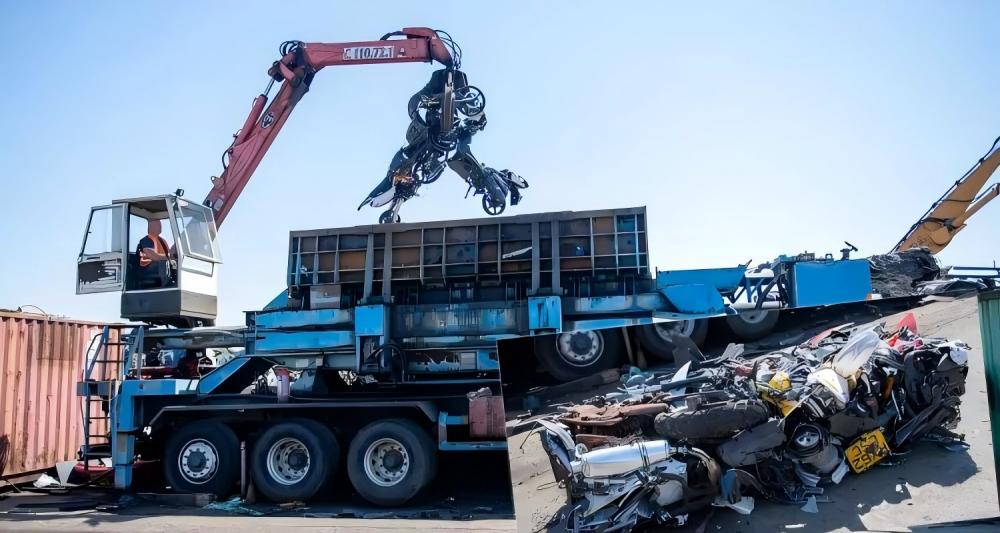
The purchase price is only the beginning. Buyers must account for several ‘hidden’ costs that can impact the budget. Shipping and logistics for a machine that weighs 20 to 50 tons can be substantial, especially for international orders. Furthermore, the installation process often requires a reinforced concrete foundation to handle the vibration and weight of the machine. If your yard’s current flooring is not up to spec, this can add thousands of dollars to the project.
Operational costs such as hydraulic oil and electricity are ongoing. A large baler can require hundreds of gallons of specialized hydraulic fluid, which must be filtered and changed periodically. Additionally, the electrical requirements of high-horsepower motors may necessitate an upgrade to your facility’s power grid. It is also wise to budget for a ‘critical spares’ kit, including seals, filters, and sensors, to ensure that a minor failure doesn’t result in days of lost production.
ROI Calculation: Is the Investment Worth It?
Calculating the Return on Investment (ROI) for a car body baler involves comparing the cost of the machine against the savings in logistics and the increase in material value. For example, if baling your scrap allows you to fit 25 tons on a trailer instead of 10 tons of loose shells, you are effectively cutting your shipping costs by 60%. Over a year, these savings can easily reach tens of thousands of dollars.
Furthermore, many shredding facilities and steel mills offer a premium for baled material because it is easier to handle and more efficient to melt. To calculate your ROI, estimate your monthly volume, the expected increase in price per ton, and the reduction in transport trips. Most high-volume yards find that a well-chosen baler pays for itself within 18 to 24 months of operation. This calculation should also factor in the reduced labor costs if moving from a manual cutting process to an automated baling process.
Buying Advice: How to Choose the Right Vendor
When you are ready to purchase, selecting the right manufacturer is as important as selecting the right machine. Look for companies like HARSLE that have a proven track record in metal fabrication machinery. A reputable vendor should provide detailed technical specifications, clear warranty terms, and accessible after-sales support. Ask for references or case studies from other scrap yards to see how the machines perform in real-world conditions.
Before finalizing a deal, conduct a site audit. Ensure you have enough space for the baler, the loading equipment (like a crane or forklift), and the storage of finished bales. Consider the ‘flow’ of your yard; the baler should be positioned to minimize the movement of raw scrap. Finally, always insist on a factory acceptance test (FAT) or a video demonstration of the exact machine you are buying to ensure it meets the promised cycle times and pressure ratings.
Safety Factors: Protecting Your Workforce
Safety is the most critical aspect of Choosing Car Body Baler: Capacity, Power, Safety Factors. These machines exert enough force to crush steel; therefore, they pose a significant risk if not handled correctly. Modern balers must include emergency stop buttons at multiple locations, safety interlocks on access doors, and protective guarding around moving parts. Remote control operation is a highly recommended safety feature, as it allows the operator to stay at a safe distance from the press box during the cycle.
Structural integrity is also a safety factor. A frame that flexes under pressure can eventually lead to catastrophic metal fatigue. Ensure the machine is CE certified or meets local industrial safety standards. Operator training is the final piece of the safety puzzle. Even the safest machine can be dangerous in untrained hands. Choose a supplier that offers comprehensive training modules for your staff, covering both daily operation and emergency procedures.
Frequently Asked Questions (FAQ)
1. What is the average cycle time for a car body baler?
Most industrial car body balers have a cycle time between 60 and 90 seconds. This includes the time to compress the material and return the rams to the starting position. High-speed models with advanced hydraulics can achieve cycles under 50 seconds, which is crucial for high-volume operations.
2. Can a car body baler handle engines and transmissions?
While some heavy-duty balers can crush engines, it is generally recommended to remove them before baling. Engines contain heavy cast iron and aluminum components that can damage the wear plates of the baler. Additionally, removing fluids and engines is often a legal requirement for environmental recycling standards.
3. Should I choose a mobile or stationary baler?
This depends on your business model. If you have multiple yards or perform on-site clearing for clients, a mobile (trailer-mounted) baler is essential. However, if all your processing happens in one location, a stationary baler is typically more robust, easier to maintain, and offers a more stable platform for high-pressure operations.
4. How often does a car baler require maintenance?
Daily checks should include hydraulic fluid levels, hose inspections, and cleaning debris from the tracks. A more thorough maintenance routine, including filter changes and bolt tightening, should occur every 500 hours of operation. Proper lubrication of moving parts is the most effective way to prevent premature wear.
5. What power supply is needed for an industrial baler?
Most car body balers require a three-phase electrical supply (380V-480V). The amperage required depends on the motor size, which typically ranges from 30kW to over 100kW. For remote locations without grid access, many balers can be configured with integrated diesel generators.
6. How do I determine the right box size?
Measure the largest vehicles you typically process. A box size of 5000mm x 2000mm is standard for most passenger cars. If you frequently handle long-wheelbase vans or trucks, you may need a custom-extended box or a machine with a ‘pre-compression’ lid that can fold the material into the chamber.
Conclusion
Investing in a car body baler is a transformative step for any scrap metal business. By focusing on the core pillars of Choosing Car Body Baler: Capacity, Power, Safety Factors, you ensure that your investment yields high returns while keeping your operators safe. Whether you prioritize the mobility of a portable unit or the raw power of a stationary heavy-duty press, understanding the technical specifications and hidden costs will lead you to the right choice. Partnering with an experienced manufacturer like HARSLE ensures you receive a machine built for durability, efficiency, and the demanding environment of modern metal recycling.