Car Body Baler Technical Guide: How It Works, Key Components, and Compression Efficiency

Technical Overview of Car Body Baler Systems
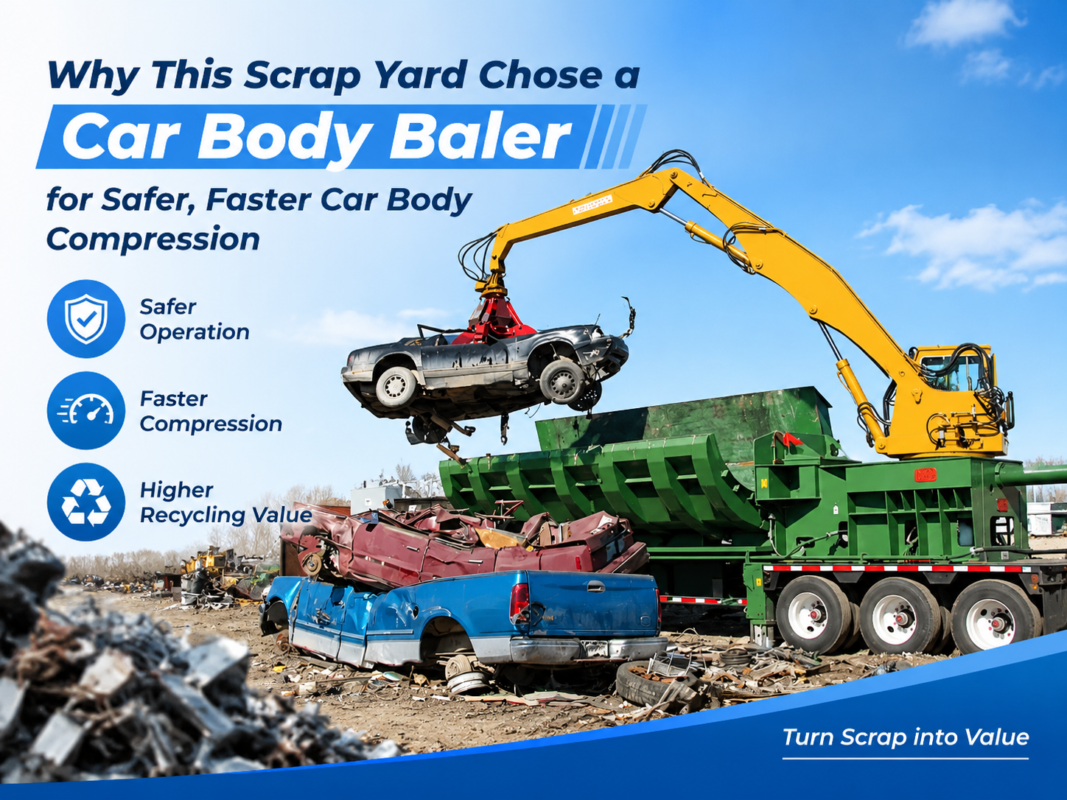
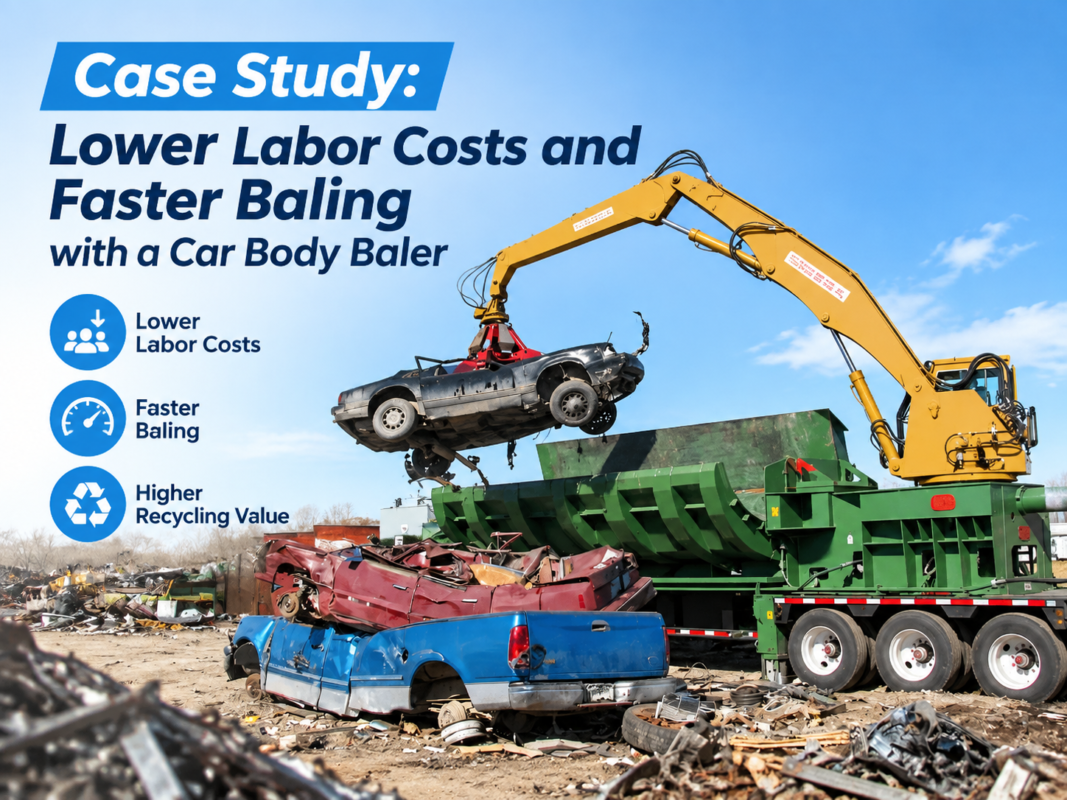
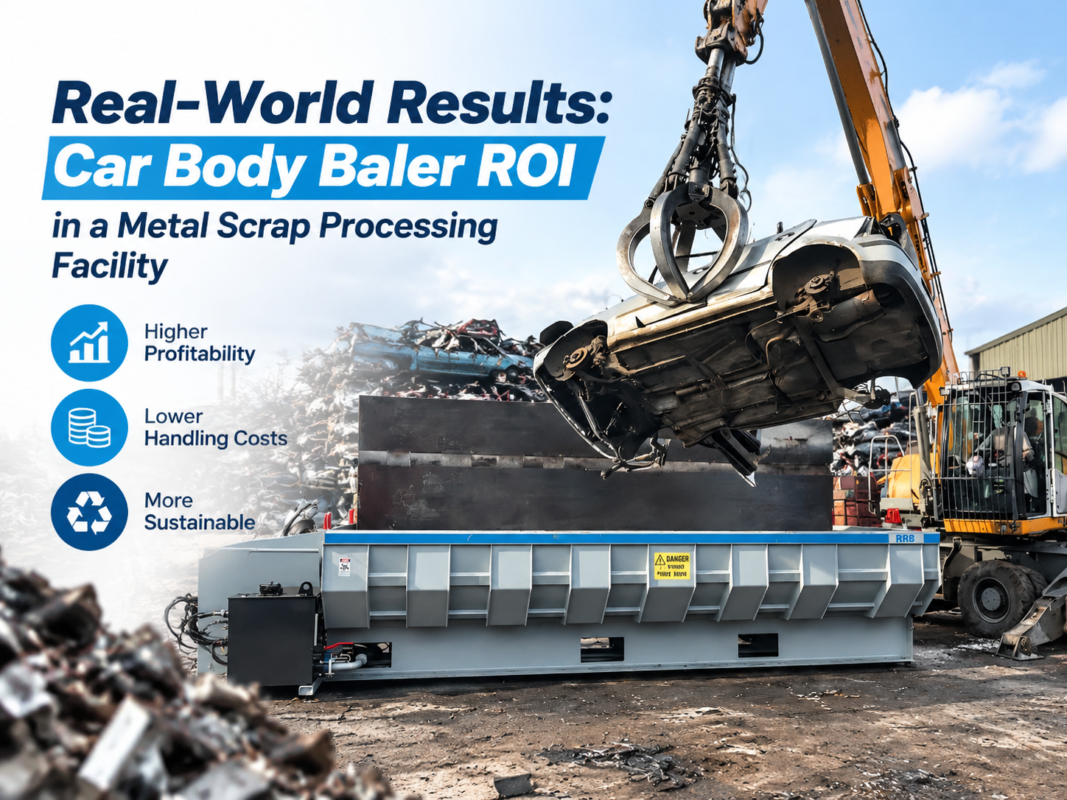
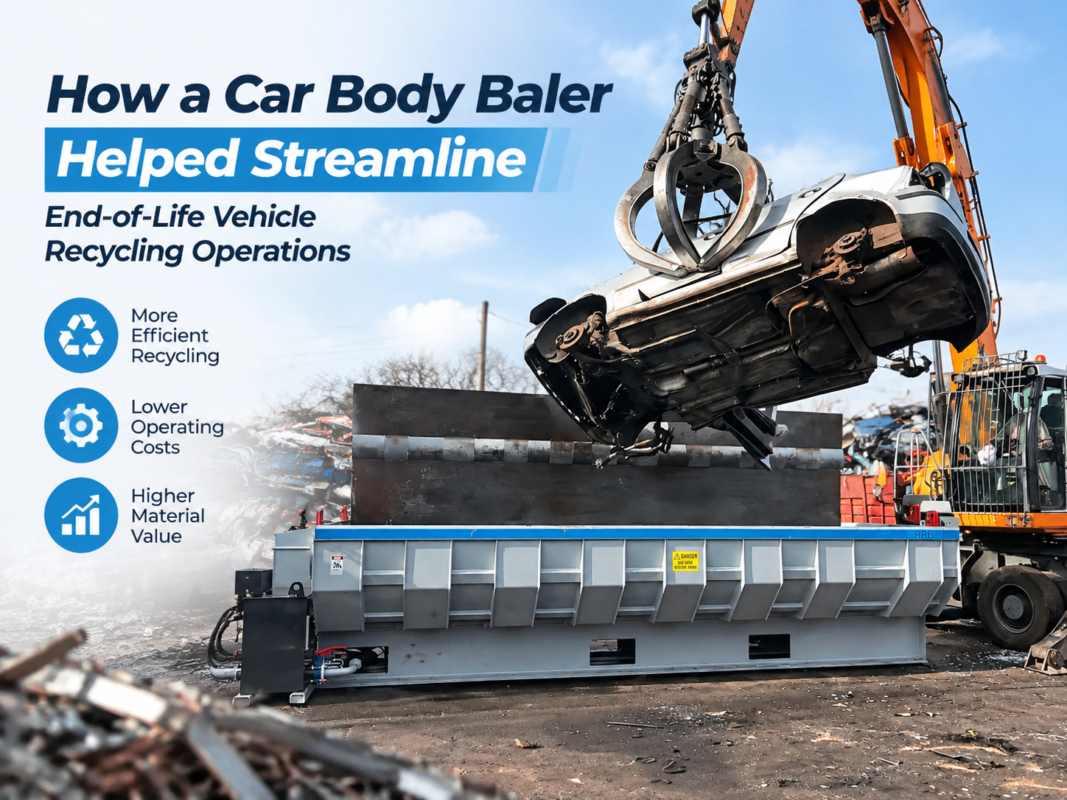
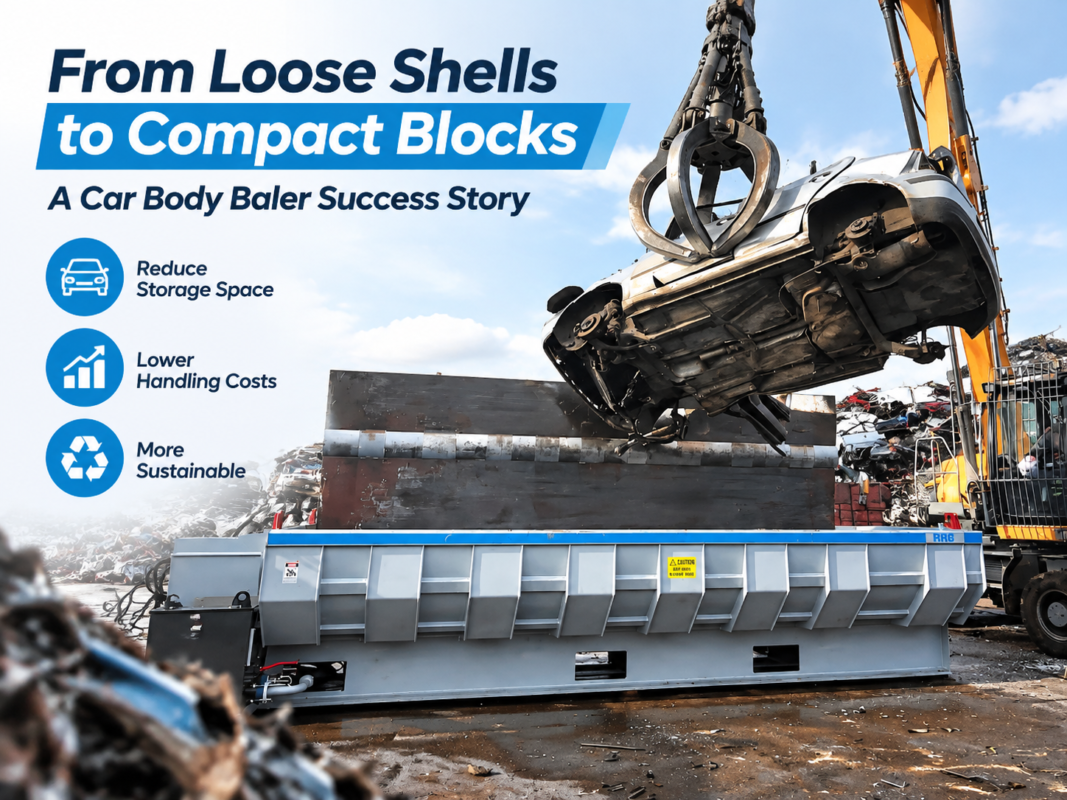
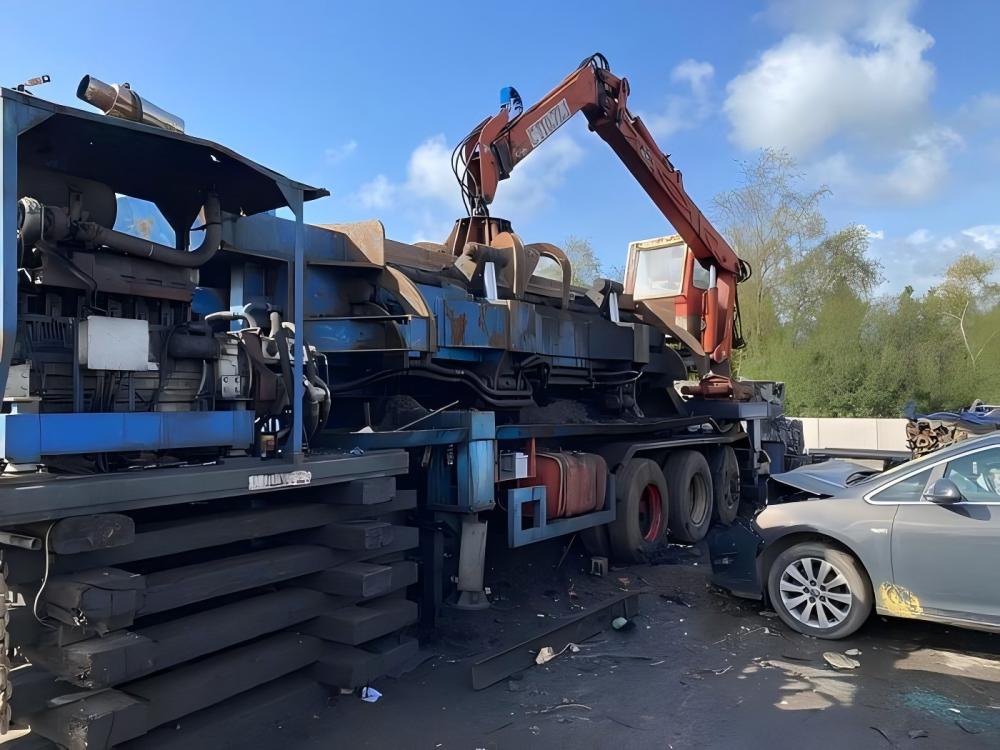
In the modern scrap metal recycling industry, the car body baler stands as a cornerstone of operational efficiency. These massive machines are engineered to transform end-of-life vehicles (ELVs) into dense, manageable cubes, significantly reducing the volume of scrap for transport and smelting. The fundamental principle behind a car body baler is the application of extreme hydraulic force to overcome the structural integrity of automotive steel and aluminum frames. By utilizing multi-stage compression, these machines ensure that the air gaps within a vehicle structure are eliminated, resulting in a bale that meets the strict density requirements of global steel mills.
The evolution of the car body baler has moved from simple vertical presses to sophisticated, multi-ram horizontal systems. Modern units, such as those manufactured by HARSLE, integrate advanced PLC (Programmable Logic Controller) systems that monitor pressure, temperature, and cycle times in real-time. This technical sophistication allows for a ‘set and forget’ operation where the machine automatically adjusts its force based on the resistance encountered during the compression cycle. This not only protects the machine from structural fatigue but also optimizes energy consumption by only drawing maximum power when the material resistance peaks.
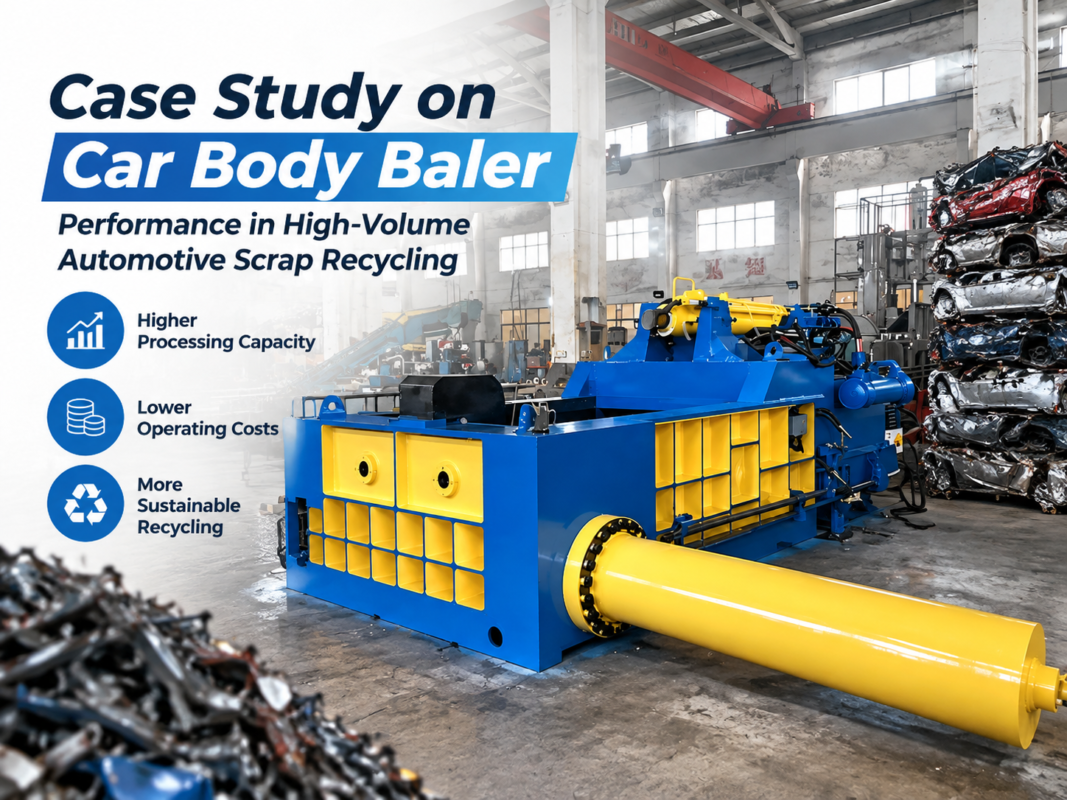
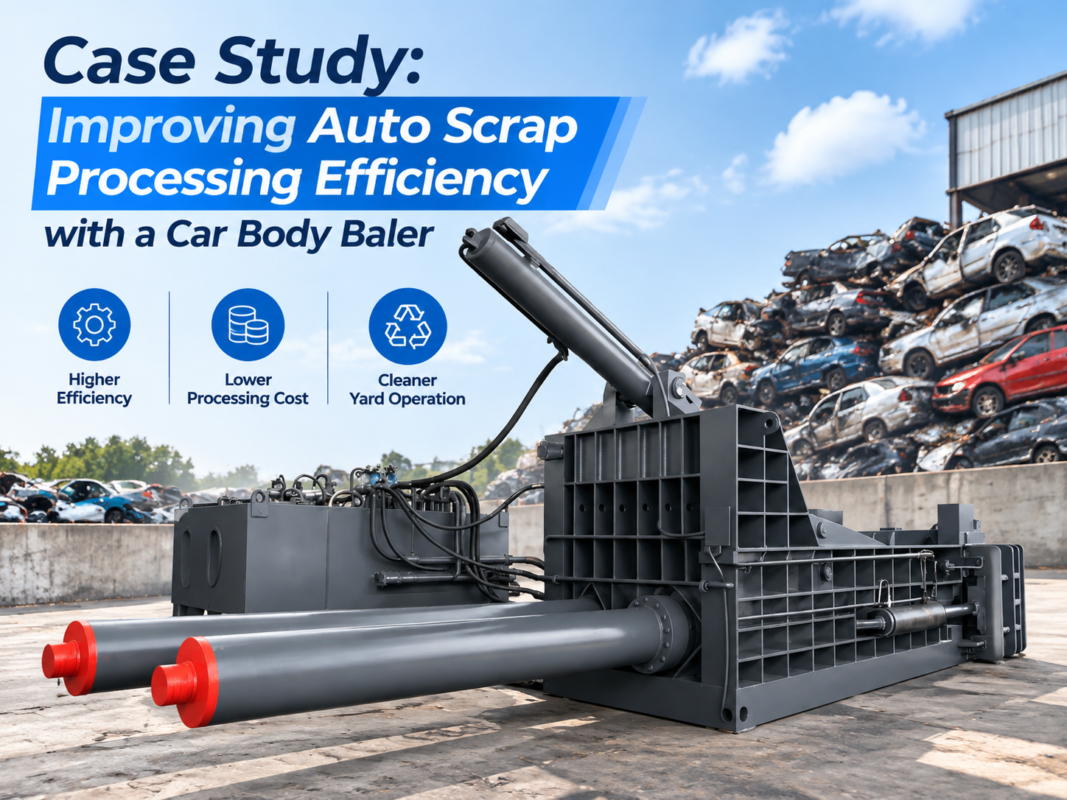
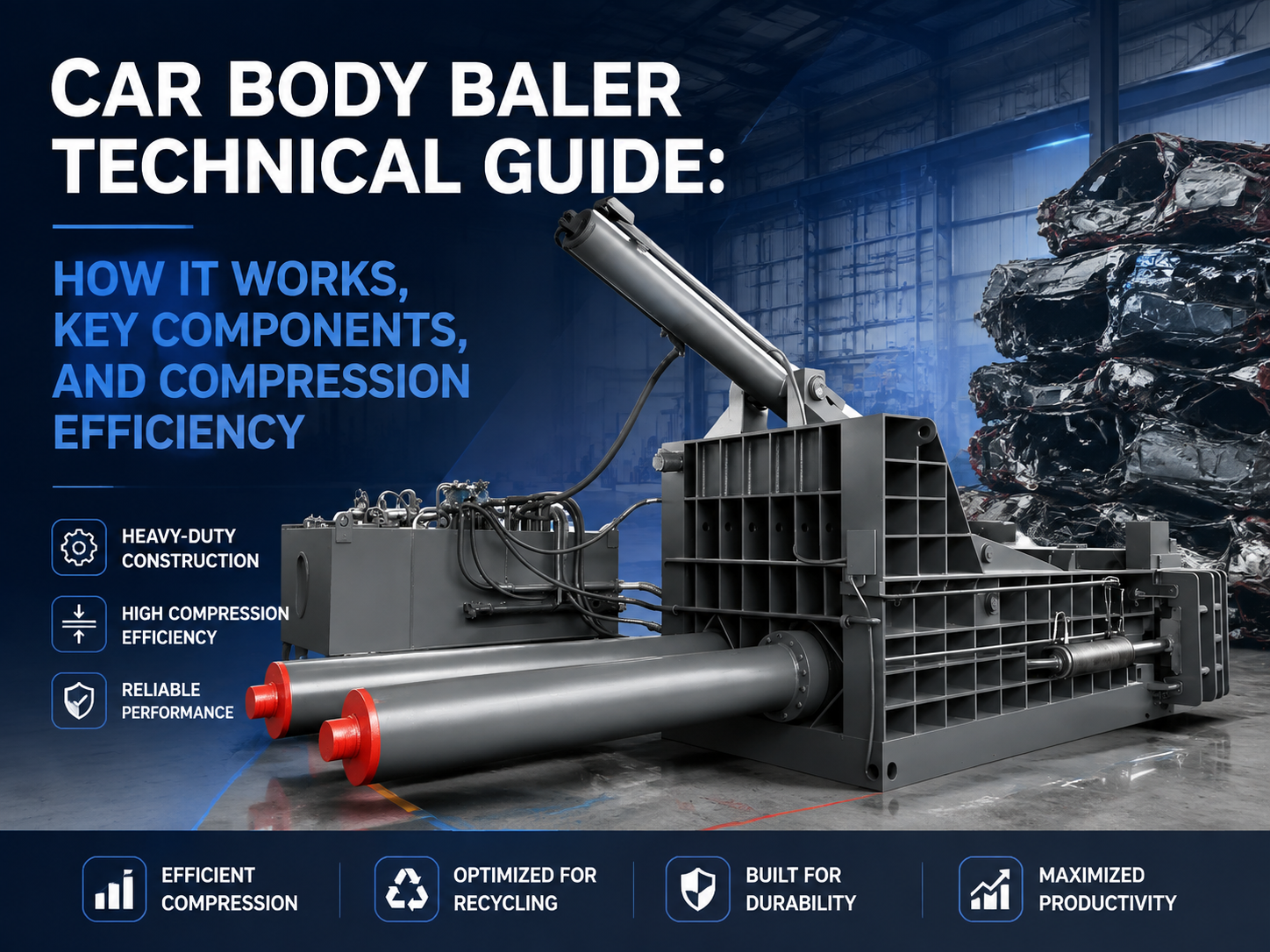
From a mechanical standpoint, the car body baler operates within a reinforced chamber, often referred to as the ‘baling box.’ This box must withstand immense internal pressures, often exceeding 200 bars. The interior is typically lined with high-wear resistant plates, such as Hardox, which can be replaced as they erode over years of contact with abrasive scrap metal. The technical synergy between the hydraulic power unit and the mechanical structure determines the machine’s overall throughput and longevity.
Core Components of a High-Performance Baler
1. The Hydraulic Power Unit (HPU)
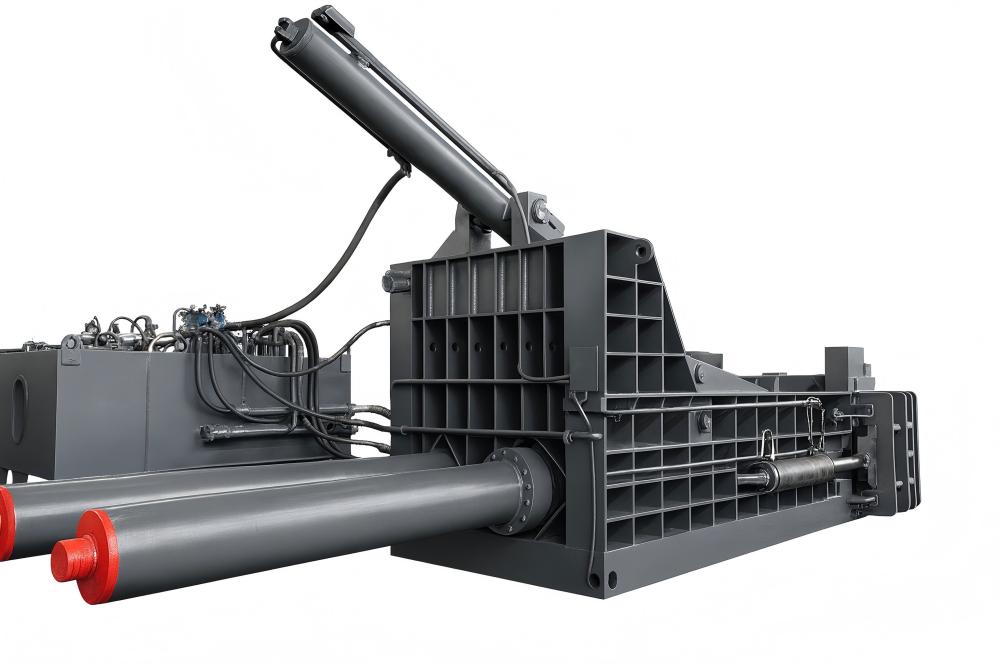
The HPU is the heart of the car body baler. It consists of high-pressure pumps (often axial piston pumps), electric motors, oil reservoirs, and a complex manifold of valves. In a Car Body Baler Technical : It Works, Key Components, Compression Efficiency context, the HPU must deliver consistent flow rates to ensure smooth cylinder movement. High-end models utilize variable displacement pumps that adjust the flow based on the load, which prevents the hydraulic oil from overheating and reduces wear on the seals. The integration of high-quality filtration systems within the HPU is critical, as even microscopic contaminants can lead to valve failure or cylinder scoring.
2. Compression Cylinders and Rams
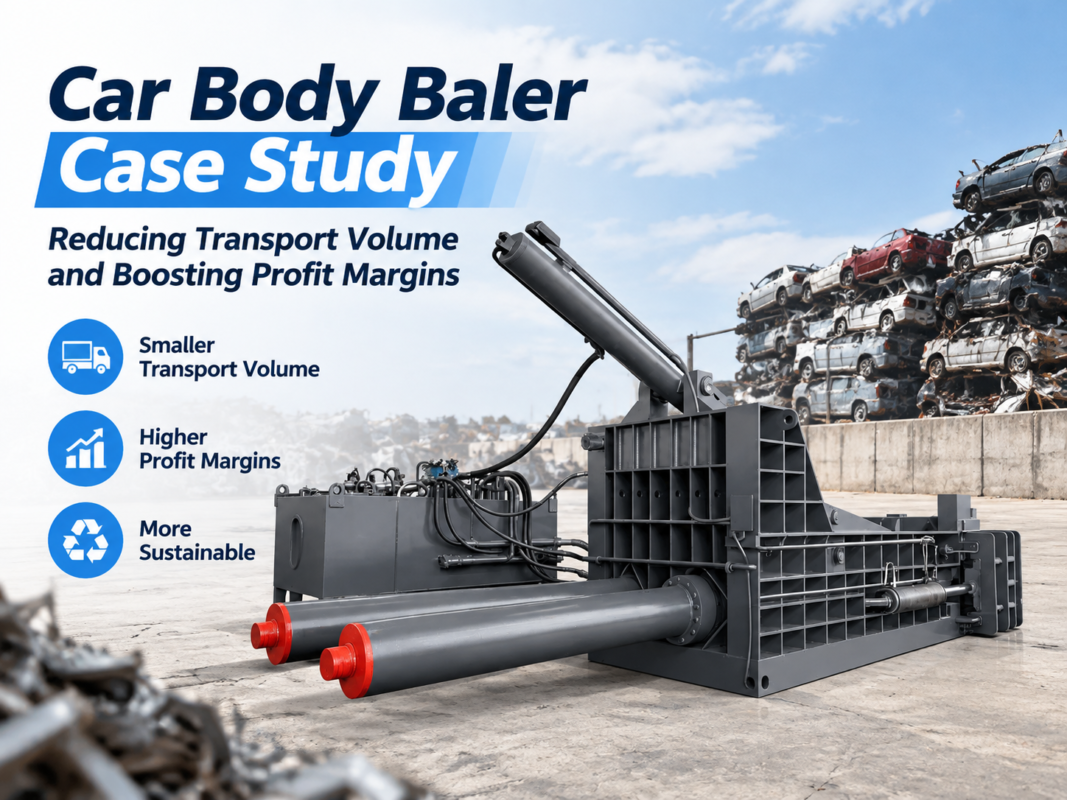
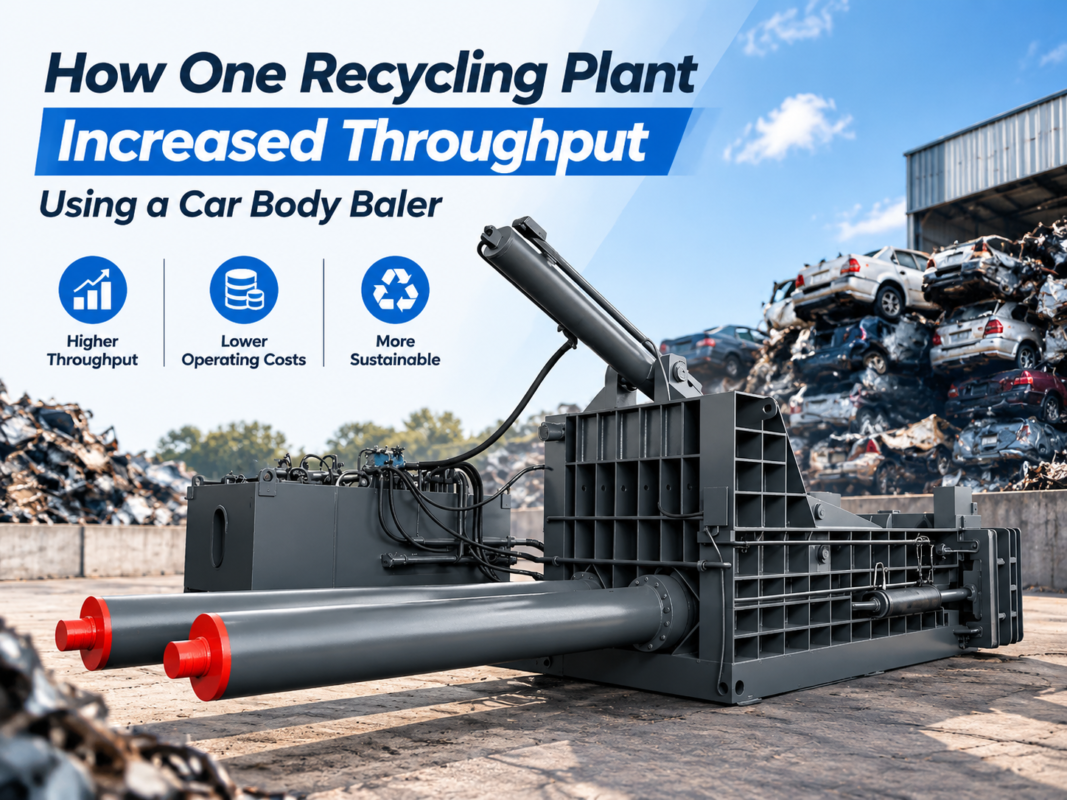
Most car body balers utilize a three-way compression system. The first ram (the lid or wing) performs the initial crush, folding the car into the chamber. The second ram (side ram) compresses the material laterally, and the third ram (main ram) provides the final longitudinal squeeze to form the bale. These cylinders are manufactured from high-tensile steel with chrome-plated rods to resist corrosion and wear. The seals used in these cylinders must be capable of handling rapid pressure fluctuations without leaking, often employing a combination of U-cups and buffer seals.
3. The Baling Chamber and Wear Liners
The chamber is where the actual transformation occurs. Because scrap metal is incredibly abrasive, the chamber walls are not the structural frame itself but are protected by replaceable liners. These liners are usually bolted or welded into place and feature a serrated or grooved surface to help ‘grip’ the metal during compression. The structural frame of the chamber is typically a heavy-duty welded construction, stress-relieved to prevent cracking under the repetitive loading cycles of a 24/7 recycling operation.
4. Control Systems and Sensors
Modern balers are no longer purely mechanical. They rely on a suite of sensors, including linear transducers to track ram position, pressure transducers to monitor hydraulic force, and temperature sensors for the oil and motor windings. A Siemens or Mitsubishi PLC typically manages these inputs, providing the operator with a touch-screen interface (HMI) to adjust bale size, cycle speed, and diagnostic monitoring. This level of control is essential for maintaining compression efficiency and ensuring operator safety through integrated emergency stop loops and light curtains.
Understanding Compression Efficiency
Compression efficiency in a car body baler is defined by the ratio of the final bale density to the energy consumed and the time taken per cycle. A highly efficient baler doesn’t just push harder; it pushes smarter. This involves optimizing the ‘dwell time’—the moment at the end of the stroke where the ram holds the pressure to allow the metal to take a permanent set, preventing ‘spring-back’ when the ram retracts.
Several factors influence this efficiency. First is the hydraulic circuit design. Using regenerative circuits can speed up the ram movement during the ‘no-load’ portion of the cycle, only switching to high-pressure mode when resistance is detected. Second is the geometry of the baling chamber. A well-designed chamber ensures that the force is distributed evenly across the scrap, preventing ‘dead zones’ where the metal remains loose. Finally, the operator’s skill in loading the machine plays a role, though automated loading systems are increasingly common to standardize this variable.
To maximize efficiency, HARSLE machines often incorporate ‘pre-fill’ valves. These valves allow large volumes of oil to flow into the cylinders by gravity or low pressure during the rapid advance phase, switching to the high-pressure pump only for the final squeeze. This significantly reduces the cycle time, allowing for more bales per hour without increasing the size of the electric motors.
Calculation Method for Baling Performance
Engineers and facility managers must be able to calculate the expected performance of a car body baler to ensure it meets their production targets. The primary calculation involves determining the Total Pressing Force, which is the product of the hydraulic pressure and the surface area of the cylinder piston.
Formula: F = P × A
Where F is the force in Newtons, P is the pressure in Pascals, and A is the area of the piston in square meters. For a baler rated at 250 bars (25 MPa) with a 300mm diameter cylinder, the force would be approximately 1,767 kN (or about 180 tons).
Another critical metric is Bale Density. This is calculated by dividing the weight of the scrap vehicle by the volume of the finished bale. High-density bales (typically > 450 kg/m³) are preferred because they maximize the weight capacity of shipping containers and trucks, directly reducing logistics costs. Throughput is then calculated by: (Bale Weight × Cycles per Hour) / 1000 = Tons per Hour. Understanding these calculations allows buyers to compare different models based on actual performance data rather than just marketing specifications.
Technical Parameter Table
| Parameter | Standard Duty Model | Heavy Duty Model | Ultra-High Capacity |
|---|---|---|---|
| Main Press Force (Tons) | 125 – 160 | 200 – 250 | 315 – 500 |
| Chamber Size (mm) | 1200 x 700 x 600 | 1600 x 1000 x 800 | 2000 x 1500 x 1000 |
| Bale Size (mm) | 300 x 300 | 400 x 400 | 600 x 600 |
| Cycle Time (Seconds) | 90 – 120 | 70 – 90 | 50 – 70 |
| Motor Power (kW) | 22 – 37 | 45 – 75 | 90 – 150 |
| Operation Mode | Manual / Semi-Auto | PLC Automatic | Fully Automated / Remote |
Common Engineering Mistakes in Baler Operation
One of the most frequent mistakes in operating a car body baler is overloading the chamber. While it may seem efficient to cram as much metal as possible into the box, this often leads to ‘bridging,’ where the metal wedges against the walls and prevents the rams from completing their stroke. This causes the hydraulic system to bypass at maximum pressure, generating excessive heat and potentially damaging the pump without actually forming a proper bale.
Another common issue is neglecting hydraulic oil health. Many operators fail to realize that hydraulic oil is not just a lubricant; it is a power transmission medium. Over time, the oil shears down, losing its viscosity, and accumulates moisture. This leads to cavitation in the pumps and internal leakage in the valves. A technical guide would be incomplete without emphasizing the need for regular oil analysis and the use of high-quality anti-wear (AW) hydraulic fluids.
Finally, ignoring the wear plate clearances can be catastrophic. As the liners wear down, the gap between the ram and the chamber wall increases. Small pieces of scrap can get wedged in these gaps, acting like a chisel and scoring the chamber walls or even jamming the ram. Maintaining the correct tolerances through regular inspection and liner replacement is vital for the structural integrity of the machine.
Selection Checklist for Industrial Buyers
- Material Throughput: Calculate your daily scrap volume. Ensure the machine’s cycle time and bale weight can handle your peak loads with a 20% safety margin.
- Bale Density Requirements: Check with your local steel mill or exporter. Do they require a specific density or bale size for their furnaces or containers?
- Power Supply Constraints: High-capacity balers require significant electrical amperage. Ensure your facility’s transformer can handle the startup current of large motors (or consider soft-starters/VFDs).
- Cooling System Type: If you operate in a hot climate, an air-cooled heat exchanger may not be enough; you might need a water-cooled system or an oversized industrial chiller.
- Maintenance Accessibility: Look for designs where hydraulic hoses and valves are easily accessible. A machine that is hard to service will inevitably suffer from neglected maintenance.
- Safety Compliance: Ensure the machine meets CE, OSHA, or local safety standards, including proper guarding and dual-channel safety circuits.
- Automation Level: Decide if you need a fully automatic system with conveyors or if a semi-automatic system with a crane operator is more cost-effective for your scale.
Frequently Asked Questions (FAQ)
What is the average lifespan of a car body baler?
With proper maintenance, a high-quality car body baler from a reputable manufacturer like HARSLE can last 15 to 20 years. The structural frame is built for longevity, while the hydraulic components and wear liners are designed to be replaced as part of a standard maintenance cycle.
Can a car body baler process other types of scrap?
Yes, car body balers are versatile. They can process white goods (appliances), light structural steel, aluminum extrusions, and copper wire. However, they should not be used for heavy plate steel or large engine blocks unless specifically rated for such high-density materials, as this can cause frame deformation.
How often should the hydraulic oil be changed?
Typically, hydraulic oil should be changed every 2,000 to 4,000 operating hours. However, it is better to rely on oil analysis. If the oil remains clean, dry, and within viscosity specs, it can last longer. Conversely, if the machine runs hot, the oil may oxidize and need changing sooner.
Why is my baler not reaching full pressure?
This is usually caused by one of three things: a worn-out hydraulic pump that can no longer maintain flow at high pressure, a leaking seal in the main cylinder allowing oil to bypass the piston, or a pressure relief valve that is stuck open or incorrectly adjusted. A systematic pressure test of the circuit can isolate the fault.
Does the bale size affect the price of the scrap?
Indirectly, yes. Steel mills prefer consistent bale sizes and densities because it makes their charging process more predictable. Furthermore, if your bales are sized perfectly for export containers, you reduce your shipping costs, effectively increasing your profit margin per ton of scrap sold.
What safety features are mandatory for these machines?
Mandatory features include emergency stop buttons at multiple stations, safety interlocks on the chamber doors, pressure relief valves to prevent explosions, and acoustic alarms to warn personnel before the machine starts its cycle. Many modern machines also include remote monitoring to alert managers of unsafe operating conditions.