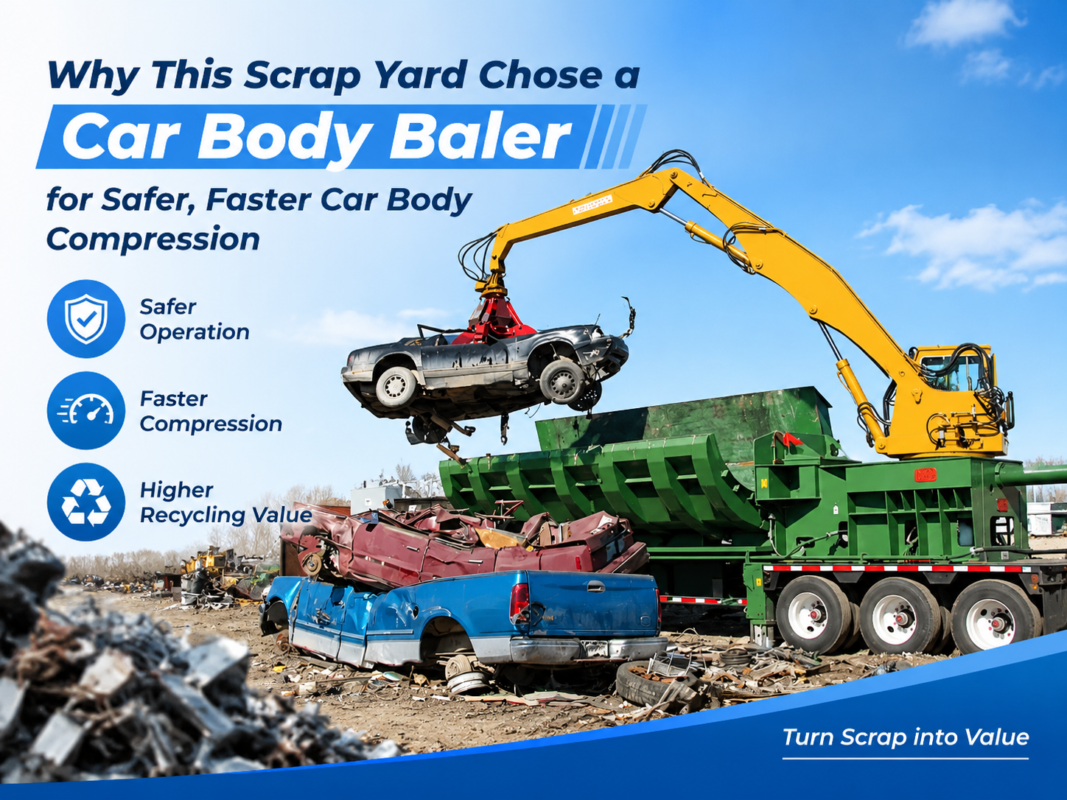
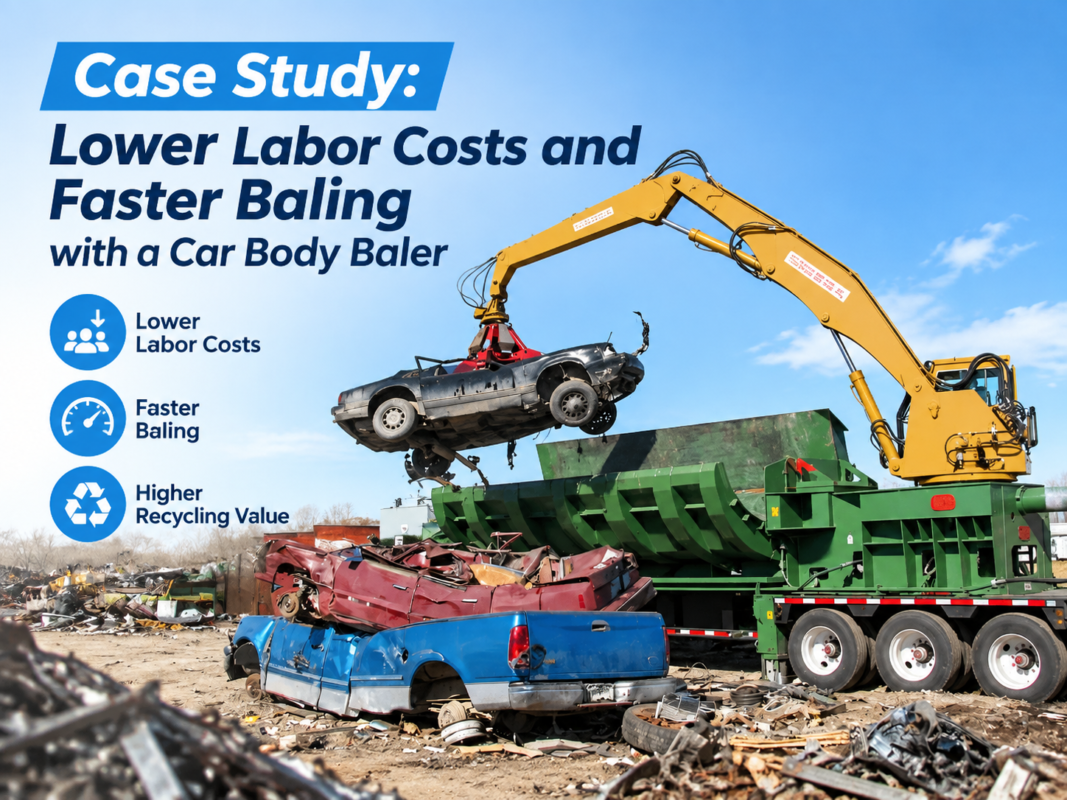
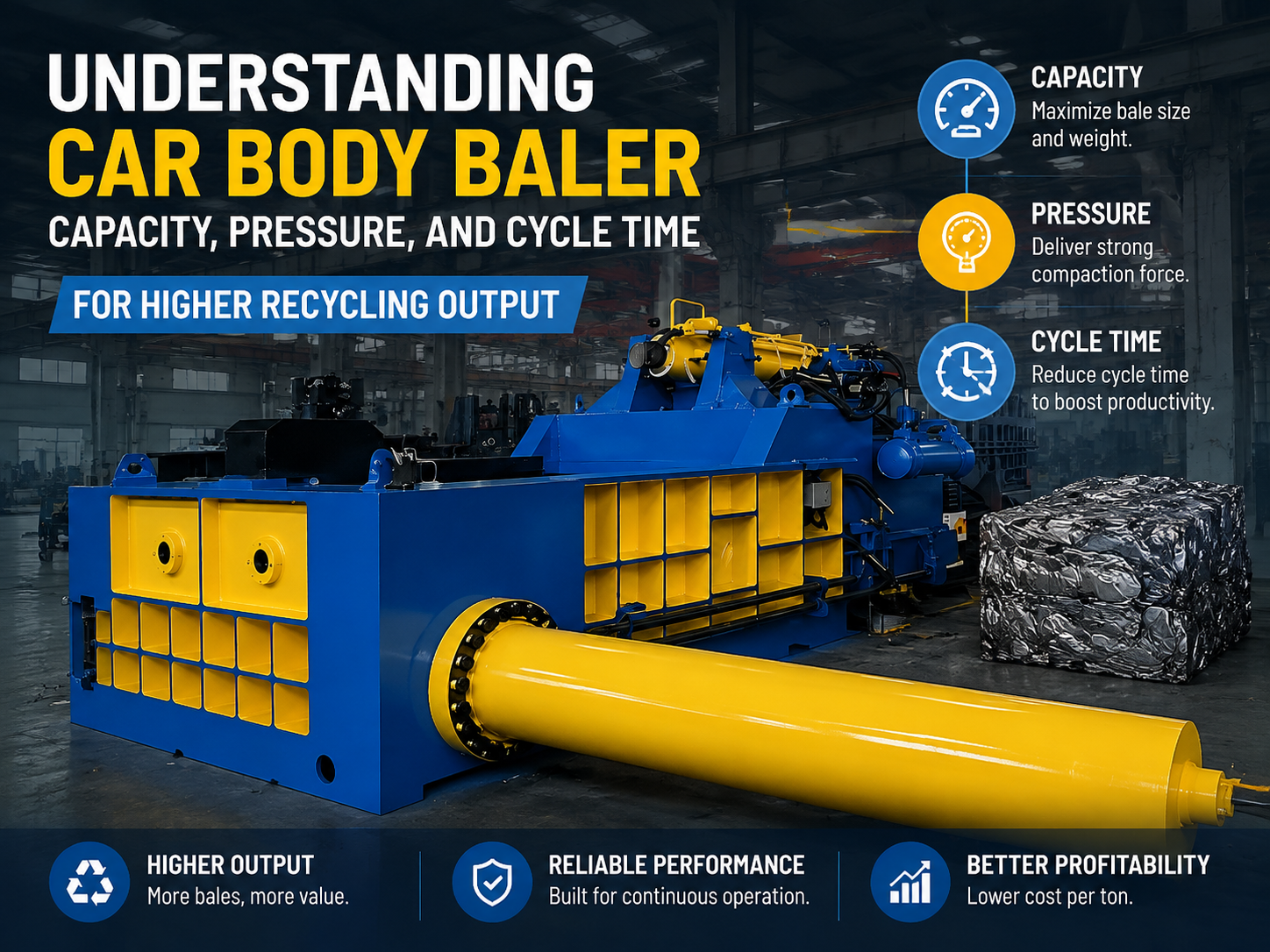
Understanding Car Body Baler Capacity, Pressure, and Cycle Time for Higher Recycling Output

Technical Overview of Modern Car Body Balers
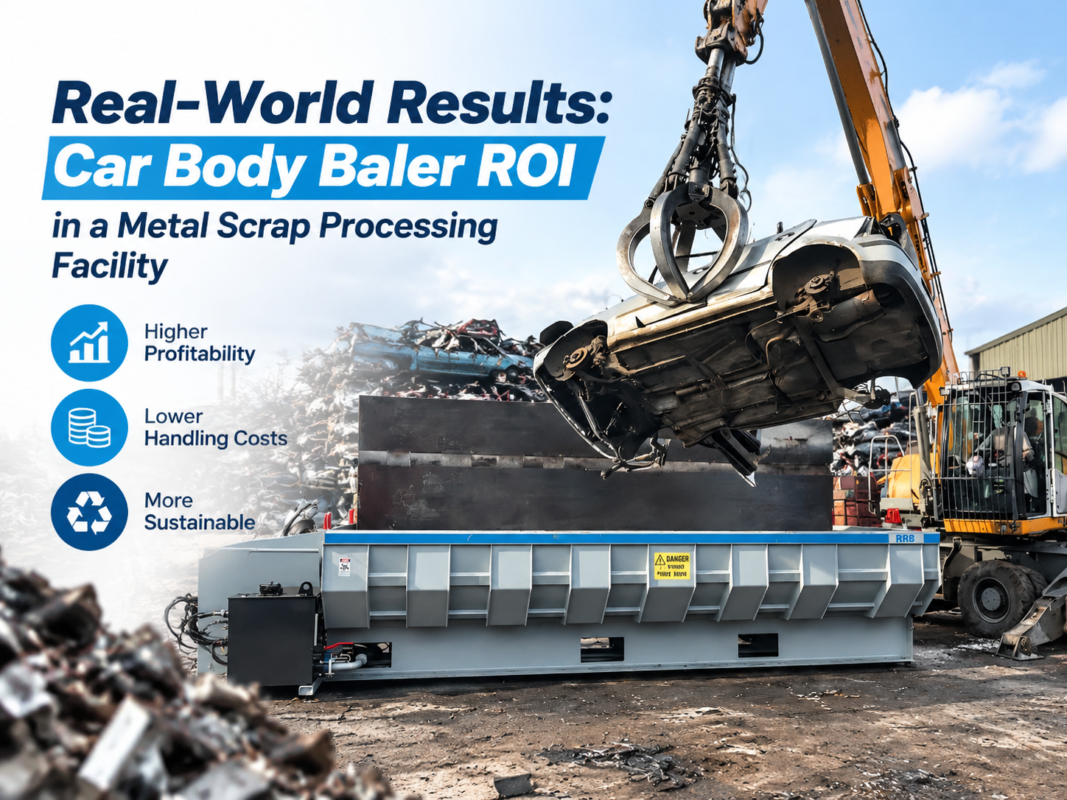
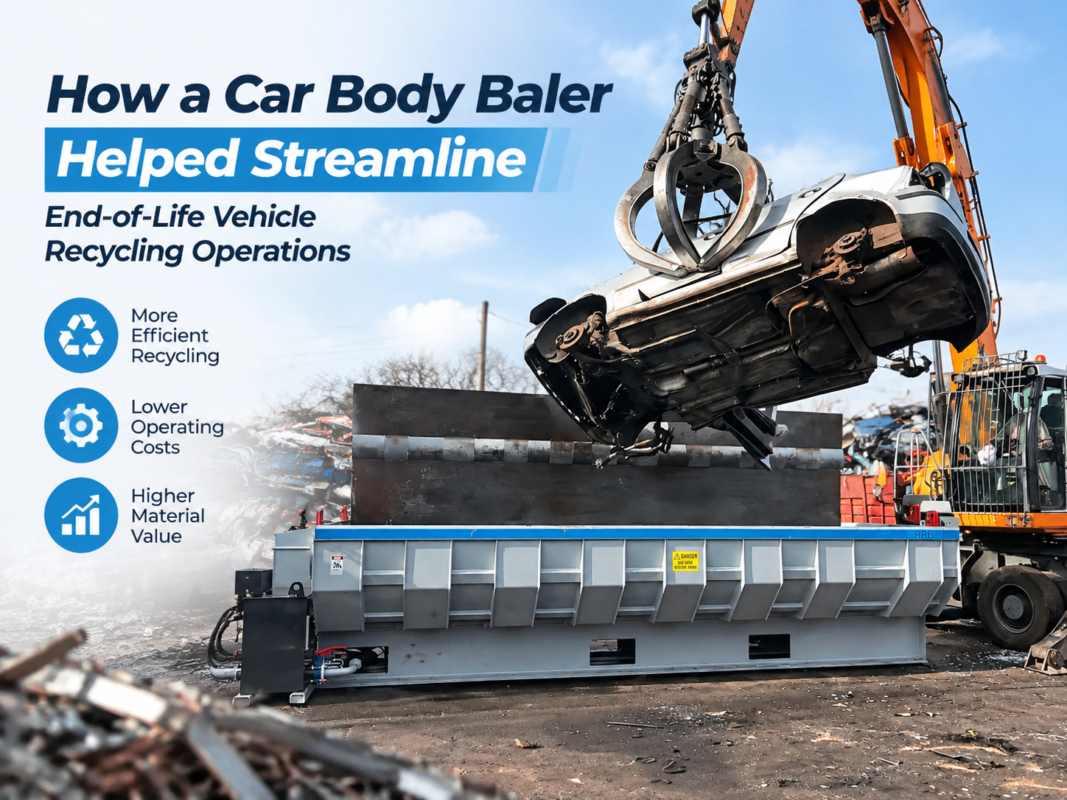
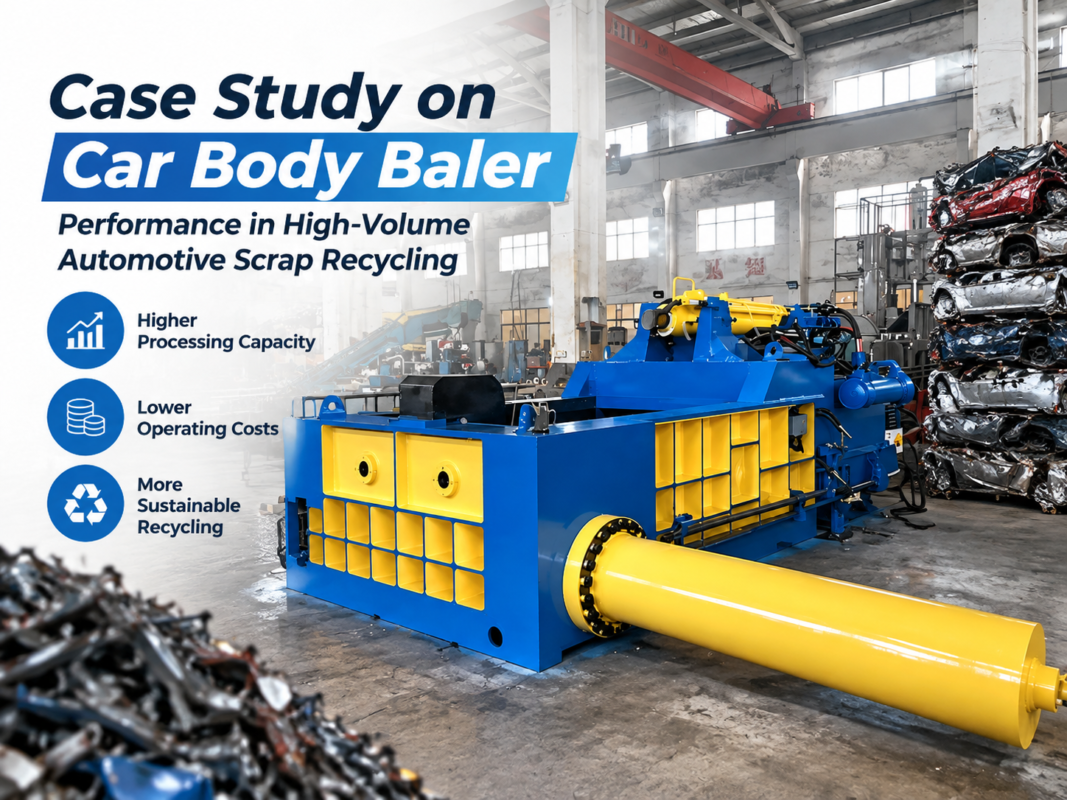
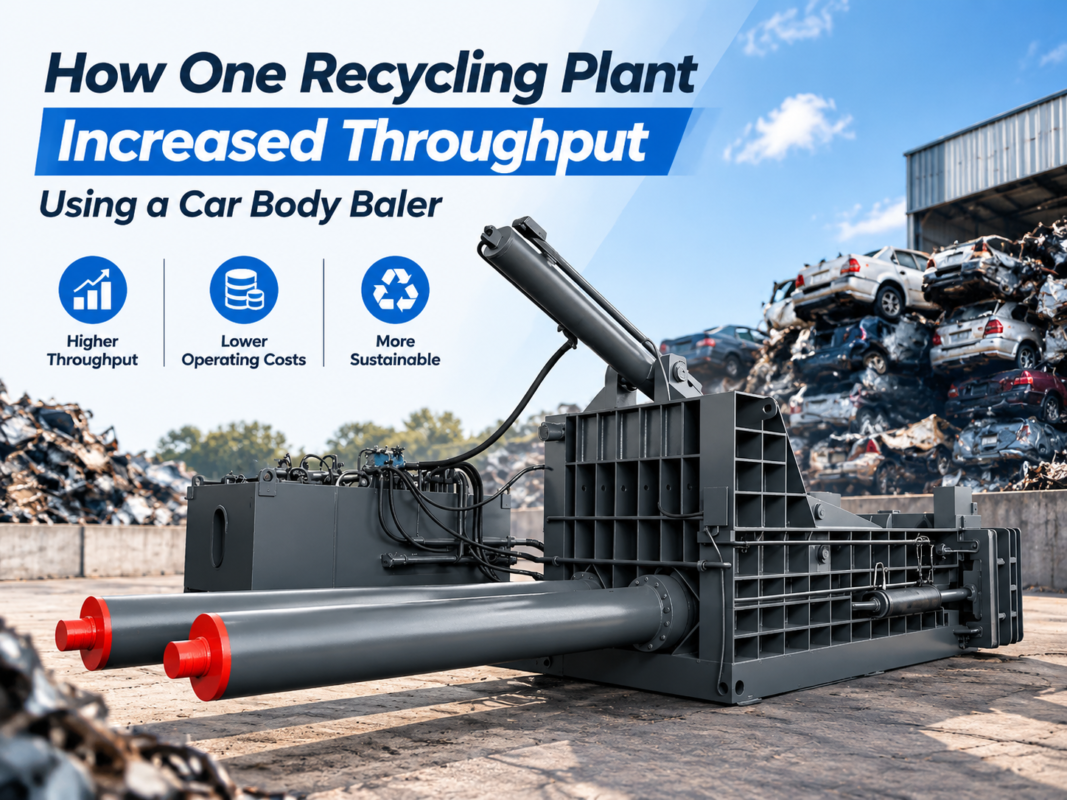
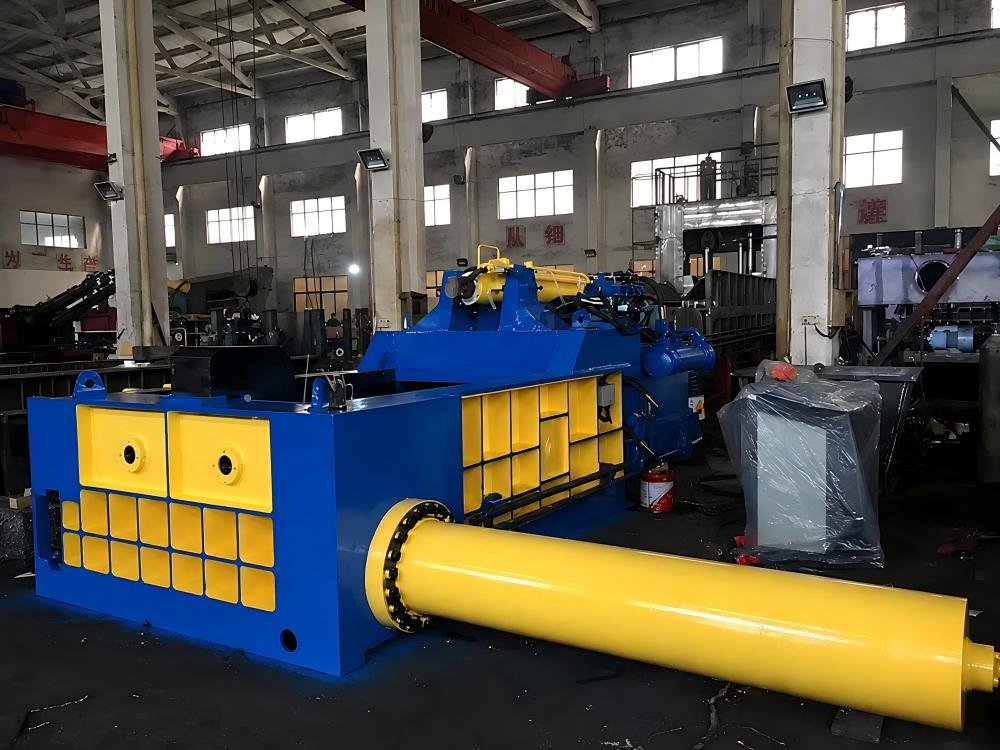
In the high-stakes world of scrap metal management, the efficiency of a recycling facility is often measured by its ability to process End-of-Life Vehicles (ELVs) into dense, transportable units. The car body baler stands as the cornerstone of this process. Understanding Car Body Baler Capacity, Pressure, Cycle Time Higher Recycling Output is not just a matter of reading a spec sheet; it involves a deep dive into hydraulic engineering, structural integrity, and operational logistics. A baler is essentially a massive hydraulic press designed to overcome the structural rigidity of automotive frames, collapsing them into compact cubes or rectangular bales.
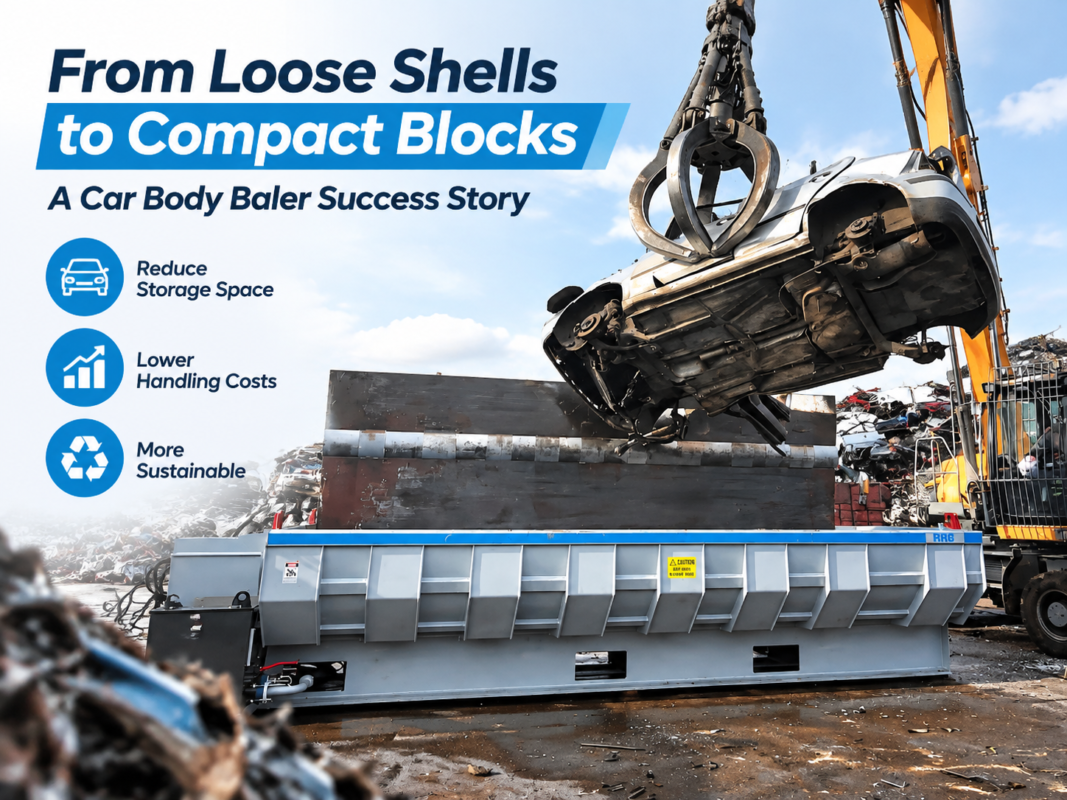
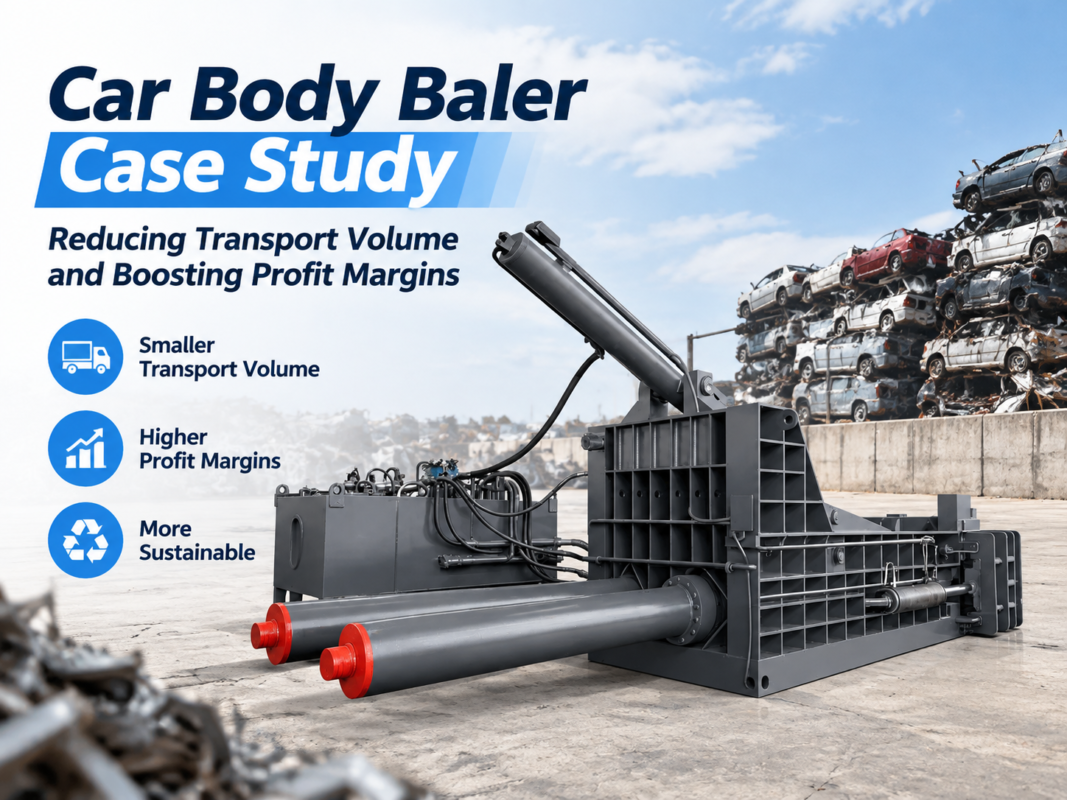
The primary function of these machines is volume reduction. By reducing the volume of a car body by up to 90%, recyclers can significantly lower logistics costs, as more weight can be packed into a single shipping container or truck bed. However, the physics behind this transformation is complex. It requires a synchronized dance between the main compression ram, the side rams, and often a heavy-duty lid or ‘clamshell’ that provides the initial pre-compression. HARSLE engineering focuses on optimizing these movements to ensure that energy consumption is minimized while throughput is maximized.
Modern balers have evolved from simple mechanical presses to sophisticated automated systems. Today’s machines utilize advanced PLC (Programmable Logic Controller) systems to monitor pressure levels in real-time, adjusting the flow of hydraulic fluid to ensure that the machine operates within its peak efficiency curve. This technical overview sets the stage for understanding how specific parameters like pressure and cycle time directly correlate to the bottom-line profitability of a recycling yard.
Core Parameters: Capacity, Pressure, and Cycle Time
1. Processing Capacity
Capacity in the context of a car body baler is typically measured in tons per hour (TPH). This figure is influenced by the size of the baling chamber, the speed of the hydraulic rams, and the density of the incoming scrap. A machine with a large chamber can accept full-sized SUVs without prior dismantling, which saves labor costs but requires significantly more hydraulic force to compress. Understanding Car Body Baler Capacity, Pressure, Cycle Time Higher Recycling Output requires recognizing that capacity is a theoretical maximum that is often limited by the speed of the loading crane and the skill of the operator.
2. Hydraulic Pressure and Force
Pressure is the ‘muscle’ of the baler. It is usually expressed in terms of the total force exerted by the cylinders (measured in tons) or the system pressure (measured in PSI or Bar). For car bodies, a high nominal pressure is required to crush the engine mounts, pillars, and reinforced frames. If the pressure is too low, the bale will not reach the required density, leading to ‘spring-back’ where the metal expands after the pressure is released. High-quality balers utilize multi-stage pumps that provide high flow at low pressure for fast movement, and low flow at high pressure for the final squeeze.
3. Cycle Time Dynamics
Cycle time refers to the duration from the moment the lid starts to close until the bale is ejected and the rams return to their starting positions. A faster cycle time directly increases the number of bales produced per shift. However, cycle time is not just about the speed of the rams; it includes the ‘dwell time’—the period where the machine holds the pressure to ensure the bale stays compacted. Reducing cycle time without compromising bale integrity is the ultimate goal of hydraulic optimization. This is often achieved through regenerative hydraulic circuits that recycle fluid within the system to speed up non-loading movements.
Calculation Method for Recycling Throughput
To accurately predict the output of a recycling facility, one must use a formula that accounts for both machine specifications and operational realities. The theoretical output can be calculated as follows: (Weight of Average Bale × 3600) / Cycle Time in Seconds = Theoretical Tons Per Hour. For example, if a baler produces a 1-ton bale every 60 seconds, the theoretical output is 60 tons per hour. However, in a real-world scenario, factors such as loading time, crane positioning, and maintenance breaks must be considered.
A more realistic calculation involves an ‘Efficiency Factor’ (usually between 0.6 and 0.8). Therefore, Actual Output = Theoretical Output × Efficiency Factor. If your crane takes 30 seconds to load the chamber, your effective cycle time is actually 90 seconds, not 60. This distinction is crucial for facility managers when planning their daily quotas and logistics schedules. Furthermore, the density of the bale plays a role; a denser bale might take 5 seconds longer to produce but could save 15% in shipping costs, making the slightly longer cycle time more profitable in the long run.

Another critical calculation is the ‘Compaction Ratio.’ This is the ratio of the volume of the loose scrap to the volume of the finished bale. A standard car body might have a volume of 10 cubic meters, while the finished bale is only 1 cubic meter, resulting in a 10:1 ratio. Understanding these calculations allows operators to fine-tune their Understanding Car Body Baler Capacity, Pressure, Cycle Time Higher Recycling Output strategies, ensuring the machine is neither under-utilized nor overworked.
Parameter Table: Comparing Baler Performance Tiers
| Baler Class | Main Press Force (Tons) | Cycle Time (Sec) | Hourly Output (Tons) | Typical Application |
|---|---|---|---|---|
| Light-Duty | 100 – 160 | 80 – 120 | 5 – 10 | Small yards, aluminum scrap |
| Medium-Duty | 200 – 315 | 60 – 90 | 12 – 20 | Standard ELV processing |
| Heavy-Duty | 400 – 630 | 45 – 70 | 25 – 45 | High-volume industrial recycling |
| Ultra-High Speed | 500+ | < 45 | 50+ | Automotive manufacturing plants |
This table illustrates how the increase in press force typically correlates with a decrease in cycle time in higher-end models, thanks to more powerful motor-pump groups. When selecting a machine, it is vital to match the machine’s tier with the volume of scrap your yard receives daily. Purchasing a heavy-duty machine for a small yard results in unnecessary capital expenditure and high idling costs, while a light-duty machine in a high-volume yard will suffer from premature wear and frequent breakdowns.
Common Engineering Mistakes in Baler Operation
One of the most frequent mistakes in the industry is the ‘Over-Pressurization Trap.’ Operators often believe that cranking up the relief valve to increase pressure will result in better bales. In reality, this leads to excessive heat generation in the hydraulic oil, which degrades the viscosity and causes internal leakage in the pumps. Over-pressurization also puts undue stress on the structural welds of the baling chamber, leading to fatigue cracks over time. Understanding Car Body Baler Capacity, Pressure, Cycle Time Higher Recycling Output means respecting the manufacturer’s design limits.
Another common error is neglecting the cooling system. Hydraulic systems are only as efficient as their ability to dissipate heat. When oil temperatures exceed 60°C (140°F), seals begin to harden and fail. A baler running hot will inevitably see an increase in cycle time because the thinning oil reduces the volumetric efficiency of the pumps. Furthermore, poor material preparation—such as leaving heavy engine blocks or thick axles in the car body—can cause ‘point loading’ on the ram face, leading to bent piston rods or damaged wear plates.
Finally, many facilities fail to account for the ‘Loading Gap.’ If the baler is capable of a 60-second cycle but the crane operator takes 120 seconds to find and load the next car, the machine is only operating at 33% of its potential. This mismatch between machine capability and material handling infrastructure is a primary cause of low ROI in recycling centers. Proper training and yard layout are just as important as the machine’s technical specs.
Selection Checklist for High-Output Balers
- Hydraulic Component Quality: Does the machine use reputable pump brands (like Rexroth or Vickers)? High-quality pumps are essential for maintaining pressure over long shifts.
- Wear Plate Material: Ensure the chamber is lined with replaceable high-abrasion steel (e.g., Hardox 450 or 500). Car bodies are abrasive and will quickly erode standard mild steel.
- PLC and Automation: Look for systems that offer remote diagnostics and automatic cycle modes. This reduces the reliance on operator skill for maintaining cycle times.
- Frame Rigidity: A heavy machine is usually a durable machine. Check the thickness of the side walls and the reinforcement of the main cylinder mount.
- Cooling Capacity: For hot climates or multi-shift operations, an oversized air or water cooling system is a non-negotiable requirement.
- After-Sales Support: Can the manufacturer provide quick access to seal kits, sensors, and hydraulic filters? Downtime is the enemy of capacity.
- Bale Ejection Method: Side-eject or flip-out designs are generally faster than manual extraction, contributing to lower cycle times.
Frequently Asked Questions (FAQ)
How does oil temperature affect cycle time?
As hydraulic oil heats up, its viscosity decreases. This causes the pumps to become less efficient and can lead to internal ‘slippage’ where oil bypasses the pistons. This results in slower ram movements and longer cycle times. Maintaining oil temperature between 40°C and 50°C is ideal for peak performance.
Can I process SUVs in a standard car body baler?
Most medium-to-heavy duty balers are designed to handle SUVs, but it depends on the chamber dimensions. If the SUV is too wide, it may require pre-processing (like flattening with a crane) to fit. Forcing oversized material into the chamber can damage the lid cylinders and increase the cycle time significantly.
What is the most common cause of pressure loss?
Pressure loss is usually attributed to worn pump internals, a malfunctioning relief valve, or leaking cylinder seals. Regular pressure testing at the manifold can help identify whether the issue is at the power source or the actuator. Understanding Car Body Baler Capacity, Pressure, Cycle Time Higher Recycling Output involves routine monitoring of these pressure benchmarks.
How often should the wear plates be replaced?
This depends entirely on your volume. In a high-output facility processing 100+ cars a day, wear plates might need inspection every six months and replacement every 18-24 months. Using high-grade scrap (cleaner cars) extends the life of these plates compared to processing sandy or dirty scrap.
Does a higher horsepower motor always mean more capacity?
Not necessarily. While a larger motor can drive larger pumps, the overall capacity is limited by the hydraulic circuit design, the valve flow ratings, and the structural limits of the machine. A poorly designed 100HP system may be less productive than a well-optimized 75HP system with regenerative circuitry.
What is the ideal bale density for export?
For international shipping in containers, a density of at least 450-500 kg/m³ is usually required to reach the maximum weight limit of the container before it is physically full. Achieving this density requires a baler with a main press force of at least 250 tons for a standard car body.