Car Body Baler Blades, Chamber Design, and Compression Ratio Explained for Operators

Technical Overview of Car Body Baler Systems
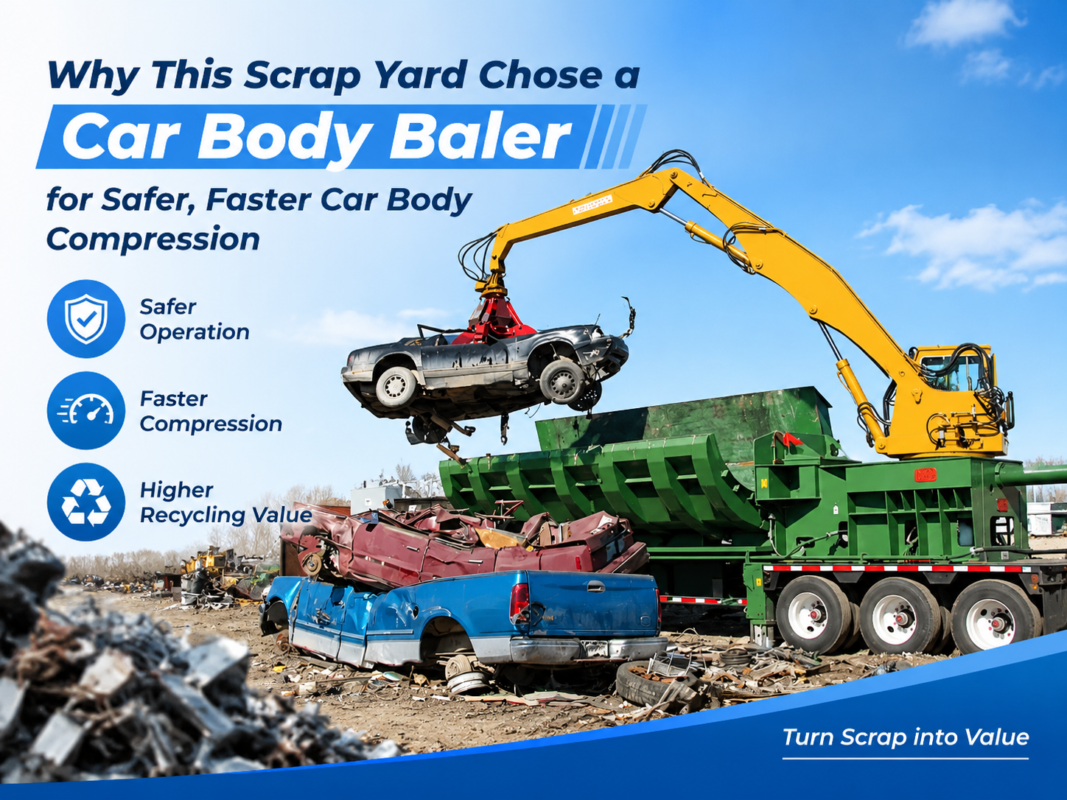
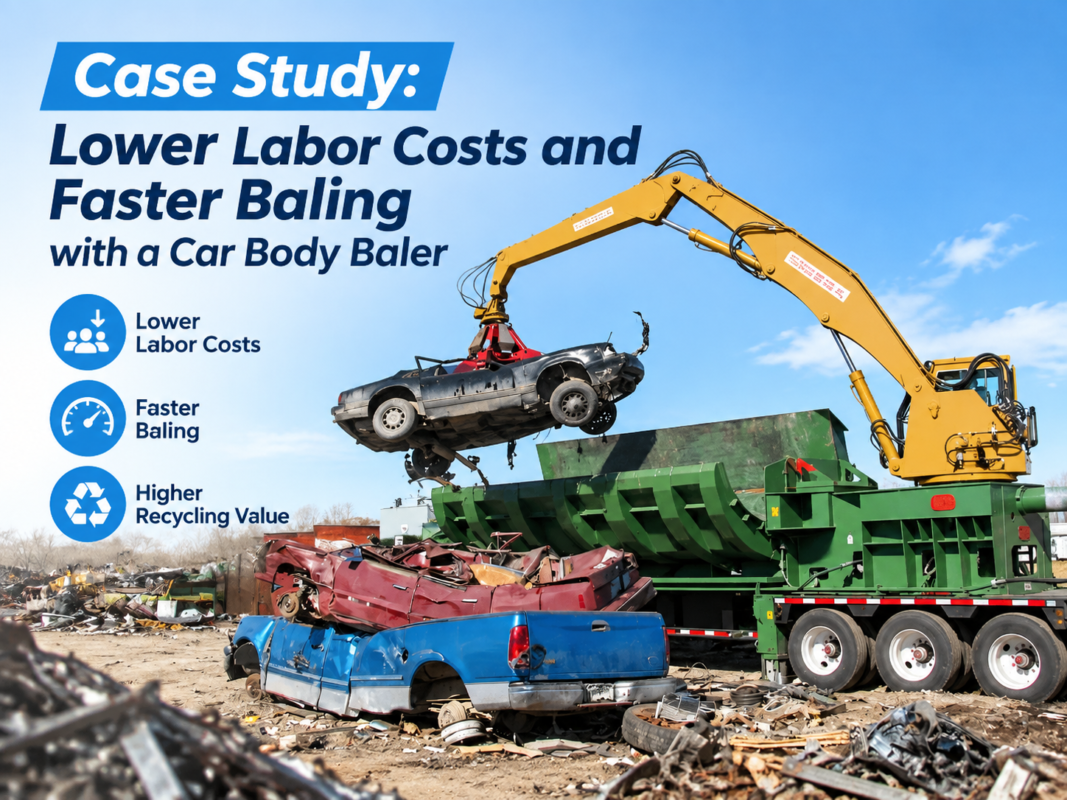
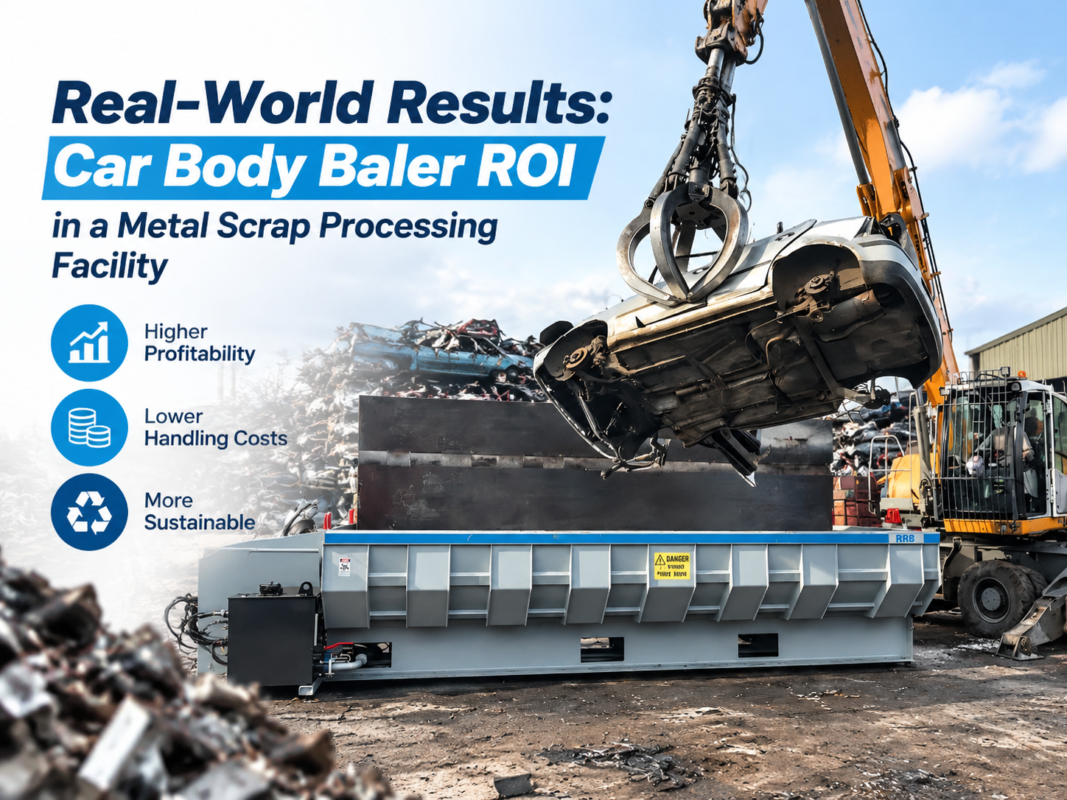
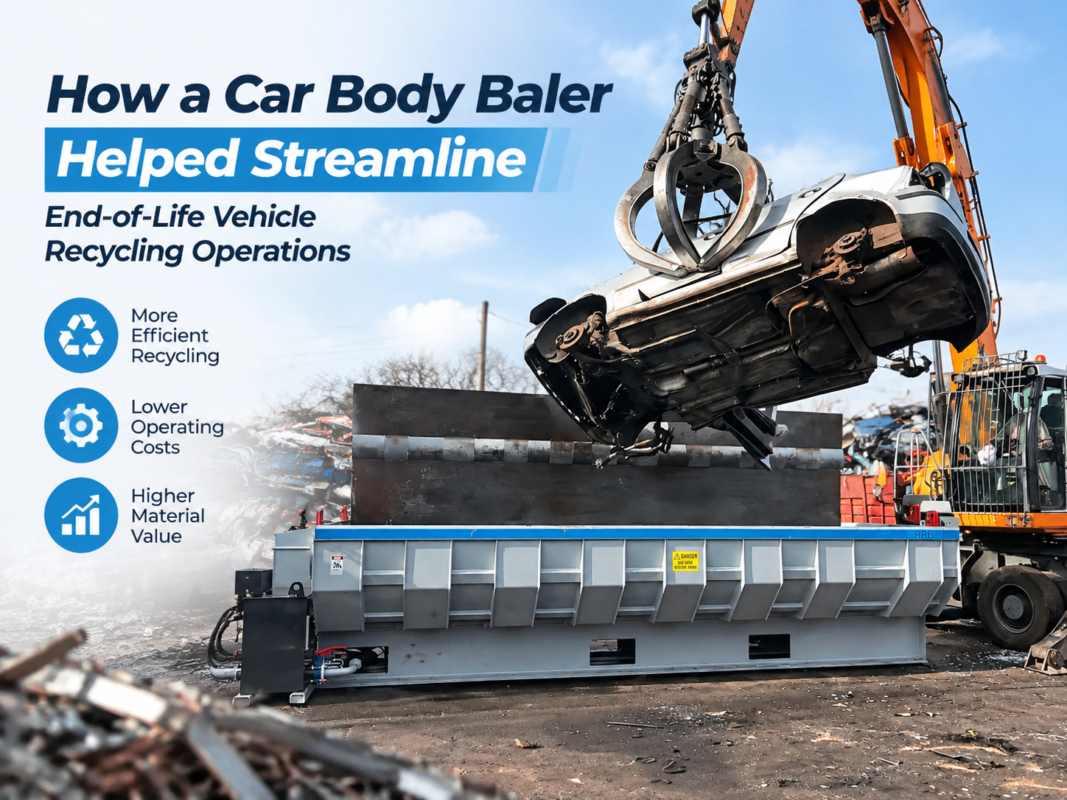
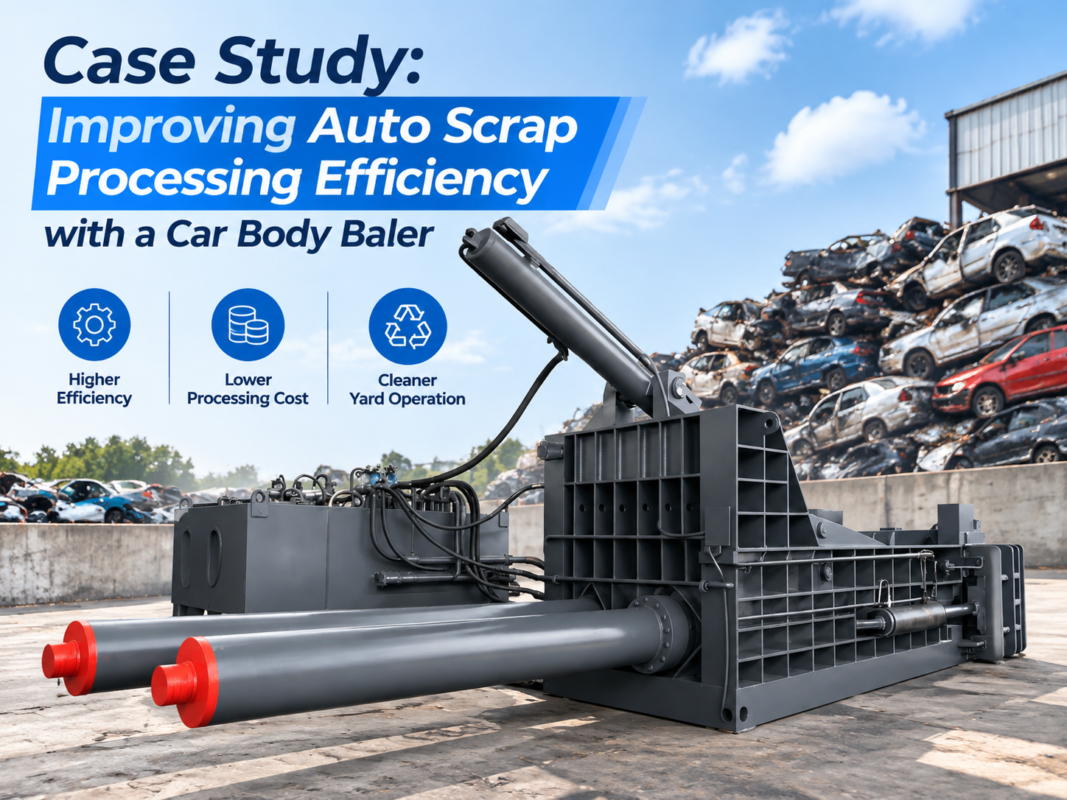
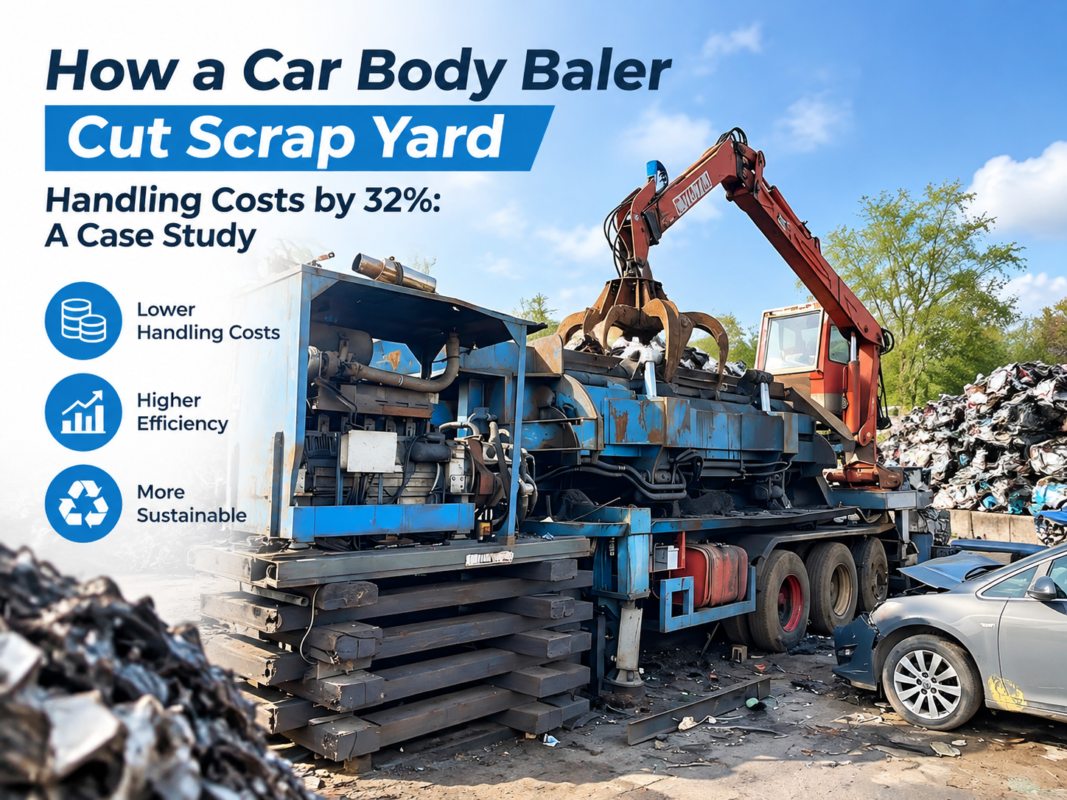
In the high-stakes world of scrap metal recycling, the car body baler stands as a cornerstone of operational efficiency. These massive machines are engineered to transform end-of-life vehicles (ELVs) into dense, manageable cubes or logs, facilitating easier transport and more efficient smelting. However, the performance of a car body baler is not merely a product of raw hydraulic force; it is a delicate synergy between the cutting blades, the structural integrity of the compression chamber, and the calculated compression ratio. For operators and facility managers, understanding these technical nuances is essential for maximizing throughput and minimizing downtime.
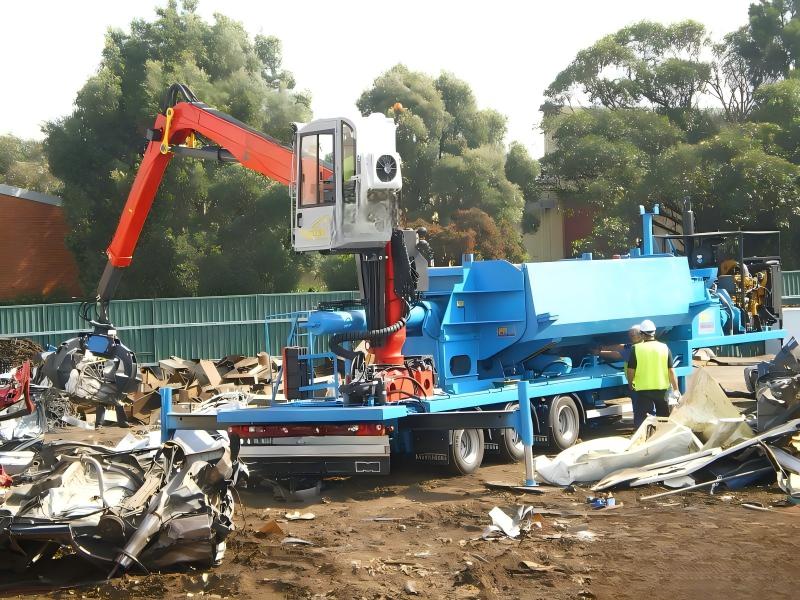
HARSLE has pioneered several advancements in baler technology, focusing on the durability of wear components and the precision of hydraulic cycles. A car body baler typically utilizes a multi-stage compression process. First, the lid or side rams crush the vehicle to reduce its initial volume. Then, the main ram pushes the material against a door or into a narrowing chamber to achieve final density. Throughout this process, the blades play a critical role in shearing protruding metal, ensuring that the bale remains within the dimensional tolerances of the chamber and preventing jams that can lead to catastrophic cylinder failure.
Modern balers are designed with high-strength alloys and sophisticated PLC (Programmable Logic Controller) systems that monitor pressure and displacement in real-time. For the operator, this means that the machine provides feedback on the resistance encountered during the compression cycle. Understanding how the blades interact with the scrap and how the chamber geometry influences material flow allows for better pre-sorting and loading, which ultimately extends the lifespan of the machine’s most expensive components.
Core Parameters: Blades, Chamber, and Force
The Role of Car Body Baler Blades
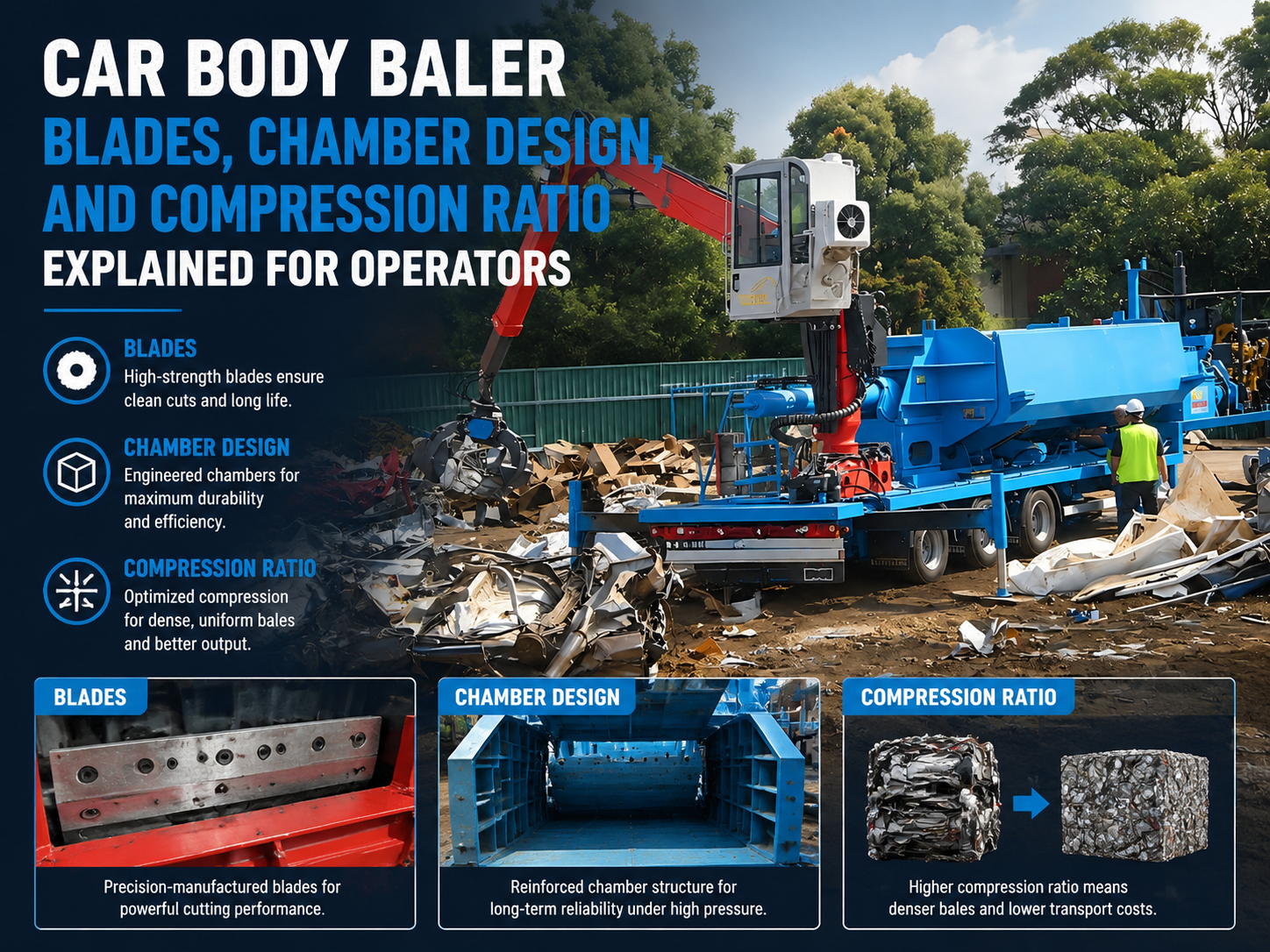
The blades in a car body baler are often misunderstood as simple cutting tools. In reality, they are heavy-duty shearing elements that must withstand immense lateral forces. These blades are typically located at the mouth of the chamber and along the edges of the compression lid. Their primary function is to shear off any scrap that exceeds the chamber’s width as the lid closes. If the blades are dull or improperly gapped, the metal will fold rather than shear, leading to “wedging.” Wedging increases the friction between the lid and the chamber walls, causing excessive wear on the hydraulic seals and potentially warping the lid structure.
Material selection for these blades is critical. Most high-end balers use heat-treated alloy steels such as Cr12MoV or specialized Hardox grades. These materials offer a balance between hardness (to maintain a sharp edge) and toughness (to resist cracking under impact). Operators must conduct weekly inspections of the blade gap, which typically ranges from 0.5mm to 1.5mm depending on the machine size. A gap that is too wide will result in inefficient shearing, while a gap that is too narrow can cause the blades to strike each other as the machine heats up and the metal expands.
Chamber Design and Wear Liners
The compression chamber is the “engine room” of the baler. It must be rigid enough to contain the force of the hydraulic rams without deforming. Most HARSLE car body balers feature a chamber lined with replaceable wear plates, often made from NM450 or NM500 abrasion-resistant steel. These plates are sacrificial; they take the brunt of the friction from the scrap metal so that the main structural frame remains intact. The design of the chamber floor is also vital, often featuring a corrugated or grooved pattern to help guide the scrap and prevent it from sliding backward during the compression stroke.
Furthermore, the chamber design must account for fluid drainage. End-of-life vehicles often contain residual oils, coolants, and rainwater. A well-designed chamber includes drainage ports and a collection system to prevent these fluids from contaminating the hydraulic system or creating a slip hazard around the machine. The geometry of the chamber—whether it is a long, narrow “logger” style or a shorter, wider “bale” style—dictates the type of scrap it can process most efficiently. Long chambers are ideal for whole cars, while square chambers are better suited for mixed light-gauge scrap.

Compression Ratio Explained for Operators
The compression ratio is perhaps the most important metric for evaluating the efficiency of a baling operation. Simply put, it is the ratio of the volume of the loose scrap metal to the volume of the finished bale. For example, if a car body occupies 10 cubic meters of space and is compressed into a bale of 1 cubic meter, the compression ratio is 10:1. Achieving a high compression ratio is essential for maximizing the weight of scrap that can be loaded onto a truck or into a shipping container, directly impacting the profitability of the recycling yard.
However, operators must understand that the compression ratio is limited by the physics of the material and the pressure capacity of the hydraulics. Steel has a specific density, and once the air gaps between the scrap pieces are eliminated, further pressure will not significantly reduce the volume. Pushing the machine beyond its rated pressure to achieve a higher ratio can lead to structural fatigue. Operators should aim for a “target density” rather than just a ratio. For car bodies, a density of 60-80 lbs per cubic foot is generally considered optimal for transport and furnace charging.
Calculation Method for Bale Density and Ratio
To maintain quality control, operators should periodically calculate the density and compression ratio of their output. This helps in identifying if the hydraulic system is losing pressure or if the blades are allowing too much material to bypass the primary compression zone. Follow these steps for an accurate calculation:
- Measure Initial Volume: Estimate the average volume of the incoming scrap. For a standard sedan, this is roughly 8 to 12 cubic meters depending on the model.
- Weigh the Finished Bale: Use the integrated scale on the baler or a platform scale to get the weight (W) of the bale.
- Measure Bale Dimensions: Measure the Length (L), Width (W), and Height (H) of the finished bale to calculate the Final Volume (Vf = L x W x H).
- Calculate Density: Density = Weight / Final Volume.
- Calculate Compression Ratio: Ratio = Initial Volume / Final Volume.
By tracking these numbers daily, operators can spot trends. A sudden drop in density might indicate a leak in the hydraulic bypass valve or air in the cylinders, while a change in the compression ratio might suggest that the loading technique needs adjustment to ensure the chamber is being filled to its optimal capacity.
Parameter Table for Standard Car Body Balers
The following table provides a reference for typical parameters found in industrial-grade car body balers. These values may vary based on specific HARSLE models and custom configurations.
| Parameter | Small/Medium Baler | Heavy-Duty Logger | Ultra-High Pressure Baler |
|---|---|---|---|
| Main Press Force (Tons) | 125 – 200 | 250 – 400 | 500+ |
| Chamber Size (mm) | 2000 x 1400 x 700 | 5000 x 2200 x 1200 | 6000 x 2500 x 1500 |
| Bale Size (mm) | 400 x 400 | 600 x 600 | 800 x 800 |
| Cycle Time (Seconds) | 100 – 140 | 150 – 200 | 180 – 250 |
| Blade Length (mm) | 1200 – 1500 | 2000 – 2500 | 3000+ |
| Compression Ratio | 5:1 to 8:1 | 8:1 to 12:1 | Up to 15:1 |
| Motor Power (kW) | 30 – 45 | 60 – 110 | 150+ |
Common Engineering and Operational Mistakes
Even with the best machinery, operational errors can lead to significant losses. One of the most common mistakes is over-loading the chamber. Operators often feel that more scrap equals more efficiency, but over-filling prevents the lid from closing properly, which puts immense stress on the hinges and the shearing blades. This can lead to “bridging,” where the scrap forms an arch that resists compression, potentially stalling the hydraulic system or causing a pressure spike that blows a hose.
Another frequent error is ignoring the blade clearance. As the machine operates, heat causes the metal components to expand. If the blades were set with a very tight clearance when cold, they might expand and clash during a long shift. Conversely, if the clearance is too wide, thin sheets of metal (like car hoods or door panels) will slip between the blades. This “slippage” creates a wedge that can actually pry the blade seats apart, leading to expensive structural repairs. Operators should check the blade bolts for tightness every shift, as the vibration of shearing can loosen even the highest-grade fasteners.
Finally, neglecting hydraulic oil temperature is a critical mistake. High-pressure compression generates significant heat. If the oil temperature exceeds 60°C (140°F), its viscosity drops, leading to internal leakage in the pumps and valves. This results in a loss of compression force, meaning the operator can no longer achieve the desired compression ratio. Always ensure the cooling system is functional and the filters are clean to maintain the hydraulic integrity required for dense baling.
Selection Checklist for Car Body Baler Upgrades
When looking to upgrade or purchase a new car body baler, use this checklist to ensure the machine meets the technical requirements of a modern scrap yard:
- Blade Material: Are the blades made of high-grade tool steel? Are they four-sided (rotatable) to extend service life?
- Liner Plate Hardness: Does the chamber use NM450 or higher wear plates? Are they bolted or welded? (Bolted is preferred for easier replacement).
- Hydraulic Logic: Does the machine feature a regenerative circuit for faster cycle times?
- Structural Reinforcement: Is the chamber reinforced with external ribbing to prevent bulging under high pressure?
- Auto-Lubrication: Does the machine have an automatic greasing system for the heavy-duty pivot points and slides?
- Filtration System: Is there a dedicated off-line filtration loop to keep the hydraulic oil pristine?
- Remote Diagnostics: Does the PLC support remote monitoring for troubleshooting and performance tracking?
Frequently Asked Questions (FAQ)
How often should I sharpen the car body baler blades?
Blade sharpening intervals depend heavily on the type of scrap processed. For standard car bodies, blades should typically be inspected daily and rotated or sharpened every 500 to 800 hours of operation. If you process a lot of heavy structural steel or stainless steel, this interval will be shorter. Always look for signs of “rounding” on the cutting edge.
What is the ideal compression ratio for shipping?
For standard 40-foot shipping containers, you want to reach a density that allows you to hit the weight limit (approx. 26-28 tons) before you run out of physical space. This usually requires a compression ratio that results in a bale density of at least 75 lbs/ft³. Achieving this consistently requires a baler with at least 250 tons of main ram pressure.
Can I bale aluminum cars in a steel baler?
Yes, but be aware of contamination. Aluminum is much softer and can “smear” onto the steel wear plates and blades. If you switch between steel and aluminum, it is vital to clean the chamber thoroughly to maintain the purity of the aluminum scrap, which commands a higher market price. Also, the compression ratio for aluminum will be different due to its lower yield strength.
Why is my bale expanding after it leaves the chamber?
This is known as “spring-back.” It occurs when the material has not been compressed past its elastic limit or if the pressure was not held long enough at the end of the stroke (dwell time). Increasing the dwell time by just 2-3 seconds can significantly reduce spring-back and result in a more stable, denser bale.
What happens if a blade breaks during a cycle?
If a blade breaks, stop the machine immediately. A broken blade fragment can be pushed into the hydraulic seals or become lodged between the ram and the chamber wall, causing catastrophic scoring. Most modern HARSLE balers have pressure sensors that will trip an emergency stop if an abnormal resistance is detected, but operator vigilance is the first line of defense.