Optimizing Car Body Baler Performance in Auto Recycling: Throughput, Bale Density, and Energy Use

Technical Overview of Car Body Balers in Modern Recycling
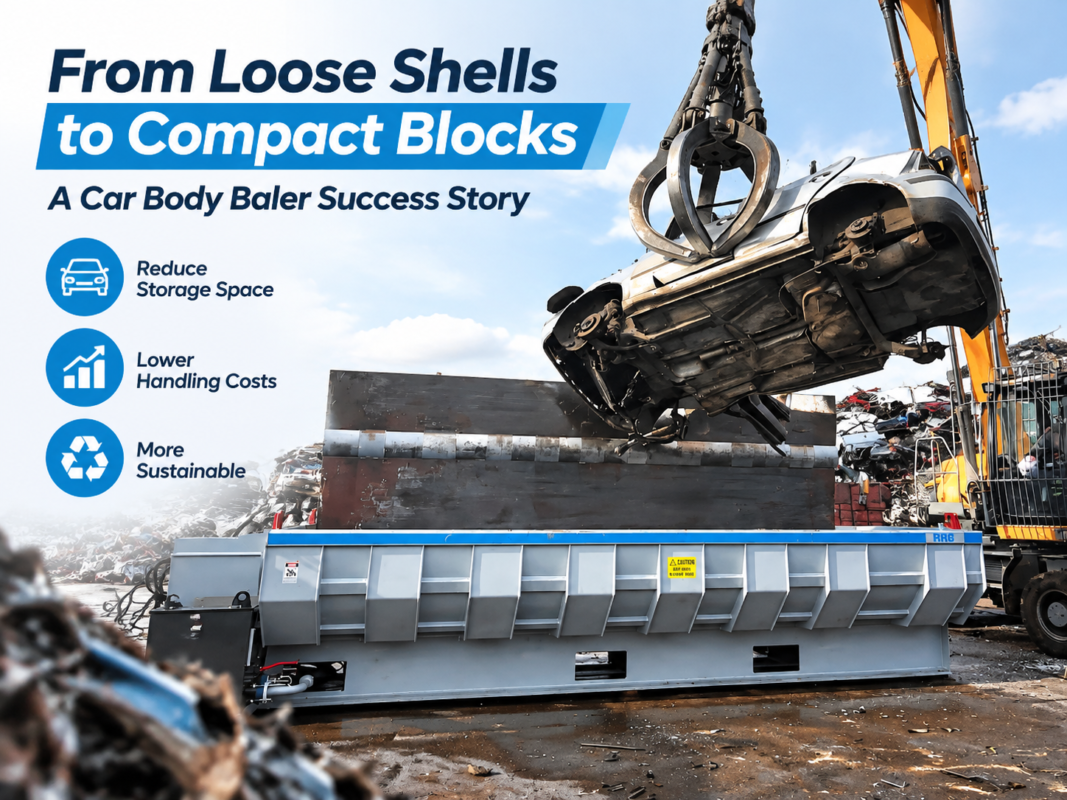
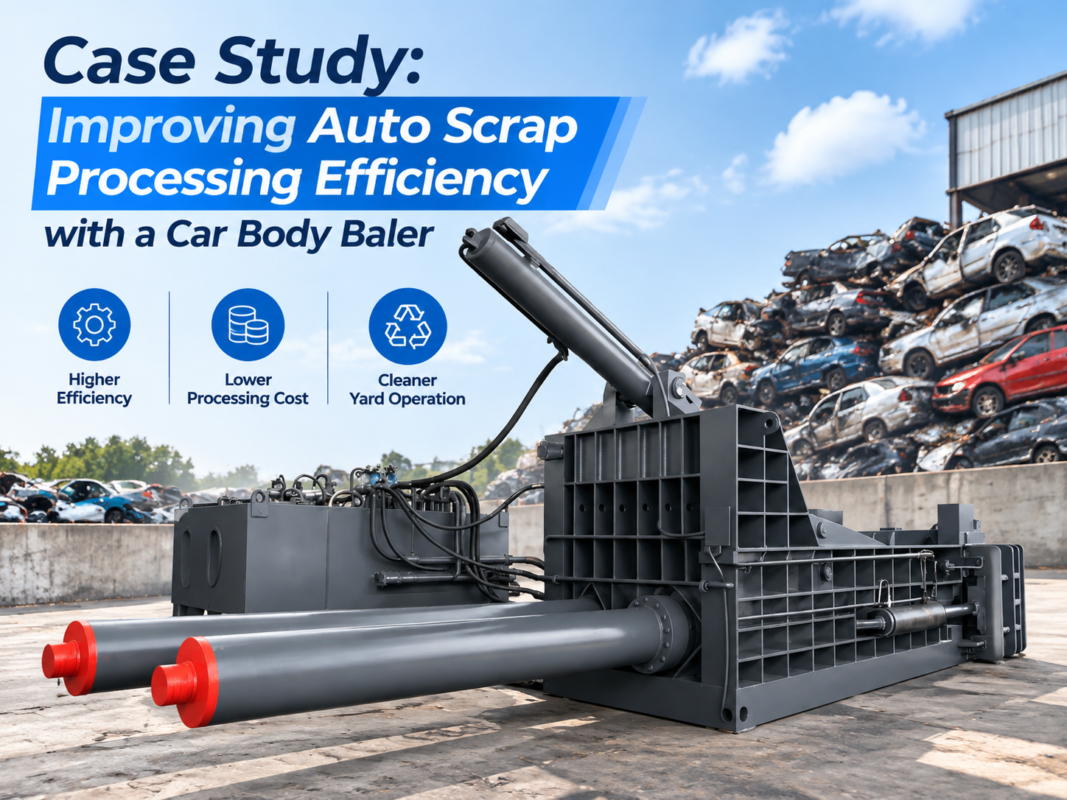
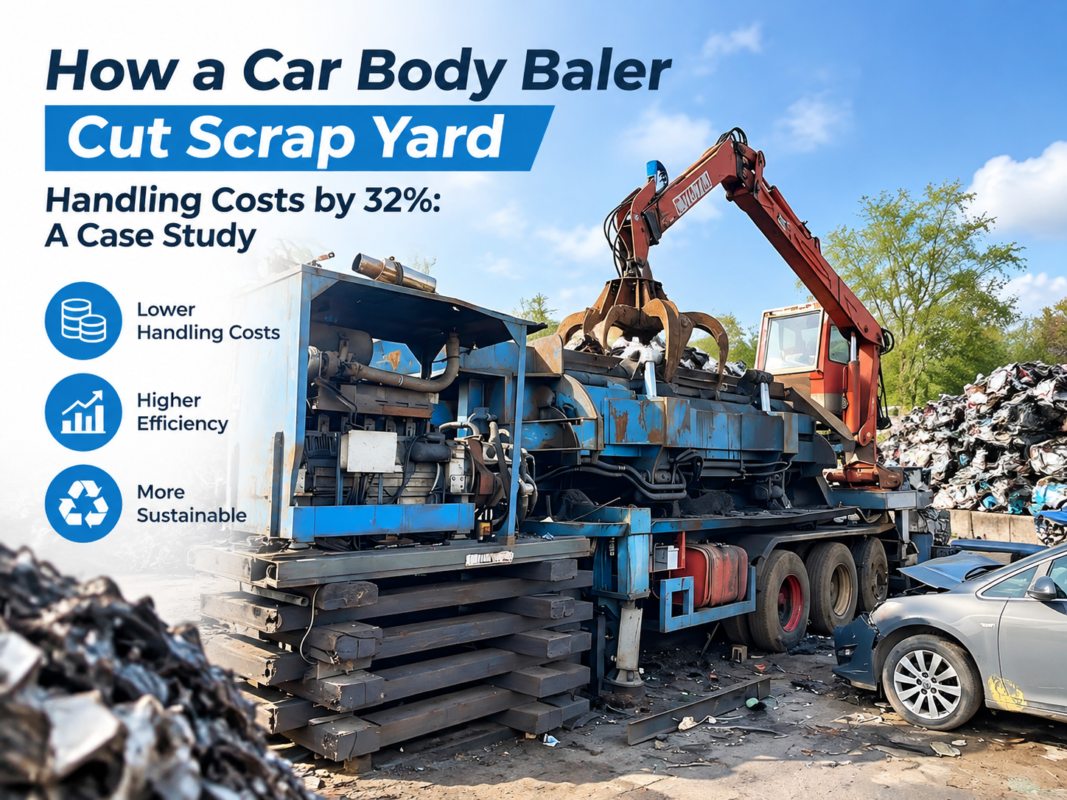
In the rapidly evolving landscape of automotive recycling, the car body baler stands as a cornerstone of operational efficiency. These massive hydraulic machines are designed to compress end-of-life vehicles (ELVs) into dense, manageable cubes or logs, facilitating easier transport and more efficient smelting. The primary objective of any recycling facility is to maximize the value of scrap metal while minimizing operational costs. Achieving this requires a deep understanding of how car body balers function and how their performance can be fine-tuned to meet specific production goals.
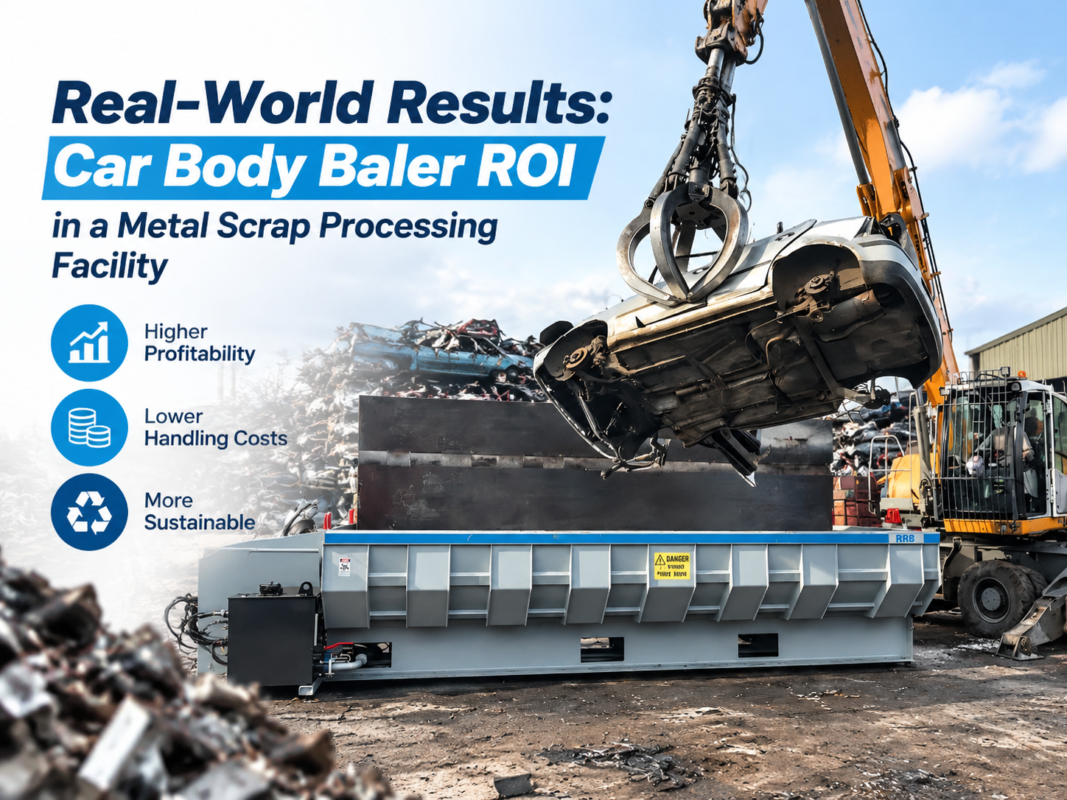
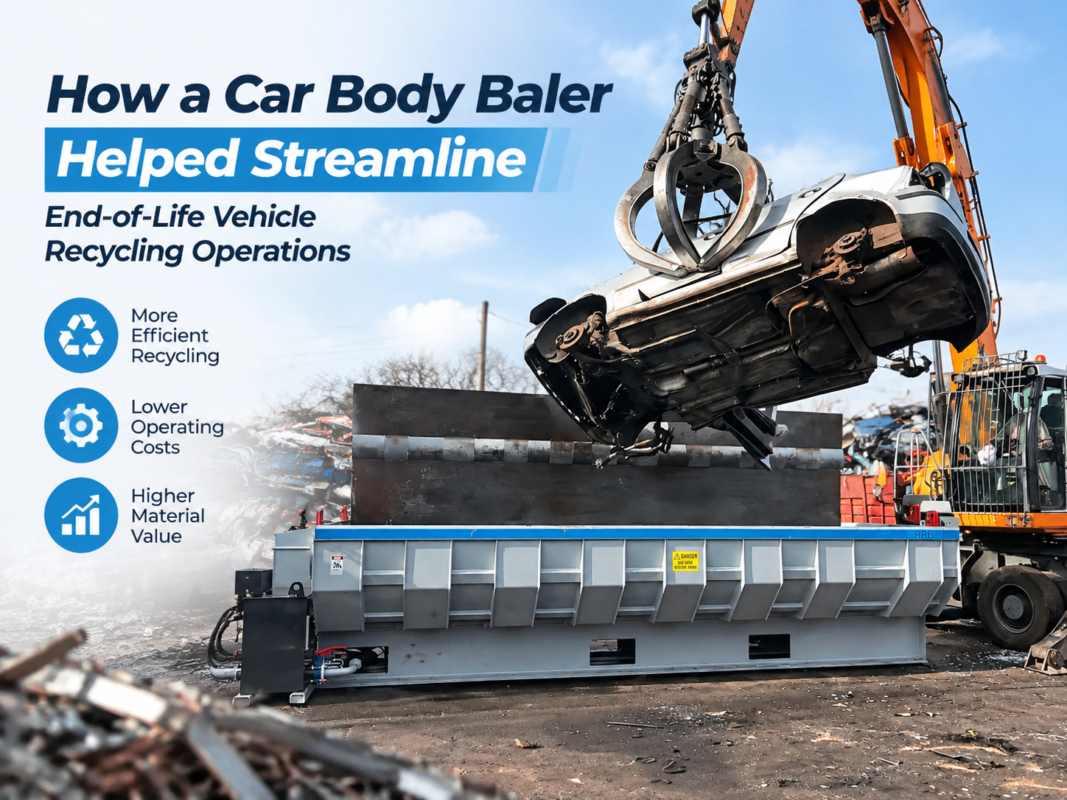
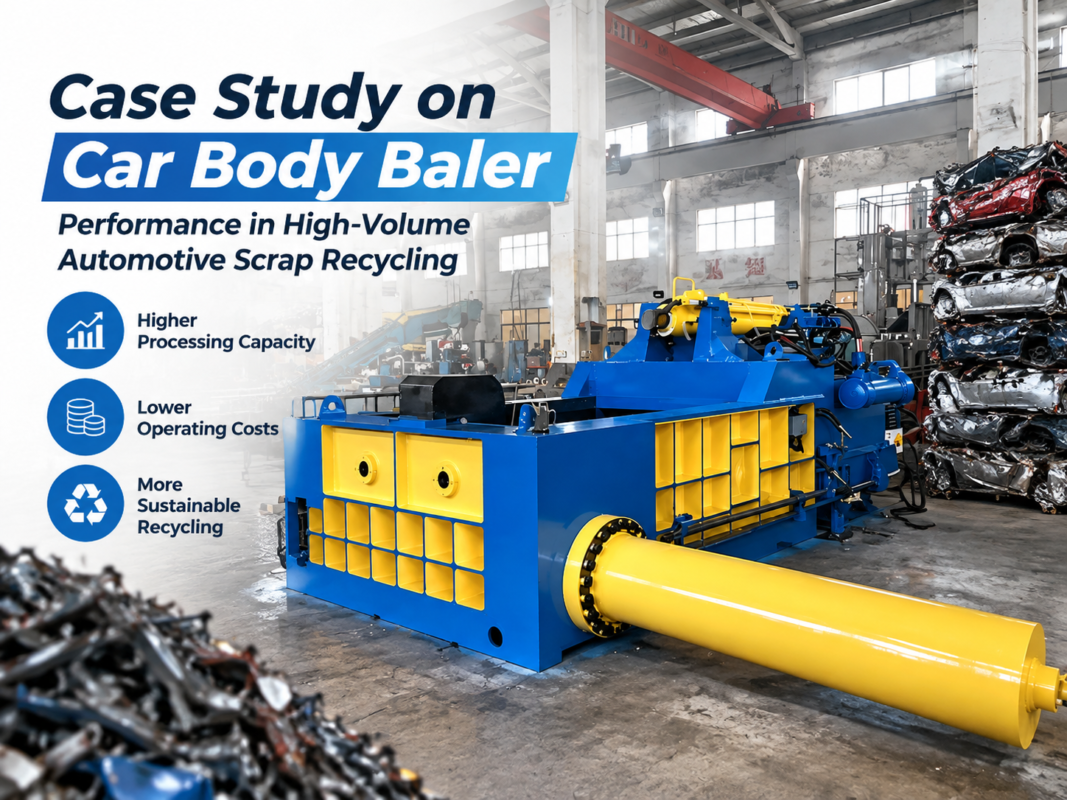
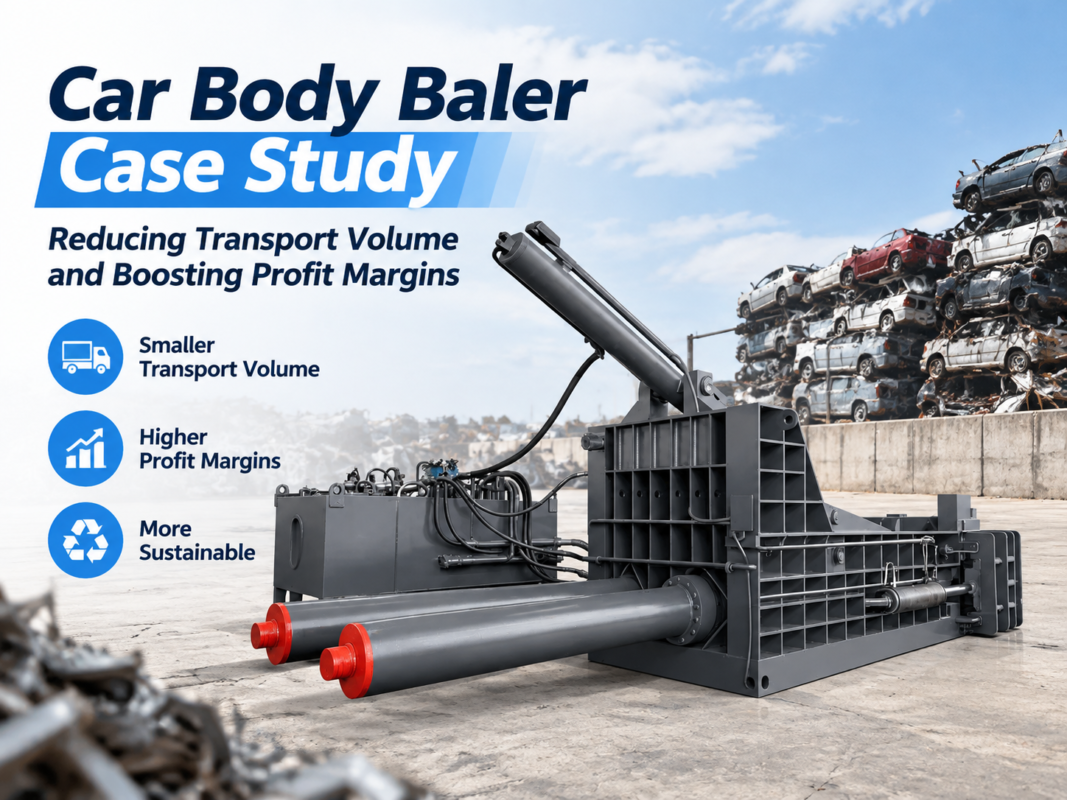
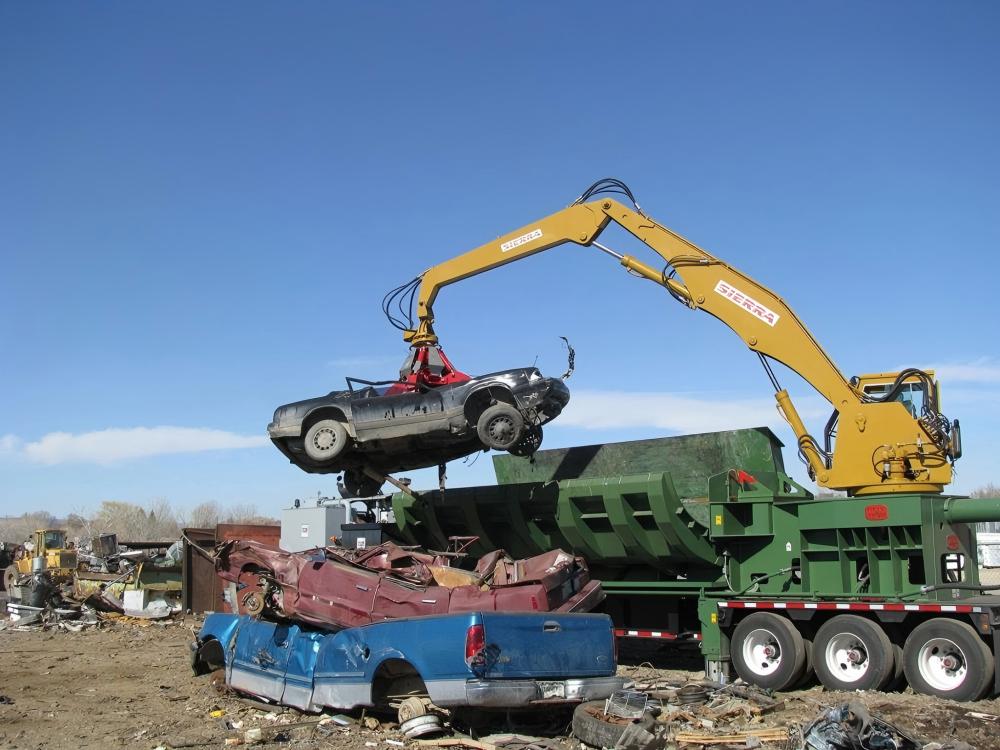
Modern car body balers, such as those engineered by HARSLE, utilize sophisticated hydraulic circuits to exert hundreds of tons of pressure. The process typically involves a large compression chamber where the vehicle is placed. A series of hydraulic rams—often including a lid or ‘wing’ system and a main longitudinal ram—work in sequence to crush the chassis. This multi-stage compression ensures that air pockets are eliminated, resulting in a bale that is structurally sound and high in density. The integration of PLC (Programmable Logic Controller) systems allows for precise control over these movements, enabling operators to switch between different baling modes based on the material type.
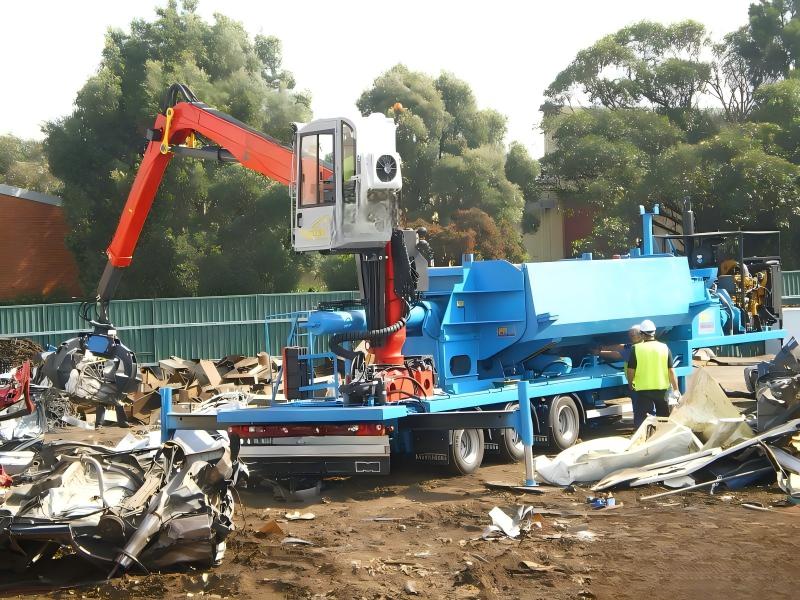
The technical sophistication of these machines has grown significantly. Earlier models relied on manual valve operation, which often led to inconsistent bale quality and higher energy waste. Today, variable displacement pumps and load-sensing hydraulics allow the machine to adjust its power output based on the resistance encountered during the crush cycle. This not only protects the structural integrity of the baler but also significantly reduces the carbon footprint of the recycling facility. Understanding the interplay between hydraulic pressure, cycle time, and material resistance is the first step in optimizing performance.
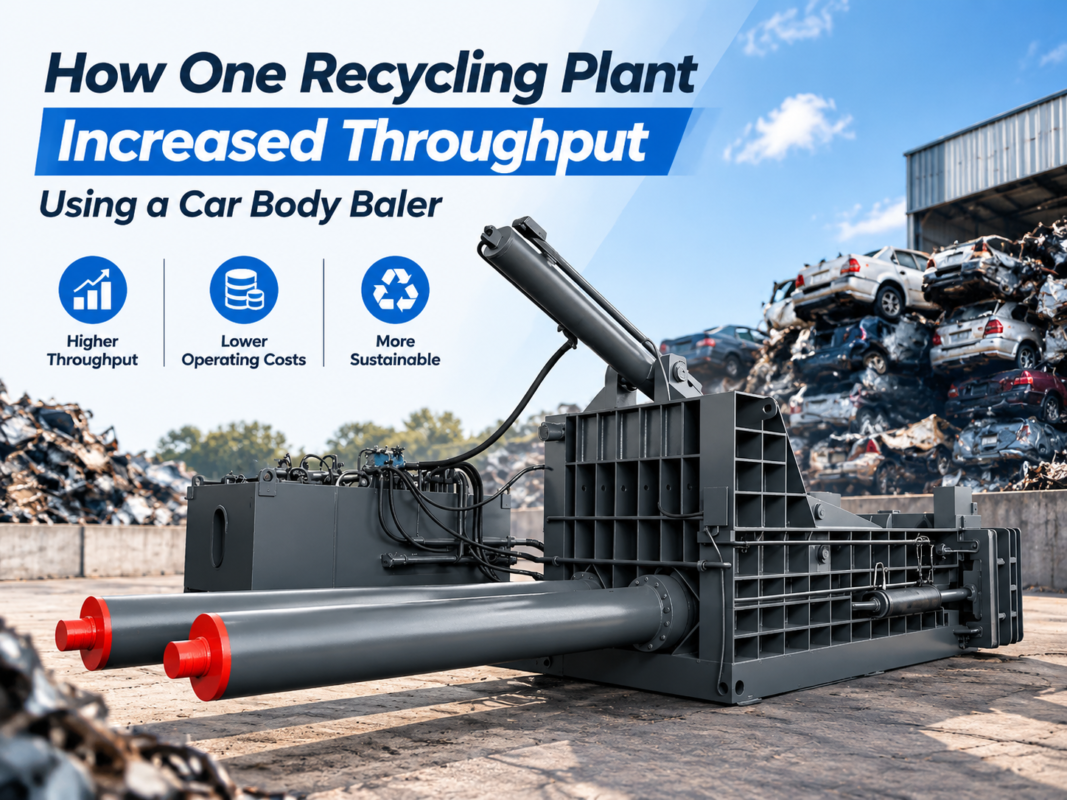
Furthermore, the physical design of the baler—whether it is a stationary unit, a mobile unit, or a portable ‘logger’—impacts its technical application. Stationary units are often used in high-volume yards where throughput is the primary KPI, whereas mobile units offer flexibility for smaller yards or on-site processing. Regardless of the configuration, the core engineering principles remain the same: converting hydraulic energy into mechanical force to transform bulky scrap into high-density commodities.
Core Parameters: Throughput, Bale Density, and Energy Use
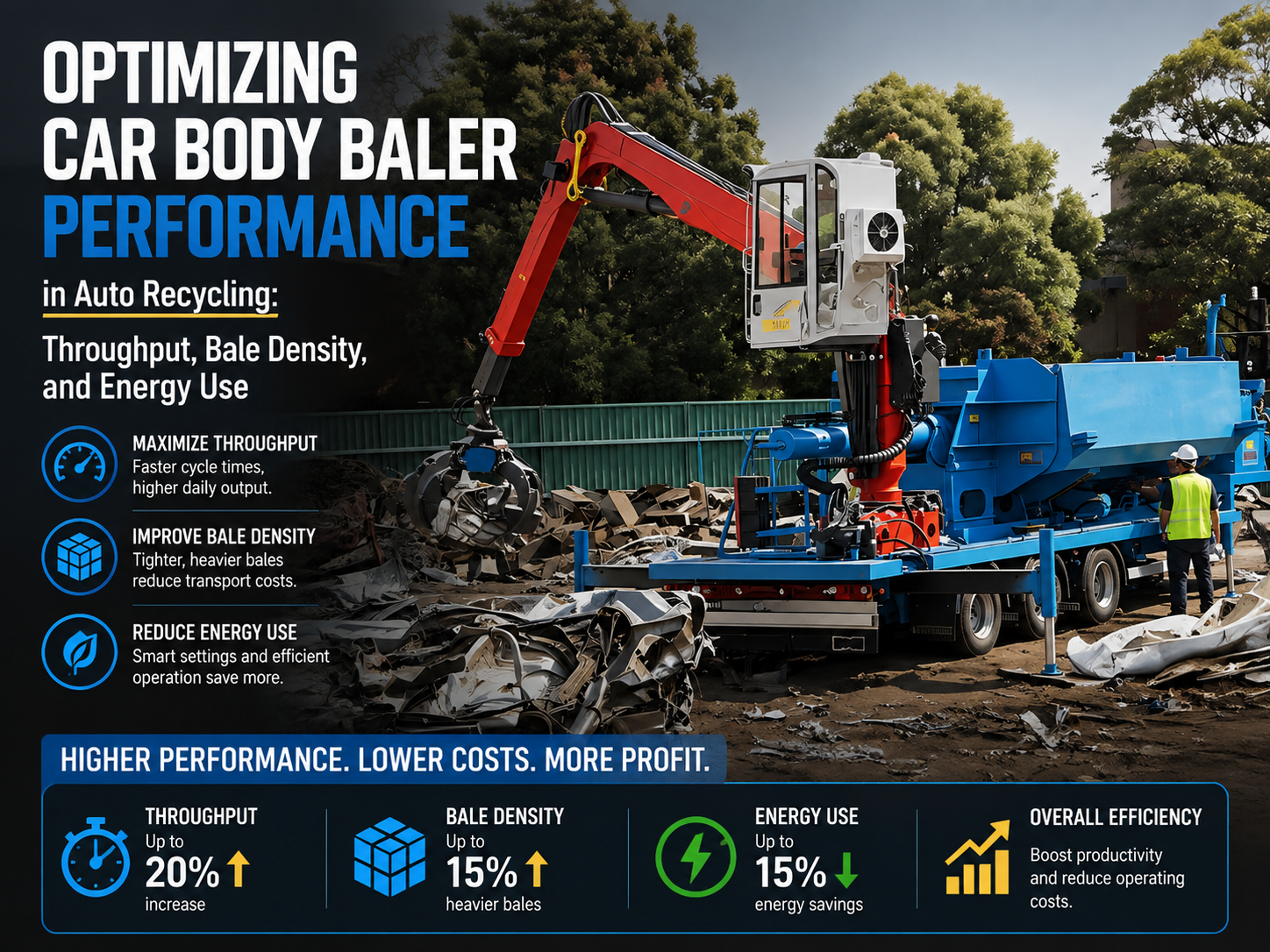
When evaluating the performance of a car body baler, three primary metrics dominate the discussion: throughput, bale density, and energy consumption. These parameters are intrinsically linked; improving one often requires a careful balance to ensure the others do not suffer. For instance, increasing throughput by shortening cycle times might lead to lower bale density if the material is not compressed long enough to overcome its natural elasticity.
Throughput: The Speed of Production
Throughput is measured in tons per hour (TPH) and represents the total volume of scrap processed within a specific timeframe. High throughput is essential for profitability, especially when dealing with large volumes of ELVs. Factors affecting throughput include the speed of the hydraulic rams, the efficiency of the loading process, and the degree of automation. A baler with a fast ‘dry cycle’ time (the time it takes to complete a compression cycle without material) provides a baseline, but real-world throughput depends on the operator’s ability to keep the chamber fed and the machine’s ability to handle varying scrap grades without stalling.
Bale Density: Maximizing Logistics
Bale density is perhaps the most critical factor for long-distance transport. Measured in kilograms per cubic meter (kg/m³), density determines how much weight can be loaded onto a truck or into a shipping container. Low-density bales are ‘light’ loads, meaning a truck might reach its volume capacity before it reaches its weight limit, leading to wasted fuel and higher shipping costs per ton. High-density baling requires significant force and a well-designed compression chamber that prevents the metal from ‘springing back’ once the pressure is released. For steel mills, higher density is also preferred as it improves the efficiency of the melting process in electric arc furnaces (EAF).
Energy Use: The Cost of Operation
Energy consumption is a major operational expense. In a car body baler, energy is primarily consumed by the electric motors driving the hydraulic pumps. Optimizing energy use involves reducing ‘idle time’ and ensuring that the hydraulic system operates at peak efficiency. Modern HARSLE balers often feature high-efficiency motors and intelligent cooling systems that only activate when necessary. By monitoring the kilowatt-hours (kWh) consumed per ton of processed scrap, facility managers can identify inefficiencies, such as worn-out pumps or internal hydraulic leaks, which force the motor to work harder to achieve the same compression force.
Calculation Method for Performance Metrics
To truly optimize a baler, one must move beyond intuition and use mathematical formulas to track performance. These calculations provide the data necessary to make informed adjustments to the machine’s settings or the facility’s workflow.
Calculating Bale Density
To calculate the density of a finished bale, use the following formula:
Density (D) = Mass (M) / Volume (V)
Where Mass is the weight of the bale (measured by a scale) and Volume is calculated by multiplying the length, width, and height of the bale. For example, if a bale weighs 800 kg and its dimensions are 1m x 0.8m x 0.6m (0.48 m³), the density is 1,666.6 kg/m³. Comparing this figure against industry standards helps determine if the hydraulic pressure settings are adequate.
Calculating Throughput
Throughput can be calculated over a shift or an hour:
Throughput (TPH) = (Average Bale Weight × Number of Bales) / Total Time (Hours)
If a machine produces 15 bales an hour, each weighing 0.8 tons, the throughput is 12 TPH. To optimize this, managers should look at the ‘dead time’ between cycles—the time spent loading the car and removing the finished bale. Reducing this interval by just 30 seconds can significantly boost hourly TPH.
Calculating Energy Efficiency
Energy efficiency is measured by the power consumed per unit of production:
Energy Efficiency = Total kWh Consumed / Total Tons Processed
A lower number indicates a more efficient operation. If a 75kW motor runs for 8 hours (consuming roughly 600 kWh) and processes 80 tons of scrap, the efficiency is 7.5 kWh/ton. Monitoring this over time can reveal when the machine requires maintenance, as a sudden spike in energy use often precedes a mechanical or hydraulic failure.
Parameter Table: Typical Performance Specifications
The following table illustrates the typical performance parameters for various classes of car body balers. These figures serve as a benchmark for selecting the right equipment based on yard volume and logistical requirements.
| Baler Class | Main Press Force (Tons) | Cycle Time (Seconds) | Average Throughput (TPH) | Target Bale Density (kg/m³) | Motor Power (kW) |
|---|---|---|---|---|---|
| Light Duty / Mobile | 100 – 150 | 60 – 90 | 4 – 6 | 800 – 1,100 | 30 – 45 |
| Standard Industrial | 160 – 250 | 45 – 70 | 8 – 12 | 1,200 – 1,500 | 55 – 75 |
| High-Capacity / Heavy Duty | 300 – 500+ | 30 – 50 | 15 – 25+ | 1,600 – 2,000+ | 90 – 150+ |
Note: Actual performance may vary based on the condition of the scrap (e.g., stripped chassis vs. full vehicles) and operator proficiency. HARSLE provides customized configurations to meet specific density and throughput targets.
Common Engineering Mistakes in Baler Operation
Even the best machinery can underperform if subjected to poor operational practices. Engineering mistakes often stem from a lack of understanding of hydraulic physics or a desire to ‘over-push’ the machine beyond its design limits.
- Incorrect Relief Valve Settings: Operators sometimes increase the pressure relief valve settings to achieve higher density. This is a dangerous mistake that can lead to hydraulic hose bursts, cylinder seal failure, and even structural cracking of the baler frame. Pressure should always remain within the manufacturer’s specified range.
- Ignoring Hydraulic Fluid Temperature: Heat is the enemy of hydraulic systems. When oil gets too hot, its viscosity drops, leading to internal leakage in pumps and valves. This results in slower cycle times and increased energy consumption. Failing to clean the oil cooler or ignoring high-temperature alarms is a common cause of performance degradation.
- Poor Material Pre-Processing: Attempting to bale vehicles with heavy engine blocks or thick structural axles still attached can damage the baler’s knives and liners. While many balers are designed to handle full cars, removing the heaviest non-ferrous components or thickest steel parts can actually increase throughput by preventing the machine from ‘stalling’ on a difficult crush.
- Neglecting Wear Plate Maintenance: The interior of the compression chamber is lined with abrasion-resistant wear plates. As these wear down, the gap between the ram and the chamber wall increases. This allows small pieces of scrap to wedge themselves into the gaps, causing friction, increasing energy use, and potentially jamming the ram.
- Inconsistent Loading: Loading the chamber unevenly can cause ‘side-loading’ on the hydraulic cylinders. This puts immense stress on the cylinder rods and seals, leading to premature failure. Ensuring the load is centered and distributed according to the machine’s design is vital for longevity.
Selection Checklist for High-Performance Car Body Balers
Choosing the right baler requires a strategic approach. Use this checklist to ensure the selected machinery aligns with your operational goals for throughput, density, and energy use.
- Chamber Dimensions: Is the chamber large enough to accept the widest vehicles in your region without excessive pre-cutting?
- Hydraulic System Type: Does the machine use high-pressure piston pumps? Are they variable displacement for energy efficiency?
- Control System: Does it feature a PLC with a touchscreen interface? Can it provide real-time diagnostics and cycle counting?
- Shear Blades: Are the lid or wing edges equipped with replaceable shear blades to cut through overhanging scrap?
- Cooling System: Is the cooling capacity sufficient for your local climate? (e.g., air-cooled vs. water-cooled).
- Bale Ejection Method: Does it use a ‘push-out’ or ‘side-eject’ system? Side-ejection is generally faster for high-throughput operations.
- Structural Integrity: Check the thickness of the steel plates and the quality of the welding. HARSLE machines are known for their robust, heavy-duty frames that resist warping under high pressure.
- After-Sales Support: Are spare parts like seals, filters, and wear plates readily available?
Frequently Asked Questions (FAQ)
Why is my bale density lower than the manufacturer’s specification?
Lower density is usually caused by one of three things: insufficient hydraulic pressure (check for leaks or pump wear), the material being too ‘springy’ (common with certain alloys), or the chamber not being filled to its optimal volume. Ensure the main ram is reaching its full stroke and that the pressure relief valves are correctly calibrated.
How can I reduce the energy consumption of my car body baler?
The most effective way to reduce energy use is to minimize idle time. Use a baler with an automatic ‘auto-stop’ or ‘idle-down’ feature that reduces motor speed when the machine is not actively compressing. Additionally, keeping the hydraulic oil clean and at the correct temperature ensures the pumps operate at maximum efficiency.
What is the difference between a car logger and a car baler?
A car logger typically produces a longer, less dense ‘log’ of metal, primarily intended for easy transport to a secondary processing facility where it will be shredded. A car baler produces a smaller, denser cube intended for direct melting or more compact transport. Loggers are often faster but offer lower density than dedicated balers.
How often should the hydraulic oil be changed?
Generally, hydraulic oil should be sampled every 1,000 hours and changed every 2,000 to 4,000 hours, depending on the environment and oil quality. However, using high-quality filtration systems can extend this interval. Always monitor for signs of oxidation or contamination (cloudy appearance).
Can a car body baler handle non-ferrous metals?
Yes, most car body balers are versatile enough to process aluminum, copper, and other non-ferrous materials. However, because these metals have different compression characteristics, you may need to adjust the pressure settings or cycle times to prevent over-compression or ‘pancaking’ of the material.