Container Shear Technical Guide: How It Works, Key Components, and Industrial Applications

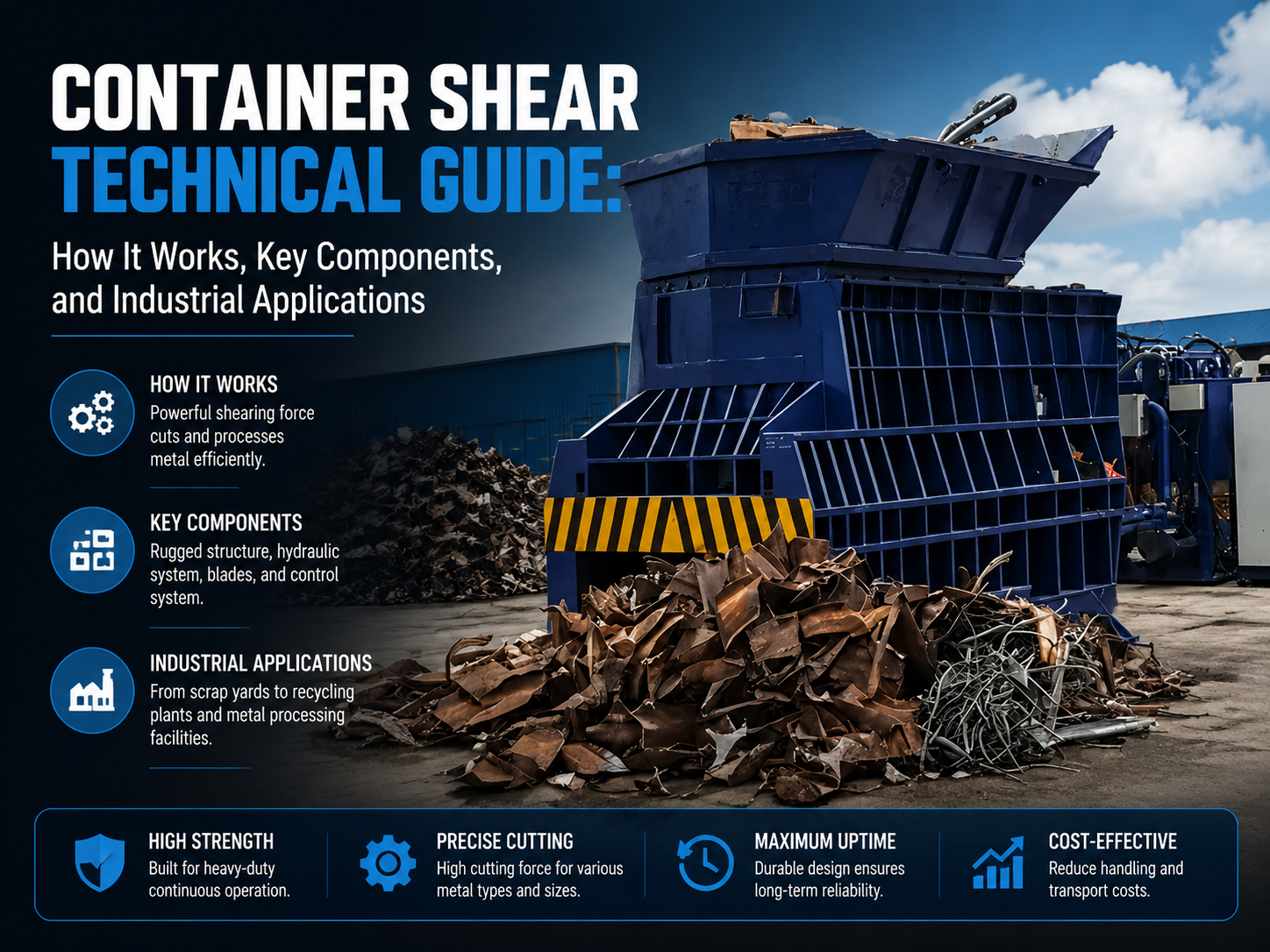
Technical Overview of Container Shears
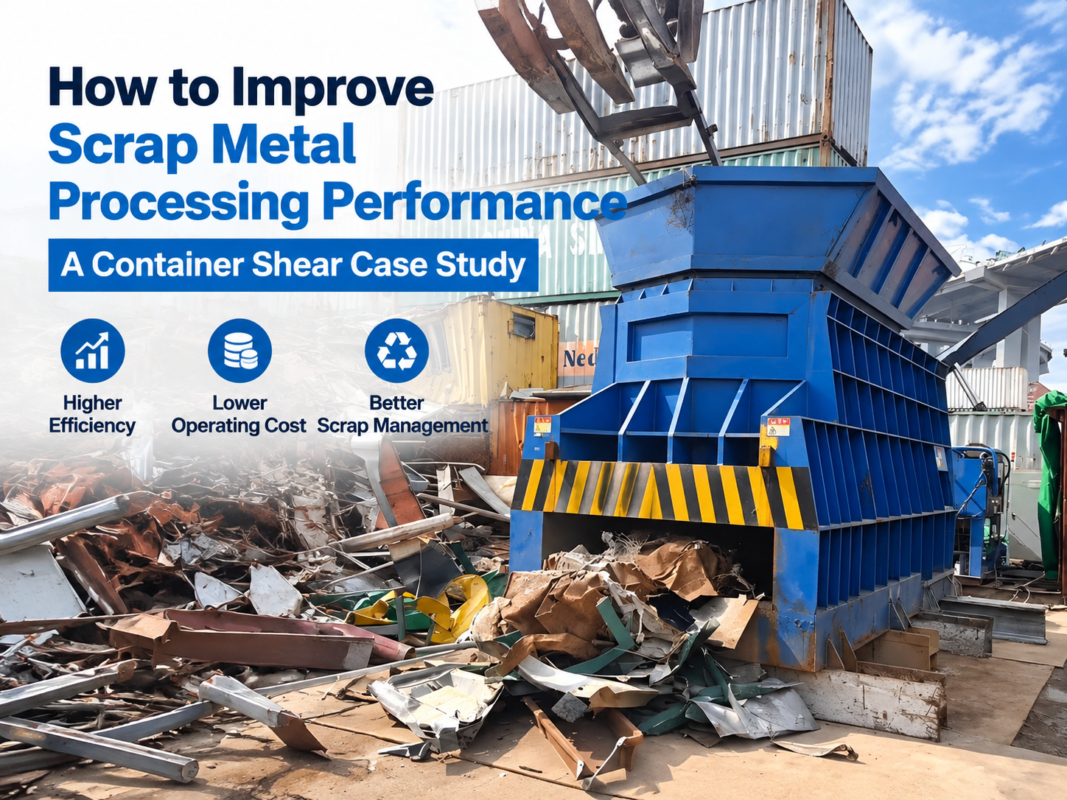
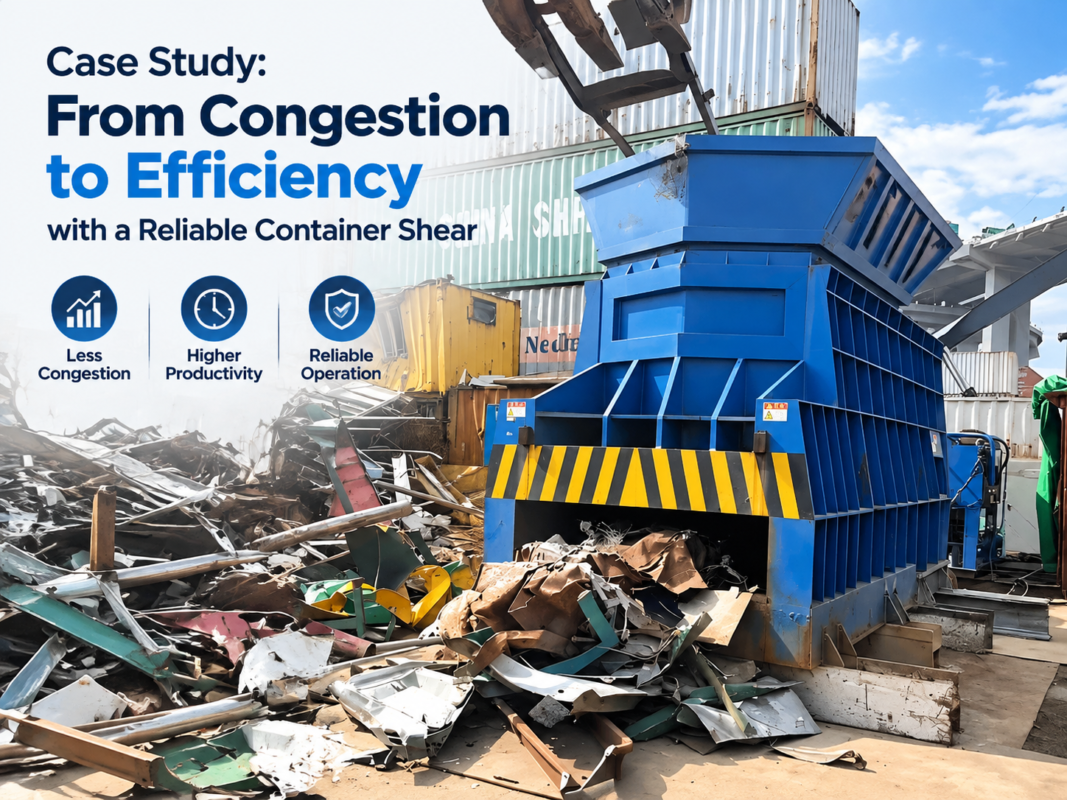
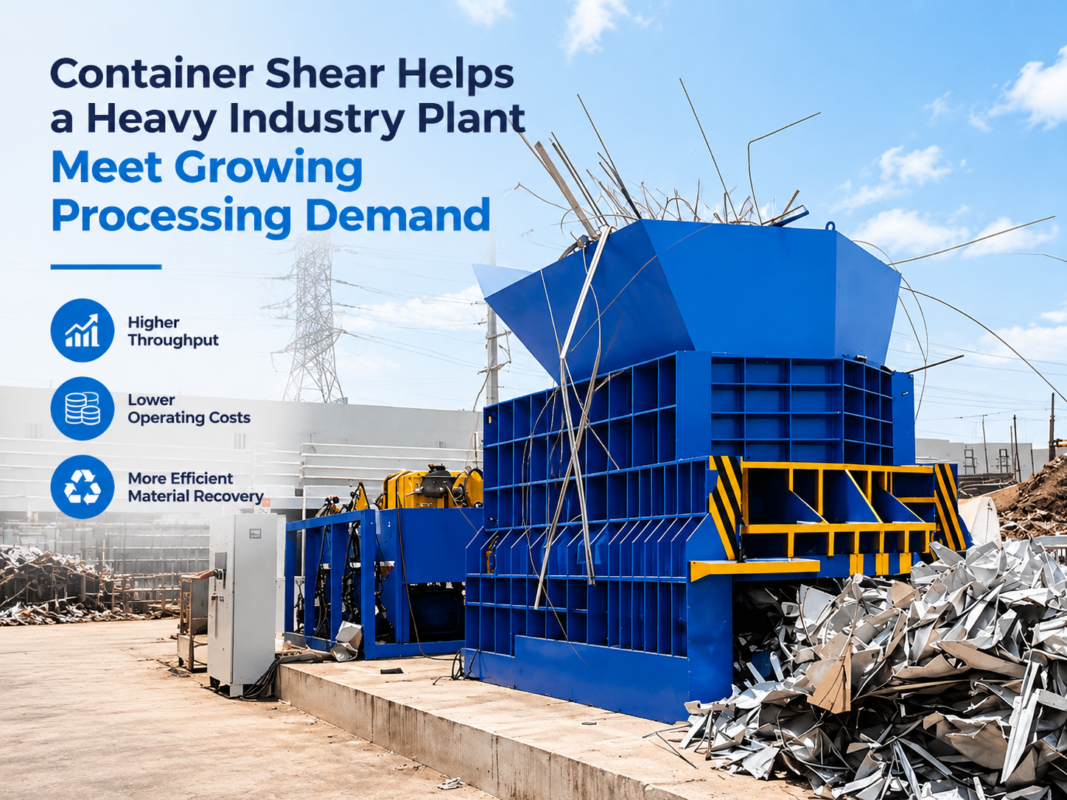
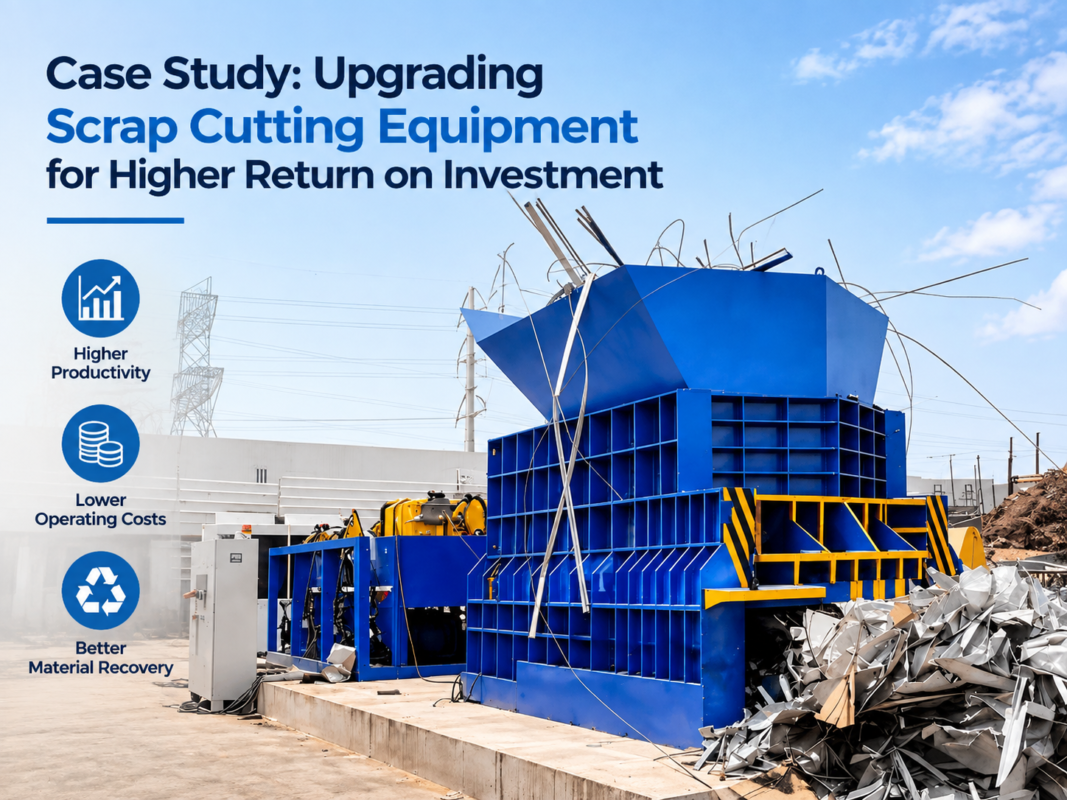
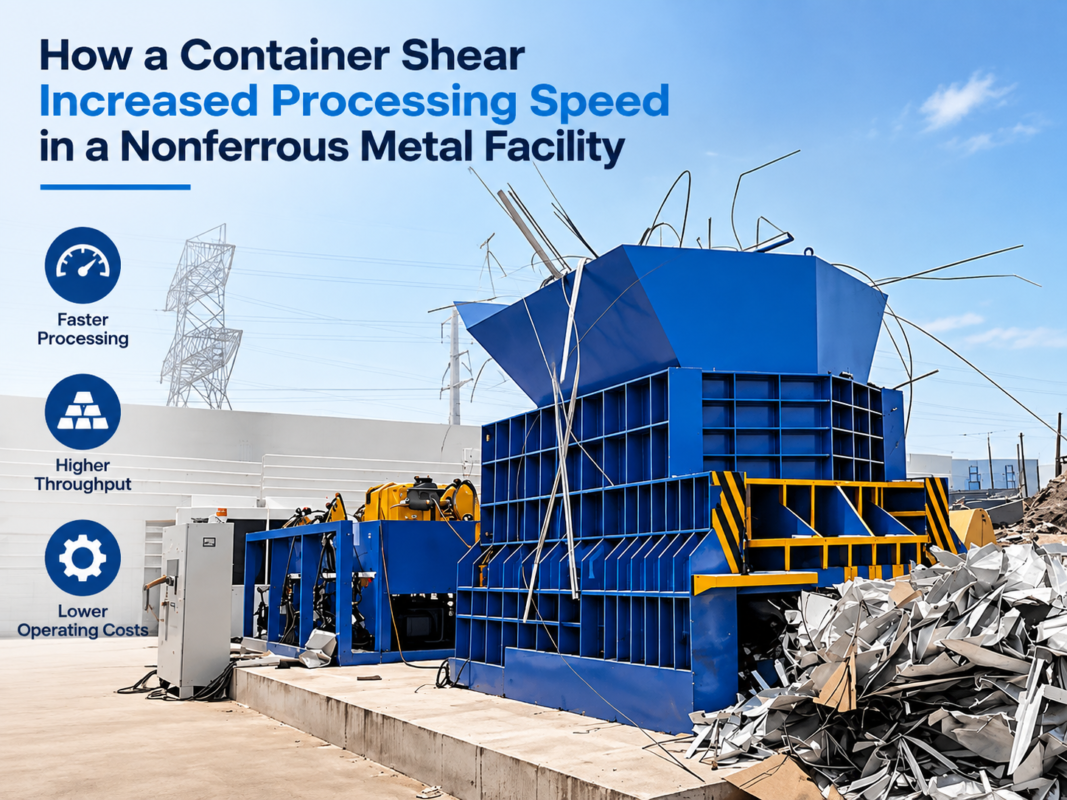
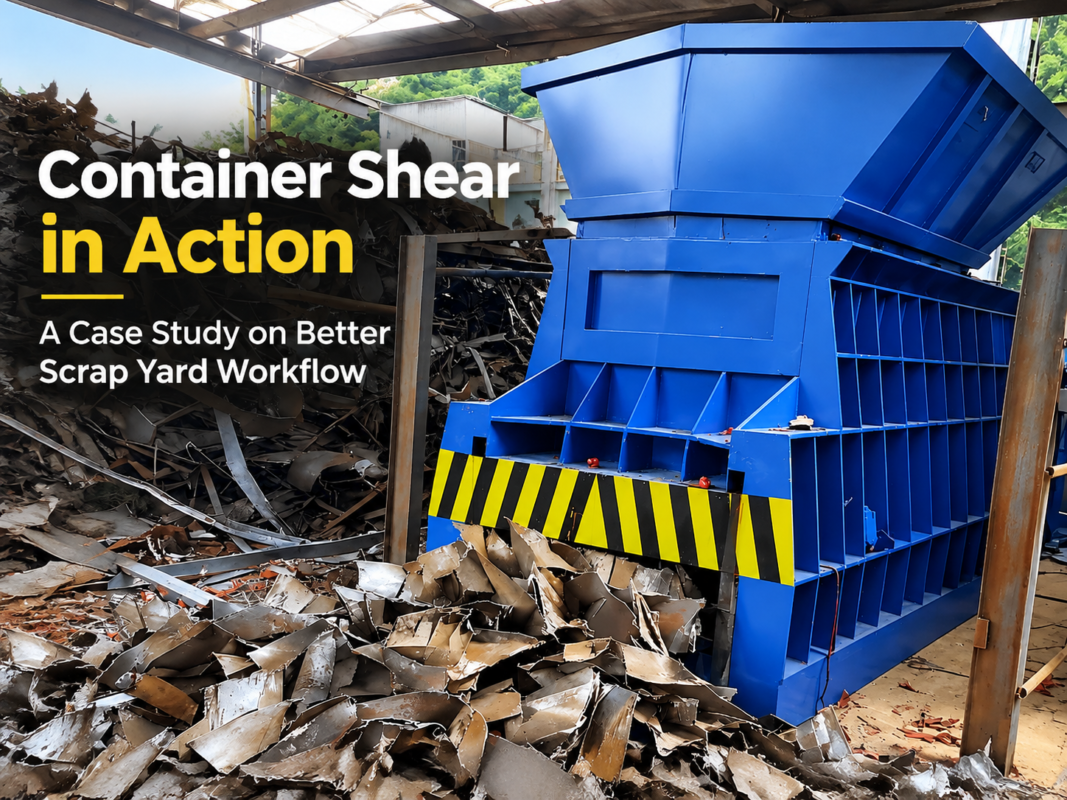
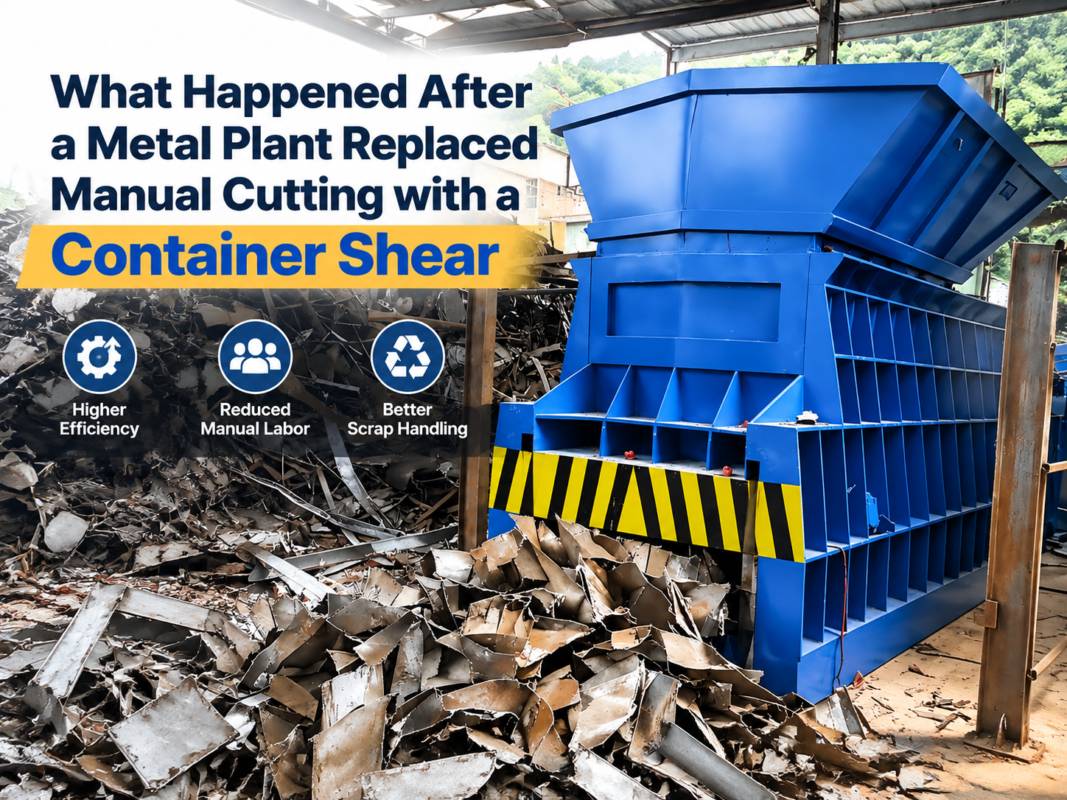
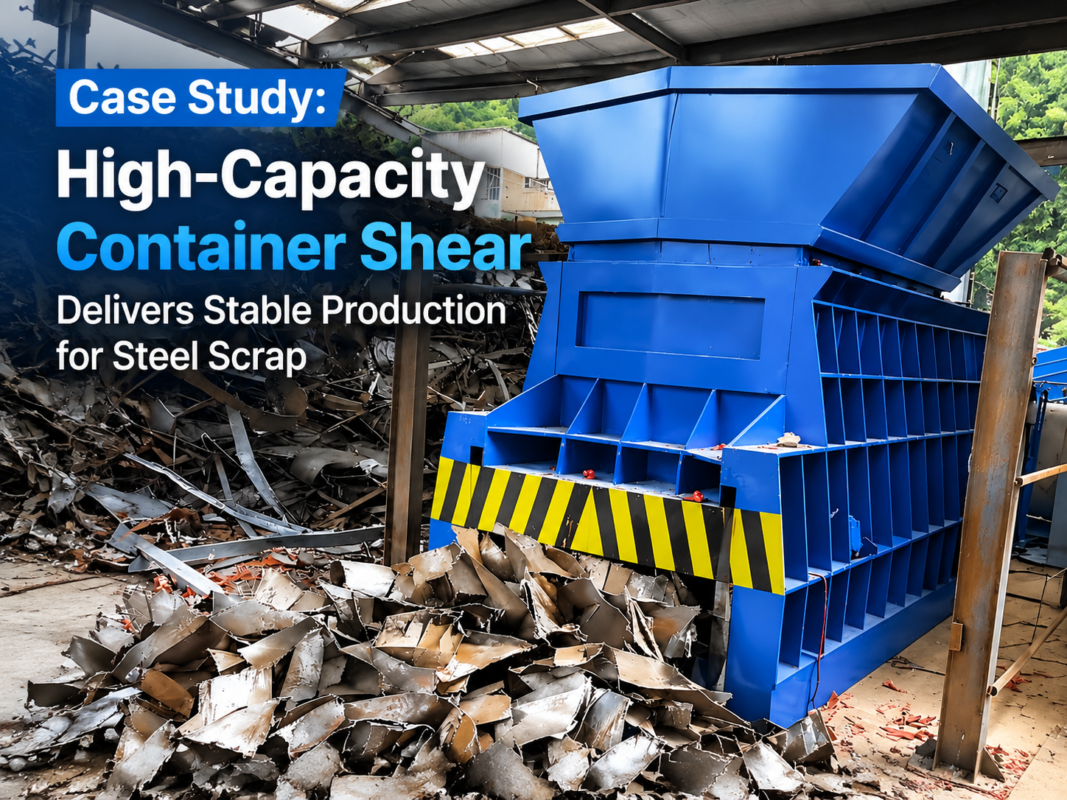
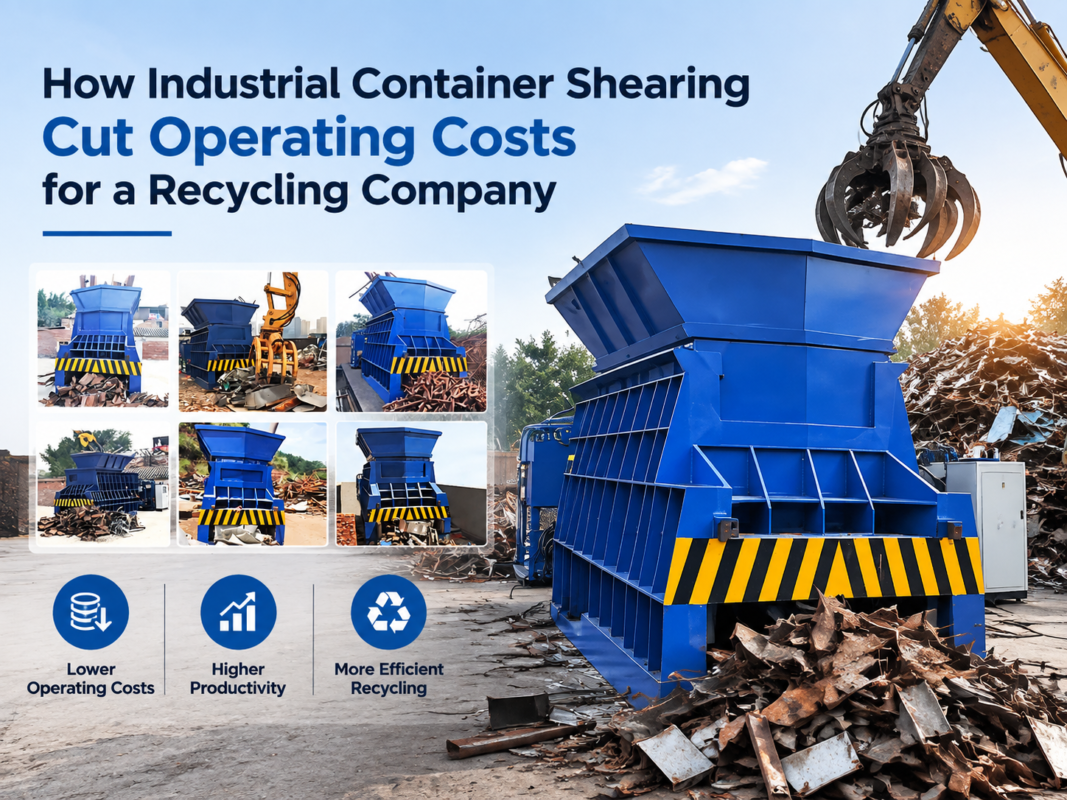
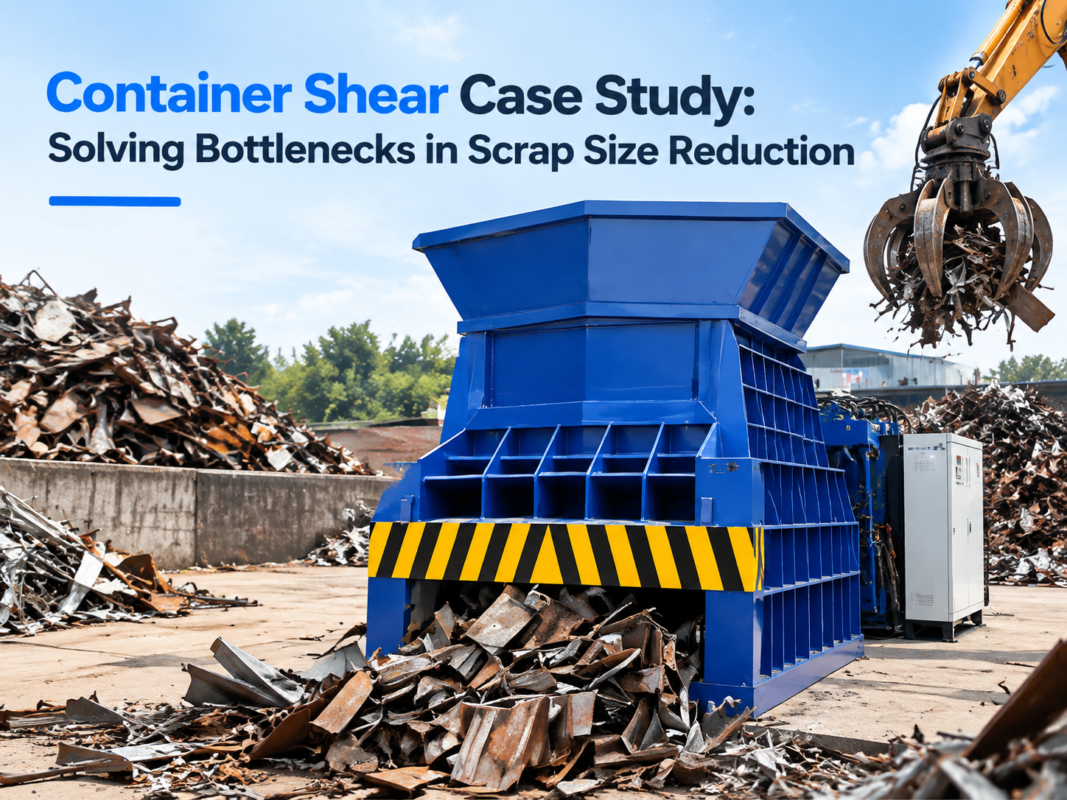
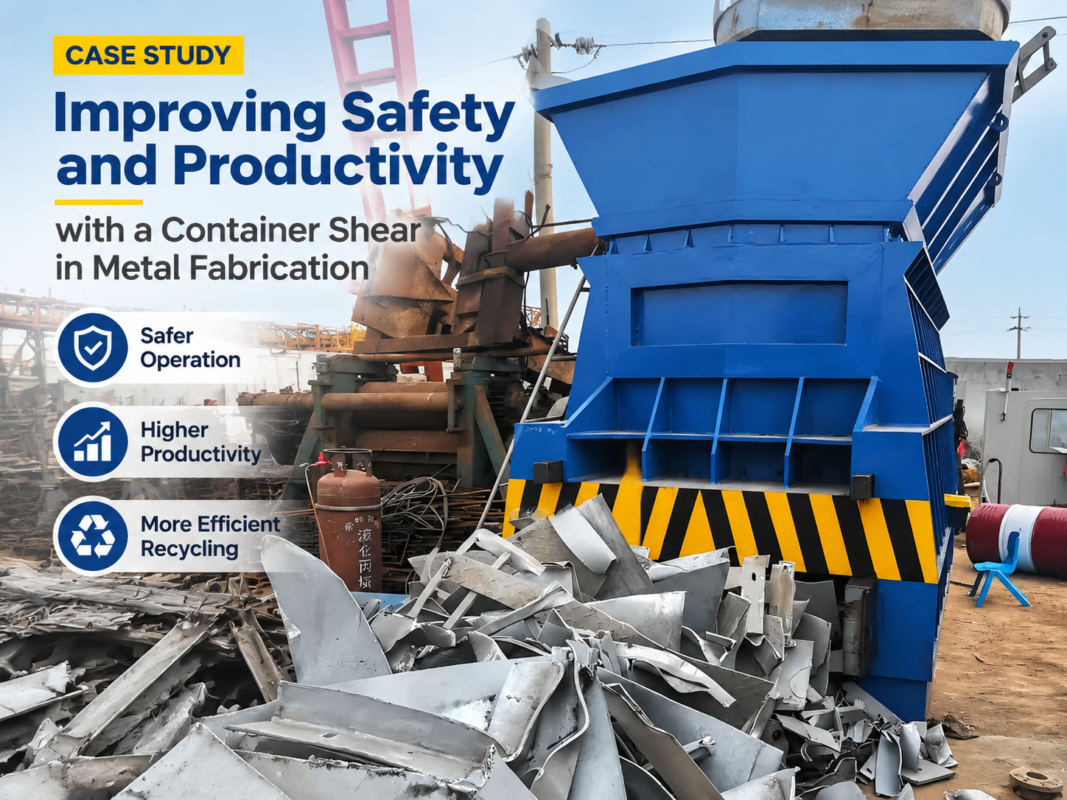
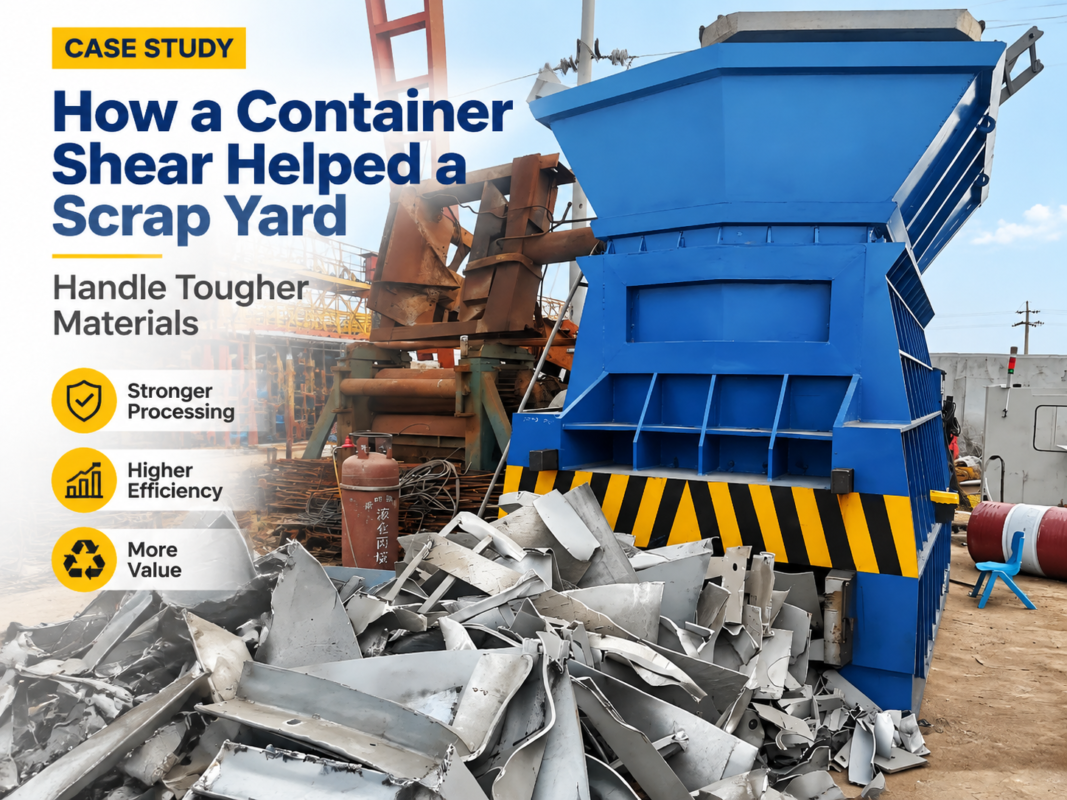
The container shear, often referred to in the industry as a box shear or horizontal scrap shear, represents a pinnacle of efficiency in the scrap metal recycling sector. Unlike traditional alligator shears or vertical gantry shears, the container shear is designed for continuous feeding and high-volume processing. Its name is derived from its structural resemblance to a standard shipping container, which allows it to be easily transported and integrated into various industrial environments. The primary function of this machine is to reduce the size of bulky scrap metal—ranging from decommissioned automobiles to structural steel beams—into manageable pieces suitable for smelting in electric arc furnaces (EAF).
At its core, the container shear operates on a horizontal plane. The scrap is loaded into a large hopper or ‘box,’ where it is compressed by a powerful hydraulic pusher. Once the material is sufficiently compacted, it is moved forward toward the shear head, where a heavy-duty blade performs the cutting action. This design minimizes the need for manual pre-sorting and pre-cutting, significantly reducing labor costs and increasing throughput. For modern recycling facilities, the Container Shear Technical : It Works, Key Components, Industrial Applications framework is essential for understanding how to maximize ROI and maintain operational longevity.
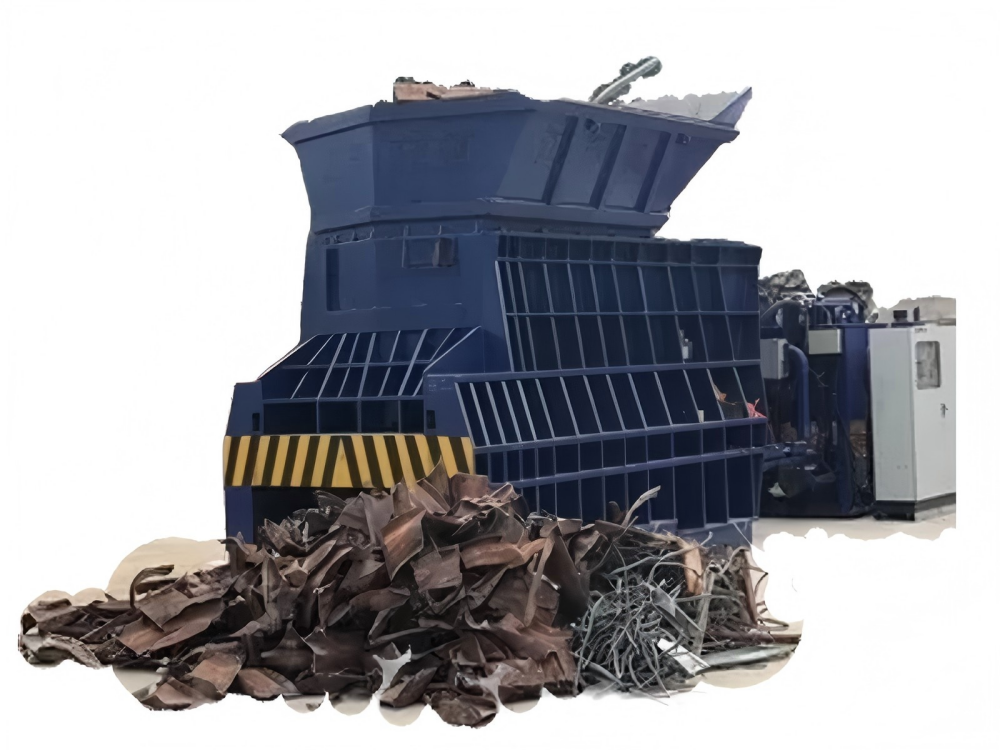
The engineering behind these machines focuses on structural rigidity and hydraulic precision. Because the forces involved in shearing thick steel can exceed 1,000 tons, the frame must be constructed from high-tensile strength steel plates, often reinforced with internal ribbing. The integration of advanced PLC (Programmable Logic Controller) systems allows for automated cycles, where the machine senses the resistance of the material and adjusts the hydraulic pressure accordingly. This prevents mechanical overload and ensures a clean cut every time.
The Evolution of Scrap Shearing Technology
Historically, scrap yards relied on manual torch cutting or small mechanical shears. These methods were slow, dangerous, and environmentally taxing due to fumes. The advent of the hydraulic container shear revolutionized the industry by providing a closed-loop system for metal reduction. Modern HARSLE container shears incorporate energy-saving variable displacement pumps and regenerative hydraulic circuits, which allow for faster cycle times without a proportional increase in electricity consumption. This evolution reflects the industry’s shift toward sustainable and highly efficient manufacturing processes.
Core Components of a Container Shear
Understanding the internal anatomy of a container shear is vital for both operators and maintenance engineers. Each component is subjected to extreme stress and must be engineered to exacting standards. The primary systems can be categorized into the structural frame, the hydraulic power unit, the shearing mechanism, and the control interface.
1. The Feeding Box and Compression System
The feeding box is the first point of contact for the scrap metal. It is typically lined with high-wear-resistant manganese steel plates (such as Hardox) to withstand the constant abrasion of jagged metal. Within the box, a horizontal pusher cylinder (the ‘ram’) moves the scrap toward the blades. In some advanced models, a side-press or ‘lid’ is also used to pre-compress the scrap from above or the side, ensuring that even the most voluminous materials are condensed into a dense ‘log’ before shearing.
2. The Shear Head and Blade Assembly
The shear head is the business end of the machine. It consists of a fixed lower blade and a moving upper blade. These blades are manufactured from specialized tool steel, heat-treated to achieve a balance between hardness (to maintain a sharp edge) and toughness (to prevent cracking under impact). The blade gap—the distance between the upper and lower blades—is a critical technical parameter that must be adjusted based on the thickness and type of metal being processed.
3. Hydraulic Power Unit (HPU)
The HPU is the heart of the container shear. It consists of high-pressure piston pumps, a large oil reservoir, cooling systems, and a manifold of valves. HARSLE machines often utilize Rexroth or Vickers hydraulic components to ensure reliability. The system must be capable of delivering consistent pressure while managing the heat generated by the friction of the oil moving through the valves. Advanced filtration systems are also integrated to prevent contaminants from damaging the sensitive hydraulic seals.
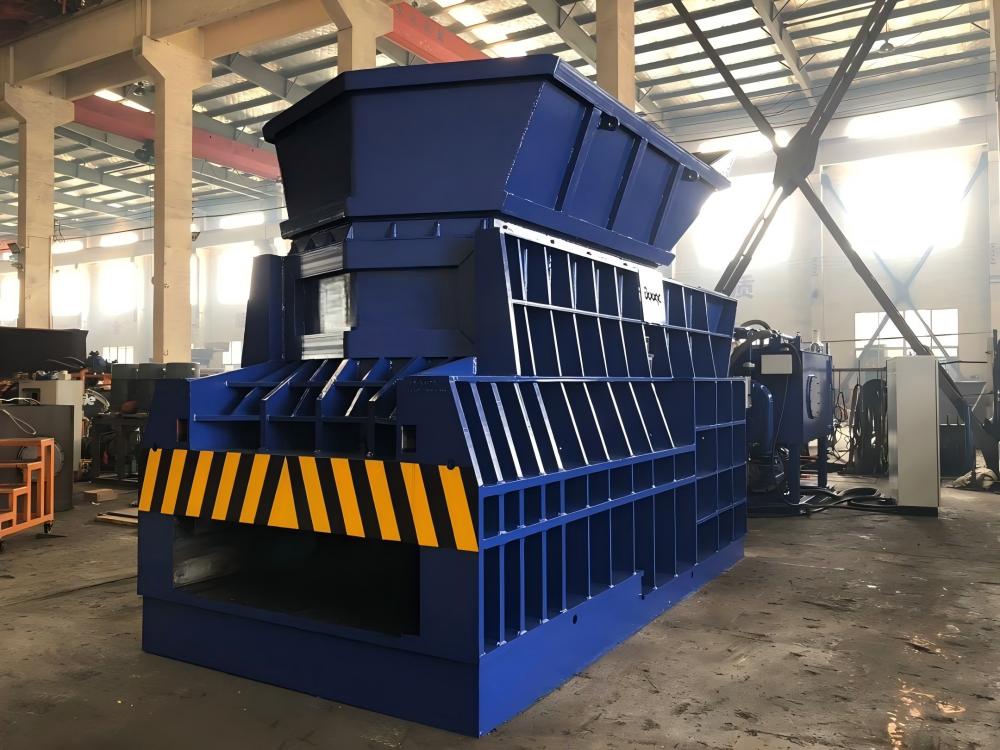
4. PLC Control and Automation
Modern container shears are no longer purely manual machines. They feature sophisticated PLC systems (often Siemens or Schneider) that monitor every aspect of the machine’s performance. Sensors track the position of the cylinders, the temperature of the oil, and the pressure in the lines. If a jam occurs or if the oil exceeds a safe temperature, the PLC will automatically pause the cycle and alert the operator via an HMI (Human Machine Interface) touch screen.
Core Parameters and Technical Specifications
When evaluating a container shear, several core parameters dictate its suitability for a specific application. These parameters are not just numbers; they define the machine’s capacity, speed, and energy footprint. The Container Shear Technical : It Works, Key Components, Industrial Applications guide emphasizes that matching the machine’s specs to the material stream is the most important step in procurement.
- Shear Force: Measured in tons (e.g., 400T, 630T, 800T, 1000T, 1250T). This is the maximum pressure the shear blade can exert. A 630T shear is generally sufficient for standard structural steel, while 1000T+ is required for heavy HMS1/HMS2 scrap.
- Blade Length: Typically ranges from 800mm to 2000mm. A longer blade allows for wider pieces of scrap to be processed without pre-cutting.
- Cycle Time: The time it takes for the machine to complete one full shearing stroke and return to the starting position. Faster cycle times (e.g., 3-5 cuts per minute) are essential for high-volume yards.
- Motor Power: Usually ranging from 45kW to over 200kW. This determines the speed at which the hydraulic pumps can move the cylinders.
- Feeding Box Dimensions: The length and width of the box determine the maximum size of the scrap that can be loaded. A standard box might be 5000mm long and 2000mm wide.
Calculation Method for Shearing Force
Engineers must calculate the required shearing force to ensure the machine can handle the intended workload. The formula for shearing force ($F$) is generally expressed as:
F = k · L · S · τ
Where:
k: A safety factor (usually 1.2 to 1.3) to account for blade dullness and material friction.
L: The width of the material being cut (mm).
S: The thickness of the material (mm).
τ: The shear strength of the material (N/mm²). For example, mild steel typically has a shear strength of approximately 350-450 N/mm².
By using this calculation, a facility can determine if a 600-ton shear is sufficient for cutting 50mm thick steel plates or if an upgrade to an 800-ton model is necessary. Overloading a machine beyond its calculated capacity leads to premature fatigue of the hydraulic seals and potential cracking of the main frame.
Container Shear Parameter Table
| Model (Tonnage) | Shear Force (kN) | Blade Length (mm) | Max Cutting Thickness (mm) | Motor Power (kW) | Box Size (L*W*H mm) |
|---|---|---|---|---|---|
| CS-400 | 4000 | 1200 | 40 | 45 | 4500 x 2000 x 1000 |
| CS-630 | 6300 | 1500 | 60 | 75 | 5000 x 2200 x 1200 |
| CS-800 | 8000 | 1800 | 80 | 110 | 6000 x 2400 x 1400 |
| CS-1000 | 10000 | 2000 | 100 | 150 | 7000 x 2500 x 1500 |
| CS-1250 | 12500 | 2200 | 120 | 185 | 8000 x 2600 x 1600 |
Common Engineering Mistakes in Container Shear Operation
Despite their robust construction, container shears are susceptible to damage if operated incorrectly. Avoiding these common engineering mistakes can save tens of thousands of dollars in repair costs and downtime.
1. Improper Blade Gap Adjustment
The gap between the upper and lower blades must be precisely set. If the gap is too wide, the metal will ‘fold’ rather than cut, causing immense lateral stress on the shear head and potentially snapping the blade bolts. If the gap is too tight, the blades will rub against each other, leading to rapid dulling and excessive heat generation. Operators should check the gap every shift, especially when switching between thin sheet metal and thick structural beams.
2. Neglecting Hydraulic Oil Maintenance
Hydraulic oil is the lifeblood of the container shear. A common mistake is ignoring oil filtration or failing to change the oil at recommended intervals. Contaminated oil acts like liquid sandpaper, eroding the precision-machined surfaces of the pumps and valves. Furthermore, operating the machine when the oil is too hot (above 60°C) will cause the seals to harden and leak, leading to a loss of pressure and efficiency.
3. Overloading the Feeding Box
While container shears are designed for bulk, ‘bridging’ occurs when large pieces of scrap are wedged in a way that prevents the pusher from moving forward. Forcing the pusher against a bridged load can bend the cylinder rod or damage the box liners. Proper loading technique—placing heavier items at the bottom and ensuring no long pieces protrude awkwardly—is essential for smooth operation.
4. Poor Foundation Design
A container shear exerts massive vibration and downward force during the shearing stroke. If the concrete foundation is not thick enough or lacks proper reinforcement, the machine will eventually shift or tilt. This misalignment can cause the hydraulic lines to stress and crack, and it can even lead to structural failure of the machine’s base frame.
Selection Checklist for Industrial Buyers
Choosing the right container shear requires a strategic approach. Use the following checklist to ensure the selected machine meets your operational requirements:
- Material Analysis: What is the primary type of scrap? (e.g., HMS, sheet metal, rebar, or non-ferrous). Match the tonnage to the thickest material you expect to process.
- Throughput Requirements: How many tons per hour do you need to process? Calculate this based on the machine’s cycle time and box volume.
- Power Supply: Does your facility have the electrical capacity to support 100kW+ motors? If not, consider diesel-powered options or electrical upgrades.
- Space Constraints: Ensure there is enough room for the machine, the loading crane, and the discharge conveyor. Don’t forget to leave space for maintenance access to the hydraulic unit.
- Blade Replacement Ease: Look for designs that allow for quick blade changes. Some HARSLE models feature ‘bolt-on’ blade seats that simplify this process.
- After-Sales Support: Does the manufacturer provide remote diagnostics, spare parts kits, and on-site training?
Industrial Applications of Container Shears
The versatility of the container shear makes it a staple in several key industries. Its ability to transform chaotic scrap into a standardized commodity is invaluable for the global supply chain.
1. Steel Mills and Foundries
Steel mills require scrap that is cut to specific dimensions to fit into their furnaces. Container shears provide the consistency needed for high-quality melt batches. By reducing the size of the scrap, the density of the furnace charge is increased, which improves melting efficiency and reduces energy consumption.
2. Large-Scale Scrap Recycling Yards
For commercial recyclers, speed is profit. Container shears allow these yards to process hundreds of tons of metal daily. The automated nature of the machine means that one operator in a crane can manage the entire loading and shearing process, significantly reducing the cost-per-ton of processed material.
3. Shipbreaking and Demolition
In shipbreaking yards, massive steel plates and beams must be broken down. Portable or semi-portable container shears can be moved to the site, reducing the need to transport oversized scrap over long distances. This on-site processing is a major logistical advantage.
4. Automotive Recycling
While car balers are common, container shears are often used to process the structural frames of trucks and heavy vehicles that are too rigid for standard balers. The shear can quickly strip down a chassis into high-value heavy melting scrap.
Frequently Asked Questions (FAQ)
How often should the blades be sharpened?
Blade life depends entirely on the material being cut. For standard mild steel, blades may last for 200-500 hours of operation before needing to be rotated or sharpened. Most blades have four cutting edges, meaning they can be flipped three times before requiring professional regrinding.
Can a container shear cut stainless steel?
Yes, but stainless steel is significantly harder and more abrasive than mild steel. When cutting stainless, it is recommended to use a machine with a higher tonnage rating than what would be required for the same thickness of mild steel, and to use specialized high-chrome blades.
What is the difference between a container shear and a gantry shear?
A gantry shear is a vertical machine where the scrap is fed through a window and cut by a vertical blade. A container shear is horizontal and uses a box-feeding mechanism. Container shears are generally easier to install (no deep foundations required) and are more mobile, whereas gantry shears are typically used for the absolute heaviest, thickest scrap in permanent installations.
What type of hydraulic oil is best?
Most industrial container shears use ISO 46 or ISO 68 anti-wear hydraulic oil. In extremely cold climates, a low-pour-point oil (HV grade) should be used to ensure the pumps can start safely in winter temperatures.
Is it better to have an electric or diesel drive?
Electric drives are more cost-effective and easier to maintain if you have a stable power grid. Diesel drives are essential for remote sites or mobile operations where high-voltage electricity is unavailable. HARSLE offers both configurations depending on the client’s site requirements.