
Common Aluminium Extrusion Press Uses In Transportation Parts Manufacturing

Introduction to Aluminium Extrusion in the Transportation Sector
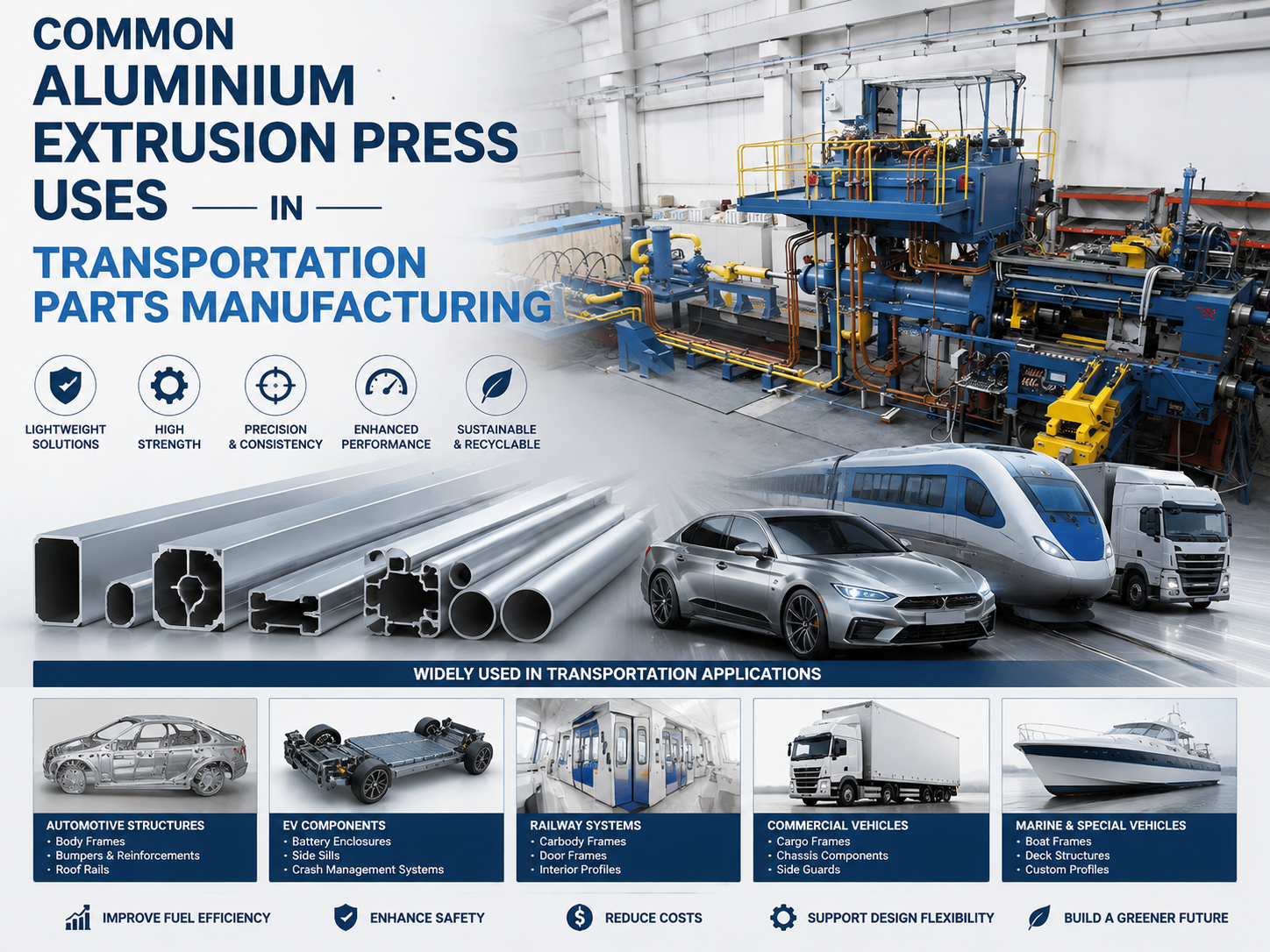
The global transportation industry is undergoing a massive transformation, driven by the urgent need for fuel efficiency, carbon footprint reduction, and the rapid rise of electric vehicles (EVs). At the heart of this revolution is the aluminium extrusion press. As manufacturers move away from heavy steel components, aluminium has emerged as the material of choice due to its exceptional strength-to-weight ratio, corrosion resistance, and recyclability. Understanding the Common Aluminium Extrusion Press Uses In Transportation Parts Manufacturing is essential for any fabrication facility looking to stay competitive in today’s industrial landscape.
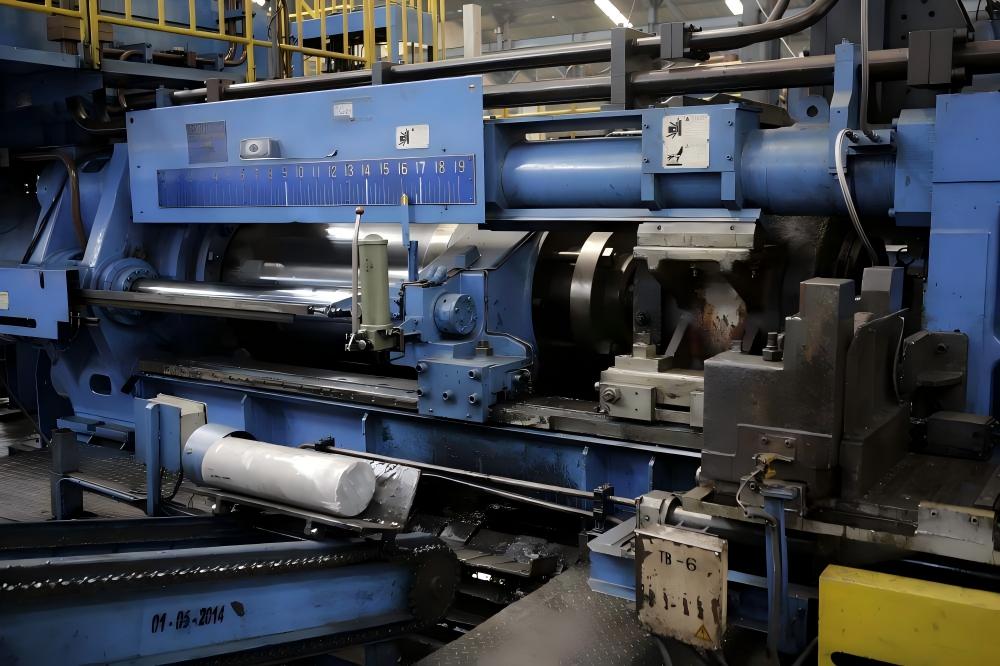
Aluminium extrusion is a process where aluminium alloy material is forced through a die with a specific cross-sectional profile. A powerful hydraulic press pushes a heated billet through the die, creating complex shapes that would be nearly impossible or prohibitively expensive to produce using other methods like machining or casting. In the transportation sector, these profiles form the backbone of everything from high-speed trains to lightweight automotive chassis. This article explores the diverse applications, technical requirements, and machinery configurations that define modern transportation manufacturing.
Application Scenarios: Where Extrusion Meets Motion
1. Automotive Industry and Electric Vehicles (EVs)
The automotive sector is perhaps the largest consumer of extruded aluminium profiles. With the shift toward electrification, the weight of battery packs has forced engineers to find weight savings elsewhere. Common aluminium extrusion press uses in transportation parts manufacturing within the automotive realm include crash management systems (CMS), engine mounts, and roof rails. Extruded sections are particularly valued for their energy absorption capabilities; in the event of a collision, specifically designed hollow profiles can collapse in a controlled manner to protect passengers.
Furthermore, EV battery trays are often constructed using large-scale aluminium extrusions. These trays must be rigid, leak-proof, and capable of dissipating heat. By using an extrusion press, manufacturers can create integrated cooling channels directly within the structural frame of the battery housing, reducing the number of parts and the complexity of the assembly.
2. High-Speed Rail and Public Transit
In the rail industry, the goal is to move more people at higher speeds while consuming less energy. Modern train carriages are essentially large assemblies of aluminium extrusions. The side walls, roof panels, and floor structures of high-speed trains are often made from wide, multi-hollow profiles. These profiles provide the necessary longitudinal stiffness to handle the stresses of high-speed travel while keeping the overall weight of the train low. This weight reduction allows for faster acceleration and shorter braking distances, significantly improving operational efficiency.
3. Aerospace and Aviation
Aerospace manufacturing demands the highest levels of precision and material integrity. Aluminium extrusion presses are used to create fuselage stringers, wing spars, and seat tracks. While the alloys used in aerospace (such as the 7xxx series) are harder to extrude than standard architectural alloys, the extrusion process ensures a grain structure that is optimized for fatigue resistance. The ability to create long, continuous parts without joints or welds is a critical safety advantage in aircraft construction.
4. Marine and Shipbuilding
Aluminium’s natural resistance to corrosion makes it ideal for marine environments. Extrusion presses are used to manufacture deck components, masts, and hull ribs for both commercial vessels and luxury yachts. The use of extruded profiles allows for modular construction, where large sections of a ship can be pre-fabricated and then welded together, drastically reducing time-in-dock.
Material and Process Requirements
Manufacturing parts for the transportation sector is not as simple as pushing metal through a hole. It requires a deep understanding of metallurgy and thermal dynamics. The most common alloys used are the 6xxx series (Al-Mg-Si), such as 6061 and 6063, due to their excellent extrudability and heat-treatability. For high-stress applications, the 7xxx series (Al-Zn) is used, though it requires much higher press tonnages and tighter temperature control.
- Billet Temperature: The aluminium billet must be heated to a precise temperature (usually between 400°C and 500°C) to ensure it is soft enough to flow but not so hot that it loses its structural properties or causes surface defects.
- Extrusion Speed: Speed must be carefully regulated. If the press pushes too fast, the friction can cause the metal to overheat and tear. If it is too slow, the metal may cool down before the profile is complete.
- Quenching: Immediately after the profile exits the die, it must be cooled (quenched) using air or water. This “freezes” the alloying elements in place, allowing the part to achieve its maximum strength during the subsequent aging process.
- Tolerances: Transportation parts often require extremely tight tolerances to ensure they fit perfectly into automated assembly lines. This necessitates high-precision dies and stable hydraulic pressure from the extrusion press.
Recommended Machine Configuration for Transportation Parts
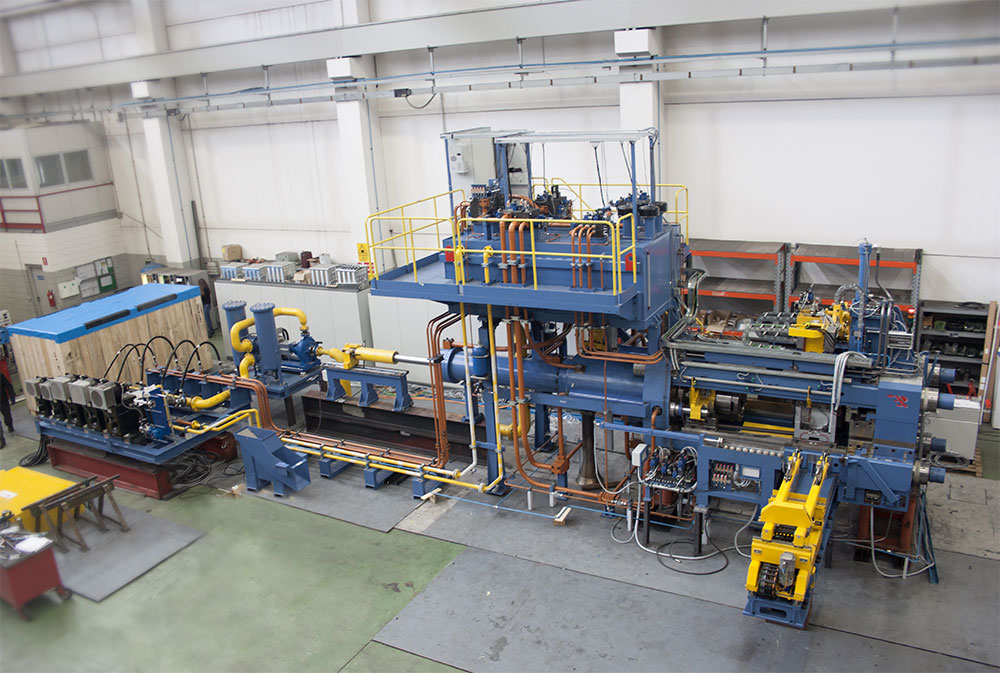
When selecting an aluminium extrusion press for transportation parts, the configuration must match the complexity and size of the intended components. For automotive parts like bumper beams or battery trays, a press with a capacity of 1800 to 3600 tons is typically required. For larger rail or aerospace components, tonnages can exceed 5000 to 10,000 tons.
| Component Type | Recommended Press Tonnage | Key Features Required |
|---|---|---|
| Automotive Trim & Roof Rails | 1000T – 1450T | High speed, precision cooling |
| EV Battery Trays & Chassis | 2500T – 4000T | Large container size, PLC control |
| Rail Carriage Frames | 5000T+ | Extra-long run-out tables, heavy-duty pullers |
| Aerospace Stringers | 3000T – 6000T | Isothermal extrusion capability, advanced logging |
Key technical features for these machines include: Isothermal Extrusion, which adjusts the press speed to maintain a constant temperature at the die; Advanced PLC Systems (like Siemens or Schneider) for recipe management; and Energy-Saving Servo Motors that reduce electricity consumption during the idle phases of the cycle. HARSLE machines are specifically engineered to integrate these technologies, providing a stable platform for high-volume transportation part production.
The Workflow: From Billet to Finished Component
The production of transportation parts follows a rigorous workflow to ensure quality and consistency. It begins with Billet Preparation, where logs of aluminium are cut to length and heated in a gas or induction furnace. Once the billet reaches the target temperature, it is transferred to the press loader.
The Extrusion Phase follows, where the main ram forces the billet into the container and through the die. As the profile emerges, it is guided by a Puller, which maintains a slight tension to prevent warping. After the profile reaches the desired length, it is cut and moved to the Cooling Table. Here, the quenching process occurs, followed by Stretching. Stretching is a critical step for transportation parts; it straightens the profiles and relieves internal stresses caused during extrusion.
Finally, the profiles are cut to their final dimensions and placed in an Aging Oven. This heat treatment process allows the alloying elements to precipitate, significantly increasing the hardness and tensile strength of the aluminium. For automotive manufacturers, this ensures that the parts meet the strict safety standards required for crash-tested components.
Productivity Benefits of Using Modern Extrusion Presses
Investing in a high-quality aluminium extrusion press offers several productivity benefits for transportation part manufacturers:
- Material Efficiency: Extrusion is a near-net-shape process, meaning very little material is wasted compared to machining parts from solid blocks.
- Complex Geometries: Presses can create multi-hollow shapes that provide incredible strength while remaining hollow and light. This is a primary reason for the Common Aluminium Extrusion Press Uses In Transportation Parts Manufacturing.
- Reduced Assembly Time: By extruding complex features directly into a profile (such as screw ports or interlocking joints), the need for secondary welding or fastening is reduced.
- Consistency: Modern hydraulic systems and automated controls ensure that the 1,000th part is identical to the first, which is vital for automotive OEMs (Original Equipment Manufacturers).
Case Example: EV Battery Housing Production
A leading automotive supplier recently upgraded their facility with a HARSLE 3600T extrusion press to produce battery housings for a new line of electric SUVs. The challenge was to create a large-format profile with integrated liquid cooling channels. Traditional methods would have required welding multiple tubes to a plate, a process prone to leaks and high labor costs.
By using a custom-designed bridge die and the high-pressure capabilities of the HARSLE press, the supplier was able to extrude the entire baseplate with internal channels in a single pass. This resulted in a 30% reduction in part weight and a 50% increase in production speed. The precision of the press ensured that the wall thickness of the cooling channels remained consistent, preventing any risk of coolant leakage into the battery cells.
Frequently Asked Questions (FAQ)
What is the most common alloy for automotive extrusions?
The 6061 and 6063 alloys are the most common due to their balance of strength, corrosion resistance, and ease of extrusion. However, for crash-sensitive areas, 6082 or 7xxx series alloys are often preferred for their higher energy absorption.
How does an extrusion press contribute to vehicle lightweighting?
By allowing for the creation of thin-walled, complex hollow shapes, the extrusion press enables engineers to replace heavy steel components with aluminium parts that offer the same structural integrity at a fraction of the weight.
What maintenance is required for a high-tonnage extrusion press?
Regular maintenance includes monitoring hydraulic oil cleanliness, checking the alignment of the main ram and container, inspecting the heating elements in the billet furnace, and ensuring the PLC software is updated for optimal performance.
Can one press produce different types of parts?
Yes, by simply changing the die, a single extrusion press can produce a wide variety of profiles, from simple flat bars to complex multi-hollow structural sections, making it a highly versatile investment for any factory.
Conclusion: Partnering with HARSLE for Transportation Excellence
The Common Aluminium Extrusion Press Uses In Transportation Parts Manufacturing are expanding every day as the world moves toward greener, faster, and more efficient transit solutions. Whether you are manufacturing components for the next generation of electric vehicles or structural frames for high-speed rail, the quality of your extrusion press is the foundation of your success. HARSLE provides the cutting-edge technology, robust construction, and technical support needed to excel in this demanding industry. Contact us today to learn how our extrusion solutions can transform your production line and help you lead the way in transportation manufacturing.


