Aluminium Extrusion Press Applications for High-Strength Lightweight Components: A Comprehensive Guide

Introduction to Aluminium Extrusion Press Applications for High-Strength Lightweight Components
In the modern industrial landscape, the demand for materials that offer both high structural integrity and minimal weight has never been higher. This shift is primarily driven by the global push for energy efficiency, particularly in the automotive and aerospace sectors. The aluminium extrusion press stands at the forefront of this revolution. By forcing heated aluminium billets through a shaped die, these machines create complex profiles that are essential for manufacturing high-strength lightweight components. HARSLE, a leader in metal fabrication machinery, provides advanced extrusion solutions designed to meet the rigorous standards of today’s high-tech industries.
The versatility of the aluminium extrusion process allows for the creation of intricate cross-sections that would be impossible or prohibitively expensive to produce via machining or casting. When we discuss Aluminium Extrusion Press Applications High-Strength Lightweight Components, we are looking at a synergy of metallurgical science and mechanical engineering. These components are not just light; they are engineered to withstand significant mechanical stress, resist corrosion, and provide excellent thermal conductivity.
This comprehensive guide explores the various application scenarios, material requirements, and technical workflows associated with high-strength aluminium extrusion. Whether you are an engineer looking to optimize a production line or a procurement specialist evaluating new machinery, understanding the capabilities of a HARSLE extrusion press is vital for staying competitive in the metal fabrication market.
Application Scenarios for High-Strength Lightweight Components
1. Automotive Industry: The Drive for Lightweighting
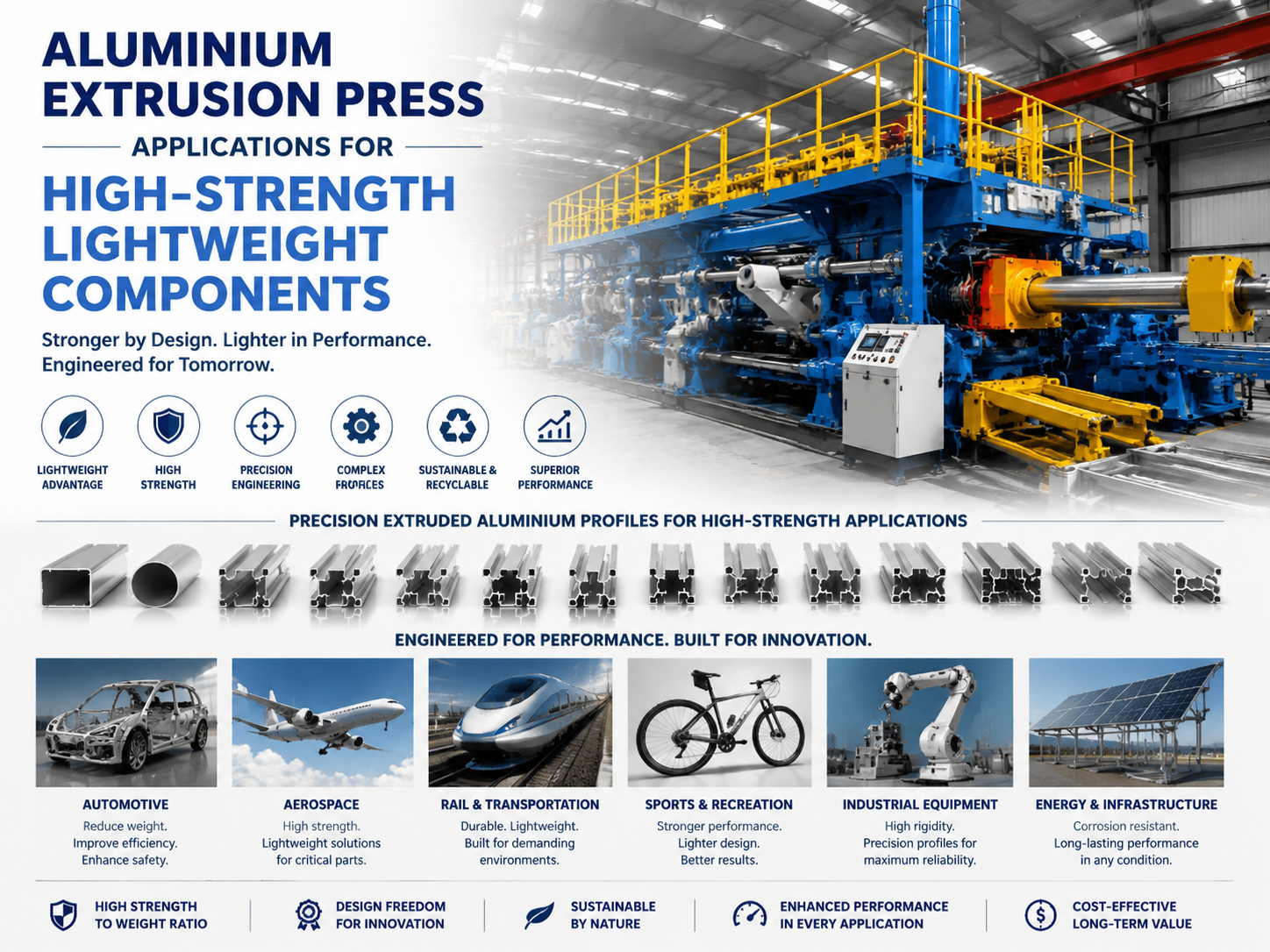
The automotive sector is perhaps the largest consumer of high-strength aluminium extrusions. As electric vehicles (EVs) become more prevalent, reducing the weight of the vehicle chassis and body is critical to extending battery range. Aluminium extrusion press applications for high-strength lightweight components in this field include battery trays, crash boxes, side sills, and roof rails. These parts must absorb energy during a collision while remaining light enough to improve the vehicle’s overall power-to-weight ratio.
Furthermore, the use of 6000 and 7000 series aluminium alloys in these extrusions ensures that the components can handle the structural loads of the vehicle. HARSLE machines are specifically calibrated to handle the high pressures required to extrude these tougher alloys, ensuring consistent wall thickness and structural uniformity across long production runs.
2. Aerospace and Defense: Precision and Strength
In aerospace, every gram saved translates to increased payload capacity and reduced fuel consumption. Aluminium extrusions are used for fuselage stringers, floor beams, and seat tracks. These components require extreme precision and must adhere to stringent safety standards. The ability of an aluminium extrusion press to produce long, seamless sections with high strength-to-weight ratios makes it indispensable for aircraft manufacturing.
Defense applications also utilize these extrusions for portable bridges, radar frames, and missile components. The high-strength nature of the extruded profiles ensures that they can perform under extreme environmental conditions, from high-altitude cold to the intense heat generated during high-speed flight.
3. Renewable Energy: Solar and Wind Infrastructure
The renewable energy sector relies heavily on aluminium extrusions for solar panel frames and mounting systems. These components must be lightweight for easy installation on rooftops but strong enough to withstand high wind loads and snow accumulation. Similarly, in wind energy, extruded aluminium is used in internal platform structures and cooling systems for the nacelle.
Using a HARSLE aluminium extrusion press allows manufacturers to produce these frames at high speeds with minimal material waste. The corrosion resistance of aluminium also ensures a long service life for outdoor energy installations, reducing maintenance costs over the decades-long lifespan of the equipment.
4. High-Speed Rail and Marine Applications
High-speed trains utilize large-scale aluminium extrusions for their body panels and structural frames. These extrusions help in achieving the aerodynamic shapes required for high speeds while keeping the train light enough to accelerate quickly. In the marine industry, extruded aluminium is used for masts, hulls, and decking, where its resistance to saltwater corrosion is a primary advantage alongside its weight-saving properties.
Material and Process Requirements
To achieve high-strength lightweight components, the choice of alloy and the precision of the extrusion process are paramount. Not all aluminium is created equal; different alloys offer varying levels of extrudability, strength, and finish.
Alloy Selection
- 6000 Series (Al-Mg-Si): These are the most common alloys for extrusion. They offer a good balance of strength, corrosion resistance, and extrudability. 6061 and 6063 are staples in the industry, often used for structural and architectural applications.
- 7000 Series (Al-Zn): Known for their very high strength, these alloys are often used in aerospace and high-end automotive parts. However, they are more difficult to extrude and require higher pressures and precise temperature control, which is where HARSLE’s robust hydraulic systems excel.
- 2000 Series (Al-Cu): These alloys offer high strength and hardness but are less resistant to corrosion. They are typically used in specific aerospace components where strength is the absolute priority.
Temperature and Pressure Control
The extrusion process is highly dependent on thermal management. The billet must be heated to a specific temperature (usually between 400°C and 500°C) to become plastic enough for extrusion but not so hot that it loses its structural properties or causes surface defects. Isothermal extrusion—maintaining a constant temperature throughout the process—is a key technique for ensuring uniform mechanical properties in high-strength components.
Pressure is the other critical variable. High-strength alloys require significantly more force to push through the die. A HARSLE aluminium extrusion press is designed with advanced hydraulic manifolds and high-pressure pumps to provide the consistent force necessary to overcome the flow stress of these advanced materials.
Recommended Machine Configuration
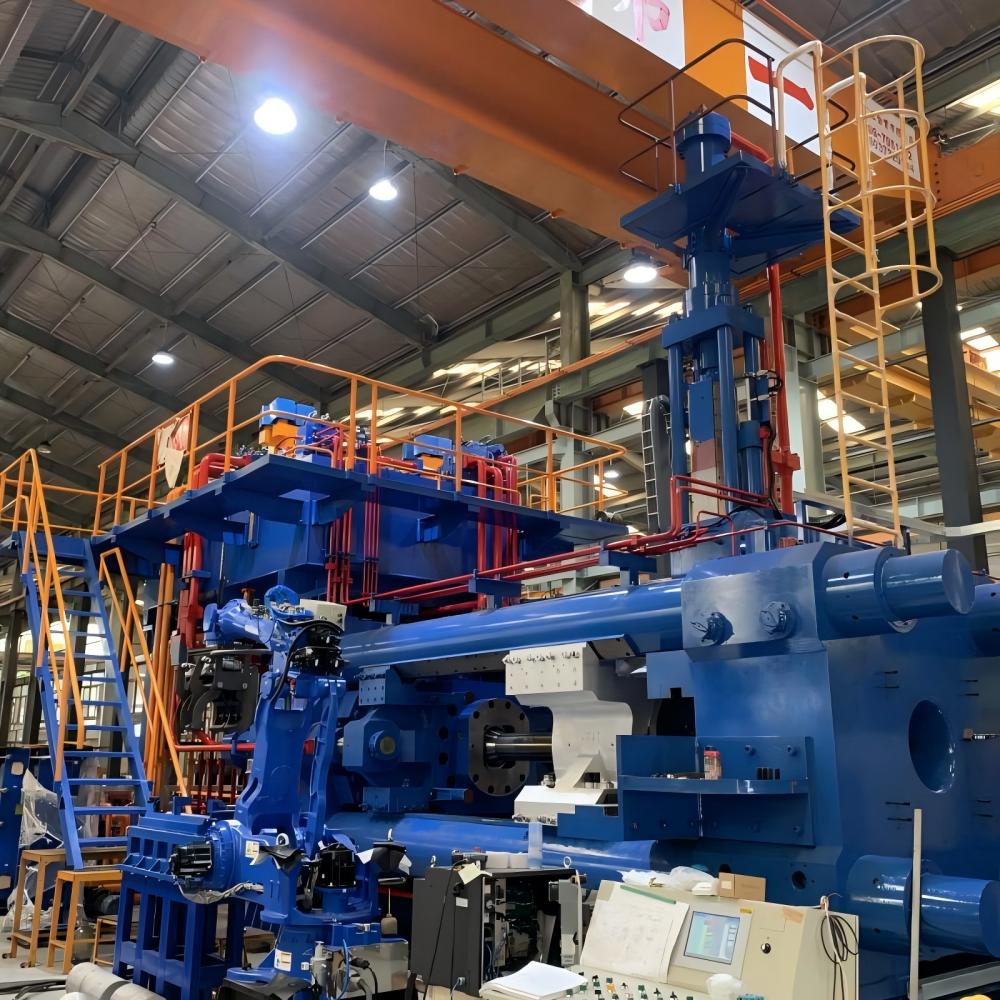
When selecting an aluminium extrusion press for high-strength lightweight components, the configuration must be tailored to the specific demands of the material and the complexity of the profiles. HARSLE recommends the following core components for a high-performance setup:
| Component | Specification/Feature | Benefit for High-Strength Components |
|---|---|---|
| Main Hydraulic System | Variable frequency drive with high-pressure pumps | Precise control over extrusion speed and pressure. |
| PLC Control System | Siemens or Schneider with touchscreen interface | Real-time monitoring and data logging for quality assurance. |
| Billet Heater | Induction or multi-log gas furnace | Ensures uniform billet temperature for consistent flow. |
| Quenching System | Air and water spray combination | Rapid cooling to lock in the metallurgical structure. |
| Puller System | Double puller with high-precision tracking | Reduces scrap and ensures profile straightness. |
In addition to these core components, the die design is crucial. For high-strength applications, dies must be made from high-grade tool steel and often feature specialized coatings to reduce friction and wear. HARSLE provides consultancy on die design to ensure that the flow of metal is optimized for the specific geometry of the component.
The Workflow: From Billet to Finished Component
The production of high-strength lightweight components via aluminium extrusion follows a precise sequence of steps. Any deviation in this workflow can result in compromised structural integrity.
Step 1: Billet Preparation and Heating
The process begins with the aluminium billet, which is a solid log of the chosen alloy. The billet is cut to length and then heated in a furnace. For high-strength components, uniform heating is essential to prevent “hot spots” that could lead to uneven extrusion. HARSLE’s integrated heating solutions ensure the billet reaches the optimal plastic state before entering the press.
Step 2: The Extrusion Cycle
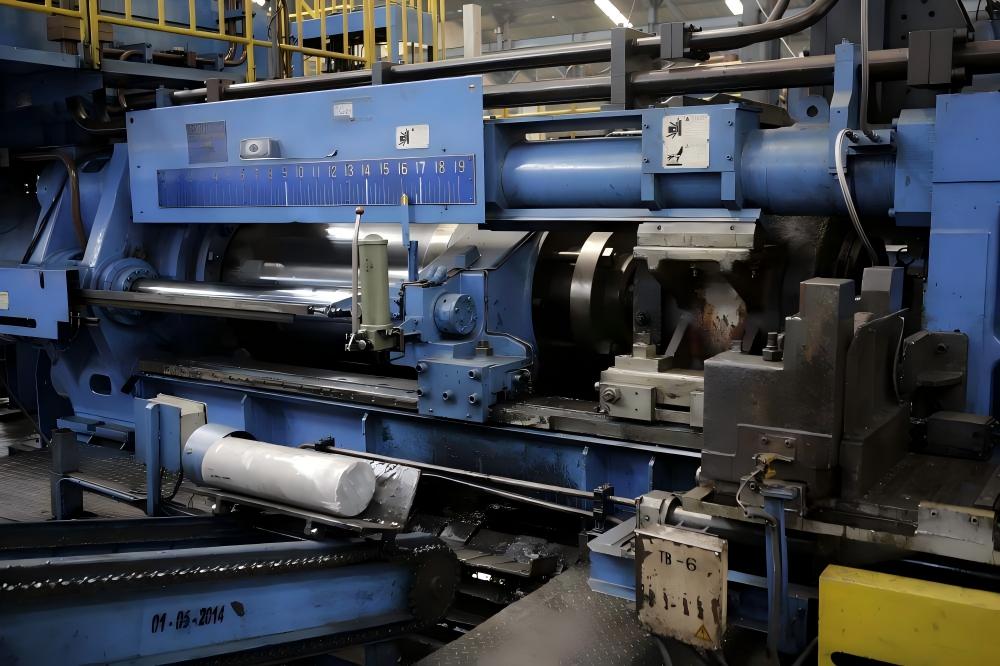
The heated billet is transferred to the container of the extrusion press. A hydraulic ram then pushes the billet against the die. Under immense pressure, the aluminium is forced through the die opening, taking its shape. During this phase, the HARSLE control system monitors the extrusion speed and pressure, adjusting in real-time to maintain the desired profile dimensions.
Step 3: Quenching and Cooling
As the profile emerges from the die, it must be cooled rapidly to achieve the desired hardness and strength. This is known as quenching. Depending on the alloy, this can be done using air fans, water mists, or full water baths. Proper quenching is vital for 6000 and 7000 series alloys to ensure they respond correctly to subsequent heat treatments.
Step 4: Stretching and Straightening
Once cooled, the long extruded profiles may have slight twists or bows. A stretcher machine grips both ends of the profile and pulls it to straighten it and relieve internal stresses. This step also slightly increases the yield strength of the material through work hardening.
Step 5: Cutting and Aging
The profiles are cut to the required lengths. Finally, they undergo an aging process—either natural aging at room temperature or artificial aging in an oven. Artificial aging (precipitation hardening) is the standard for high-strength components, as it optimizes the distribution of alloying elements within the aluminium matrix, reaching peak mechanical properties.
Productivity Benefits of HARSLE Extrusion Presses
Investing in a high-quality aluminium extrusion press from HARSLE offers several long-term productivity benefits for manufacturers focusing on high-strength lightweight components:
1. Material Efficiency: The extrusion process is inherently low-waste. Unlike machining, where a large portion of the raw material is turned into chips, extrusion uses nearly all the billet material. Any scrap produced (such as the butt end of the billet) is easily recyclable.
2. Complex Geometry Integration: Extrusion allows for the integration of multiple functions into a single profile. For example, a structural beam can include channels for wiring or cooling fluids, reducing the need for secondary assembly steps and further lowering the weight of the final product.
3. Energy Efficiency: Modern HARSLE presses utilize energy-saving hydraulic systems and efficient heating technologies. By reducing the “dead cycle time” (the time between extrusions), manufacturers can significantly increase their hourly output while lowering energy consumption per ton of aluminium produced.
4. Consistent Quality: With advanced PLC controls and automated handling systems, the risk of human error is minimized. This ensures that every batch of high-strength components meets the rigorous specifications required by industries like aerospace and automotive.
Case Example: EV Battery Housing Production
A leading manufacturer of electric vehicle components recently integrated a HARSLE 2500-ton aluminium extrusion press into their production line. Their goal was to produce complex, multi-hollow battery trays using 6061-T6 aluminium. These trays needed to be lightweight to maximize vehicle range but strong enough to protect the battery cells in the event of a side-impact collision.
By utilizing HARSLE’s precision extrusion technology, the manufacturer was able to achieve a wall thickness tolerance of +/- 0.1mm. The integrated quenching system ensured that the profiles reached the required hardness immediately after extrusion, streamlining the workflow to the aging ovens. The result was a 15% reduction in production time and a significant decrease in reject rates compared to their previous machinery. This case highlights how the right Aluminium Extrusion Press Applications High-Strength Lightweight Components can transform manufacturing efficiency.
Frequently Asked Questions (FAQ)
What is the maximum strength achievable with aluminium extrusions?
Using 7000 series alloys and proper heat treatment (T6 temper), aluminium extrusions can reach tensile strengths of over 500 MPa, which is comparable to some structural steels but at one-third of the weight.
How does HARSLE ensure the longevity of its extrusion presses?
HARSLE uses high-grade forged steel for the main cylinder and robust frames designed using Finite Element Analysis (FEA). Regular maintenance schedules and the use of world-class hydraulic components further ensure a long service life.
Can a single press handle different alloys?
Yes, HARSLE presses are versatile. By adjusting the pressure, speed, and temperature settings via the PLC interface, a single machine can extrude everything from soft 1000 series aluminium to high-strength 7000 series alloys.
What is the typical ROI for an aluminium extrusion press?
ROI varies based on production volume, but most manufacturers see a return on investment within 18 to 36 months through material savings, reduced labor costs, and the ability to take on high-value contracts in the aerospace and EV sectors.
Conclusion: Partnering with HARSLE for Future-Ready Manufacturing
The transition toward lightweight, high-strength materials is a defining trend of 21st-century manufacturing. Aluminium extrusion is the key technology enabling this shift. By understanding the intricate Aluminium Extrusion Press Applications High-Strength Lightweight Components, manufacturers can position themselves at the cutting edge of industrial innovation.
HARSLE is committed to providing the machinery and expertise necessary to excel in this demanding field. Our extrusion presses are engineered for precision, durability, and efficiency, ensuring that your production line is ready for the challenges of tomorrow. Whether you are producing components for the next generation of electric vehicles or structural members for aerospace, HARSLE has the solution.
Ready to elevate your production capabilities? Contact HARSLE today to discuss your specific extrusion requirements and discover how our advanced machinery can drive your success in the world of high-strength lightweight components.