Aluminium Extrusion Press Applications for Modular Assembly Systems: A Comprehensive Guide

Introduction to Aluminium Extrusion Press Applications for Modular Assembly Systems
In the modern industrial landscape, the demand for flexibility, speed, and structural integrity has led to the widespread adoption of modular assembly systems. These systems, often characterized by their signature T-slot profiles, rely heavily on the precision and efficiency of high-quality extrusion machinery. Understanding Aluminium Extrusion Press Applications for Modular Assembly Systems is essential for manufacturers looking to internalize production or optimize their supply chain. HARSLE, a leader in metal fabrication technology, provides the robust machinery required to transform raw aluminium billets into the complex, high-tolerance profiles that form the backbone of modern automation.
Modular assembly systems have replaced traditional welded steel structures in many sectors due to their lightweight nature and ease of reconfiguration. However, the success of these systems depends entirely on the dimensional accuracy of the extruded profiles. An aluminium extrusion press must deliver consistent pressure and temperature control to ensure that every millimeter of the profile meets the rigorous standards required for interlocking hardware and accessories. This article explores the technical nuances, machine configurations, and strategic benefits of utilizing HARSLE extrusion presses in this specialized field.
Application Scenarios for Modular Assembly Systems
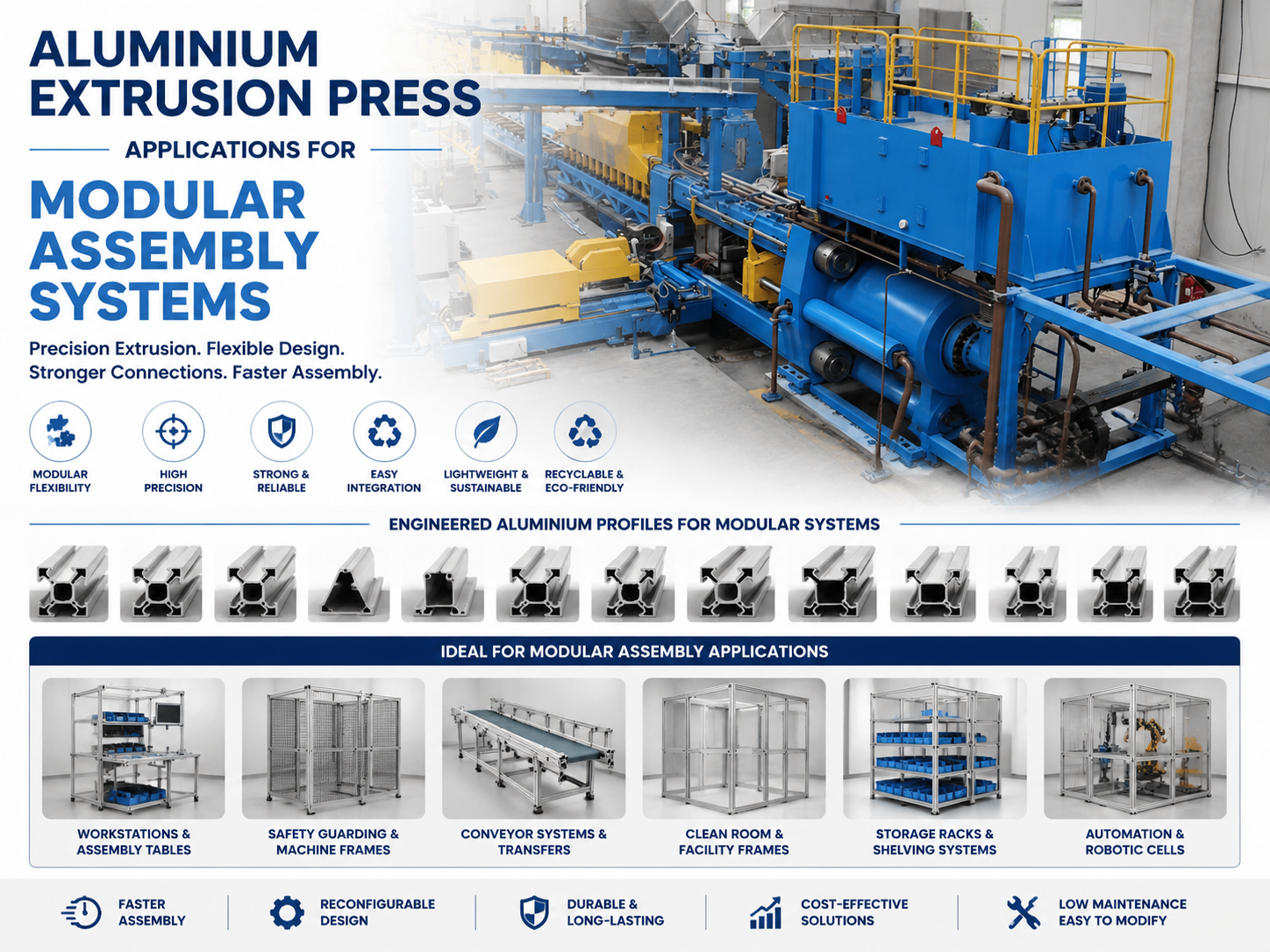
The versatility of modular assembly systems means they are found in nearly every corner of the manufacturing world. One of the primary application scenarios is in the construction of industrial workstations and ergonomic assembly lines. These environments require custom-sized frames that can be easily adjusted as production needs change. By utilizing an aluminium extrusion press, companies can produce specific profile geometries that allow for the seamless integration of monitors, tool balancers, and lighting systems directly into the frame.
Another critical scenario involves the robotics and automation sector. Safety enclosures and robot pedestals are frequently built using modular aluminium profiles. These structures must be rigid enough to withstand the vibrations of high-speed robotic arms while remaining lightweight enough for rapid deployment. The precision offered by HARSLE extrusion presses ensures that the T-slots are perfectly aligned, allowing for the secure mounting of polycarbonate shielding and safety sensors without the need for complex machining or welding.
Cleanroom environments and laboratory settings also benefit significantly from these applications. Aluminium is naturally resistant to corrosion and does not outgas, making it ideal for controlled environments. Modular systems allow for the quick assembly of laminar flow hoods, equipment racks, and partition walls. In these cases, the surface finish of the extrusion is paramount; a high-quality extrusion press ensures a smooth, non-porous surface that is easy to sanitize and maintain.
Material and Process Requirements
When discussing Aluminium Extrusion Press Applications for Modular Assembly Systems, the choice of material is usually centered around the 6000 series aluminium alloys. Specifically, 6063 and 6061 are the industry standards. 6063 is preferred for its excellent extrudability and superior surface finish, making it the go-to choice for architectural and modular framing. 6061, while slightly more difficult to extrude, offers higher structural strength for heavy-duty load-bearing applications.
The process requirements for modular profiles are exceptionally stringent. Unlike simple decorative trim, modular profiles feature complex internal cavities and precise T-slot dimensions. The die design must account for the flow of metal into these thin-walled sections to prevent structural weaknesses or dimensional warping. Furthermore, the cooling (quenching) process must be carefully controlled to achieve the desired temper, typically T5 or T6, which provides the necessary hardness for the profile to hold fasteners securely under tension.
Tolerance control is perhaps the most critical process requirement. In modular systems, multiple components must slide or lock into the extrusion. If the T-slot is even a fraction of a millimeter too narrow, the entire assembly system fails. HARSLE presses utilize advanced hydraulic control systems to maintain constant extrusion speed and pressure, which minimizes variance across the length of the profile. This level of control is vital for maintaining the “interchangeability” that modular systems promise.
Recommended Machine Configuration
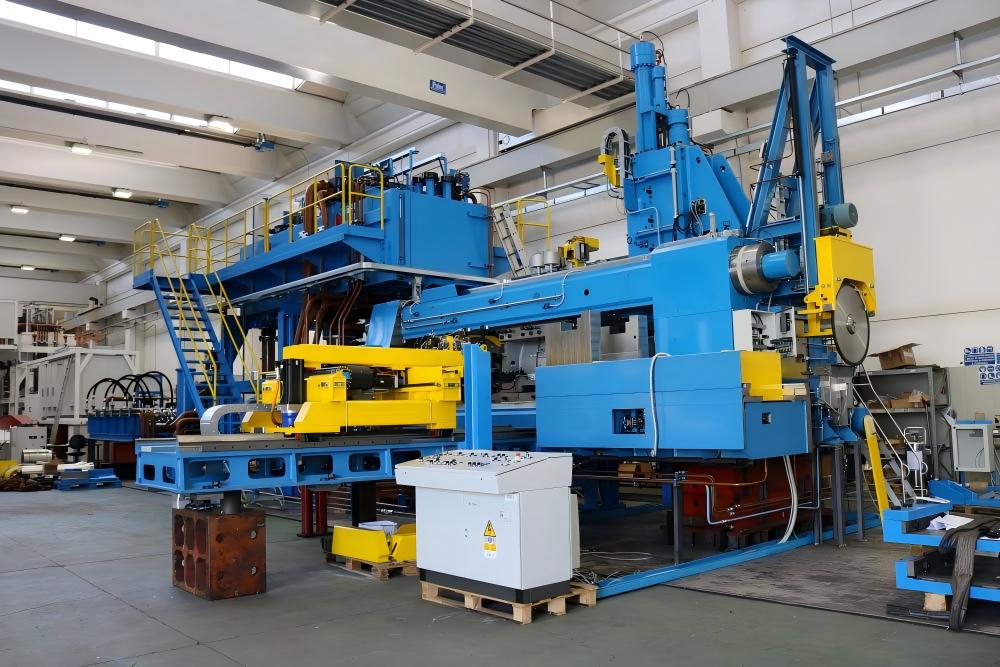
For producing modular assembly profiles, a medium-to-high tonnage extrusion press is typically recommended. Depending on the cross-sectional area of the profiles, a press ranging from 1000T to 2500T is usually sufficient. HARSLE’s range of hydraulic extrusion presses is specifically engineered to handle the high-pressure demands of complex multi-cavity dies used in modular framing.
Key Components of the Configuration:
- Main Hydraulic System: High-efficiency servo-driven pumps that reduce energy consumption while providing precise pressure regulation.
- PLC Control System: A user-friendly interface that allows operators to store and recall specific extrusion recipes for different profile shapes, ensuring consistency across production batches.
- Billet Heating System: An induction or gas-fired furnace that ensures the aluminium billet reaches the optimal plastic state (usually between 450°C and 500°C) before entering the container.
- Double-Die Slide: This allows for rapid die changes, which is essential for modular systems where a variety of different profile shapes (e.g., 20×20, 40×40, 80×80) are produced in the same facility.
- Automated Puller and Cooling Table: To maintain the straightness of the profile and ensure uniform cooling, preventing the “banana effect” or twisting.
Furthermore, the integration of an automated handling system is highly recommended. Once the profile exits the press, it must be stretched to relieve internal stresses and then cut to precise lengths. A HARSLE-configured line includes these downstream components to ensure that the final product is ready for the aging oven and subsequent anodizing or powder coating.
Workflow of the Extrusion Process
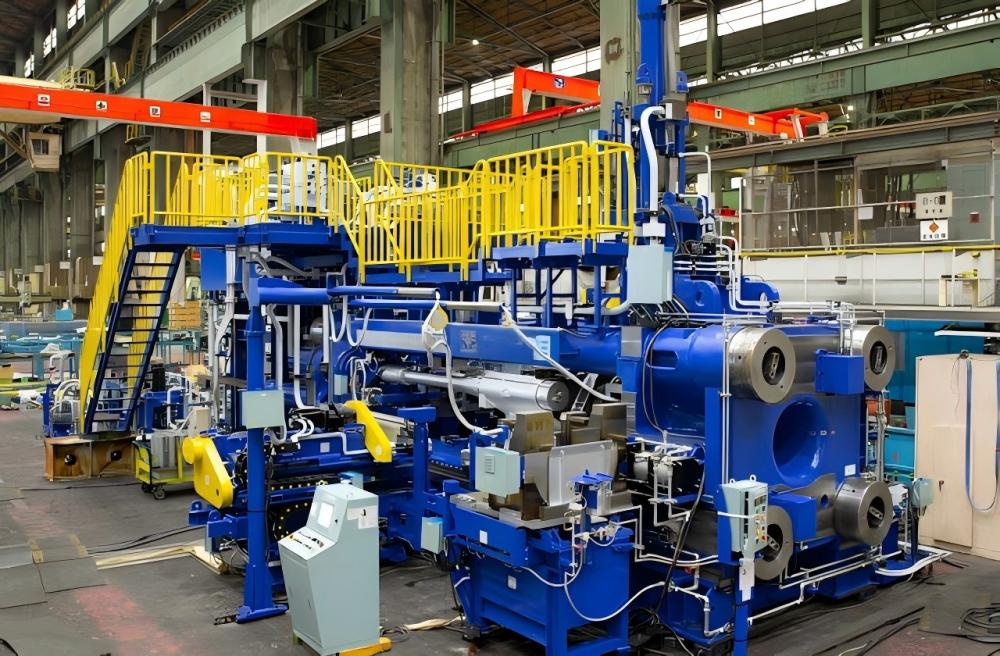
The workflow for Aluminium Extrusion Press Applications for Modular Assembly Systems is a highly synchronized operation. It begins with the preparation of the aluminium log, which is cut into billets of a specific length. These billets are then heated in a furnace to the required extrusion temperature. Simultaneously, the extrusion die is preheated in a die oven to prevent thermal shock and ensure smooth metal flow.
Once heated, the billet is loaded into the container of the press. The hydraulic ram then pushes the billet through the die. As the aluminium emerges from the die in the shape of the modular profile, it is guided by a puller. The puller maintains a slight tension on the profile, which is crucial for maintaining dimensional stability. Immediately after exiting the die, the profile undergoes quenching—either by air or water—to lock in its mechanical properties.
After the profile has reached the desired length, it is sheared and moved to the cooling table. Once cooled to room temperature, the profiles are moved to a stretcher. The stretching process is vital for modular systems as it straightens the profiles and increases the yield strength of the material. Finally, the profiles are cut to finished lengths and placed in an aging oven, where they are held at a specific temperature for several hours to achieve the final T5 or T6 hardness. This rigorous workflow ensures that every piece of the modular system is capable of performing its structural role.
Productivity and Economic Benefits
Investing in a HARSLE aluminium extrusion press for modular assembly systems offers significant productivity benefits. Firstly, it allows for “just-in-time” manufacturing. Instead of carrying a massive inventory of various profile sizes, a manufacturer can produce exactly what is needed for a specific project. This reduces warehousing costs and improves cash flow. Additionally, the ability to create custom profiles gives companies a competitive edge, allowing them to design proprietary interlocking systems that offer better performance than generic off-the-shelf solutions.
From an economic standpoint, the reduction in waste is a major factor. Modern HARSLE presses are designed with minimal dead-cycle times and high-precision shearing, which maximizes the yield from every aluminium billet. Furthermore, the energy efficiency of servo-hydraulic systems significantly lowers the operational cost per kilogram of extruded material. When compared to the cost of purchasing pre-extruded profiles from a third-party supplier, the ROI on a HARSLE extrusion press is often realized within a few years of consistent operation.
The structural benefits also translate to economic gains. Modular systems built from high-quality extrusions are durable and reusable. If a factory layout changes, the profiles can be disassembled and reconfigured into new structures. This sustainability is a key selling point for modern industrial clients who are increasingly focused on reducing their environmental footprint and long-term capital expenditure.
Case Example: Automotive Component Assembly Line
A leading Tier-1 automotive supplier recently integrated a HARSLE 1600T extrusion press into their facility to support their modular assembly needs. Previously, the company relied on external vendors for their T-slot profiles, which often led to delays in line reconfigurations and high shipping costs for bulky aluminium bundles. By bringing the extrusion process in-house, they were able to produce custom 45x45mm and 90x90mm profiles on demand.
The result was a 30% reduction in the lead time for new assembly workstations. Furthermore, the engineering team developed a specialized profile with an integrated conduit for pneumatic lines, a feature that was not available from their previous suppliers. This innovation simplified the assembly of their robotic cells and reduced the overall footprint of the machines. The HARSLE press provided the consistent tolerances required for the integrated conduit, ensuring that the pneumatic fittings snapped into place perfectly every time. This case highlights how Aluminium Extrusion Press Applications for Modular Assembly Systems can drive innovation and operational efficiency at the highest levels of manufacturing.
Frequently Asked Questions (FAQ)
1. What is the best alloy for modular assembly profiles?
The most common alloy is 6063-T5. It offers a perfect balance of extrudability, surface finish, and sufficient strength for most framing applications. For heavy-duty structures, 6061-T6 is recommended due to its higher tensile strength.
2. How does HARSLE ensure the precision of the T-slot dimensions?
HARSLE presses use high-precision hydraulic valves and advanced PLC feedback loops to maintain a constant extrusion speed. This, combined with high-quality die steel and precise temperature control, ensures that the T-slot dimensions remain within tight tolerances (often within +/- 0.1mm).
3. Can a HARSLE press handle different profile sizes?
Yes. By changing the extrusion die and adjusting the press parameters via the PLC, a single HARSLE press can produce a wide range of profiles, from small 20x20mm laboratory rails to large 100x200mm heavy-duty structural beams.
4. What maintenance is required for an aluminium extrusion press?
Regular maintenance includes monitoring hydraulic oil quality, checking the alignment of the container and stem, and inspecting the heating elements in the billet furnace. HARSLE provides comprehensive maintenance guides and support to ensure long-term machine reliability.
5. Is it cost-effective to produce profiles in-house?
For companies with high volume or those requiring specialized, custom profiles, in-house production is highly cost-effective. It eliminates supplier markups, reduces shipping costs, and provides total control over the production schedule.
Conclusion and Call to Action
The role of Aluminium Extrusion Press Applications for Modular Assembly Systems cannot be overstated in today’s fast-paced industrial world. From providing the structural framework for automation to enabling the rapid deployment of custom workstations, the quality of the extrusion press is the foundation of success. HARSLE’s commitment to precision, energy efficiency, and robust engineering makes our extrusion presses the ideal choice for manufacturers looking to master their modular assembly production.
Are you ready to elevate your manufacturing capabilities and take control of your modular profile production? Contact HARSLE today to speak with our technical experts. We can help you configure the perfect extrusion line tailored to your specific application needs, ensuring you achieve the highest levels of productivity and quality. Visit our website or reach out to our sales team to schedule a consultation and see our machinery in action.