
Aluminium Extrusion Press Uses in Machinery Guard and Safety Frame Production: A Comprehensive Guide

Introduction to Aluminium Extrusion in Industrial Safety
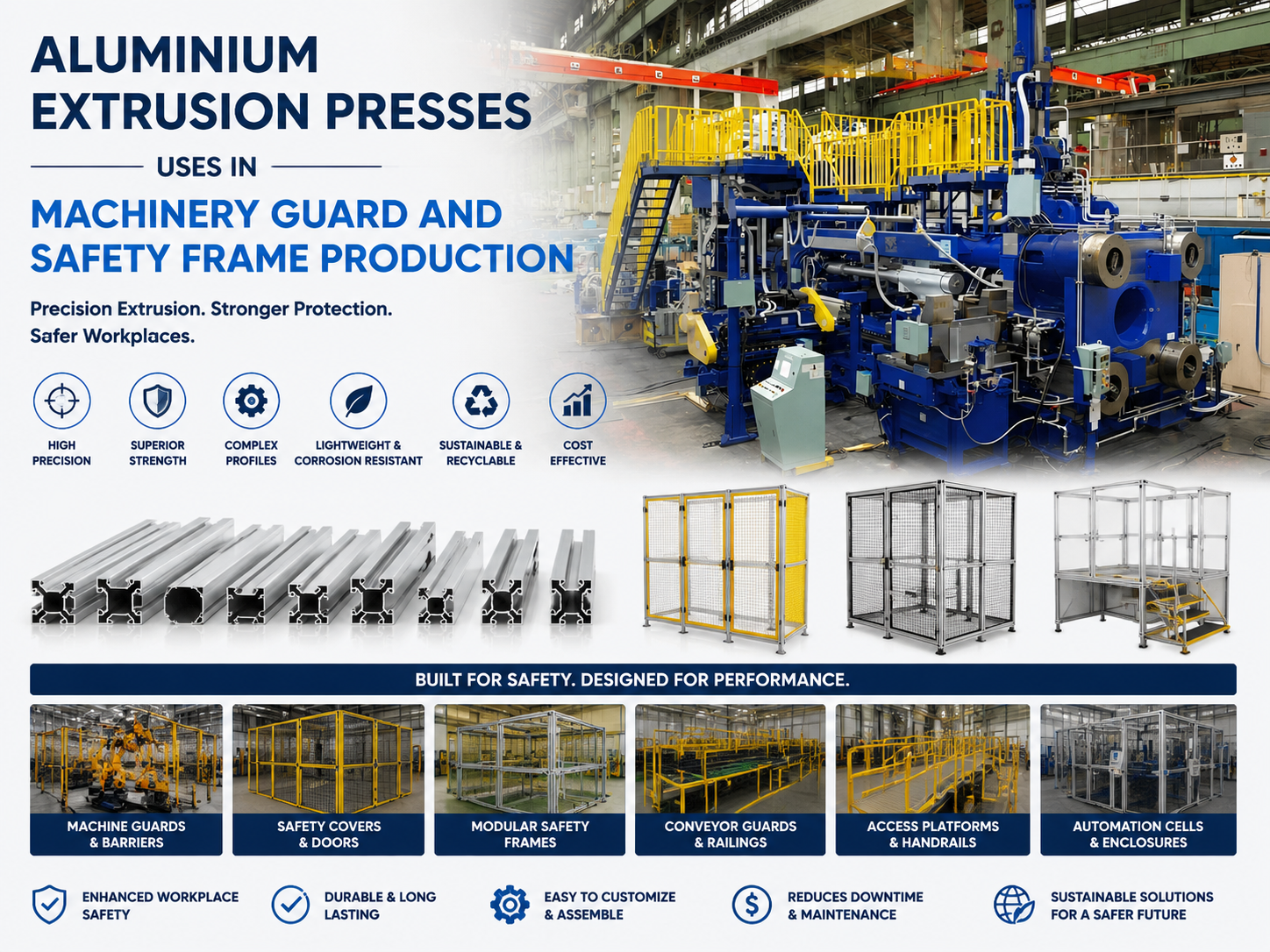
In the modern manufacturing landscape, the safety of personnel and the protection of sensitive equipment are paramount. As industrial automation accelerates, the demand for robust, modular, and lightweight structural components has skyrocketed. This is where the Aluminium Extrusion Press Uses In Machinery Guard Safety Frame Production become critical. Aluminium extrusion technology allows for the creation of complex, high-strength profiles that serve as the backbone for safety enclosures, robotic cells, and machine guarding systems.
Unlike traditional welded steel frames, aluminium extrusions offer a modular approach that is both cost-effective and highly adaptable. The process involves forcing heated aluminium billets through a precision-engineered die to create continuous lengths of T-slot or structural profiles. These profiles are then cut, machined, and assembled into the safety frames we see on factory floors worldwide. HARSLE, a leader in metal fabrication machinery, provides the advanced extrusion presses necessary to meet the rigorous standards of this industry.
Application Scenarios for Machinery Guards and Safety Frames
The application of aluminium extrusion in safety systems is diverse, spanning across various sectors from automotive assembly to food processing. One of the primary scenarios is the creation of robotic work cells. As industrial robots become more prevalent, they must be isolated from human workers to prevent accidents. Extruded aluminium frames provide a sturdy yet flexible perimeter that can support wire mesh, polycarbonate panels, or light curtains.
Another significant application is in conveyor system guarding. Conveyors often have moving parts that pose a risk of entanglement. Custom-extruded guards can be designed to fit the specific geometry of the conveyor, ensuring that all pinch points are covered while allowing for easy maintenance access through integrated hinged doors or sliding panels. The lightweight nature of aluminium makes these guards easy to remove and reinstall during servicing.
In cleanroom environments, such as pharmaceutical or semiconductor manufacturing, aluminium extrusion is the preferred choice for safety frames. Aluminium does not rust and can be anodized to provide a smooth, non-porous surface that is easy to sterilize. This makes it ideal for creating enclosures that protect sensitive processes from contamination while ensuring operator safety. Furthermore, the aesthetic appeal of anodized aluminium provides a professional, high-tech look to the facility.
Finally, CNC machine enclosures represent a major market for extrusion presses. Modern CNC machines operate at high speeds and use high-pressure coolants. The safety frames must be able to withstand the impact of broken tools or flying debris while containing the mist and spray of lubricants. The precision of the extrusion process ensures that the frames are perfectly square and the seals are tight, providing a safe and clean working environment for the machine operator.
Material and Process Requirements
When discussing Aluminium Extrusion Press Uses In Machinery Guard Safety Frame Production, the choice of material is fundamental. The most commonly used alloys are the 6000 series, specifically 6061 and 6063. Alloy 6063 is often favored for machinery guards because of its excellent extrudability and superior surface finish, which is essential for anodizing. Alloy 6061, while slightly more difficult to extrude, offers higher structural strength, making it suitable for heavy-duty frames that must support significant loads.
The extrusion process itself requires precise control over temperature and pressure. The aluminium billet must be heated to its plastic state, typically between 400°C and 500°C. If the temperature is too low, the pressure required to extrude the metal will exceed the machine’s capacity; if it is too high, the metal may become too soft, leading to surface defects or structural weaknesses in the profile. HARSLE extrusion presses utilize advanced induction heating systems to ensure uniform billet temperature.
The design of the die is another critical factor. For machinery guards, T-slot profiles are the industry standard. These profiles feature longitudinal grooves that allow for the easy attachment of fasteners, panels, and accessories without the need for welding. The die must be engineered to maintain tight tolerances, ensuring that the T-slots are consistent across the entire length of the extrusion. This consistency is vital for the modularity and ease of assembly that makes aluminium safety frames so popular.
Post-extrusion processes are equally important. After the profile emerges from the die, it must be cooled rapidly using air or water quenching to achieve the desired mechanical properties. Following cooling, the profiles are stretched to ensure straightness and then cut to length. Finally, they undergo an aging process in a specialized furnace to increase their hardness and strength, reaching the T5 or T6 temper required for industrial applications.
Recommended Machine Configuration
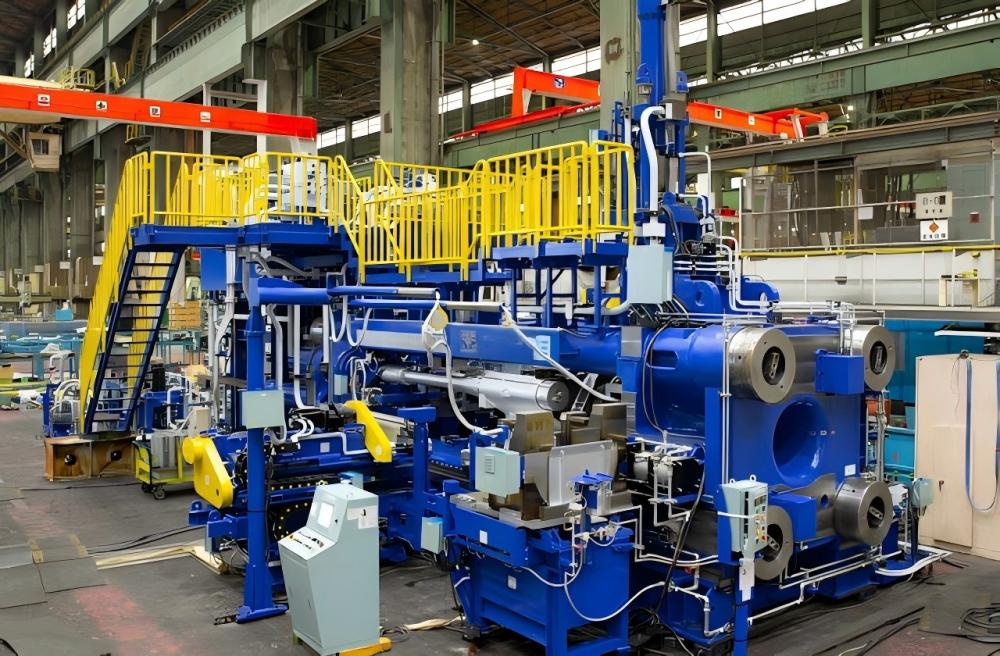
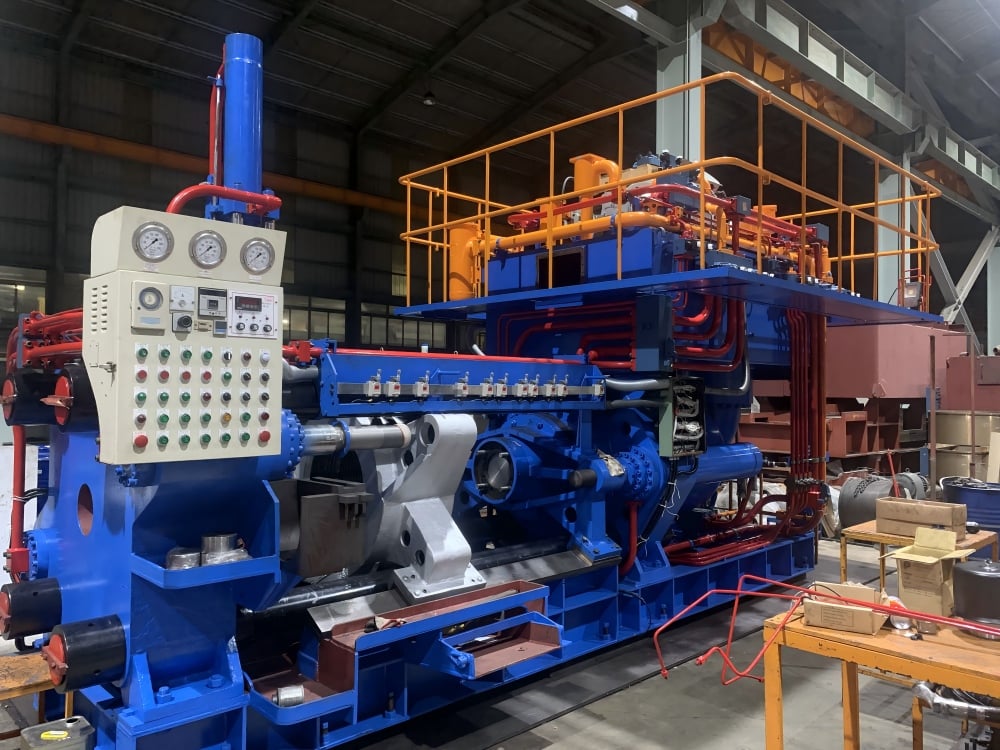
To achieve high-quality results in safety frame production, a specific machine configuration is required. A standard HARSLE aluminium extrusion press for this application typically ranges from 600 to 2000 tons of pressure, depending on the size and complexity of the profiles being produced. For standard T-slot profiles used in machinery guards, a 1000-ton press is often the “sweet spot” for balancing productivity and investment cost.
The hydraulic system is the heart of the press. We recommend a configuration featuring high-pressure piston pumps from reputable brands like Rexroth, coupled with a sophisticated manifold block design to minimize pressure drops and ensure smooth operation. A variable frequency drive (VFD) on the main motor can significantly reduce energy consumption by adjusting the pump speed based on the real-time requirements of the extrusion cycle.
The control system should be based on a high-performance PLC, such as those from Siemens or Schneider Electric. This allows for precise control over the extrusion speed, which is critical for maintaining the surface quality of the profiles. A user-friendly HMI (Human Machine Interface) enables operators to monitor all parameters, including billet temperature, container temperature, and extrusion pressure, in real-time. Data logging capabilities are also essential for quality control and process optimization.
Auxiliary equipment is just as important as the press itself. A complete production line should include a log shear or billet saw, a billet heating furnace, a cooling table with a run-out system, a stretcher for straightening, and a precision cutting saw. For safety frame production, an automated stacking system and an aging furnace are also recommended to ensure that the finished profiles meet the necessary hardness specifications consistently.
The Workflow of Safety Frame Production
The production workflow begins with the preparation of the aluminium logs. These logs are heated in a gas or induction furnace to the optimal extrusion temperature. Once heated, the log is sheared into individual billets of the required length. The billet is then loaded into the container of the extrusion press, where a hydraulic ram forces it through the die. As the profile emerges, it is supported by a lead-out table and guided by a puller to maintain tension and prevent warping.
Once the desired length is reached, the profile is cut, and the next billet is loaded. The extruded profiles move onto a cooling table, where they are subjected to forced air or water spray. This quenching process is vital for setting the metallurgical structure of the alloy. After cooling, the profiles are moved to a stretching machine. Stretching removes any residual stresses and ensures that the profiles are perfectly straight, which is a non-negotiable requirement for modular safety frames that must align perfectly during assembly.
After stretching, the profiles are moved to a finishing saw, where they are cut to the final commercial lengths, typically 3 or 6 meters. The cut profiles are then loaded into aging ovens. The aging process involves heating the aluminium to a specific temperature for several hours, which allows for the precipitation of alloying elements, significantly increasing the material’s yield strength. This ensures the safety frame can withstand impacts and vibrations in an industrial environment.
The final stage involves surface treatment and quality inspection. Most machinery guard profiles are anodized to provide a hard, corrosion-resistant layer. The profiles are inspected for dimensional accuracy, surface finish, and hardness. Once approved, they are ready to be shipped to the fabricator, who will cut them to specific sizes, drill holes for connectors, and assemble the final machinery guard or safety frame according to the customer’s design.
Productivity and Economic Benefits
Utilizing an Aluminium Extrusion Press Uses In Machinery Guard Safety Frame Production offers significant economic advantages. The primary benefit is the reduction in labor costs. Traditional steel frames require skilled welders, grinders, and painters. In contrast, aluminium extrusion frames are assembled using simple mechanical fasteners. This “Meccano-like” assembly process can be performed by general labor, drastically reducing the time and cost of installation.
Furthermore, the modularity of aluminium extrusions means that frames can be easily modified or expanded. If a factory layout changes or a new piece of equipment is added, the existing safety frames can be disassembled and reconfigured with minimal waste. This flexibility is a major selling point for manufacturers who need to remain agile in a fast-changing market. The ability to reuse components also contributes to the sustainability goals of many modern corporations.
From a logistics perspective, aluminium’s high strength-to-weight ratio is a game-changer. Aluminium frames are approximately one-third the weight of their steel counterparts. This leads to lower shipping costs and easier handling on-site. In many cases, large safety enclosures can be pre-assembled in a workshop and transported to the factory floor without the need for heavy lifting equipment, further speeding up the commissioning process.
Finally, the long-term maintenance costs of aluminium safety frames are significantly lower. Unlike steel, which requires regular painting or galvanizing to prevent rust, anodized aluminium is virtually maintenance-free. It resists corrosion even in harsh industrial environments, ensuring that the safety guards remain functional and aesthetically pleasing for decades. This durability provides a superior return on investment for the end-user.
Case Example: Automotive Assembly Line Safety Upgrade
A prominent automotive parts manufacturer recently faced a challenge: their existing steel safety fencing was difficult to modify and was showing signs of significant wear and tear. They decided to transition to a modular aluminium system produced using HARSLE extrusion technology. By investing in their own extrusion press, they were able to produce custom T-slot profiles tailored to their specific safety requirements.
The transition allowed them to standardize their safety enclosures across multiple production lines. Because the aluminium profiles were produced in-house, they could quickly respond to design changes required by new robotic installations. The assembly time for a standard 20-meter safety corridor was reduced from five days (for welded steel) to just one and a half days using the modular aluminium system.
The manufacturer also noted a significant improvement in the working environment. The bright, clean look of the anodized aluminium frames improved the overall aesthetics of the plant, and the integrated cable channels within the profiles allowed for a much tidier installation of sensors and light curtains. Over the first year of operation, the company estimated a 30% reduction in total safety infrastructure costs, including material, labor, and maintenance.
Frequently Asked Questions (FAQ)
What is the best aluminium alloy for machinery guards?
Alloy 6063 is the most common choice due to its excellent surface finish and ease of extrusion. However, for frames that require higher structural integrity, 6061 is often used. Both belong to the 6000 series, which offers a good balance of strength and corrosion resistance.
How long does an extrusion die last?
The lifespan of a die depends on the complexity of the profile and the material being extruded. For standard T-slot profiles, a well-maintained H13 steel die can typically produce between 15,000 to 30,000 kilograms of aluminium before requiring significant refurbishment or replacement.
Can aluminium extrusion presses be automated?
Yes, modern HARSLE extrusion lines are highly automated. From billet loading and heating to the puller system and the final cutting saw, the entire process can be managed by a central control system, reducing the need for manual intervention and increasing consistency.
What is the typical lead time for a custom extrusion profile?
Once the die is designed and manufactured (which usually takes 2-4 weeks), the actual extrusion process is very fast. A standard production run can be completed in a matter of days, depending on the volume and the scheduling of the press.
Is aluminium strong enough to replace steel in safety frames?
Absolutely. While aluminium has a lower modulus of elasticity than steel, its strength-to-weight ratio is excellent. By using properly engineered profiles with internal ribbing, aluminium frames can meet or exceed the safety requirements of almost any industrial application.
Conclusion and Call to Action
The Aluminium Extrusion Press Uses In Machinery Guard Safety Frame Production represent a cornerstone of modern industrial safety. The combination of strength, modularity, and cost-effectiveness makes aluminium the ideal material for protecting both workers and machinery. By investing in high-quality extrusion equipment from HARSLE, manufacturers can take control of their supply chain, reduce costs, and ensure the highest standards of safety on their production floors.
Are you looking to upgrade your production capabilities or implement a more efficient safety frame system? HARSLE offers a wide range of aluminium extrusion presses and complete production lines tailored to your specific needs. Our team of experts is ready to assist you with machine selection, die design, and process optimization. Contact HARSLE today to learn how our advanced metal fabrication solutions can drive your business forward and enhance your workplace safety.


