
Comprehensive Guide to Aluminium Extrusion Press Uses for Heat Dissipation and Thermal Management Parts

Introduction to Thermal Management and Aluminium Extrusion
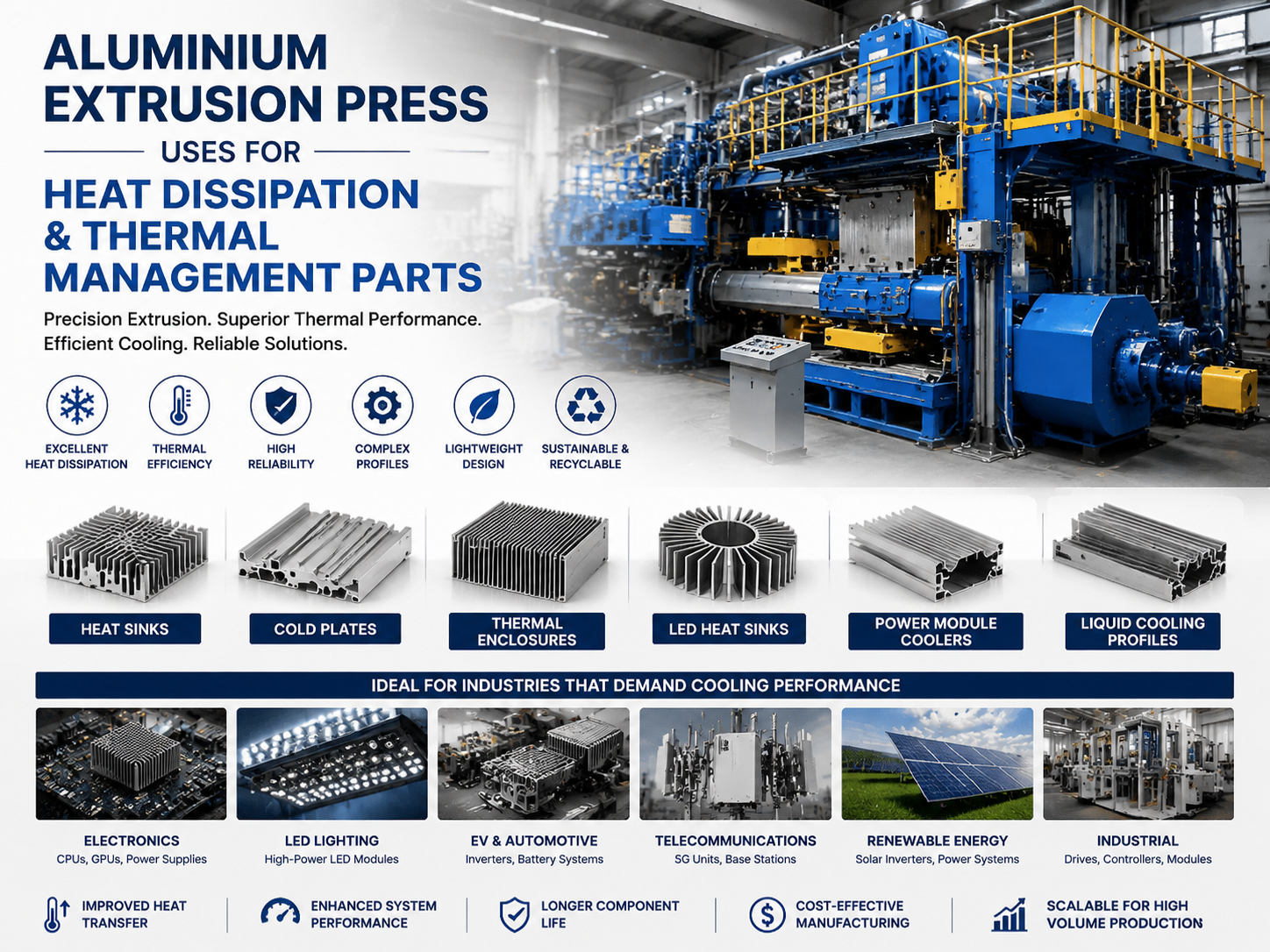
In the modern industrial landscape, the demand for efficient thermal management has reached unprecedented levels. As electronic components become smaller and more powerful, the heat they generate increases exponentially. This is where the Aluminium Extrusion Press Uses Heat Dissipation Thermal Management Parts become vital. Aluminium, known for its excellent thermal conductivity, lightweight nature, and corrosion resistance, is the material of choice for heat sinks and cooling components. The extrusion process allows for the creation of complex cross-sections that maximize surface area, which is the most critical factor in heat dissipation.
HARSLE, a leader in metal fabrication machinery, provides advanced aluminium extrusion presses designed to meet the rigorous tolerances required for thermal management applications. Whether it is for electric vehicle (EV) battery trays, 5G base station housings, or high-performance CPU coolers, the precision of the extrusion press determines the efficiency of the final thermal part. This guide explores the application scenarios, technical requirements, and machine configurations necessary to produce world-class heat dissipation components.
Application Scenarios for Heat Dissipation Parts
Electric Vehicle (EV) Battery Cooling
The transition to electric mobility has created a massive market for thermal management. EV batteries generate significant heat during rapid charging and high-speed driving. To maintain battery health and safety, manufacturers use extruded aluminium cooling plates and battery trays. These parts often feature internal micro-channels through which liquid coolant flows. An aluminium extrusion press is essential for creating these intricate internal geometries with high structural integrity, ensuring that the coolant remains contained while effectively absorbing heat from the battery cells.
5G Telecommunications Infrastructure
5G technology operates at higher frequencies and requires more power than previous generations, leading to increased heat generation in base stations and signal processing units. The housings for these units often double as massive heat sinks. Using an aluminium extrusion press, manufacturers can create large-scale profiles with deep, thin fins that provide the necessary surface area to dissipate heat into the surrounding air without the need for active cooling fans, which can fail or require maintenance.
LED Lighting Systems
High-power LED arrays used in industrial lighting, streetlights, and stadium displays are sensitive to heat. Excessive temperatures can reduce the lifespan of the LEDs and cause color shifting. Extruded aluminium heat sinks are the standard solution for these applications. The extrusion process allows for the production of circular, radial, or longitudinal fin designs that are optimized for natural convection. The ability to produce these parts in high volumes with consistent quality makes the extrusion press a cornerstone of the LED manufacturing industry.
Renewable Energy Inverters
Solar and wind energy systems rely on inverters to convert DC power to AC power. These inverters contain power semiconductors that generate substantial heat. Large-scale extruded heat sinks are used to keep these components within their operating temperature range. Given the outdoor environments of these systems, the corrosion resistance of extruded aluminium (often 6063 or 6061 alloys) is a significant advantage, ensuring long-term reliability in harsh conditions.
Material and Process Requirements
Alloy Selection for Thermal Conductivity
Not all aluminium alloys are created equal when it comes to thermal management. The most common alloys used in Aluminium Extrusion Press Uses Heat Dissipation Thermal Management Parts are from the 1xxx and 6xxx series. The 1050 and 1070 alloys offer the highest thermal conductivity (approx. 220-230 W/m·K) but have low structural strength. Conversely, the 6063 alloy is the industry standard because it offers a perfect balance of good thermal conductivity (approx. 200 W/m·K), excellent extrudability, and sufficient mechanical strength for structural applications.
Precision and Fin Ratio
The efficiency of a heat sink is largely determined by its “fin ratio”—the ratio of the fin height to the gap between fins. High-performance thermal parts require thin, tall fins to maximize surface area. This puts immense pressure on the extrusion die and requires a press with extremely stable pressure control. If the pressure fluctuates, the fins may wave or vary in thickness, leading to poor thermal performance or assembly issues. Achieving a fin ratio of 10:1 or even 20:1 requires a high-tonnage press with precision-guided rams.
Surface Finish and Flatness
For heat sinks that interface directly with electronic components (like CPUs or IGBTs), the flatness of the base is critical. Any air gaps between the component and the heat sink act as insulators. While post-extrusion machining is often used, the extrusion process must produce a profile that is as flat as possible to minimize material waste during the milling stage. Additionally, the surface finish must be free of streaks or “pick-up” marks, which can interfere with the application of thermal interface materials (TIMs).
Recommended Machine Configuration
Hydraulic System and Tonnage
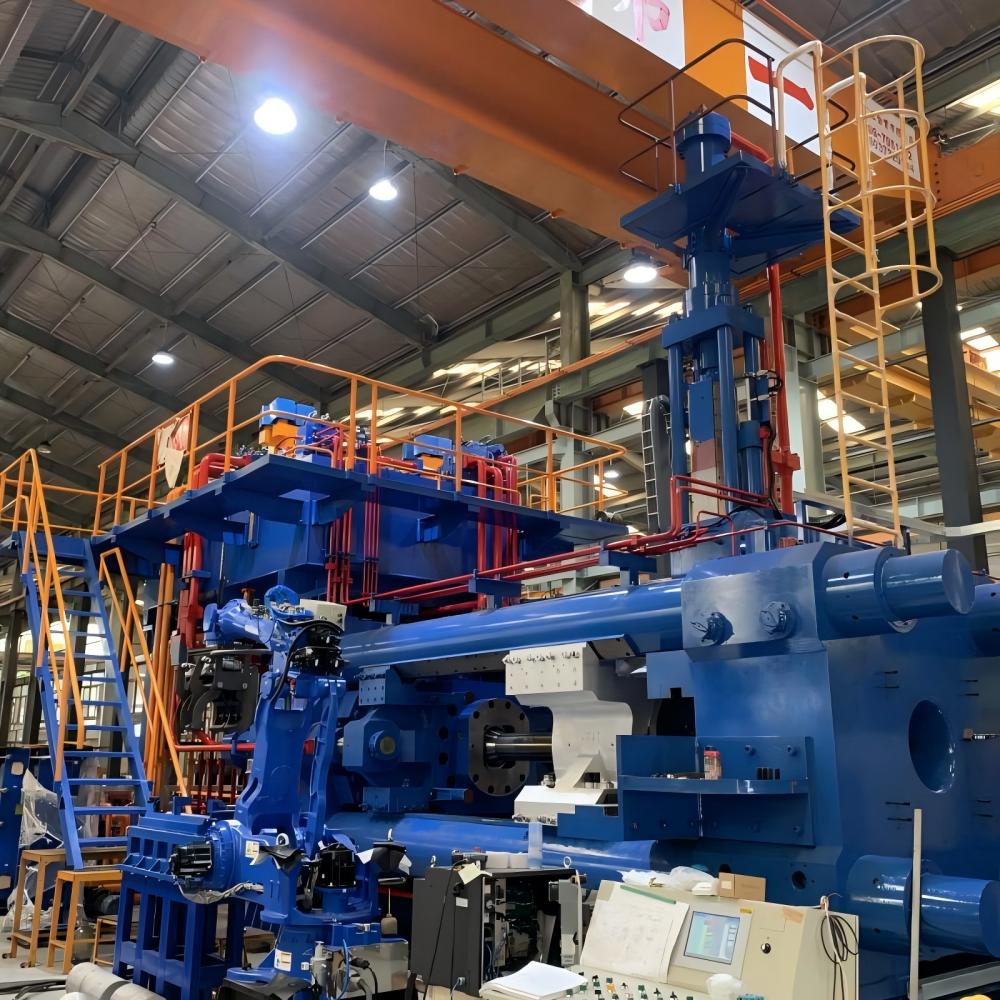
For thermal management parts, which often involve wide profiles or high-density fins, a press with a tonnage ranging from 1000T to 3500T is typically recommended. HARSLE’s extrusion presses utilize advanced hydraulic systems with servo-motor drives. This configuration allows for precise speed control during the extrusion stroke, which is vital for maintaining the integrity of thin fins. The servo system also reduces energy consumption by up to 50% compared to traditional constant-delivery pump systems.
PLC Control and Automation
Modern extrusion requires sophisticated software. A high-end PLC (Programmable Logic Controller) manages the temperature of the billet, the container, and the die. For thermal parts, “isothermal extrusion” is preferred. This involves varying the extrusion speed to maintain a constant temperature at the die exit, ensuring uniform mechanical properties and dimensions throughout the entire length of the profile. HARSLE machines feature intuitive touch-screen interfaces that allow operators to store and recall specific recipes for different heat sink designs.
Cooling and Handling Systems
Once the profile exits the die, it must be cooled (quenched) correctly to achieve the desired T5 or T6 temper. For heat dissipation parts, air quenching is often sufficient, but it must be uniform to prevent warping. A precision puller system is also necessary to keep the profile straight as it moves onto the cooling table. Any twist or bow in the profile can render a high-precision heat sink useless.
The Extrusion Workflow for Thermal Parts
- Billet Heating: Aluminium billets are heated in a gas or induction furnace to approximately 450°C – 500°C. Precise temperature control is necessary to ensure the metal flows smoothly through the complex die.
- Die Preparation: The die, which contains the negative image of the heat sink profile, is preheated to prevent thermal shock and ensure consistent flow. For thermal parts, dies are often nitrided to increase hardness and reduce friction.
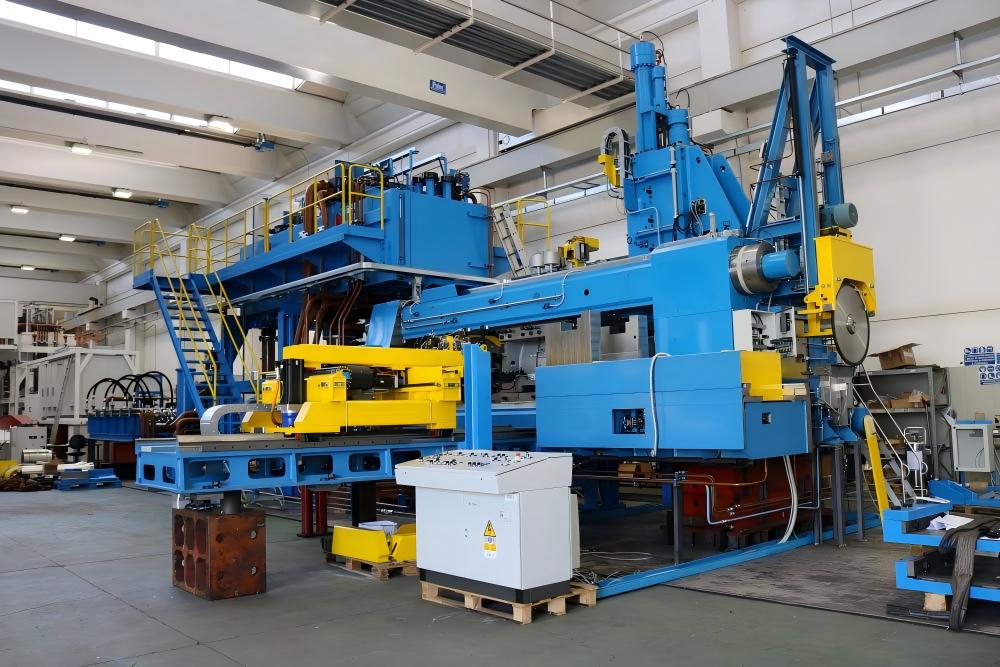
- Extrusion: The heated billet is placed into the container, and the hydraulic ram forces the metal through the die. This is where the Aluminium Extrusion Press Uses Heat Dissipation Thermal Management Parts logic comes into play, as the ram speed is carefully modulated.
- Quenching: As the profile emerges, it is cooled by fans or water mists. This “freezes” the microstructure of the alloy.
- Stretching and Straightening: The cooled profiles are stretched to remove internal stresses and ensure perfect straightness.
- Cutting and Aging: The profiles are cut to length and then placed in an aging oven. This heat treatment process (typically at 170°C-190°C for several hours) precipitates the alloying elements to reach the final hardness and strength.
Productivity and Economic Benefits
Material Efficiency
Compared to CNC machining a heat sink from a solid block of aluminium, extrusion is incredibly efficient. Machining can result in up to 60-80% material waste in the form of chips. Extrusion, however, is a “near-net-shape” process. The only waste is the “butt” end of the billet and the scrap from cutting the ends of the profiles. This significantly lowers the cost per part, especially for high-volume production runs.
Design Flexibility
Extrusion allows engineers to place metal exactly where it is needed for thermal performance. Features like screw ports, snap-fit joints, and complex internal cavities can be integrated into the profile design. This reduces the need for secondary assembly operations, such as welding or brazing, which can introduce thermal resistance at the joints.
Scalability
Once a die is created, an aluminium extrusion press can produce thousands of meters of profile with minimal variation. This scalability is essential for industries like consumer electronics and automotive, where demand can spike rapidly. A single HARSLE extrusion line can support the production needs of multiple product lines simultaneously.
Case Example: High-Density Fin Heatsink for 5G Base Stations
A leading telecommunications equipment manufacturer required a heat sink with a base width of 400mm and fins 80mm tall, spaced only 4mm apart. Traditional casting methods resulted in porosity issues that reduced thermal conductivity, while machining was too expensive. By utilizing a HARSLE 2500T Aluminium Extrusion Press, the manufacturer was able to produce the profile in 6063-T5 aluminium. The press’s stable hydraulic pressure ensured that the 80mm fins remained perfectly vertical and uniform in thickness. The result was a 30% increase in thermal efficiency compared to the previous cast version and a 45% reduction in production costs.
Frequently Asked Questions (FAQ)
What is the best aluminium alloy for heat sinks?
For most applications, 6063 is the best choice due to its excellent extrudability and good thermal conductivity. If maximum heat transfer is required and structural strength is not a priority, 1050 or 1070 alloys are used. For high-strength structural thermal parts, 6061 is often preferred.
Can extrusion produce internal cooling channels?
Yes, through the use of “porthole dies” or “bridge dies,” an extrusion press can create hollow profiles with multiple internal chambers. This is commonly used for liquid-cooled battery plates in EVs.
How does the extrusion press affect the quality of the heat sink?
The press affects quality through pressure stability and speed control. Inconsistent pressure leads to dimensional variations in the fins, while poor speed control can cause surface defects or inconsistent mechanical properties. A high-quality press like those from HARSLE ensures the precision needed for tight-tolerance thermal parts.
What is the typical lifespan of an extrusion die for thermal parts?
Because thermal parts often have thin, fragile die tongues to create the gaps between fins, die wear is a concern. However, with proper nitriding and maintenance, a die can typically produce 2,000 to 5,000 kg of aluminium before requiring significant refurbishment.
Conclusion and Call to Action
The role of Aluminium Extrusion Press Uses Heat Dissipation Thermal Management Parts is only set to grow as global industries push toward electrification and higher computing power. Investing in the right extrusion technology is not just about buying a machine; it is about ensuring the thermal performance and reliability of the products that power our world. HARSLE provides the expertise, machinery, and support needed to excel in this demanding field. Whether you are looking to upgrade your current production line or enter the thermal management market, our team is ready to assist you with customized solutions.
Contact HARSLE today to learn more about our aluminium extrusion presses and how we can help you optimize your thermal management part production. Visit our website or speak with one of our technical experts to find the perfect machine for your needs.


