
How Aluminium Extrusion Press Machines Drive High-Volume Profile Output

Introduction to High-Volume Aluminium Extrusion
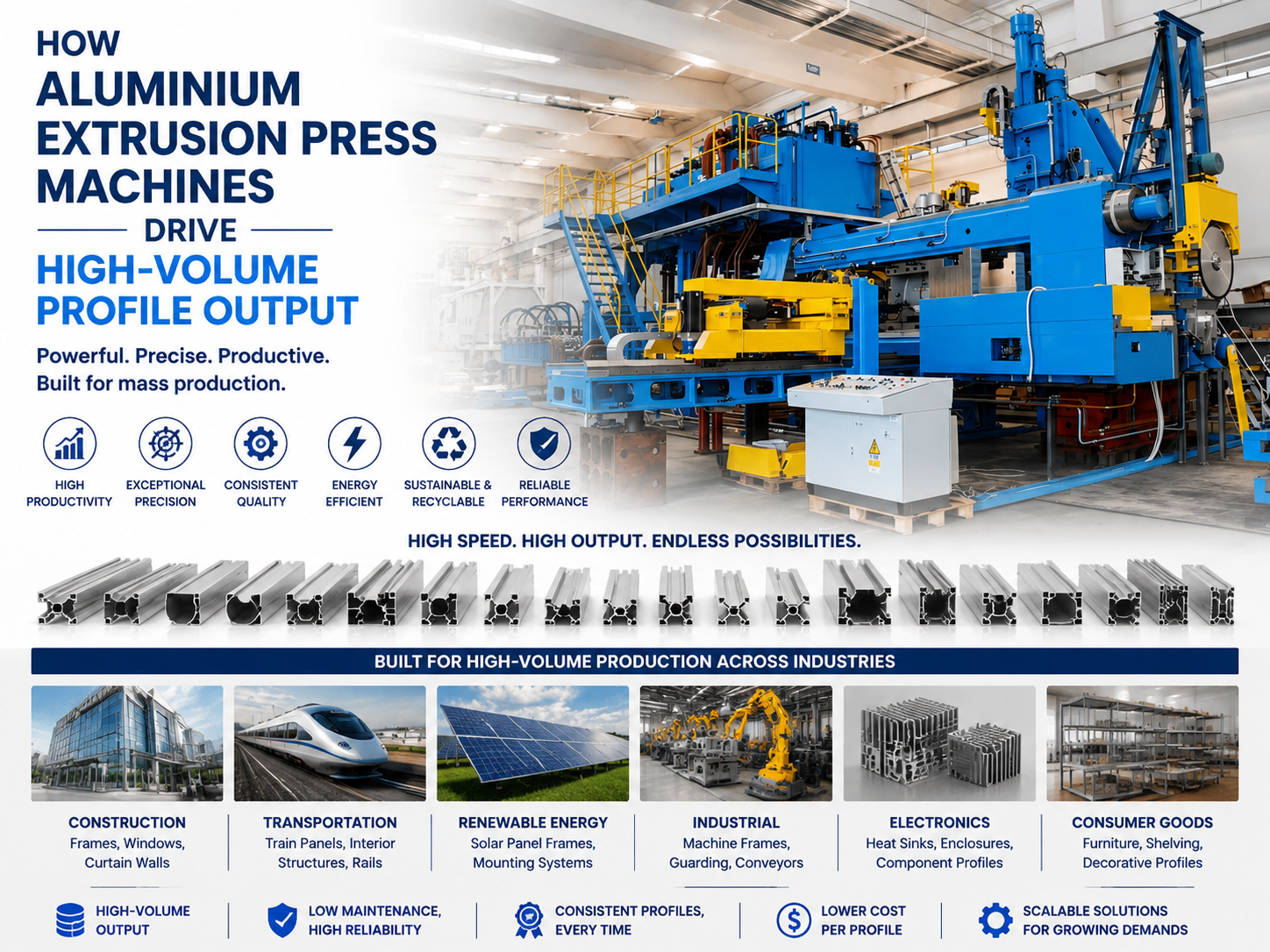
In the modern industrial landscape, the demand for lightweight, durable, and complex metal components has never been higher. Aluminium, with its exceptional strength-to-weight ratio and corrosion resistance, stands at the forefront of this demand. To meet the rigorous needs of global supply chains, manufacturers rely on sophisticated machinery. Specifically, understanding how aluminium extrusion press machines drive high-volume profile output is essential for any facility looking to scale production while maintaining tight tolerances and material integrity.
HARSLE has pioneered the development of high-efficiency extrusion systems designed to bridge the gap between raw material and finished industrial profiles. High-volume output is not merely a matter of speed; it is a synergy of hydraulic power, thermal management, and automated handling. This article explores the intricate mechanics and strategic configurations that allow these machines to transform solid aluminium billets into miles of precise profiles used in everything from smartphones to skyscrapers.
The transition to high-volume production requires a shift from manual oversight to integrated system control. As we delve into the application scenarios and technical requirements, it becomes clear that the extrusion press is the heart of a much larger, synchronized ecosystem. By optimizing every stage of the extrusion cycle, HARSLE machines ensure that downtime is minimized and throughput is maximized, providing a competitive edge in a crowded market.
Application Scenarios for High-Volume Profiles
The versatility of aluminium profiles makes them indispensable across various sectors. High-volume output is particularly critical in the Automotive Industry. With the rise of Electric Vehicles (EVs), there is an urgent need for lightweight battery trays, motor housings, and structural frames. These components must be produced in the hundreds of thousands, requiring extrusion presses that can run 24/7 with minimal variance in profile geometry.
In the Construction and Architecture sector, high-volume extrusion is the backbone of modern infrastructure. Curtain walls, window frames, and roofing systems rely on standardized profiles that must be produced at scale to meet project deadlines. The ability to produce long-length profiles with consistent surface finishes is a hallmark of a high-performance extrusion line. HARSLE machines are engineered to handle the heavy-duty cycles required for these large-scale architectural demands.
The Renewable Energy sector, specifically solar power, represents another massive application. Solar panel mounting systems require millions of meters of aluminium rails annually. These profiles are often simple in cross-section but require extreme consistency and high-speed production to remain cost-effective. Similarly, in the Electronics field, heat sinks for servers and consumer electronics demand high-precision extrusions that can be manufactured rapidly to keep up with fast-moving product lifecycles.
Finally, the Aerospace and Rail industries utilize high-volume extrusion for interior fittings and structural reinforcements. While the alloys used here are often harder to extrude (such as the 7000 series), the requirement for high-volume output remains. HARSLE’s robust press designs provide the necessary tonnage and control to handle these challenging materials without sacrificing the speed required for industrial-scale supply.
Material and Process Requirements for Efficiency
Achieving high-volume output begins with the material. The most common alloys for high-speed extrusion are the 6000 series (Al-Mg-Si), such as 6061 and 6063. These alloys offer an excellent balance of extrudability, strength, and surface finish. To drive high-volume output, the billets must be of high metallurgical quality, free from inclusions and hydrogen porosity, which could cause profile breakage or surface defects during high-speed runs.
The Thermal Management of the process is perhaps the most critical factor. The billet must be pre-heated to a specific temperature (usually between 400°C and 500°C) to reach a plastic state. However, the extrusion process itself generates friction heat. If the temperature rises too high, the profile may suffer from “speed cracks” or surface tearing. Conversely, if it is too low, the pressure required increases, slowing down the cycle. High-volume machines use sophisticated sensors to maintain the “isothermal extrusion” state, where the exit temperature remains constant regardless of the extrusion speed.
Die Design and Maintenance also play a pivotal role. For high-volume output, dies must be made from high-grade H13 tool steel and undergo specialized nitriding treatments to withstand the abrasive flow of hot aluminium. Multi-hole dies are often employed to extrude multiple profiles simultaneously, effectively doubling or tripling the output per press stroke. Proper die cooling (using liquid nitrogen in some advanced setups) allows for even higher extrusion speeds by preventing the die from overheating.
Lastly, the Lubrication and Billet Preparation phase cannot be overlooked. Automated log shears and billet heaters ensure that the press is never waiting for material. The use of boron nitride or other high-temperature lubricants on the dummy block and die face reduces friction, which not only speeds up the process but also extends the life of the machine components, reducing the frequency of maintenance-related shutdowns.
Recommended Machine Configuration for Maximum Throughput
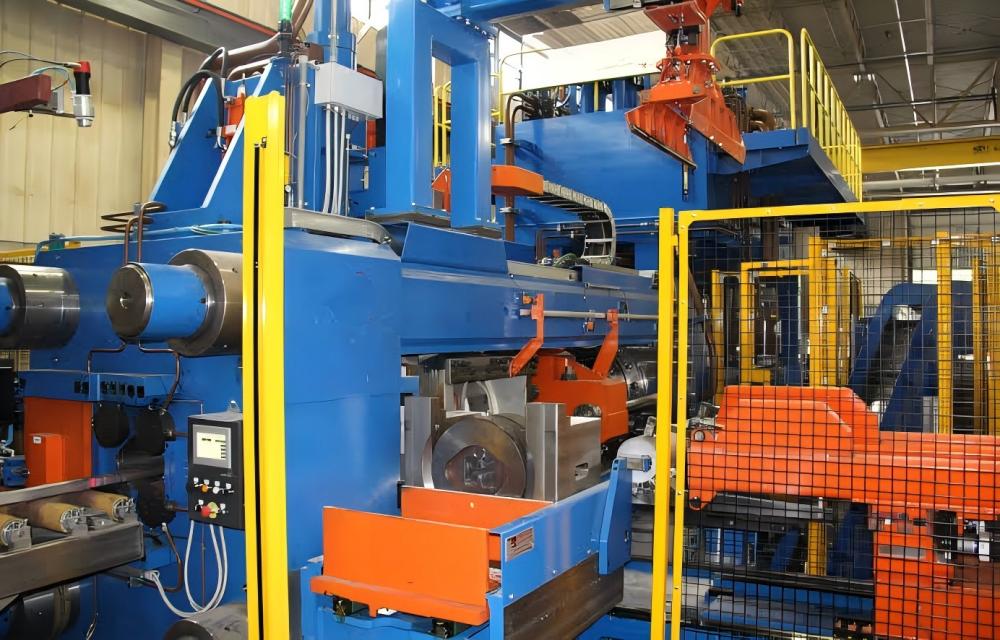
To truly understand how aluminium extrusion press machines drive high-volume profile output, one must look at the internal configuration. A high-output machine is characterized by its Hydraulic System Efficiency. HARSLE utilizes high-pressure pumps (often from brands like Rexroth or Vickers) paired with servo-motor drives. This configuration allows for rapid approach speeds, precise extrusion control, and fast return strokes, significantly shortening the non-productive “dead cycle” time.
The Tonnage Selection is the first step in configuration. For high-volume standard profiles, a range of 1000T to 2500T is common. However, for larger industrial components, presses can exceed 5000T. The key is to match the press capacity to the profile’s circumscribing circle and the alloy’s flow stress. Overloading a small press leads to premature wear, while using a massive press for small profiles is energy-inefficient. HARSLE provides a tailored approach to ensure the machine operates in its “sweet spot” for maximum longevity and speed.
Control Systems (PLC and HMI) are the brains of the operation. Modern HARSLE presses feature Siemens or Mitsubishi PLC systems that store hundreds of “recipes” for different profiles. These recipes include parameters for pressure, speed, and temperature. Automation extends to the Billet Loading System and the Automatic Die Changer. An automatic die changer can reduce changeover times from 30 minutes to under 5 minutes, which is vital for facilities that handle multiple small-to-medium batch orders within a high-volume environment.
Technical Specification Comparison Table
| Feature | Standard Configuration | High-Volume Optimized (HARSLE) |
|---|---|---|
| Main Pump Type | Fixed Displacement | Variable Displacement Servo-Hydraulic |
| Dead Cycle Time | 25-35 Seconds | 12-18 Seconds |
| Control System | Manual/Basic PLC | Advanced CNC with Remote Diagnostics |
| Billet Loading | Semi-Automatic | Fully Automated Log Shear & Loader |
| Cooling System | Air Cooling Only | Multi-Stage Air & Water Quench |
The Extrusion Workflow: From Billet to Finished Profile
The workflow of a high-volume extrusion line is a continuous loop of precision movements. It begins at the Billet Heating Furnace, where logs are heated and then sheared to the required length. This “hot shearing” ensures a clean face for the extrusion process. The heated billet is then transferred via an automated loader to the press container. This transfer must be rapid to prevent heat loss, which would compromise the extrusion consistency.
Once the billet is in the container, the Main Ram advances. This is where the hydraulic power is converted into the force required to push the solid aluminium through the die. In a high-volume setup, the ram speed is carefully modulated. The initial “breakthrough” pressure is high, followed by a steady extrusion speed. HARSLE’s control software monitors the pressure in real-time, adjusting the flow to ensure the profile emerges at a constant velocity, which is critical for maintaining dimensional accuracy.
As the profile emerges from the die, it passes through the Quench System. For high-volume output, the cooling must be intense and uniform to “freeze” the metallurgical structure of the alloy, ensuring it meets the required hardness specifications. Depending on the profile thickness, this can involve high-velocity air fans or water spray mists. The profile is then guided onto a Run-out Table, which can be over 50 meters long, equipped with graphite rollers or heat-resistant belts to prevent surface scratching.
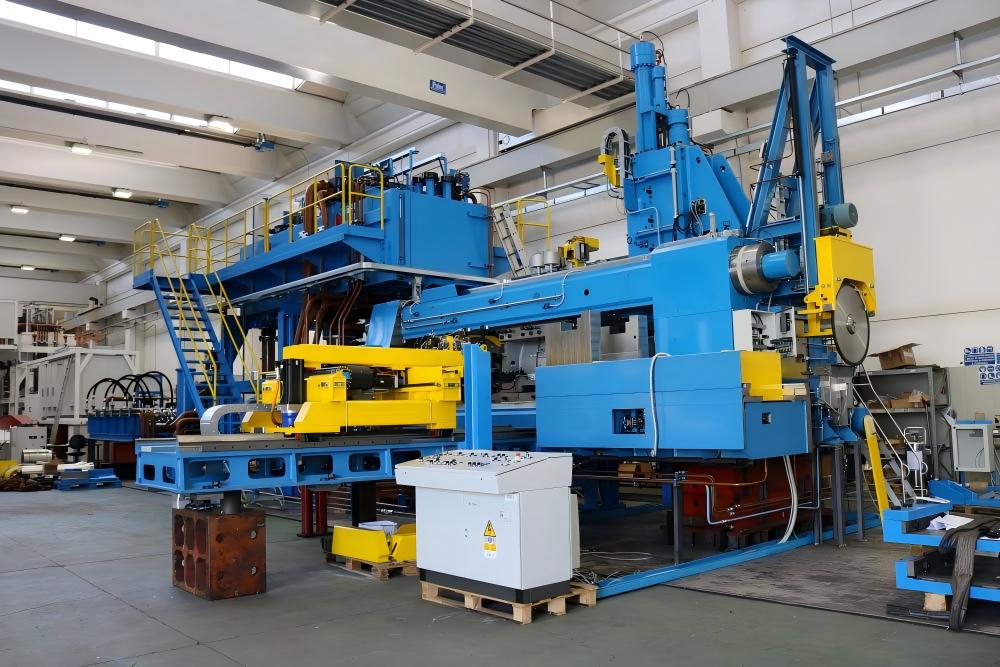
The final stages involve Stretching and Cutting. Once cooled, the profiles are moved to a stretcher that pulls them to remove any longitudinal twists and to straighten them perfectly. This also slightly work-hardens the material. Finally, an automated saw cuts the profiles to the customer’s specified lengths. In a high-volume HARSLE line, these steps are fully integrated, meaning the press doesn’t have to stop while the finished profiles are being processed and packed.
Productivity Benefits of Advanced Extrusion Technology
Investing in a high-performance aluminium extrusion press offers a multitude of productivity benefits. The most obvious is the Reduction in Cycle Time. By optimizing the hydraulic movements and automating the billet loading, HARSLE machines can produce more kilograms of aluminium per hour than older, manual systems. This increased throughput directly translates to a faster Return on Investment (ROI) for the manufacturer.
Material Yield Optimization is another significant benefit. High-volume production can generate substantial waste if the “butt end” (the unextruded part of the billet) is too large or if the profile dimensions are inconsistent. HARSLE’s precision control minimizes the butt thickness and ensures that the profile stays within tolerance from the start to the end of the billet. Furthermore, advanced log-shearing systems allow for “zero-waste” billet length calculation based on the desired finished profile length.
Energy efficiency is a major concern in modern manufacturing. Older hydraulic systems are notorious for wasting energy by keeping pumps running at full speed even when the press is idle. HARSLE’s Servo-Driven Hydraulics only consume power when movement is required. This can lead to energy savings of up to 30-50%, which, in a high-volume environment, results in massive operational cost reductions over the course of a year.
Finally, the Data Integration and Predictive Maintenance capabilities of modern presses enhance long-term productivity. By tracking parameters like pump pressure, oil temperature, and cycle counts, the system can alert operators to potential issues before they cause a breakdown. This shift from reactive to proactive maintenance is essential for maintaining the high uptime required for high-volume profile output.
Case Example: Scaling Production for Solar Infrastructure
A leading manufacturer of solar mounting systems recently faced a challenge: their existing 600T and 1000T presses could not keep up with a 300% increase in order volume for 6063-T6 aluminium rails. The manual handling of billets and the slow cooling cycles were creating a massive bottleneck. They turned to HARSLE for a solution that could drive high-volume profile output without compromising the structural integrity of the rails.
HARSLE implemented a 2000T Fully Automated Extrusion Line. This system included a multi-billet heating furnace with an integrated hot shear, a high-speed press with a 15-second dead cycle, and a 60-meter automated cooling and stretching table. The transition to a larger tonnage allowed the client to use multi-cavity dies, extruding four rails simultaneously instead of one. This immediately quadrupled their output per stroke.
The results were transformative. Within the first six months, the manufacturer reported a 250% increase in total tonnage produced. Furthermore, the automated quenching system ensured that 99% of the profiles met the hardness requirements on the first pass, reducing scrap rates by 12%. The energy-saving servo motors also reduced their electricity bill per ton of aluminium by 35%, proving that high-volume output and sustainability can go hand-in-hand when the right machinery is employed.
Frequently Asked Questions (FAQ)
1. What is the typical lifespan of a HARSLE aluminium extrusion press?
With proper maintenance, a HARSLE extrusion press is designed to last 20 to 30 years. Key components like the main cylinder and frame are built with high safety factors. Regular hydraulic oil filtration and seal replacements are the primary requirements for ensuring long-term reliability in high-volume environments.
2. How does the press handle different aluminium alloys?
The press uses programmable logic controllers (PLC) to store specific pressure and speed profiles for different alloys. Harder alloys (like the 7000 series) require slower extrusion speeds and higher pressures, while softer alloys (like the 6000 series) can be extruded much faster. The machine automatically adjusts its hydraulic output based on the selected recipe.
3. Can the machine be integrated into an existing factory automation system?
Yes, HARSLE presses are designed with Industry 4.0 compatibility. They can be connected to Manufacturing Execution Systems (MES) via Ethernet or other industrial protocols, allowing for real-time monitoring of production data, energy consumption, and machine status from a central control room.
4. What kind of maintenance is required for high-volume output?
High-volume output puts significant stress on the hydraulic and thermal systems. Daily checks should include oil levels, leak inspections, and die heater functionality. Monthly maintenance involves checking the alignment of the container and ram, as well as inspecting the wear plates. HARSLE provides a comprehensive maintenance schedule with every machine.
5. How does HARSLE ensure the safety of the operators?
Safety is paramount. Our machines are equipped with light curtains, emergency stop buttons at multiple stations, and interlocked safety gates. The automated billet loading and profile handling systems also reduce the need for manual intervention near high-temperature and high-pressure zones.
Conclusion and Call to Action
Understanding how aluminium extrusion press machines drive high-volume profile output is the first step toward industrial excellence. By combining massive hydraulic force with precision electronic control and seamless automation, HARSLE machines empower manufacturers to meet the world’s growing demand for aluminium components. Whether you are expanding into the EV market or scaling up for infrastructure projects, the right extrusion technology is the foundation of your success.
At HARSLE, we don’t just sell machines; we provide comprehensive production solutions tailored to your specific volume and material requirements. Our team of engineers is ready to help you configure an extrusion line that maximizes throughput, minimizes waste, and ensures the highest quality standards.
Ready to elevate your production capacity? Contact HARSLE today to speak with a technical expert about our latest aluminium extrusion press models. Visit our website to view our full catalog of metal fabrication machinery and discover how we can help you drive your high-volume profile output to new heights. Let’s build the future of aluminium manufacturing together.


