
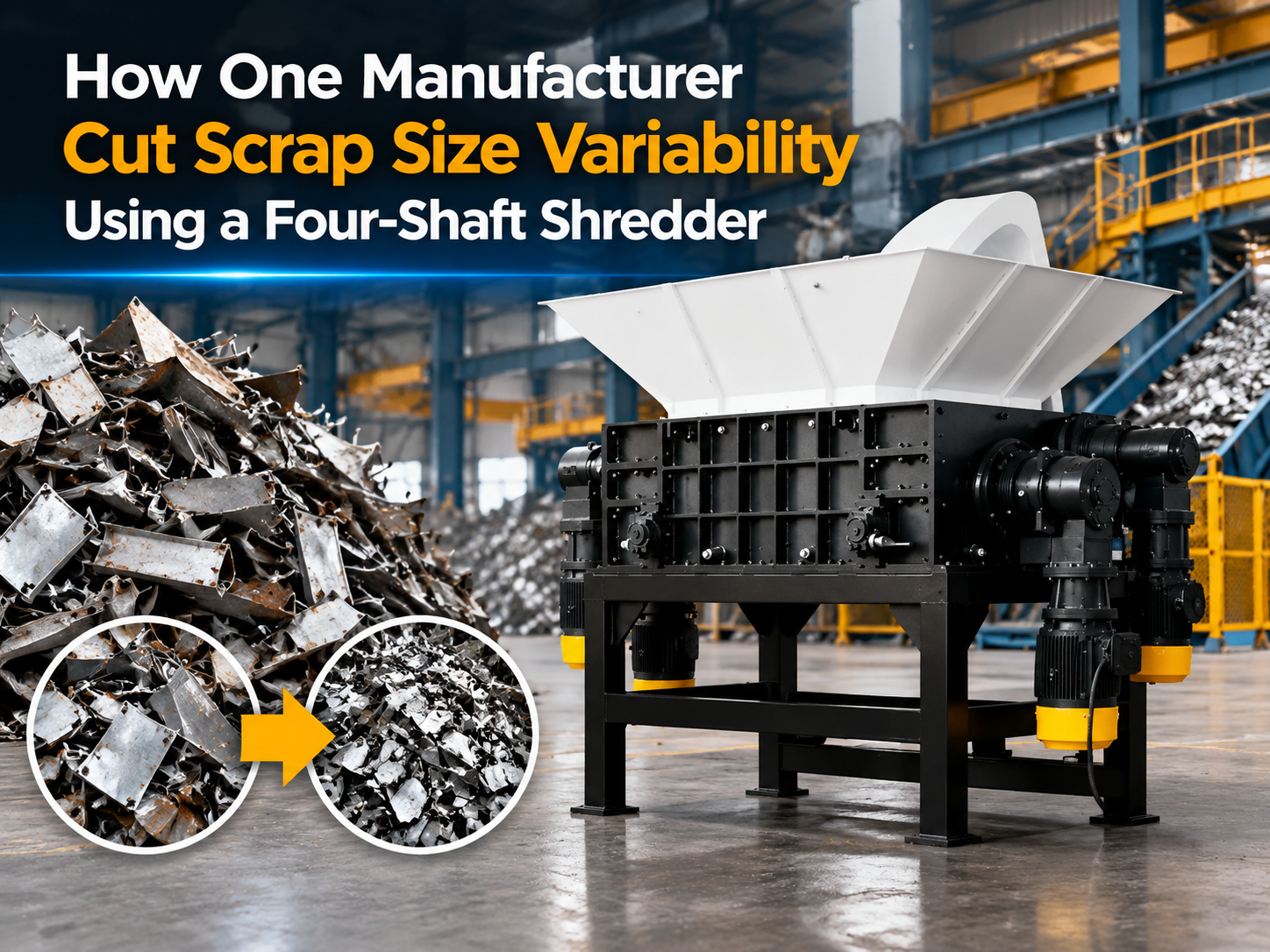
How One Manufacturer Cut Scrap Size Variability Using a Four-Shaft Shredder

Introduction
In the competitive landscape of modern metal fabrication, efficiency is not merely about production speed; it is about the holistic management of resources, including the byproduct of manufacturing: scrap metal. For many facilities, inconsistent scrap size leads to logistical bottlenecks, increased transportation costs, and lower recycling yields. This article explores the transformative journey of a mid-sized fabrication plant that successfully optimized its operations. By implementing a high-precision industrial solution, One Manufacturer Cut Scrap Size Variability Using A Four-Shaft Shredder, effectively turning a waste management headache into a streamlined, profitable process.
The challenge faced by this manufacturer was common in the industry: their previous shredding equipment produced irregular, oversized chunks of metal that were difficult to transport and even harder to process for downstream recycling. This inconsistency meant that containers were rarely filled to capacity, leading to wasted space and higher shipping costs. Furthermore, the variability in scrap size caused frequent jams in their automated sorting systems, leading to costly downtime and increased maintenance requirements for their facility managers.
By transitioning to a specialized four-shaft shredder, the manufacturer was able to achieve a uniform output that met the strict requirements of their recycling partners. This case study delves into the technical nuances of why four-shaft technology outperforms traditional two-shaft or single-shaft alternatives when precision is the primary objective. We will examine the mechanical advantages, the operational shifts required for implementation, and the long-term ROI that this manufacturer realized.
Understanding the mechanics of scrap reduction is essential for any fabrication plant looking to improve its bottom line. Whether you are dealing with aluminum offcuts, steel skeletons, or complex alloy waste, the ability to control the physical dimensions of your scrap is a competitive advantage. This guide provides an in-depth look at how the right machinery can redefine your waste management strategy and improve overall plant efficiency.
Key Considerations for Scrap Management
Before investing in new machinery, it is vital to understand the specific pain points of your current scrap handling process. The manufacturer in our case study identified three primary areas of concern: volume reduction, material density, and size uniformity. When scrap is bulky and irregular, it occupies significant floor space, which is a premium commodity in any fabrication environment. By reducing the volume of scrap at the source, the manufacturer was able to reclaim valuable floor space for production machinery.
Material density is another critical factor. Many recycling facilities pay based on the weight-to-volume ratio of the scrap provided. If your scrap is “fluffy” or contains large voids, you are essentially paying to ship air. By utilizing a four-shaft shredder, the manufacturer was able to increase the bulk density of their scrap, ensuring that every shipping container was utilized to its maximum weight capacity. This simple change resulted in a significant reduction in the number of trips required to transport waste, directly impacting the company’s carbon footprint and logistics budget.

Size uniformity is the final, and perhaps most important, consideration. Downstream processing equipment, such as magnetic separators and eddy current sorters, operates most efficiently when the input material is consistent. When the manufacturer achieved a uniform scrap size, they noticed a marked improvement in the purity of their separated metal streams. This allowed them to sell their scrap at a premium, as the quality of the sorted material was significantly higher than what they had previously produced.
Finally, the manufacturer had to consider the safety and maintenance implications of their scrap handling process. Traditional shredders often require frequent manual intervention to clear jams, exposing workers to potential hazards. The four-shaft design, with its independent shaft control and auto-reverse features, significantly reduced the need for manual clearing. This not only improved the safety profile of the facility but also allowed maintenance teams to focus on proactive care rather than reactive troubleshooting.
Technical Details of the Four-Shaft Shredder
The core of the solution lies in the unique mechanical design of the four-shaft shredder. Unlike two-shaft shredders, which rely on a shearing action between two sets of blades, the four-shaft design incorporates two primary cutting shafts and two secondary sizing shafts. This configuration allows for a two-stage process: the primary shafts perform the initial heavy-duty shredding, while the secondary shafts act as a screen, ensuring that only material of a specific size passes through the discharge area.
The cutting blades are typically manufactured from high-alloy, wear-resistant steel, designed to withstand the rigors of cutting through hardened steel, aluminum, and even copper alloys. The manufacturer in our case study opted for a modular blade design, which allowed them to replace individual teeth rather than entire shafts. This modularity was a game-changer for their maintenance schedule, as it minimized downtime and reduced the cost of spare parts over the long term.
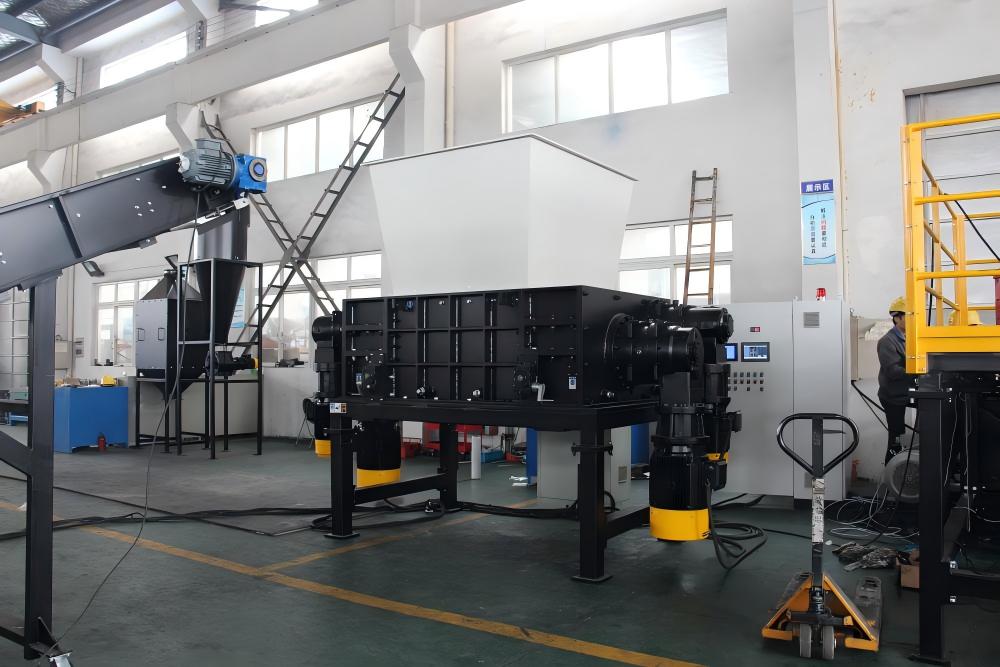
Another technical advantage is the low-speed, high-torque operation. By operating at lower rotational speeds, the shredder generates less heat and noise compared to high-speed granulators. This is crucial for metal fabrication, where the material is already prone to work-hardening. The high torque ensures that the machine can handle thick-gauge materials without stalling, providing a consistent throughput that matches the speed of the production line.
The control system of the four-shaft shredder is equally sophisticated. Modern units are equipped with PLC-based logic that monitors the load on each shaft independently. If a particularly dense piece of material is detected, the system can automatically adjust the torque or initiate a brief reverse cycle to clear the obstruction without stopping the entire process. This level of automation is what allowed the manufacturer to achieve such high levels of consistency in their scrap sizing.
Selection Advice for Metal Fabricators
Selecting the right four-shaft shredder requires a thorough analysis of your specific material stream. Not all shredders are created equal, and the configuration of the shafts, the blade geometry, and the motor power must be matched to the types of metal you process. For instance, if your facility primarily handles thin-gauge sheet metal, you will require a different blade configuration than a facility that processes heavy structural steel offcuts.
Consider the throughput requirements of your facility. It is tempting to purchase the largest machine available, but this can lead to inefficiencies if the machine is constantly running at a fraction of its capacity. Instead, calculate your daily scrap volume and select a shredder that operates comfortably within its rated capacity. This ensures the longevity of the motor and the cutting components, as the machine will not be under constant strain.
Integration with existing material handling systems is another vital step. Does your scrap currently move via conveyor belts, or is it collected in bins? A four-shaft shredder can be integrated into a fully automated system, where scrap is fed directly from the production line into the shredder, and then conveyed to a storage silo. This “closed-loop” approach is the gold standard for modern fabrication plants, as it eliminates manual handling entirely.
Finally, do not overlook the importance of after-sales support and spare parts availability. Industrial shredders are heavy-duty machines that require regular maintenance. Partnering with a reputable manufacturer like HARSLE ensures that you have access to technical expertise, genuine spare parts, and preventative maintenance programs. Investing in a machine from a reliable supplier is an investment in the long-term reliability of your entire production facility.
Frequently Asked Questions
Why is a four-shaft shredder better than a two-shaft shredder for scrap metal?
A four-shaft shredder provides superior size control due to its secondary sizing shafts. While a two-shaft shredder is excellent for volume reduction, it cannot guarantee a uniform output size. The four-shaft design acts as a built-in screen, ensuring that all material is shredded to a consistent, pre-determined size before it exits the machine.
How does scrap size variability affect recycling costs?
Inconsistent scrap size leads to lower bulk density, meaning you are shipping more volume for less weight. This increases your logistics costs. Furthermore, recycling facilities often charge higher processing fees for mixed or irregular scrap, as it requires additional sorting and preparation. Uniform scrap is easier to process and typically commands a higher market price.
What maintenance is required for a four-shaft shredder?
Regular maintenance includes inspecting the cutting blades for wear, checking the lubrication systems, and monitoring the hydraulic or gear oil levels. Because the four-shaft design is robust, daily maintenance is minimal, but periodic checks of the blade teeth and the drive system are essential to prevent unexpected downtime.
Can a four-shaft shredder handle different types of metal?
Yes, these machines are highly versatile. By adjusting the blade geometry and the rotational speed, a four-shaft shredder can process a wide range of metals, including aluminum, steel, copper, and brass. It is important to consult with the manufacturer to ensure the specific blade material is compatible with the hardness of the metals you intend to process.
Conclusion
The story of how One Manufacturer Cut Scrap Size Variability Using A Four-Shaft Shredder serves as a powerful reminder that operational excellence is found in the details. By addressing the inconsistency of their scrap metal, this manufacturer was able to streamline their logistics, improve their recycling revenue, and create a safer, more efficient work environment. The transition to four-shaft technology was not just a purchase of new equipment; it was a strategic upgrade that aligned their waste management with their high-precision production standards.
For any metal fabrication facility, the path to increased profitability often lies in the optimization of existing processes. Scrap metal, once considered a nuisance, can be transformed into a valuable asset through the right technology. By focusing on size uniformity, density, and automated processing, you can turn your scrap handling area into a model of industrial efficiency. As the industry continues to evolve, those who invest in smart, reliable, and high-performance machinery will undoubtedly lead the way in sustainable and profitable manufacturing.
If you are ready to take the next step in optimizing your scrap management, consider the benefits of a HARSLE four-shaft shredder. With a commitment to quality, technical precision, and customer support, we provide the tools necessary to help your facility reach its full potential. Contact our team today to learn more about how our shredding solutions can be tailored to your specific fabrication needs and help you achieve the same level of success as the manufacturer featured in this case study.












