
Aluminium Extrusion Press Applications for Aerospace Structural Components: A Comprehensive Technical Guide

Introduction to Aerospace Extrusion Technology
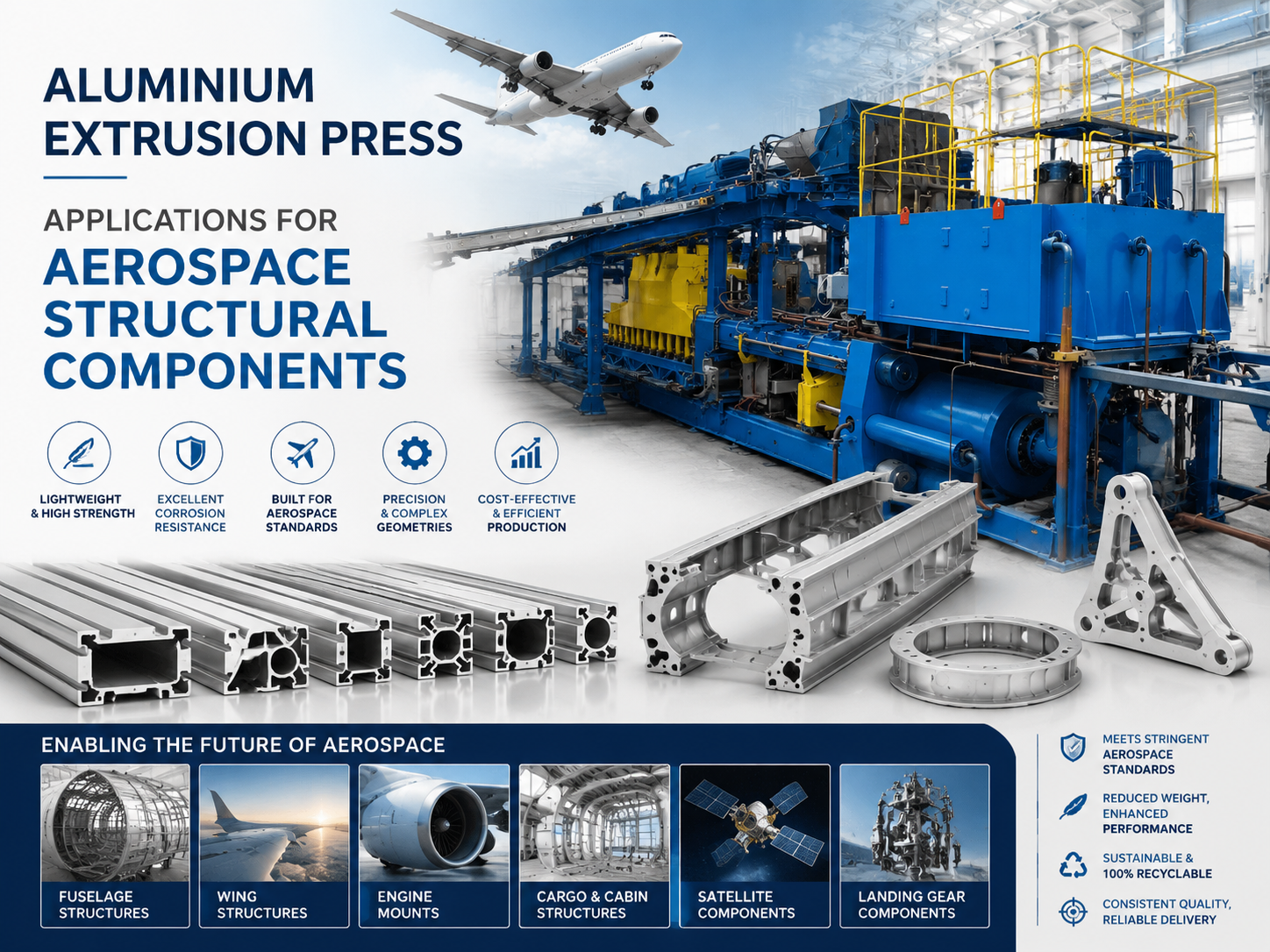
The aerospace industry demands materials and components that exhibit an exceptional strength-to-weight ratio, flawless structural integrity, and long-term resistance to fatigue and environmental stress. Among the various manufacturing methodologies available, the utilization of high-capacity hydraulic extrusion presses stands out as a foundational process for producing complex, near-net-shape profiles. This comprehensive guide explores the deep technical nuances of Aluminium Extrusion Press Applications Aerospace Structural Components, highlighting how advanced machinery from manufacturers like HARSLE fulfills these stringent requirements.
Modern aircraft rely heavily on extruded aluminium profiles to form the backbone of their structural architecture. From commercial airliners to military transport planes and aerospace launch vehicles, the efficiency of the extrusion process allows for the creation of intricate cross-sections that would be economically unfeasible or structurally inferior if produced via traditional machining or casting. By forcing high-strength aluminium billets through precisely engineered dies under immense pressure, extrusion presses alter the grain structure of the metal, aligning it along the direction of extrusion to maximize mechanical performance.
Application Scenario: Where Extruded Profiles Form the Aircraft Backbone
In aerospace engineering, structural components are categorized based on their load-bearing requirements and location within the airframe. Aluminium extrusion presses are uniquely capable of producing long, continuous profiles that can be cut, machined, and treated to form critical structural elements. Below are the primary application scenarios where these extrusions are indispensable:
Fuselage Stringers and Longerons
The fuselage of an aircraft is subjected to continuous aerodynamic forces, internal pressurization cycles, and bending moments. Fuselage stringers and longerons are longitudinal structural members that run along the length of the aircraft, reinforcing the skin against buckling. Extrusion presses produce these profiles with variable wall thicknesses, allowing engineers to place material exactly where stress concentrations are highest while minimizing weight elsewhere.
Wing Spars and Rib Caps
Wing spars are the primary structural elements of the wing, bearing the immense lift forces generated during flight. Rib caps reinforce the transverse wing ribs. These components require ultra-high-strength alloys (such as the 7xxx series) extruded under highly controlled thermal conditions. The extrusion process ensures that the grain flow follows the contour of the spar, providing superior resistance to fatigue crack propagation over thousands of flight hours.
Seat Tracks and Floor Beams
Inside the cabin, the floor structure must support passenger loads, cargo weight, and dynamic forces during turbulence or hard landings. Extruded aluminium floor beams offer a lightweight alternative to fabricated steel or composite structures. Additionally, seat tracks—which run the length of the cabin and secure passenger seats to the airframe—are exclusively produced via extrusion due to the complex interlocking geometries required for seat attachment mechanisms.
Cargo Handling Systems and Door Frames
Commercial freighters and military transport aircraft utilize specialized extruded profiles for cargo loading tracks, roller trays, and heavy-duty door frames. These components must withstand severe impact loads and abrasive wear while maintaining dimensional stability. Extrusion allows for the integration of guide rails, fastening slots, and reinforcement ribs into a single, monolithic profile, eliminating the need for multi-part assemblies and reducing potential failure points.
Material and Process Requirements for Aerospace Extrusions
Aerospace structural components cannot tolerate material defects, internal voids, or inconsistent mechanical properties. Consequently, the material selection and process control parameters for aerospace extrusion are significantly more rigorous than those used in commercial or architectural extrusion applications.
High-Strength Aluminium Alloys
The aerospace sector primarily utilizes two main groups of heat-treatable aluminium alloys:
- 2xxx Series (Al-Cu): Known for high fracture toughness and excellent fatigue resistance. Alloy 2024 is widely used for fuselage skins and lower wing structures where tension forces dominate.
- 7xxx Series (Al-Zn-Mg-Cu): Offers ultra-high yield and tensile strength. Alloys like 7075 and 7050 are deployed in upper wing structures, spars, and highly stressed fuselage components where compression forces are critical.
These alloys exhibit high deformation resistance at elevated temperatures, meaning they require substantially higher extrusion forces and narrower processing windows compared to standard 6xxx series architectural alloys.
Isothermal and Constant-Speed Extrusion
As an aluminium billet is forced through a die, internal friction and deformation generate heat, causing the temperature of the extrudate to rise. If the temperature exceeds the alloy’s solidus point, surface tearing and microstructural defects occur. Conversely, if the temperature drops too low, the extrusion force escalates, and the material fails to achieve complete recrystallization. Aerospace extrusion requires isothermal extrusion, where the extrusion speed is dynamically adjusted in real-time based on die temperature feedback to maintain a constant exit temperature, ensuring uniform mechanical properties from the front to the back of the charge.
Recommended Machine Configuration for Aerospace Profiles
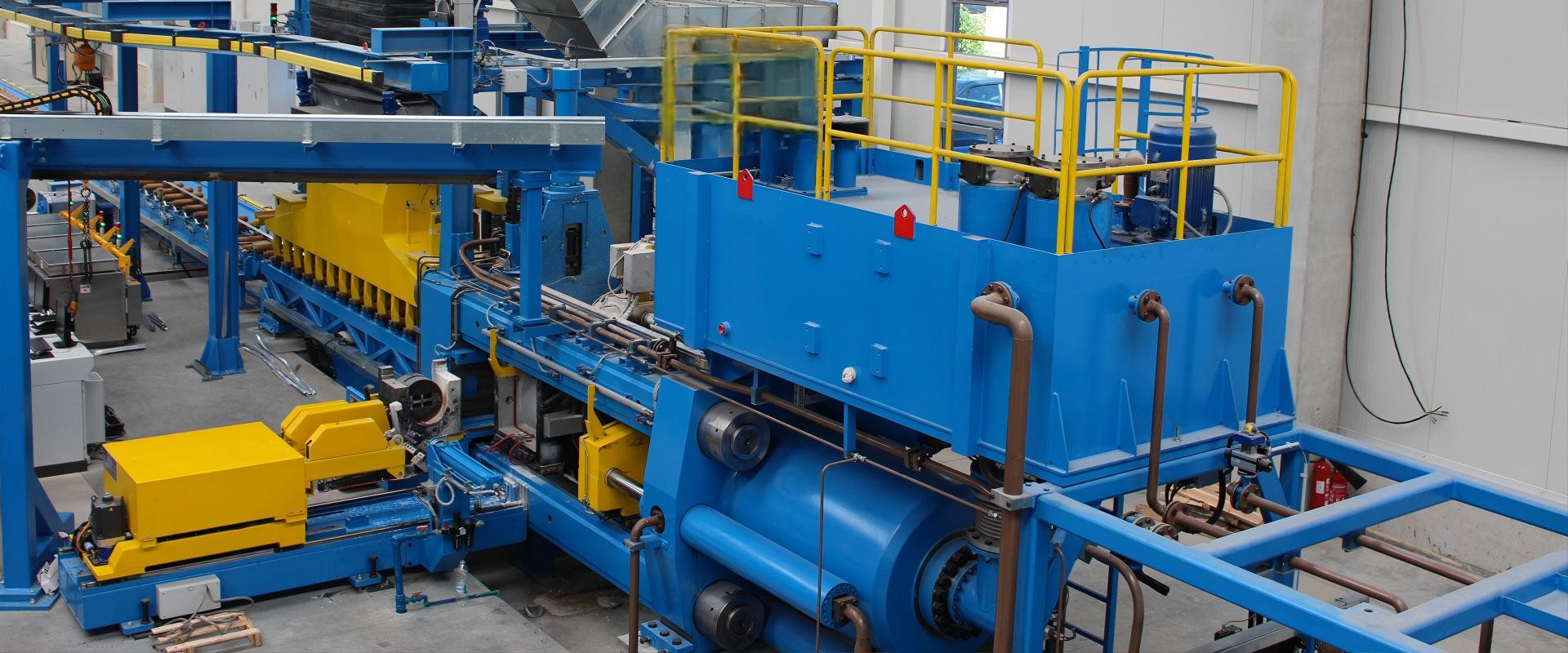
To successfully process aerospace-grade alloys into complex structural profiles, an extrusion press must possess extreme rigidity, precise hydraulic control, and advanced thermal management systems. HARSLE recommends the following heavy-duty machine configurations for aerospace applications:
| Parameter / Component | Standard Configuration Requirement | Aerospace Application Benefit |
|---|---|---|
| Press Tonnage | 3600T to 10000T (Tons) | Provides the immense specific pressure required to extrude hard 2xxx and 7xxx series alloys through complex dies. |
| Drive System | Servo-driven Hydraulic Pumps (Rexroth/Parker) | Delivers ultra-precise speed control down to 0.1 mm/s, critical for maintaining isothermal extrusion conditions. |
| Frame Design | Pre-stressed Tie-Rod / Rigid Counter-Box | Minimizes structural deflection under maximum load, ensuring strict dimensional tolerances across long profiles. |
| Billet Heating | Multi-Zone Induction Heater with Taper Heating | Creates a controlled temperature gradient along the billet length to compensate for frictional heating during extrusion. |
| Quenching System | Combined High-Volume Air & Water Spray Quench | Achieves the rapid cooling rates required for solution heat treatment directly at the press exit, preventing solute precipitation. |
Advanced Control Systems
HARSLE extrusion presses designed for aerospace applications integrate state-of-the-art PLC control systems (such as Siemens S7-1500 series) paired with proprietary extrusion optimization software. This system monitors variables such as container temperature, die temperature, main ram pressure, and extrusion speed at millisecond intervals. The software logs all production data, creating a digital birth certificate for each extruded profile, which is a critical requirement for aerospace traceability and quality assurance protocols.
Step-by-Step Workflow of Aerospace Extrusion
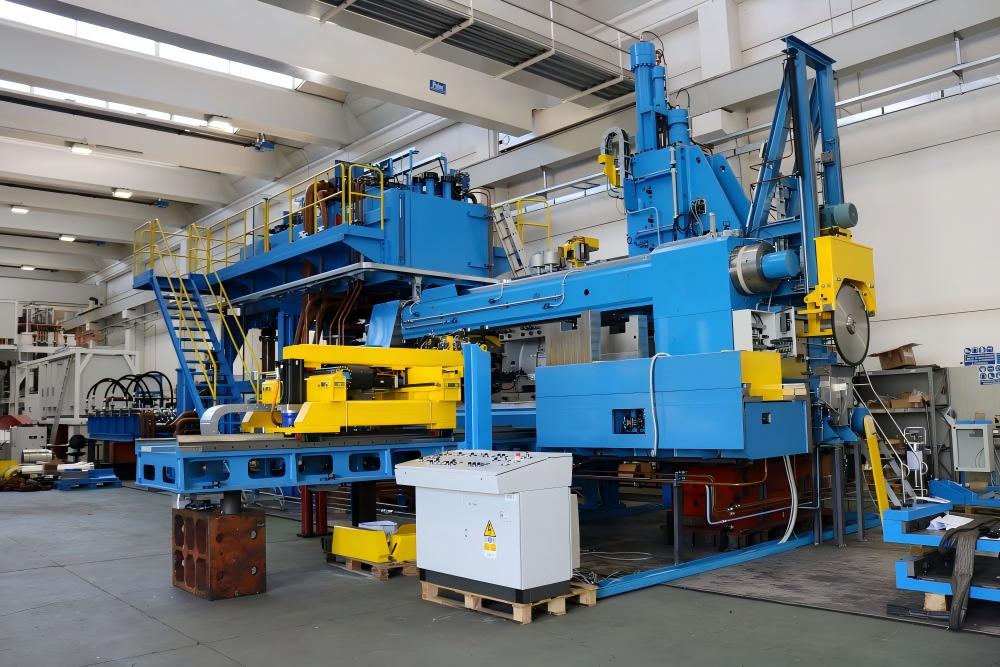
The transformation of a raw aluminium alloy billet into a flight-ready structural component follows a highly regulated, multi-stage workflow:
1. Billet Preparation and Homogenization
Before entering the press, cast aluminium billets undergo a rigorous homogenization heat treatment to eliminate chemical segregation and dissolve intermetallic phases. The billets are then cut to precise lengths based on the volume of the target profile and the required scrap allowance.
2. Taper Heating
The billet is passed through a multi-zone induction furnace where it is heated to its optimal extrusion temperature (typically between 400°C and 480°C depending on the alloy). The furnace applies a thermal taper, making the rear of the billet cooler than the front. This taper compensates for the heat generated by friction as the ram pushes the billet through the container, maintaining a stable temperature at the die face.
3. The Extrusion Cycle
The heated billet is transferred to the press container, which is also heated to prevent thermal shock. The main hydraulic ram advances, forcing a dummy block against the billet. Under immense pressure, the aluminium becomes plastic and is extruded through the die geometry. The press operates under closed-loop speed control, slowing down or speeding up automatically to maintain the target exit temperature.
4. Press Quenching (Solution Heat Treatment)
As the profile emerges from the die, it immediately enters the quench zone. For aerospace alloys, the cooling rate must be fast enough to lock the alloying elements into a supersaturated solid solution. Depending on the profile’s wall thickness and alloy sensitivity, this is achieved using high-velocity air blasts, water mist, or full water immersion. Proper quenching is vital to achieving the final desired mechanical properties after aging.
5. Stretching and Straightening
The rapid and sometimes uneven cooling during quenching introduces residual stresses and minor distortions along the length of the profile. Once the profile reaches room temperature, it is transferred to a heavy-duty stretcher. The stretcher grips both ends of the profile and applies a controlled tensile force, stretching the material by 1% to 3%. This process straightens the profile, relieves internal residual stresses, and stabilizes its dimensions.
6. Age Hardening
The final step in the metallurgical process is artificial aging (precipitation hardening) in a specialized aging oven. The profiles are held at elevated temperatures (e.g., 120°C to 180°C) for several hours. This causes the controlled precipitation of micro-particles within the aluminium matrix, drastically increasing the material’s yield strength, hardness, and resistance to stress corrosion cracking (achieving tempers such as T6, T73, or T76).
Productivity and Structural Benefits of Extrusion
Implementing high-performance Aluminium Extrusion Press Applications Aerospace Structural Components offers profound advantages over alternative manufacturing methods like forging or machining from solid plate:
- Near-Net-Shape Efficiency: Extrusion produces profiles that closely match the final component geometry. This drastically reduces the “buy-to-fly” ratio—the weight of raw material purchased versus the weight of the final component flying on the aircraft—leading to massive cost savings on expensive aerospace alloys.
- Optimized Grain Flow: Unlike machining, which cuts through the metal’s grain structure and creates weak points, extrusion aligns the grain structure continuously along the profile’s contours. This significantly enhances fatigue life and fracture toughness.
- Monolithic Integration: Extrusion allows multiple separate components (such as stiffeners, flanges, and attachment tracks) to be integrated into a single complex profile. This eliminates the need for rivets, welds, or fasteners, reducing both assembly labor and overall aircraft weight.
- Dimensional Consistency: Advanced hydraulic control systems ensure that dimensional tolerances are maintained within fractions of a millimeter across profiles that can exceed 30 meters in length, ensuring seamless integration during final airframe assembly.
Case Example: Production of 7075-T6 Wing Stringers
To illustrate the practical application of this technology, let us examine a production scenario involving a HARSLE 5000-Ton Heavy-Duty Hydraulic Extrusion Press deployed at an aerospace tier-1 supplier facility. The objective was to manufacture 12-meter-long wing stringers using 7075 aluminium alloy, destined for a commercial narrow-body aircraft program.
The HARSLE press was configured with an automated log shear, a multi-zone induction billet heater with a 30°C thermal taper capability, and an integrated water-box quench system. The extrusion die was engineered with a specialized PVD coating to withstand the highly abrasive nature of the 7075 alloy at elevated pressures.
During production, the billet entry temperature was set to 430°C at the front and 400°C at the rear. The press maintained an extrusion speed profile that started at 2.5 mm/s and gradually tapered down to 1.8 mm/s as the ram advanced, keeping the exit temperature strictly within a 475°C to 485°C window. Post-extrusion, the profiles underwent a 2% mechanical stretch to eliminate distortion, followed by a two-stage T73 aging process to optimize the balance between tensile strength and stress corrosion cracking resistance. The resulting stringers passed 100% ultrasonic and eddy-current non-destructive testing, demonstrating zero internal voids and a 15% improvement in production throughput compared to the legacy press line previously utilized by the manufacturer.
Frequently Asked Questions (FAQ)
What makes aerospace extrusion different from commercial extrusion?
Aerospace extrusion utilizes hard, high-strength alloys (2xxx and 7xxx series) that require significantly higher extrusion pressures, precise thermal management, and strict traceability. Commercial extrusion typically uses soft 6xxx series alloys for architectural or general industrial applications where mechanical property requirements are far less stringent.
Why is stretching necessary after the extrusion process?
Stretching serves two critical purposes: it mechanically straightens the profiles which may have warped during the rapid quenching process, and more importantly, it relieves internal residual stresses. Unrelieved stresses can cause the component to distort unpredictably during subsequent machining operations or while in service on the aircraft.
How does HARSLE ensure the dimensional accuracy of long aerospace profiles?
HARSLE achieves exceptional dimensional accuracy through a combination of ultra-rigid, pre-stressed press frames that resist deflection under maximum load, high-precision linear encoders that monitor ram alignment, and advanced closed-loop hydraulic systems that maintain constant pressure and speed profiles throughout the extrusion cycle.
What is isothermal extrusion and why is it critical for aerospace components?
Isothermal extrusion is a process control methodology where the extrusion speed is dynamically varied to keep the temperature of the metal emerging from the die completely constant. This is critical for aerospace components because variations in exit temperature lead to localized differences in microstructure, grain size, and mechanical properties, which can compromise the structural integrity of the aircraft component.
Can extrusion presses handle titanium or other advanced aerospace metals?
While this guide focuses on aluminium, specialized high-tonnage extrusion presses can extrude titanium and steel alloys. However, these materials require significantly higher processing temperatures (often exceeding 1000°C), specialized glass lubricants, and different container and die materials compared to aluminium extrusion lines.
Conclusion and Call to Action
The production of aerospace structural components demands manufacturing equipment that delivers uncompromising precision, power, and reliability. As demonstrated, Aluminium Extrusion Press Applications Aerospace Structural Components represent the pinnacle of metal forming technology, transforming high-strength alloys into the vital frameworks that keep modern aircraft flying safely and efficiently.
HARSLE is at the forefront of engineering high-capacity, technologically advanced hydraulic extrusion presses tailored to meet the rigorous standards of the global aerospace supply chain. Our machinery combines robust structural design with intelligent automation and closed-loop control systems to optimize your production yield, reduce material waste, and guarantee flawless component quality. Contact the engineering team at HARSLE today to discuss your specific aerospace manufacturing requirements and discover how our custom extrusion solutions can elevate your production capabilities to new heights.


