
Why Aluminium Extrusion Press Technology Matters for Heat Sink Manufacturing

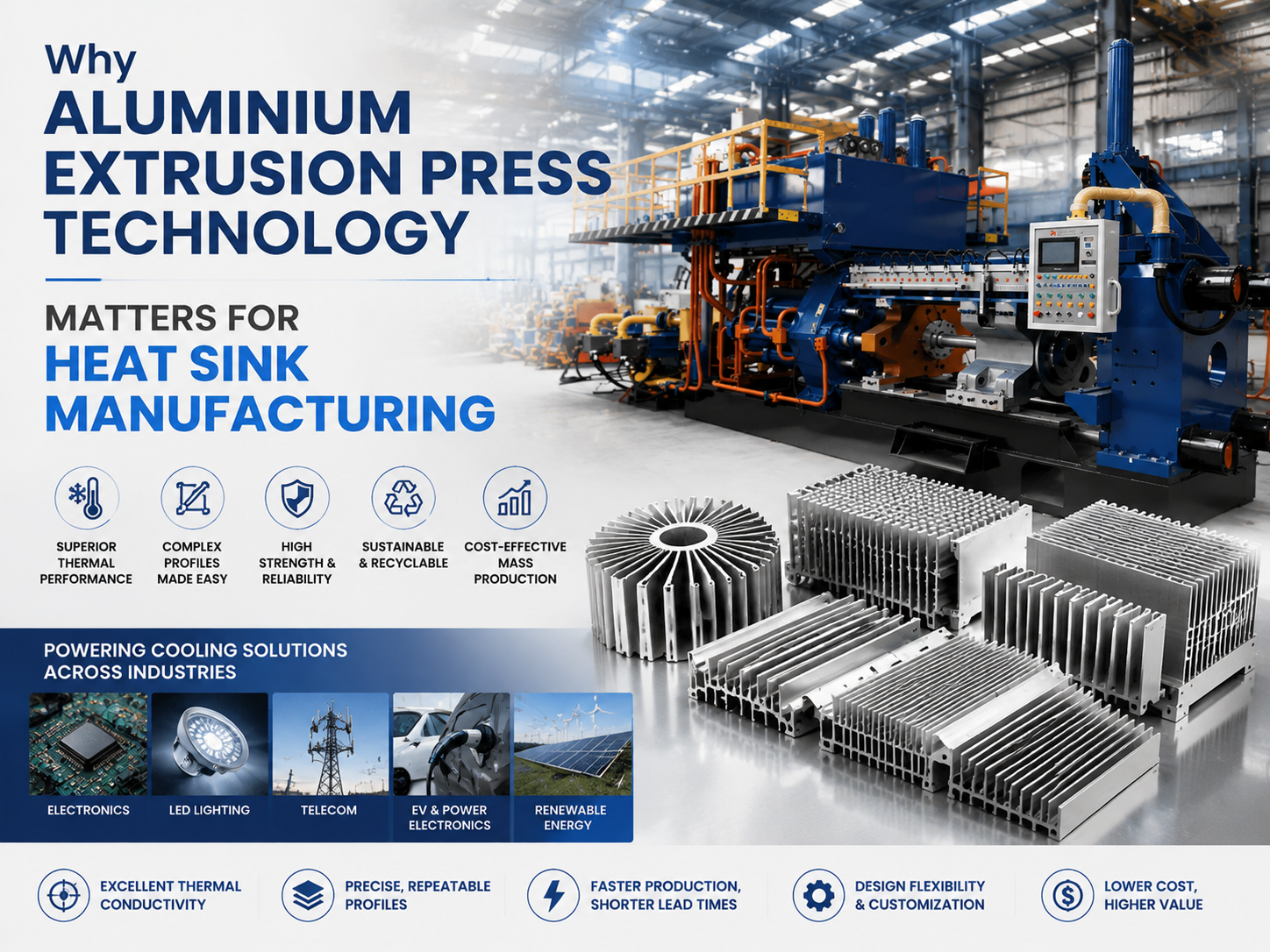
Introduction: The Critical Role of Extrusion in Thermal Management
In the modern industrial landscape, the demand for efficient thermal management has never been higher. As electronic components become smaller and more powerful, the heat they generate increases exponentially. This is where the heat sink comes into play, acting as a vital component in everything from consumer electronics to electric vehicle (EV) batteries. However, the effectiveness of a heat sink is not just determined by its design, but by the technology used to manufacture it. This article explores why aluminium extrusion press technology matters for heat sink manufacturing and how HARSLE machinery is leading the way in this specialized field.
Aluminium extrusion is the process of forcing an aluminium alloy through a die with a specific cross-sectional profile. For heat sinks, this typically involves creating complex shapes with numerous thin fins that maximize surface area for heat dissipation. The precision, speed, and consistency required for these profiles make the choice of extrusion press technology a deciding factor in a manufacturer’s success. Without high-quality extrusion technology, achieving the necessary fin density and wall thickness becomes an impossible task, leading to thermal failure in end-user applications.
Application Scenarios for Extruded Heat Sinks
The application of extruded heat sinks spans across multiple high-growth industries. One of the most prominent sectors is the telecommunications industry, specifically with the global rollout of 5G infrastructure. 5G base stations generate significant heat due to high-frequency signal processing, requiring massive, high-performance aluminium heat sinks that can only be produced efficiently via high-tonnage extrusion presses. These components must be durable enough to withstand outdoor environments while maintaining peak thermal conductivity.
In the automotive sector, the shift toward electrification has created a massive market for heat sink technology. EV battery packs and power inverters require sophisticated cooling systems to ensure safety and longevity. Extruded aluminium profiles are often used to create cooling plates and housings that integrate heat-dissipating fins directly into the structure. The ability of an aluminium extrusion press to produce long, continuous profiles with internal channels is a game-changer for automotive engineers looking to reduce weight while improving thermal performance.
Furthermore, the LED lighting industry relies heavily on extrusion. LEDs are highly sensitive to heat; excessive temperatures can drastically shorten their lifespan and reduce light output. Extruded aluminium heat sinks provide the necessary cooling in a cost-effective, lightweight package. From streetlights to high-bay industrial lighting, the geometry of these heat sinks is often complex, requiring a press that can maintain tight tolerances over long production runs. This versatility is a primary reason why aluminium extrusion press technology matters for heat sink manufacturing across diverse markets.
Material and Process Requirements
When discussing why aluminium extrusion press technology matters for heat sink manufacturing, we must look at the material science involved. The most common alloys used for heat sinks are the 6000 series, particularly 6063 and 6061. These alloys offer an excellent balance of extrudability, thermal conductivity, and mechanical strength. 6063 is often preferred for heat sinks because it allows for more intricate fin designs and has a higher thermal conductivity than the more structural 6061 alloy.
The process requirements for heat sink extrusion are significantly more demanding than for standard architectural profiles. The “fin ratio”—the ratio of the height of the fin to the gap between fins—is a critical metric. High-performance heat sinks require high fin ratios to maximize surface area. Achieving this requires a press with exceptional pressure control and a die design that can withstand the immense stresses of forcing metal through narrow gaps without breaking the die tongues. This necessitates a stable hydraulic system and precise speed control to ensure the metal flows uniformly.
Temperature management during the extrusion process is another vital factor. The aluminium billet must be heated to a specific temperature (usually between 400°C and 500°C) to reach a plastic state. If the temperature is too low, the pressure required increases, potentially damaging the die. If it is too high, the metal may become too soft, leading to poor surface finish or structural defects. Advanced extrusion presses incorporate sophisticated temperature monitoring systems to ensure the billet and the die remain within the optimal range throughout the cycle.
Recommended Machine Configuration for Heat Sink Production
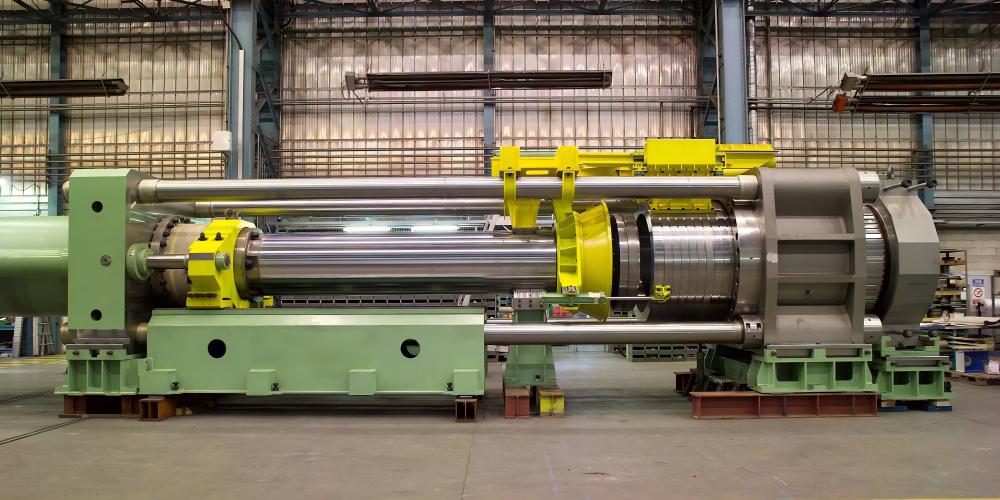
To meet the rigorous demands of heat sink manufacturing, a specific machine configuration is required. HARSLE recommends a hydraulic extrusion press with a tonnage ranging from 600T to 2500T, depending on the size and complexity of the heat sink profiles. For small electronics heat sinks, a 600T to 1000T press is often sufficient, providing the high speed and precision needed for thin-walled sections. For larger industrial or automotive applications, a 1450T or 2000T press offers the necessary force to extrude larger billets and more complex geometries.
Key Components of a High-Performance Press:
- Hydraulic System: A high-pressure hydraulic system using premium pumps (such as Rexroth or Vickers) is essential. These systems provide the smooth, consistent pressure required to maintain uniform metal flow through complex dies.
- PLC Control System: Modern presses should be equipped with a high-end PLC (like Siemens or Schneider) and a user-friendly HMI. This allows operators to program specific extrusion profiles, monitor real-time data, and make micro-adjustments to speed and pressure.
- Billet Heating Furnace: An integrated induction or gas-fired billet heater ensures the raw material reaches the exact temperature needed for extrusion, reducing waste and improving cycle times.
- Cooling and Quenching System: For heat sinks, the cooling rate after extrusion is critical for setting the mechanical properties of the alloy. An air or water quenching system must be integrated into the outfeed table.
The structural integrity of the press frame itself cannot be overlooked. A four-column prestressed structure provides the rigidity necessary to prevent deflection under high loads. This rigidity is what allows for the production of heat sinks with extremely tight tolerances, ensuring that every fin is perfectly aligned and every wall is the correct thickness.
The Extrusion Workflow: From Billet to Finished Heat Sink
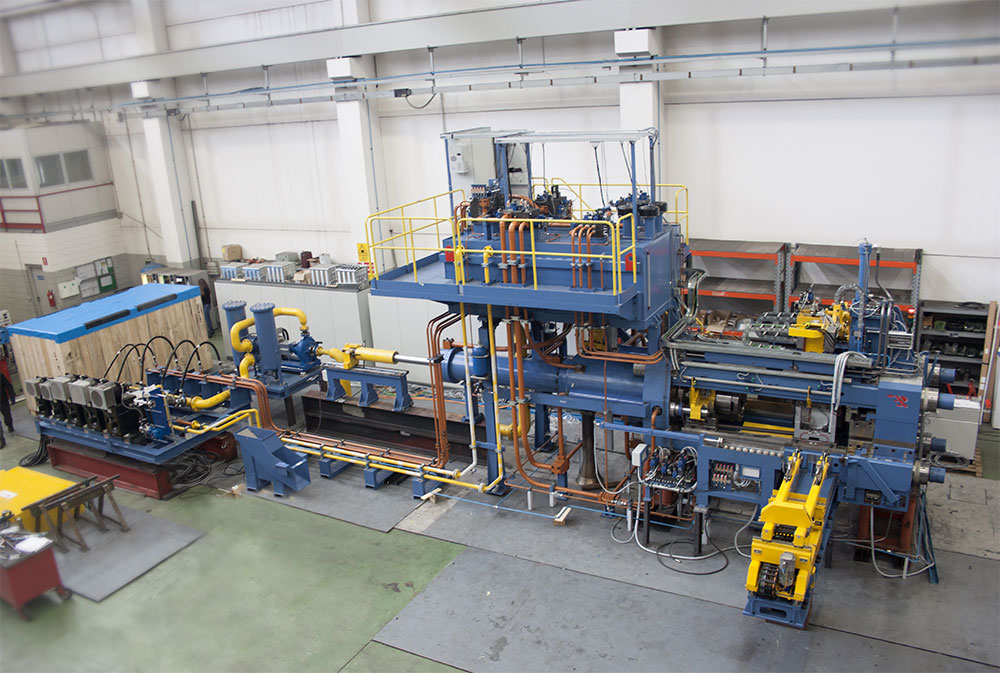
The workflow of manufacturing a heat sink using an aluminium extrusion press is a highly synchronized operation. It begins with the preparation of the aluminium billet, which is cut to length and then passed through a pre-heating furnace. Once the billet reaches the target temperature, it is transferred to the press container. A hydraulic ram then pushes the billet against the die. The metal is forced through the die opening, taking the shape of the heat sink profile.
As the profile emerges from the die, it is guided onto a run-out table. This is a critical stage where the “puller” maintains a consistent tension on the profile to prevent warping or twisting. Simultaneously, the quenching system cools the profile to “freeze” its shape and metallurgical structure. Once the profile reaches the end of the run-out table, it is cut to a manageable length (often 30 to 60 meters) and moved to a cooling bed.
After cooling, the profiles undergo a stretching process. This straightens the extrusions and relieves internal stresses caused during the extrusion and cooling phases. The long profiles are then moved to a precision saw, where they are cut into the final lengths required for the specific heat sink application. The final step is often an aging process in a specialized oven, which hardens the aluminium to its final T5 or T6 temper, ensuring it has the strength and durability required for industrial use.
Productivity and Economic Benefits
Why does aluminium extrusion press technology matter for heat sink manufacturing from a business perspective? The answer lies in productivity and cost-efficiency. Compared to other manufacturing methods like CNC machining or die casting, extrusion offers several distinct advantages. CNC machining a heat sink from a solid block of aluminium is incredibly time-consuming and results in a massive amount of material waste in the form of chips. Extrusion, by contrast, is a “near-net-shape” process, meaning the profile is produced almost exactly in its final form, significantly reducing waste.
While die casting can produce complex shapes, it often results in lower thermal conductivity due to the porosity of the cast metal and the presence of impurities. Extruded aluminium has a dense, wrought grain structure that facilitates much better heat transfer. Furthermore, the initial investment in an extrusion die is significantly lower than the cost of a complex die-casting mold, making extrusion more viable for both medium and high-volume production runs.
The speed of modern extrusion presses also contributes to high productivity. A well-optimized press can produce hundreds of meters of heat sink profile per hour. When combined with automated handling systems, the labor cost per unit drops dramatically. This allows manufacturers to remain competitive in a global market where margins are often tight. By investing in high-quality extrusion technology, companies can achieve faster turnaround times and higher product quality, leading to better customer satisfaction and increased market share.
Case Example: Upgrading to a HARSLE 1450T Press
Consider a mid-sized manufacturer of industrial power supplies that was previously outsourcing its heat sink production. They faced issues with long lead times and inconsistent quality, particularly regarding the flatness of the heat sink base, which is critical for proper contact with electronic components. After analyzing their needs, they decided to bring production in-house by investing in a HARSLE 1450T aluminium extrusion press.
The results were transformative. By controlling the extrusion process, they were able to optimize the die design to increase fin density by 15%, improving the thermal performance of their power supplies without increasing the overall footprint. The precision of the HARSLE press ensured that the base of the heat sinks met a flatness tolerance of 0.05mm, eliminating the need for expensive post-extrusion milling. Within the first year of operation, the company reported a 30% reduction in total heat sink costs and a 50% reduction in production lead times. This case perfectly illustrates why aluminium extrusion press technology matters for heat sink manufacturing when precision and efficiency are the top priorities.
Frequently Asked Questions (FAQ)
1. What is the best aluminium alloy for heat sinks?
The 6063 alloy is generally considered the best choice for heat sinks due to its high thermal conductivity and excellent extrudability, allowing for complex fin designs. 6061 is also used when higher structural strength is required, though its thermal performance is slightly lower.
2. How does the fin ratio affect the extrusion process?
The fin ratio (height to width) determines the difficulty of the extrusion. High ratios require more pressure and put more stress on the die. A high-quality extrusion press with precise speed and pressure control is necessary to successfully extrude high-ratio fins without damaging the tooling.
3. Can an extrusion press produce hollow heat sinks?
Yes, by using a bridge die or a porthole die, an aluminium extrusion press can produce profiles with internal hollow sections. These are often used for liquid cooling applications where coolant flows directly through the heat sink.
4. What maintenance is required for an aluminium extrusion press?
Regular maintenance includes monitoring hydraulic oil quality, checking for leaks, lubricating moving parts, and inspecting the alignment of the ram and container. The PLC system should also be kept updated, and the heating elements in the billet furnace should be checked periodically.
5. Is extrusion cost-effective for small production runs?
While extrusion is most efficient for high volumes, it can be cost-effective for smaller runs because the cost of the die is relatively low compared to die-casting molds. However, the setup time for the press must be factored into the total cost.
Conclusion: Investing in the Future of Thermal Management
As we have explored, the importance of aluminium extrusion press technology in the manufacturing of heat sinks cannot be overstated. From the ability to create complex, high-surface-area geometries to the economic benefits of reduced waste and high-speed production, the extrusion press is the heart of the thermal management industry. For manufacturers looking to stay ahead in sectors like EV production, 5G infrastructure, and high-power electronics, the choice of machinery is a strategic decision that impacts every aspect of the business.
HARSLE is committed to providing the high-precision, reliable extrusion technology needed to meet these challenges. Our range of hydraulic extrusion presses is designed with the latest in control systems and structural engineering to ensure that your heat sink production is efficient, consistent, and profitable. Whether you are looking to upgrade your current capabilities or establish a new production line, HARSLE has the expertise and the equipment to help you succeed.
Ready to elevate your heat sink manufacturing? Contact HARSLE today to discuss our aluminium extrusion press solutions and find the perfect machine for your specific application. Let’s build the future of thermal management together.


