Container Shear Buying Guide: Key Features to Compare Before You Purchase

Introduction to Container Shear Procurement
In the rapidly evolving world of scrap metal recycling, the efficiency of your processing equipment directly dictates your profit margins. Among the most critical investments for any medium-to-large scale recycling yard is the container shear. This machine, designed to cut bulky scrap into manageable, furnace-ready sizes, represents a significant capital expenditure. Navigating the market requires a deep understanding of technical specifications and operational requirements. This Container Shear Buying Guide: Key Features to Compare Before You Purchase is designed to provide you with the technical depth needed to make an informed decision.
Container shears have revolutionized the industry by offering a continuous feeding mechanism that significantly outperforms traditional alligator shears or stationary guillotine shears in terms of throughput. However, not all container shears are created equal. From the quality of the hydraulic valves to the metallurgy of the cutting blades, every component plays a role in the machine’s longevity and performance. When considering a Container Shear Buying : Key Features Compare Before You Purchase, one must look beyond the sticker price and evaluate the total cost of ownership and the specific demands of their scrap stream.
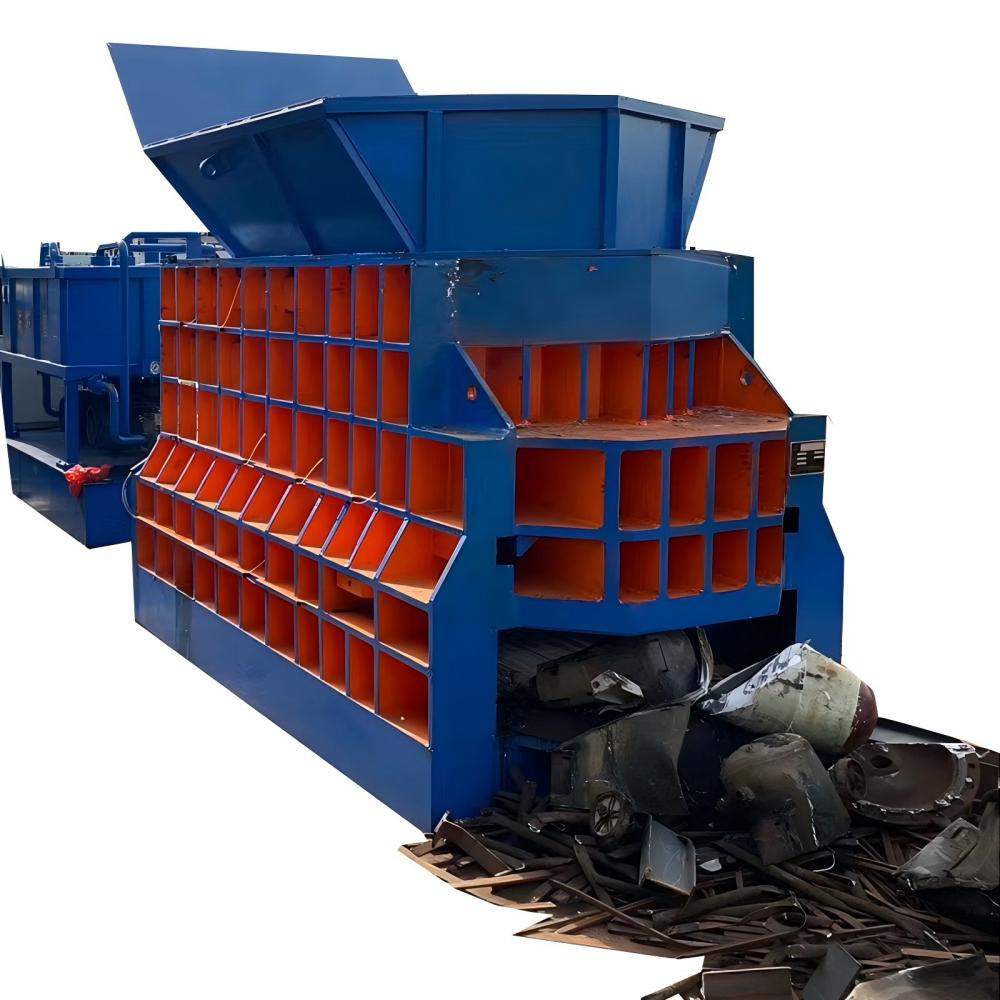
Price Range Overview: Understanding the Market Landscape
The price of a container shear can vary wildly, typically ranging from $60,000 for entry-level, lower-tonnage models to well over $400,000 for high-capacity, fully automated industrial systems. This price disparity is not arbitrary; it reflects the machine’s capacity, durability, and the sophistication of its control systems. For a business looking into Container Shear Buying : Key Features Compare Before You Purchase, understanding these price brackets is the first step in budgeting.
Entry-level models (400-500 tons of cutting force) are often suitable for smaller yards processing light-to-medium gauge scrap like aluminum extrusions, light copper, or thin steel sheets. These machines usually feature simplified hydraulic circuits and manual or semi-automatic controls. While they offer a lower barrier to entry, their throughput is limited, and they may struggle with heavy structural steel or thick-walled pipes.
Mid-range models (600-800 tons) represent the sweet spot for most commercial recycling operations. These machines offer a balance of power and speed, capable of handling the majority of HMS (Heavy Melting Scrap) grades. They often include better cooling systems and more robust wear plates, ensuring they can run for multiple shifts without overheating or excessive downtime. High-end models (1000 tons and above) are reserved for massive industrial operations where the volume of scrap exceeds several hundred tons per day. These units are built with premium components like Rexroth hydraulics and Siemens PLC systems, designed for 24/7 operation.
Main Cost Drivers in Container Shear Manufacturing
When you begin the process of Container Shear Buying : Key Features Compare Before You Purchase, you will notice that certain specifications drive the price more than others. The most significant cost driver is the cutting force, measured in tons. Increasing the tonnage requires larger hydraulic cylinders, a more reinforced frame, and more powerful motor-pump groups. Each additional 100 tons of force adds substantial weight and material cost to the machine’s construction.
The quality of the hydraulic system is another major factor. A machine equipped with high-pressure, variable displacement piston pumps (such as those from Bosch Rexroth or Kawasaki) will cost significantly more than one using standard gear pumps. However, the premium pumps offer much higher energy efficiency and a longer service life, which reduces operational costs over time. Similarly, the complexity of the hydraulic manifold and the inclusion of high-speed valves (to reduce cycle times) will impact the initial purchase price.
Material quality cannot be overlooked. The frame of a container shear must withstand immense stress. Machines built with high-tensile Q345B or Q355B steel are standard, but those utilizing specialized alloys or thicker plate sections in high-stress areas will command a premium. Furthermore, the use of branded wear-resistant liners, such as Hardox 450 or 500, in the feeding box and shear head ensures the machine doesn’t literally grind itself away during operation. These liners are expensive but essential for processing abrasive scrap materials.
Configuration Impact: Tailoring the Machine to Your Needs
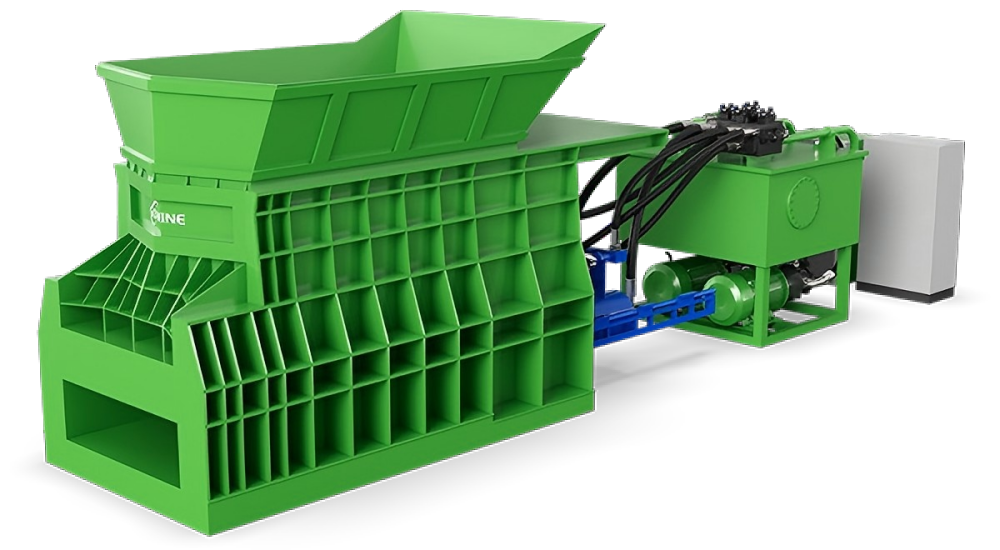
The configuration of a container shear determines its operational workflow. One of the most important features to compare is the feeding mechanism. Most modern container shears utilize a “continuous feed” system where a hydraulic pusher moves the scrap toward the blades. The length and width of the feeding box are critical; a larger box allows you to load longer pieces of scrap without pre-cutting, saving labor and time.
Another configuration choice is the power source. While most units are electric-driven, some manufacturers offer diesel-powered versions for remote yards without stable grid access. Electric models are generally preferred for their lower maintenance and operating costs, but they require a significant power drop (often 90kW to 200kW+). If your facility’s electrical infrastructure cannot support this, the cost of upgrading the transformer must be factored into your Container Shear Buying : Key Features Compare Before You Purchase analysis.
Automation and control systems also vary. Basic models might use simple button controls, while advanced units feature touch-screen interfaces with diagnostic capabilities, remote monitoring, and automatic cycle modes. An automatic cycle allows the operator to load the box and let the machine handle the pushing and shearing sequence independently, freeing the operator to manage the loading crane. This increases overall yard efficiency and reduces the likelihood of operator error leading to machine damage.
Hidden Costs: What the Quote Doesn’t Always Show
When performing a Container Shear Buying : Key Features Compare Before You Purchase, the purchase price is just the beginning. One of the most significant hidden costs is shipping and logistics. These machines are incredibly heavy (often 30 to 80 tons) and oversized. Shipping them from the factory to your site requires specialized heavy-lift transport and, in many cases, multiple flat-rack containers. Customs duties and local port fees can also add thousands to the final bill.
Installation and foundation preparation are equally critical. A container shear cannot simply be placed on a standard asphalt lot. It requires a reinforced concrete pad designed to withstand both the static weight and the dynamic vibrations of the shearing process. Failure to provide a proper foundation can lead to frame misalignment and premature hydraulic failure. Additionally, you must account for the initial fill of hydraulic oil—often 1,000 to 3,000 liters—which is a substantial one-time expense.
Consumables and spare parts should be budgeted from day one. The cutting blades are the most frequently replaced items. High-quality tool steel blades are expensive, and having a spare set on hand is mandatory to avoid downtime during sharpening or replacement. You should also consider the cost of regular maintenance, including filter changes, seal replacements, and the electricity or fuel consumed during operation. A machine that is slightly more expensive but 20% more energy-efficient can save tens of thousands of dollars over its lifespan.
ROI Calculation: Justifying the Investment
To justify the cost of a Container Shear Buying : Key Features Compare Before You Purchase, you must calculate the Return on Investment (ROI). The primary driver of ROI in scrap processing is the “spread”—the difference between the price you pay for unprocessed scrap and the price you receive for processed, furnace-ready material. Processed scrap (like HMS 1/2) fetches a significantly higher price than bulky, unprocessed light melt.
Consider a scenario where a container shear allows you to process 15 tons of scrap per hour. If the price difference between unprocessed and processed scrap is $40 per ton, the machine generates $600 of value per hour. Subtracting labor, electricity, and maintenance costs (roughly $150/hour), you are left with a net gain of $450 per hour. If the machine runs for 2,000 hours a year, that is a $900,000 annual contribution to the bottom line. In this scenario, even a $300,000 machine pays for itself in less than six months of full operation.
Furthermore, container shears reduce transportation costs. Bulky scrap is expensive to move because trucks hit their volume limit long before their weight limit. By shearing the material into dense pieces, you can maximize the weight of every outbound load, potentially cutting your shipping costs by 30-50%. This logistical saving is often the “hidden” hero of the ROI calculation for large-scale recycling operations.
Buying Advice: A Step-by-Step Checklist
When you are ready to move forward with a Container Shear Buying : Key Features Compare Before You Purchase, follow this checklist to ensure you select the right partner and machine:
- Define Your Scrap Profile: What is the thickest material you process? Ensure the shear’s rated capacity handles your toughest 10% of material, not just the average.
- Verify Component Brands: Ask for a detailed bill of materials. Are the pumps, valves, and PLC from reputable global brands with local support?
- Check the Cycle Time: A machine that shears every 30 seconds is twice as productive as one that shears every 60 seconds. Speed matters.
- Inspect the Frame Construction: Look for continuous welds and reinforcement in the “throat” of the shear where the most stress occurs.
- Evaluate After-Sales Support: Does the manufacturer offer remote diagnostics? How quickly can they ship replacement blades or seals?
- Request a Video Test: Before shipping, have the manufacturer record a video of the machine processing material similar to your own.
Choosing a manufacturer like HARSLE ensures that you are getting a machine built to international standards with a focus on durability and efficiency. Always prioritize a manufacturer that provides comprehensive manuals, wiring diagrams, and a clear warranty policy. The cheapest machine on the market is rarely the most profitable one in the long run.
Frequently Asked Questions (FAQ)
What is the average lifespan of a container shear?
With proper maintenance, a high-quality container shear can last 10 to 15 years in a heavy-duty environment. The frame and main cylinders are designed for longevity, while wear parts like blades and liners will need replacement every few months to years depending on volume.
Can a container shear handle stainless steel?
Yes, but stainless steel is much harder than carbon steel. You will need a machine with higher tonnage and specialized high-chrome blades to prevent excessive wear and ensure clean cuts. Always inform the manufacturer if stainless steel is a primary part of your scrap stream.
How often do the blades need to be sharpened?
This depends entirely on the material being cut. For clean, soft steel, blades might last 200-400 hours before needing a flip or grind. For sandy, rusty, or alloyed scrap, you might need to service the blades every 100 hours. Most blades are 4-sided, meaning you can rotate them four times before they require professional regrinding.
Is a container shear better than a baler?
They serve different purposes. A baler is for light gauge material (like cars or tin) to create dense blocks for transport. A container shear is for heavy structural scrap that needs to be cut to size for melting. Many modern yards use both, or a “shear-baler” combo that can perform both functions.
What kind of hydraulic oil should I use?
Most manufacturers recommend an anti-wear hydraulic oil (ISO VG 46 or 68). In extremely cold climates, a low-pour-point oil is necessary to prevent pump cavitation during startup. Regular oil analysis is recommended to extend the life of the hydraulic components.
How many operators are needed?
Typically, only one operator is needed to run the loading crane. If the container shear has an automatic cycle and a remote control, the crane operator can trigger the machine from the cab, making the entire process a one-person operation.