Comprehensive Guide to Weekly Maintenance Tasks for Scrap Metal Shear Equipment

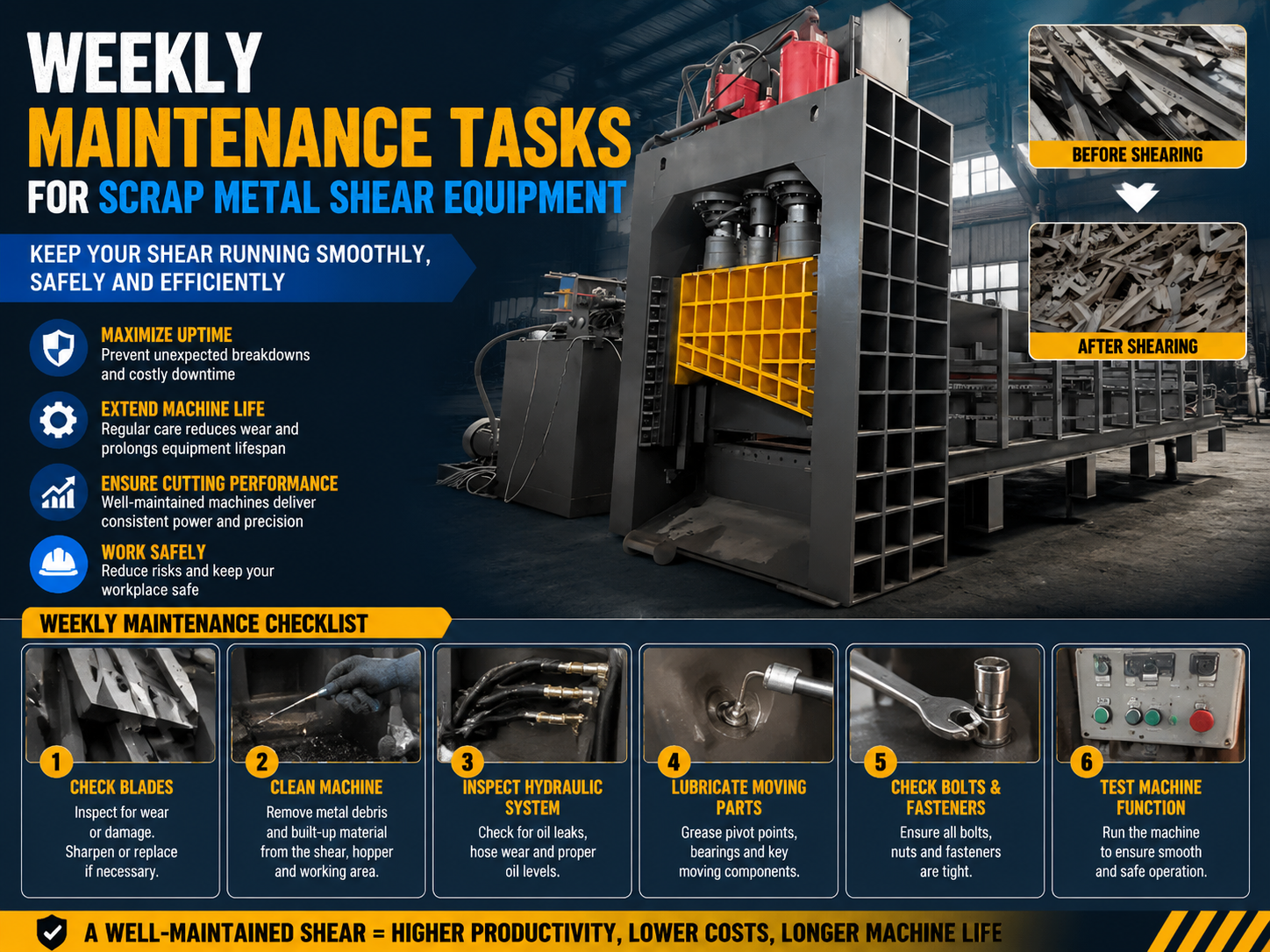
The Critical Importance of Weekly Maintenance for Scrap Metal Shears
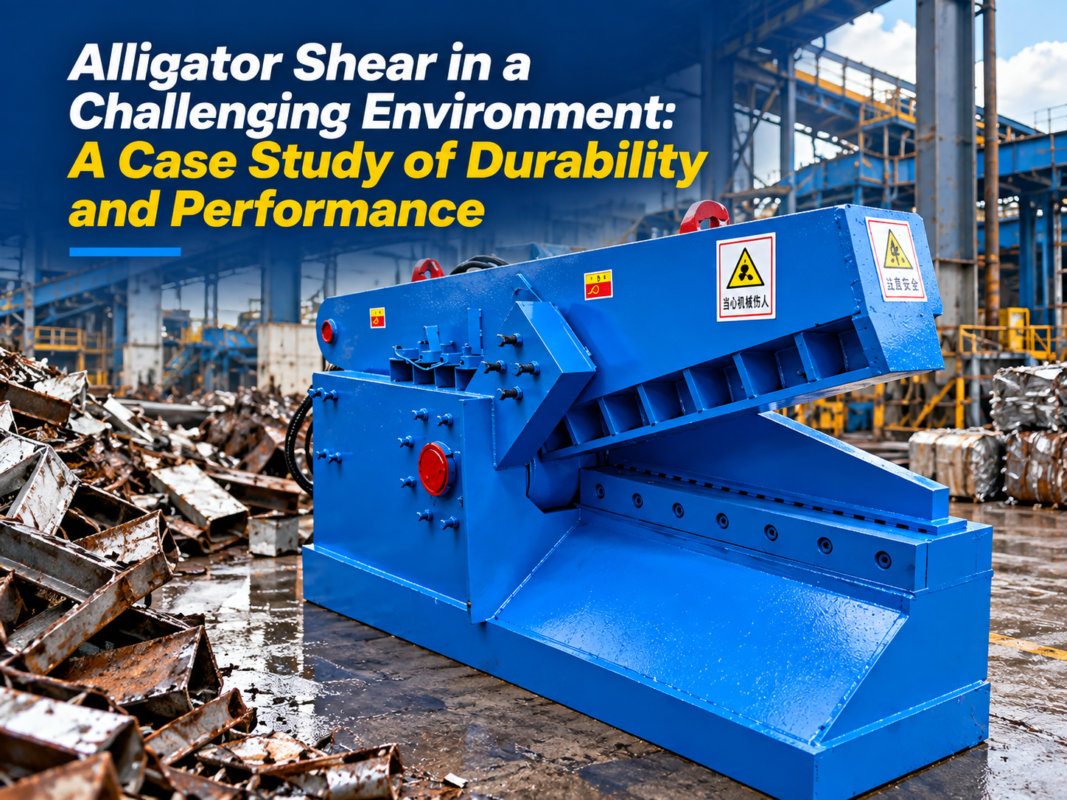
In the high-intensity world of metal recycling and industrial fabrication, the scrap metal shear stands as a cornerstone of productivity. These machines are designed to exert hundreds of tons of force to process bulky materials into manageable sizes. However, the sheer power and harsh environments in which they operate mean that wear and tear are inevitable. Implementing a rigorous routine of Weekly Maintenance Tasks Scrap Metal Shear Equipment is not just a recommendation; it is a necessity for any facility aiming to maximize Return on Investment (ROI) and ensure operator safety.
Neglecting maintenance often leads to a domino effect of mechanical failures. What begins as a minor hydraulic leak can escalate into pump cavitation, and eventually, a complete system shutdown. By focusing on weekly intervals, maintenance teams can identify issues that are too subtle for daily visual inspections but too urgent to wait for monthly or quarterly overhauls. This proactive approach minimizes unplanned downtime, which is often the single most significant cost factor in industrial operations.
HARSLE understands that durability is built on the foundation of proper care. Our scrap metal shears are engineered for longevity, but their performance relies heavily on the consistency of the maintenance team. A well-maintained shear operates more efficiently, consumes less energy, and produces cleaner cuts, which in turn increases the value of the processed scrap. Throughout this guide, we will detail the specific technical steps required to keep your equipment in peak condition.
Beyond the financial benefits, maintenance is a core component of workplace safety. Scrap shears involve high-pressure hydraulics and massive moving parts. A failure in a structural bolt or a hydraulic hose can lead to catastrophic accidents. Therefore, the weekly checklist serves as a vital safety audit, ensuring that every safety interlock, structural weld, and hydraulic fitting is capable of withstanding the rigors of heavy-duty shearing.
Transitioning from Daily Inspections to Weekly Deep Dives
Daily inspections are primarily focused on the immediate operational readiness of the machine. Operators typically check oil levels, look for obvious leaks, and ensure the work area is clear of debris. While these are essential, they do not provide a comprehensive view of the machine’s health. The Weekly Maintenance Tasks Scrap Metal Shear Equipment require a deeper level of technical engagement, often involving tools for measurement and diagnostic testing.
During the weekly cycle, the focus shifts from “Is it working?” to “How well is it working?” This involves checking the calibration of sensors, the tightness of critical fasteners, and the chemical state of the hydraulic fluid. It is the time to remove protective covers that are not touched during daily shifts to inspect the hidden components that bear the brunt of the machine’s mechanical stress.
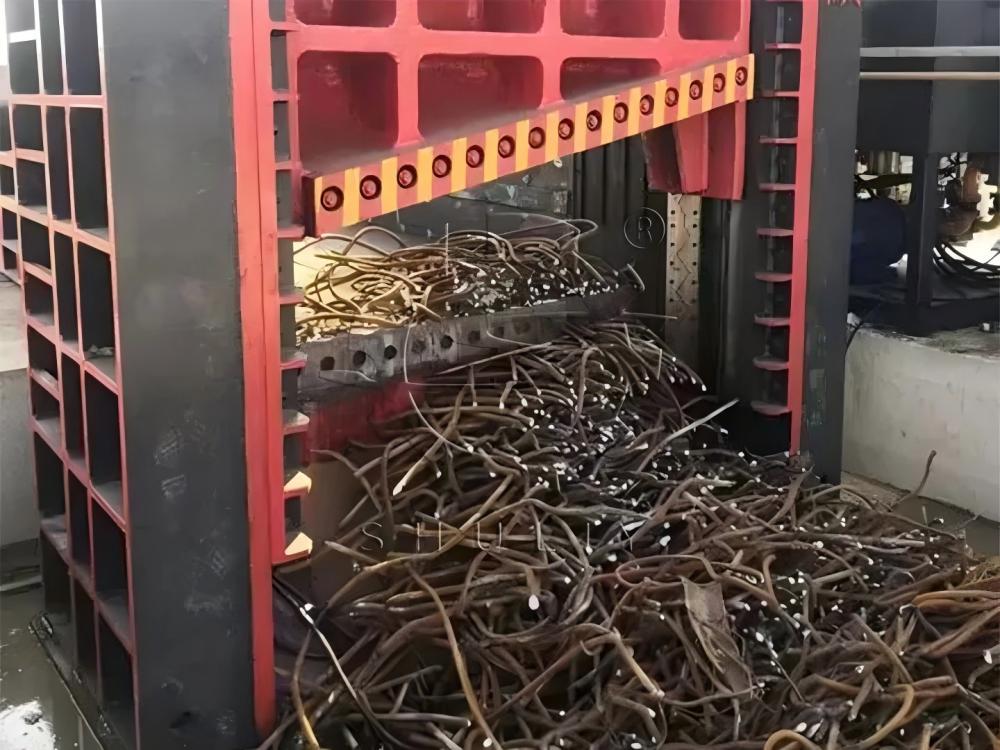
Consistency is key. We recommend scheduling these tasks at the end of the work week or during a dedicated maintenance shift. This allows the machine to cool down, providing a safer environment for technicians to handle hydraulic components and mechanical linkages. Documentation is equally important; keeping a log of weekly findings helps in predicting part failures before they occur, allowing for the pre-ordering of spare parts.
Hydraulic System: The Heart of the Shear
The hydraulic system is the lifeblood of any scrap metal shear. Weekly checks must go beyond simply looking at the fluid level. Technicians should inspect the hydraulic oil for signs of aeration, foaming, or discoloration. Milky oil indicates water contamination, while dark, burnt-smelling oil suggests overheating. Both conditions require immediate attention to prevent damage to the high-precision valves and pumps.
Filter health is a primary concern during weekly maintenance. Most modern shears, including HARSLE models, are equipped with pressure gauges or indicators on the filter housings. If the indicator is approaching the red zone, the filter element must be replaced. Even if the indicator is clear, the weekly check should involve inspecting the area around the filter for micro-leaks that could introduce air into the system.
Hose and fitting integrity must be scrutinized. Under the high-pressure cycles of a scrap shear, hydraulic hoses expand and contract. This movement can lead to abrasion if hoses rub against the frame or each other. Weekly, technicians should feel along the length of the hoses (while the machine is off and depressurized) for soft spots, bulges, or frayed outer layers. Any hose showing the wire braid must be replaced immediately to prevent a high-pressure burst.
Finally, the hydraulic cylinders themselves require inspection. Check the piston rods for scoring or pitting. A damaged rod will quickly destroy the cylinder seals, leading to internal bypassing and a loss of shearing force. Ensure that the cylinder mounting pins are properly lubricated and that the retaining clips are secure. A loose cylinder can cause misalignment, which is a leading cause of frame cracking in heavy machinery.
Electrical and Control System Verification
While scrap shears are mechanical giants, they are governed by sophisticated electrical systems. The weekly maintenance routine must include a thorough cleaning of the electrical cabinet. Dust, particularly metallic dust common in scrap yards, can cause short circuits or overheating of sensitive PLC (Programmable Logic Controller) components. Use low-pressure compressed air or a specialized vacuum to remove debris from the cabinet.
Check all cable entries and terminal blocks. Vibration from the shearing process can loosen screw terminals over time. A loose wire can lead to intermittent faults that are notoriously difficult to diagnose. Technicians should gently tug on critical control wires to ensure they are seated firmly. Additionally, inspect the insulation of cables that run along the machine frame for signs of wear or damage from falling scrap.
Safety devices and limit switches are the most critical part of the electrical check. Manually trigger each emergency stop button to ensure the system shuts down instantly. Verify that the limit switches, which control the stroke of the shear and the position of the stamper, are clean and properly aligned. If a limit switch fails to trigger, the hydraulic cylinder could over-travel, causing significant mechanical damage.
Lastly, review the control panel for any logged error codes. Modern HARSLE shears provide diagnostic feedback through the HMI (Human Machine Interface). Even if the machine is running, minor warnings might have been triggered during the week that indicate a sensor is drifting out of calibration or a motor is drawing excessive current. Addressing these “soft” errors early prevents “hard” failures later.
Mechanical Components and Blade Management
The mechanical integrity of the shear frame and the cutting blades is what determines the quality of the output. Weekly, the blade gap must be measured using feeler gauges. As blades wear, the gap increases, leading to “folding” rather than “cutting.” This puts immense lateral stress on the slide guides and the main frame. Adjusting the blade gap to the manufacturer’s specifications is a core Weekly Maintenance Task Scrap Metal Shear Equipment.
Inspect the blades for chipping or excessive rounding of the edges. Most scrap shear blades are four-sided and can be rotated to provide a fresh cutting edge. If the weekly inspection reveals significant wear, plan for a blade rotation or replacement during the next scheduled downtime. Operating with dull blades increases the hydraulic pressure required for each cut, which accelerates the wear on the entire hydraulic circuit.
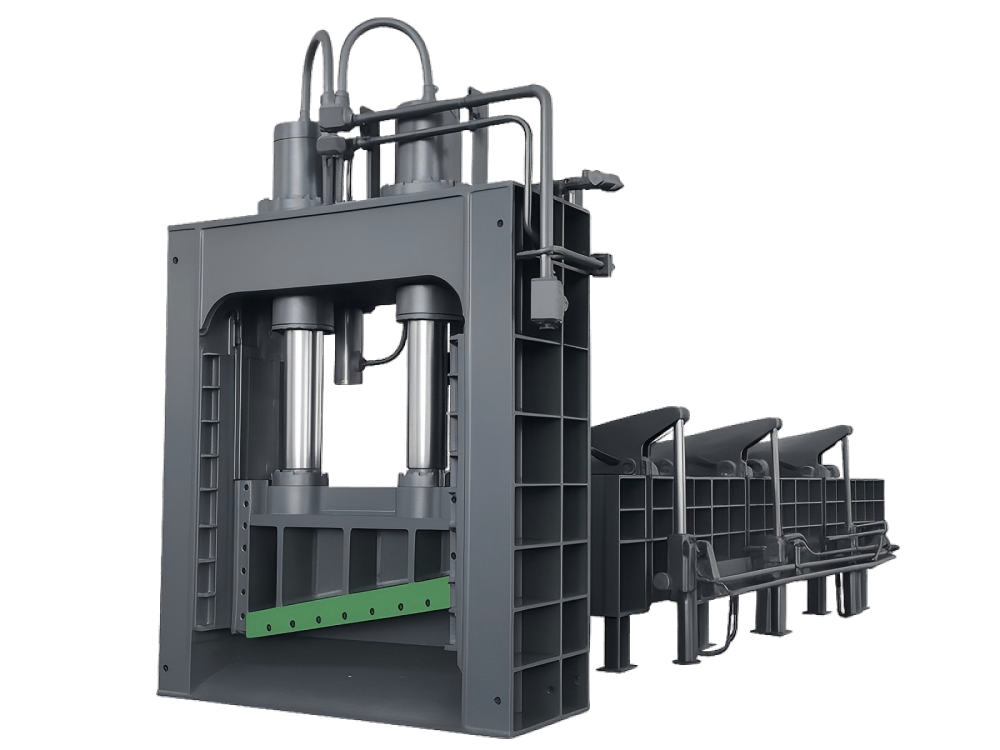
The slide guides (or gibs) that direct the movement of the shear head must be checked for proper clearance and lubrication. If the guides are too loose, the shear head will tilt during the cut, causing uneven wear. If they are too tight, they will generate excessive heat and friction. Check the wear plates for scoring and ensure that the automatic lubrication system is delivering grease to all points along the slide path.
Structural bolts, especially those securing the blades and the main pivot points, must be checked for tightness. Use a torque wrench on a sampling of critical bolts to ensure they haven’t vibrated loose. In the high-vibration environment of a scrap yard, even the highest-grade fasteners can move. A loose blade bolt can lead to a shattered blade, which is both expensive and dangerous.
Lubrication Plan: Ensuring Smooth Operation
Lubrication is the simplest yet most frequently overlooked aspect of machine maintenance. For a scrap metal shear, the lubrication plan should be divided into automated and manual tasks. Weekly, the central lubrication reservoir must be checked and refilled with the correct grade of Extreme Pressure (EP) grease. Do not mix different types of grease, as chemical incompatibilities can cause the lubricant to harden and clog the distribution lines.
Technicians should verify that grease is actually reaching the destination points. Look for a small “purge” of fresh grease at the edges of pins and bushings. If a point looks dry, the distribution line may be blocked or broken. Manual grease points, such as those on the motor bearings or smaller linkage pins, should be serviced weekly using a manual grease gun. Usually, two to three pumps are sufficient; over-greasing can be as harmful as under-greasing, as it can damage seals.
The quality of the lubricant matters. In cold climates, a lighter grade of grease may be necessary to ensure it flows through the lines, while in hot environments, a higher viscosity is required to maintain a protective film. Always refer to the HARSLE manual for the specific lubricant specifications tailored to your operating environment. Clean the grease nipples before applying the gun to prevent pushing dirt and grit into the bearing surfaces.
Troubleshooting Signals: What to Listen and Look For
A skilled technician uses their senses as diagnostic tools. During the weekly maintenance run, operate the machine through several dry cycles and listen for unusual noises. A high-pitched whine often indicates pump cavitation or a restricted suction line. A banging or clunking sound during the stroke suggests loose mechanical components or a failing cylinder mounting. Identifying these sounds early can save thousands in repair costs.
Heat is another major indicator of trouble. Use an infrared thermometer to check the temperature of the hydraulic pump, the valve manifold, and the main bearings. If one component is significantly hotter than the others, it is likely experiencing internal friction or bypassing. For example, a hot hydraulic cylinder often indicates that the internal seals are leaking, allowing high-pressure oil to slip past the piston.
Vibration analysis is also part of the weekly routine. While some vibration is normal during shearing, excessive shaking of the hydraulic lines or the control cabinet indicates an imbalance or a loose mounting. Check the motor-to-pump coupling; if the rubber insert is worn, it will cause vibration that can eventually destroy the pump bearings and the motor shaft.
Weekly Maintenance Schedule Table
| Component | Task Description | Tools Required | Estimated Time |
|---|---|---|---|
| Hydraulic System | Check oil clarity, inspect hoses for abrasion, and verify filter indicators. | Flashlight, Clean Cloth | 45 Mins |
| Cutting Blades | Measure blade gap and inspect for chips or rounding. | Feeler Gauges, Torque Wrench | 60 Mins |
| Electrical Cabinet | Vacuum dust, check for loose terminals, and test E-Stops. | Industrial Vacuum, Screwdriver | 30 Mins |
| Lubrication System | Refill reservoir, check lines for blockages, and grease manual points. | Grease Gun, EP2 Grease | 30 Mins |
| Slide Guides | Inspect wear plates and adjust gib clearance if necessary. | Wrenches, Measuring Tools | 45 Mins |
| Structural Frame | Check for stress cracks in welds and tighten foundation bolts. | Flashlight, Large Wrench | 30 Mins |
Frequently Asked Questions (FAQ)
How often should I change the hydraulic oil in my scrap shear?
While weekly tasks involve checking the oil quality, a full oil change is typically required every 2,000 to 4,000 operating hours, or once a year. However, if your weekly inspection reveals significant contamination or oxidation, the oil should be changed immediately regardless of the hour count. Regular oil analysis by a lab can provide a more precise timeline.
What is the ideal blade gap for a scrap metal shear?
The ideal gap depends on the thickness and type of material you are cutting. Generally, for heavy scrap, a gap of 0.5mm to 1.0mm is common. Always consult your HARSLE manual for the specific settings for your model. A gap that is too small can cause the blades to clash, while a gap that is too large will result in poor cut quality and machine strain.
Why is my shear losing power during the cut?
Loss of power is usually related to the hydraulic system. Common causes include a worn hydraulic pump, internal leaking in the cylinders, or a pressure relief valve that is set too low or stuck open. Weekly checks of the system pressure and cylinder heat can help pinpoint which component is failing.
Can I use any grease for the automatic lubrication system?
No. You must use the grease specified by the manufacturer, usually an EP2 (Extreme Pressure) lithium-based grease. Using the wrong grease can lead to system clogs, especially in cold weather, and may not provide the necessary film strength to protect the heavy-duty pivot pins and slides.
How do I detect cracks in the machine frame?
During your weekly maintenance, clean the high-stress areas of the frame (near cylinder mounts and the throat of the shear) and use a bright light to look for hairline fractures. If a crack is suspected, a dye penetrant test can be used to confirm its presence and extent. Early detection of frame cracks is vital for repairability.
Conclusion: The Path to Operational Excellence
Mastering the Weekly Maintenance Tasks Scrap Metal Shear Equipment is the hallmark of a professional metal recycling operation. It transforms maintenance from a reactive “fix-it-when-it-breaks” mentality into a strategic asset that drives productivity. By dedicating a few hours each week to the hydraulic, electrical, and mechanical systems, you ensure that your HARSLE equipment remains a reliable workhorse for years to come.
Remember that maintenance is an investment, not an expense. The cost of a few filters, a tub of grease, and a technician’s time is negligible compared to the cost of a seized pump or a cracked frame. By following the guidelines laid out in this guide, you protect your equipment, your staff, and your bottom line. For further technical support or to order genuine replacement parts, always reach out to authorized HARSLE service centers.