Industrial Shredder Applications for Drum, Barrel, and Container Disposal: A Comprehensive Guide

Introduction to Industrial Shredder Applications for Drum, Barrel, and Container Disposal
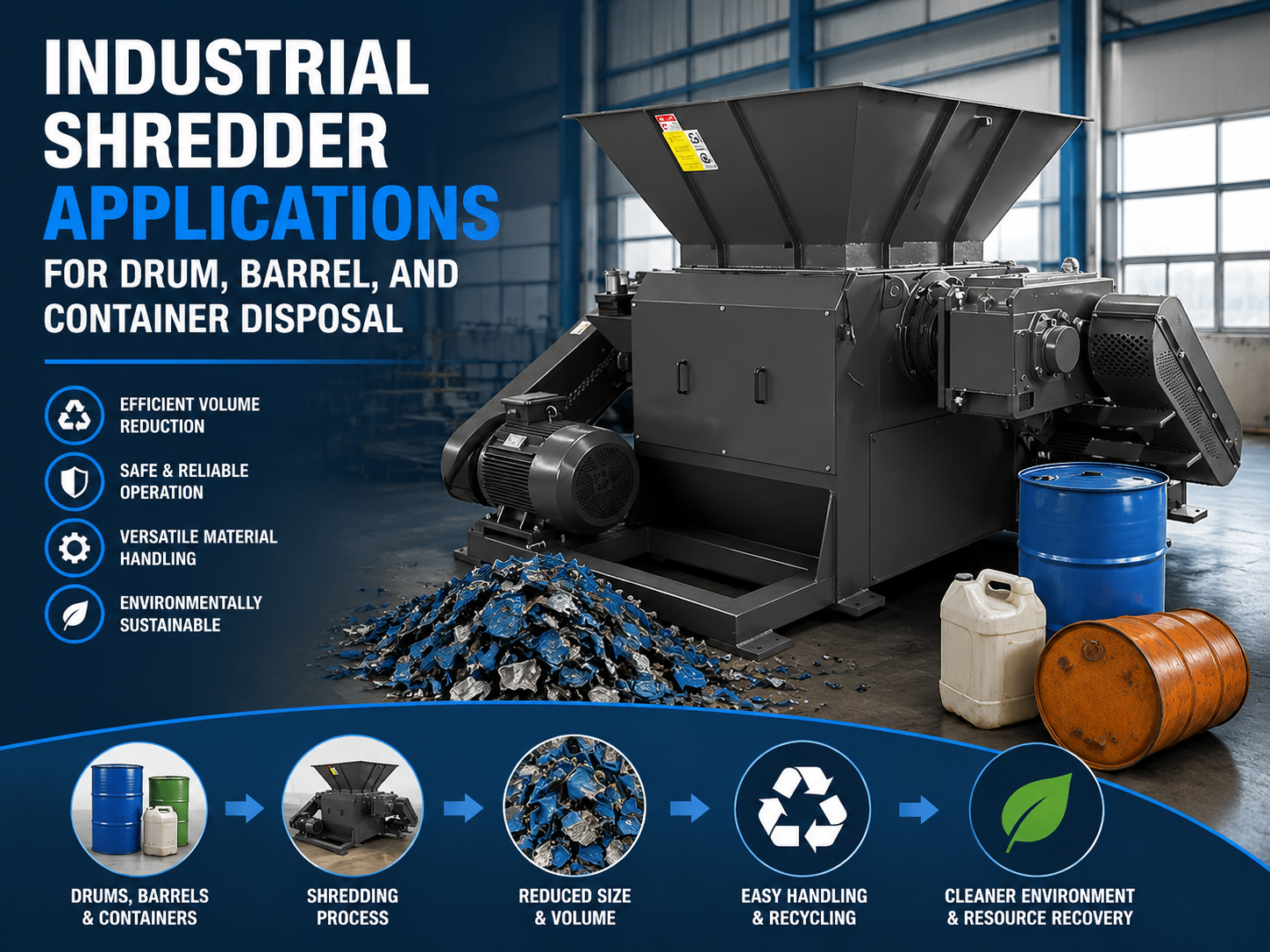
In the modern industrial landscape, the management of bulk waste containers—such as 55-gallon steel drums, plastic barrels, and Intermediate Bulk Containers (IBCs)—presents a significant logistical and environmental challenge. These containers are ubiquitous in chemical manufacturing, oil and gas, food processing, and pharmaceutical industries. However, once they reach the end of their lifecycle or become contaminated, their hollow structure occupies immense space, making storage and transportation prohibitively expensive. This is where Industrial Shredder Applications Drum, Barrel, Container Disposal become critical. By utilizing high-torque, low-speed shredding technology, facilities can transform bulky, air-filled vessels into dense, manageable scrap, facilitating efficient recycling and disposal.
HARSLE provides advanced shredding solutions designed to handle the rigorous demands of container destruction. Whether dealing with heavy-gauge carbon steel or high-density polyethylene (HDPE), an industrial shredder acts as the primary stage in a waste reduction strategy. This guide explores the specific application scenarios, technical requirements, and productivity benefits of implementing industrial shredders for container disposal, providing a roadmap for facilities looking to optimize their waste management workflows.
Application Scenarios for Container Shredding
The need for robust shredding solutions spans across various sectors, each with unique requirements for material handling and safety. One of the primary application scenarios is in Chemical and Hazardous Waste Management. Chemical plants often accumulate thousands of steel and plastic drums that once held volatile or corrosive substances. These containers cannot simply be discarded; they must be rendered unusable to prevent unauthorized reuse and shredded to reduce volume before entering specialized treatment streams. Industrial shredders ensure that these containers are completely destroyed, meeting strict regulatory compliance standards.
Another critical scenario is found in Recycling and Scrap Yards. For these facilities, the goal is maximum throughput and material purity. Steel drums are a valuable source of ferrous scrap, but their cylindrical shape makes them difficult to melt in furnaces without prior processing. Shredding these drums into small strips increases the bulk density of the scrap, allowing for more efficient furnace charging and reducing energy consumption during the smelting process. Similarly, plastic barrels are shredded into flakes that can be washed, pelletized, and reintroduced into the manufacturing cycle as post-consumer resin.
In the Logistics and Warehousing sector, damaged or expired containers often take up valuable floor space. Large-scale distribution centers utilize industrial shredders to process damaged IBC totes and plastic pallets on-site. By shredding these items immediately, companies can reduce the frequency of waste pickups, leading to a direct reduction in carbon footprint and transportation costs. Furthermore, in the Food and Beverage Industry, large metal tins and plastic containers used for bulk ingredients must be disposed of hygienically. Shredding provides a secure way to ensure that branded packaging is destroyed, protecting the company’s intellectual property and preventing counterfeit refilling.
Material and Process Requirements
Successful Industrial Shredder Applications Drum, Barrel, Container Disposal require a deep understanding of the materials being processed. Not all containers are created equal, and the shredder must be configured to handle the specific physical properties of the waste stream. For instance, 55-gallon steel drums are typically made from 18-gauge to 20-gauge carbon steel. While relatively thin, the circular geometry provides structural integrity that requires significant initial piercing force. The shredder blades must be sharp and made from high-strength alloy steel to bite into the metal without slipping.
Plastic containers, such as HDPE barrels and IBC tanks (which often feature a galvanized steel outer cage), present different challenges. Plastic is elastic and can sometimes “bounce” or wrap around the shafts if the blade geometry is not optimized. For IBC totes, the shredder must be capable of processing both the plastic inner tank and the metal outer frame simultaneously. This requires a dual-shaft configuration where the torque is distributed to handle the intermittent shock loads of the metal cage while maintaining a consistent cut on the plastic liner.
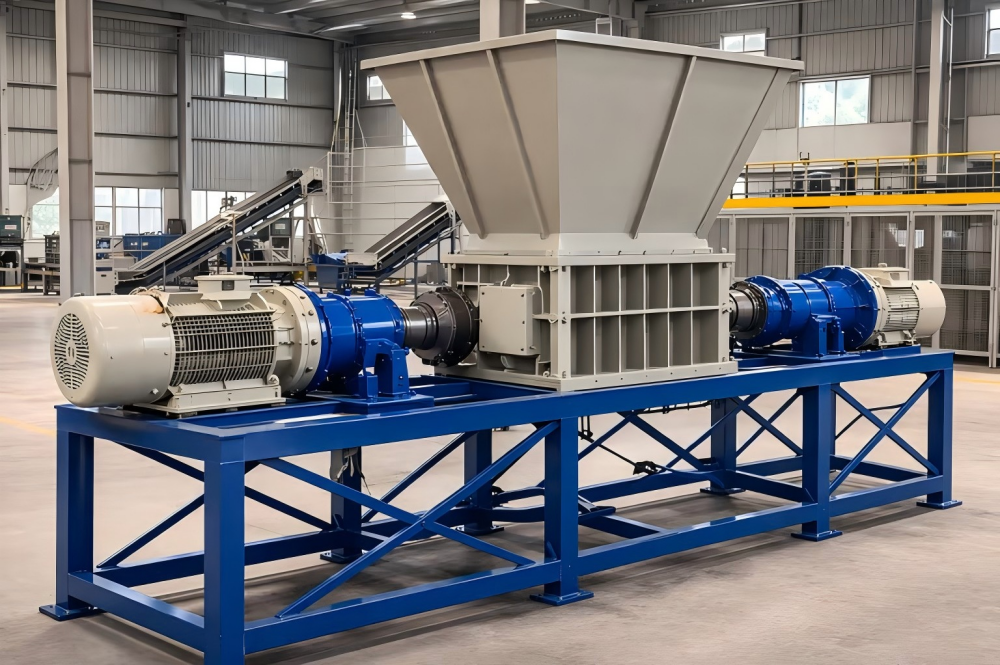
Process requirements also include considerations for residual contents. Many industrial containers are not perfectly empty. They may contain residues of oils, chemicals, or food products. Therefore, the shredder must be designed with sealed bearings and robust drive systems that are protected from liquid ingress. In some cases, a “wet shredding” process is employed, where water is sprayed into the cutting chamber to cool the blades and begin the cleaning process of the material flakes. Additionally, explosion-proof motors and non-sparking blade materials may be required if the containers previously held flammable substances.
Recommended Machine Configuration
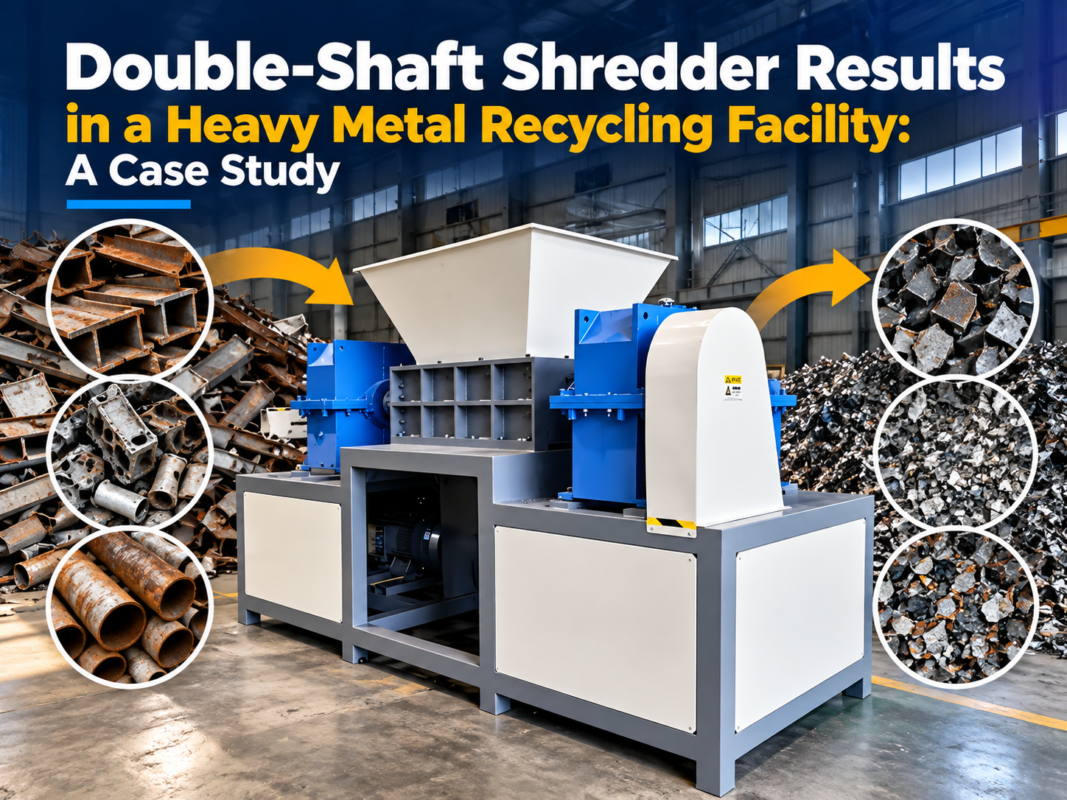
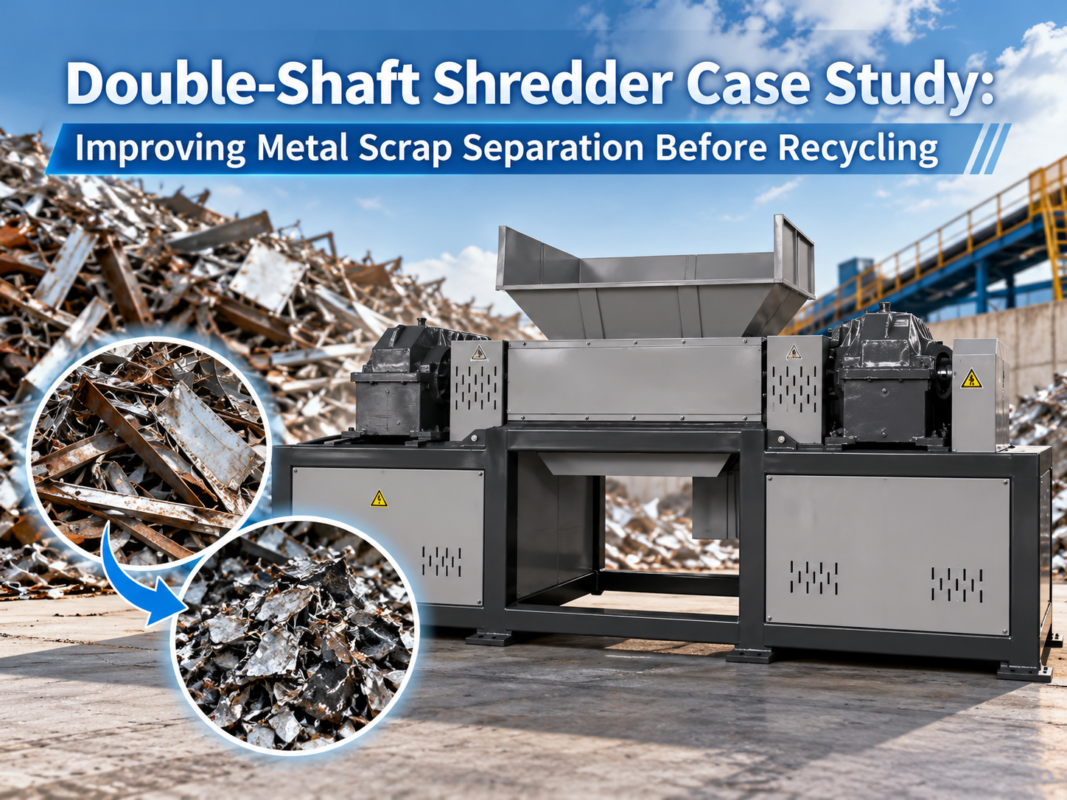
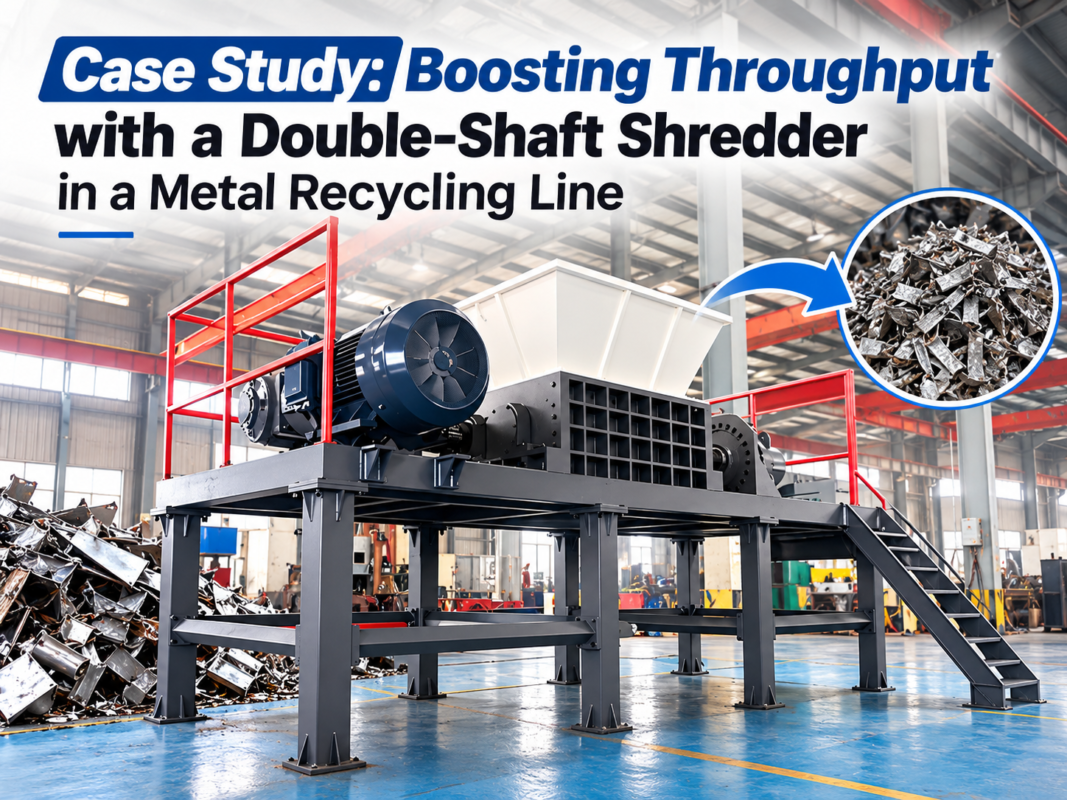
For drum and container disposal, the Twin-Shaft Shredder is the industry standard. Unlike single-shaft shredders that use a screen to determine particle size, twin-shaft shredders rely on the width and number of hooks on the blades to size the material. This design is preferred for containers because it offers high torque at low speeds, which is essential for shearing through metal and thick plastics without generating excessive heat or dust.
Key Configuration Components:
- Blade Material and Design: HARSLE utilizes high-alloy steels such as D2 or SKD-11, heat-treated to a high Rockwell hardness. For drum disposal, blades with multiple hooks (3 to 5 hooks) are recommended to ensure the machine can grab the smooth surface of a round barrel. The thickness of the blades typically ranges from 20mm to 50mm, depending on the desired final strip width.
- Drive System: A dual-motor drive system is often employed, providing independent power to each shaft. This allows for better torque distribution and the ability for the shafts to rotate at slightly different speeds, which enhances the “tearing” action. Hydraulic drives are also an option for extremely heavy-duty applications where shock loads are frequent.
- PLC Control and Auto-Reverse: An intelligent PLC (Programmable Logic Controller) is vital. When the shredder encounters an unshreddable object or a particularly thick section of a container, the motor current spikes. The PLC detects this and automatically reverses the shafts to clear the jam before attempting to shred again. This protects the motor and the gearbox from damage.
- Hopper and Feeding Mechanism: For large containers like IBC totes, an extra-wide hopper is necessary. In some high-volume setups, a hydraulic ram or “pusher” is integrated into the hopper to force the containers into the cutting shafts, ensuring the blades always have material to grab.
Workflow of Container Disposal
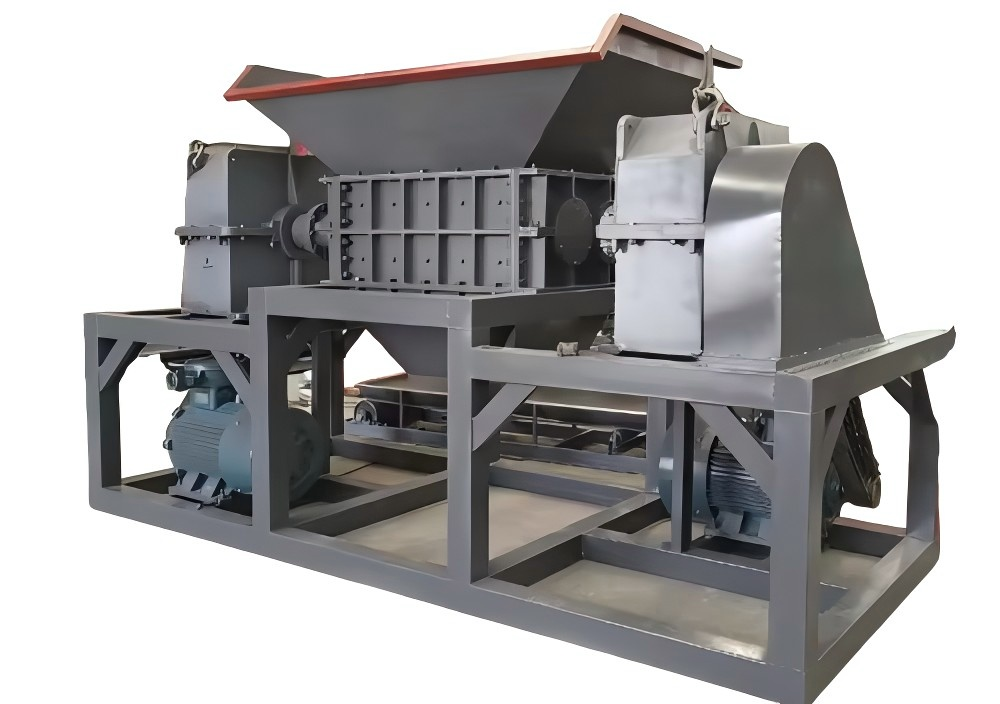
The workflow for Industrial Shredder Applications Drum, Barrel, Container Disposal is a multi-stage process designed for safety and efficiency. It begins with Material Inspection and Sorting. Operators must ensure that containers are free of pressurized gases or highly explosive materials that could react during the shearing process. Once cleared, the containers are moved to the loading area.
The second stage is Feeding. Depending on the scale of the operation, containers can be fed into the shredder manually, via a conveyor belt, or using a forklift with a rotating clamp. For automated lines, a heavy-duty steel slat conveyor is often used to handle the weight and impact of falling drums. As the containers enter the Shredding Chamber, the counter-rotating shafts draw the material downward. The hooks on the blades pierce the container wall, and the side-by-side blades shear the material into strips.
Following the shredding action, the material moves to the Discharge and Separation phase. Below the shredder, a discharge conveyor carries the shredded strips away. If the waste stream consists of mixed materials (like IBC totes), a magnetic separator is often positioned over the discharge belt to pull out the ferrous metal fragments, leaving the plastic flakes to continue to a separate collection bin. Finally, the shredded material is weighed and compacted or sent directly to a recycling facility. This streamlined workflow reduces the volume of the original containers by up to 80-90%, significantly optimizing the entire waste chain.
Productivity and Economic Benefits
Implementing an industrial shredder for container disposal offers a rapid Return on Investment (ROI) through several channels. The most immediate benefit is Transportation Cost Savings. A standard flatbed truck can only carry a limited number of intact 55-gallon drums because they are mostly filled with air. Once shredded, the same truck can carry the weight equivalent of hundreds of additional drums in the form of dense scrap. This reduces the number of trips required, saving on fuel, labor, and vehicle maintenance.
Furthermore, there is the Value of Recyclable Materials. Intact, contaminated drums are often a liability that companies must pay to have removed. However, shredded and cleaned steel or plastic is a commodity. By processing the waste on-site, companies can turn a disposal cost into a secondary revenue stream by selling the scrap to recyclers. In the case of plastic HDPE barrels, the shredded flakes are highly sought after for the production of plastic lumber, drainage pipes, and new industrial containers.
From an operational standpoint, shredding improves On-site Safety and Space Utilization. Piles of empty drums are a fire hazard and can harbor pests or collect rainwater, leading to environmental hazards. A shredder allows for “just-in-time” waste processing, keeping the facility clean and dedicated to production rather than waste storage. Additionally, the automated nature of modern shredders like those from HARSLE reduces the need for manual labor in the waste department, allowing staff to be reassigned to higher-value tasks.
Case Example: Chemical Distribution Center
A regional chemical distribution center was facing rising costs for the disposal of damaged HDPE barrels and rusted steel drums. They were paying a third-party contractor over $15,000 per month for hauling and disposal fees. The facility accumulated approximately 400 drums per week, which occupied nearly 2,000 square feet of outdoor storage space.
After consulting with HARSLE, they installed a 45kW Twin-Shaft Shredder equipped with a magnetic separator. The results were immediate. The facility was able to process their entire weekly accumulation of drums in just one shift (8 hours). The volume reduction allowed them to store a month’s worth of waste in the same space that previously held only one week’s worth. By selling the shredded steel scrap and HDPE flakes to a local recycler, they generated an average of $3,000 in monthly revenue. Between the eliminated disposal fees and the new scrap revenue, the machine paid for itself in less than 14 months, while also improving the facility’s environmental audit ratings.
Frequently Asked Questions (FAQ)
1. What is the maximum thickness of steel a drum shredder can handle?
Most industrial twin-shaft shredders designed for container disposal can easily handle standard 1.2mm to 2.0mm (18-14 gauge) steel drums. For heavier reinforced containers or thicker structural steel, a higher kilowatt motor and thicker blades are required. HARSLE machines can be customized to handle specific thickness requirements by adjusting the gearbox ratio and blade profile.
2. How long do the shredder blades last?
Blade longevity depends heavily on the material being shredded and the presence of contaminants (like sand or stones). For clean steel and plastic drums, blades can typically process hundreds of tons before requiring sharpening. HARSLE blades are designed to be removed and reground multiple times, extending their service life significantly before a full replacement is needed.
3. Can the shredder handle containers with liquid residue?
Yes, but the machine must be configured for it. This includes using sealed bearings to prevent liquid from entering the internal components and potentially using stainless steel for certain parts if the liquids are corrosive. It is always recommended to drain containers as much as possible before shredding to minimize mess and potential chemical reactions.
4. Is it better to use a single-shaft or twin-shaft shredder for barrels?
For empty containers and barrels, a twin-shaft shredder is almost always superior. Single-shaft shredders are better for solid plastics or wood where a specific small particle size is needed. Twin-shaft shredders have a much better “grab” on hollow, rounded objects and provide the high torque necessary to pierce and tear metal drums efficiently.
Conclusion: Choosing HARSLE for Your Shredding Needs
The implementation of Industrial Shredder Applications Drum, Barrel, Container Disposal is a strategic move for any facility dealing with high volumes of waste packaging. By choosing a HARSLE industrial shredder, you are investing in a machine built for durability, safety, and maximum efficiency. Our twin-shaft designs are engineered to tackle the toughest materials, from reinforced IBC totes to heavy-duty steel barrels, ensuring that your waste management process is a contributor to your bottom line rather than a drain on resources.
Are you ready to optimize your container disposal process? Contact HARSLE today to speak with our technical experts. We can provide a custom assessment of your material stream and recommend the ideal shredder configuration to meet your volume and budget requirements. Let us help you turn your waste into a valuable resource.