The Crucial Industrial Shredder Role In Wood, Pallet, and Biomass Processing: A Comprehensive Guide

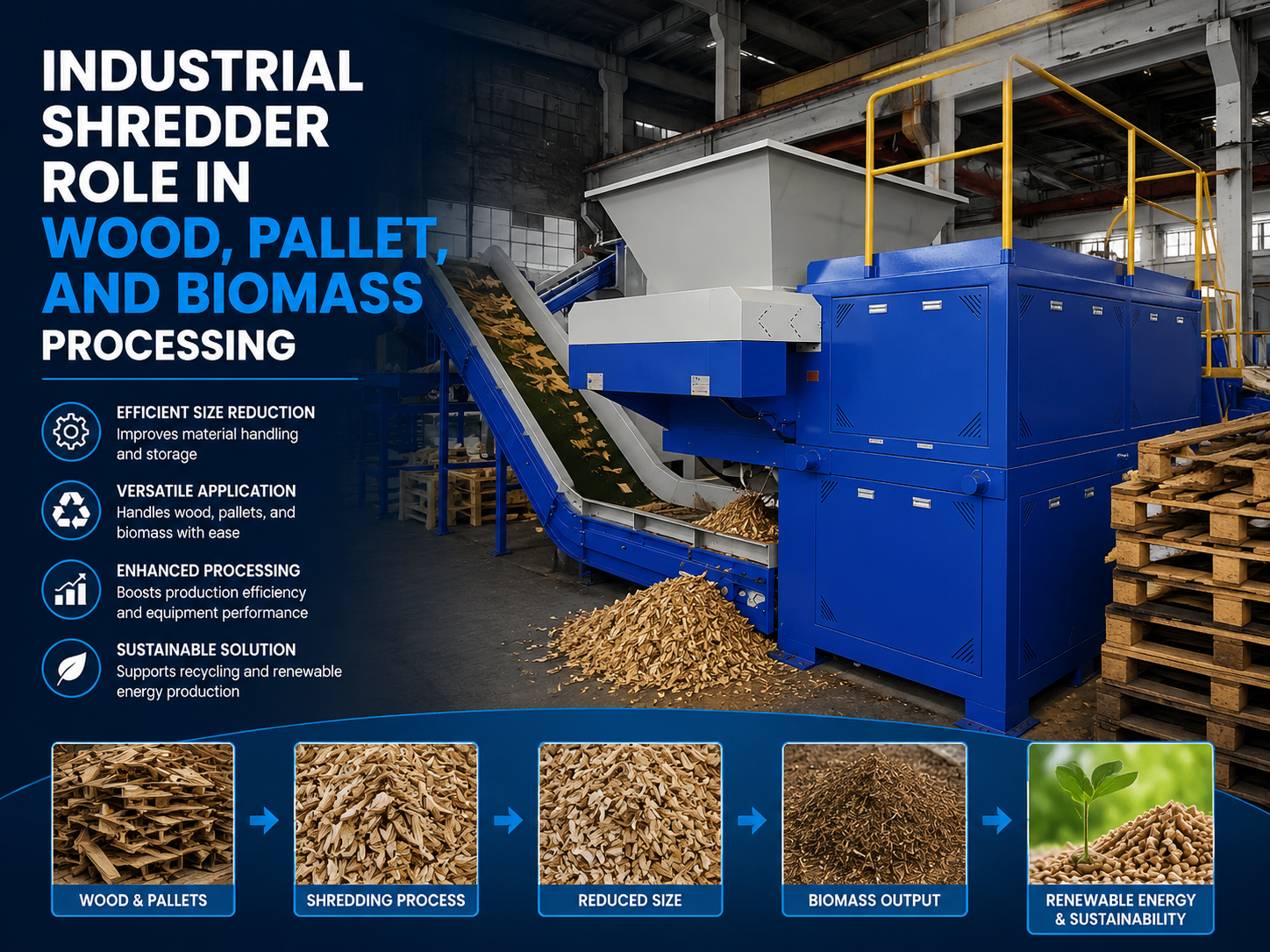
Introduction to the Industrial Shredder Role In Wood, Pallet, Biomass Processing
In the modern industrial landscape, the transition toward a circular economy and renewable energy sources has placed a significant spotlight on waste management. Among the various technologies driving this change, the industrial shredder stands out as a cornerstone. The Industrial Shredder Role In Wood, Pallet, Biomass Processing is not merely about waste reduction; it is about resource transformation. By converting bulky, irregular waste into uniform, manageable feedstock, these machines enable industries to recover value from materials that were previously destined for landfills.
Wood waste, discarded shipping pallets, and agricultural biomass represent a massive volume of potential energy and raw material. However, without proper processing, these materials are difficult to transport, store, and utilize. Industrial shredders provide the necessary mechanical force to break down high-density wood and fibrous biomass, ensuring that the resulting product meets the strict specifications required for particleboard production, animal bedding, or biofuel pellets. This article explores the technical nuances, application scenarios, and productivity benefits of integrating high-performance shredding systems into your operations.
Application Scenarios for Wood and Biomass Shredding
The application of industrial shredders spans across multiple sectors, each with unique demands. In the logistics and warehousing industry, the primary challenge is the disposal of broken or non-standard wooden pallets. Thousands of pallets are discarded daily, taking up valuable floor space and creating fire hazards. An industrial shredder allows these facilities to process pallets on-site, reducing their volume by up to 80% and creating a byproduct that can be sold to mulch manufacturers or biomass power plants.
In the forestry and timber industry, the Industrial Shredder Role In Wood, Pallet, Biomass Processing involves handling ‘green’ waste, such as tree limbs, bark, and stumps. This material is often high in moisture and irregular in shape. Shredders designed for this application must feature high-torque motors to handle the tough, fibrous nature of fresh wood. The processed material is frequently used as a base for composting or as a primary fuel source for industrial boilers.
Construction and demolition (C&D) sites also rely heavily on shredding technology. Wood salvaged from old buildings often contains contaminants like nails, screws, and hinges. Specialized shredders equipped with magnetic separators can process this ‘dirty’ wood, extracting the metal for recycling while producing clean wood chips. This dual-stream recovery maximizes the profitability of demolition projects and aligns with environmental regulations regarding waste diversion.
Finally, the burgeoning biomass energy sector utilizes industrial shredders to prepare agricultural residues—such as corn stalks, straw, and nut shells—for pelletization. Consistency is key in this scenario; the shredder must produce a uniform particle size to ensure the pellet mill operates efficiently. By providing a reliable method for size reduction, industrial shredders act as the gateway to sustainable energy production from organic waste.
Material and Process Requirements
Processing wood and biomass is not a one-size-fits-all operation. The physical properties of the material dictate the requirements of the shredding process. For instance, hardwoods like oak and maple require significantly more cutting force than softwoods like pine. When considering the Industrial Shredder Role In Wood, Pallet, Biomass Processing, one must account for the Janka hardness of the wood and the presence of resins or sap, which can gum up blades if the machine is not properly maintained.
Moisture content is another critical factor. Biomass with high moisture levels (above 30%) tends to be more flexible and resistant to brittle fracturing. In these cases, a shredder with a shearing action is more effective than one that relies on impact. Conversely, dry pallets are brittle and can be processed quickly, but they generate significant amounts of dust, necessitating robust dust extraction systems to maintain air quality and prevent explosive atmospheres.
Contaminant management is perhaps the most challenging aspect of pallet and C&D wood processing. Pallets are held together by hardened steel nails. A standard wood chipper would be destroyed by these fasteners, but an industrial shredder is designed with slow-speed, high-torque shafts that can shear through metal without catastrophic failure. The process requirements must include a stage for ferrous metal removal, typically via an over-belt magnet positioned after the shredding chamber.
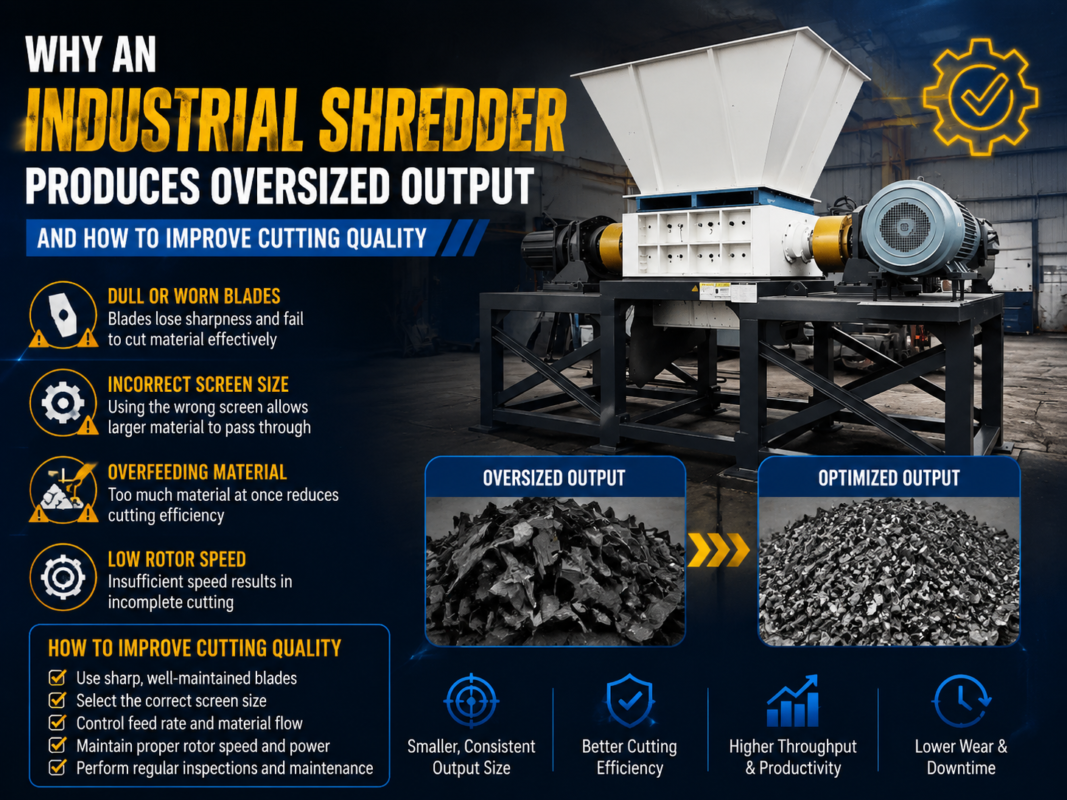
Output size requirements also vary. For mulch, a larger, more irregular chip is often acceptable. However, for biomass power plants, the ‘spec’ for the fuel is often very tight—usually requiring chips to be between 10mm and 50mm. Achieving this requires the use of sizing screens within the shredder, which retain the material in the cutting chamber until it is small enough to pass through the mesh. This ensures a consistent product that won’t clog downstream conveyors or feed systems.
Recommended Machine Configuration
Choosing the right machine configuration is essential for optimizing the Industrial Shredder Role In Wood, Pallet, Biomass Processing. For most wood-based applications, a dual-shaft shredder is the preferred choice. These machines utilize two counter-rotating shafts equipped with interlocking knives. This design provides high torque at low speeds, which is ideal for grabbing and tearing apart bulky items like pallets and large timber sections.
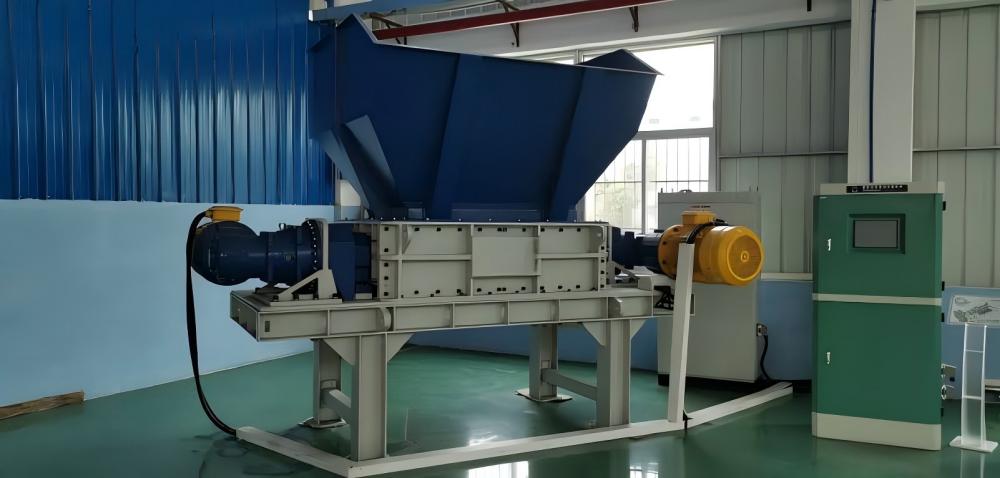
The knife material is a critical specification. For wood processing, knives are typically made from high-alloy heat-treated steel, such as D2 or SKD-11. These materials offer a balance between hardness (to maintain a sharp edge) and toughness (to resist chipping when hitting a nail). In high-volume operations, we recommend knives with four-way rotatable edges, allowing operators to flip the knife to a fresh cutting surface before needing a full regrind, thus minimizing downtime.
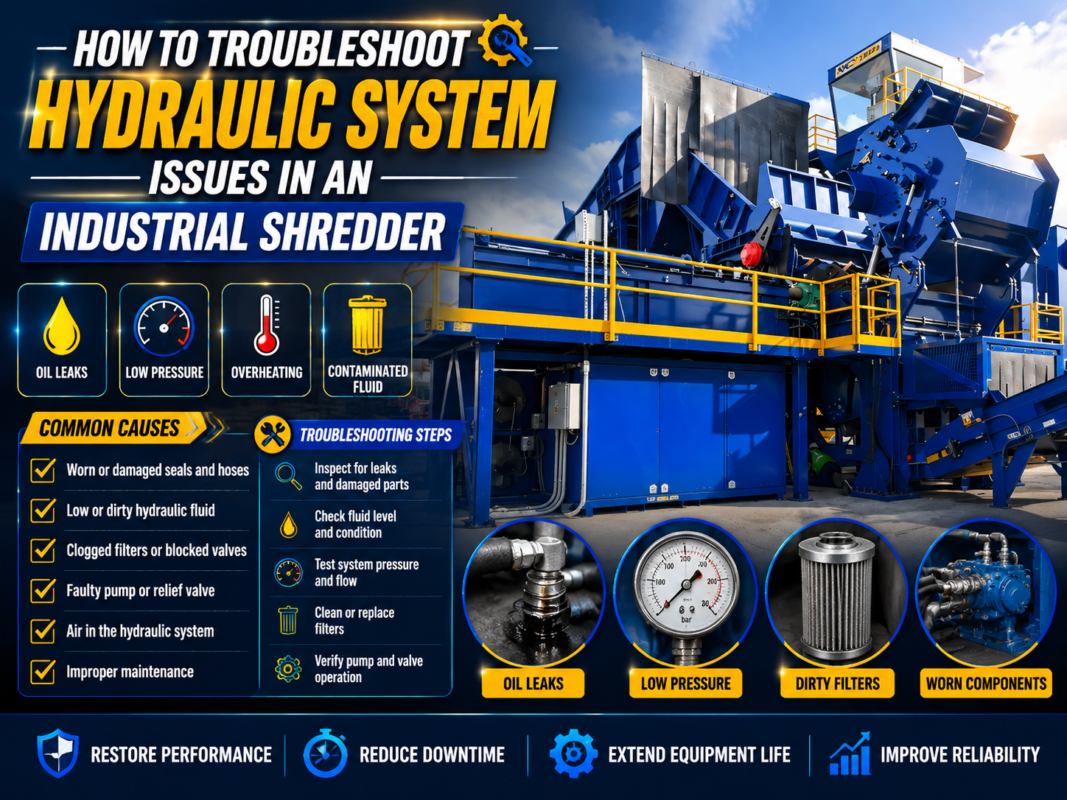
The drive system is another vital component. While electric motors are standard for their efficiency and ease of control, hydraulic drives are often recommended for extremely heavy-duty biomass processing. Hydraulic systems offer superior shock absorption and can easily reverse if the machine encounters an un-shreddable object, protecting the drivetrain from damage. For electric models, a PLC-controlled auto-reverse function is a must-have feature to prevent jams.
Additionally, the inclusion of a hydraulic pusher or ram can significantly increase throughput for light, bulky materials like loose biomass or empty crates. The pusher forces the material against the rotating shafts, ensuring the knives are always engaged. For fine-grinding applications, a secondary single-shaft shredder or a hammer mill may be placed downstream of the primary dual-shaft unit to achieve the final desired particle size.
Workflow of an Industrial Shredding Line
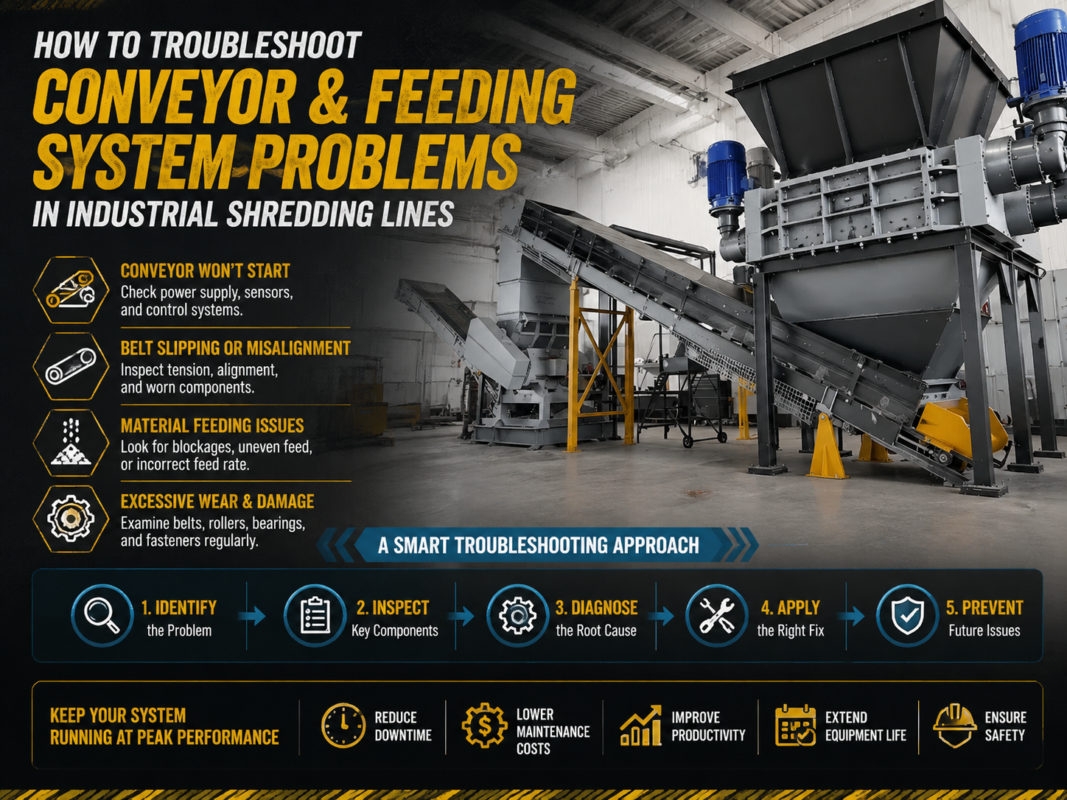
The workflow of a professional wood and biomass processing line is a multi-stage process designed for efficiency and safety. It begins with the Feeding Stage. Depending on the volume, material is fed into the shredder’s hopper via a vibrating feeder, a belt conveyor, or a grapple loader. It is crucial to maintain a steady feed rate to prevent ‘slugging’ the motor, which can lead to frequent auto-reverses and reduced hourly output.
Next is the Shredding Stage. As the material enters the chamber, the interlocking knives grab the wood and pull it through the cutting gap. In a dual-shaft system, the shearing action breaks the wood fibers along the grain and across it. If the material is too large to be grabbed, the PLC senses the spike in amperage and momentarily reverses the shafts to reposition the load, ensuring continuous operation without manual intervention.
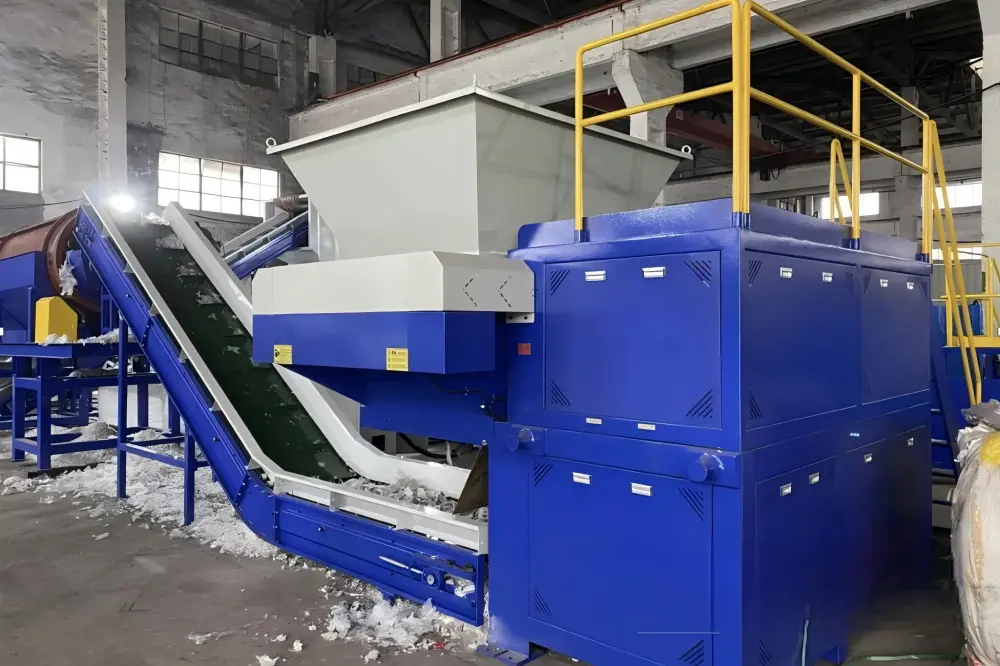
Following the shredding, the Separation and Discharge Stage takes place. The shredded material falls onto a discharge conveyor. At this point, an over-belt magnetic separator is typically employed to pull out any nails or metal fragments. This is a critical step if the wood is intended for fuel or animal bedding, as metal contaminants can damage boilers or injure livestock. The clean, shredded wood is then moved to a storage silo or loaded directly into a trailer for transport.
Finally, the Dust Management Stage runs concurrently with the entire process. Wood shredding, especially of dry pallets, generates fine particulate matter. A centralized dust extraction system with hoods at the hopper and discharge points is necessary to comply with health and safety standards and to reduce the risk of dust explosions. Regular cleaning of the area around the shredder is also a standard part of the operational workflow.
Productivity and Economic Benefits
Investing in a high-quality shredder offers immediate productivity gains. The most obvious benefit is Volume Reduction. By shredding pallets and wood waste, companies can fit significantly more material into a single transport container. This reduces the number of truck trips required to haul waste away, leading to substantial savings in fuel, labor, and vehicle maintenance. In many cases, the reduction in logistics costs alone can pay for the shredder within 18 to 24 months.
Furthermore, the Industrial Shredder Role In Wood, Pallet, Biomass Processing extends to revenue generation. Instead of paying ‘tipping fees’ to dispose of wood waste at a landfill, businesses can sell the shredded output. Clean wood chips are in high demand for the production of Medium Density Fiberboard (MDF) and particleboard. Similarly, the biomass energy market is constantly seeking reliable sources of wood-derived fuel. By turning a waste expense into a product revenue stream, the shredder becomes a profit center.
Operational efficiency is also enhanced through automation. Modern shredders from manufacturers like HARSLE feature advanced control systems that require minimal operator oversight. These machines can run for hours with only periodic checks, allowing staff to focus on other value-added tasks. The durability of modern components also means that maintenance intervals are extended, ensuring that the machine remains available for work during peak production periods.
From an environmental perspective, shredding facilitates Carbon Neutrality goals. Using wood waste as biomass fuel is considered carbon-neutral because the CO2 released during combustion is equivalent to the CO2 absorbed by the tree during its growth. By processing biomass efficiently, industries contribute to the reduction of fossil fuel reliance. This not only improves the company’s ‘green’ credentials but also ensures compliance with increasingly strict environmental regulations and carbon tax frameworks.
Case Example: Logistics Hub Pallet Recycling
Consider a large regional logistics hub that handles over 2,000 pallets a week. Approximately 15% of these pallets are damaged beyond repair. Previously, the hub spent $4,000 per month on waste removal services to haul these bulky pallets to a landfill. The pallets were air-filled and inefficient to transport, leading to high carbon emissions from the waste trucks.
The hub implemented a HARSLE Dual-Shaft Shredder integrated with a magnetic separator and a discharge conveyor. Now, the damaged pallets are fed into the shredder daily. The machine reduces the pallets into 30mm chips and removes all nails. The resulting clean wood chips are sold to a local landscaping company for mulch production at $20 per ton. The extracted steel nails are sold to a scrap metal recycler.
The results were transformative: the $4,000 monthly expense was eliminated and replaced by a modest revenue stream. The volume of waste was reduced so significantly that the hub only required one chip-trailer pickup per month instead of four weekly waste pickups. The ROI was achieved in just 14 months, and the facility’s safety profile improved due to the elimination of pallet stacks that previously posed a fire risk.
Frequently Asked Questions (FAQ)
| Question | Answer |
|---|---|
| How often do the shredder blades need sharpening? | This depends on the material. For clean wood, blades can last 500-1,000 hours. If processing pallets with nails, they may need rotation or sharpening every 300-500 hours. |
| Can an industrial shredder handle wet biomass? | Yes, but it requires a specific blade configuration and potentially a higher torque motor to prevent clogging and ensure efficient shearing of the wet fibers. |
| What is the typical power consumption? | Industrial shredders for wood typically range from 30kW to 150kW depending on the required throughput and material hardness. |
| Is it possible to change the output size? | Yes, by changing the sizing screen located beneath the cutting shafts, you can control the maximum dimensions of the output material. |
Conclusion: Partnering with HARSLE for Your Shredding Needs
The Industrial Shredder Role In Wood, Pallet, Biomass Processing is vital for any organization looking to optimize its waste management and embrace sustainable practices. Whether you are dealing with bulky pallets, forestry residues, or agricultural biomass, the right shredding solution can turn a logistical headache into a valuable resource. HARSLE provides industry-leading shredding technology designed for durability, efficiency, and ease of use.
Our team of experts is ready to help you configure a system that meets your specific material requirements and production goals. From standalone units to fully integrated recycling lines, HARSLE machinery is built to withstand the rigors of heavy-duty industrial use. Don’t let your wood waste go to waste—transform it with HARSLE.
Contact HARSLE today to discuss your wood and biomass processing requirements and receive a customized quote for our industrial shredder solutions.