Industrial Shredder Applications in Plant Waste Disposal Systems: A Comprehensive Guide

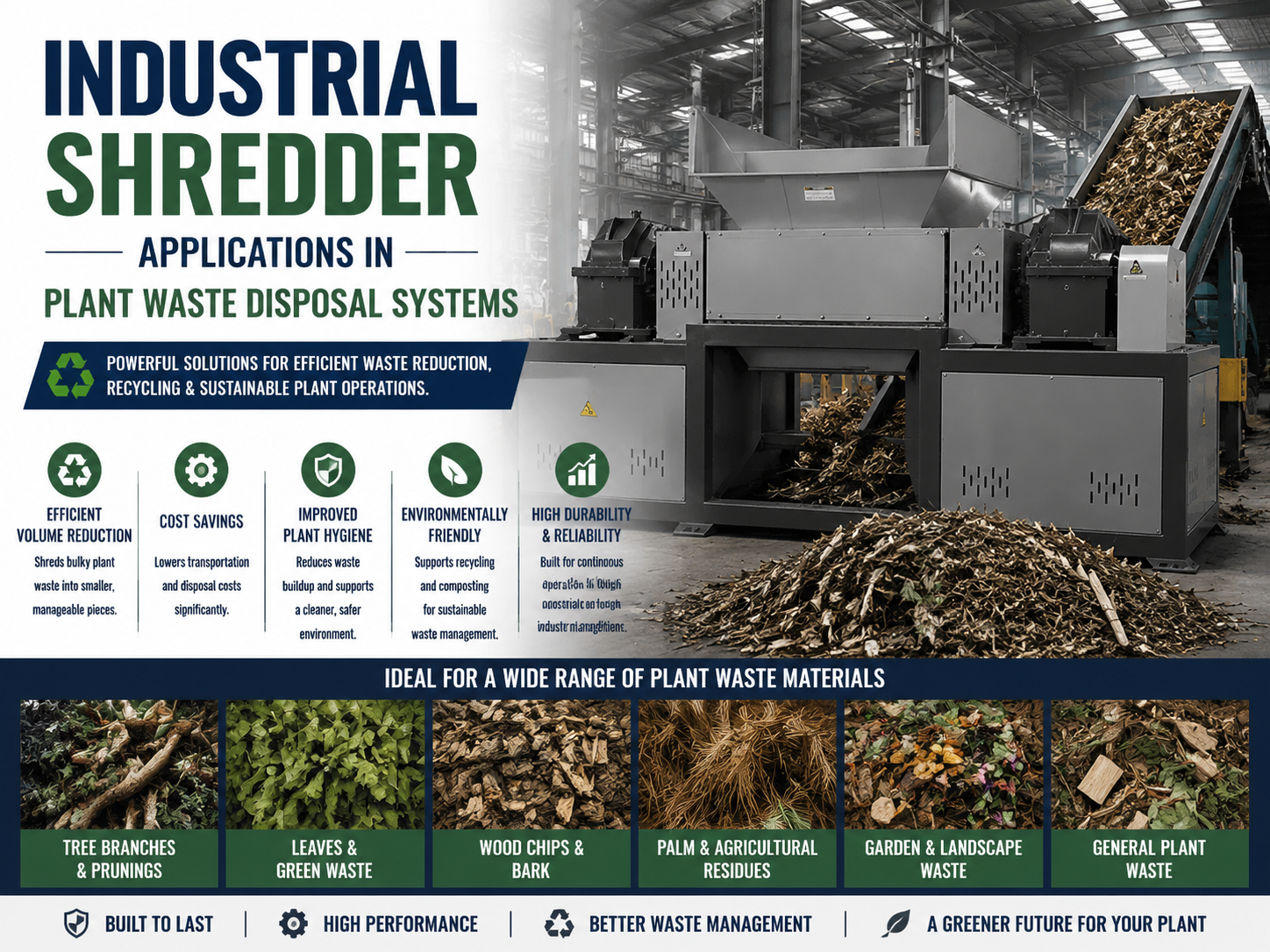
Introduction to Industrial Shredder Applications in Plant Waste Disposal Systems
In the modern manufacturing landscape, the management of industrial waste has evolved from a secondary logistical concern into a primary operational priority. As global regulations regarding environmental sustainability tighten and the costs of waste transport and landfilling skyrocket, facilities are turning to advanced technology to manage their output. Central to this transformation is the integration of industrial shredders. Industrial Shredder Applications In Plant Waste Disposal Systems are no longer limited to simple destruction; they are now sophisticated components of circular economy strategies, designed to reduce volume, recover valuable materials, and prepare waste for energy conversion.
HARSLE, a leader in metal fabrication and waste processing machinery, recognizes that every plant has unique waste streams. Whether it is metal offcuts from a stamping line, plastic purgings from injection molding, or bulky packaging materials, the right shredding solution can turn a liability into a resource. This article provides an in-depth exploration of how industrial shredders function within plant ecosystems, the technical requirements for different materials, and the tangible benefits of implementing a high-performance disposal system.
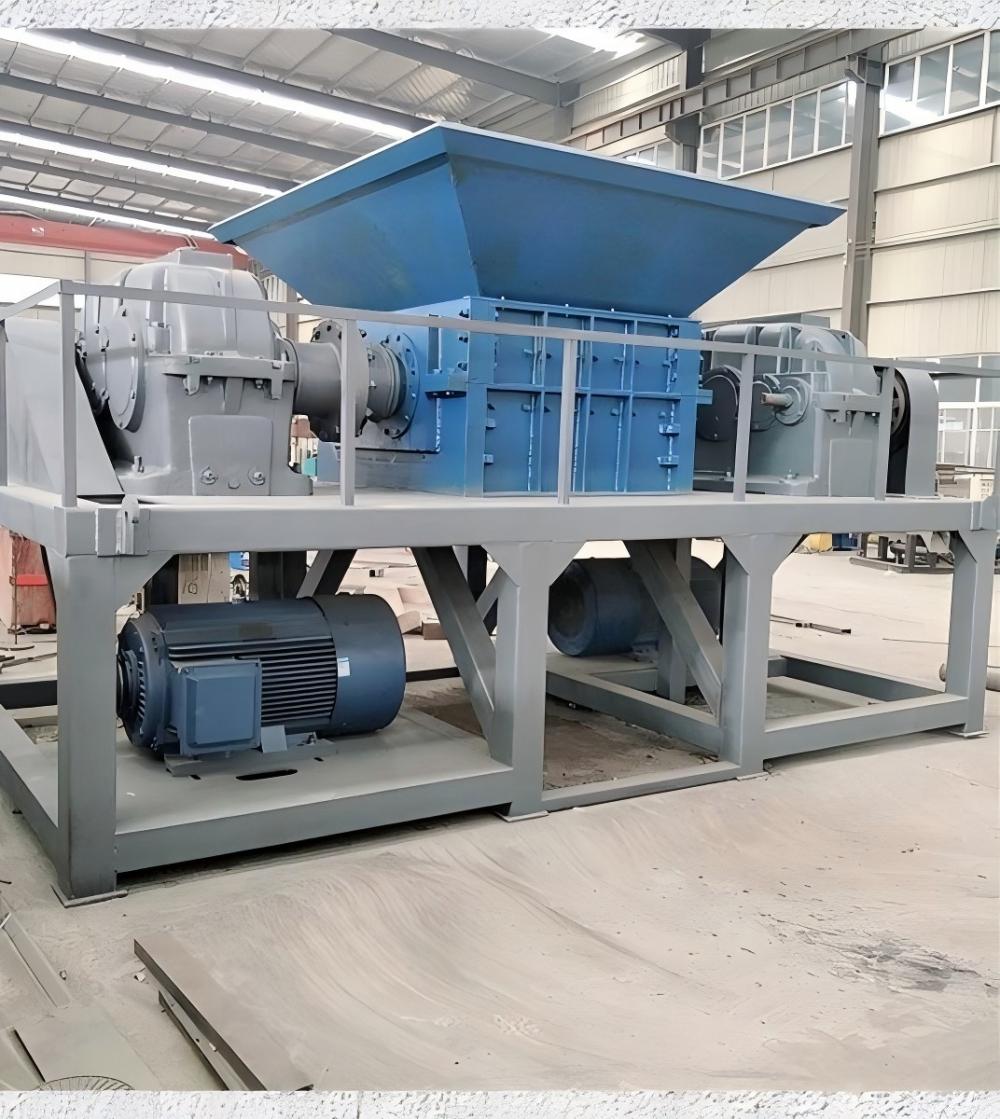
Application Scenarios for Industrial Shredders
The versatility of industrial shredders allows them to be deployed across a vast array of industrial sectors. One of the most common scenarios is in the Automotive Manufacturing Industry. Automotive plants generate massive amounts of diverse waste, including metal scraps, rubber gaskets, plastic bumpers, and interior fabrics. Industrial Shredder Applications In Plant Waste Disposal Systems in this sector focus on segregating these materials at the source. By shredding metal scraps into uniform sizes, plants can sell the material to recyclers at a higher premium compared to loose, bulky scrap.
In the Electronics and E-Waste Sector, shredders are used to destroy sensitive components and recover precious metals. Modern shredders can handle circuit boards, hard drives, and plastic casings simultaneously, reducing them to a size that allows for efficient downstream sorting via magnetic or eddy current separators. This not only ensures data security but also maximizes the recovery of copper, gold, and aluminum.
The Chemical and Pharmaceutical Industry utilizes shredders for the disposal of contaminated packaging, expired products, and laboratory waste. In these environments, shredders are often equipped with specialized seals and stainless-steel components to prevent corrosion and ensure that hazardous materials are contained during the volume reduction process. Shredding these materials is often a prerequisite for incineration or specialized chemical treatment.
Finally, Logistics and Distribution Centers face the challenge of massive quantities of wood pallets, cardboard, and stretch film. A dedicated shredding system can reduce the volume of this waste by up to 80%, significantly lowering the frequency of waste pickups and reducing the carbon footprint associated with transport. By processing wood pallets into chips, plants can even create a secondary revenue stream by selling the chips for biomass fuel or landscaping mulch.
Material and Process Requirements
When evaluating Industrial Shredder Applications In Plant Waste Disposal Systems, understanding the physical properties of the waste material is critical. Not all shredders are created equal, and the “one size fits all” approach often leads to mechanical failure or inefficient processing. The primary factors to consider are material hardness, moisture content, and the desired final particle size.
Metal and High-Density Materials
For metal fabrication plants, the shredder must possess high torque and low-speed operation. This is essential for shearing through steel offcuts, aluminum extrusions, or copper wiring without causing excessive wear on the blades. The blades themselves must be manufactured from high-strength alloys like D2 or SKD-11, heat-treated to withstand the repetitive impact and abrasion of metal-on-metal contact.
Plastics and Polymers
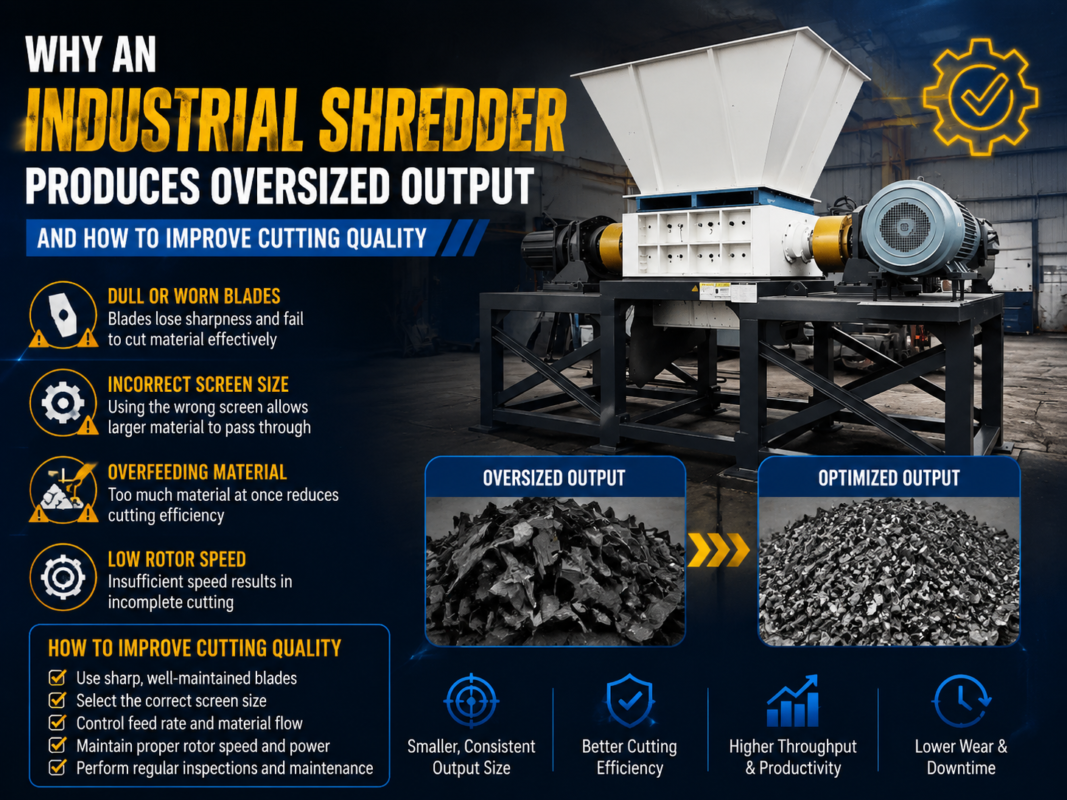
Plastics present a different challenge. Some plastics are brittle and shatter easily, while others are ductile and can wrap around the shredder shafts if not handled correctly. For plastic waste, the clearance between the blades and the spacers must be precisely calibrated to ensure a clean cut rather than a tearing action. Heat management is also a factor; if the shredding process generates too much friction, the plastic may melt and clog the machine.
Organic and Fibrous Materials
Wood, paper, and textiles require high-speed shredding or specialized tooth profiles to prevent clogging. Fibrous materials can easily entwine around rotating shafts, leading to motor strain. In these applications, shredders are often equipped with “anti-wrap” technology and specialized cleaning combs that keep the shafts clear during operation.
Process Integration
The process requirement also dictates whether a single-shaft, twin-shaft, or four-shaft shredder is needed. Single-shaft shredders are excellent for achieving a precise, small output size due to their integrated screens. Twin-shaft shredders are the workhorses of the industry, offering high throughput and the ability to handle bulky, irregular items. Four-shaft shredders combine the benefits of both, providing high torque and consistent sizing in a single pass.
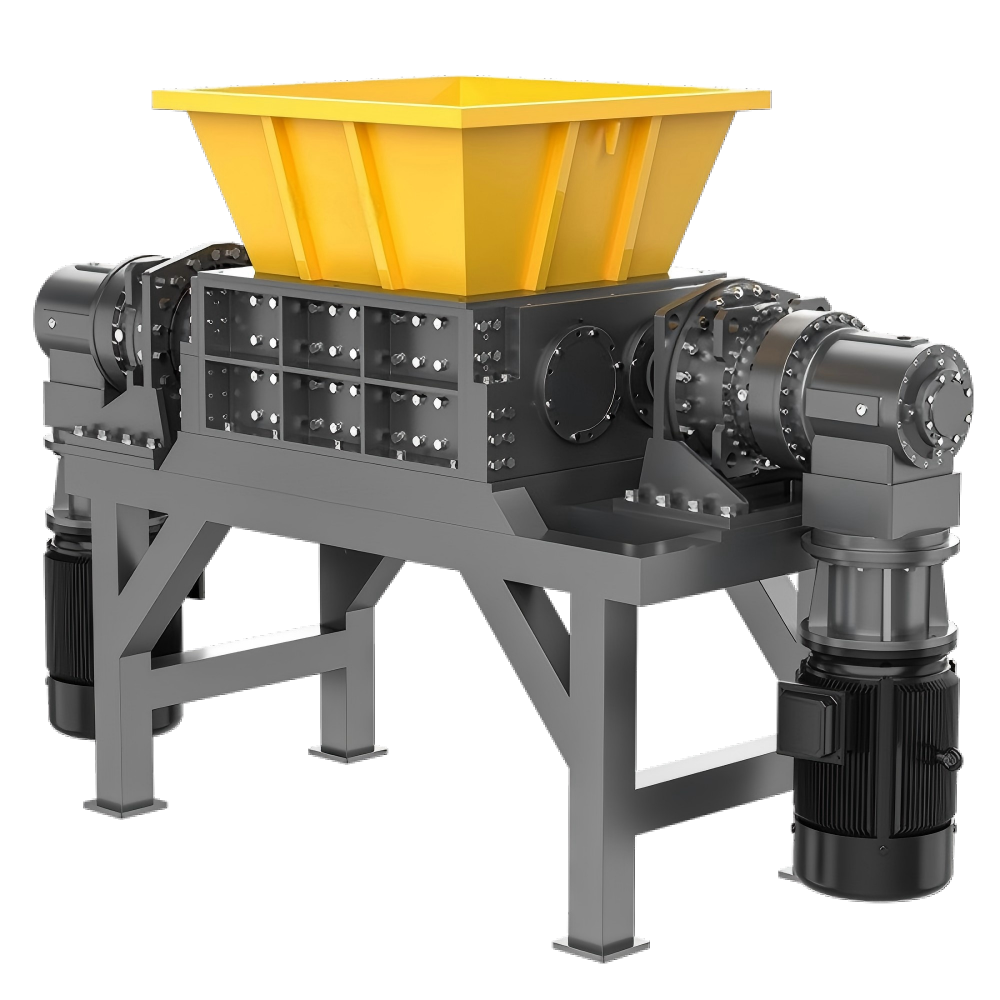
Recommended Machine Configuration
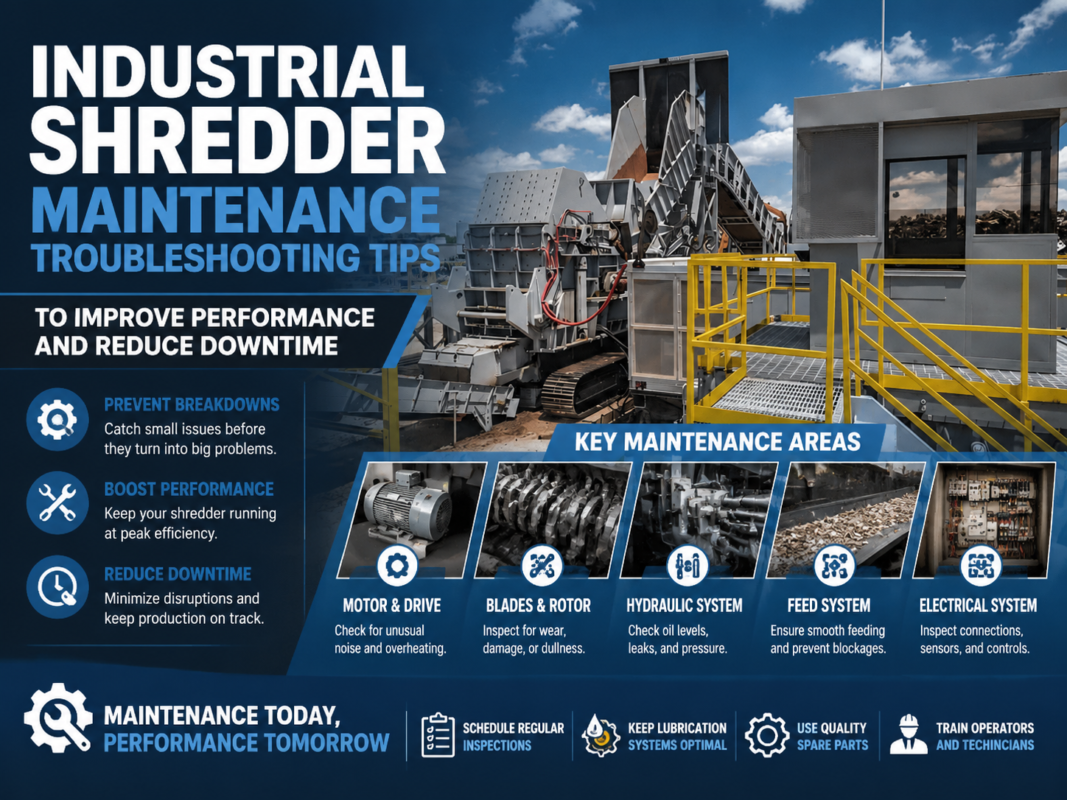
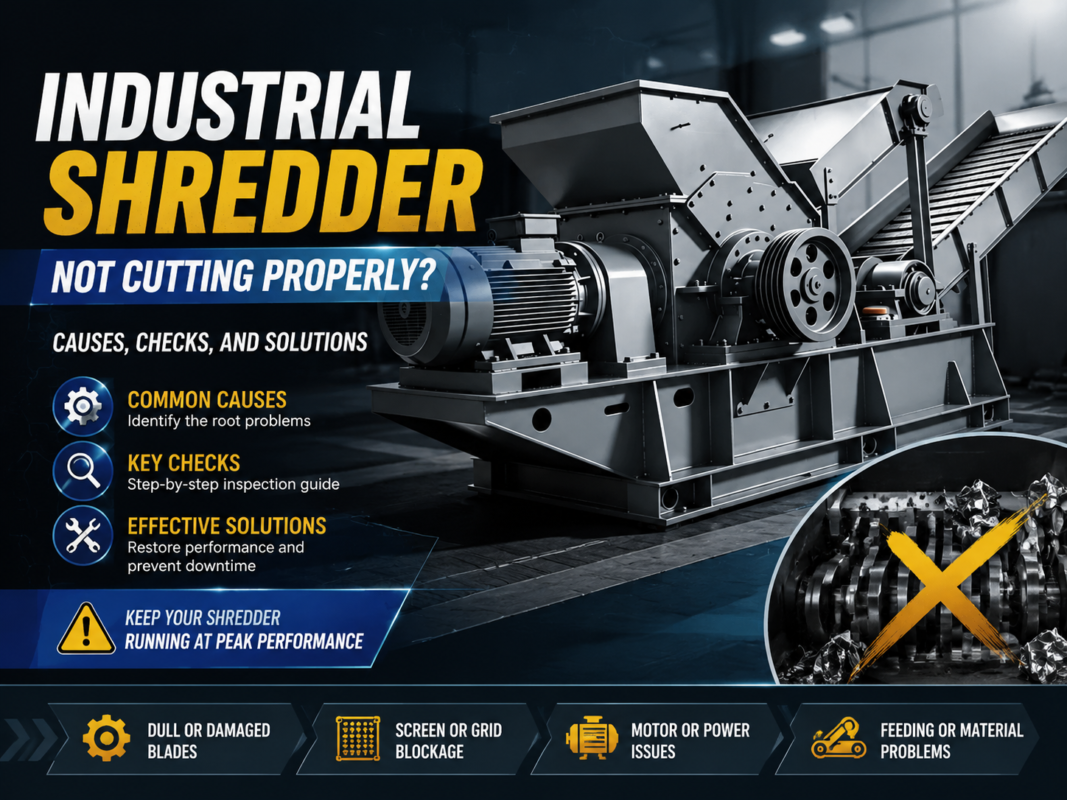
To maximize the efficiency of Industrial Shredder Applications In Plant Waste Disposal Systems, HARSLE recommends a configuration tailored to heavy-duty industrial environments. A standard high-performance setup typically includes the following components:
- High-Torque Gearbox: The heart of the shredder. It must be capable of delivering massive force at low RPMs to handle sudden shocks when processing tough materials.
- Siemens PLC Control System: An intelligent control system is vital. It should feature an auto-reverse function that triggers if the shredder encounters an unbreakable object, preventing damage to the motor and blades.
- Advanced Blade Design: Depending on the material, blades may be hooked, square, or multi-pointed. HARSLE uses vacuum-hardened alloy steel blades that can be sharpened or replaced individually to minimize maintenance costs.
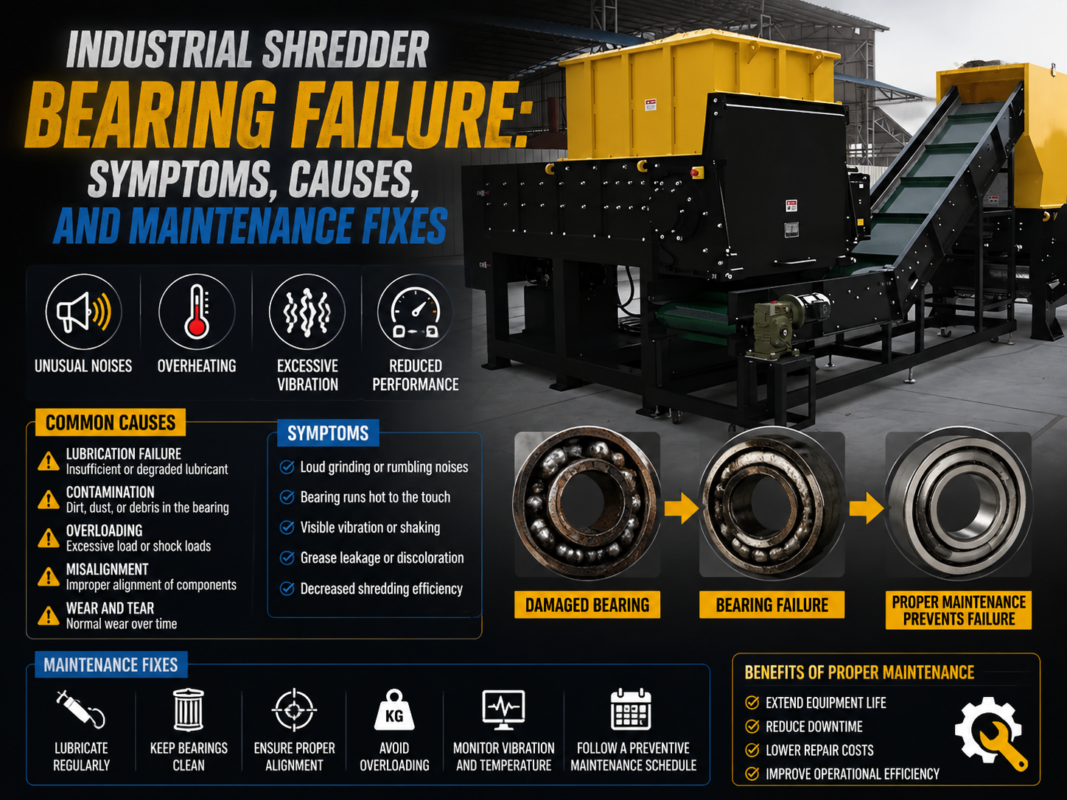
- Heavy-Duty Bearings and Seals: To protect the internal components from dust, liquids, and debris, the bearings are typically mounted outside the shredding chamber with multi-layer seals.
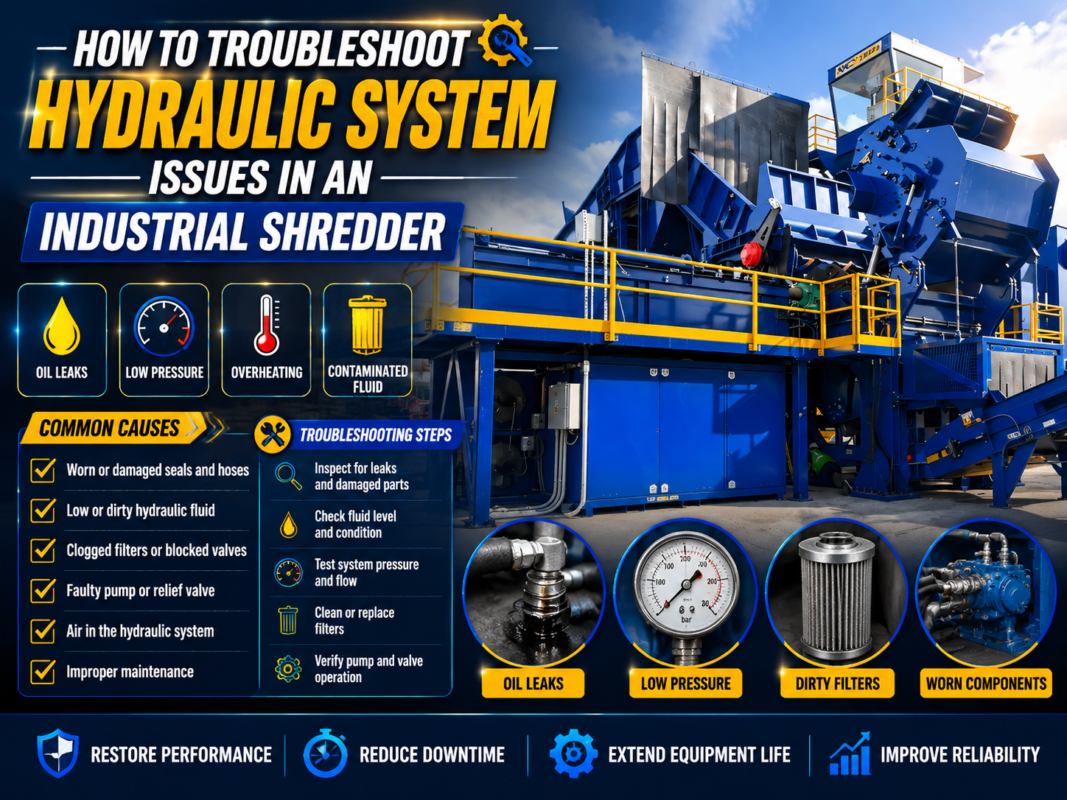
- Hydraulic Pusher System: For single-shaft models, a horizontal hydraulic ram forces the material against the rotating shaft, ensuring consistent feeding and preventing the material from “bridging” in the hopper.
Furthermore, the integration of a Variable Frequency Drive (VFD) allows the operator to adjust the speed of the shredder based on the material density, optimizing energy consumption and reducing mechanical stress during lighter loads.
Workflow of a Plant Waste Disposal System
A well-designed waste disposal workflow ensures that the industrial shredder operates at peak efficiency while maintaining a safe environment for plant personnel. The typical workflow follows these stages:
- Collection and Sorting: Waste is collected from various production lines. While modern shredders can handle mixed waste, pre-sorting high-value materials (like clean aluminum) can increase the ROI of the recycling process.
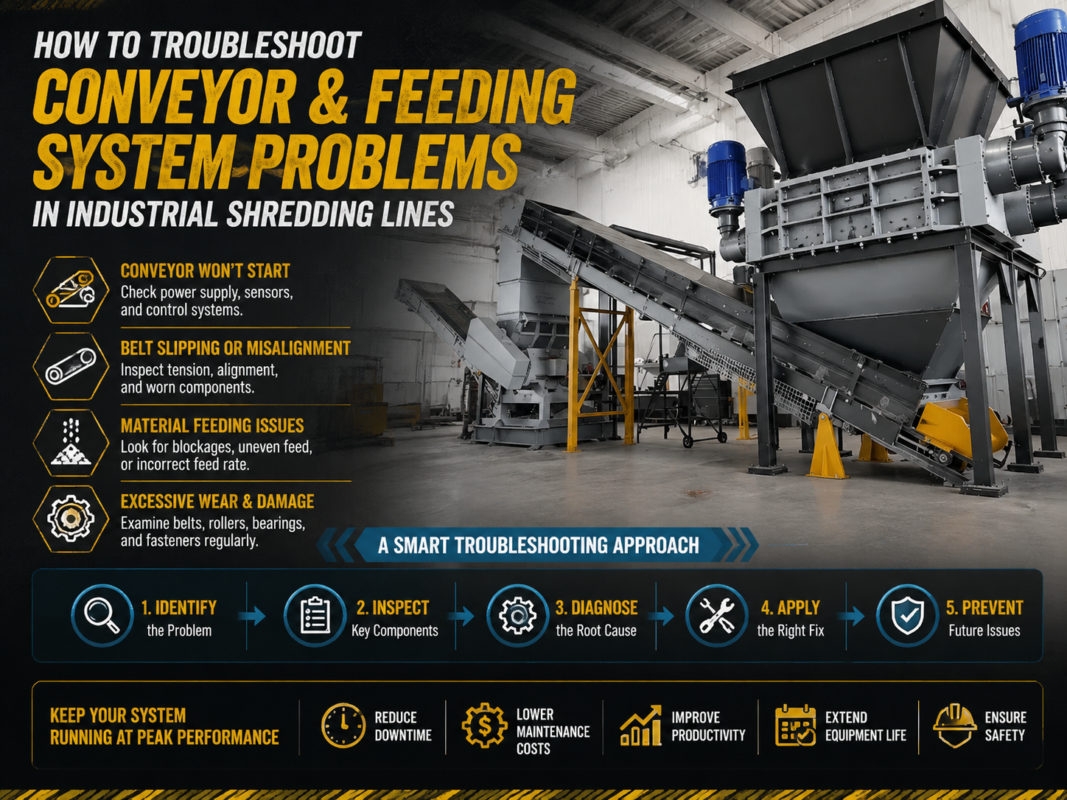
- Feeding: Material is fed into the shredder hopper via a conveyor belt, forklift, or overhead crane. Automated conveyor systems are preferred for continuous operations to ensure a steady feed rate and prevent overloading.
- Shredding: The material enters the shredding chamber. In a twin-shaft system, the counter-rotating blades grab the material and shear it into strips. If the material is too tough, the PLC reverses the shafts to reposition the load before attempting to shred again.
- Sizing (Optional): If a specific particle size is required, the material passes through a screen located beneath the shafts. Pieces that are too large are carried back up by the blades for another round of shredding.
- Discharge and Separation: The shredded material falls onto a discharge conveyor. At this stage, magnetic separators can remove ferrous metals, and air classifiers can separate light plastics from heavier materials.
- Compaction or Containerization: The final product is either compacted into bales for transport or collected in large bins for onsite use (such as fuel) or external recycling.
Productivity and Economic Benefits
Investing in Industrial Shredder Applications In Plant Waste Disposal Systems yields significant long-term benefits that go beyond simple waste removal. The primary advantage is Volume Reduction. By shredding waste, plants can reduce the physical space occupied by scrap by 60% to 90%. This frees up valuable floor space for production and reduces the number of waste containers required on-site.
Logistical Cost Savings are another major factor. Most waste management companies charge by the haul. If a plant can fit four times as much waste into a single truck by shredding it first, the transportation costs are slashed by 75%. Over a fiscal year, these savings often cover the initial capital expenditure of the shredder.
From a Revenue Generation perspective, shredded and sorted waste is a commodity. Recyclers pay significantly more for uniform, shredded scrap than for loose, mixed waste. In some cases, plants can transform a “cost center” (waste disposal) into a “profit center” (material sales).
Finally, Environmental Compliance and Safety are enhanced. Shredding hazardous or sensitive waste ensures it cannot be reused or diverted illegally. It also reduces fire hazards associated with bulky, loose combustible materials like cardboard and plastic film. By implementing an onsite shredding system, companies demonstrate a commitment to ISO 14001 standards and corporate social responsibility (CSR) goals.
Case Example: Automotive Component Manufacturer
A mid-sized automotive component manufacturer was struggling with the disposal of large quantities of reinforced plastic trim and aluminum offcuts. Their waste bins were overflowing daily, requiring two pickups per day at a cost of $400 per haul. The loose material was also a safety hazard, cluttering the walkways near the production lines.
HARSLE implemented a TS-Series Twin-Shaft Shredder integrated with a magnetic separator and a discharge conveyor. The system was configured to handle both the plastic and aluminum streams.
The Results:
1. Volume Reduction: The waste volume was reduced by 70%, allowing the plant to move from two daily pickups to one pickup every three days.
2. Labor Efficiency: Instead of manual breaking and loading of bulky parts, workers now simply toss scrap onto a conveyor belt, saving approximately 15 man-hours per week.
3. Material Value: By separating the aluminum from the plastic via the magnetic system, the manufacturer was able to sell the aluminum scrap to a local foundry, generating $2,500 in monthly revenue that was previously lost.
4. ROI: The total system cost was recouped in just 14 months through a combination of reduced hauling fees and scrap sales.
Frequently Asked Questions (FAQ)
1. What is the difference between a single-shaft and a twin-shaft shredder?
A single-shaft shredder uses a high-speed rotor with small blades and a screen to produce a very specific, small output size. It is ideal for plastics and wood. A twin-shaft shredder uses low-speed, high-torque counter-rotating shafts to shear bulky and tough materials. It is better for metal, tires, and large-scale volume reduction where a precise particle size is less critical than throughput.
2. How often do the blades need to be sharpened?
Blade longevity depends entirely on the material being processed. For soft plastics or cardboard, blades can last for years. For abrasive materials like glass-reinforced plastics or contaminated metals, blades may need inspection every 6 months. HARSLE blades are designed to be easily accessible for maintenance or individual replacement.
3. Can an industrial shredder handle wet materials?
Yes, but the machine must be configured with specialized seals and potentially stainless-steel components to prevent corrosion. If the material is extremely wet (like organic waste), a drainage system may be integrated into the shredding chamber to manage liquid runoff.
4. Is it possible to integrate the shredder into an existing production line?
Absolutely. Most Industrial Shredder Applications In Plant Waste Disposal Systems are designed to be modular. They can be fed directly by production conveyors and can output into existing waste management infrastructure. HARSLE provides custom hopper and frame designs to match specific factory layouts.
5. What safety features are included?
Standard safety features include emergency stop buttons, safety interlocks on all access panels, and PLC-driven overload protection. The auto-reverse function is the most critical safety feature for the machine itself, as it prevents catastrophic failure when un-shreddable items (like heavy steel ingots) accidentally enter the chamber.
Conclusion and Call to Action
The implementation of Industrial Shredder Applications In Plant Waste Disposal Systems is a strategic move for any manufacturing facility looking to optimize its operations. By reducing waste volume, lowering logistical costs, and enabling material recovery, industrial shredders provide a clear path to both economic and environmental sustainability. HARSLE’s range of heavy-duty shredding solutions is engineered to meet the rigors of the modern factory floor, offering reliability, ease of maintenance, and high performance.
Are you ready to transform your plant’s waste management strategy? Contact the experts at HARSLE today for a comprehensive waste stream analysis and a customized shredding solution tailored to your specific material and volume requirements. Let us help you turn your waste into a valuable asset.