Industrial Shredder Applications in Cable and Wire Recycling: A Comprehensive Guide

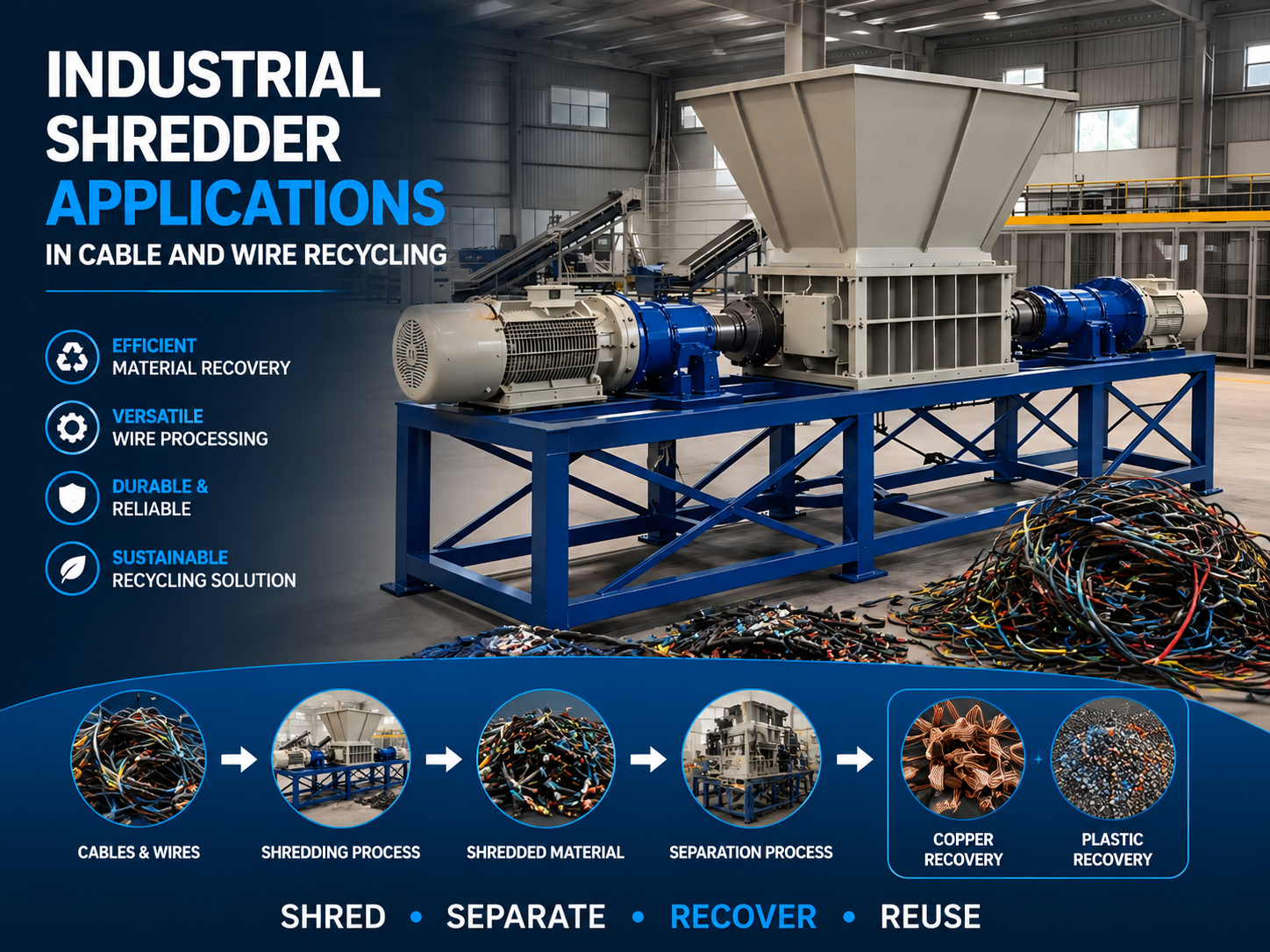
Introduction to Industrial Shredder Applications in Cable and Wire Recycling
The global demand for recycled metals, particularly copper and aluminum, has reached unprecedented levels due to the rise of electric vehicles, renewable energy infrastructure, and the continuous expansion of telecommunications. In this landscape, the efficiency of metal recovery from waste cables and wires is paramount. Industrial shredders serve as the backbone of this process, transforming bulky, tangled scrap into manageable, high-value raw materials. Industrial Shredder Applications In Cable Wire Recycling are not just about waste reduction; they are about precision engineering and economic optimization.
Modern recycling facilities face the challenge of processing a diverse array of materials, from thin household electronics wiring to massive, armored industrial power cables. Without the right shredding technology, the separation of conductive metal from insulating plastic (PVC, PE, or rubber) becomes labor-intensive and inefficient. HARSLE’s industrial shredders are designed to address these challenges, providing the high torque and durability required to break down complex composite materials while maintaining the integrity of the metal for downstream separation.
In this comprehensive guide, we will explore the specific scenarios where industrial shredders are applied, the technical requirements for different materials, and the workflows that ensure maximum productivity and purity in the recycling stream. Whether you are a small-scale scrap yard or a large-scale industrial recycler, understanding these applications is key to selecting the right machinery for your operations.
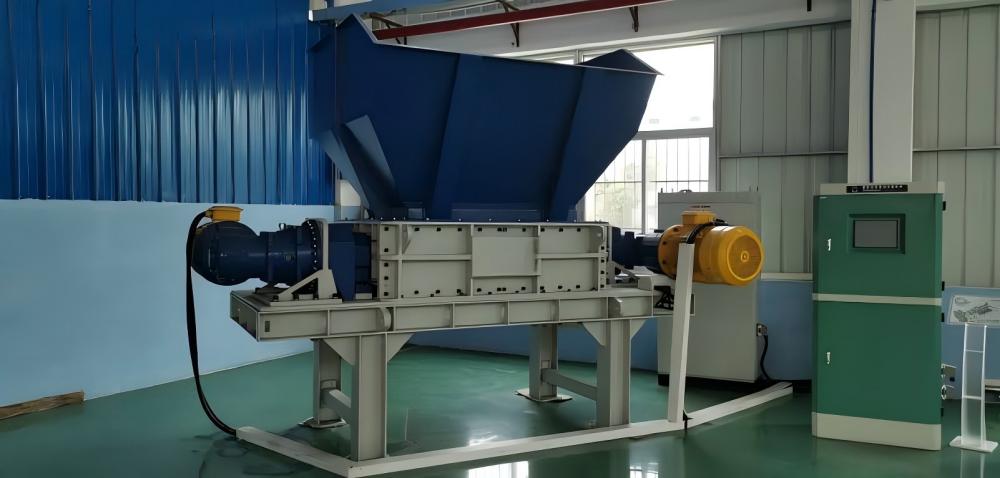
Application Scenarios for Cable and Wire Shredding
1. E-Waste and Consumer Electronics
Electronic waste, or e-waste, contains a significant amount of fine-gauge wiring. These wires are often found inside computers, televisions, and household appliances. Because these wires are thin and often bundled with other materials like plastic housings or circuit boards, they require a shredder that can handle mixed-material streams. Industrial shredders in this scenario act as the primary reduction stage, breaking down the entire assembly so that the wires can be liberated from the plastic and metal frames.
2. Automotive Wiring Harnesses
The automotive industry is a massive source of scrap wire. Modern vehicles contain miles of wiring harnesses, which are often wrapped in sticky tapes, protective sleeves, and plastic connectors. Shredding these harnesses is particularly challenging because the adhesives can gum up blades. Industrial shredders used in automotive recycling are often equipped with specialized blade geometries and cooling systems to prevent the melting of plastics during the high-speed cutting process.
3. Industrial and Construction Power Cables
Construction sites and industrial plants generate large volumes of heavy-duty power cables. These cables often feature thick copper or aluminum cores protected by multiple layers of insulation, steel armoring, or lead sheathing. Processing these requires heavy-duty dual-shaft shredders capable of exerting immense shearing force. The goal here is to strip away the armoring and reduce the cable to a size that can be further refined by a granulator.
4. Telecommunications and Data Center Scrap
Telecommunications cables, including fiber optics and high-density copper data cables, present unique recycling challenges. While fiber optics are primarily glass, the copper-based data cables are highly valuable. Industrial shredders allow for the rapid processing of these long, continuous strands, converting them into uniform chips that facilitate the separation of the high-purity copper used in data transmission.
Material and Process Requirements
To achieve high-quality output in Industrial Shredder Applications In Cable Wire Recycling, one must understand the physical properties of the input material. The process is not a “one size fits all” solution; it requires careful calibration of the machinery to the specific scrap being processed.
- Tensile Strength: Copper and aluminum have different shearing requirements. Aluminum is softer but can be more abrasive, while copper requires sharp, high-carbon steel blades to ensure clean cuts without “smearing” the metal into the plastic insulation.
- Insulation Type: PVC is the most common insulation, but XLPE (cross-linked polyethylene) and rubber are also prevalent. Rubber-insulated cables require shredders with higher torque and lower speeds to prevent the material from bouncing or stretching rather than cutting.
- Contamination Levels: Scrap cables are rarely clean. They may contain grease, dirt, or steel reinforcements. The shredder must be robust enough to handle occasional non-target materials without catastrophic blade failure.
- Output Size: The desired final particle size (often 10mm to 20mm for primary shredding) dictates the screen size and blade configuration. Smaller output sizes increase the surface area, making subsequent air separation more effective.
Furthermore, the moisture content of the scrap can affect the efficiency of the shredding process. Wet cables can cause the shredded plastic to clump, which interferes with the gravity separation phase. Therefore, many industrial setups include a pre-drying stage or use shredders that can operate effectively in varied environmental conditions.
Recommended Machine Configuration
Choosing the right configuration is critical for maximizing ROI. For cable and wire recycling, the most common configurations involve either single-shaft or dual-shaft shredders, often followed by a granulator.
Dual-Shaft Shredders
Dual-shaft shredders are the workhorses of the primary recycling stage. They operate at low speeds with high torque, making them ideal for bulky materials like armored cables or large bundles of wire. The interlocking blades pull the material into the cutting chamber, effectively “eating” the scrap. This configuration is less prone to jamming and can handle steel-reinforced cables that would damage high-speed machines.
Single-Shaft Shredders
Single-shaft shredders are typically used for more uniform scrap or as a secondary processing step. They feature a hydraulic pusher that forces the material against a high-speed rotating shaft equipped with replaceable blades. This setup allows for a more precise control over the output size, as the material remains in the chamber until it is small enough to pass through a screen.
| Feature | Dual-Shaft Shredder | Single-Shaft Shredder |
|---|---|---|
| Speed | Low (10-20 RPM) | High (60-100 RPM) |
| Torque | Very High | Moderate |
| Primary Use | Bulky, Armored, Mixed Scrap | Uniform, Pre-shredded, Fine Wire |
| Output Size Control | Determined by Blade Width | Determined by Screen Mesh |
| Maintenance | Blade Sharpening/Replacement | Rotatable/Replaceable Inserts |
For a complete recycling line, HARSLE recommends a combination: a dual-shaft shredder for initial volume reduction, followed by a magnetic separator to remove ferrous metals, and finally a high-speed granulator to reduce the material to 3-5mm granules for final separation.
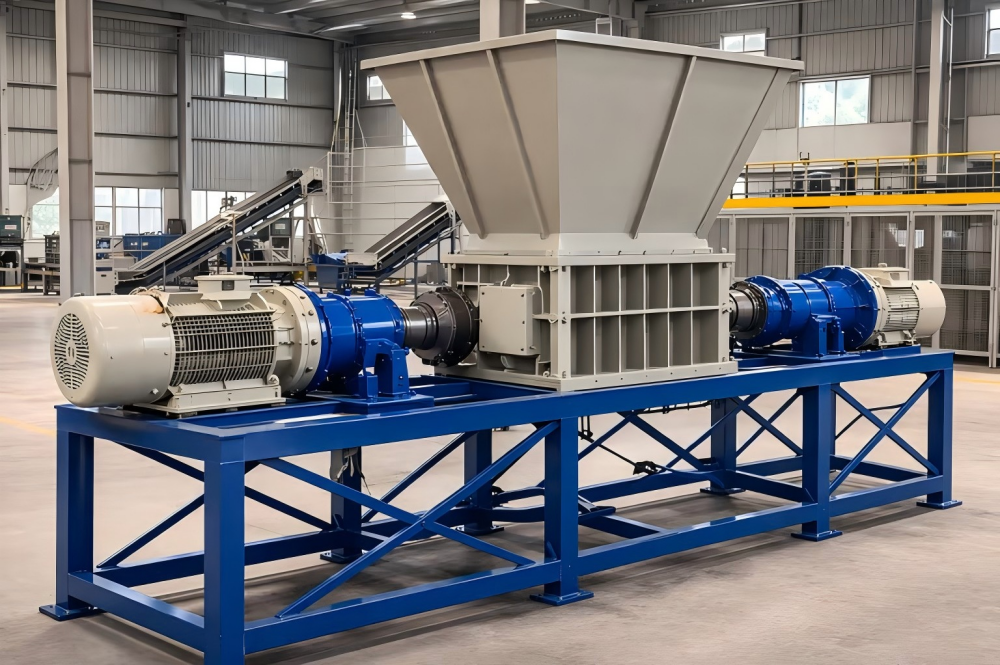
The Workflow of a Cable Recycling Line
The efficiency of Industrial Shredder Applications In Cable Wire Recycling is realized through a systematic workflow. Each stage is designed to refine the material further until the metal and plastic are completely isolated.
- Feeding: Scrap is loaded onto a heavy-duty conveyor belt. Automated feeding systems ensure a steady flow of material into the shredder, preventing overloads and maximizing throughput.
- Primary Shredding: The dual-shaft shredder breaks the cables into 20-50mm lengths. This stage liberates the metal core from the outer heavy armoring or thick insulation.
- Magnetic Separation: As the shredded material moves along the conveyor, an over-belt magnet removes steel wires, screws, or armoring fragments. This protects the downstream granulator blades from damage.
- Granulation: The pre-shredded material enters a high-speed granulator. Here, the material is reduced to fine granules (usually 2-6mm). The impact and shearing action in the granulator ensure that the plastic “skin” is completely detached from the copper or aluminum “meat.”
- Air Gravity Separation: The mixture of metal and plastic granules is fed onto a vibrating air table. Using the difference in specific gravity, the heavier metal particles move upward on the table, while the lighter plastic particles are blown downward.
- Dust Collection: Throughout the process, a pulse dust extraction system removes fine plastic dust and fibers, ensuring a clean working environment and preventing contamination of the final metal product.
- Electrostatic Separation (Optional): For extremely fine wires (hair wire), an electrostatic separator can be used to recover the tiny metal particles that might be lost in the air separation stage, pushing purity levels toward 99.9%.
Productivity and Economic Benefits
Investing in high-quality industrial shredders for cable recycling offers significant economic advantages. The primary benefit is the purity of the recovered metal. High-purity copper granules (often referred to as “Copper Chops”) command a much higher market price than mixed scrap or burnt wire. Burning wire to remove insulation is not only environmentally hazardous and illegal in many jurisdictions, but it also degrades the quality of the copper and results in significant metal loss.
Labor Reduction: Automated shredding lines replace dozens of manual workers who would otherwise be stripping wires by hand. A single operator can manage a HARSLE recycling line that processes several tons of cable per hour.
Volume Reduction: Shredding reduces the volume of bulky scrap by up to 80%. This significantly lowers transportation and storage costs, allowing recyclers to move more material in fewer trips.
Environmental Compliance: Modern shredding and separation systems are closed-loop and mechanical, meaning they produce no toxic fumes or wastewater. This allows businesses to operate in compliance with strict environmental regulations while positioning themselves as sustainable enterprises.
Case Example: Large-Scale Scrap Yard Optimization
A mid-sized recycling facility in Eastern Europe was struggling with a backlog of mixed industrial cables. They were using manual stripping for large cables and selling the smaller wires as low-grade mixed scrap. After implementing a HARSLE dual-shaft shredder integrated with a granulation and air separation system, their throughput increased by 400%.
The facility was able to process 3 tons of mixed cable per hour. The resulting copper granules achieved a purity of 99.5%, allowing them to sell directly to copper smelters at premium prices. Within 14 months, the increased profit margins and labor savings covered the entire capital investment of the machinery. This case highlights how Industrial Shredder Applications In Cable Wire Recycling can transform a struggling operation into a highly profitable, automated powerhouse.
Frequently Asked Questions (FAQ)
How often do the shredder blades need to be sharpened?
Blade longevity depends on the material being processed. For standard copper and PVC cables, blades can last several hundred hours before requiring sharpening. However, if the scrap contains significant amounts of steel or sand, the interval will be shorter. HARSLE blades are made from high-wear D2 or SKD-11 steel, which can be reground multiple times to extend their service life.
Can one shredder handle both copper and aluminum wires?
Yes, the same shredder can handle both. However, the separation settings (air flow and vibration frequency on the gravity table) must be adjusted because aluminum is much lighter than copper. Most operators process these materials in separate batches to maintain high purity levels.
What is the maximum cable diameter a HARSLE shredder can handle?
Our heavy-duty dual-shaft models can handle cables up to 150mm in diameter, including armored varieties. For exceptionally large cables, we recommend a pre-cutting stage or a specialized hydraulic cable stripper before feeding the material into the shredder.
Is the plastic byproduct recyclable?
Absolutely. The shredded PVC or PE granules are a valuable byproduct. They can be sold to manufacturers of plastic products like garden hoses, traffic cones, or floor mats, providing an additional revenue stream for the recycling facility.
Conclusion and Call to Action
Industrial Shredder Applications In Cable Wire Recycling represent the pinnacle of efficiency in the modern circular economy. By converting waste into high-purity raw materials, these machines provide a sustainable solution to the growing problem of e-waste and industrial scrap. HARSLE is committed to providing the metal fabrication and recycling industry with robust, high-performance machinery that stands the test of time.
If you are looking to upgrade your recycling capabilities or start a new cable processing venture, our team of experts is ready to assist you. We offer customized machine configurations tailored to your specific material types and volume requirements. Contact HARSLE today to receive a detailed consultation and quote, and take the first step toward maximizing your metal recovery profits.