Comprehensive Guide to Hydraulic Briquetting Machines for Steel Scrap Compression Applications

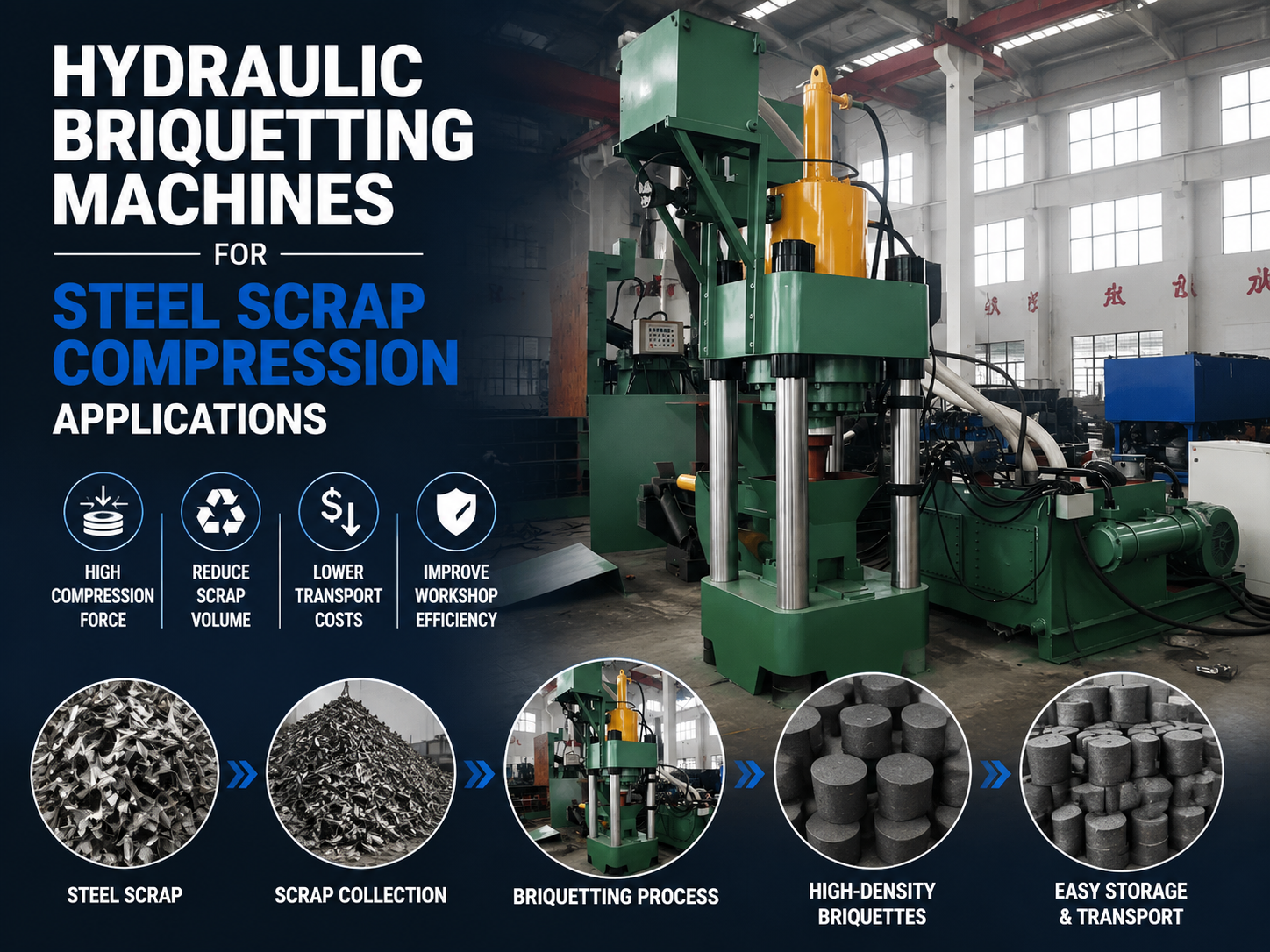
Introduction to Hydraulic Briquetting Machines for Steel Scrap Compression Applications
In the modern industrial landscape, the management of metal waste has evolved from a logistical burden into a significant opportunity for cost recovery and environmental stewardship. Hydraulic Briquetting Machines Steel Scrap Compression Applications represent the pinnacle of this evolution. These machines are engineered to transform loose metal chips, turnings, filings, and dust into high-density, cylindrical or rectangular blocks known as briquettes. By applying immense hydraulic pressure, these systems eliminate the air gaps between metal fragments, resulting in a product that is easier to handle, cheaper to transport, and significantly more efficient to melt in a furnace.
HARSLE has long been at the forefront of developing high-performance hydraulic solutions. Our briquetting presses are designed to meet the rigorous demands of high-volume manufacturing environments, where steel scrap is generated in massive quantities. Whether it is carbon steel, stainless steel, or alloy steel, the compression process ensures that the material retains its metallurgical integrity while occupying a fraction of its original volume. This introduction explores why briquetting has become a standard practice in Tier 1 and Tier 2 automotive suppliers, aerospace components manufacturing, and general heavy engineering sectors.
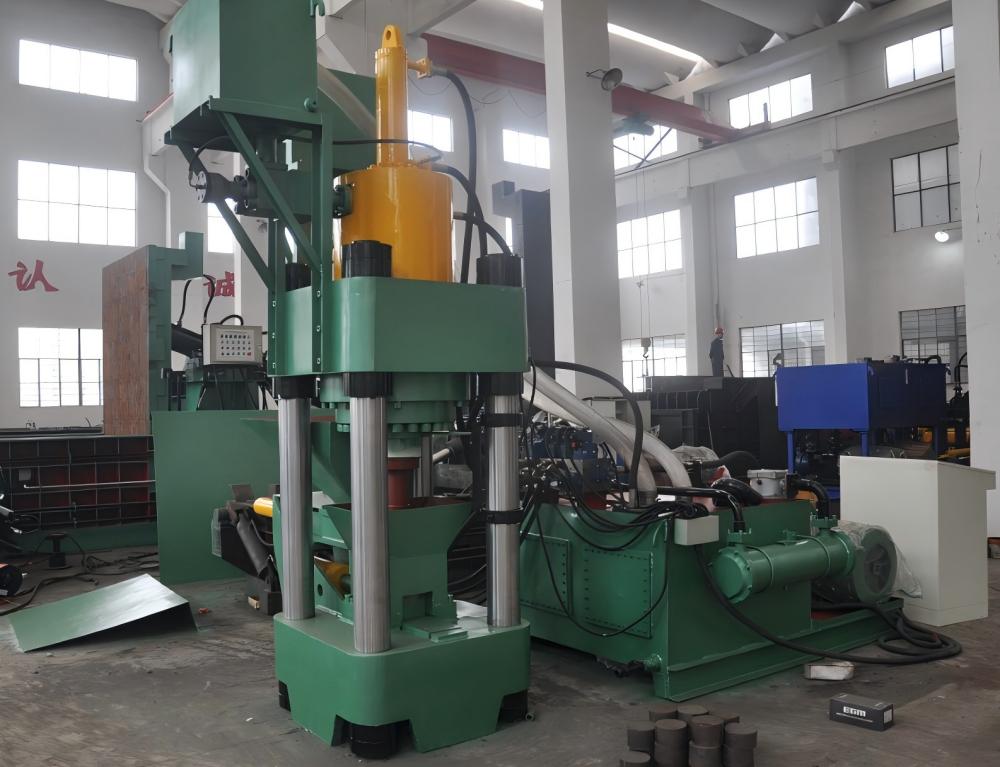
The fundamental value proposition of Hydraulic Briquetting Machines Steel Scrap Compression Applications lies in the ‘melting yield.’ When loose steel turnings are thrown into a furnace, the high surface-area-to-volume ratio leads to significant oxidation and ‘burn-off.’ Much of the metal is lost to the atmosphere as slag or smoke. Conversely, a compressed briquette sinks beneath the surface of the molten bath, minimizing oxidation and increasing the metal recovery rate by up to 25%. This guide will delve into the technical nuances, selection criteria, and operational benefits of integrating these machines into your production line.
Key Considerations for Steel Scrap Compression
1. Material Characteristics and Density
Not all steel scrap is created equal. The effectiveness of Hydraulic Briquetting Machines Steel Scrap Compression Applications depends heavily on the physical properties of the input material. Long, stringy turnings require a different feeding mechanism compared to fine, granular chips. For instance, stainless steel turnings are often tougher and more abrasive than mild steel, requiring hardened wear plates and specialized piston seals. The goal of the compression process is to achieve a density that is typically 70% to 85% of the solid metal’s density. Achieving this requires a machine capable of exerting specific pressures often exceeding 300 MPa.
2. Economic Return on Investment (ROI)
The financial justification for a hydraulic briquetting machine is multi-faceted. First, there is the direct increase in the sale price of the scrap. Smelters and foundries pay a premium for briquetted material because it is ‘furnace-ready.’ Second, there is the recovery of expensive cutting fluids and coolants. During the compression process, liquids are squeezed out of the scrap and collected in a dedicated reservoir for filtration and reuse. In high-volume operations, the value of recovered oil can pay for the machine’s electricity costs alone. Finally, the reduction in storage space and transportation frequency significantly lowers overhead costs.
3. Environmental and Regulatory Compliance
Environmental regulations regarding the storage of ‘oily scrap’ are becoming increasingly stringent. Loose turnings coated in cutting fluid can leak hazardous chemicals into the factory floor or the ground, leading to soil contamination and heavy fines. Hydraulic Briquetting Machines Steel Scrap Compression Applications mitigate this risk by extracting the fluids in a controlled environment. Furthermore, by reducing the volume of scrap, companies can decrease their carbon footprint associated with the logistics of waste removal. This aligns with global ESG (Environmental, Social, and Governance) goals that many large-scale manufacturers are now required to meet.
4. Automation and Integration
Modern briquetting systems are rarely standalone units. To maximize efficiency, they must be integrated into the existing production workflow. This involves automated conveyor systems that transport scrap directly from the CNC machines to the briquetting press hopper. Advanced PLC (Programmable Logic Controller) systems allow the machine to adjust its cycle time based on the volume of incoming material, ensuring that the machine is not running idle and wasting energy. HARSLE machines feature intuitive touch-screen interfaces that allow operators to monitor pressure, temperature, and throughput in real-time.
Technical Details of Hydraulic Briquetting Systems
The Hydraulic Circuit and Power Unit
The heart of any Hydraulic Briquetting Machine Steel Scrap Compression Applications is the hydraulic power unit (HPU). This system must deliver consistent, high-pressure force over thousands of cycles. HARSLE utilizes high-efficiency piston pumps and manifold blocks that minimize internal pressure drops. The use of proportional valves allows for smooth acceleration and deceleration of the main ram, which prevents hydraulic shock and extends the lifespan of the seals and hoses. Cooling is also a critical factor; integrated oil-to-air or oil-to-water heat exchangers ensure that the hydraulic fluid remains within the optimal temperature range (usually 40°C to 55°C) even during 24/7 operation.
Frame Construction and Durability
Given the extreme forces involved—often ranging from 100 to 1000 tons of force—the structural integrity of the machine frame is paramount. Most high-end briquetting presses utilize a four-column design or a heavy-duty C-frame made of welded Q235B or Q345B steel. These frames undergo stress-relieving heat treatments to ensure they do not warp over time. The compression chamber itself is lined with high-chromium or manganese steel wear plates. These plates are replaceable, ensuring that the main structure of the machine remains protected from the abrasive nature of steel scrap.
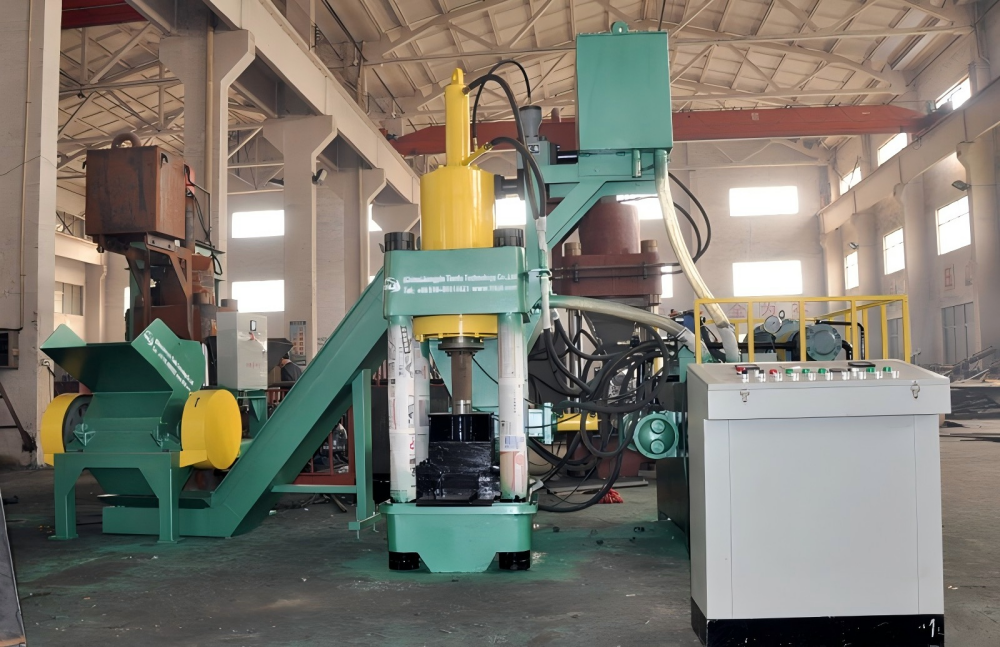
The Compression Process: Step-by-Step
The cycle begins with the feeding stage, where a screw conveyor or a hydraulic pusher moves the scrap into the pre-compression chamber. Once the chamber is full, the pre-compression cylinder descends to compact the loose material into a manageable ‘charge.’ Following this, the main compression ram moves forward with full force, squeezing the material against a fixed die or a sliding gate. This is where the actual briquette is formed. Finally, the discharge gate opens, and the ram pushes the finished briquette out onto a discharge chute. This entire sequence is managed by the PLC, with sensors detecting the position of each cylinder to prevent collisions or over-pressurization.
Coolant Recovery Systems
One of the most technically sophisticated aspects of Hydraulic Briquetting Machines Steel Scrap Compression Applications is the fluid management system. As the scrap is compressed, the volume of the metal decreases, forcing out any trapped moisture or oils. The base of the compression chamber is perforated with micro-slots or equipped with a drainage mesh. The collected fluid flows into a primary settling tank to remove large particles and is then pumped through a secondary filtration system. This allows the manufacturer to reclaim up to 95% of the cutting fluids originally present on the scrap.
Selection Advice for Industrial Buyers
| Factor | Requirement | Impact on Selection |
|---|---|---|
| Material Type | Steel, Cast Iron, Aluminum | Determines the required compression force and wear plate material. |
| Throughput | 500kg/h to 5000kg/h | Determines the size of the HPU and the diameter of the briquette. |
| Briquette Size | Standard 100mm to 200mm | Affects the compatibility with the customer’s furnace charging system. |
| Automation Level | Manual to Fully Autonomous | Determines the need for conveyors, sensors, and remote monitoring. |
| Space Constraints | Available Floor Area | Influences whether a vertical or horizontal design is chosen. |
Step 1: Define Your Scrap Profile
Before purchasing a machine, you must analyze the physical state of your scrap. Is it ‘dry’ (less than 2% moisture) or ‘wet’ (saturated with coolant)? Is it ‘short’ (chips) or ‘long’ (turnings)? Long turnings may require a pre-shredder before they can be effectively briquetted. HARSLE offers integrated shredder-briquetting combos for this specific purpose. Knowing the chemical composition is also vital; for example, high-carbon steel requires more force to achieve the same density as mild steel.
Step 2: Calculate Required Capacity
Buyers often make the mistake of sizing the machine for their average hourly scrap generation. However, scrap generation is rarely linear. It is better to size the machine for 120% of your peak generation rate to prevent bottlenecks. Consider the number of shifts your facility operates. If you run three shifts, you need a heavy-duty machine with an oversized cooling system and high-end components designed for continuous duty.
Step 3: Evaluate the Total Cost of Ownership (TCO)
The initial purchase price is just one part of the equation. Look at the power consumption (kW), the cost of replacement wear parts, and the ease of maintenance. A machine that is $5,000 cheaper but uses 20% more electricity and requires proprietary seals that take weeks to ship will eventually cost much more. HARSLE focuses on using globally recognized components (like Siemens motors and Schneider electrics) to ensure that maintenance is straightforward and parts are locally available.
Step 4: Factory Acceptance Testing (FAT)
Always insist on a Factory Acceptance Test using your actual scrap material. Different materials behave differently under pressure. Some might require a ‘dwell time’ at maximum pressure to prevent the briquette from expanding (the ‘spring-back’ effect) once the pressure is released. Testing ensures that the machine settings are optimized for your specific waste stream before it arrives at your facility.
Frequently Asked Questions (FAQ)
Q1: Can these machines handle mixed metal scrap?
While Hydraulic Briquetting Machines Steel Scrap Compression Applications can physically compress mixed metals, it is not recommended from a value perspective. Mixed briquettes have a lower resale value because they contaminate the melt. It is always best to segregate scrap at the source (the CNC machine) and process each material type separately.
Q2: Do I need to add a binder to make the briquettes stay together?
In most steel scrap applications, no binder is required. The high pressure causes the metal fragments to interlock mechanically. However, for very fine dust or certain non-metallic additives, a small amount of water or a specialized organic binder might be used. For standard steel turnings, the pressure alone is sufficient to create a solid, durable briquette.
Q3: How often do the wear plates need to be replaced?
This depends entirely on the abrasiveness of the material and the volume processed. For standard mild steel, wear plates can last 12 to 18 months in a multi-shift operation. For highly abrasive materials like cast iron or certain tool steels, they may need replacement every 6 to 9 months. HARSLE designs these plates for quick ‘bolt-on’ replacement to minimize downtime.
Q4: What is the typical density of a steel briquette?
A typical steel briquette produced by a HARSLE machine will have a density between 5.0 and 6.5 g/cm³. For comparison, solid steel is approximately 7.8 g/cm³. This high density is what allows the briquette to sink in the furnace and prevents it from being blown away by the furnace’s exhaust system.
Q5: Is the machine difficult to operate?
No. Modern HARSLE machines are designed for ‘one-button’ operation. Once the parameters are set for a specific material, the operator only needs to ensure the hopper is fed and the finished briquettes are cleared. The PLC handles all the complex timing and pressure adjustments, and safety interlocks prevent the machine from operating if a door is open or a sensor is blocked.
Conclusion: The Future of Metal Waste Management
The adoption of Hydraulic Briquetting Machines Steel Scrap Compression Applications is no longer a luxury for high-end manufacturers; it is a strategic necessity. As the global steel industry moves toward ‘Green Steel’ and more efficient recycling loops, the ability to process scrap internally and return it to the supply chain in a high-density format provides a significant competitive advantage. By reducing volume, recovering valuable fluids, and increasing furnace yields, these machines offer one of the fastest payback periods in the metal fabrication equipment sector.
HARSLE remains committed to innovation in this field, constantly refining our hydraulic circuits and control logic to provide machines that are faster, quieter, and more energy-efficient. Whether you are a small machine shop looking to tidy up your floor or a massive foundry processing thousands of tons of scrap a month, there is a hydraulic briquetting solution tailored to your needs. Investing in this technology is an investment in the efficiency, profitability, and sustainability of your manufacturing operation. As we look toward the future, the integration of IoT (Internet of Things) for remote diagnostics and predictive maintenance will further enhance the reliability of these essential industrial workhorses.