Hydraulic Briquetting Machine Jammed? Common Blockages and How to Clear Them

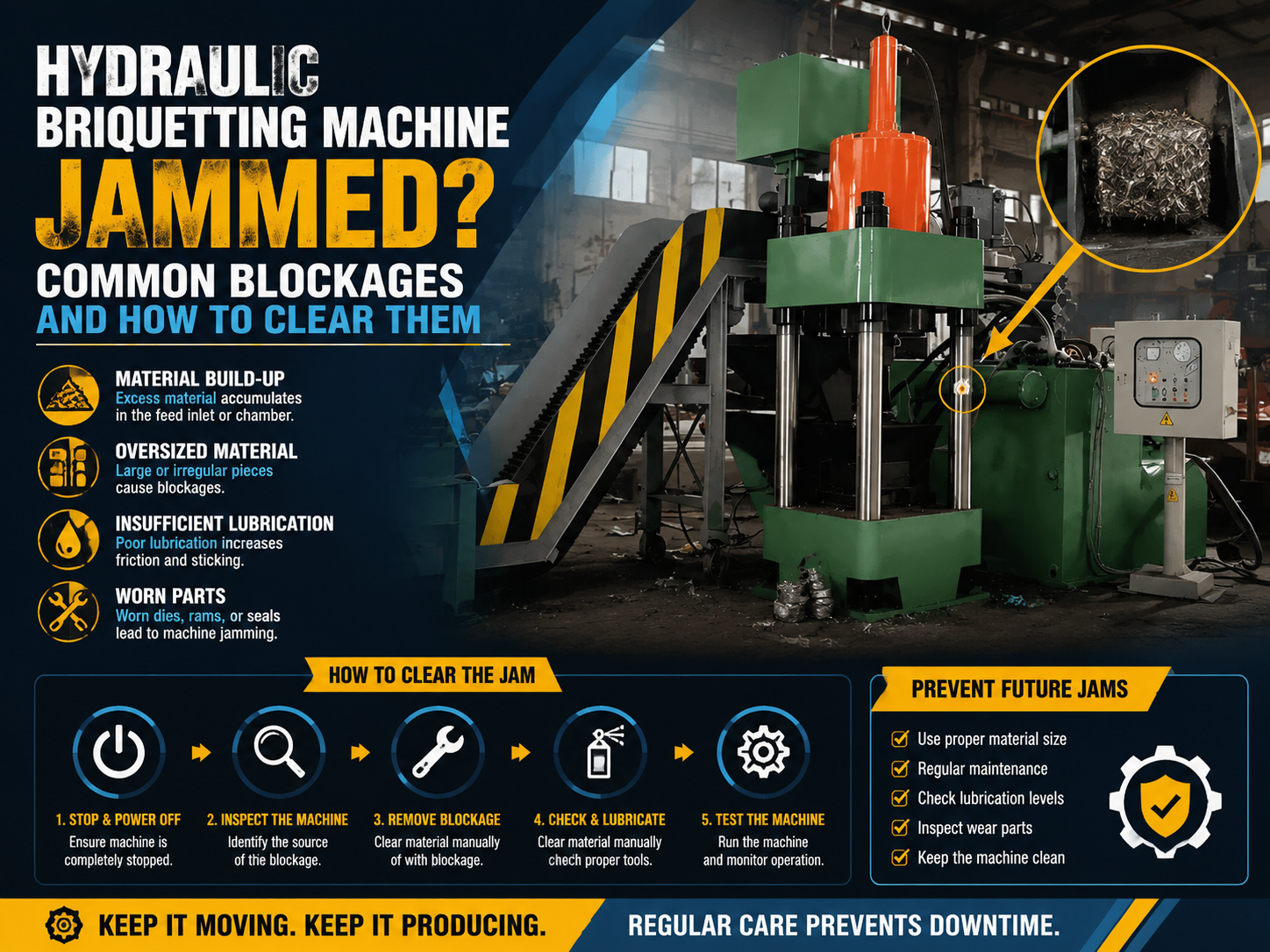
Introduction to Hydraulic Briquetting Machine Reliability
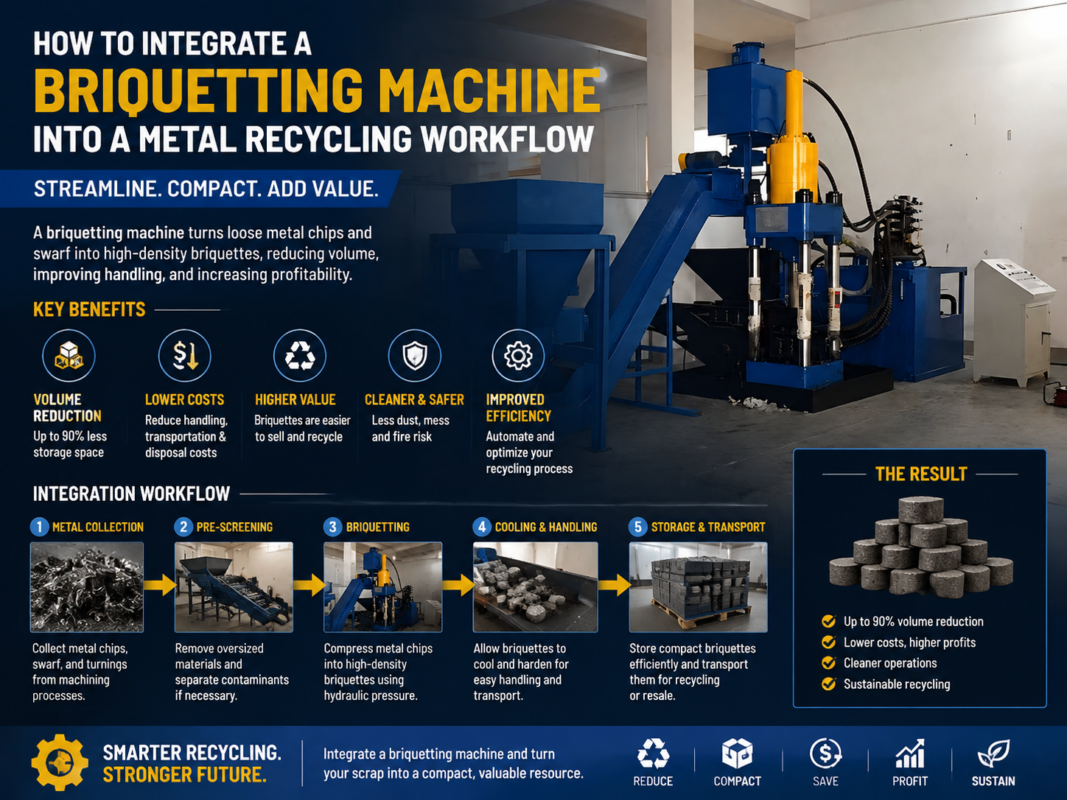
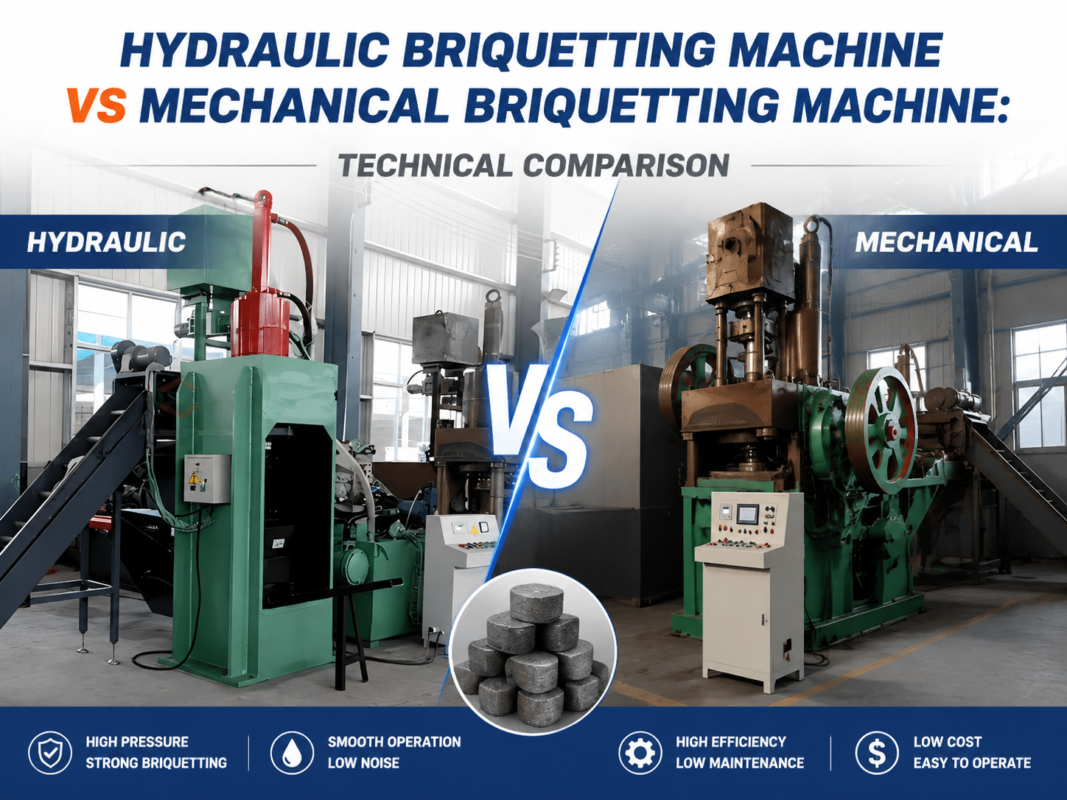
In the high-stakes world of metal recycling and industrial waste management, the hydraulic briquetting machine stands as a cornerstone of efficiency. By compressing loose metal chips, turnings, and shavings into dense, manageable briquettes, these machines significantly reduce storage volume and increase the melt yield during smelting. However, even the most robust equipment, such as those engineered by HARSLE, can encounter operational hurdles. One of the most frustrating issues for any operator is a machine jam. When a Hydraulic Briquetting Machine Jammed? Common Blockages Clear Them becomes the primary search query in your maintenance department, it indicates a need for a deep dive into the mechanics of blockages.
A jam is rarely a random occurrence; it is usually the result of a specific mismatch between material characteristics, machine settings, or maintenance protocols. Understanding why these blockages happen is the first step toward minimizing downtime. In this comprehensive guide, we will explore the technical nuances of hydraulic briquetting, identify the most frequent culprits behind machine stalls, and provide actionable steps to clear them safely. Whether you are processing aluminum, steel, cast iron, or copper, maintaining a smooth flow is essential for maximizing your return on investment.
HARSLE has spent decades refining the hydraulic systems and structural integrity of our briquetting presses. We recognize that a jammed machine isn’t just a mechanical failure; it’s a bottleneck in your entire production line. By the end of this article, you will be equipped with the knowledge to not only clear current blockages but also implement preventive strategies that ensure your hydraulic briquetting machine operates at peak performance for years to come.
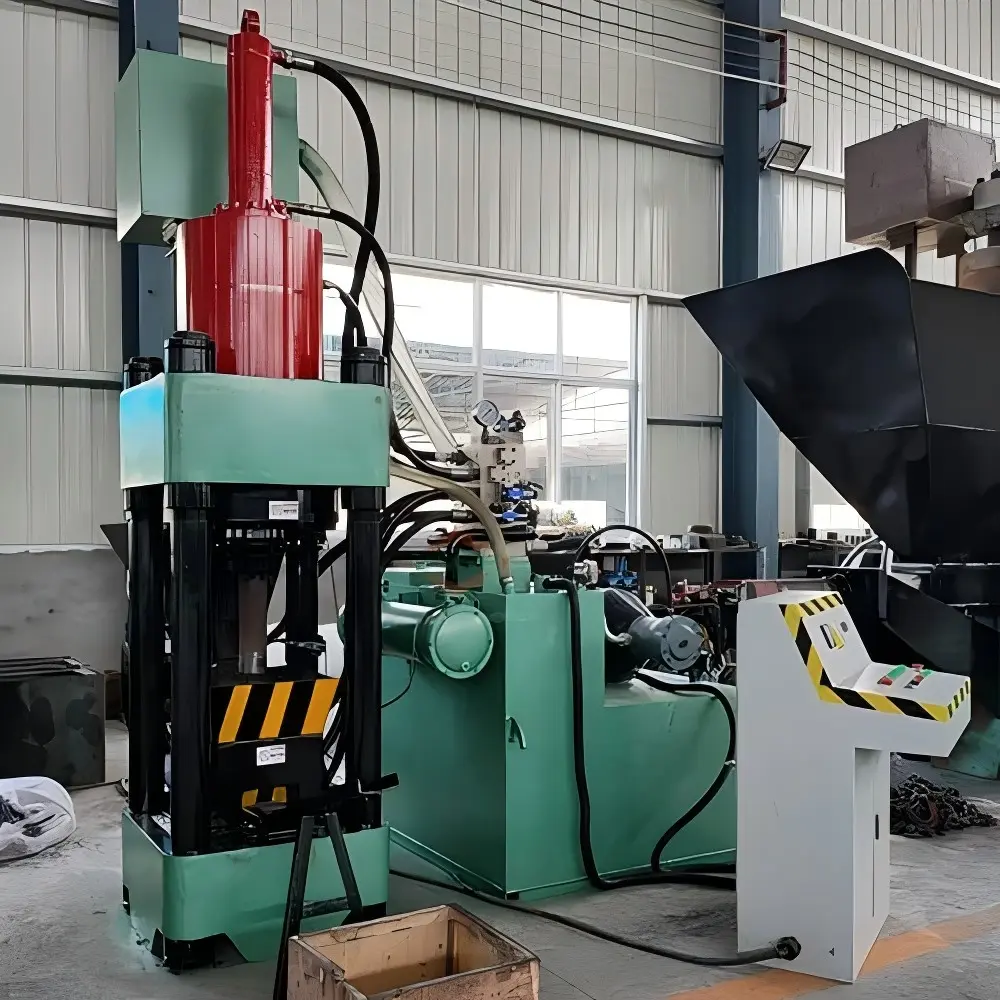
Key Considerations: Why Do Briquetting Machines Jam?
Before reaching for the tools, it is vital to understand the environmental and material factors that contribute to a Hydraulic Briquetting Machine Jammed? Common Blockages Clear Them scenario. The most common cause is material inconsistency. If the metal chips are too long—often referred to as “bird-nesting”—they can bridge across the hopper opening, preventing the material from entering the compression chamber. This creates a vacuum in the chamber while the hopper remains full, leading to an imbalance in the hydraulic cycle.
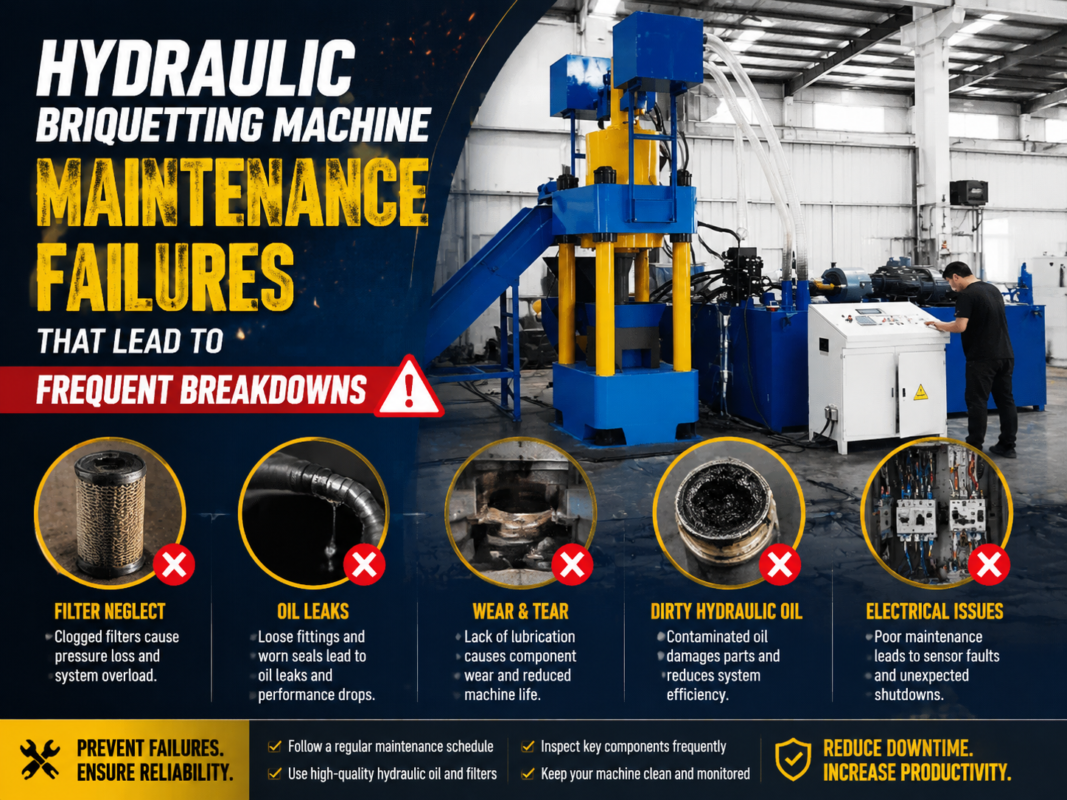
Moisture and coolant content also play a significant role. While many HARSLE machines are equipped with drainage systems, an excessive amount of cutting fluid or water can turn fine metal dust into a thick, cement-like sludge. This sludge can harden inside the compression sleeve or around the ram head, significantly increasing friction. When the hydraulic pressure required to overcome this friction exceeds the machine’s safety limits, the system will stall or trigger an emergency stop.
Foreign objects are another frequent offender. In a busy scrap yard, it is not uncommon for stray bolts, heavy steel plates, or even hand tools to find their way into the chip bin. Unlike the soft aluminum or brass turnings the machine is designed to process, these hardened steel objects cannot be compressed. When the ram encounters an uncompressible object, it reaches its maximum pressure setting instantly. If the machine does not have an automatic relief or reverse function, the object becomes wedged between the ram and the die, resulting in a severe jam.
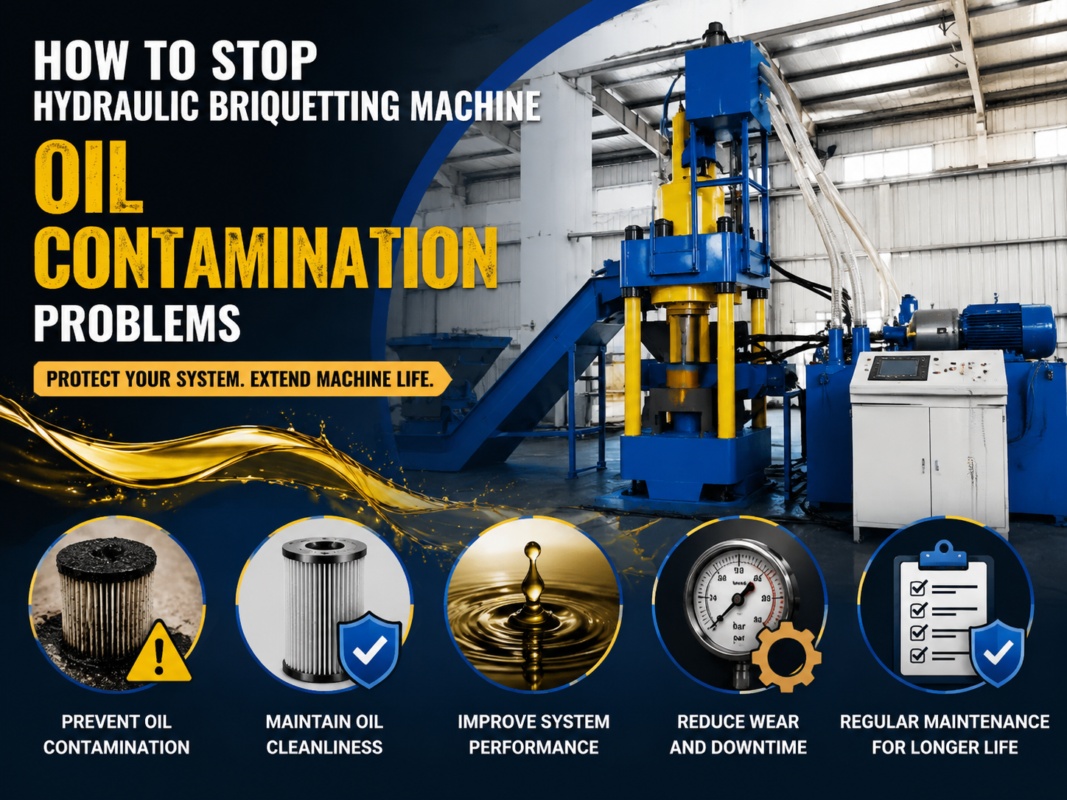
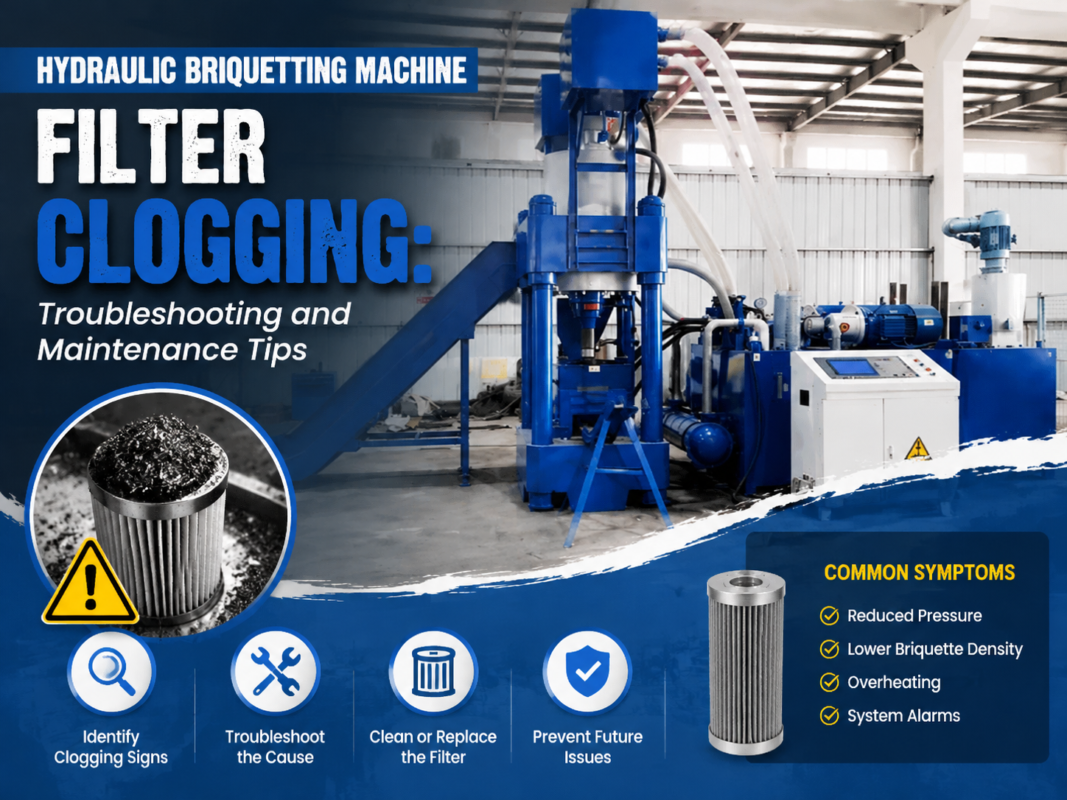
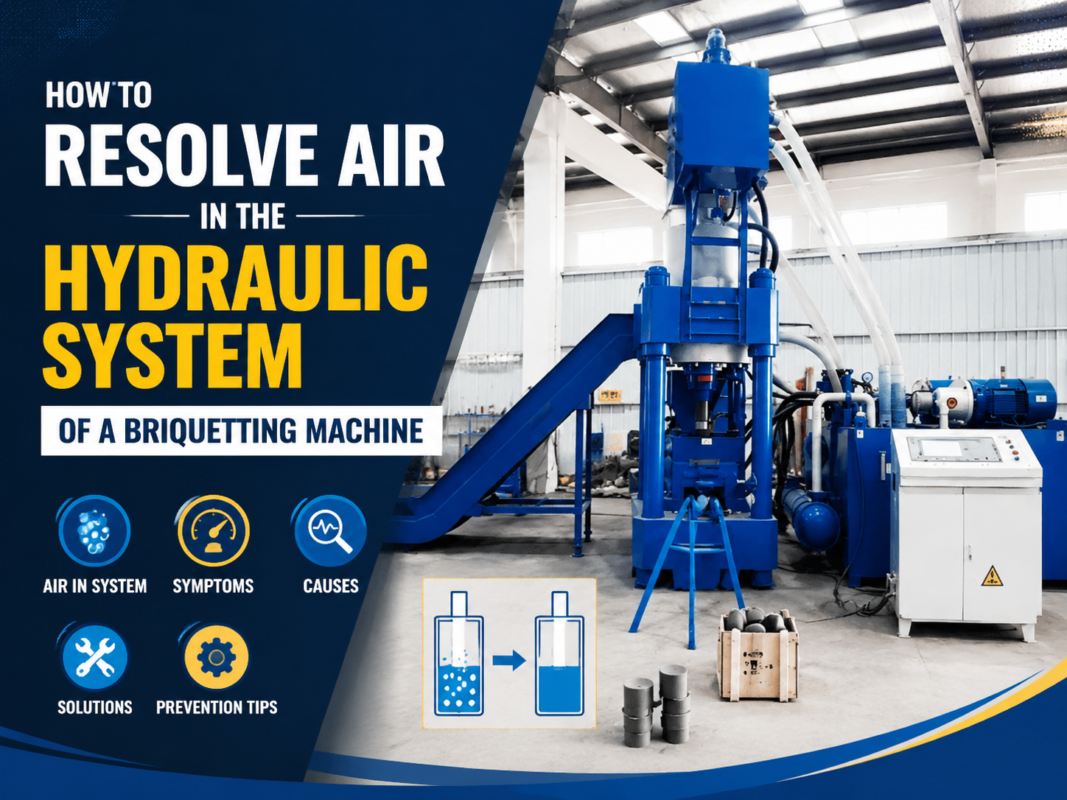
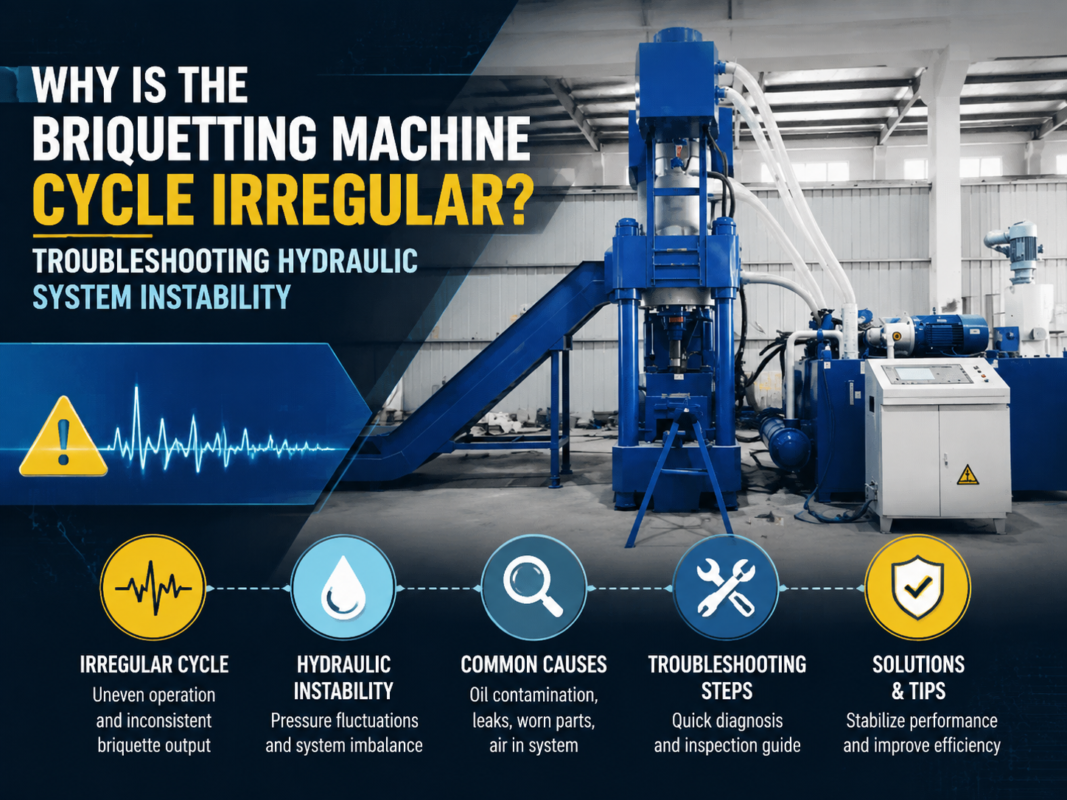
Finally, thermal expansion and hydraulic oil degradation can contribute to mechanical sticking. If the machine is operated beyond its duty cycle without adequate cooling, the metal components in the compression zone can expand, reducing the tolerances between the ram and the sleeve. Similarly, old or contaminated hydraulic oil can lose its viscosity, leading to sluggish valve response and incomplete ram retraction, which eventually causes material to build up in areas where it shouldn’t.
Technical Details: The Mechanics of a Blockage
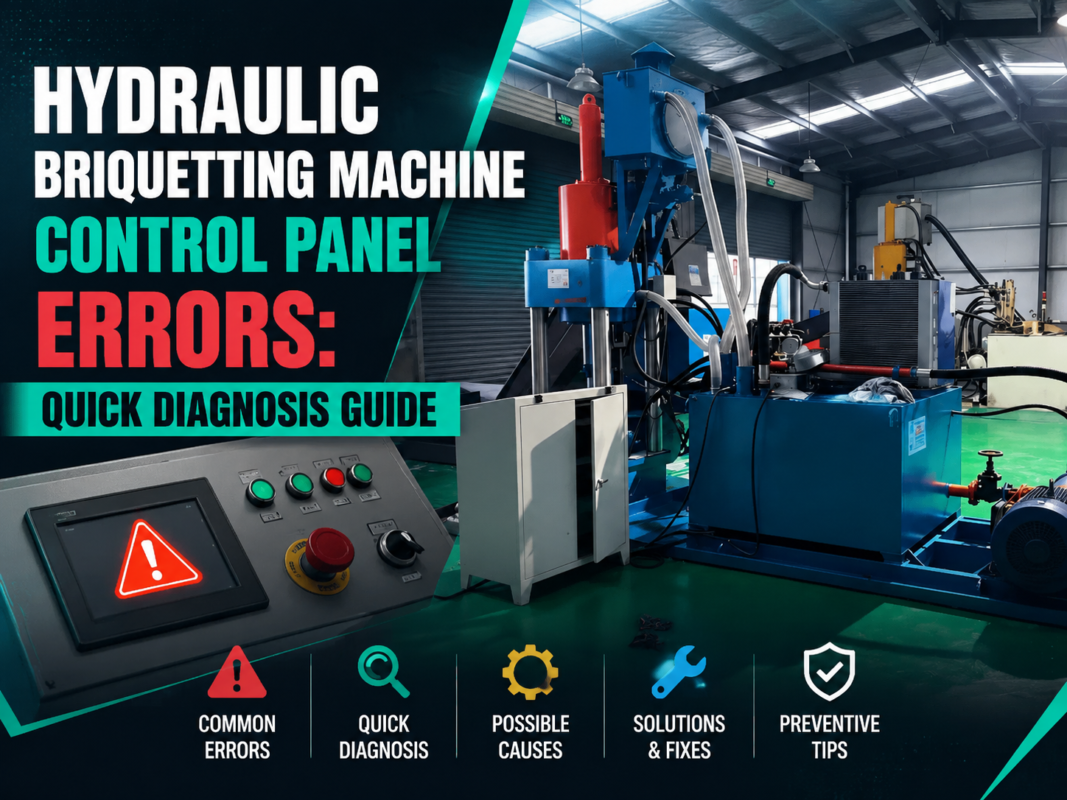
To effectively clear a jam, one must understand the hydraulic circuit’s behavior during a stall. In a standard HARSLE briquetting press, the cycle involves a feeding cylinder, a compression cylinder, and often a block-out or ejector cylinder. These are controlled by a PLC (Programmable Logic Controller) that monitors pressure transducers and limit switches. When a Hydraulic Briquetting Machine Jammed? Common Blockages Clear Them situation occurs, the pressure transducer detects a spike that doesn’t correspond with the expected ram position.
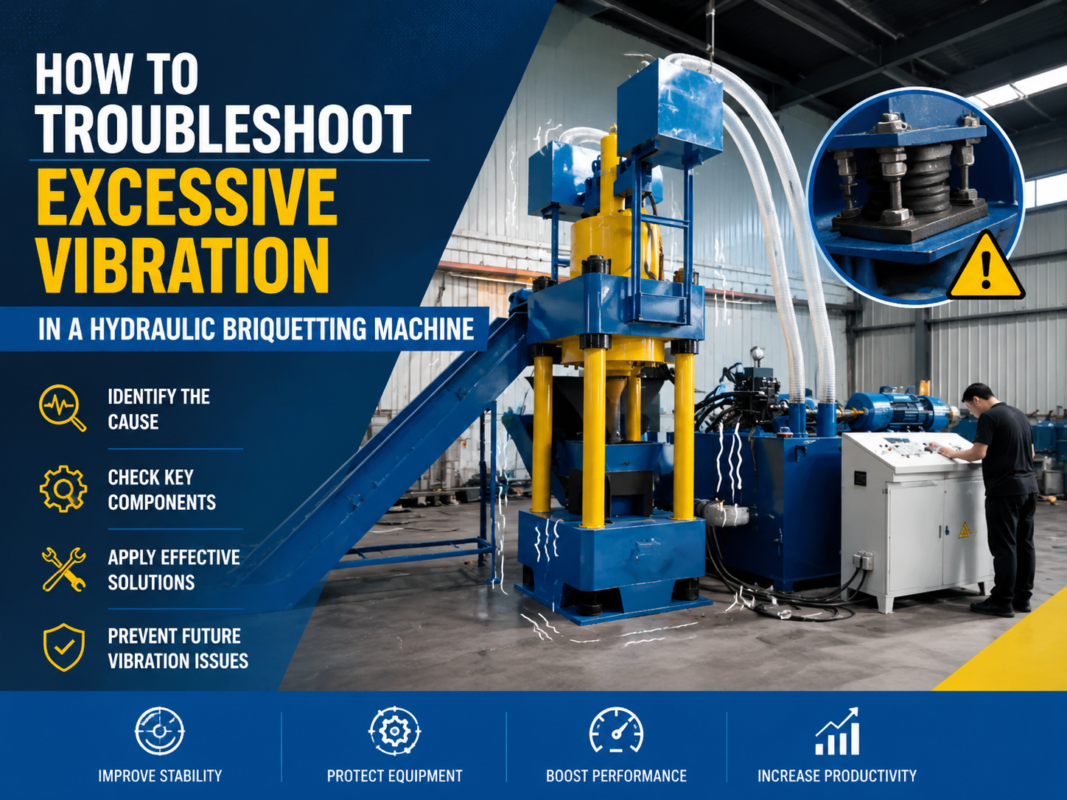
The compression chamber is the heart of the machine. It is where the loose material is transformed into a solid block. If the material is not fed uniformly, the ram may apply uneven force, causing it to tilt slightly or “cock” within the cylinder. This mechanical misalignment increases wear on the seals and can lead to a physical lock-up. In advanced HARSLE models, the PLC will attempt an “auto-clear” sequence, where the ram retracts and extends several times to break up the blockage. If this fails, manual intervention is required.
Common Blockage Zones
| Zone | Cause of Jam | Symptom |
|---|---|---|
| Hopper / Feed Throat | Long turnings or “bird-nesting” | Machine runs but produces no briquettes; hopper is full. |
| Compression Chamber | Foreign objects or over-filling | Ram stops mid-stroke; hydraulic pressure hits maximum. |
| Discharge Chute | Briquette expansion or debris buildup | Briquettes get stuck at the exit; machine cannot eject the next block. |
| Hydraulic Valves | Contaminated oil or solenoid failure | Erratic ram movement or failure to retract. |
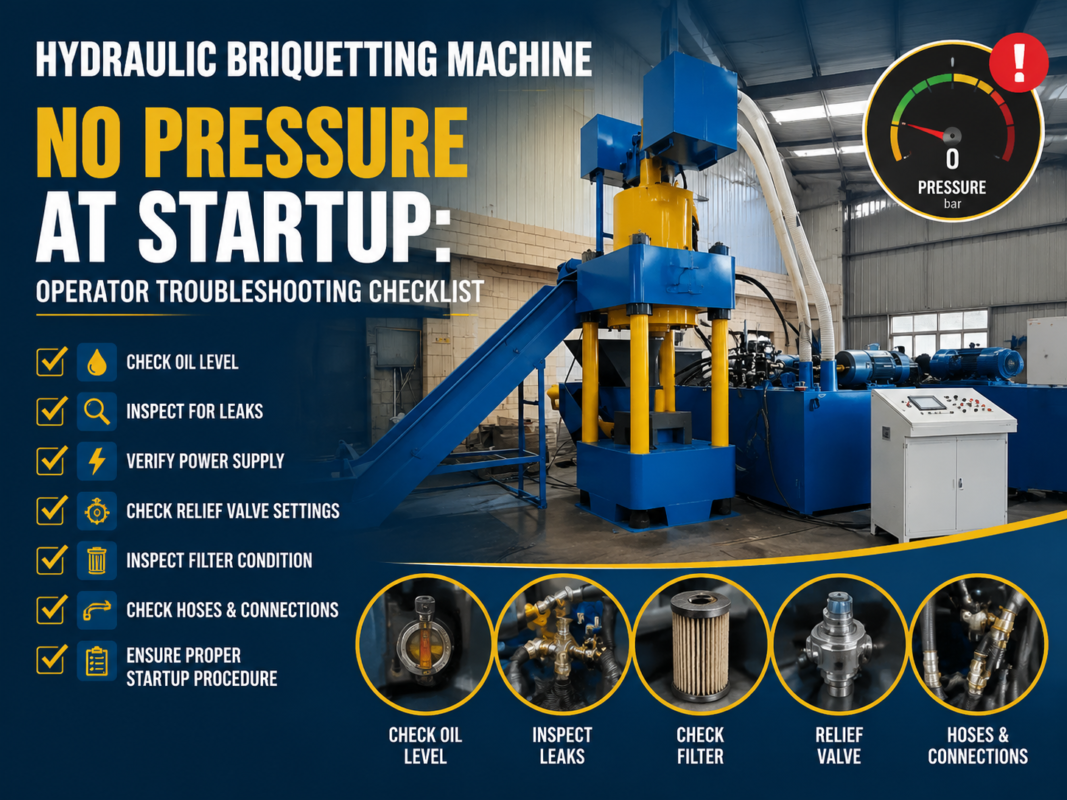
Understanding these zones allows maintenance teams to target their efforts. For instance, a jam in the discharge chute is often easier to clear than one in the main compression chamber. However, the latter is more dangerous because of the stored energy in the hydraulic lines. Always ensure that the system pressure is bled off before attempting to remove a foreign object from the compression zone.
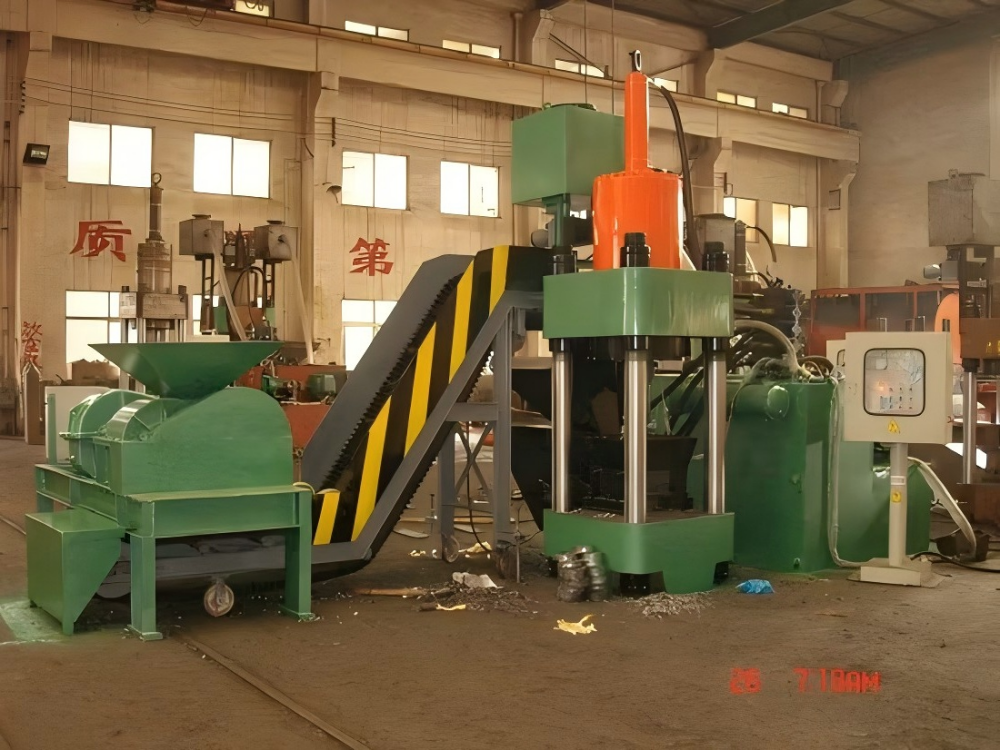
Step-by-Step: How to Clear Common Blockages
When you find your Hydraulic Briquetting Machine Jammed? Common Blockages Clear Them, follow these standardized procedures to restore operation safely and efficiently. Safety is the absolute priority; never place hands or tools inside the machine while the hydraulic pump is running or the system is energized.
- Initiate Lock-Out Tag-Out (LOTO): Shut down the power supply and lock the main isolator. Bleed the hydraulic accumulators if the machine is equipped with them to ensure no residual pressure remains in the cylinders.
- Inspect the Hopper: If the jam is in the feed throat, use a long reach tool to break up the bridged material. If the material is excessively long turnings, you may need to manually remove the “nest” and consider pre-shredding the material in the future.
- Access the Compression Chamber: Most HARSLE machines feature access panels or removable dies. Open these to inspect the ram head. If a foreign object is wedged, use a brass drift and hammer to gently dislodge it. Avoid using hardened steel tools that could score the polished surface of the ram or sleeve.
- Check the Discharge Path: Ensure the exit gate is functioning correctly. Sometimes, a briquette can expand slightly after compression, becoming stuck in the discharge tube. Clearing this usually requires a simple mechanical push or the removal of the discharge tube assembly.
- Reset and Test: Once the blockage is cleared, close all access panels, restore power, and run the machine in “Manual Mode.” Observe the ram movement for any signs of hesitation or unusual noise before returning to “Auto Mode.”
If the machine continues to jam in the same spot, it may indicate a worn sleeve or a damaged ram face. Over time, the tolerances in the compression chamber can widen, allowing fine particles to migrate behind the ram head. This buildup eventually acts like a brake, leading to frequent stalls. In such cases, replacing the wear parts is the only long-term solution.
Selection Advice: Choosing a Machine to Minimize Jams
When purchasing a new unit, looking for features that prevent a Hydraulic Briquetting Machine Jammed? Common Blockages Clear Them scenario is a wise investment. Not all briquetting presses are created equal, and HARSLE focuses on several key design elements to ensure reliability.
First, consider the Pre-Compression System. Machines that use a vertical pre-charger to pack material into the main chamber before the horizontal ram moves are much less likely to jam. This ensures a consistent volume of material for every stroke. Second, look for Advanced PLC Controls with Auto-Reverse. A smart system can detect a jam before it becomes critical, automatically reversing the ram to reposition the material and trying again. This can clear 90% of minor blockages without operator intervention.
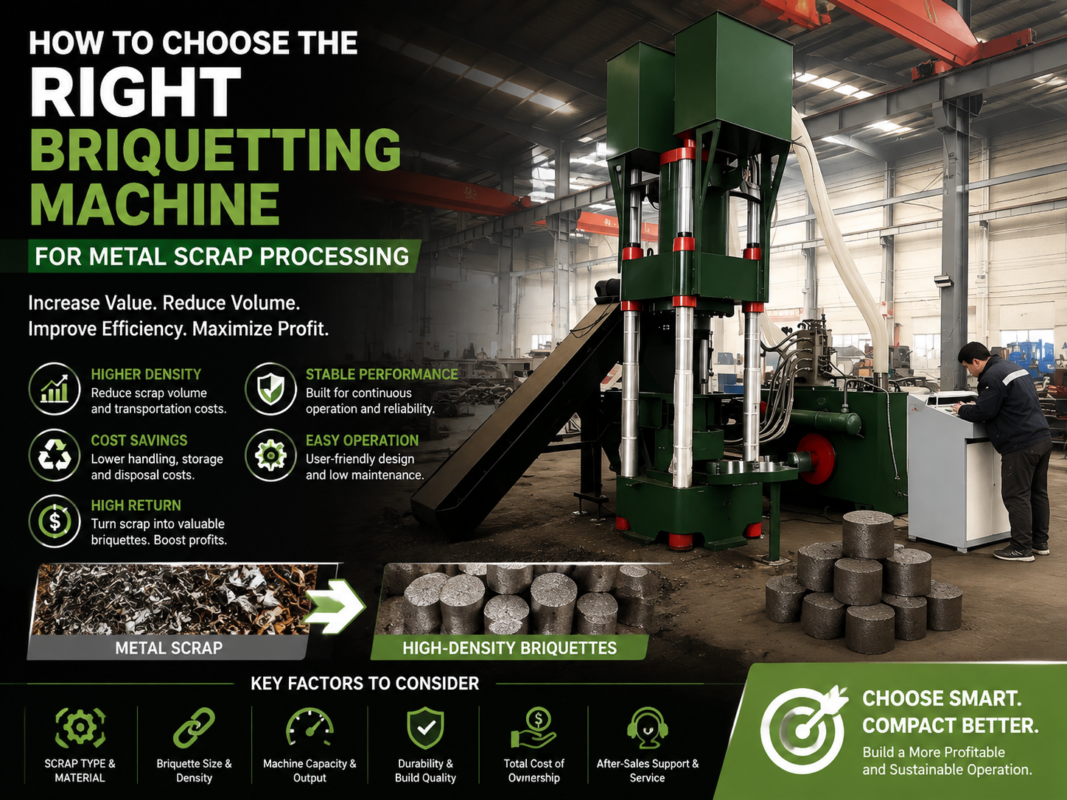
Third, evaluate the Cooling and Filtration System. High-quality hydraulic oil maintained at the correct temperature is vital. Machines with integrated oil coolers and high-efficiency filters prevent the valve sticking and thermal expansion issues mentioned earlier. Finally, ensure the machine is rated for your specific material. A machine designed for light aluminum chips will struggle and likely jam if fed heavy steel turnings. Always provide HARSLE with material samples during the selection process so we can calibrate the pressure settings and die geometry to your specific needs.
Maintenance Tips to Prevent Future Blockages
Preventive maintenance is the most effective way to avoid the Hydraulic Briquetting Machine Jammed? Common Blockages Clear Them headache. Establish a daily, weekly, and monthly checklist to keep the system running smoothly.
- Daily: Inspect the hopper for foreign objects. Check the oil level and temperature. Listen for unusual cavitation noises in the pump.
- Weekly: Clean the area around the ram seals. Remove any fine dust buildup that could enter the hydraulic tank. Check the tightness of all hydraulic fittings.
- Monthly: Inspect the wear plates and compression sleeve for scoring. Test the emergency stop and safety interlocks. Analyze the hydraulic oil for contamination.
- Annually: Perform a full hydraulic system flush. Replace filters and seals. Recalibrate the pressure transducers to ensure the PLC is receiving accurate data.
By maintaining a clean environment and following these steps, you significantly reduce the friction and mechanical stress that lead to jams. Remember, a briquetting machine is a precision instrument disguised as a heavy-duty press; treat it with the care it deserves, and it will reward you with consistent output.
FAQ: Frequently Asked Questions
1. Why does my machine jam more often in the winter?
Hydraulic oil becomes more viscous (thicker) in cold temperatures. This can cause slow valve response and increased pressure in the lines before the ram even moves. Ensure your machine has an oil heater or allow it to idle for 15-20 minutes to reach operating temperature before starting production.
2. Can I process different metals in the same machine?
Yes, but you must adjust the pressure settings. Steel requires much higher compression force than aluminum. If you switch from aluminum to steel without adjusting the PLC settings, the machine may perceive the higher resistance as a jam and stop prematurely.
3. What should I do if the ram is stuck in the forward position?
This is usually a sign of a mechanical lock or a failed solenoid valve. First, try to manually override the valve to retract the ram. If that fails, you may need to carefully loosen a hydraulic fitting to release the pressure (take extreme caution and follow safety protocols) to allow the ram to be pushed back.
4. How do I know if my material is too wet?
If you see liquid spraying out of the compression chamber during the stroke, or if the briquettes are crumbly and “mushy,” the moisture content is too high. This can lead to sludge buildup and jams. Consider using a centrifuge or a drainage conveyor before the briquetting stage.
Conclusion: Maximizing Uptime with HARSLE
Dealing with a Hydraulic Briquetting Machine Jammed? Common Blockages Clear Them situation is a challenge that every high-volume recycling facility will face at some point. However, by understanding the root causes—ranging from material bird-nesting to foreign object ingress—and following a structured approach to clearing and prevention, you can turn a major disruption into a minor maintenance task.
HARSLE is committed to providing not just the machinery, but the technical expertise required to keep your operations running. Our machines are designed with the end-user in mind, featuring accessible components, intuitive controls, and the rugged durability needed for the scrap industry. By choosing the right equipment and adhering to a rigorous maintenance schedule, you ensure that your hydraulic briquetting machine remains a profitable asset rather than a source of frustration. For more technical support or to explore our latest range of high-efficiency briquetting presses, contact the HARSLE engineering team today.