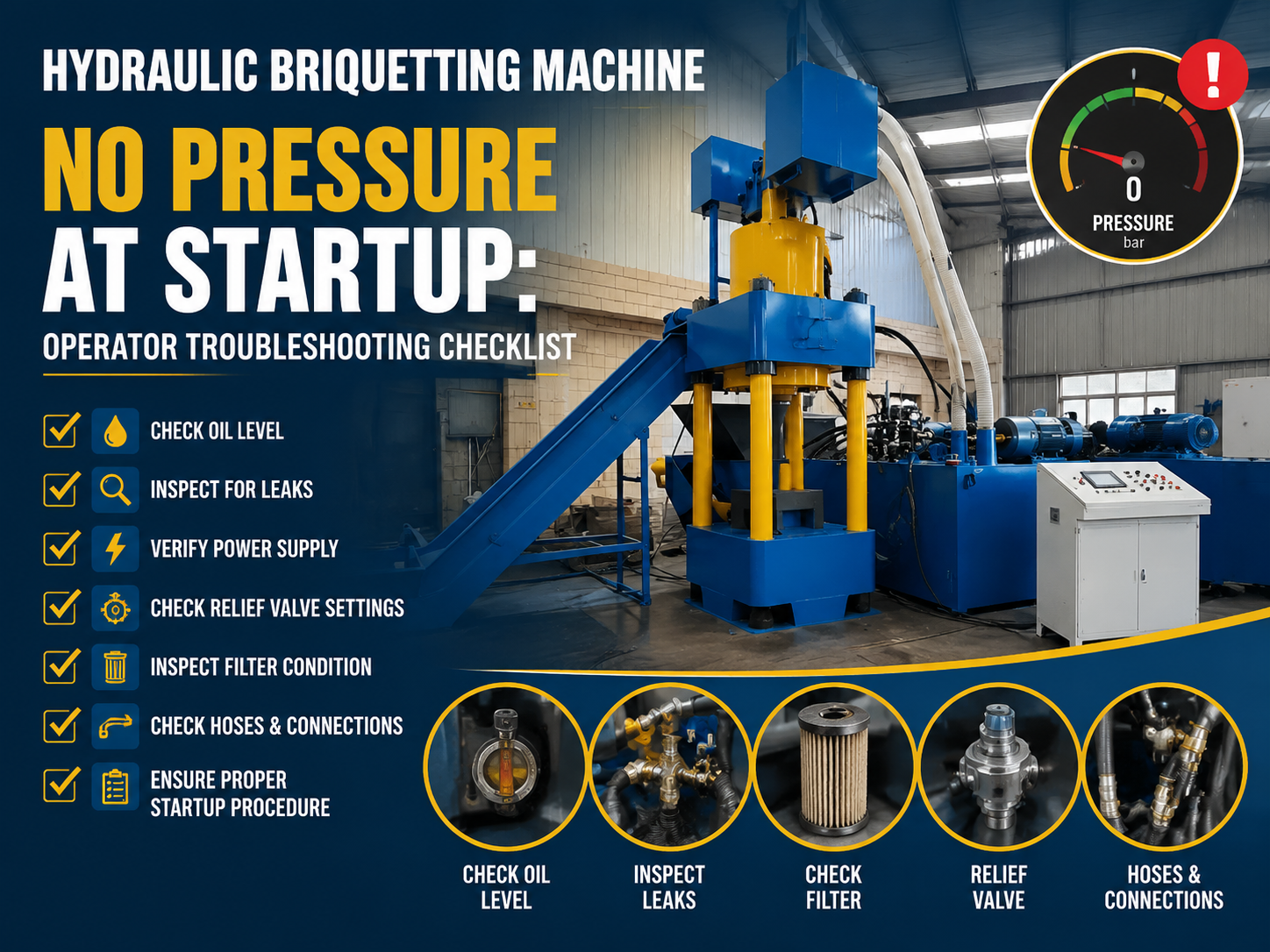
Hydraulic Briquetting Machine No Pressure at Startup: Operator Troubleshooting Checklist

Introduction to Hydraulic Briquetting Machine Pressure Issues
In the world of metal recycling and waste management, the Hydraulic Briquetting Machine stands as a cornerstone of efficiency. By compressing loose metal chips, turnings, and shavings into dense, manageable briquettes, these machines significantly reduce storage space and increase the melt value of the scrap. However, like any sophisticated industrial equipment, they are subject to operational hiccups. One of the most common and frustrating issues faced by operators is the Hydraulic Briquetting Machine No Pressure At Startup: Operator Troubleshooting Checklist scenario. When the motor hums but the ram fails to move or the gauge stays at zero, production grinds to a halt.
Understanding why a hydraulic system fails to build pressure requires a systematic approach. It is rarely a single catastrophic failure; more often, it is a combination of environmental factors, maintenance oversights, or minor component misalignments. For operators, the ability to quickly diagnose these issues is the difference between a five-minute fix and hours of unnecessary downtime. This guide is designed to provide a comprehensive, step-by-step checklist to identify and resolve pressure-related issues at the moment of startup.
HARSLE, a leader in metal fabrication machinery, emphasizes that a well-maintained machine is a productive one. While our machines are engineered for durability, the laws of hydraulics dictate that certain conditions must be met for pressure to generate. This article will delve into the mechanical, hydraulic, and electrical nuances that govern pressure buildup, ensuring that your team is equipped with the knowledge to keep the briquetting process running smoothly.
Before diving into the technicalities, it is essential to recognize that “no pressure” is a symptom, not the disease. Whether you are working with aluminum, steel, or cast iron chips, the hydraulic principles remain the same. By following this Hydraulic Briquetting Machine No Pressure At Startup: Operator Troubleshooting Checklist, you can eliminate variables one by one until the root cause is revealed.
Key Considerations Before Troubleshooting
Safety must always be the primary concern when dealing with high-pressure hydraulic systems. Before any operator begins the Hydraulic Briquetting Machine No Pressure At Startup: Operator Troubleshooting Checklist, they must ensure the machine is in a safe state. This includes implementing Lockout/Tagout (LOTO) procedures if any physical inspection of the internal components is required. Never attempt to tighten a fitting or check for leaks while the system is under the command to build pressure, as high-pressure fluid injection injuries can be fatal.
Another key consideration is the distinction between “no pressure” and “low pressure.” No pressure usually indicates a total bypass of fluid or a failure in the prime mover (the pump), whereas low pressure often points toward wear and tear or internal leakage. At startup, a total lack of pressure is frequently related to the initial conditions of the system—such as oil temperature, valve positioning, or electrical signals—rather than long-term component degradation.
Operators should also be familiar with the specific hydraulic circuit of their machine. While most briquetting presses follow a standard design, variations in valve blocks and PLC programming can affect how pressure is initiated. Having the machine’s hydraulic schematic and electrical diagram on hand is not just helpful; it is necessary for advanced troubleshooting. Understanding the flow path from the reservoir, through the pump, into the manifold, and finally to the cylinders allows the operator to visualize where the “blockage” or “leakage” might be occurring.
Finally, consider the environment. Hydraulic oil is highly sensitive to temperature. In cold climates, the oil viscosity may be too high for the pump to prime correctly at startup. Conversely, if the machine was shut down due to overheating the previous shift, there may be underlying damage to seals or the pump itself. Always start your troubleshooting by looking at the simplest, most obvious factors before moving to complex component teardowns.
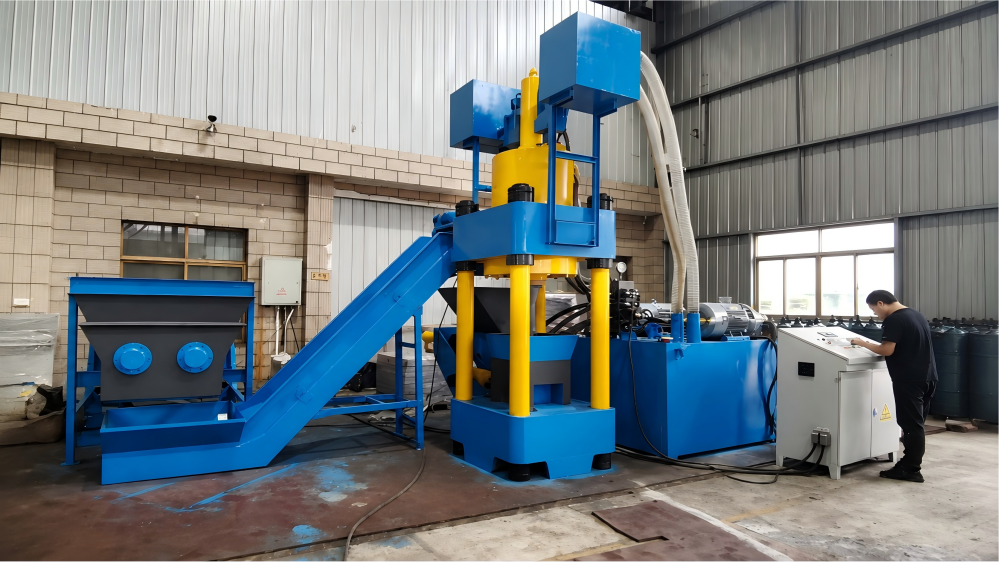
Technical Details: The Operator Troubleshooting Checklist
1. Verify Motor Rotation and Power Supply
It may sound elementary, but the first step in the Hydraulic Briquetting Machine No Pressure At Startup: Operator Troubleshooting Checklist is checking the motor. If the machine has recently been moved or if electrical work was performed on the shop floor, the phases might be reversed. A hydraulic pump is unidirectional; if it spins backward, it will not move oil into the system, and therefore, no pressure will be generated. Check the arrow on the motor housing and compare it with the actual rotation upon startup.
Additionally, ensure that the motor is reaching its rated RPM. A motor that is struggling due to a dropped phase or low voltage will not provide the torque necessary for the pump to overcome the initial resistance of the hydraulic circuit. Listen for unusual humming or clicking sounds from the electrical cabinet, which could indicate a faulty contactor or a tripped circuit breaker.
2. Inspect Oil Levels and Suction Lines
The pump cannot create pressure if it cannot draw oil. Check the sight glass on the hydraulic reservoir. If the oil level is below the minimum threshold, the pump may be drawing in air—a condition known as cavitation. Air is compressible, whereas hydraulic fluid is not; if the system is full of air, the pressure gauge will remain at zero. Furthermore, check the suction strainer inside the tank. If it is clogged with debris or sludge, it will starve the pump, leading to a lack of pressure and potential pump damage.
Inspect the suction hose between the tank and the pump. Even a pinhole leak in this hose can allow air to be sucked into the system. Since this line is under vacuum rather than pressure, you won’t see oil leaking out, but you will hear a high-pitched whining sound from the pump. Ensure all clamps are tight and the hose is not collapsed or kinked.
3. The Relief Valve: The Most Common Culprit
The main relief valve is the “gatekeeper” of the hydraulic system. Its job is to limit the maximum pressure to protect the machine. If the relief valve is stuck in the open position, all the oil pumped by the system will bypass the cylinders and go directly back to the tank. This is a frequent cause of “no pressure” at startup. A small piece of contamination—even a tiny metal flake—can lodge in the valve seat, preventing it from closing.
To troubleshoot this, locate the primary relief valve (usually found on the main manifold block). With the machine off, you can sometimes manually override or clean the valve. If the valve is adjustable, check if the setting has been tampered with or vibrated loose. If the spring inside the relief valve is broken, the valve will offer no resistance, and pressure will never build.
4. Solenoid Valve Functionality
Hydraulic briquetting machines use solenoid-operated directional valves to route oil to the cylinders. If the solenoid responsible for the “advance” stroke fails to energize, the oil may simply circulate through the center of the valve back to the tank (in an open-center system) or hit a dead end without building pressure in the work circuit. Check the LED indicators on the solenoid plugs. If the light doesn’t turn on when the cycle is started, the issue is electrical (PLC, relay, or wiring).
If the light is on but there is no movement, the valve spool might be mechanically stuck due to oil contamination or a burnt-out solenoid coil. You can often test this by using a small screwdriver to manually push the override pin on the end of the solenoid. If the machine builds pressure during a manual override, you have confirmed that the problem lies in the electrical signal or the solenoid coil itself.
| Component | Potential Issue | Diagnostic Action |
|---|---|---|
| Electric Motor | Reverse Rotation | Check phase wiring and rotation arrow. |
| Hydraulic Pump | Internal Wear / Loss of Prime | Check for suction leaks or air in the line. |
| Main Relief Valve | Stuck Open / Debris | Clean valve seat and check spring tension. |
| Directional Valve | Solenoid Failure | Check PLC signal and manual override pin. |
| Hydraulic Oil | Low Level / High Viscosity | Refill oil and check heater/cooler status. |
Selection Advice for Reliable Briquetting Operations
When purchasing a Hydraulic Briquetting Machine, the goal is to minimize the frequency of troubleshooting. High-quality machines, such as those manufactured by HARSLE, are designed with redundant systems and superior components to prevent common startup issues. When evaluating a machine, look for the quality of the hydraulic manifold. A well-designed manifold reduces the number of external hoses and fittings, which are common points of failure and air ingress.
Consider the brand of the hydraulic components. Machines equipped with world-class valves (like Rexroth or Vickers) and motors (like Siemens or ABB) offer much higher reliability. These components are manufactured to tighter tolerances, meaning they are less likely to stick or fail prematurely. Furthermore, a machine with an integrated oil filtration and cooling system will keep the hydraulic fluid in optimal condition, preventing the contamination that leads to relief valve failures.
Another critical factor is the PLC and control system. Modern briquetting machines should have diagnostic screens that tell the operator exactly which solenoid is energized and whether pressure sensors are detecting a rise in force. This digital transparency turns the Hydraulic Briquetting Machine No Pressure At Startup: Operator Troubleshooting Checklist from a guessing game into a data-driven process. If the screen shows “Pressure Sensor Fault,” you immediately know where to look, saving hours of manual testing.
Finally, evaluate the manufacturer’s support and documentation. A machine is only as good as the manual that comes with it. HARSLE provides detailed troubleshooting guides and remote technical support to ensure that if a “no pressure” situation arises, your team has the resources to fix it. Investing in a machine with a robust frame and oversized hydraulic cylinders also ensures that the machine operates well within its limits, reducing the wear and tear that leads to pressure loss over time.
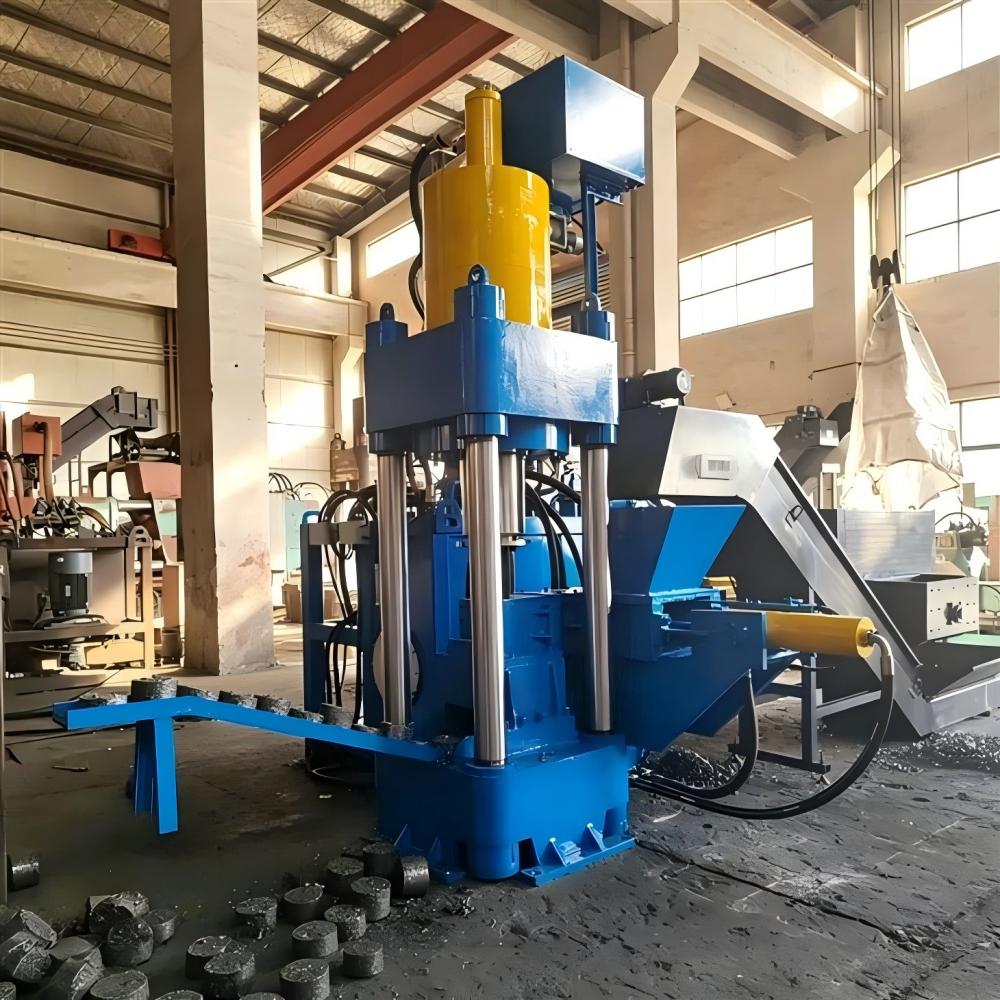
Frequently Asked Questions (FAQ)
Why does my briquetting machine have pressure sometimes but not at startup?
This is often related to oil temperature or “drain back.” If the check valves are slightly worn, oil can drain out of the pump and lines back into the tank overnight. At startup, the pump has to purge the air before it can build pressure. Additionally, cold oil is thicker and harder to pump, which can cause the pump to cavitate until the oil warms up.
Can a clogged return filter cause no pressure at startup?
Usually, a clogged return filter causes high backpressure or slow operation, but in some systems with safety interlocks, a high-pressure drop across the filter might trigger a bypass or a PLC shutdown. It is always best to maintain clean filters to ensure the entire circuit functions as intended.
How do I know if my hydraulic pump is actually broken?
If you have confirmed the motor is spinning correctly, the oil level is full, the suction line is clear, and the relief valve is closed, but you still have zero pressure, the pump may have an internal mechanical failure (such as a sheared shaft or broken vanes). A flow meter test can confirm if the pump is moving any fluid at all.
Is it safe to adjust the relief valve while the machine is running?
Only qualified maintenance personnel should adjust the relief valve. While it is often done while the pump is running to see the effect on the gauge, it must be done with extreme caution. Turning the valve in too far can cause a catastrophic over-pressure event that could burst hoses or damage the pump.
What type of hydraulic oil is best for preventing startup issues?
Most manufacturers recommend an ISO VG 46 or 68 anti-wear hydraulic oil. In very cold environments, a multi-grade oil with a high viscosity index may be necessary to ensure the oil flows easily at startup while still providing protection at operating temperatures.
Conclusion: Mastering the Pressure
The Hydraulic Briquetting Machine No Pressure At Startup: Operator Troubleshooting Checklist is an essential tool for any facility looking to maintain high productivity in their recycling operations. By understanding the relationship between the motor, the pump, the fluid, and the valves, operators can transform from passive observers into proactive problem solvers. Most pressure issues at startup are not the result of major mechanical failures but are instead small, correctable discrepancies in the system’s initial state.
Consistent maintenance remains the best defense against downtime. Regularly checking oil quality, cleaning suction strainers, and ensuring electrical connections are tight will prevent the majority of “no pressure” scenarios before they even occur. When a problem does arise, following a logical, step-by-step diagnostic path ensures that the repair is fast, safe, and effective.
At HARSLE, we are committed to providing not only the highest quality metal fabrication machinery but also the knowledge required to operate it at peak performance. Our hydraulic briquetting machines are engineered for the rigors of industrial use, featuring intuitive controls and accessible components that make troubleshooting straightforward. By empowering your operators with the right checklist and the right machine, you ensure that your waste-to-value pipeline remains uninterrupted and profitable for years to come.