How to Stop Hydraulic Briquetting Machine Oil Contamination Problems: A Comprehensive Industrial Guide

Introduction to Hydraulic Oil Integrity in Briquetting Operations
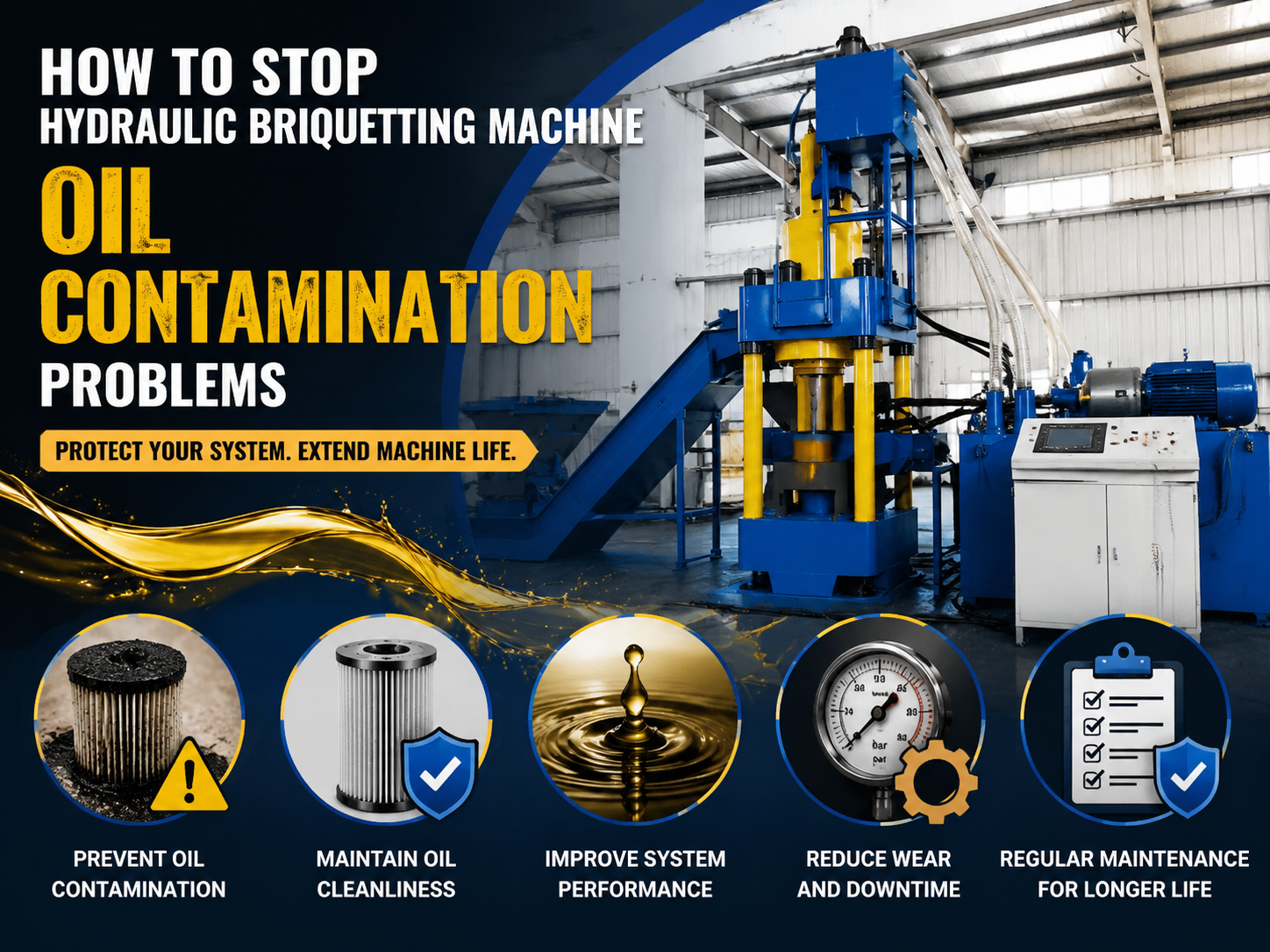
In the world of metal fabrication and scrap recycling, the hydraulic briquetting machine stands as a cornerstone of efficiency. These machines are designed to compress metal chips, shavings, and turnings into dense, manageable blocks, significantly reducing volume and increasing the value of waste material. However, the heart of these machines—the hydraulic system—is incredibly sensitive to the quality of its fluid. To stop hydraulic briquetting machine oil contamination problems, one must first understand that hydraulic oil is not just a lubricant; it is a power-transmission medium, a heat transfer fluid, and a sealing agent.
Contamination is often cited as the primary cause of up to 80% of hydraulic system failures. In a briquetting environment, where metal dust, moisture, and high pressures are constant, the risk of oil degradation is amplified. When oil becomes contaminated, it leads to increased wear on pumps, sluggish valve response, and eventual catastrophic component failure. For operators using HARSLE equipment or any high-performance industrial press, maintaining oil purity is the single most effective way to ensure long-term ROI and operational uptime.
This guide provides an in-depth look at the technical strategies required to identify, prevent, and eliminate oil contamination. By implementing a rigorous fluid management program, facilities can transition from reactive repairs to proactive maintenance, ensuring that their hydraulic briquetting machines operate at peak performance for decades.
Key Considerations: Identifying the Enemies of Hydraulic Fluid
Before you can effectively stop hydraulic briquetting machine oil contamination problems, you must identify what you are fighting against. Contamination in a hydraulic system generally falls into three categories: particulate matter, water, and air. Each of these enters the system through different pathways and causes unique types of damage to the internal components of the briquetting press.
1. Particulate Contamination
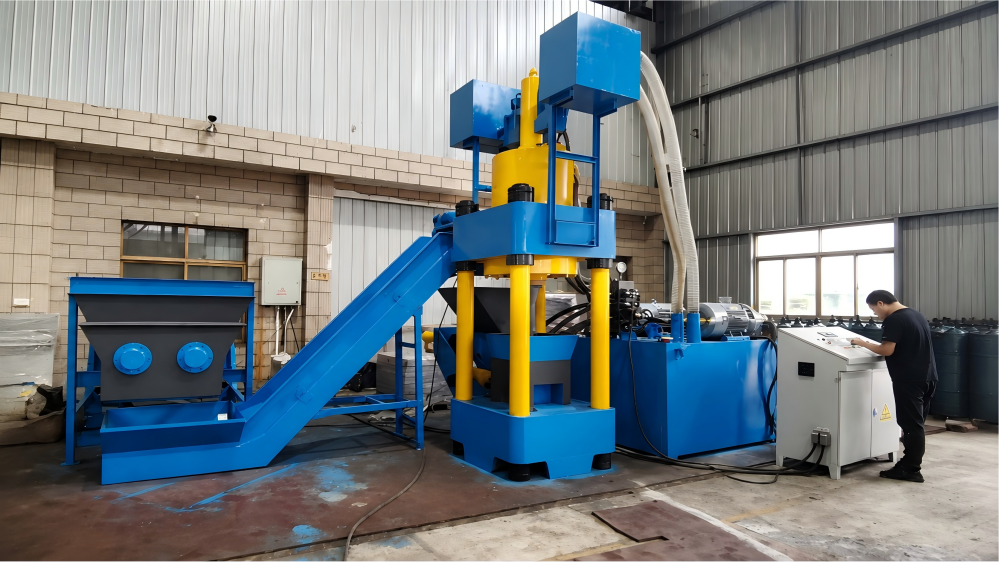
In a metal fabrication setting, particulate contamination is the most common threat. This includes microscopic metal shards, silica (dust), and even fibers from cleaning rags. These particles act as abrasives. When they pass through high-pressure pumps or precision valves, they cause “silt erosion,” which gradually wears down the tight tolerances required for efficient operation. In a briquetting machine, the very material being processed—metal scrap—is a constant source of potential ingressed particles if the reservoir is not properly sealed.
2. Water Contamination
Water can enter the system through condensation in the reservoir (caused by temperature fluctuations) or through leaks in oil coolers. Water is devastating because it reduces the oil’s lubricity, leads to the oxidation of metal surfaces (rust), and can cause the oil’s additives to drop out of suspension. Furthermore, water in hydraulic oil can lead to the formation of sludge and acids, which chemically attack seals and yellow metals like brass and bronze found in pump bushings.
3. Air Contamination and Cavitation
While often overlooked, air is a major contaminant. Entrained air (bubbles) and dissolved air can cause the oil to become spongy, leading to erratic machine movements. More dangerously, air leads to cavitation in the pump. When air bubbles collapse under high pressure, they create micro-jets of oil that can literally blast metal off the internal surfaces of the pump, creating more particulate contamination in a vicious cycle.
4. Chemical Degradation (Varnish)
Over time, heat and pressure cause the hydraulic oil to oxidize. This chemical breakdown results in the formation of “varnish”—a sticky, resinous substance that coats internal parts. Varnish is particularly problematic for the proportional valves used in modern briquetting machines, as it causes them to stick or respond slowly, leading to inaccurate briquette density and cycle time delays.
Technical Details: Engineering Solutions for Oil Purity
To stop hydraulic briquetting machine oil contamination problems at a technical level, we must look at the ISO 4406 cleanliness standards and the filtration technologies available. Modern industrial machinery requires a specific level of cleanliness to function without premature wear.
Understanding ISO 4406 Cleanliness Codes
The ISO 4406:99 standard is the industry benchmark for quantifying fluid cleanliness. It uses three numbers (e.g., 18/16/13) to represent the number of particles larger than 4, 6, and 14 microns per milliliter of fluid. For a high-pressure hydraulic briquetting machine, maintaining a code of 17/15/12 or better is often recommended. Achieving this requires a multi-stage filtration approach.
| Contaminant Type | Detection Method | Prevention/Removal Method |
|---|---|---|
| Solid Particles | Particle Counting (ISO 4406) | High-efficiency glass media filters (3-10 micron) |
| Free Water | Visual (Cloudiness) / Crackle Test | Water-absorbing filters / Vacuum dehydration |
| Dissolved Water | Karl Fischer Titration | Polymeric absorption / Centrifugation |
| Varnish/Sludge | MPC (Membrane Patch Colorimetry) | Electrostatic oil cleaners / Kidney loop systems |
Advanced Filtration Systems
Standard suction strainers are rarely enough to protect a briquetting machine. To truly stop contamination, machines should be equipped with high-efficiency return-line filters and, ideally, a “kidney loop” system. A kidney loop is an independent filtration circuit that constantly pulls oil from the reservoir, passes it through ultra-fine filters and water-removal media, and returns it to the tank. This ensures the oil is being cleaned even when the main machine is not under load.
The Role of High-Quality Breathers
The reservoir “breathes” as the oil level rises and falls during the cylinder’s stroke. If the machine is equipped with a simple vented cap, it is sucking in humid, dusty factory air with every cycle. Replacing standard caps with high-quality desiccant breathers is a low-cost, high-impact way to stop contamination. These breathers use silica gel to strip moisture from the air and fine pleated media to catch dust before it ever reaches the oil.
Selection Advice: Choosing the Right Machine and Oil
When purchasing a hydraulic briquetting machine, or when upgrading an existing one, certain design features can make it much easier to stop hydraulic briquetting machine oil contamination problems. HARSLE emphasizes robust system design to minimize these issues from the factory level.
1. Reservoir Design and Material
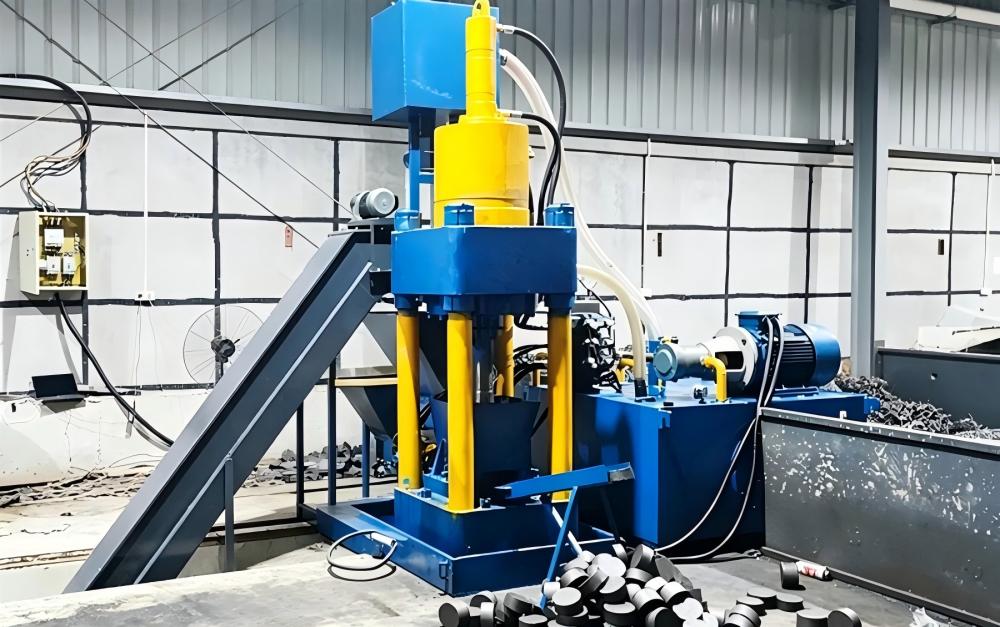
Look for machines with stainless steel or epoxy-coated reservoirs. Traditional raw steel tanks can rust over time, especially if water contamination occurs, adding more particles to the oil. Additionally, the reservoir should have internal baffles to allow air to escape and contaminants to settle before the oil is drawn back into the pump.
2. Selecting the Correct Hydraulic Fluid
Not all hydraulic oils are created equal. For briquetting machines, which often operate in varying temperatures, a high-viscosity index (HVI) oil is essential. HVI oils maintain their thickness better across a wide temperature range, preventing the oil from thinning out and losing its protective film. Furthermore, ensure the oil has a robust additive package including anti-wear (AW) agents, rust and oxidation inhibitors (R&O), and anti-foam agents.
3. Integrated Monitoring Systems
Modern machines can be equipped with online particle counters and moisture sensors. These devices provide real-time data on oil health, allowing operators to change filters based on actual condition rather than a fixed schedule. If your machine doesn’t have these, ensure it at least has clear sight glasses and accessible sampling ports for manual oil analysis.
4. Seal Compatibility
The choice of seal material (Viton, NBR, Polyurethane) must be compatible with the type of hydraulic fluid used. Incompatible seals can degrade, swell, or shrink, leading to external leaks and the ingress of external contaminants. When replacing seals, always use OEM-spec components to ensure the integrity of the hydraulic circuit.
Maintenance Protocols to Stop Contamination
Establishing a strict maintenance schedule is the final piece of the puzzle. Without a routine, even the best filtration system will eventually fail. Follow these steps to maintain a clean system:
- Monthly Oil Sampling: Send a sample of your hydraulic oil to a lab for analysis. This is the “blood test” for your machine, revealing hidden wear patterns and contamination levels.
- Filter Replacement Schedule: Don’t wait for a filter to bypass. Change filters based on pressure differential gauges or at set intervals (e.g., every 1,000 operating hours).
- Cleanliness During Repairs: When a hose or valve is replaced, the system is exposed. Always cap open lines and clean the surrounding area before opening the hydraulic circuit.
- Proper Oil Storage: New oil is often surprisingly dirty. Always filter new oil through a 5-micron filter cart before adding it to the machine’s reservoir.
Frequently Asked Questions (FAQ)
How often should I change the oil in my hydraulic briquetting machine?
There is no one-size-fits-all answer. While many manufacturers suggest changing oil every 2,000 to 4,000 hours, the best practice is to change it based on oil analysis. If the oil’s additive package is still healthy and the cleanliness levels are within spec, the oil can often last much longer. Conversely, if contamination is high, you may need to change it much sooner.
Why does my hydraulic oil look milky?
Milky oil is a classic sign of water contamination. The oil has become emulsified with water. This requires immediate attention. You should identify the source of the water (usually a leak in the cooler or a faulty breather) and then use a water-removal filter or a vacuum dehydrator to clean the oil. In severe cases, a full oil change and system flush are necessary.
Can I mix different brands of hydraulic oil?
It is generally discouraged. While the base oils might be compatible, different brands use different additive packages. Mixing them can cause chemical reactions that lead to the formation of precipitates or reduce the effectiveness of the anti-wear additives. If you must switch brands, perform a compatibility test first.
What is the most common source of dirt entering the system?
The most common source is the cylinder rod. As the hydraulic cylinder extends, it is coated in a thin film of oil. Dust and metal particles from the briquetting process stick to this film. When the cylinder retracts, the rod wiper seal is supposed to scrape this off, but some microscopic particles inevitably make it past the seal and into the system.
Are “washable” filters a good idea for briquetting machines?
Generally, no. While they seem cost-effective, washable mesh filters cannot capture the fine particles (3-10 microns) that cause the most damage to high-pressure pumps and valves. High-efficiency, disposable synthetic media filters are much more effective at stopping hydraulic briquetting machine oil contamination problems.
Conclusion: The Path to Machine Longevity
To stop hydraulic briquetting machine oil contamination problems, a holistic approach is required. It begins with choosing a well-engineered machine from a reputable manufacturer like HARSLE, which prioritizes system integrity. It continues with the selection of high-quality fluids and the implementation of advanced filtration and breathing technologies. Finally, it is sustained through a culture of cleanliness and regular oil analysis.
Investing in oil cleanliness is not merely a maintenance cost; it is an investment in the reliability of your entire production line. By keeping your hydraulic fluid clean, cool, and dry, you reduce the risk of unexpected downtime, lower your total cost of ownership, and ensure that your briquetting operations remain profitable and efficient for years to come. Remember, in the world of high-pressure hydraulics, cleanliness is not just a virtue—it is a technical necessity.