Comprehensive Guide: How to Repair Slow Cycle Time in a Hydraulic Briquetting Machine

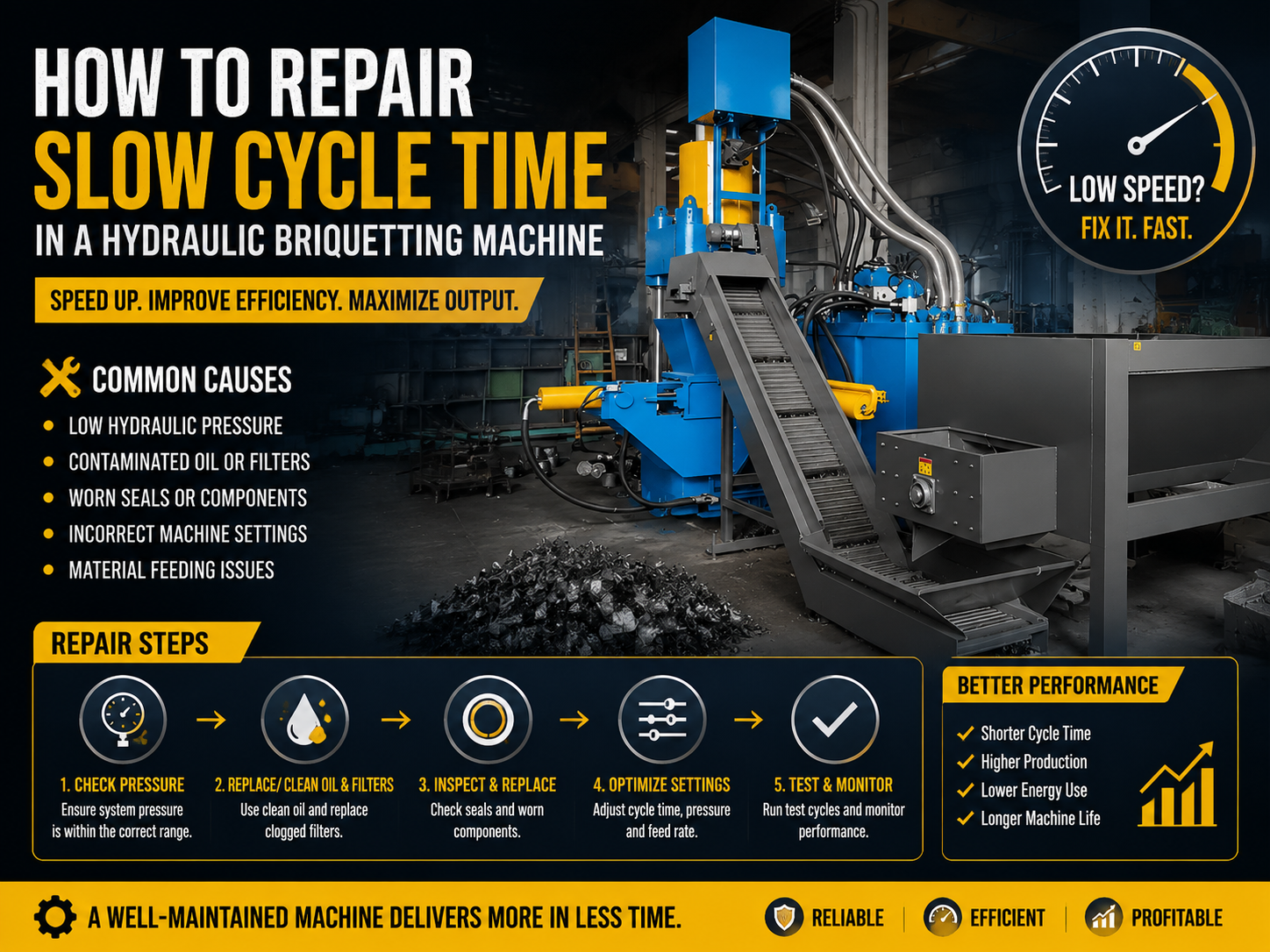
Introduction to Hydraulic Briquetting Machine Efficiency
In the world of metal recycling and industrial waste management, the hydraulic briquetting machine stands as a cornerstone of efficiency. By compressing loose metal chips, turnings, and swarf into dense, manageable briquettes, these machines significantly reduce storage space and increase the melt value of the scrap. However, like any heavy-duty industrial equipment, performance can degrade over time. One of the most common and frustrating issues operators face is a decrease in cycle speed. When you need to Repair Slow Cycle Time In A Hydraulic Briquetting Machine, it is rarely a single-factor problem but rather a combination of hydraulic, mechanical, and electrical variables.
A slow cycle time directly impacts the bottom line. If a machine designed to produce 100 briquettes per hour drops to 70, the operational cost per unit increases, and the return on investment (ROI) for the equipment stretches further into the future. Understanding the mechanics of the hydraulic cycle—comprising the feeding, compression, holding, and ejection phases—is critical to diagnosing where the bottleneck occurs. This guide provides a deep dive into the technical aspects of restoring your machine to its peak factory performance.
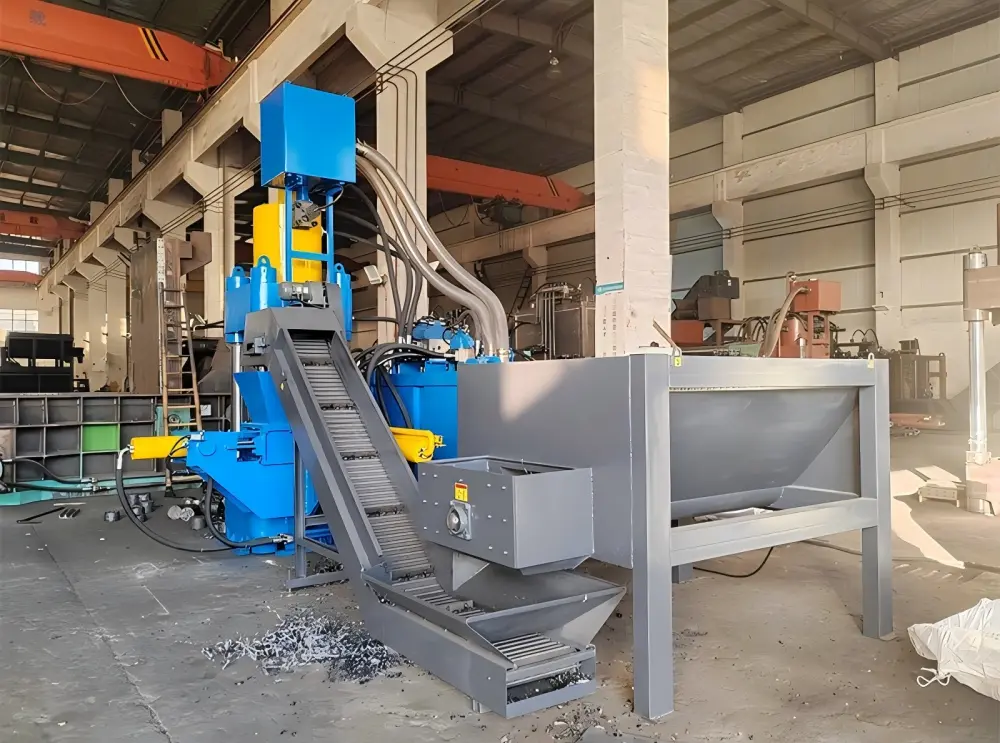
HARSLE machines are engineered for durability, but even the most robust systems require maintenance. Whether you are dealing with a vertical or horizontal briquetting press, the principles of fluid power remain the same. To effectively repair slow cycle time in a hydraulic briquetting machine, one must look beyond the surface and analyze the flow rates, pressure settings, and the physical state of the hydraulic medium itself. In the following sections, we will explore the key considerations and technical steps necessary to troubleshoot and fix these delays.
Key Considerations Before Beginning Repairs
Before diving into the internal components of the hydraulic system, it is essential to perform a holistic assessment of the machine’s environment and operation. Often, what appears to be a mechanical failure is actually a result of external factors or improper settings. The first consideration is the material being processed. If the scrap metal chips are significantly larger or more saturated with cutting fluids than usual, the machine may require more time to compress the material to the set density, leading to a perceived slow cycle time.
Environmental temperature also plays a massive role in hydraulic performance. Hydraulic oil has a specific viscosity range in which it operates most efficiently. If the workshop is too cold, the oil becomes thick and sluggish, increasing friction and slowing down the movement of the cylinders. Conversely, if the machine is overheating, the oil thins out, leading to internal leakage within the pump and valves, which also results in a loss of speed. Monitoring the oil temperature gauge is the first step in any diagnostic process.
Another critical factor is the power supply. Hydraulic pumps rely on electric motors to drive them. If there is a voltage drop or if the motor is not running at its rated RPM, the pump cannot deliver the required flow rate (GPM/LPM). Ensure that the electrical infrastructure is stable and that the motor is not showing signs of excessive heat or vibration, which could indicate failing bearings or windings. A motor that cannot maintain torque will inevitably slow down the hydraulic cycle under load.
Finally, consider the age and service history of the machine. If the hydraulic filters have not been changed according to the manufacturer’s schedule, they may be partially clogged. A clogged suction filter causes pump cavitation, which not only slows down the cycle but can also lead to catastrophic pump failure. Always check the basics—oil levels, filter indicators, and general cleanliness—before moving on to more complex technical repairs.
Technical Details: Diagnosing the Root Causes
1. Hydraulic Pump Efficiency and Flow Rate
The heart of the hydraulic briquetting machine is the pump. Its primary job is to convert mechanical energy into hydraulic flow. When attempting to repair slow cycle time in a hydraulic briquetting machine, the pump is often the primary suspect. Over time, the internal components of the pump—such as the gears, vanes, or pistons—wear down. This wear creates internal clearances that allow high-pressure oil to leak back to the suction side, a phenomenon known as “slippage.”
To test this, a flow meter should be used to compare the pump’s actual output against its theoretical rating. If the flow drops significantly as the pressure increases, the pump is worn and needs either a rebuild or replacement. Additionally, check the pump’s coupling. A slipping or damaged coupling between the motor and the pump can cause intermittent speed issues that are difficult to track without a physical inspection.
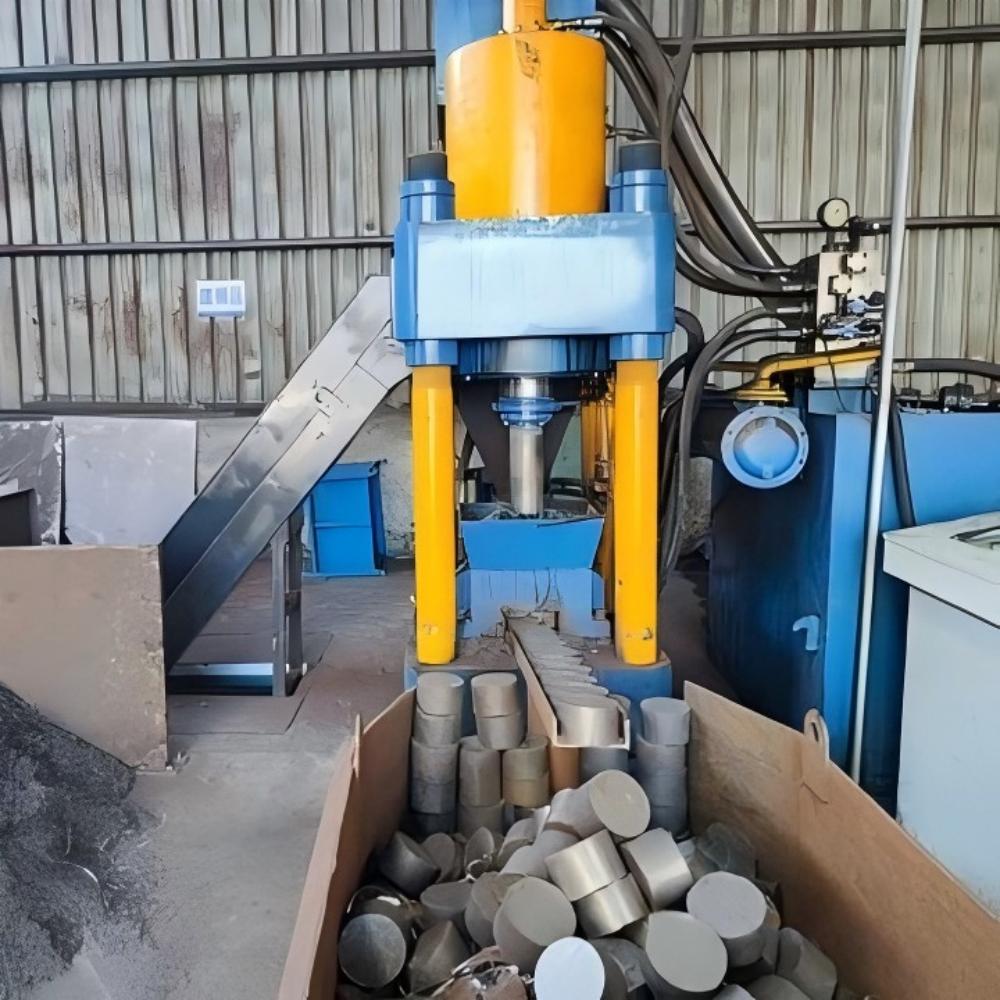
2. Directional Control Valve and Solenoid Response
The speed of the cylinder’s movement is determined by how quickly and fully the directional control valves open. If the solenoids are weak or the valve spools are sticking due to contaminated oil, the transition between cycle phases (e.g., from compression to retraction) will be delayed. Even a half-second delay in valve shifting can add up to several seconds over a full cycle.
Inspect the electrical signals reaching the solenoids. Using an oscilloscope or a high-quality multimeter, ensure that the PLC (Programmable Logic Controller) is sending the “shift” command instantly. If the signal is fine, the issue is mechanical within the valve. Cleaning the valve body and ensuring the spool moves freely can often resolve minor sticking issues without requiring new parts.
3. Relief Valve Settings and Pressure Bleed-off
If the main relief valve is set too low or is leaking, the system will struggle to reach the pressure required to complete the briquette. The machine might spend an excessive amount of time in the “holding” phase, trying to reach a pressure target that it cannot achieve because the oil is bypassing back to the tank. This not only slows the cycle but generates immense heat. Adjusting the relief valve to the manufacturer’s specifications is a delicate but necessary task to ensure the machine has the “punch” needed for fast compression.
4. Cylinder Seal Integrity
Internal leakage in the main compression cylinder is a silent thief of speed. If the piston seals are worn, oil can bypass from the high-pressure side to the low-pressure side of the cylinder. This means the pump has to work longer to move the piston the same distance. A simple way to check this is to extend the cylinder fully, hold the pressure, and check the return line for oil flow. Any flow while the cylinder is stationary indicates a seal failure.
| Component | Common Issue | Impact on Cycle Time | Repair Action |
|---|---|---|---|
| Hydraulic Pump | Internal Wear / Slippage | Reduced flow under pressure | Replace or rebuild pump |
| Suction Filter | Clogging / Contamination | Pump cavitation and slow intake | Replace filter element |
| Main Cylinder | Piston Seal Leakage | Loss of force and speed | Replace cylinder seals |
| Relief Valve | Spring Fatigue / Debris | Premature pressure bypass | Clean or recalibrate valve |
| Hydraulic Oil | High Temperature / Low Viscosity | Increased internal leakage | Check cooling system |
Selection Advice for High-Efficiency Briquetting Machines
When looking to purchase a new machine or upgrade an existing one to avoid future cycle time issues, certain design features should be prioritized. First, look for machines equipped with high-speed valves or “regenerative circuits.” These systems allow the oil from the rod end of the cylinder to be redirected to the cap end during the rapid advance phase, significantly increasing the speed of the ram without requiring a larger pump.
Second, prioritize machines with integrated oil cooling systems. As discussed, heat is the enemy of hydraulic speed. A machine with a robust air-cooled or water-cooled heat exchanger will maintain consistent oil viscosity throughout a multi-shift operation, ensuring that the cycle time at 8:00 AM is the same as at 4:00 PM. HARSLE’s advanced briquetting presses often include these features as standard to ensure long-term reliability.
Third, consider the PLC and sensor package. Modern machines use high-precision linear transducers instead of traditional limit switches. Linear transducers provide real-time feedback on the piston’s position, allowing the PLC to optimize the deceleration and transition points. This eliminates the “dead time” between movements, shaving seconds off every cycle. When selecting a machine, ask about the control logic and whether it allows for fine-tuning of the stroke lengths to match the specific material being processed.
Finally, evaluate the ease of maintenance. A machine that makes it difficult to access the filters, pump, and valves will inevitably suffer from neglected maintenance. Choose a design where the hydraulic manifold is centrally located and clearly labeled. This accessibility makes it much easier to repair slow cycle time in a hydraulic briquetting machine when issues eventually arise, reducing downtime and labor costs.
Frequently Asked Questions (FAQ)
Why does my briquetting machine slow down after 2 hours of work?
This is almost always related to oil temperature. As the machine works, the hydraulic oil heats up. If the cooling system is inadequate or the oil is of poor quality, its viscosity drops. This leads to increased internal leakage in the pump and valves, which reduces the effective flow rate and slows down the machine. Check your cooling fans or water flow in the heat exchanger.
Can I increase the cycle speed by just turning up the pressure?
No, increasing the pressure will not necessarily increase the speed and can actually be dangerous. Speed is a function of flow (GPM), while force is a function of pressure (PSI). Turning the pressure up beyond the machine’s design limits can cause component failure, excessive heat, and safety hazards. To increase speed, you need to optimize the flow or reduce the stroke distance.
How often should I change the hydraulic oil to maintain speed?
For most industrial briquetting machines, the oil should be changed every 2,000 to 4,000 hours of operation, or at least once a year. However, you should perform oil analysis every six months to check for contamination and additive depletion. Clean oil is the best way to prevent the wear that leads to slow cycle times.
What is the role of the accumulator in cycle time?
Some high-speed briquetting machines use a hydraulic accumulator to store pressurized oil. This stored energy can be released quickly to assist the pump during the rapid advance or compression phases. If your machine has an accumulator and the cycle has slowed down, the nitrogen pre-charge in the accumulator may have leaked out, requiring a recharge.
Conclusion: Maintaining Peak Performance
To Repair Slow Cycle Time In A Hydraulic Briquetting Machine requires a systematic approach that balances mechanical inspection with hydraulic theory. By addressing the health of the pump, the precision of the valves, and the quality of the hydraulic fluid, operators can restore their equipment to its original efficiency. Regular maintenance is not just a chore; it is a critical strategy for ensuring that your metal recycling operation remains profitable and productive.
At HARSLE, we understand that every second counts in industrial production. Our hydraulic briquetting machines are designed with high-quality components and intelligent control systems to minimize cycle times and maximize output. However, even the best machines require a knowledgeable hand to keep them running at their best. By following the diagnostic steps outlined in this guide—from checking oil viscosity to testing cylinder seals—you can ensure that your briquetting press remains a high-speed asset for years to come. Remember, a well-maintained machine is a fast machine, and a fast machine is a profitable one.