Why Is the Briquetting Machine Cycle Irregular? Troubleshooting Hydraulic System Instability

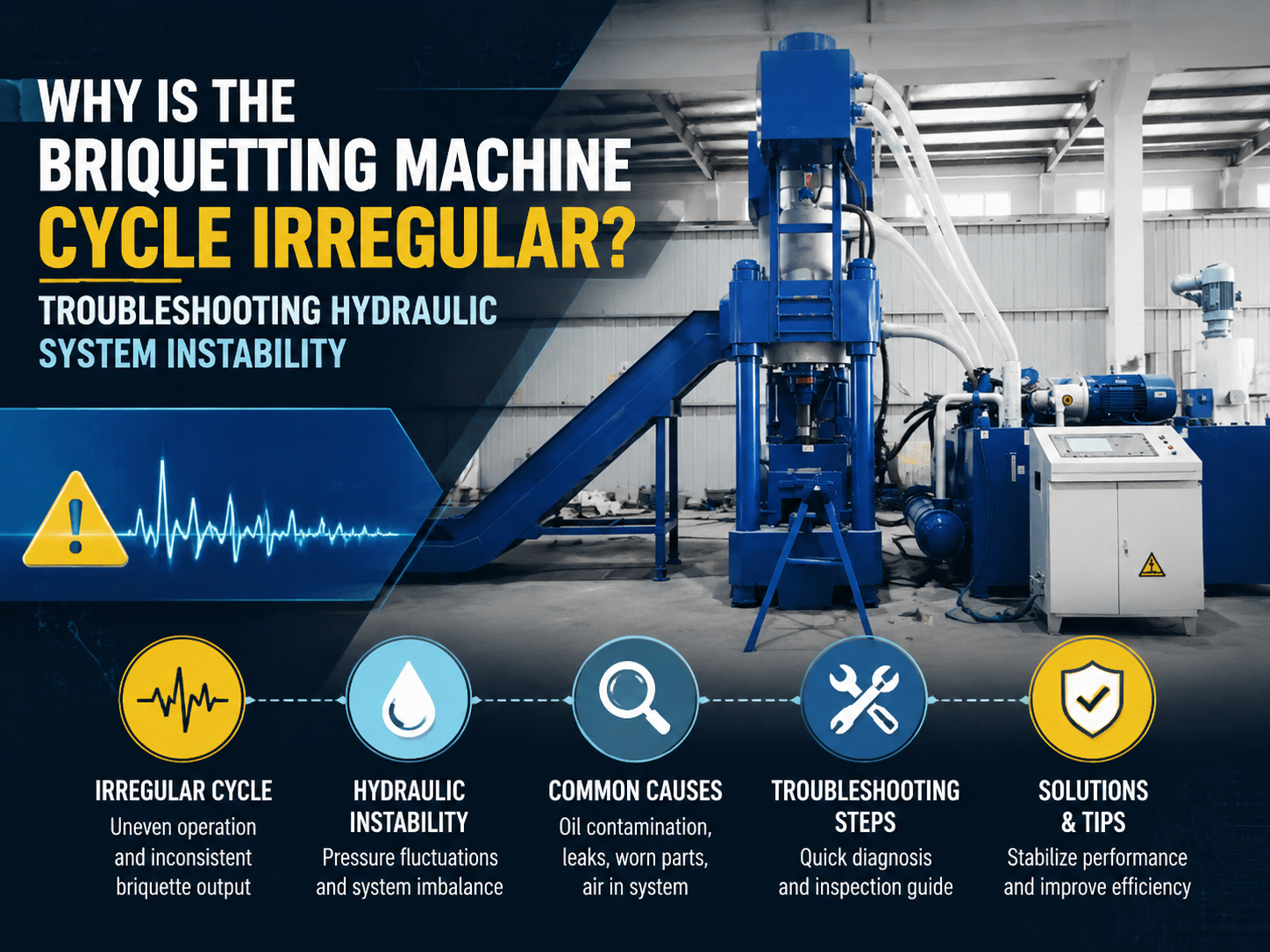
Introduction to Hydraulic Briquetting Machine Cycle Consistency
In the world of metal recycling and waste management, the hydraulic briquetting machine stands as a cornerstone of efficiency. These machines are designed to compress loose metal chips—such as aluminum, steel, cast iron, and copper—into dense, manageable blocks. However, for a facility to maintain peak productivity, the machine must operate with a rhythmic, predictable cycle. When operators begin to ask, “Is Briquetting Machine Cycle Irregular? Troubleshooting Hydraulic System Instability,” it often signals an underlying issue that could lead to significant downtime or mechanical failure if left unaddressed.
A consistent cycle time is the heartbeat of a briquetting operation. It ensures that the feeding mechanism, the compression ram, and the ejection system work in perfect synchronization. When this cycle becomes irregular—meaning the time it takes to complete one full briquette varies significantly—it disrupts the entire production line. This instability is almost always rooted in the hydraulic system, which serves as the “muscles and nerves” of the equipment. Understanding the nuances of hydraulic pressure, flow rates, and thermal dynamics is essential for any technician tasked with maintaining these powerful machines.
HARSLE, a leader in metal fabrication machinery, emphasizes that a briquetting machine is only as reliable as its hydraulic circuit. Irregular cycles are not just a nuisance; they are symptoms of energy loss, component wear, or fluid contamination. In this comprehensive guide, we will dive deep into the technical reasons behind hydraulic instability and provide actionable troubleshooting steps to restore your machine to its optimal performance levels.
Key Considerations: Why Cycle Timing Matters
The primary goal of a hydraulic briquetting machine is to maximize the density of the output while minimizing the energy consumed per ton of material. When the cycle becomes irregular, the first casualty is throughput. If a machine designed for a 20-second cycle starts fluctuating between 18 and 35 seconds, the daily output can drop by as much as 30%. This inconsistency makes it impossible to schedule labor effectively or meet production quotas for recycled material shipments.
Beyond throughput, irregular cycles often indicate that the machine is working harder than necessary. For instance, if a cycle is delayed because a valve is slow to shift, the hydraulic pump may be forced to bypass oil through the relief valve at high pressure. This generates excessive heat, which further degrades the hydraulic oil and shortens the lifespan of seals and gaskets. Therefore, addressing the question “Is Briquetting Machine Cycle Irregular? Troubleshooting Hydraulic System Instability” is as much about preventative maintenance as it is about immediate repair.
Another critical consideration is the quality of the briquette itself. A stable cycle ensures that the material is held under maximum pressure for a consistent duration. If the cycle is cut short or if the pressure build-up is sluggish, the resulting briquettes may be crumbly or lack the density required by foundries. This can lead to rejected loads and financial losses. Consistency in the hydraulic cycle directly translates to consistency in product quality.
Technical Details: Troubleshooting Hydraulic System Instability
1. Hydraulic Oil Viscosity and Temperature Fluctuations
One of the most common causes of an irregular cycle is the state of the hydraulic fluid. Hydraulic systems are designed to operate within a specific temperature range, typically between 35°C and 55°C. When the oil is too cold, its viscosity is high, making it thick and resistant to flow. This causes the pump to work harder and the cylinders to move slower. Conversely, if the oil overheats, its viscosity drops significantly.
Thin, overheated oil leads to internal leakage within the pump and valves. This “slippage” means that even though the pump is turning at the correct speed, the actual volume of oil reaching the cylinder is reduced, causing the ram to move slowly or erratically. If your briquetting machine starts the day with a fast cycle but slows down significantly after four hours of operation, the cooling system or the oil grade is likely the culprit. Checking the heat exchanger and ensuring the cooling water flow is unobstructed is a vital first step.
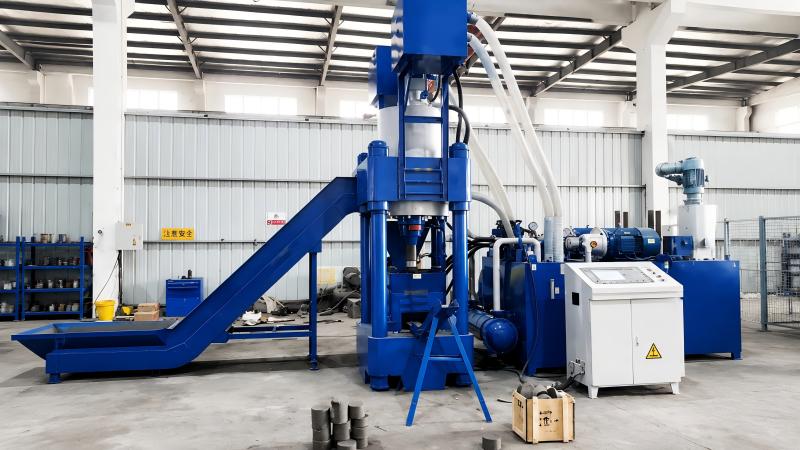
2. Air Entrainment and Cavitation
Air is the enemy of hydraulic stability. Unlike hydraulic oil, air is compressible. If air bubbles are trapped in the system—a condition known as aeration—the hydraulic fluid becomes “spongy.” When the PLC signals a valve to open, the pressure must first compress the air bubbles before the cylinder begins to move. This creates a noticeable lag and jerky movements, leading to an irregular cycle.
Cavitation is a related but more destructive issue. It occurs when the pump cannot get enough oil from the reservoir, creating a vacuum that forms vapor bubbles. When these bubbles reach the high-pressure side of the pump, they implode with enough force to pit metal surfaces. A cavitating pump will produce a distinct high-pitched whining or “marbles in a blender” sound. To troubleshoot this, inspect the suction filters for clogs and ensure that the reservoir oil level is sufficient and that the intake pipe is not drawing air.
3. Valve Malfunctions and Solenoid Lag
The directional control valves and relief valves are the “logic” of the hydraulic system. If a spool inside a valve is worn or contaminated with fine metal particles, it may stick or shift slowly. This is a frequent cause of irregular cycles in metal briquetting machines because the environment is naturally dusty and full of metal fines. Even a microscopic piece of debris can interfere with the tight tolerances of a high-pressure valve.
Furthermore, the electrical solenoids that actuate these valves can fail intermittently. As solenoids age or overheat, their magnetic force may weaken, causing them to take longer to pull the spool into position. Monitoring the “signal-to-action” time using the machine’s PLC diagnostics can help identify which specific valve is causing the delay. Regular cleaning of the valve manifold and ensuring the use of high-quality filtration (typically 10-25 microns) is essential for preventing these issues.
4. Internal Cylinder Leakage
The main compression cylinder is subject to immense forces. Over time, the piston seals can wear out. While an external leak is easy to spot, an internal leak—where oil bypasses the piston head and flows back to the tank—is invisible. This internal bypass reduces the effective force and speed of the cylinder. If the leakage is inconsistent (perhaps due to a damaged spot on the cylinder wall), the cycle time will fluctuate depending on where the piston is in its stroke. A “drift test” or using a flow meter on the return line can help diagnose internal seal failure.
| Symptom | Possible Cause | Recommended Action |
|---|---|---|
| Slow cycle after startup | High oil viscosity (Cold oil) | Install an oil heater or allow longer warm-up time. |
| Cycle slows down mid-shift | Oil overheating / Internal leakage | Check cooling system; inspect pump efficiency. |
| Jerky ram movement | Air in the hydraulic circuit | Bleed the system; check suction line for leaks. |
| Inconsistent pressure build-up | Faulty relief valve or worn pump | Clean/replace relief valve; perform pump flow test. |
| Erratic timing between stages | PLC or Solenoid failure | Check electrical connections and valve response times. |
Selection Advice: Choosing a Stable Briquetting Machine
When purchasing a new machine, preventing the question “Is Briquetting Machine Cycle Irregular? Troubleshooting Hydraulic System Instability” starts with the selection process. Not all hydraulic systems are created equal. High-end manufacturers like HARSLE utilize integrated manifold blocks rather than extensive piping. Manifolds reduce the number of potential leak points and minimize the distance oil must travel, which leads to a more responsive and stable cycle.
Look for machines equipped with variable displacement piston pumps rather than simple gear pumps. While more expensive, piston pumps are much more efficient and can adjust their output based on the load, which significantly reduces heat generation. A machine with a built-in oil cooling system (either air-cooled or water-cooled) is also a must-have for any high-volume industrial application. Without proper thermal management, cycle instability is almost guaranteed during summer months or long shifts.
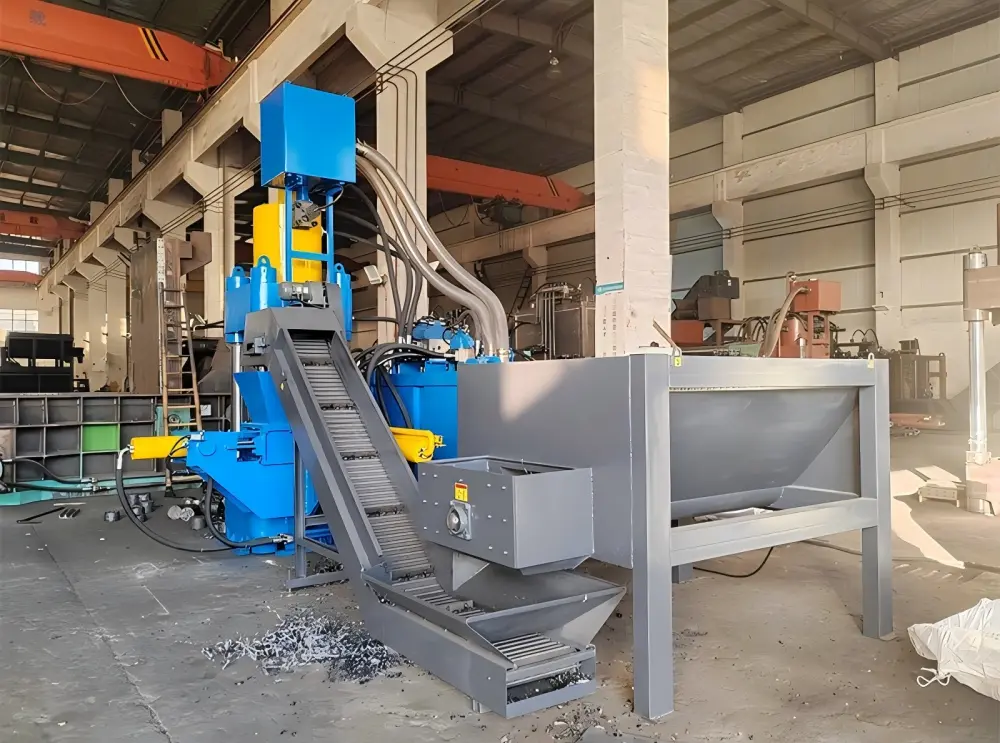
Another factor to consider is the control system. Modern briquetting machines should feature a PLC (Programmable Logic Controller) with a user-friendly HMI (Human Machine Interface). This allows operators to monitor cycle times in real-time and receive alerts when the cycle deviates from the set parameters. Advanced PLCs can also compensate for slight changes in oil temperature by adjusting valve timing, maintaining a consistent rhythm throughout the day. When evaluating a machine, ask about the brand of hydraulic components used; names like Rexroth, Vickers, and Yuken are industry standards for reliability.
Maintenance Checklist for Hydraulic Stability
To ensure your briquetting machine maintains a regular cycle, a rigorous maintenance schedule is required. The following checklist should be integrated into your facility’s routine:
- Daily: Check oil levels and monitor the operating temperature. Listen for unusual noises from the pump.
- Weekly: Inspect all hydraulic hoses for signs of wear or weeping. Clean the air filters on the electrical cabinet and the oil cooler.
- Monthly: Take an oil sample for analysis. Look for metal particles or water contamination. Check the tightness of all solenoid connections.
- Quarterly: Replace hydraulic filters. Even if they don’t look dirty, microscopic particles can clog the bypass and allow contaminants into the valves.
- Annually: Perform a full system flush. Replace the hydraulic oil entirely and clean the interior of the reservoir to remove settled sludge.
FAQ: Common Questions About Briquetting Machine Instability
Why does my briquetting machine cycle faster when it first starts?
This is usually due to the oil being at its optimal viscosity for the pump’s current wear level. As the oil heats up, it thins out, and internal leakage increases, which slows down the cycle. If the speed difference is dramatic, it indicates that your pump or cylinder seals are worn and need replacement.
Can the type of metal scrap affect the hydraulic cycle?
Yes. If the scrap is very bulky or has a high “spring-back” effect, the hydraulic system must work harder to reach the final compression pressure. This can lead to longer pressure-dwell times. However, the machine’s mechanical movements (retracting, feeding) should remain constant regardless of the material.
How do I know if there is air in my hydraulic lines?
Air usually causes a “bouncing” or “spongy” movement of the ram. You might also see foam in the oil reservoir. If you hear a crackling sound in the pump, that is a sign of aeration or cavitation, both of which will cause an irregular cycle.
Is it okay to use a higher viscosity oil to stop leaks?
While thicker oil might temporarily reduce internal leakage and stabilize a slow cycle, it is not a permanent fix. Thicker oil generates more heat and can cause cavitation in the pump. It is always better to fix the underlying seal or pump issue and use the oil grade recommended by the manufacturer (usually ISO VG 46 or 68).
Conclusion: Restoring Precision to Your Metal Fabrication
In conclusion, an irregular cycle in a briquetting machine is a clear warning sign that the hydraulic system is struggling. Whether the issue is as simple as a clogged filter or as complex as internal pump wear, addressing it promptly is key to maintaining a profitable recycling operation. By focusing on the core pillars of hydraulic health—oil quality, thermal management, and component integrity—you can ensure that your machine operates with the precision and reliability that industrial standards demand.
At HARSLE, we understand that your machinery is an investment in your company’s future. Our briquetting machines are engineered with robust hydraulic circuits designed to withstand the rigors of 24/7 operation. By following the troubleshooting steps outlined in this guide and choosing equipment built with high-quality components, you can eliminate the frustrations of cycle instability. Remember, a steady machine is a productive machine. Keep your hydraulic system in check, and your briquetting process will remain a seamless part of your production line for years to come.