Horizontal Baler Buying Guide: How to Choose the Right Machine for Your Waste Management Line

Introduction to Horizontal Baler Procurement
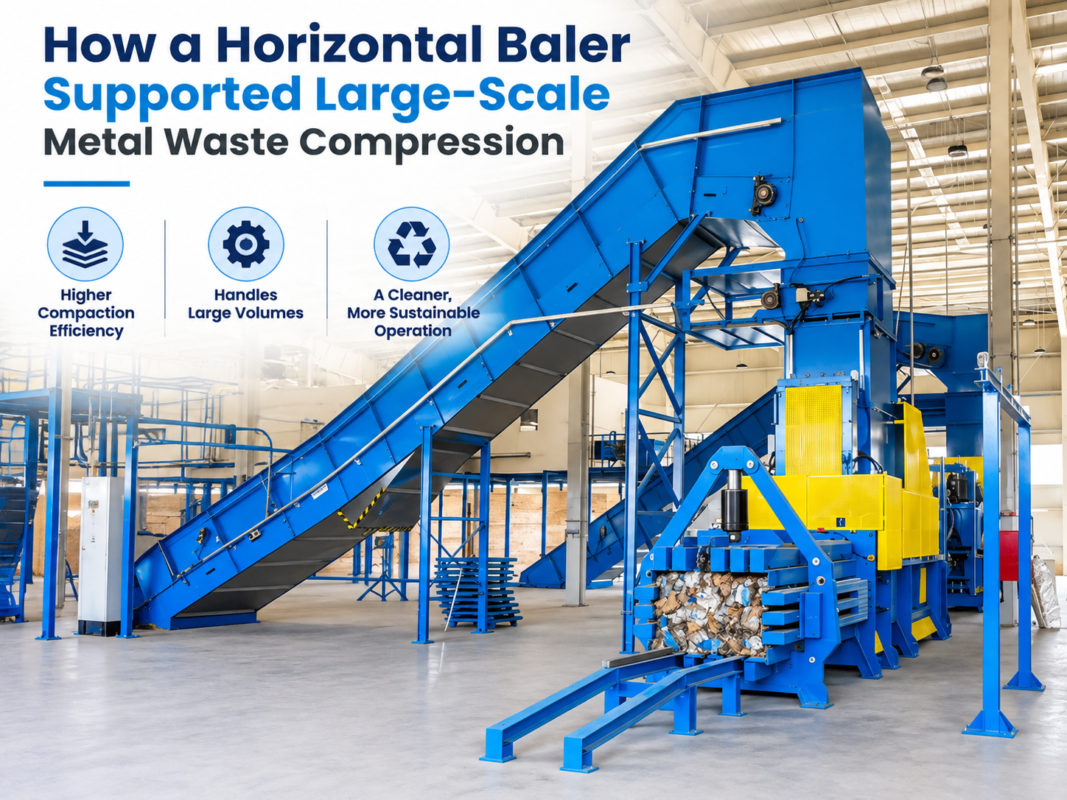
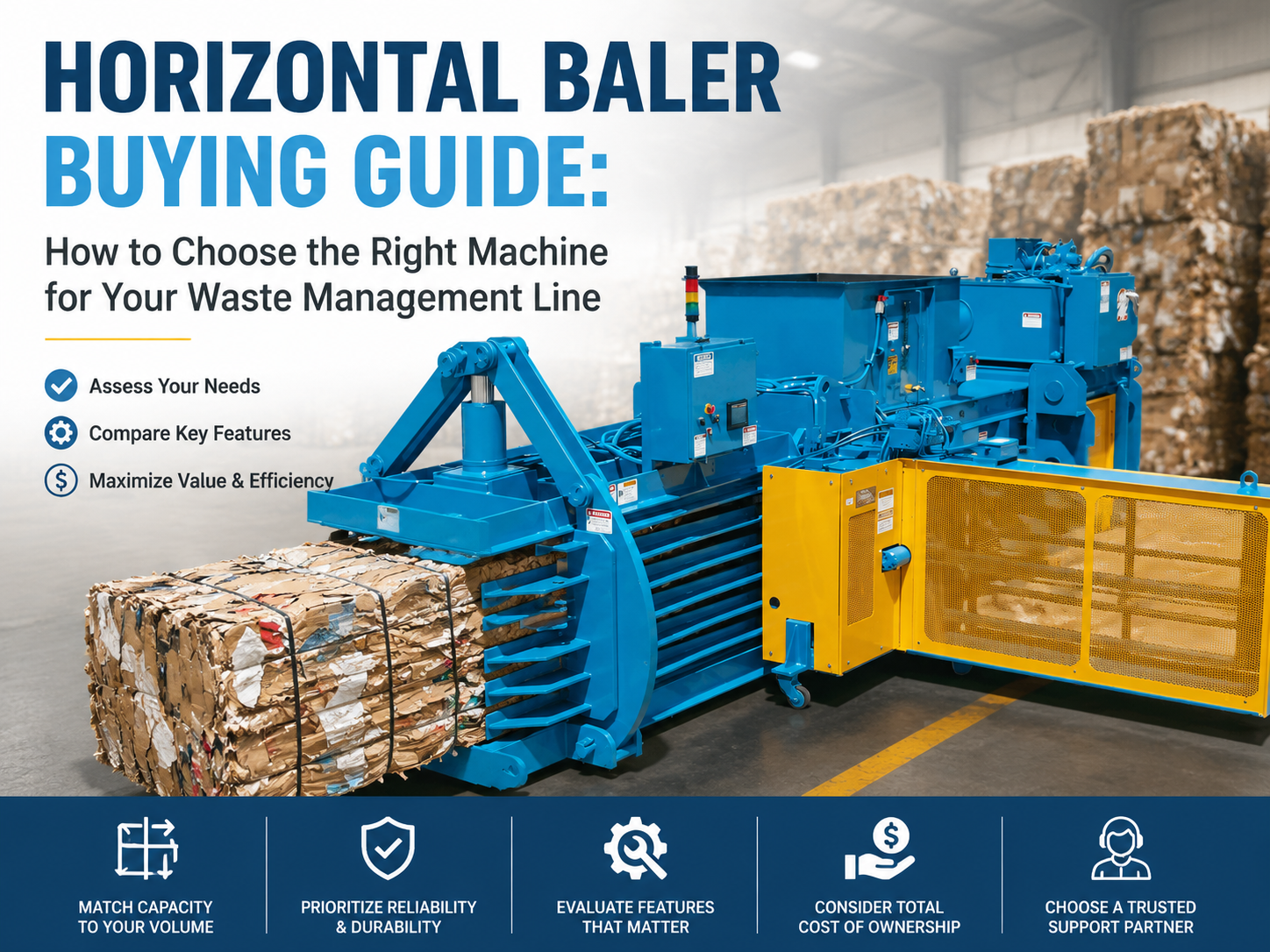
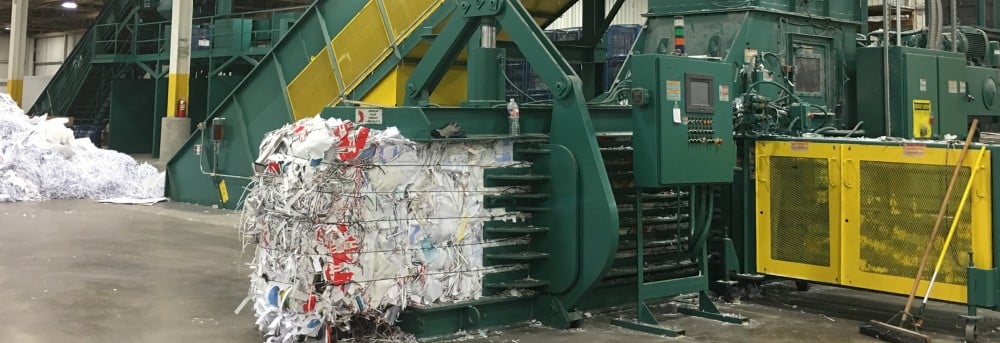
In the modern industrial landscape, efficient waste management is no longer just a regulatory requirement; it is a critical component of operational profitability. For facilities dealing with high volumes of recyclable materials—such as cardboard (OCC), plastics, non-ferrous metals, and paper—the horizontal baler stands as the workhorse of the processing line. Unlike vertical balers, which are suited for smaller retail environments, horizontal balers are designed for continuous, high-capacity throughput, transforming loose waste into dense, transportable bales.
Choosing the right machine requires a deep understanding of your facility’s specific needs, the characteristics of the material being processed, and the long-term financial implications of the investment. This Horizontal Baler Buying Guide is designed to help facility managers and procurement officers navigate the complexities of the market, ensuring they choose the right machine for their waste management line while maximizing efficiency and ROI.
Price Range Overview: Setting Your Budget
The price of a horizontal baler can vary significantly based on its capacity, automation level, and specialized features. Understanding the general price tiers is the first step in the Horizontal Baler Buying process. Generally, industrial horizontal balers fall into three main categories:
- Entry-Level Manual Tie Balers ($20,000 – $45,000): These machines are ideal for facilities processing 1 to 3 tons of material per hour. While they offer the power of a horizontal press, they require an operator to manually thread and tie the bales. They are excellent for businesses transitioning from vertical balers to a more continuous flow.
- Mid-Range Auto-Tie Balers ($50,000 – $120,000): This is the most common category for dedicated recycling centers and large manufacturing plants. These machines feature automatic tying systems, higher hydraulic pressure (60 to 100 tons), and throughput capacities of 4 to 10 tons per hour. They significantly reduce labor costs by automating the most time-consuming part of the baling process.
- High-End Industrial/Two-Ram Balers ($130,000 – $350,000+): Designed for multi-material processing and extreme density, these machines are used by municipal waste facilities and large-scale scrap yards. They often feature advanced PLC controls, high-horsepower motors (up to 150 HP), and the ability to process difficult materials like high-density plastics and non-ferrous metals.
When evaluating these price ranges, it is vital to look beyond the initial sticker price. A cheaper manual machine might seem attractive, but the ongoing labor costs associated with manual tying can quickly exceed the price difference of an auto-tie model within just 18 to 24 months of operation.
Main Cost Drivers in Horizontal Baler Manufacturing
Several technical factors dictate the manufacturing cost and, consequently, the market price of a horizontal baler. Understanding these drivers allows you to choose the machine for your waste management line that offers the best balance of performance and price.
1. Hydraulic System and Tonnage
The heart of any baler is its hydraulic system. The total pressure (measured in tons) exerted by the main ram determines the density of the bale. Higher tonnage requires larger cylinders, more robust hydraulic pumps, and heavier steel frames to withstand the stress. A 100-ton baler will naturally cost more than a 60-ton model because every component must be upsized to handle the increased force.
2. Motor Horsepower and Cycle Time
Throughput is directly related to cycle time—the time it takes for the ram to extend and retract. Faster cycle times require higher horsepower motors and high-flow hydraulic valves. If your waste management line needs to process 15 tons per hour, you will need a dual-motor system or a high-performance single motor, which adds to the cost but ensures the machine doesn’t become a bottleneck in your production line.
3. Steel Quality and Frame Construction
Industrial balers are subject to immense structural fatigue. Premium manufacturers like HARSLE use high-tensile, reinforced steel and precision welding. The thickness of the floor plate and the side walls, as well as the inclusion of replaceable wear liners (often made of Hardox or similar abrasion-resistant steel), are significant cost drivers that ensure the machine lasts 15-20 years rather than 5-7 years.
Configuration Impact: Customizing for Efficiency
The configuration of your baler should be dictated by the material you process and the layout of your facility. Here is how different configurations impact performance:
Manual Tie vs. Auto-Tie
As mentioned, the tying mechanism is a major configuration choice. Auto-tie systems use a needle and twister mechanism to secure the bale without operator intervention. This is essential for high-volume lines. However, for materials that are difficult to tie automatically, such as certain types of plastic film or heavy-duty scrap, a manual tie system might actually be more reliable.

Feed Opening and Hopper Size
The size of the feed opening must match the size of the largest items in your waste stream. If you are baling large appliance boxes or bulky plastic containers, a small feed opening will lead to bridging (material getting stuck), requiring manual clearing. Custom hoppers can be designed to integrate with conveyor belts, air-sort systems, or forklift tipping stations.
Shear Blades vs. No-Shear Designs
Most horizontal balers use a shear blade at the top of the ram to cut off excess material as the ram moves forward. This ensures a clean bale and prevents jams. However, for certain materials like textiles or specific plastics, a “no-shear” or “closed-end” design might be preferable to prevent material from being cut into small, unmanageable pieces.
Hidden Costs of Horizontal Baler Ownership
When you choose a machine for your waste management line, the purchase price is only the beginning. To avoid budget overruns, consider these often-overlooked expenses:
- Electrical Infrastructure: High-capacity balers often require 460V 3-phase power. If your facility is currently set up for standard industrial power, you may need to invest in transformers or new electrical panels to support the 50HP to 150HP motors.
- Freight and Installation: These machines are massive and often require oversized load permits for shipping. Installation usually requires a heavy-duty forklift or a small crane, as well as a factory-trained technician to calibrate the PLC and hydraulic pressures.
- Consumables: Auto-tie balers consume large quantities of baling wire. Depending on your volume, wire costs can run into thousands of dollars per year. Additionally, hydraulic oil (often 200+ gallons) needs to be filtered and occasionally replaced.
- Wear Parts: Shear blades need sharpening, and liners eventually need replacement. Budgeting for a preventative maintenance contract is highly recommended to avoid catastrophic failures that stop the entire waste management line.
ROI Calculation: Turning Waste into Profit
The primary justification for buying a horizontal baler is the Return on Investment (ROI). A well-chosen machine pays for itself through three main avenues:
1. Labor Savings
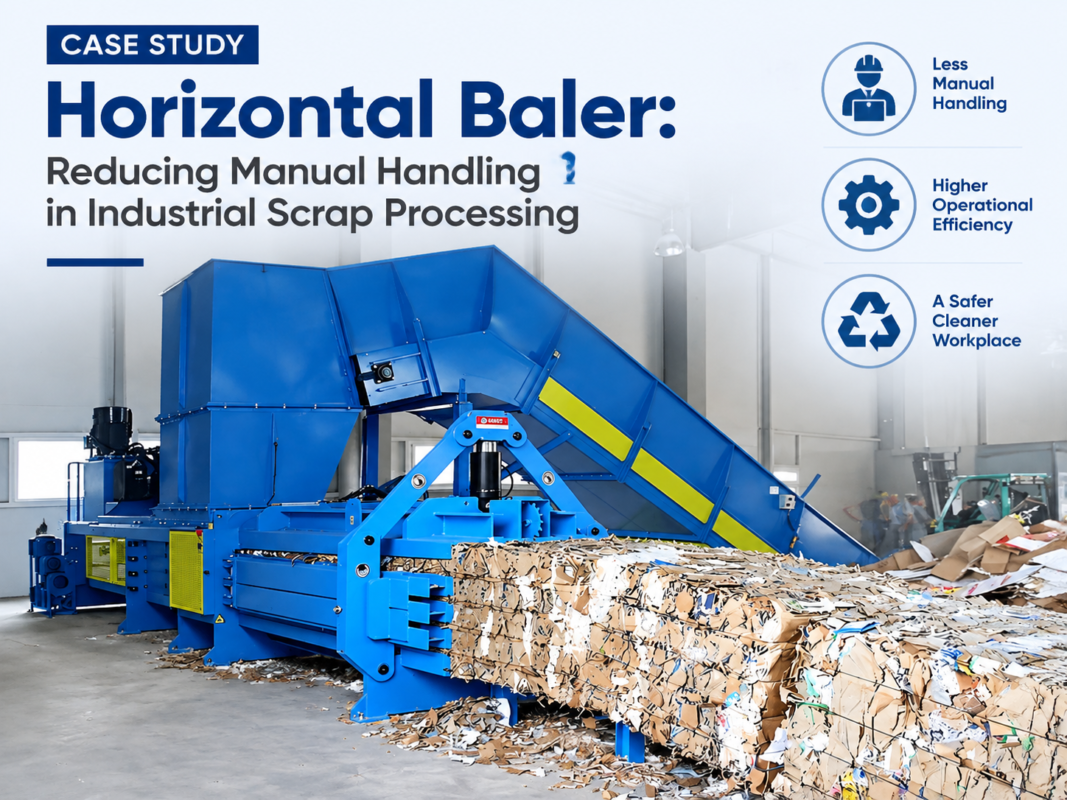
A horizontal baler with a conveyor feed and auto-tie system can replace 2-3 manual laborers who would otherwise be spent breaking down boxes or manually feeding a smaller vertical baler. If you save $60,000 a year in labor costs, a $120,000 machine pays for itself in just two years on labor alone.
2. Transportation Efficiency
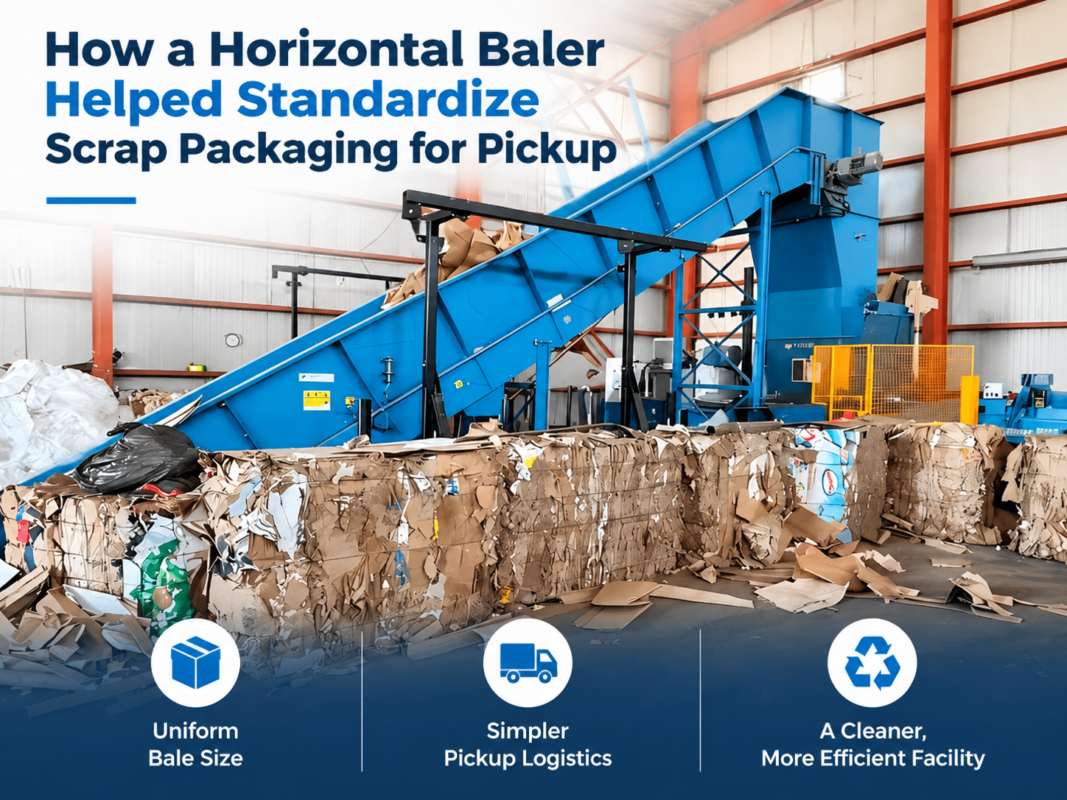
Loose cardboard or plastic is expensive to transport because you are essentially paying to ship air. A horizontal baler creates high-density bales that maximize the weight capacity of a standard 53-foot trailer. By increasing bale density from 800 lbs to 1,200 lbs, you reduce the number of truckloads required by 33%, leading to massive savings in freight costs.
3. Material Rebates
Recycling mills pay a premium for high-density, mill-sized bales. Loose or poorly baled material often incurs “contamination” or “processing” fees from the recycler. By producing high-quality bales, you move from paying someone to take your waste to receiving a monthly check for your recyclables.
Buying Advice: A Step-by-Step Checklist
To ensure you choose the right machine for your waste management line, follow this professional checklist before signing a purchase order:
- Analyze Your Material: What is the primary material? What is the secondary? If you process 80% cardboard and 20% plastic, choose a baler optimized for cardboard but capable of handling plastic.
- Measure Your Space: Horizontal balers have a large footprint. Remember to account for the space needed for the bale exit ramp, the wire spools, and the clearance for maintenance access.
- Verify Throughput Requirements: Don’t buy a machine based on your average daily volume. Buy it based on your peak hourly volume. If you receive 50% of your daily waste in a 2-hour window, your baler must be able to handle that surge.
- Check Component Availability: Ensure the baler uses standard, off-the-shelf components for its hydraulics and electronics (like Rexroth valves or Siemens PLCs). This ensures you can get parts locally in an emergency rather than waiting for international shipping.
- Request a Reference Visit: A reputable manufacturer like HARSLE should be able to provide references or even arrange a visit to a facility using a similar model. Seeing the machine in a real-world environment is invaluable.
Frequently Asked Questions (FAQ)
What is the difference between an open-end and a closed-end horizontal baler?
An open-end baler allows for continuous extrusion, where the friction of the previous bale provides the resistance for the current one. This is best for high-volume, consistent materials like cardboard. A closed-end baler has a hydraulic door that stays shut until the bale is finished, allowing for higher pressure and density, which is ideal for multi-material processing or difficult-to-bale items.
How often does a horizontal baler require maintenance?
Daily checks should include oil levels and clearing debris from the sensors. Monthly maintenance involves greasing pivot points and checking wire-tie alignment. A comprehensive professional inspection should be conducted every 2,000 operating hours to check hydraulic pressures and blade sharpness.
Can one horizontal baler handle both plastic and metal?
Yes, but with caveats. While many horizontal balers can handle plastic and light non-ferrous metals (like aluminum cans), processing heavy scrap metal requires a specialized “scrap baler” with reinforced structures and higher-grade shear blades. Always consult the manufacturer before switching material types.
What is the average lifespan of a HARSLE horizontal baler?
With proper maintenance and adherence to throughput limits, a high-quality horizontal baler can last between 15 and 25 years. Many machines from the 1990s are still in operation today thanks to regular liner replacements and hydraulic overhauls.
Does the machine come with a warranty?
Most industrial balers come with a 1-year parts and labor warranty. Extended warranties on the frame and hydraulic cylinders are often available and are highly recommended for high-duty cycle operations.
Conclusion
Investing in a horizontal baler is a transformative step for any waste management line. By focusing on the right tonnage, automation level, and structural quality, you can turn a waste-handling headache into a streamlined, profit-generating department. Remember that the cheapest machine is rarely the most cost-effective over its lifespan. Prioritize reliability, ease of maintenance, and the specific needs of your material stream to ensure your Horizontal Baler Buying experience leads to long-term success.