Horizontal Baler Noise, Vibration, and Stability: Engineering Considerations

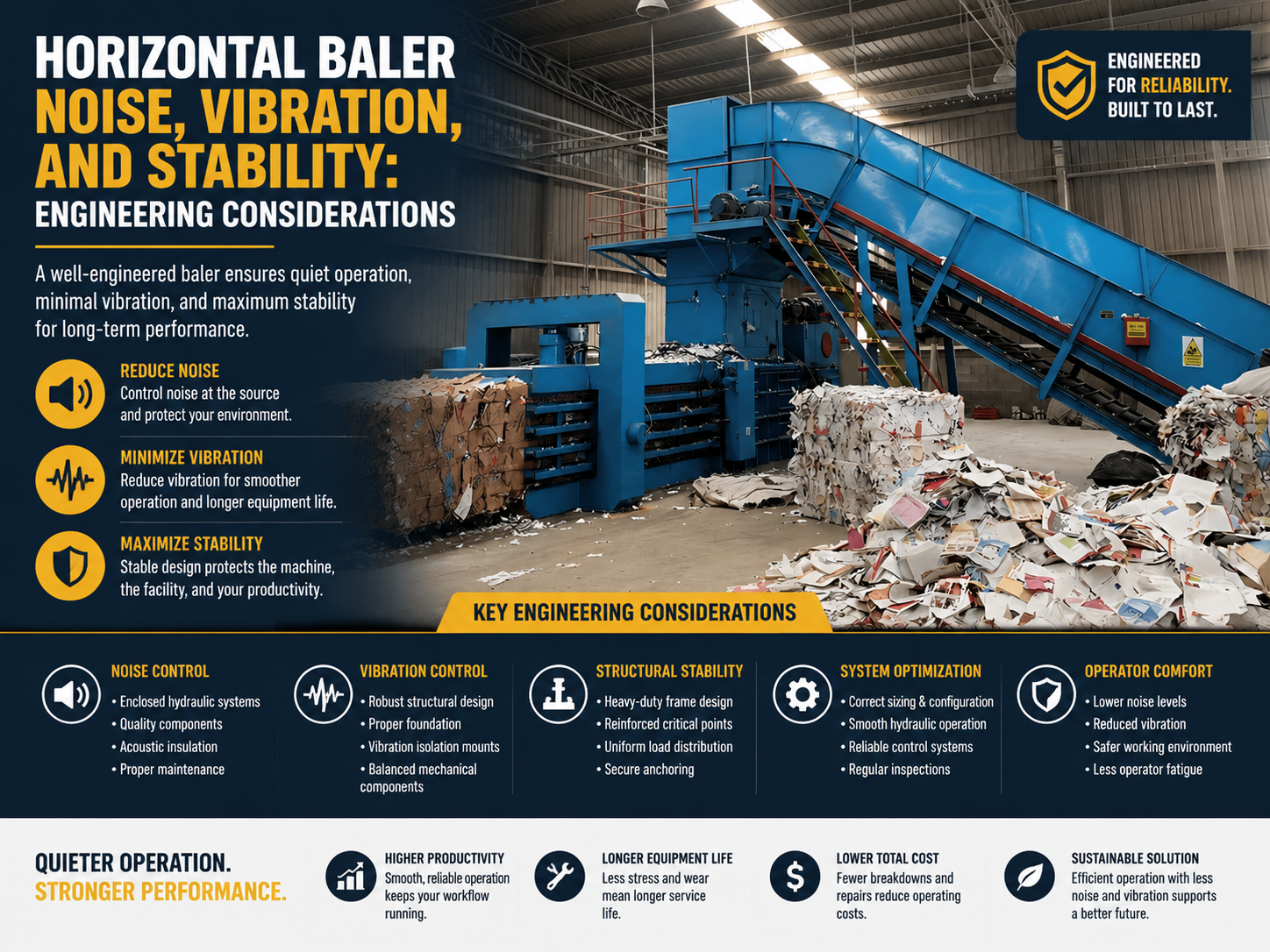
Technical Overview of Horizontal Baler Dynamics
In the realm of industrial recycling and waste management, the horizontal baler stands as a cornerstone of efficiency. However, the sheer force required to compress materials like cardboard, plastics, and non-ferrous metals introduces significant engineering challenges regarding noise, vibration, and structural stability. Understanding these dynamics is not merely a matter of comfort; it is a critical factor in machine longevity, operator safety, and regulatory compliance. When a horizontal baler operates, it converts electrical energy into hydraulic pressure, which is then translated into mechanical force. This process involves high-speed fluid movement, reciprocating mechanical parts, and the sudden release of stored energy during material shearing or compression cycles.
Noise in horizontal balers primarily originates from three sources: the hydraulic power unit (HPU), mechanical friction, and structural resonance. The HPU, consisting of the motor and pump, generates high-frequency acoustic energy. If the pump is cavitating or if the motor is misaligned, these noise levels can exceed 85-90 dB, necessitating hearing protection and potentially violating local noise ordinances. Furthermore, the mechanical interaction between the ram and the wear liners creates frictional noise, especially if lubrication is inadequate. Engineering a quiet baler requires a holistic approach that addresses these sources at the design stage, utilizing acoustic enclosures and precision-machined components.
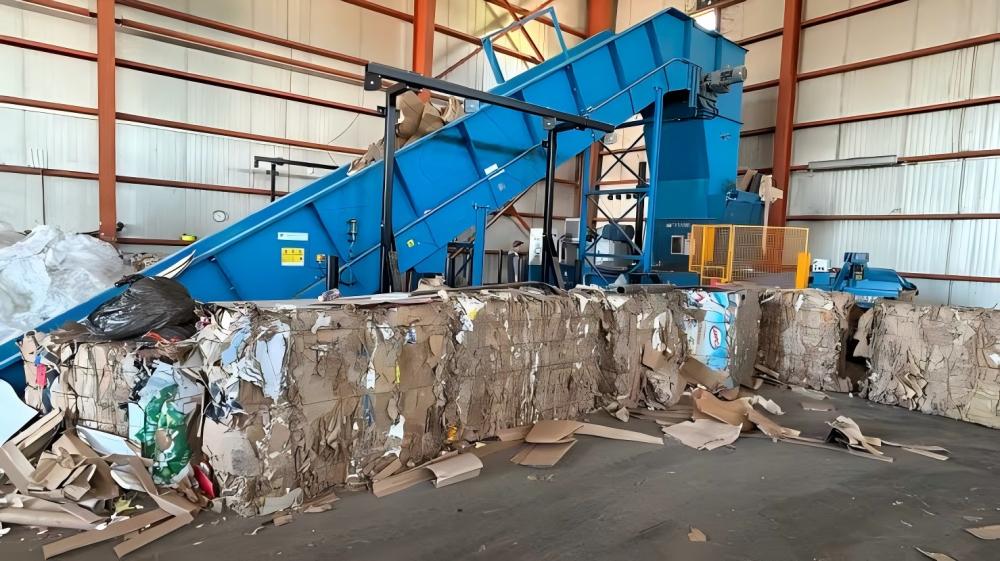
Vibration is perhaps the most destructive force in heavy machinery. In horizontal balers, vibration is often the result of unbalanced hydraulic forces or the impact of the ram hitting the material. These vibrations propagate through the machine frame and into the floor, leading to fastener loosening, seal failure, and even structural cracking over time. Stability, closely linked to vibration, refers to the machine’s ability to maintain its alignment and position during peak load. A baler that ‘walks’ or shifts during operation is a sign of poor foundation engineering or an unbalanced center of gravity. Engineers must calculate the dynamic loads to ensure the machine remains anchored and stable throughout its multi-ton compression cycles.
Stability is also influenced by the frame’s rigidity. A horizontal baler frame must withstand not only the primary compression force but also the lateral forces generated when the material is unevenly distributed in the chamber. If the frame flexes excessively, it leads to misalignment of the hydraulic cylinders, which accelerates wear on the piston rods and seals. High-quality manufacturers like HARSLE utilize finite element analysis (FEA) to simulate these stresses, ensuring that the steel structure is reinforced at critical stress points to maintain absolute stability under maximum pressure.
Core Parameters Influencing Noise and Stability
To effectively manage the environmental and mechanical impact of a horizontal baler, engineers focus on several core parameters. The first is the Hydraulic System Pressure. While higher pressure allows for denser bales, it also increases the load on the pump and the potential for hydraulic ‘hammer’—a pressure surge that causes significant noise and vibration. Modern systems use proportional valves and soft-start technology to ramp pressure up and down smoothly, mitigating these spikes.
The Cycle Time and Ram Speed are also vital. Faster cycle times increase productivity but also increase the kinetic energy that must be dissipated at the end of each stroke. If the ram decelerates too abruptly, the resulting shockwave can vibrate the entire facility. Engineering considerations for high-speed balers include hydraulic cushioning and electronic sensors that slow the ram before it reaches its end-of-travel position. This ‘soft-stop’ capability is essential for reducing mechanical wear and noise.
Another critical parameter is the Motor and Pump Mounting. In high-end horizontal balers, the HPU is often mounted on anti-vibration pads or isolated from the main frame. This prevents the high-frequency vibrations of the motor from being amplified by the large steel plates of the baler body, which can act like a sounding board. Additionally, the use of flexible hydraulic hoses instead of rigid piping for the final connections to the cylinders helps dampen fluid-borne vibrations.
Finally, the Material Density and Feed Consistency play a role. Inconsistent feeding leads to ‘voids’ in the compression chamber, causing the ram to strike the material unevenly. This creates lateral instability. Engineers design the hopper and the pre-compression ‘fluffers’ to ensure a more uniform distribution of material, which stabilizes the load on the ram and reduces the erratic noises associated with crushing uneven objects like large plastic drums or heavy-gauge cardboard.
Calculation Method for Vibration and Foundation Requirements
Engineering a stable installation for a horizontal baler requires precise calculations. The most fundamental calculation involves determining the Dynamic Load Factor. While the static weight of the baler is known, the dynamic load during operation can be 1.5 to 2.5 times the static weight. The formula for the required foundation mass (M_f) is often expressed as: M_f > k * M_m, where M_m is the mass of the machine and k is a coefficient based on the machine type (typically 2.0 to 3.0 for reciprocating balers).
To calculate the Natural Frequency of the installation and avoid resonance, engineers use the formula: f_n = (1 / 2π) * √(k / m), where k is the stiffness of the mounting/foundation and m is the mass. It is crucial that the natural frequency of the foundation does not match the operating frequency of the baler’s motor or the frequency of the ram cycles. If these frequencies align, resonance occurs, leading to catastrophic vibration levels that can damage the building’s floor and the machine itself.
Noise levels are calculated using the Sound Power Level (Lw) and Sound Pressure Level (Lp). Engineers must account for the distance from the machine and the reflective surfaces in the facility. The total noise level in a room with multiple machines is calculated using logarithmic addition: L_total = 10 * log10(Σ 10^(Li/10)). By calculating the expected noise output, engineers can determine if additional soundproofing, such as acoustic panels or HPU enclosures, is required to meet safety standards.
Lastly, the Hydraulic Surge Pressure calculation is essential for choosing the right pipe thickness and seal ratings. The surge pressure (ΔP) can be estimated by ΔP = ρ * c * Δv, where ρ is the fluid density, c is the speed of sound in the fluid, and Δv is the change in fluid velocity. Minimizing Δv through gradual valve closure is the primary engineering method for reducing the ‘thumping’ noise and vibration associated with hydraulic systems.
Horizontal Baler Engineering Parameter Table
| Parameter | Standard Duty Baler | Heavy-Duty Industrial Baler | High-Speed Automatic Baler |
|---|---|---|---|
| Max Compression Force | 60 – 100 Tons | 120 – 200 Tons | 150 – 250+ Tons |
| Average Noise Level (dB) | 75 – 82 dB | 80 – 88 dB | 82 – 92 dB (w/o enclosure) |
| Vibration Amplitude (mm) | < 0.05 mm | < 0.08 mm | < 0.10 mm |
| Motor Power (kW) | 15 – 30 kW | 45 – 75 kW | 75 – 150 kW |
| Foundation Depth (mm) | 150 – 200 mm | 300 – 500 mm | 500 – 800 mm (Reinforced) |
| Hydraulic System Type | Open Loop | Closed Loop / Regenerative | Servo-Hydraulic Hybrid |
| Stability Factor (Safety) | 1.5x Static Load | 2.0x Static Load | 2.5x Static Load |
Common Engineering Mistakes in Baler Installation
One of the most frequent mistakes in horizontal baler engineering is Inadequate Foundation Design. Many facilities assume that a standard 4-inch concrete floor is sufficient for a 20-ton machine. However, the repetitive shock loads of a baler will quickly crack standard concrete. Without a reinforced, isolated foundation pad, vibrations will travel through the floor, affecting sensitive equipment nearby and eventually causing the baler’s own frame to warp or its anchor bolts to shear off.
Another common error is Ignoring Hydraulic Fluid Temperature. As hydraulic fluid heats up, its viscosity decreases. This change in viscosity affects the damping characteristics of the system. A machine that runs quietly in the morning may become noisy and vibrate excessively by the afternoon as the thin oil fails to provide adequate lubrication and cushioning. Engineers must specify robust cooling systems—either air-cooled or water-cooled heat exchangers—to maintain consistent fluid properties and, consequently, consistent stability.
Poor Alignment of the Main Ram is a mechanical mistake that leads to significant noise and vibration. If the ram is not perfectly centered, it will exert uneven pressure on the wear liners. This results in a ‘chattering’ sound and high-frequency vibrations. Over time, this misalignment causes ‘scoring’ on the hydraulic cylinder walls, leading to internal bypass and loss of compression force. Regular inspection and adjustment of the wear pads are necessary to prevent this issue.
Finally, Neglecting the ‘Water Hammer’ Effect in hydraulic plumbing is a major oversight. Using rigid 90-degree elbows in high-pressure lines creates turbulence and pressure spikes. Engineering the hydraulic circuit with smooth bends and utilizing accumulators to absorb pressure shocks can significantly reduce the ‘bang’ heard when valves shift. Failure to address this not only increases noise but also leads to premature fatigue of the hydraulic hoses and fittings.
Selection Checklist for a Stable and Quiet Horizontal Baler
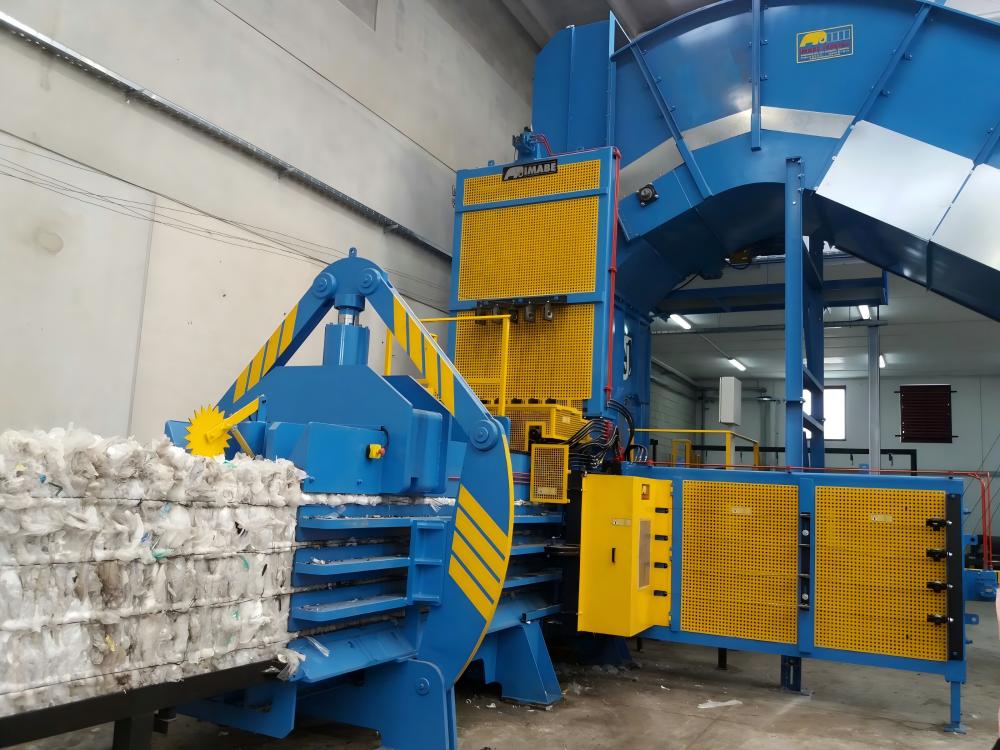
- Frame Construction: Look for a fully welded, heavy-duty steel frame. Check the thickness of the side plates and the floor of the compression chamber.
- HPU Isolation: Does the machine feature an isolated hydraulic power unit? Are there rubber dampers between the motor and the frame?
- Soft-Start/Stop Technology: Ensure the PLC (Programmable Logic Controller) is programmed for smooth ram acceleration and deceleration.
- Noise Reduction Features: Check for acoustic covers over the motor and pump. Ask about the decibel rating under full load.
- Wear Liner Material: High-quality balers use replaceable Hardox or similar abrasion-resistant liners to reduce friction and noise.
- Hydraulic Component Quality: Specify world-class valves (like Rexroth or Vickers) that are designed for smooth shifting and minimal pressure spikes.
- Foundation Requirements: Review the manufacturer’s foundation drawings. Does the machine require a dedicated pit or reinforced pad?
- Auto-Lubrication System: An automatic greasing system for the ram and pivot points ensures consistent friction reduction and quieter operation.
Frequently Asked Questions (FAQ)
1. Why is my horizontal baler making a loud ‘thumping’ sound at the end of each stroke?
This is usually caused by the hydraulic ram hitting its mechanical limit or the material at high speed without proper cushioning. It can be mitigated by adjusting the proximity sensors to slow the ram down before the end of the stroke or by checking the hydraulic cushion valves in the cylinder.
2. How often should I check the anchor bolts of my baler?
For a new installation, anchor bolts should be checked weekly for the first month. After the machine has settled, a monthly inspection is recommended. Loose anchor bolts are a primary cause of increased vibration and structural damage.
3. Can I reduce the noise of an older baler?
Yes. Noise can be reduced by installing anti-vibration mounts under the HPU, replacing old gear pumps with quieter vane or piston pumps, and adding acoustic insulation to the motor area. Ensuring the hydraulic oil is at the correct level and temperature also helps.
4. Does the type of material being baled affect the machine’s stability?
Absolutely. Dense, springy materials like certain plastics or heavy cardboard require more force to compress and can cause ‘kickback’ when the ram retracts. This puts more stress on the stability of the machine compared to softer materials.
5. What is the acceptable noise level for an industrial baler?
Most modern horizontal balers operate between 75 and 85 dB. If the noise exceeds 85 dB consistently, OSHA requires hearing protection for operators. Engineering solutions should always aim to keep the noise below this threshold for a safer work environment.
6. How do I know if my baler’s vibration is excessive?
If you notice visible movement of the machine frame, loosening of hydraulic fittings, or if the vibration can be felt through the floor more than 10 feet away, it is likely excessive. A vibration analysis using an accelerometer can provide precise data to compare against manufacturer specs.