Choosing the Right Tying Wire for a Horizontal Baler: A Comprehensive Technical Guide

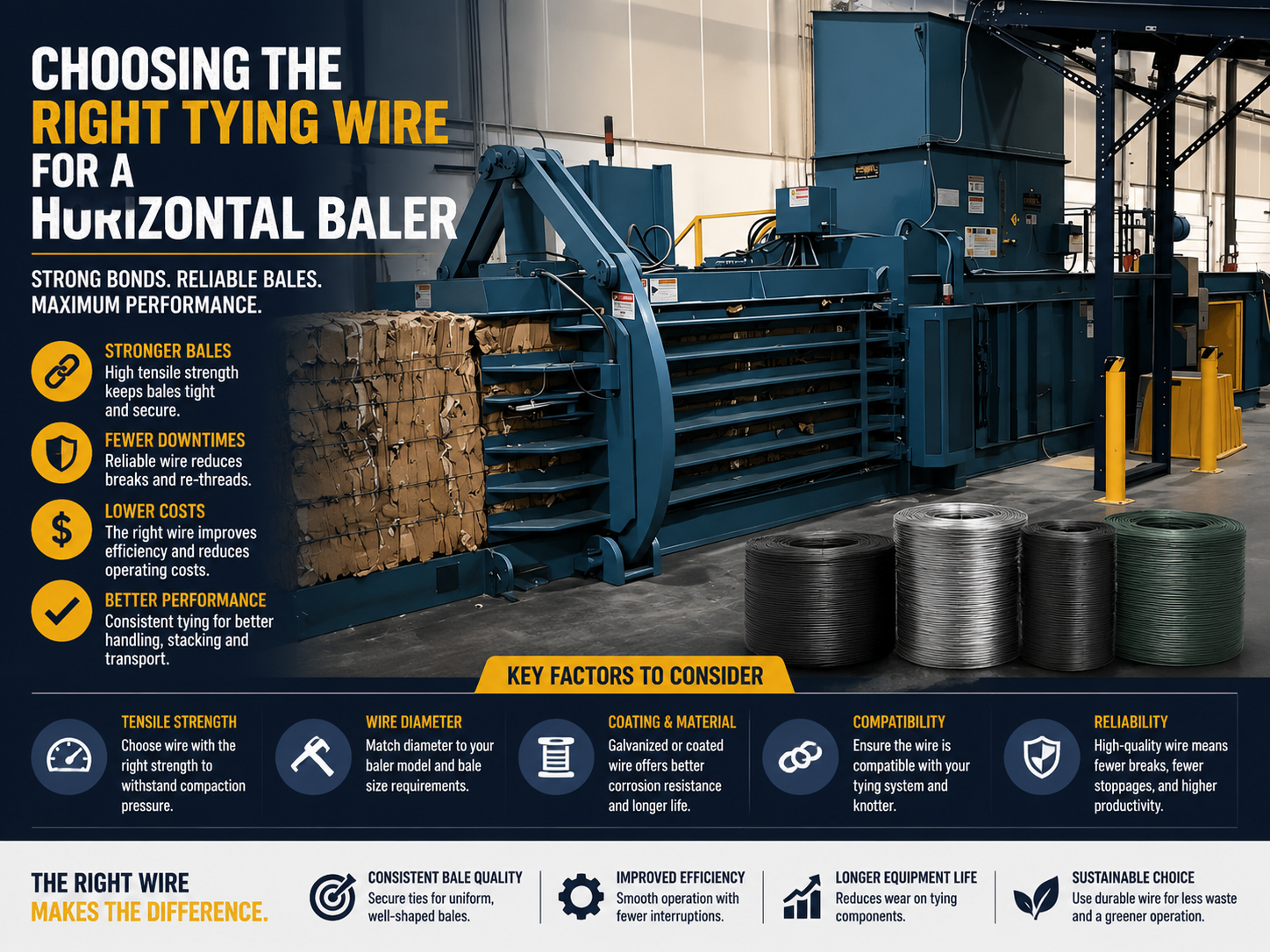
Technical Overview of Tying Wire in Horizontal Balers
In the world of industrial waste management and recycling, the horizontal baler stands as a cornerstone of efficiency. However, the performance of these massive machines is often dictated by a relatively small component: the tying wire. Choosing tying wire a horizontal baler requires an understanding of the mechanical stresses involved during the compression and ejection phases. The tying wire is not merely a fastener; it is a structural element that must withstand the internal expansion forces of compressed materials like cardboard, plastics, and non-ferrous metals.
Horizontal balers typically utilize an automatic tying system (auto-tier). This system demands a specific type of wire that possesses a delicate balance of tensile strength and ductility. If the wire is too brittle, it will snap during the knotting process; if it is too soft, it will stretch excessively, leading to ‘bale expansion’ or total bale failure. The metallurgical properties of the wire, including its carbon content and the annealing process it undergoes, are critical factors that determine its suitability for high-volume horizontal baling operations.
There are three primary types of wire used in these applications: black annealed wire, galvanized wire, and stainless steel wire. Black annealed wire is the most common due to its excellent flexibility and oil-coated surface, which lubricates the baler’s knotter mechanism. Galvanized wire is preferred for outdoor storage or highly corrosive environments, as the zinc coating prevents rust that could weaken the wire over time. Understanding these material differences is the first step in optimizing your baling process and reducing downtime caused by wire breakage.
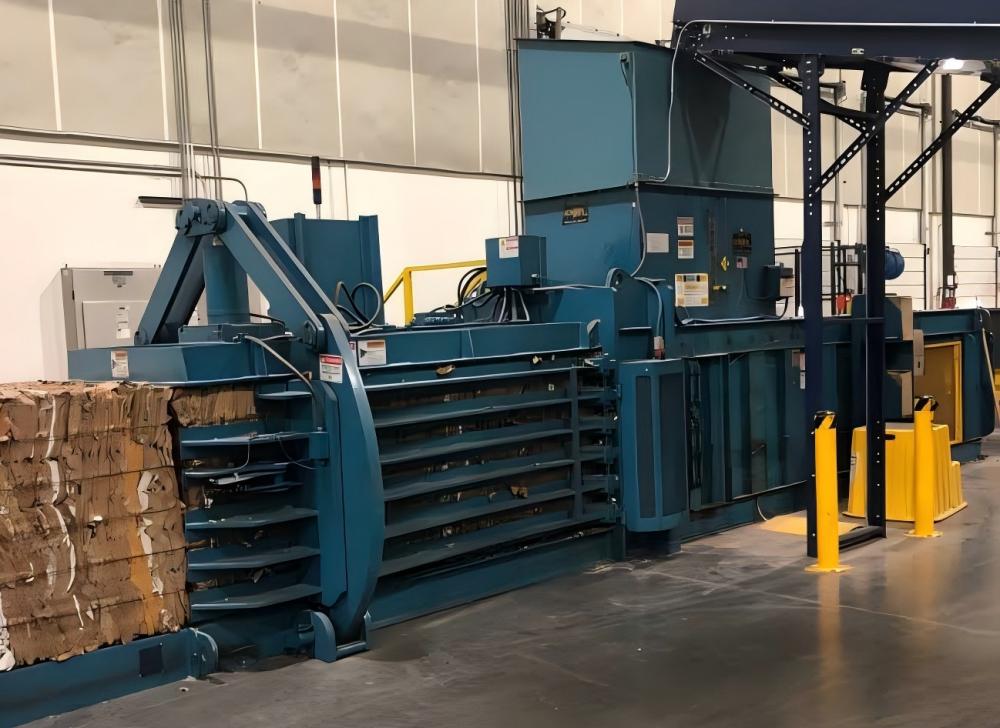
Furthermore, the physical format of the wire—whether it comes in boxed coils, carriers, or stems—impacts the logistics of your facility. For horizontal balers, which often run continuously, large carriers (often weighing 1,000 to 2,000 lbs) are preferred to minimize the frequency of wire changes. This technical overview sets the stage for a deeper dive into the specific parameters that engineers and facility managers must evaluate when choosing tying wire a horizontal baler.
Core Parameters for Selecting Tying Wire
When selecting the ideal wire, several core parameters must be evaluated to ensure compatibility with both the machine and the material being baled. The first and most obvious parameter is the Wire Gauge. In the United States, the American Wire Gauge (AWG) or Steel Wire Gauge (SWG) is used, while other regions use millimeters. For horizontal balers, gauges typically range from 10 to 14. A thicker wire (lower gauge number) provides higher break strength but puts more strain on the baler’s twisting needles and cutters.
Tensile Strength is the next critical metric. This is the maximum amount of longitudinal stress a wire can take before breaking, usually measured in Pounds per Square Inch (PSI) or Megapascals (MPa). For horizontal baling, a tensile strength between 65,000 and 75,000 PSI is often the ‘sweet spot.’ If the tensile strength is too high (e.g., over 100,000 PSI), the wire becomes too stiff for the auto-tier to twist effectively, leading to frequent mechanical jams and increased wear on the knotter components.
Elongation refers to the wire’s ability to stretch before it snaps. This is vital because once a bale is released from the compression chamber, it naturally expands. The wire must be able to stretch slightly (typically 15% to 25%) to absorb this expansion energy without failing. If the wire has zero elongation, the sudden ‘shock’ of the bale expanding will cause the knots to pop. Conversely, too much elongation results in loose, messy bales that are difficult to stack and transport.
Lastly, the Surface Finish plays a significant role in machine longevity. Black annealed wire is treated with a light coating of oil. This oil serves a dual purpose: it prevents the wire from rusting during storage and acts as a lubricant as the wire passes through the baler’s guides and knotter. For galvanized wire, the thickness of the zinc coating (measured in ounces per square foot) must be consistent to ensure it doesn’t flake off and clog the tying mechanism. Choosing tying wire a horizontal baler involves balancing these four parameters against the specific density requirements of your bales.
Calculation Method for Wire Consumption and Tension
To manage costs and ensure operational continuity, it is essential to calculate the expected wire consumption. The formula for wire consumption per bale is relatively straightforward: (Bale Perimeter + Knot Allowance) x Number of Ties. For a standard 60-inch bale with a height of 30 inches and a width of 42 inches, the perimeter is 144 inches. Adding a 10-inch allowance for the knot and tail gives 154 inches per tie. If the baler uses 5 wires, the total wire per bale is 770 inches (approx. 64 feet).
Beyond consumption, calculating the Bale Expansion Force is crucial for choosing the right tensile strength. Different materials have different ‘spring-back’ characteristics. For example, plastic film has a much higher expansion force than shredded paper. Engineers use the formula F = P x A x k, where F is the expansion force, P is the compression pressure, A is the surface area of the bale face, and k is the material expansion coefficient. This force must be distributed across the number of wires used. If the total force exceeds the combined break strength of the wires (with a safety factor of at least 1.5), a thicker gauge or higher tensile wire is required.
Another calculation involves the Feed Rate Compatibility. Horizontal balers with high-speed auto-tiers require wire that can be pulled from the carrier at high velocities without tangling. This involves calculating the ‘pay-off’ tension. If the tension required to pull the wire from the coil is too high, it can cause the wire to thin out (necking) or break before it even reaches the knotter. Ensuring that the wire’s yield strength is significantly higher than the pay-off tension is a key engineering requirement for high-speed operations.
Technical Parameter Table
The following table provides a general guideline for common wire specifications used in horizontal balers. Note that specific machine requirements may vary based on the manufacturer (e.g., HARSLE, Harris, or Maren).
| Wire Gauge (US) | Diameter (inches/mm) | Tensile Strength (PSI) | Approx. Feet per Lb | Typical Application |
|---|---|---|---|---|
| 10 Gauge | 0.135″ / 3.43mm | 65,000 – 75,000 | 21.5 | Heavy-duty scrap metal, high-density plastics |
| 11 Gauge | 0.120″ / 3.05mm | 70,000 – 80,000 | 27.2 | Standard OCC (Cardboard), mixed paper |
| 12 Gauge | 0.105″ / 2.67mm | 75,000 – 85,000 | 35.6 | Lightweight plastics, shredded paper |
| 13 Gauge | 0.091″ / 2.31mm | 80,000 – 95,000 | 47.5 | Small horizontal balers, low-expansion materials |
| 14 Gauge | 0.080″ / 2.03mm | 85,000 – 100,000 | 61.7 | Textiles, light foam, specialty fibers |
Common Engineering Mistakes in Wire Selection
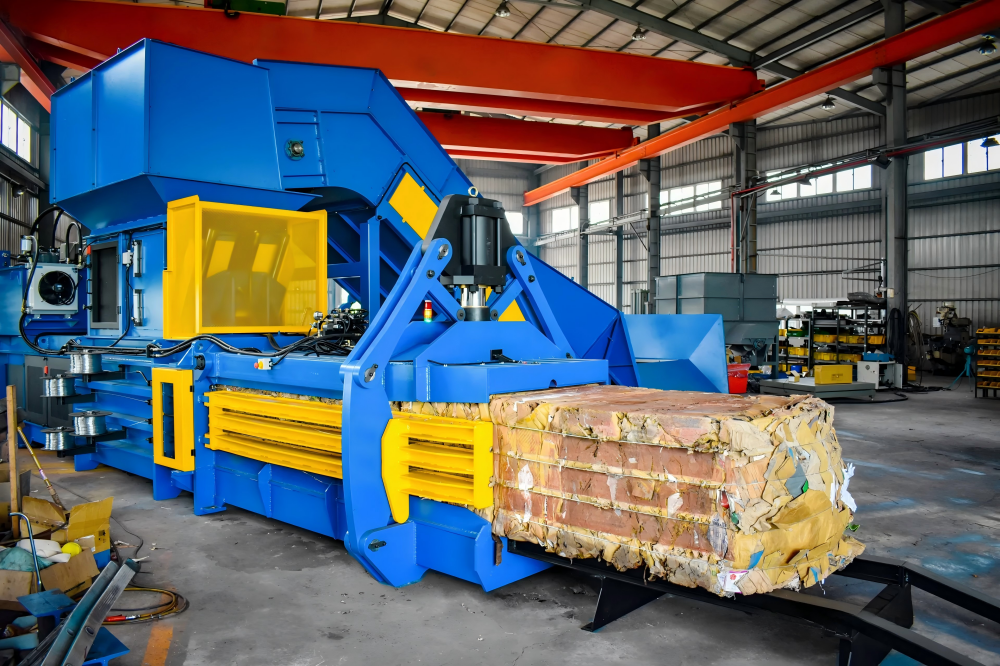
One of the most frequent mistakes in choosing tying wire a horizontal baler is over-specifying the tensile strength. Many operators believe that ‘stronger is always better.’ However, high-tensile wire is significantly stiffer. In an automatic tying system, the twisting needles must bend the wire around the bale and twist it into a knot. If the wire is too stiff, it increases the torque required by the motor, leads to premature wear on the needle bushings, and can even snap the twisting hooks. Always match the wire tensile to the machine manufacturer’s specifications rather than simply seeking the highest number.
Another common error is ignoring the wire’s ‘cast’ and ‘helix’. Cast refers to the diameter of the circle the wire forms when a length is cut and laid on the floor. Helix refers to the height the wire rises off the floor. If the cast is too small or the helix is too high, the wire will ‘bird-nest’ or tangle as it is pulled from the carrier. This is a major cause of downtime in horizontal balers. Engineers should ensure that the wire is ‘dead’ (has a large cast and low helix) to ensure smooth feeding into the auto-tier.
Poor storage conditions also lead to significant issues. Black annealed wire is susceptible to rust if stored in humid environments. Even a small amount of surface oxidation increases the friction coefficient of the wire. This extra friction can cause the wire to ‘chatter’ in the guides, leading to inconsistent knot lengths and potential breakage. Furthermore, rust particles can accumulate in the knotter assembly, acting as an abrasive that grinds down precision components. Always store wire in a dry, temperature-controlled area and keep it on its original pallet or carrier to prevent floor moisture from seeping in.
Finally, failing to adjust the baler settings when switching wire brands or gauges is a recipe for disaster. Even if two wires are both ’11 gauge,’ slight variations in metallurgy or oil coating can affect how they behave in the machine. When changing wire, operators should always perform a test bale and check the knot quality. If the knot is too loose or the ‘pigtail’ is too short, the tensioners and cutters must be recalibrated. Neglecting this step often leads to a series of broken wires that can take hours to clear from the machine’s internal tracks.
Selection Checklist for Choosing Tying Wire A Horizontal Baler
- Material Compatibility: Does the wire’s tensile strength match the expansion force of the material (OCC, PET, HDPE, etc.)?
- Machine Specifications: Does the wire gauge fall within the range recommended by the baler manufacturer?
- Auto-Tier Requirements: Is the wire specifically designed for automatic tying systems (correct ductility and lubrication)?
- Environmental Factors: Will the bales be stored outdoors? If so, is galvanized wire required to prevent corrosion?
- Coil Format: Does the wire carrier size (e.g., 1500 lb stem) match your facility’s material handling equipment (forklift capacity, overhead clearance)?
- Consistency: Does the supplier provide a certificate of analysis (COA) ensuring consistent gauge and tensile strength across batches?
- Surface Finish: Is the black annealing uniform, and is the oil coating sufficient for lubrication without being excessive?
- Feed Path Inspection: Are your baler’s ceramic guides and rollers in good condition to prevent scratching the wire coating?
- Cost-per-Bale Analysis: Have you calculated the total cost based on feet-per-pound rather than just the price per ton?
- Supplier Support: Does the wire supplier offer technical assistance if the auto-tier begins experiencing knotting issues?
Frequently Asked Questions (FAQ)
1. Why does my tying wire keep snapping at the knot?
Wire snapping at the knot is usually a sign of either excessive tensile strength (making the wire too brittle to twist) or improper knotter timing. If the wire is too stiff, the twisting action creates micro-fractures in the metal. Check if your wire meets the ductility requirements for your specific horizontal baler model. Also, ensure the knotter hooks are not worn, as sharp edges can score the wire and create a failure point.
2. Can I use manual tie wire in an automatic horizontal baler?
No, this is highly discouraged. Manual tie wire (like single-loop or double-loop ties) is often not manufactured to the same tight tolerances as auto-tier wire. It may lack the necessary lubrication (oil coating) and consistent cast required for high-speed feeding. Using the wrong wire type can cause severe damage to the automatic tying mechanism and void your machine’s warranty.
3. How does temperature affect baling wire performance?
Extreme cold can make steel wire more brittle, increasing the likelihood of breakage during the knotting process. Conversely, extreme heat can cause the lubricating oil on black annealed wire to thin out and run off, leading to increased friction. In very cold climates, it is advisable to store wire in a heated area before use or consult with your supplier about ‘cold-weather’ wire formulations.
4. What is the difference between ‘Box Wire’ and ‘Carrier Wire’?
Box wire typically comes in 50-100 lb coils inside a cardboard box, often used for smaller vertical balers or manual-tie horizontal balers. Carrier wire (or stem wire) comes in large continuous coils weighing 1,000 lbs or more. For industrial horizontal balers, carrier wire is the standard because it allows for hours of uninterrupted operation and reduces the labor required for wire changes.
5. Is galvanized wire always better than black annealed wire?
Not necessarily. While galvanized wire offers superior rust resistance, it is generally more expensive and can be slightly more abrasive on the baler’s internal components. If your bales are stored in a dry warehouse and shipped quickly, black annealed wire is the more cost-effective and machine-friendly choice. Galvanized wire should be reserved for applications where moisture exposure is unavoidable.
6. How often should I clean the wire feed path?
The wire feed path, including all rollers, guides, and the knotter assembly, should be inspected daily and cleaned weekly. Dust from the baled material can mix with the wire’s lubricating oil to create a ‘sludge’ that increases drag. Keeping the path clean ensures consistent tension and reduces the load on the feed motors, extending the life of your equipment.