Horizontal Baler Capacity Explained: Key Specs That Actually Matter

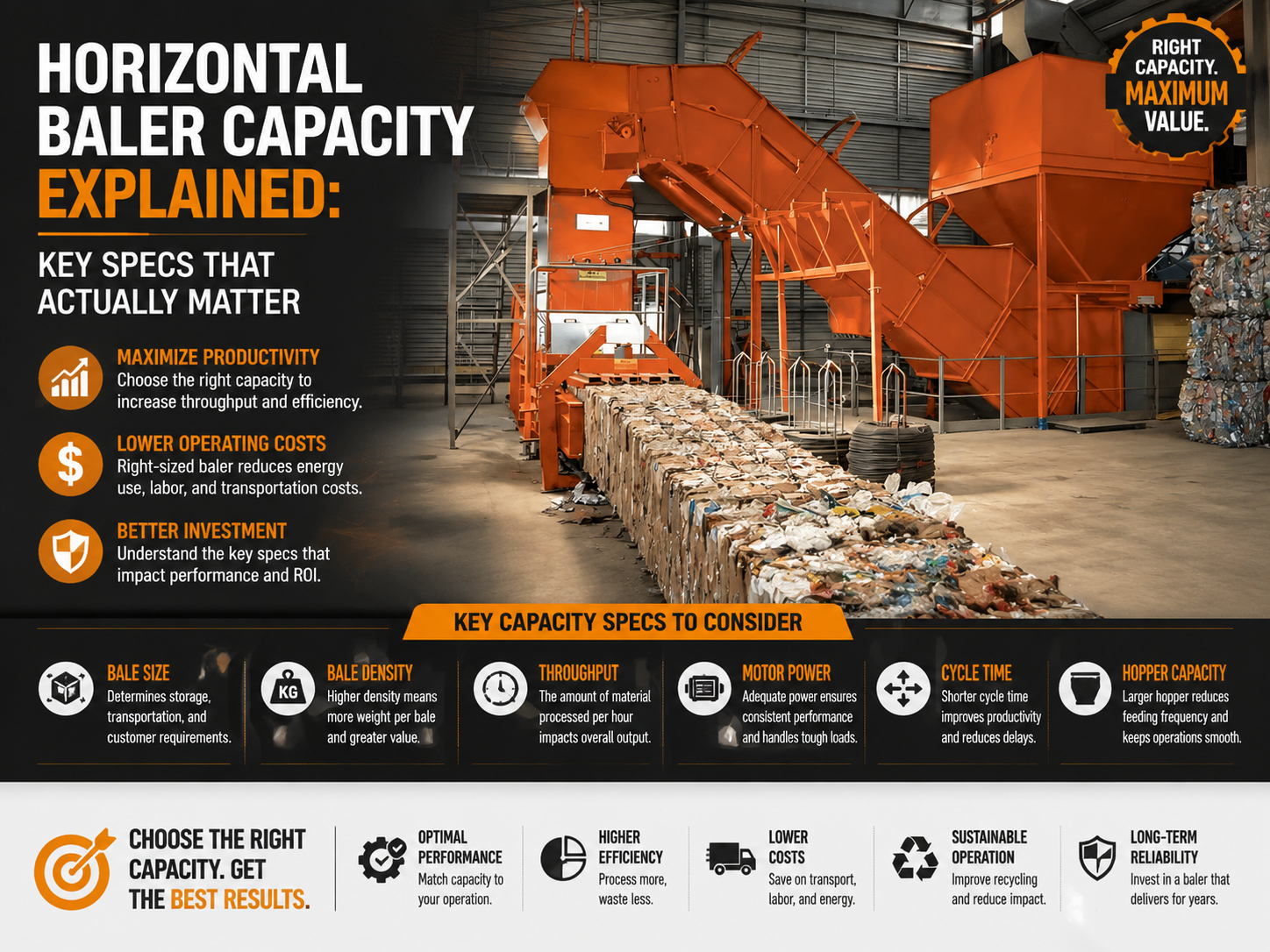
Technical Overview of Horizontal Baler Capacity
In the world of industrial waste management and metal fabrication, the horizontal baler stands as a cornerstone of efficiency. Unlike its vertical counterparts, which are often limited by manual loading and smaller footprints, the horizontal baler is designed for high-volume, continuous operation. However, understanding ‘capacity’ in this context is far more complex than simply looking at a single number on a spec sheet. Capacity is a multi-dimensional metric that encompasses throughput speed, material density, hydraulic force, and structural integrity.
At its core, a horizontal baler’s capacity is defined by its ability to process a specific volume of material into a dense, transportable bale within a set timeframe. For manufacturers like HARSLE, engineering these machines requires a delicate balance between hydraulic power and mechanical speed. If the machine is too fast but lacks force, the bales will be loose and inefficient for transport. Conversely, if the machine has immense force but a slow cycle time, it becomes a bottleneck in the production line.
Technical capacity is often divided into two categories: theoretical capacity and actual capacity. Theoretical capacity assumes a 100% efficient feed rate with no downtime, while actual capacity accounts for material loading variations, operator skill, and maintenance intervals. For industrial facilities, the goal is to bridge the gap between these two figures. This guide dives deep into the technical specifications that dictate these outcomes, ensuring that your investment in a horizontal baler yields the highest possible ROI.
Modern horizontal balers utilize advanced PLC (Programmable Logic Controller) systems to optimize these capacities. By adjusting the ram pressure and cycle speed based on the material detected in the hopper, these machines can maintain high throughput even when switching between different types of scrap, such as cardboard, plastics, or light non-ferrous metals. Understanding these nuances is the first step in selecting a machine that won’t just fit your floor space, but will actually meet your production demands.
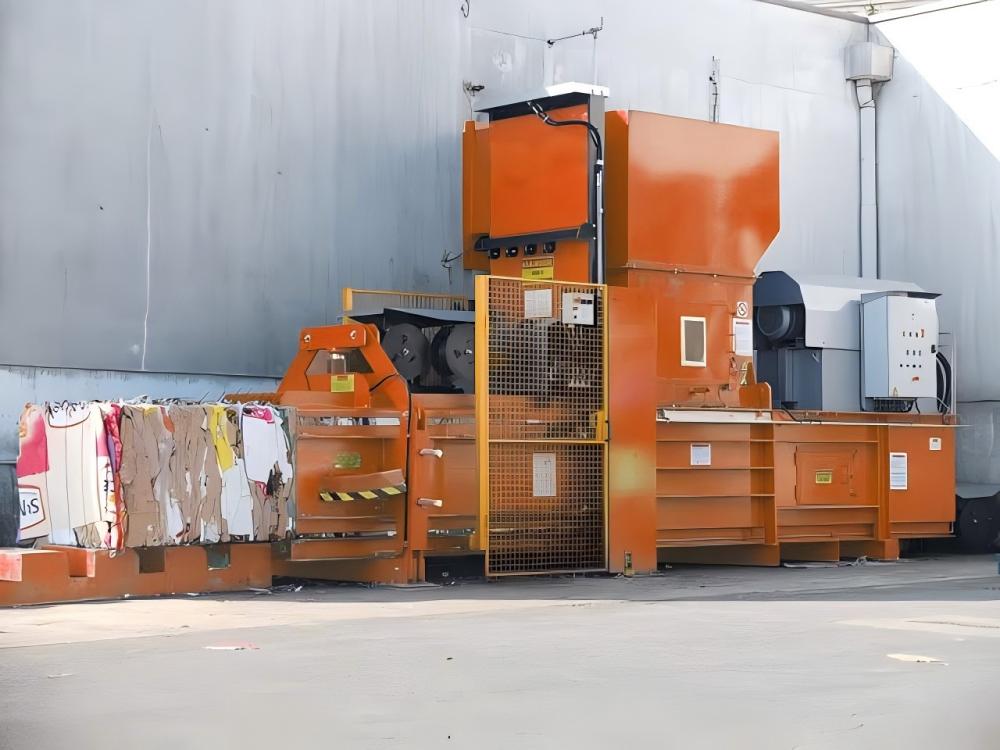
Core Parameters That Define Performance
1. Main Cylinder Pressing Force
The pressing force, usually measured in tons or kilonewtons (kN), is perhaps the most cited specification. It represents the total amount of pressure the hydraulic ram can exert on the material. For horizontal balers, this force typically ranges from 50 tons to over 200 tons. However, the ‘total force’ is less important than the ‘specific pressure’ (PSI or kg/cm²). Specific pressure is the total force divided by the surface area of the ram face. A higher specific pressure results in denser bales, which is critical for maximizing shipping container weights and reducing logistics costs.
2. Cycle Time and Hydraulic Efficiency
Cycle time refers to the duration it takes for the ram to move from its home position, reach full extension, and return. In high-capacity environments, every second counts. A machine with a 20-second cycle time is significantly more productive than one with a 40-second cycle time, provided the hydraulic system can handle the heat generation. HARSLE machines often employ dual-pump systems or regenerative hydraulic circuits to speed up the ram’s movement during the non-pressing phase of the cycle, effectively increasing capacity without requiring massive increases in motor horsepower.
3. Feed Opening and Hopper Dimensions
The physical size of the feed opening dictates the size of the material the baler can accept without pre-shredding. If you are processing large cardboard boxes or bulky metal scraps, a small feed opening will limit your capacity regardless of how fast the ram moves. The hopper design must also facilitate a smooth flow of material to prevent ‘bridging,’ where material gets stuck and stops the feed. Capacity is often limited by the ‘charge box’ volume—the amount of space available for material in front of the ram before a stroke begins.
4. Motor Power and Electrical Consumption
The kilowatt (kW) or horsepower (HP) rating of the main motor determines how much hydraulic fluid can be moved under pressure. High-capacity balers require substantial power to maintain fast cycle times under high load. However, modern engineering focuses on ‘smart’ power. Variable Frequency Drives (VFDs) allow the motor to consume only the energy needed for the current task, reducing operational costs while maintaining the ability to hit peak capacity when the hopper is full.
The Science of Calculation: Determining Real-World Throughput
To accurately calculate the capacity of a horizontal baler for your specific application, you must look beyond the manufacturer’s ‘tons per hour’ estimate, which is often based on ideal materials like high-density cardboard. The formula for hourly throughput is generally: (Bale Weight × 3600) / (Cycle Time + Loading Time). However, this formula is heavily influenced by the ‘Bulk Density’ of the incoming material.
For example, loose plastic film has a very low bulk density compared to shredded paper. This means the ram must perform more ‘pre-compression’ strokes to create a single bale of plastic than it would for paper. Consequently, the hourly tonnage for plastic will be lower. When calculating capacity, engineers also factor in the ‘Volumetric Displacement’ of the ram. This is the volume of the charge box multiplied by the number of strokes per hour. If your material is extremely light, you may find that the machine’s volumetric capacity is the limiting factor, not its hydraulic force.
Another critical factor is the ‘Shear Force.’ Many horizontal balers are equipped with shear blades at the top of the pressing chamber. These blades cut off overhanging material as the ram moves forward. The energy required to shear through thick material subtracts from the energy available for compression. If your material is difficult to shear, it will increase the cycle time and decrease the overall capacity. Understanding these interactions allows facility managers to set realistic production goals and choose the right auxiliary equipment, such as conveyors or fluffers, to optimize the feed.
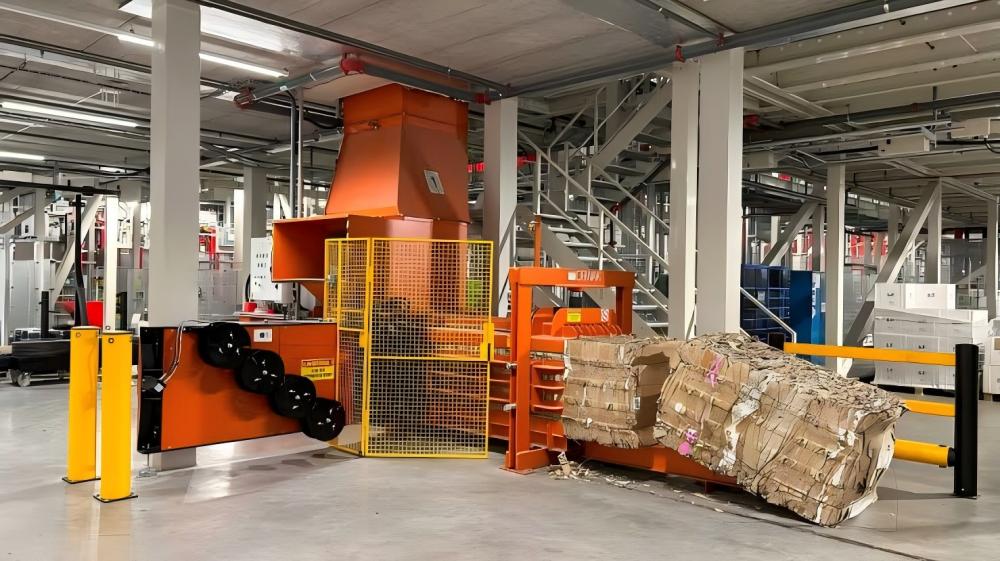
Technical Parameter Comparison Table
The following table illustrates how different specifications impact the intended application and capacity of HARSLE horizontal balers. Note how the relationship between motor power and cycle time shifts as the pressing force increases.
| Model Series | Pressing Force (Tons) | Motor Power (kW) | Cycle Time (Sec) | Bale Size (mm) | Typical Throughput (Tons/Hr) |
|---|---|---|---|---|---|
| HBA-60 | 60 | 15 – 22 | 25 – 35 | 1100 x 750 x Var | 3 – 5 |
| HBA-100 | 100 | 30 – 45 | 20 – 30 | 1100 x 1100 x Var | 6 – 10 |
| HBA-160 | 160 | 45 – 75 | 15 – 25 | 1100 x 1100 x Var | 12 – 18 |
| HBA-200 (HD) | 200+ | 75 – 110 | 12 – 20 | 1100 x 1100 x Var | 20+ |
Note: Throughput values are estimates based on standard OCC (Old Corrugated Containers). Actual results vary by material density and moisture content.
Common Engineering and Operational Mistakes
One of the most frequent mistakes in selecting a horizontal baler is undersizing the motor for the desired throughput. While a smaller motor may save on initial capital expenditure, it will result in longer cycle times and may struggle to reach the necessary pressures for high-density bales. This leads to ‘soft’ bales that fall apart during transport, increasing labor costs for re-baling and potentially incurring penalties from recyclers.
Another common error is ignoring the cooling system. High-capacity baling generates significant heat within the hydraulic oil. If the machine is operated at its limit without an adequately sized oil cooler, the oil viscosity will drop, leading to internal leakage in the pumps and valves. This not only reduces capacity but also accelerates wear on expensive hydraulic components. In tropical climates or high-duty cycle environments, an oversized cooling system is a necessity, not an option.
Furthermore, many operators fail to account for the ‘Wire-Tie’ bottleneck. An automatic horizontal baler is only as fast as its tying mechanism. If the machine compresses a bale in 20 seconds but takes 40 seconds to tie it, the capacity is effectively halved. High-end models utilize multi-wire simultaneous tying systems to minimize this downtime. Neglecting the maintenance of the tying needles and twisters is a surefire way to see your hourly capacity plummet due to missed ties and machine jams.
Selection Checklist for Industrial Buyers
Choosing the right horizontal baler requires a systematic approach. Use the following checklist to ensure the machine’s capacity matches your operational reality:
- Material Characterization: What is the primary material? (Cardboard, PET, Aluminum, MSW). What is its average moisture content and bulk density?
- Volume Requirements: How many tons do you need to process per shift? Always size the machine for 20% more than your current peak volume to allow for future growth.
- Space Constraints: Horizontal balers have a large footprint. Does the layout allow for efficient conveyor feeding and bale removal?
- Electrical Infrastructure: Can your facility handle the peak amperage draw of a 75kW or 110kW motor?
- Bale Logistics: What are the dimensions of your transport trucks or export containers? Ensure the bale size maximizes the ‘cube’ of the trailer.
- Automation Level: Do you need a fully automatic system with a continuous tie, or is a semi-automatic manual-tie system sufficient for your volume?
- Maintenance Access: Does the design allow for easy access to the shear blades and hydraulic filters? Capacity is zero when the machine is down for repairs.
Frequently Asked Questions
How does material moisture affect baler capacity?
Moisture increases the weight of the material but often makes it more difficult to compress. Wet cardboard, for instance, is less ‘springy’ than dry cardboard but can become slippery, affecting the grip of the chamber tensioners. Generally, high moisture content requires more force to achieve the same density, which can slow down the overall throughput and increase wear on the machine’s liners.
What is the difference between an open-end and a closed-end horizontal baler?
Open-end balers allow for continuous extrusion of bales and are typically used in high-volume, fully automatic operations. They use hydraulic ‘tensioners’ to create resistance. Closed-end balers have a manual or hydraulic door that stays shut until the bale is finished. Closed-end models usually offer higher pressing force for difficult materials but have lower overall capacity because the process must stop to eject each bale.
Can one horizontal baler handle multiple types of material?
Yes, most modern horizontal balers from HARSLE feature ‘Material Recipes’ in the PLC. The operator can select ‘Plastic’ or ‘Paper,’ and the machine will automatically adjust the ram pressure, tensioner settings, and tie counts. However, switching materials frequently can reduce daily capacity due to the time needed to clear the chamber between different grades.
Why is ‘Specific Pressure’ more important than ‘Total Tons’?
Total tons is the brute force, but specific pressure (PSI) is how that force is applied. A 100-ton baler with a small ram face will produce a much denser bale than a 100-ton baler with a massive ram face. For logistics and shipping, density is the key to profitability, making specific pressure the more critical engineering metric for capacity evaluation.
How often should the shear blades be sharpened to maintain capacity?
Shear blades should be inspected weekly and typically sharpened or rotated every 500 to 1,000 hours of operation, depending on the abrasiveness of the material. Dull blades increase the load on the hydraulic system, lengthen the cycle time, and can cause the machine to jam, all of which severely degrade the effective capacity of the baler.