Gantry Shear Buying Guide: Essential Specs Every Buyer Should Compare Before Purchase

Introduction to Gantry Shear Procurement
In the heavy-duty world of scrap metal recycling and industrial demolition, the gantry shear stands as a titan of productivity. Unlike smaller alligator shears or mobile attachments, a gantry shear is a stationary powerhouse designed to process massive volumes of structural steel, HMS (Heavy Melting Scrap), and bulky metal waste into manageable, furnace-ready sizes. However, investing in a gantry shear is a significant capital expenditure that can range from tens of thousands to over a million dollars. Making the wrong choice based on surface-level specifications can lead to years of operational inefficiency, high maintenance costs, and missed production targets.
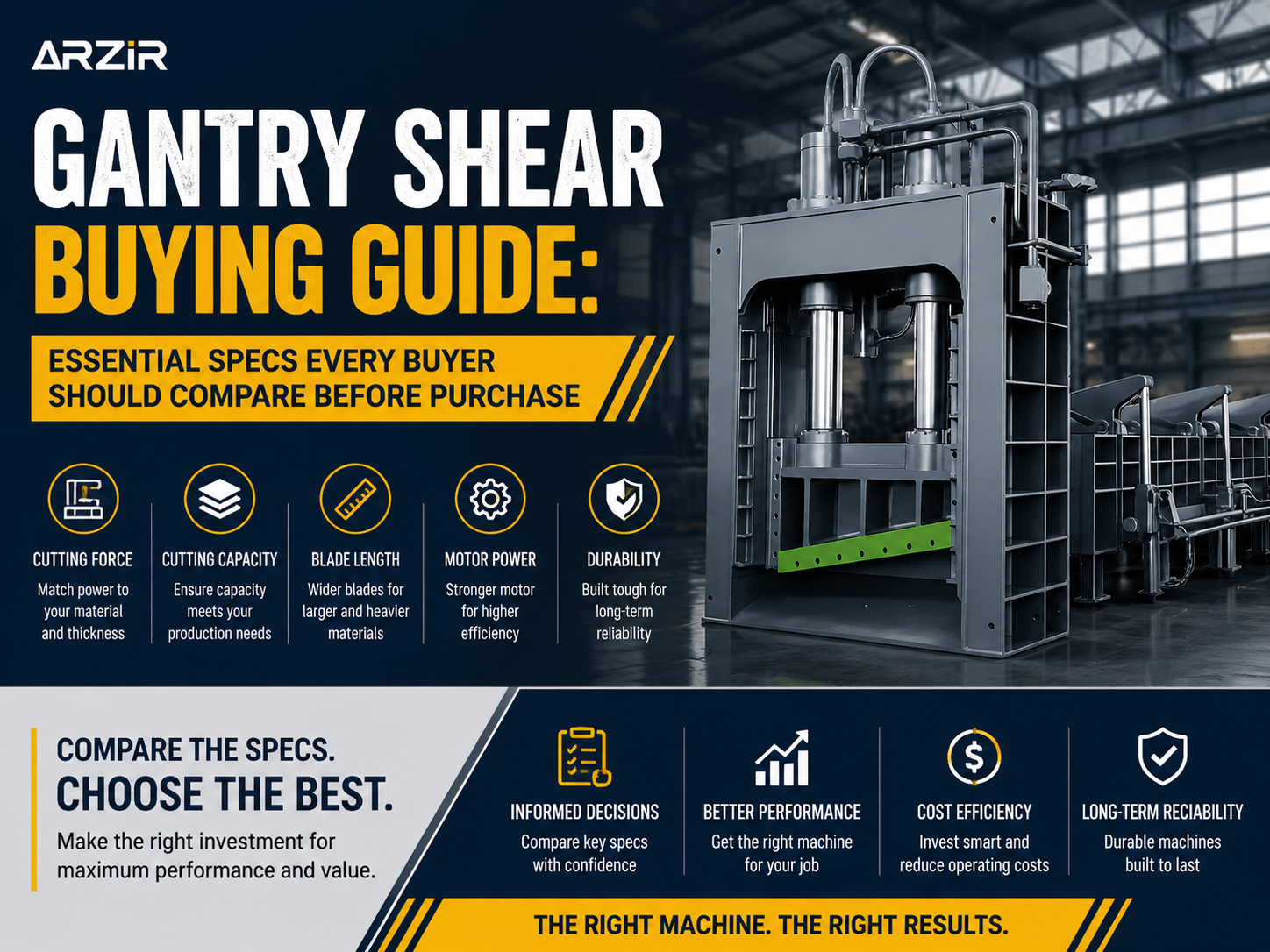
This Gantry Shear Buying Guide: Essential Specs Every Buyer Should Compare Before Purchase is designed to navigate the technical complexities of these machines. We will move beyond the marketing brochures to look at the engineering realities that dictate performance. Whether you are upgrading an existing scrap yard or setting up a new metal fabrication facility, understanding the nuances of hydraulic pressure, blade metallurgy, and structural frame rigidity is paramount. By the end of this guide, you will have a comprehensive framework for evaluating different models and manufacturers, ensuring your investment delivers the highest possible return.
Price Range Overview: What to Expect in the Market
The price of a gantry shear is primarily dictated by its cutting force and automation level. At the entry-level, often referred to as ‘compact’ or ‘light-duty’ gantry shears (typically 400 to 600 tons of cutting force), prices generally start around $60,000 and can go up to $120,000. These machines are suitable for smaller yards processing light structural steel and non-ferrous metals. They often feature manual or semi-automatic controls and smaller feeding boxes.
Mid-range gantry shears, which are the workhorses of the industry (800 to 1250 tons), typically fall between $150,000 and $450,000. These machines offer a balance of speed and power, capable of handling thicker beams and larger volumes of scrap. In this price bracket, you begin to see advanced features like high-speed hydraulic circuits, PLC (Programmable Logic Controller) integration, and more robust wear-resistant liners in the compression box.
High-end, heavy-duty industrial gantry shears (1600 tons to 2500+ tons) represent the pinnacle of scrap processing technology. These machines can cost anywhere from $500,000 to well over $1.5 million. They are designed for 24/7 operation in high-volume environments. At this level, buyers are paying for massive throughput capacities, sophisticated remote monitoring systems, and extreme structural durability. The price also reflects the massive scale of the hydraulic power units required to drive such immense cutting forces.
Main Cost Drivers in Gantry Shear Manufacturing
Understanding why one machine costs significantly more than another, despite having similar ‘rated’ tonnages, requires looking at the components. The first major cost driver is the Hydraulic System. High-quality shears utilize pumps and valves from reputable global brands like Rexroth, Vickers, or Parker. These components are more expensive but offer superior reliability and easier sourcing of spare parts. A cheaper machine might use generic or domestic-only hydraulic components that are prone to internal leakage and overheating under heavy loads.
The second driver is Steel Quality and Fabrication. The frame of a gantry shear must withstand repetitive, massive shock loads. Manufacturers like HARSLE use high-tensile strength steel (such as Q345B or better) and employ advanced welding techniques followed by stress-relieving heat treatments. A machine built with thinner plates or lower-grade steel will eventually develop fatigue cracks, leading to catastrophic structural failure. The weight of the machine is often a good proxy for its build quality; a heavier machine usually indicates more substantial steel reinforcement.
Blade Material and Design also significantly impact the initial cost and long-term operating expenses. Premium blades made from specialized tool steels like 6CrW2Si or Cr12MoV are designed to maintain their edge longer and resist chipping when encountering hardened materials. Furthermore, the design of the blade seat and the ease of blade rotation (most blades have 4 cutting edges) affect how much downtime is required for maintenance. A well-engineered blade system reduces the cost per ton of processed material.
Configuration Impact: Matching Specs to Production Needs
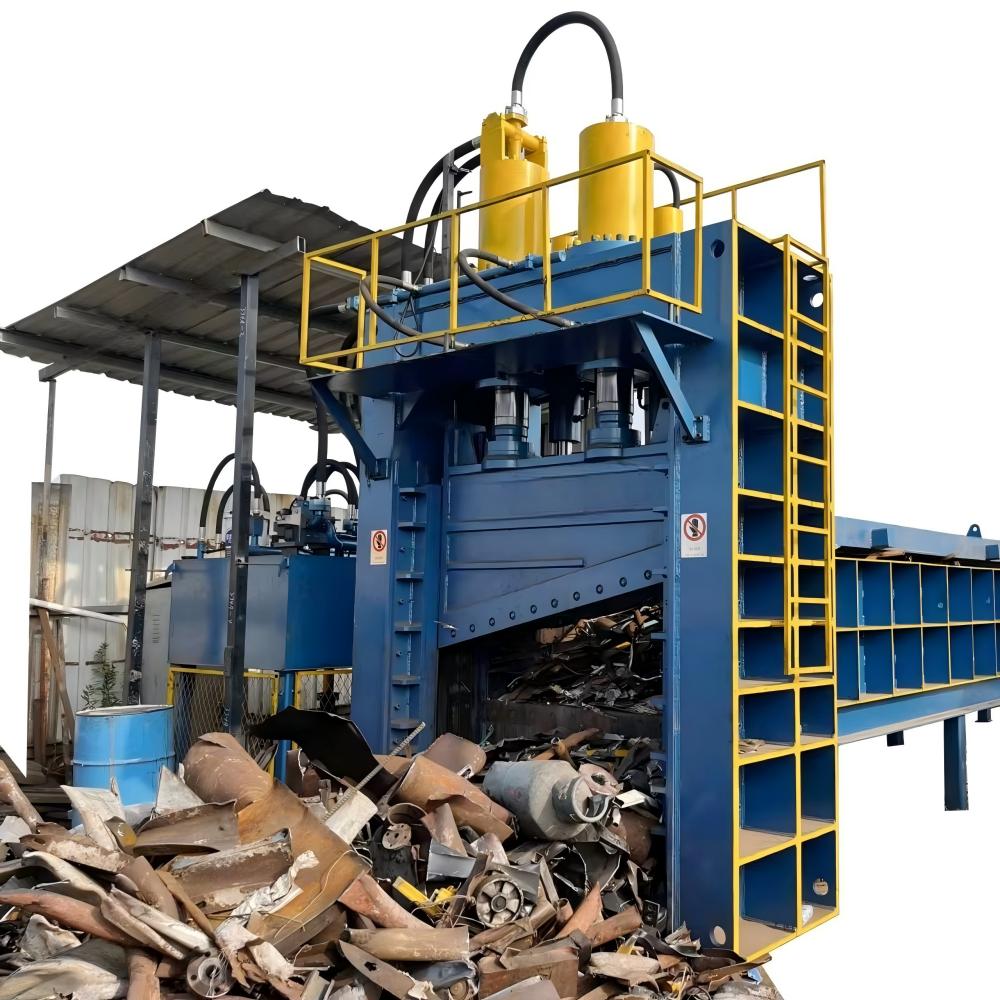
When comparing specifications, the Cutting Force is the headline figure, but it must be viewed alongside the Blade Length. A 1000-ton shear with a 1500mm blade exerts less pressure per square inch than a 1000-ton shear with a 1000mm blade. Buyers must match the blade width to the type of scrap they process. If you are processing wide plates or large pipe sections, a wider blade is necessary, but you may need a higher total tonnage to maintain cutting efficiency.
The Feeding Box Dimensions are equally critical. The box must be large enough to accommodate the largest pieces of scrap you intend to process without excessive pre-cutting with torches. A larger feeding box increases the efficiency of the crane operator, as they can drop larger loads into the machine. However, a larger box also requires more powerful cylinders to compress the scrap before the shear cycle begins. Look for ‘side-press’ or ‘wing-style’ compression boxes which are highly effective at densifying bulky scrap.
Cycle Time is the metric that defines your daily throughput. This is the time it takes for the shear to complete one full stroke (down and up). Faster cycle times are achieved through high-flow hydraulic systems and ‘regenerative’ circuits that speed up the non-cutting portion of the stroke. When comparing machines, ask for the cycle time under load versus the ‘dry’ cycle time. A machine that is fast on paper but slows down significantly when it hits steel will not meet your production targets.
Hidden Costs of Gantry Shear Ownership
The purchase price is only the beginning. One of the most overlooked hidden costs is Civil Engineering and Foundation Work. A gantry shear exerts incredible dynamic forces on the ground. You cannot simply place it on a standard factory floor. You will likely need a reinforced concrete pad, often several feet thick, with specific anchoring points. Depending on your local soil conditions, this can add $10,000 to $50,000 to your total project cost.
Electrical Infrastructure is another major consideration. These machines use high-horsepower motors (often multiple 45kW or 75kW motors). You must ensure your facility has the necessary amperage to start and run these motors. If an electrical upgrade or a new transformer is required, the costs can be substantial. Additionally, consider the Hydraulic Oil Requirement. A large gantry shear may require 2,000 to 5,000 liters of high-grade hydraulic oil. Filling the tank for the first time is a significant expense, and regular oil analysis and filtration are necessary to protect the system.
Finally, consider Freight and Installation. These machines are oversized and overweight loads. Shipping them from the manufacturer to your site requires specialized logistics, permits, and often multiple flatbed trucks. Once on-site, you will need a heavy-lift crane and a team of specialized technicians to assemble the gantry, connect the hydraulics, and calibrate the PLC. Always clarify with the manufacturer whether these services are included in the quote or are additional expenses.
ROI Calculation: When Will the Machine Pay for Itself?
To calculate the Return on Investment (ROI) for a gantry shear, you must look at the ‘Spread’—the difference between the price you pay for unprocessed scrap and the price you receive for processed, furnace-ready scrap. Processed scrap (like HMS 1/2) commands a significantly higher market price because it is denser and easier for steel mills to melt. If the spread is $50 per ton and your gantry shear allows you to process 10 tons per hour, you are generating $500 of value-added per hour.
Next, subtract your Operating Costs. This includes electricity, labor (usually one crane operator and one machine monitor), blade sharpening/replacement, and routine maintenance. If your total operating cost is $150 per hour, your net profit is $350 per hour. If the machine costs $350,000, you would need 1,000 hours of operation to break even on the capital cost. In a standard single-shift operation, this could be achieved in less than a year.
However, the ROI calculation should also factor in Labor Savings. Before a gantry shear, many yards rely on manual torch cutting. Torch cutting is slow, dangerous, and expensive due to the cost of gases and high insurance premiums. A gantry shear can replace 5 to 10 torch cutters, significantly reducing your payroll and improving site safety. The reduction in workplace injury risk alone provides a ‘soft’ ROI that is invaluable to modern industrial operations.

Buying Advice: A Checklist for the Smart Buyer
Before signing a contract, perform a thorough vetting of the manufacturer. If possible, visit the factory to see their production process. Are they using CNC machining centers to ensure the precision of the blade seats? Do they have a dedicated testing area where the machine is run under pressure before shipping? A reputable manufacturer like HARSLE welcomes such inspections as it demonstrates their commitment to quality.
- Request a Material Test: Send samples of your toughest scrap to the manufacturer and ask for a video of the machine processing it. This proves the machine can handle your specific material mix.
- Check Spare Parts Availability: Ask for a list of ‘wear parts’ and their prices. Ensure that critical components like seals, filters, and blades are kept in stock and can be shipped quickly.
- Verify the Warranty: A standard warranty should cover the frame for at least 2-3 years and the hydraulic/electrical components for 1 year. Be wary of manufacturers who offer very short warranties.
- Evaluate the PLC Interface: The software should be user-friendly and offer diagnostic capabilities. If a sensor fails, the screen should tell the operator exactly where the problem is, reducing troubleshooting time.
- Safety Features: Ensure the machine complies with international safety standards (like CE or ANSI). This includes emergency stop buttons, safety cages, and pressure relief valves.
Frequently Asked Questions (FAQ)
How often do the blades need to be changed?
Blade life depends entirely on the material being cut. For standard structural steel, you might get 200-400 hours of cutting per edge. Since most blades have four edges, a single set can last 800-1600 hours. However, cutting hardened alloys or contaminated scrap will shorten this significantly. Regular inspection and maintaining the correct blade gap are essential to maximizing life.
Can a gantry shear be moved once installed?
While they are ‘stationary’ machines, they can be disassembled and moved. However, it is a major undertaking involving heavy cranes and specialized technicians. It is not something you would do seasonally. If you need mobility, you might consider a ‘containerized’ or ‘portable’ gantry shear, which is built on a heavy-duty sub-frame that can be transported more easily.
What is the difference between a side-press and a top-press gantry shear?
A top-press uses a vertical lid to crush scrap down into the box. A side-press (or wing-style) uses horizontal rams to squeeze the scrap from the sides. Side-press models are generally better for long, bulky items like pipes and beams, as they can ‘fold’ the material more effectively into the cutting zone. Most modern high-production shears utilize a combination of both or a sophisticated wing design.
What kind of hydraulic oil should I use?
Most manufacturers recommend a high-quality anti-wear hydraulic oil, typically ISO VG 46 or 68, depending on your climate. In very cold environments, a low-pour-point oil is necessary, while in hot climates, a higher viscosity oil helps maintain system pressure. Always follow the manufacturer’s specific lubrication chart to avoid voiding the warranty.
Is automation really necessary for a scrap yard?
Automation (PLC control) allows the machine to run in a continuous cycle. The operator only needs to keep the feeding box full. Without automation, the operator must manually trigger every compression and cutting stroke, which is exhausting and leads to inconsistent production rates. Automation also includes safety interlocks that prevent the machine from operating if a door is open or pressure is too high, protecting both the staff and the equipment.