Comprehensive Guide: How to Inspect and Replace Wear Parts on a Gantry Shear

Technical Overview of Gantry Shear Wear Components
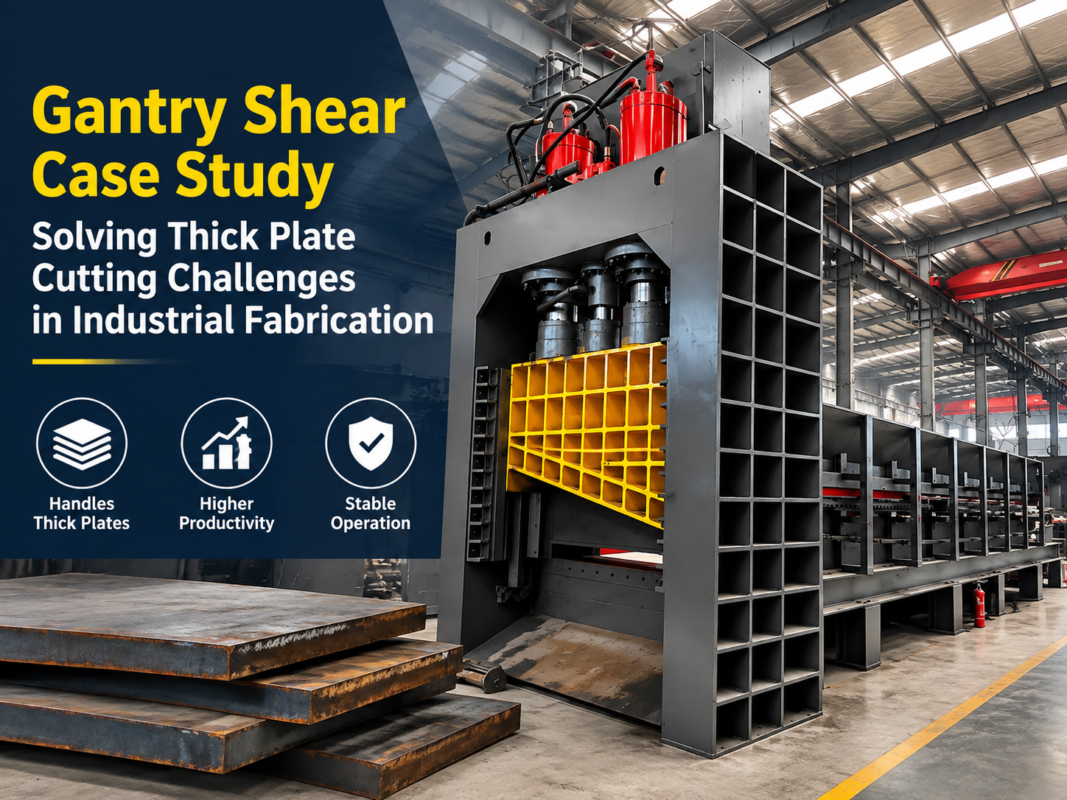
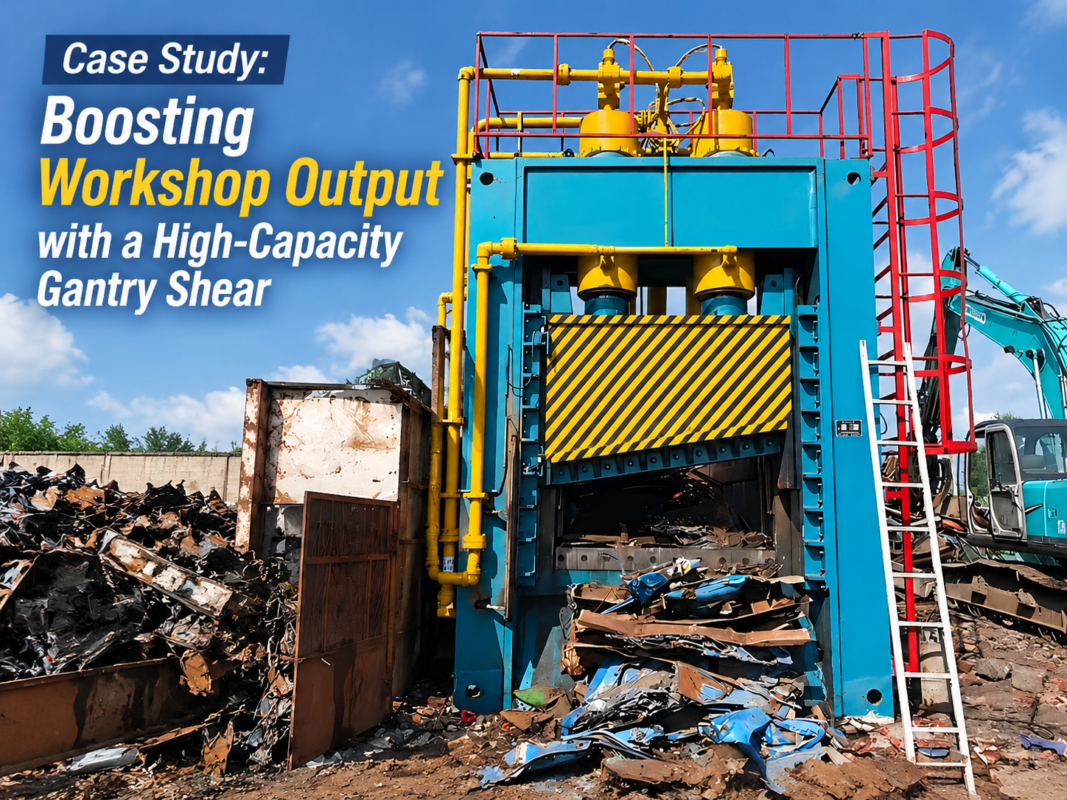
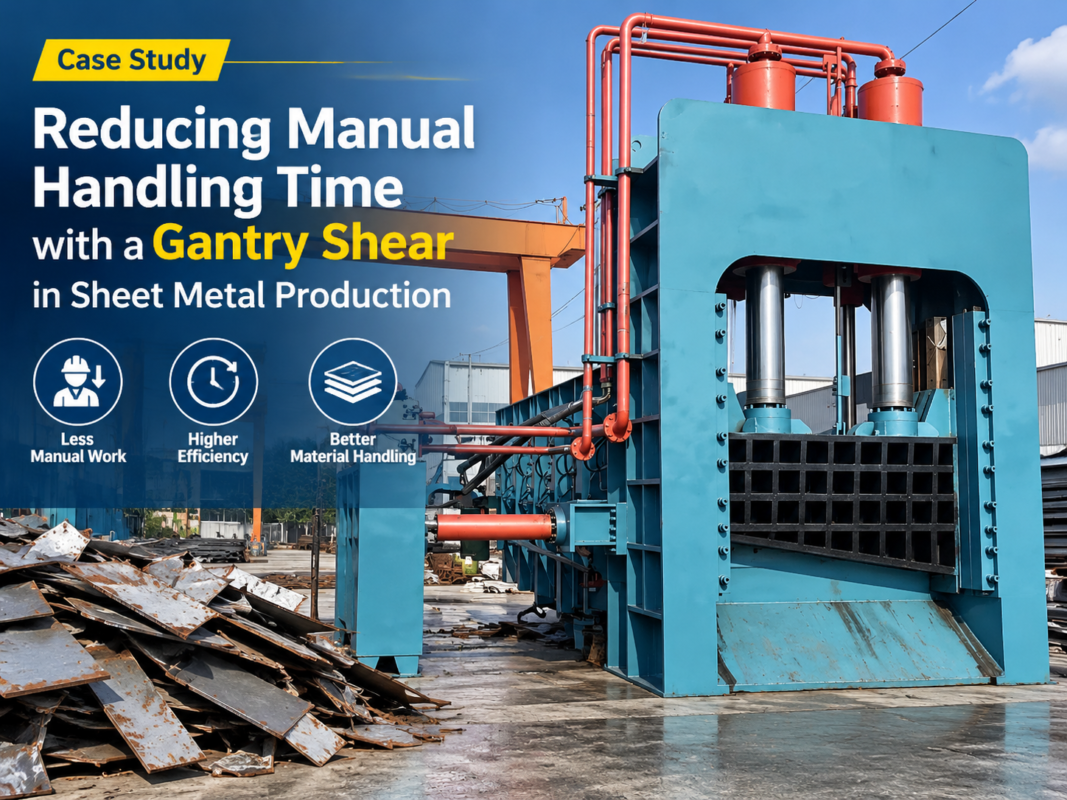
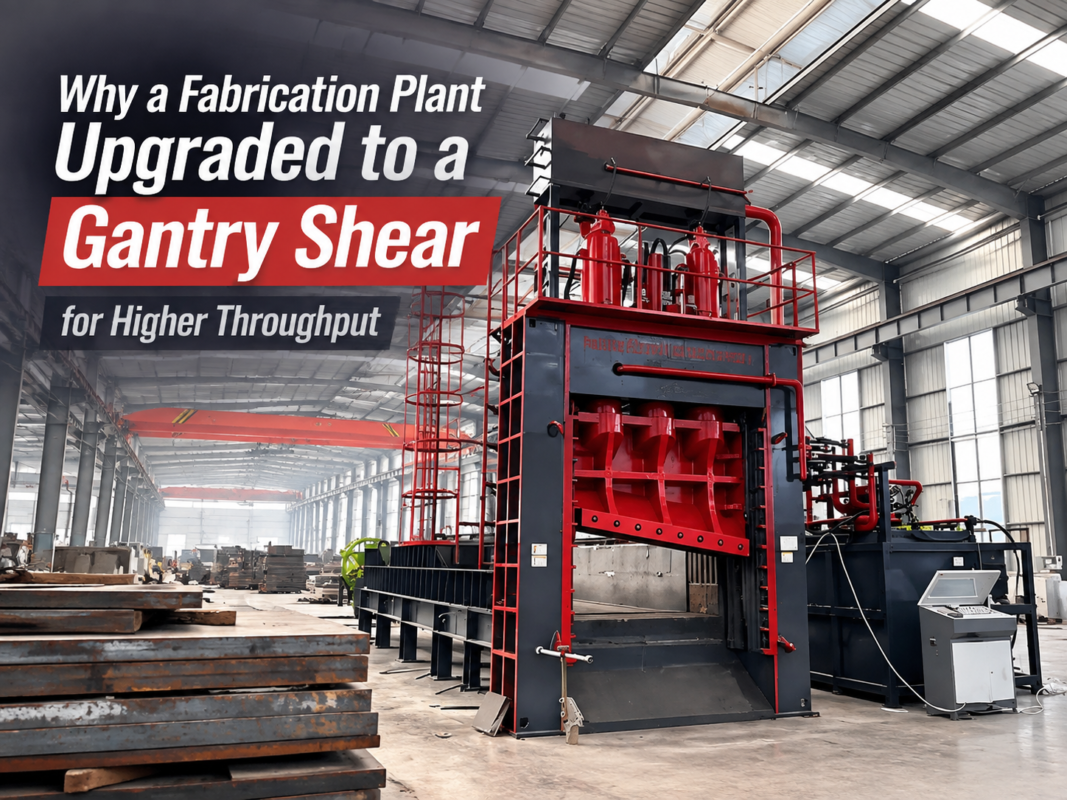
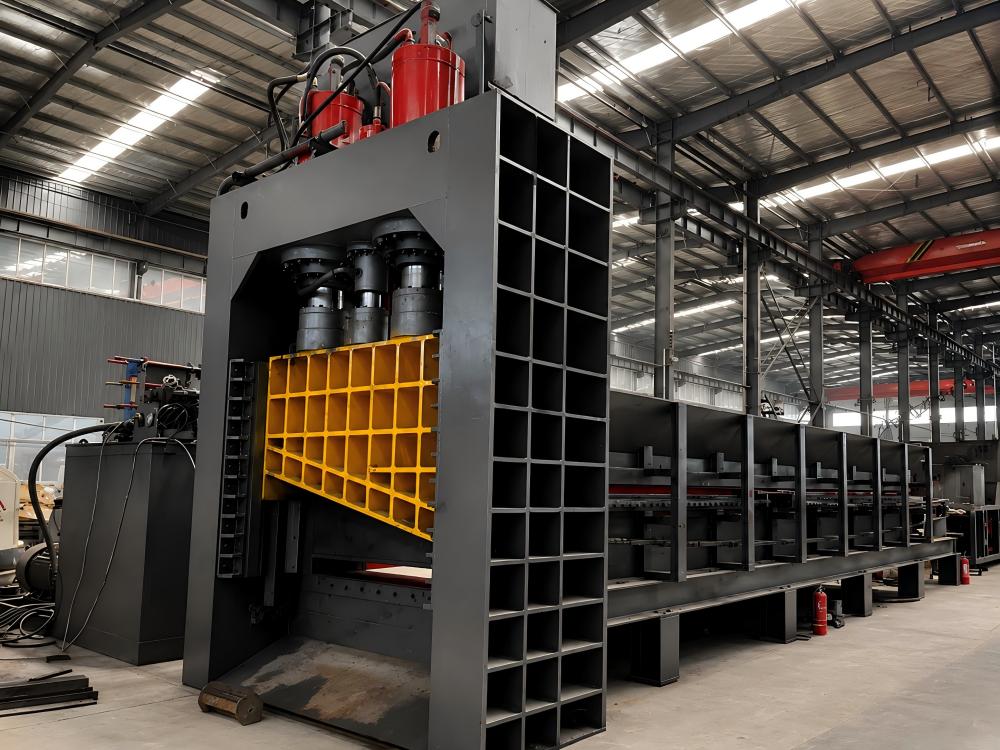
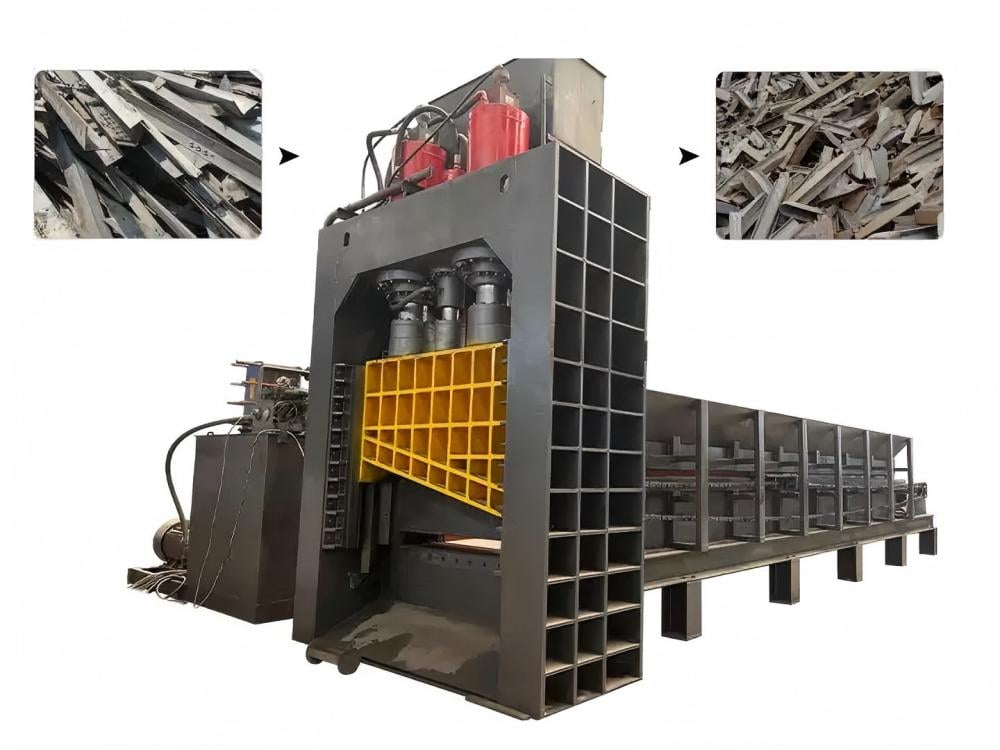
The gantry shear is a cornerstone of the scrap metal recycling and heavy metal fabrication industries. Designed to process large volumes of structural steel, plate, and mixed scrap, these machines operate under immense hydraulic pressure. Because of the violent nature of shearing metal, certain components—known as wear parts—are designed to be sacrificial or maintainable. Understanding how to Inspect Replace Wear Parts On A Gantry Shear is critical for maintaining operational efficiency, ensuring safety, and extending the lifespan of the machine.
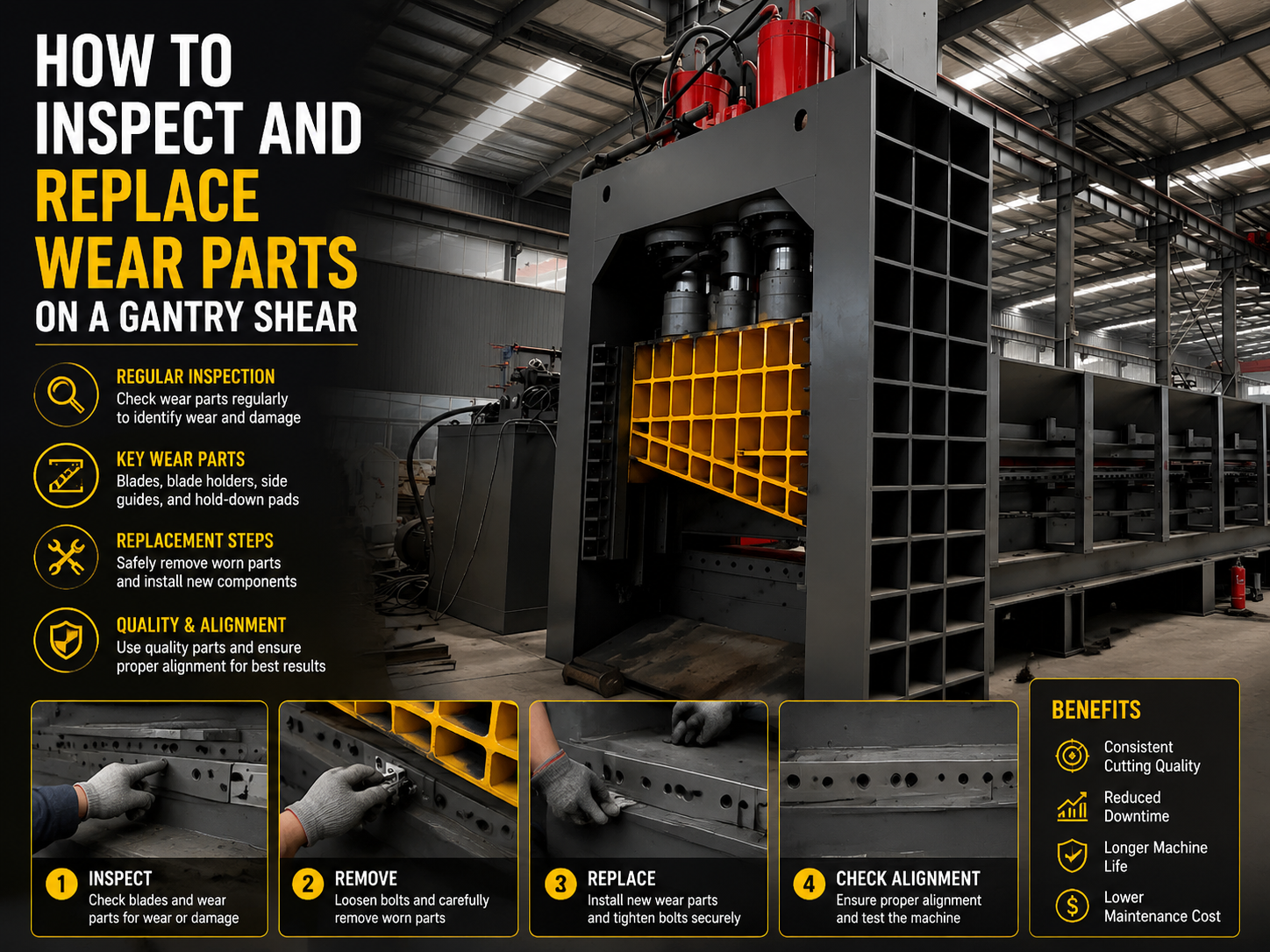
The primary wear parts in a gantry shear include the cutting blades (knives), the slide guide plates (liners), the hydraulic seals, and the pressure plates. The blades are subjected to extreme compressive and shear stresses, leading to edge rounding, chipping, or cracking. The guide plates, which ensure the shear head travels in a perfectly vertical path, experience friction and heat, eventually thinning out and creating ‘slop’ or play in the cutting head. If these parts are not inspected regularly, the resulting misalignment can cause catastrophic damage to the main cylinder or the machine frame.
HARSLE gantry shears are engineered with high-durability materials, but even the most robust engineering cannot bypass the laws of physics. Regular inspection cycles allow operators to identify wear before it reaches a critical failure point. A well-maintained shear produces cleaner cuts, requires less hydraulic pressure to operate, and consumes less energy. This technical guide provides a deep dive into the mechanics of these parts and the systematic approach required for their upkeep.
The Role of Metallurgy in Wear Parts
When we discuss wear parts, we are essentially discussing metallurgy. Shear blades are typically made from high-alloy tool steels such as Cr12MoV, 6CrW2Si, or specialized H13. These materials are chosen for their ability to maintain hardness at elevated temperatures and their resistance to impact. However, the harder the blade, the more brittle it becomes. Conversely, guide liners are often made from bronze alloys or oil-impregnated nylon to provide a low-friction surface against the steel frame. Understanding the material properties of your specific wear parts is the first step in a professional inspection routine.
Core Parameters for Gantry Shear Maintenance
To effectively Inspect Replace Wear Parts On A Gantry Shear, one must understand the operational parameters that define the machine’s performance. These parameters serve as the baseline for determining when a part has exceeded its useful life. The most critical parameters include shearing force, blade clearance, stroke frequency, and hydraulic operating temperature.
- Shearing Force (Tonnage): This is the maximum pressure the cylinders can exert. If you find that the machine requires higher pressure than usual to cut the same thickness of material, it is a primary indicator that the blades are dull or the clearance is too wide.
- Blade Clearance (Gap): This is the distance between the upper and lower blades as they pass each other. For a gantry shear, this is typically set between 5% and 10% of the material thickness. Excessive clearance leads to ‘folding’ rather than ‘shearing,’ which puts immense lateral stress on the guide system.
- Slide Tolerance: The gap between the moving shear head and the stationary frame guides. Typically, this should be maintained within 0.2mm to 0.5mm. Anything larger allows the head to tilt, causing uneven blade wear.
- Hydraulic Duty Cycle: The number of cuts per minute. High-speed operations generate more heat, which accelerates the degradation of hydraulic seals and reduces the viscosity of the lubricant on the guide plates.
Monitoring these parameters requires precision tools, including feeler gauges, ultrasonic thickness testers (for liners), and pressure transducers. By logging these values weekly, maintenance teams can predict the exact moment a replacement is needed, moving from reactive to predictive maintenance.
Calculation Method for Blade Clearance and Wear Limits
Calculating the correct blade clearance is essential for both cut quality and part longevity. The standard formula used in industrial shearing is:
C = K * T
Where:
C = Blade Clearance (mm)
K = Material Constant (typically 0.05 to 0.08 for mild steel, higher for stainless)
T = Thickness of the material being cut (mm)
For example, if you are shearing 20mm thick mild steel plate with a K-factor of 0.06, your clearance should be 1.2mm. If the clearance exceeds this by more than 20%, the blades are effectively ‘pushing’ the metal, which increases the wear rate on the blade seats and the hydraulic pump.
Determining Wear Limits
When should a blade be flipped or replaced? Most gantry shear blades are four-sided, meaning they can be rotated four times before needing a regrind. A general rule of thumb is that once the radius of the cutting edge exceeds 1.5mm, the blade must be rotated. For guide liners, replacement is mandatory when the thickness has decreased by 15% of its original dimension, or when the surface shows signs of ‘galling’ (material transfer between the slide and the guide).
Parameter Table: Typical Wear Part Specifications
The following table outlines the standard specifications for wear parts across various HARSLE gantry shear models. Use this as a reference for your inspection logs.
| Machine Model (Tonnage) | Blade Material Grade | Standard Blade Gap (mm) | Max Liner Wear (mm) | Seal Replacement Interval |
|---|---|---|---|---|
| Q91-400 | 9CrSi / Cr12MoV | 0.4 – 0.8 | 2.0 | 2,000 Hours |
| Q91-630 | Cr12MoV / H13 | 0.6 – 1.2 | 2.5 | 2,000 Hours |
| Q91-800 | 6CrW2Si | 0.8 – 1.5 | 3.0 | 1,500 Hours |
| Q91-1000+ | Special Alloy Steel | 1.0 – 2.0 | 4.0 | 1,500 Hours |
Step-by-Step Guide: How to Inspect and Replace Wear Parts
Step 1: Safety and Preparation
Before any inspection or replacement, the machine must be locked out and tagged out (LOTO). Ensure the shear head is either fully lowered or mechanically blocked to prevent accidental descent. Relieve all hydraulic pressure from the accumulators. Wear parts on a gantry shear are heavy; ensure you have overhead cranes or forklifts rated for the weight of the blades (which can exceed 100kg each).
Step 2: Inspecting the Blades
Clean the blades with a wire brush to remove scale and debris. Look for ‘nicks’ or ‘chips.’ A single large chip can act as a stress concentrator, leading to a full blade fracture. Use a straightedge to check for bowing along the length of the blade. If the center of the blade is worn more than the ends, it indicates that the machine is frequently used for material narrower than the full blade width, necessitating a rotation to balance the wear.
Step 3: Replacing/Rotating Blades
To Inspect Replace Wear Parts On A Gantry Shear, specifically the blades, loosen the high-tensile bolts starting from the center and moving outwards. Once the bolts are removed, use a pry bar to carefully move the blade away from its seat. Crucial: Clean the blade seat thoroughly. Even a 0.1mm piece of debris behind the blade can cause it to crack when tightened. Rotate the blade to a fresh edge, or install a new one. Apply an anti-seize compound to the bolts and torque them to the manufacturer’s specification (often exceeding 500 Nm for large shears).
Step 4: Inspecting and Adjusting Liners
The liners or guide plates are located on the sides of the gantry. Check for uneven wear patterns. If one side is more worn than the other, the gantry is ‘walking’ or tilting. Most HARSLE shears feature adjustable push-bolts behind the liners. You can take up the slack by tightening these bolts, but if the liner is worn past the limit shown in the parameter table, it must be replaced. New liners should be lubricated immediately with a high-pressure grease or dedicated slide-way oil.
Common Engineering Mistakes in Gantry Shear Maintenance
Even experienced technicians can make errors when they Inspect Replace Wear Parts On A Gantry Shear. Avoiding these common mistakes will save thousands of dollars in repair costs.
- Improper Bolt Torque: Under-tightening allows the blade to move during a cut, which can shatter the blade or damage the seat. Over-tightening can stretch the bolts beyond their elastic limit, leading to failure under load. Always use a calibrated torque wrench.
- Ignoring the Shims: After blades are reground, they are shorter. You must use precision shims to bring the cutting edge back to the correct position. Failure to shim correctly results in a gap that is too wide, even if the blades are sharp.
- Mixing Blade Grades: Never use a high-hardness blade on the top and a soft blade on the bottom. The difference in deformation rates will cause the harder blade to chip prematurely. Always replace or rotate blades in matched sets.
- Neglecting Hydraulic Filtration: Many operators don’t realize that ‘wear parts’ include the internal seals. If you replace blades but ignore dirty hydraulic oil, the metal particles from the old worn blades will circulate and destroy the new seals and pump internals.
Selection Checklist for Replacement Wear Parts
When purchasing new parts for your gantry shear, use this checklist to ensure you are getting industrial-grade components:
- Material Certification: Does the blade supplier provide a heat-treatment certificate? Blades should typically be hardened to 54-58 HRC for scrap applications.
- Dimensional Accuracy: Are the bolt holes countersunk correctly? Misaligned holes put lateral stress on the bolts.
- Liner Material: For high-speed shears, ensure liners are made from a self-lubricating composite or high-tin bronze.
- Seal Compatibility: Ensure hydraulic seals are compatible with the type of fluid you use (e.g., anti-wear hydraulic oil vs. fire-resistant fluids).
- OEM vs. Aftermarket: While aftermarket parts are cheaper, OEM parts from HARSLE ensure the exact tolerances required for the machine’s geometry.
Frequently Asked Questions (FAQ)
How often should I inspect the blades on my gantry shear?
For single-shift operations, a visual inspection should be performed daily. A detailed measurement of blade clearance and edge radius should be conducted weekly. If you are processing particularly hard materials like stainless steel or rebar, increase the frequency to every three days.
Can I weld a chipped shear blade?
It is generally not recommended to weld tool steel shear blades. The intense heat of welding alters the grain structure and hardness of the surrounding metal, often leading to a catastrophic crack during the next heavy cut. It is safer and more cost-effective to rotate the blade or have it professionally reground.
Why is my shear making a loud ‘banging’ noise during the cut?
This is often a sign of excessive blade clearance or loose blade bolts. The ‘bang’ is the sound of the material snapping rather than being sheared, or the blade shifting in its seat. Stop the machine immediately and check the torque on all blade bolts and the gap between the knives.
What is the average lifespan of a set of gantry shear blades?
Lifespan varies wildly based on material. In clean mild steel, a set of four-sided blades might last 1,000 to 2,000 hours per edge. In sandy, rusty scrap or demolition debris, this can drop to 500 hours. Proper lubrication and correct clearance settings can double the life of the blades.
How do I know if my hydraulic seals are failing?
Look for ‘weeping’ around the main cylinder rod. If you see a ring of oil on the rod as it extends, the wiper seal is gone. If the shear head ‘drifts’ downward when the pump is off, the internal piston seals are likely leaking, allowing oil to bypass the piston head.
Does the temperature of the metal affect wear?
Yes. Shearing cold metal (below freezing) increases the risk of blade chipping because the material is more brittle. Conversely, shearing very hot metal can cause ‘smearing’ on the blades, where the material sticks to the tool steel, requiring more frequent cleaning and potentially causing overheating of the guide liners.