How to Clean and Service an Industrial Shredder Safely: The Ultimate Maintenance Guide

The Critical Importance of Industrial Shredder Maintenance
In the world of heavy-duty recycling and metal fabrication, the industrial shredder stands as a cornerstone of efficiency. Whether you are processing scrap metal, plastics, or electronic waste, these machines endure immense stress, high torque, and abrasive environments. To ensure your investment continues to perform at peak capacity, understanding how to clean and service an industrial shredder safely is not just a recommendation—it is a fundamental operational requirement. Proper maintenance directly correlates with the longevity of the machine, the safety of the operators, and the overall profitability of the facility.
Neglecting a shredder can lead to catastrophic failures that are both expensive and dangerous. When debris builds up in the cutting chamber or when lubrication levels drop, the friction increases, leading to overheating and premature wear of the blades and shafts. Furthermore, an unmaintained shredder consumes more energy to achieve the same output, driving up operational costs. By implementing a rigorous service schedule, you can identify minor issues before they escalate into major mechanical breakdowns, ensuring that your HARSLE equipment remains a reliable asset for decades.
Safety is the most vital aspect of any maintenance routine. Industrial shredders are designed to destroy tough materials; they do not distinguish between scrap metal and human limbs. Therefore, every cleaning and servicing task must be approached with a “safety-first” mindset. This involves strict adherence to Lock-Out Tag-Out (LOTO) protocols, the use of appropriate Personal Protective Equipment (PPE), and a deep understanding of the machine’s mechanical and electrical systems. This guide will walk you through the essential steps to keep your shredder running smoothly while keeping your team safe.
Beyond the mechanical benefits, a well-maintained shredder produces a more consistent end-product. In the recycling industry, the size and quality of the shredded output determine its market value. Dull blades or misaligned shafts can result in uneven shredding, which may require secondary processing. By following the cleaning and servicing steps outlined in this article, you ensure that your HARSLE shredder delivers the high-performance results your business depends on.
Daily Inspection: The First Line of Defense
The key to preventing long-term damage is the daily inspection. Before the shift begins, a designated operator should perform a comprehensive visual and auditory check of the machine. This routine helps in identifying loose fasteners, fluid leaks, or unusual debris accumulation that might have occurred during the previous shift. A daily checklist ensures that nothing is overlooked and creates a historical record of the machine’s condition, which is invaluable for long-term troubleshooting.
Start by inspecting the hopper and the cutting chamber. Ensure there are no large, non-shreddable objects that could cause a jam or damage the blades upon startup. Check for “bridging,” where material becomes stuck above the cutters, preventing a smooth feed. If the shredder was not cleaned at the end of the previous shift, any residual material should be cleared out using long-handled tools, never by hand, even if the machine is off. This prevents accidental injury from sharp edges or residual tension in the drive system.
Listen to the machine during its warm-up phase. An experienced operator can often “hear” a problem before they see it. Unusual grinding, high-pitched squealing, or excessive vibration are all red flags. These sounds often indicate bearing failure, belt slippage, or blade interference. If any of these sounds are present, the machine should be shut down immediately for a more detailed inspection. Checking the discharge conveyor is also part of the daily routine; ensure that the shredded material is moving away from the machine efficiently to prevent back-ups into the cutting chamber.
Finally, check the control panel for any warning lights or error codes. Modern HARSLE shredders are equipped with sophisticated sensors that monitor motor temperature, amperage draw, and hydraulic pressure. If the PLC (Programmable Logic Controller) indicates a fault, do not bypass it. Investigate the root cause immediately. Daily inspections might seem repetitive, but they are the most effective way to catch the “small” problems that eventually lead to “big” repair bills.
Hydraulic, Electrical, and Mechanical Checks
Hydraulic System Integrity
For shredders powered by hydraulic drive systems, the fluid is the lifeblood of the machine. Servicing the hydraulic system involves checking fluid levels, monitoring temperature, and inspecting hoses for signs of wear or leaks. Hydraulic fluid should be clear; if it appears milky or dark, it may be contaminated with water or oxidized due to overheating. Contaminated fluid can damage sensitive valves and pumps, leading to a loss of torque and shredding power.
Inspect the hydraulic filters regularly. A clogged filter can cause a drop in pressure and lead to cavitation in the pump, which is a leading cause of pump failure. Additionally, check the cooling system. Industrial shredders generate significant heat during operation, and if the heat exchanger is clogged with dust or debris, the hydraulic oil will thin out, losing its lubricating properties. Ensure the cooling fans are operational and the radiator fins are clean.
Electrical System Safety and Performance
The electrical cabinet is the brain of the industrial shredder. Over time, vibrations from the shredding process can loosen electrical connections. During your monthly service, ensure that all wiring is secure and that there are no signs of arcing or charred insulation. Dust is a major enemy of electrical components; use compressed air or a specialized vacuum to clean the interior of the control cabinet, ensuring that the machine is fully powered down and locked out first.
Check the operation of all emergency stop buttons and safety interlocks. These components are critical for operator safety and must be functional at all times. If a safety limit switch on a maintenance door is bypassed or broken, the machine must be taken out of service until it is repaired. Furthermore, monitor the motor’s amperage draw during operation. A sudden increase in amperage for the same material load often indicates that the blades are dull or that there is mechanical resistance within the drive train.
Mechanical Components and Blade Sharpness
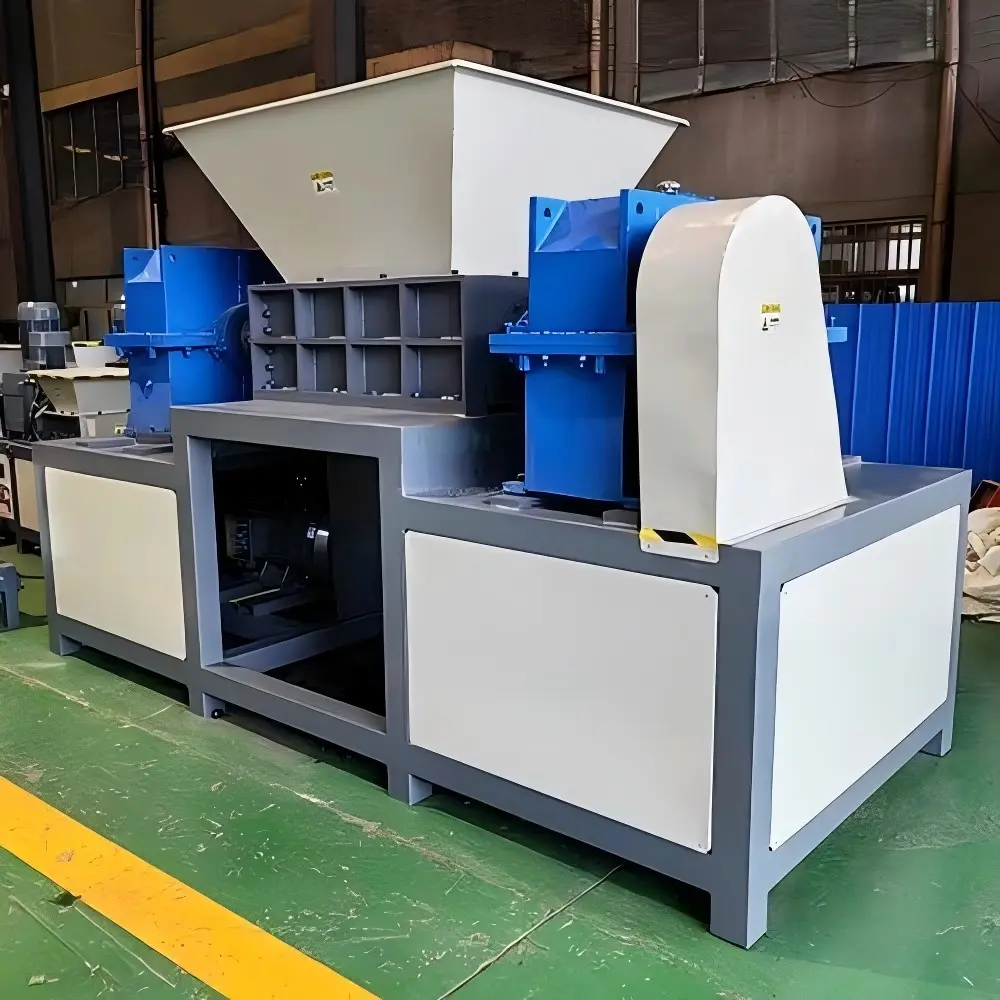
The mechanical heart of the shredder consists of the shafts, blades (cutters), and the gearbox. Inspect the blades for chipping, rounding, or excessive wear. Dull blades do not cut efficiently; they tear and crush, which requires significantly more energy and puts unnecessary strain on the motor and gearbox. Depending on the material being processed, blades may need to be sharpened or replaced periodically. HARSLE shredders often feature modular blade designs that allow for easier replacement of individual segments.
Check the torque on the bolts holding the blades and the bearing housings. The intense vibration of shredding can cause even the strongest fasteners to loosen over time. Inspect the gearbox for oil leaks and check the oil level. The gearbox oil should be changed according to the manufacturer’s specifications, typically after the first 500 hours of operation and then every 2,000 to 3,000 hours thereafter. Use only the recommended gear oil to ensure proper film strength under high-load conditions.
The Comprehensive Lubrication Plan
Lubrication is the single most important factor in preventing mechanical wear. An industrial shredder has numerous moving parts that operate under extreme pressure. Without a proper lubrication film, metal-on-metal contact will quickly destroy bearings and gears. A comprehensive lubrication plan should specify the type of lubricant to be used, the location of every grease point, and the frequency of application. Most HARSLE shredders require an Extreme Pressure (EP) grease, such as an NLGI Grade 2 lithium-based grease, to handle the high shock loads.
Main shaft bearings are the most critical lubrication points. These bearings support the entire weight and force of the shredding action. They should be greased while the machine is running (if safe and equipped with remote grease lines) or immediately after shutdown while the bearings are still warm, as this helps the grease distribute evenly. Be careful not to over-grease, as this can blow out the seals and allow contaminants to enter the bearing housing. Usually, a few pumps of a manual grease gun are sufficient for daily or weekly maintenance.
If your shredder is equipped with an automatic lubrication system, your primary task is to ensure the reservoir is full and the pump is functioning correctly. Check the delivery lines for kinks or breaks. Even with an auto-lube system, manual inspection of the bearings is still necessary to ensure they are actually receiving the grease. For the drive chains and open gears, use a specialized tacky lubricant that won’t sling off during high-speed operation. This prevents corrosion and reduces the noise generated by the drive system.
How to Clean an Industrial Shredder Safely
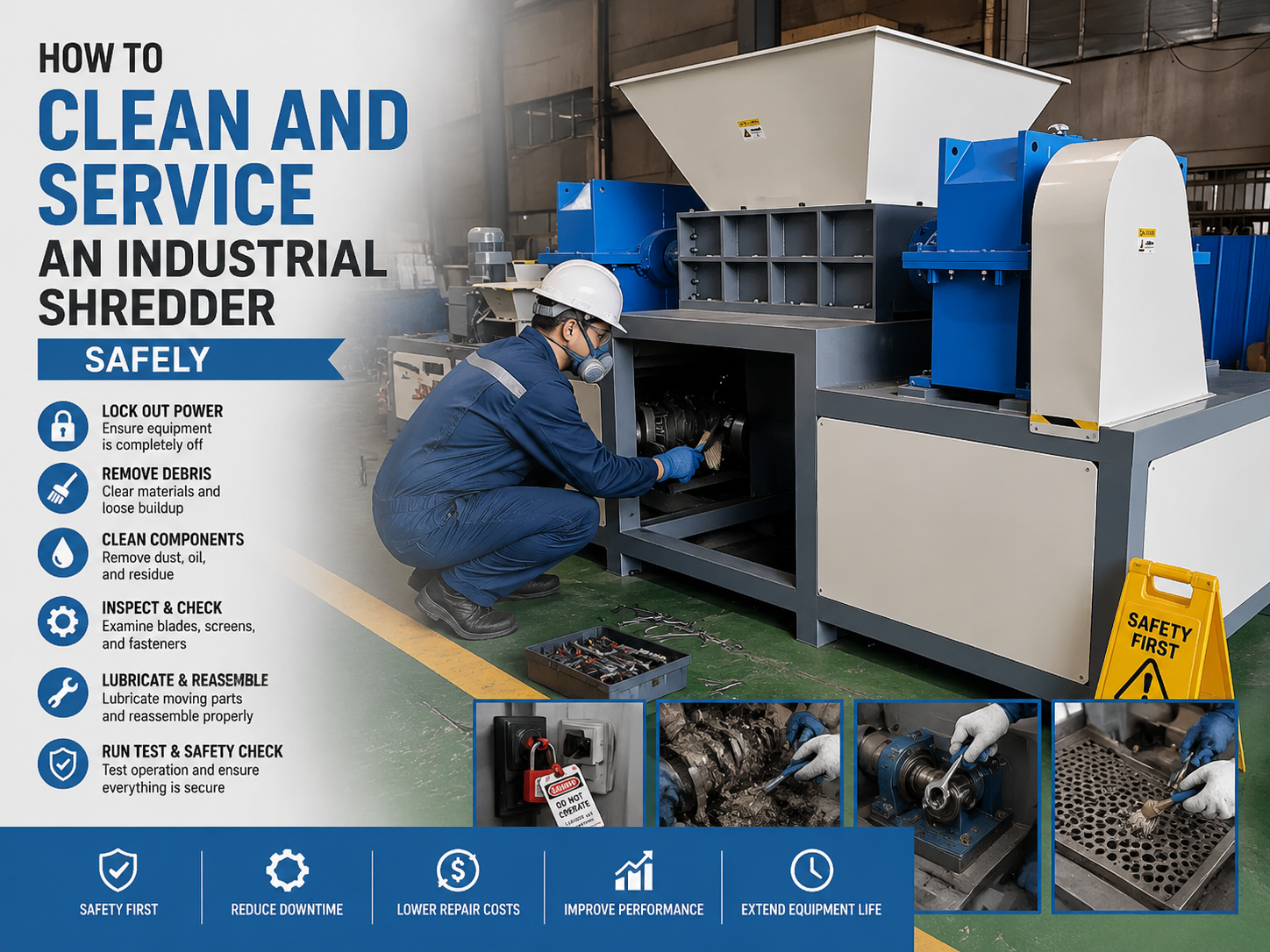
Cleaning an industrial shredder is a dirty but necessary task. Accumulated debris can hide mechanical problems, create fire hazards (especially with materials like paper or plastic), and cause premature wear. The first step in any cleaning process is the Lock-Out Tag-Out (LOTO) procedure. Ensure the main power is disconnected, the switch is locked, and you have the only key. Verify that there is no residual energy in the system (e.g., hydraulic pressure or kinetic energy in a flywheel).
Start by removing large debris from the hopper and the cutting chamber using rakes or specialized hooks. Once the bulk material is removed, use compressed air to blow out dust and small particles from the motor cooling fins, the electrical cabinet (carefully), and the areas around the bearings. For sticky residues, such as those from processed plastics or adhesives, you may need to use a biodegradable solvent and a stiff brush. Never use flammable solvents near electrical components or where they might pool in the machine base.
Pay special attention to the area around the shaft seals. Debris that wraps around the shaft can eventually work its way into the seals, causing them to fail and allowing contaminants into the bearings or gearbox. Removing “wraps” (long strips of plastic or wire) is a critical part of the cleaning process. This often requires cutting the material away with a utility knife or shears. Always wear cut-resistant gloves during this process, as the shredder blades and the material itself can be extremely sharp.
Troubleshooting Signals: What to Watch For
Even with the best maintenance, components will eventually wear out. The goal is to recognize the signals of impending failure so you can perform a controlled shutdown rather than dealing with an emergency breakdown. One of the most common signals is a change in the vibration profile of the machine. If the shredder starts shaking more than usual, it could indicate a bent shaft, a lost blade, or an unbalanced load. Vibration analysis tools can be used for a more scientific approach, but an experienced operator’s intuition is often the first line of detection.
Heat is another major indicator. Use an infrared thermometer to check the temperature of the bearings and the motor. If one bearing is significantly hotter than the others, it is likely failing or under-lubricated. Similarly, if the motor is running hot, it may be overloaded due to dull blades or a problem with the electrical supply. Monitoring the “throughput” or the amount of material processed per hour is also a form of troubleshooting. A gradual decline in throughput usually points to blade wear or a slipping drive belt.
Finally, watch for changes in the shredded material. If the output size becomes inconsistent or if the machine is frequently reversing (a feature in HARSLE shredders to clear jams), it is a sign that the cutting geometry is compromised. This could be due to blade wear or an increase in the gap between the blades and the counter-knives. Addressing these signals early can save thousands of dollars in repair costs and prevent days of lost production time.
Maintenance Schedule Table
| Frequency | Task | Description |
|---|---|---|
| Daily | Visual Inspection | Check hopper, cutting chamber, and discharge for obstructions or leaks. |
| Daily | Safety Check | Test E-stops and interlocks; ensure PPE is used. |
| Weekly | Lubrication | Grease main bearings and check auto-lube reservoir levels. |
| Weekly | Cleaning | Remove material wraps from shafts and blow out dust from motors. |
| Monthly | Blade Inspection | Check for blade wear, chips, and proper bolt torque. |
| Monthly | Hydraulic Service | Inspect hoses for wear and check fluid quality/filter status. |
| Quarterly | Electrical Audit | Tighten terminal connections and clean the control cabinet. |
| Yearly | Major Overhaul | Change gearbox oil, replace seals, and perform deep structural inspection. |
Frequently Asked Questions (FAQ)
1. How often should I sharpen the blades on my industrial shredder?
The frequency of blade sharpening depends entirely on the material you are processing. For soft materials like plastics, blades may last several months. For abrasive materials like glass-filled polymers or contaminated metals, sharpening may be required every few weeks. Monitor the output quality and motor amperage; if the output is ragged or the motor is working harder, it’s time to sharpen.
2. What is the most common cause of shredder failure?
The most common cause is improper feeding—specifically, allowing “unshreddables” (like heavy steel chunks in a light-duty shredder) to enter the chamber. The second most common cause is a lack of lubrication, which leads to bearing seizure and shaft damage. Regular cleaning and following the lubrication plan can prevent the vast majority of failures.
3. Can I clean the shredder while it is running in reverse?
Absolutely not. Never attempt to clean or reach into the shredder while it is powered. Even in reverse, the blades pose a lethal threat. Always follow LOTO procedures before any cleaning or maintenance task. Use long-handled tools to clear jams only after the machine has been safely de-energized.
4. Why is my shredder vibrating excessively?
Excessive vibration is usually caused by an unbalanced shaft (due to a broken blade), a loose bearing housing, or a misaligned drive coupling. It can also happen if the machine is not properly anchored to the floor. Shut down the machine immediately and inspect the cutting chamber and drive train to identify the source of the imbalance.
5. What type of oil should I use in the gearbox?
You should always refer to the HARSLE manual for specific oil grades. Generally, high-torque shredder gearboxes require an ISO VG 220 or 320 synthetic gear oil with EP additives. Using the wrong oil can lead to overheating and rapid gear wear, especially in high-ambient-temperature environments.
6. How do I know if my hydraulic fluid needs changing?
Check the fluid’s color and clarity. If it is cloudy, it contains water. If it smells burnt or is very dark, it has oxidized. For a more accurate assessment, send a fluid sample to a lab for analysis. They can detect microscopic metal particles that indicate internal component wear before a failure occurs.
7. Is it necessary to clean the motor cooling fins?
Yes. Industrial environments are often dusty. If the cooling fins on the electric motor are covered in dust or grease, the motor cannot dissipate heat effectively. This leads to insulation breakdown and eventual motor burnout. A quick blast of compressed air once a week can significantly extend the life of your motor.