Industrial Shredder Inspection Guide for Safer and More Reliable Operation

The Critical Role of Industrial Shredder Inspection
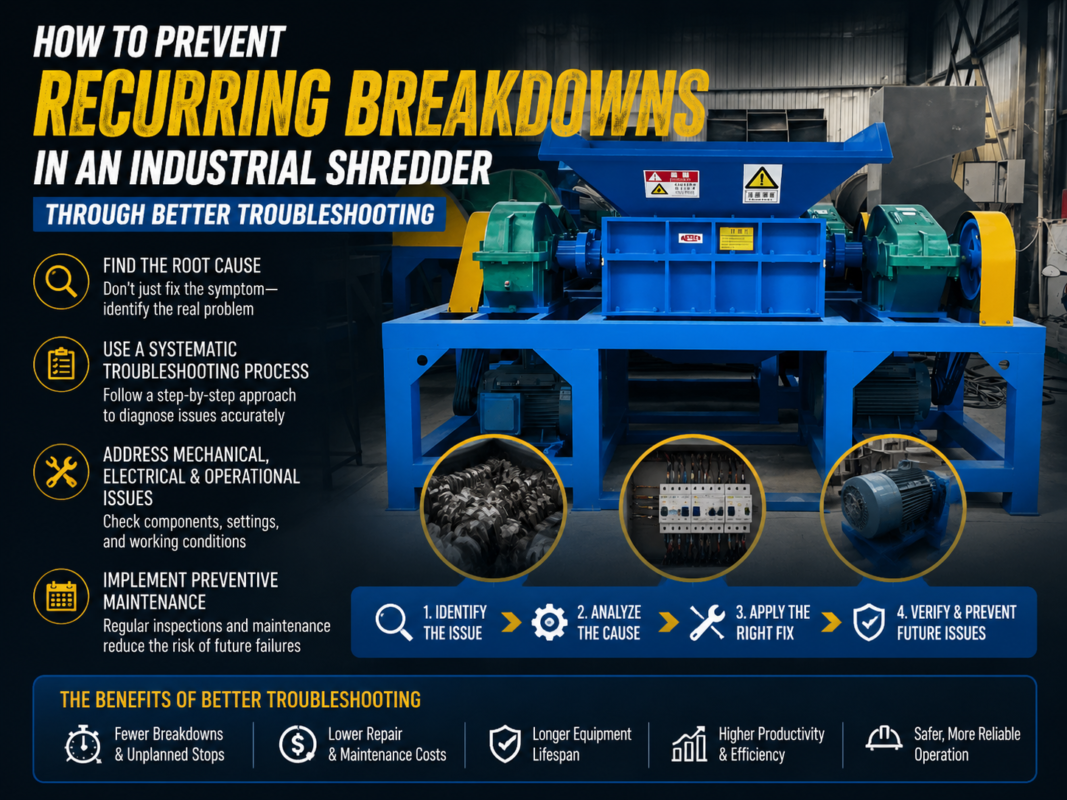
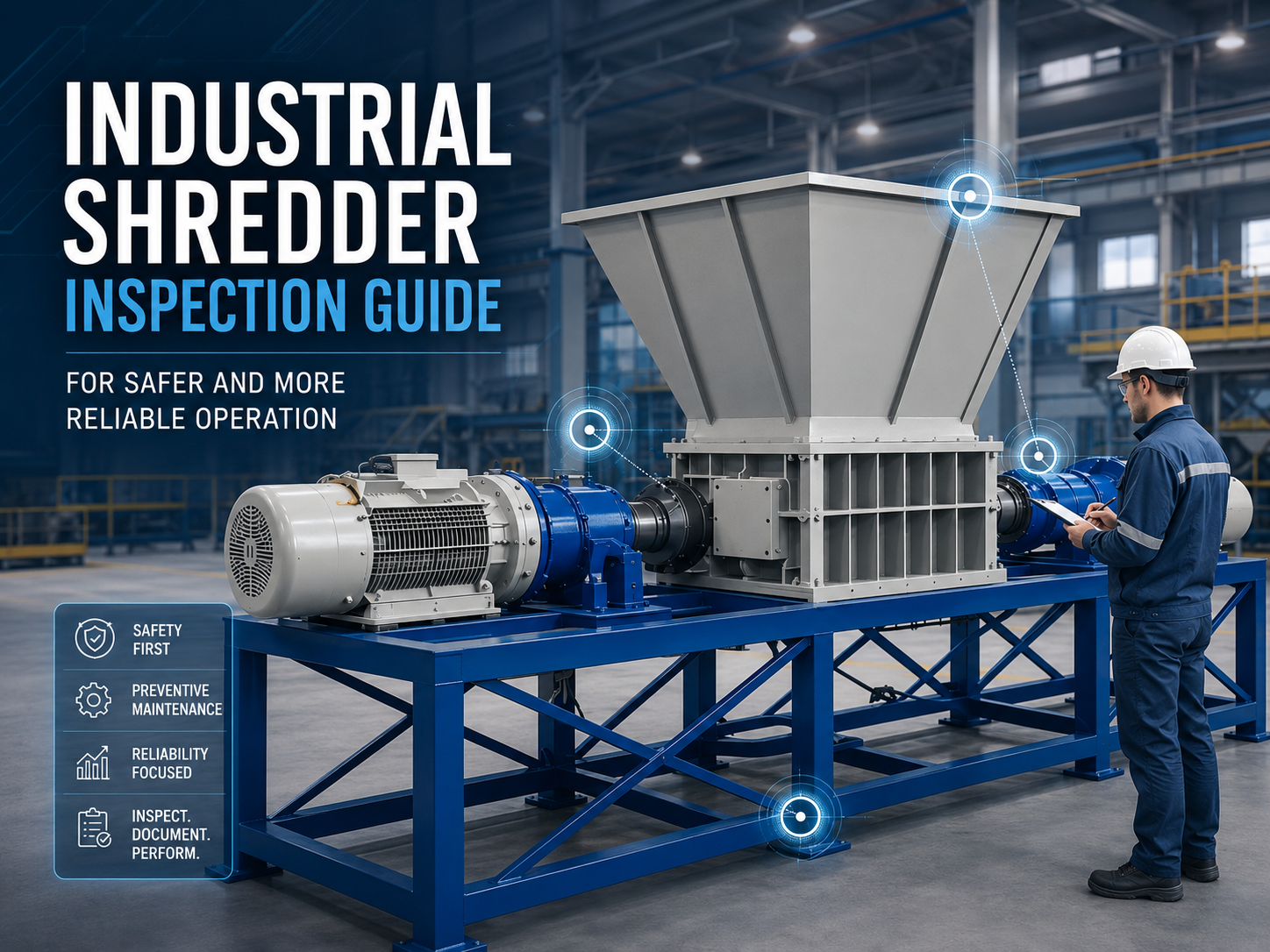
In the world of heavy-duty waste management and metal recycling, the industrial shredder stands as a cornerstone of productivity. These machines are engineered to handle immense stress, processing everything from scrap metal and plastics to electronic waste and tires. However, the very nature of their work—applying massive torque and shearing forces—means that wear and tear are not just possibilities; they are certainties. Implementing a comprehensive Industrial Shredder Inspection Guide for Safer and More Reliable Operation is not merely a recommendation; it is a fundamental necessity for any facility aiming to maximize uptime and ensure worker safety.
Regular inspection protocols serve as the first line of defense against catastrophic mechanical failure. When a shredder operates, it generates significant vibration and heat. Over time, these forces can loosen fasteners, degrade hydraulic seals, and dull cutting edges. Without a structured inspection routine, a minor issue like a loose bearing housing can escalate into a broken shaft or a destroyed gearbox, resulting in tens of thousands of dollars in repair costs and weeks of unplanned downtime. By prioritizing inspection, operators can identify these ‘weak signals’ before they manifest as total system failures.
Safety is the most compelling reason for rigorous inspection. Industrial shredders are among the most powerful machines in a fabrication or recycling plant. A malfunction, such as a blade shattering or a hydraulic line bursting under high pressure, poses a lethal risk to nearby personnel. A ‘Safer and More Reliable Operation’ begins with the understanding that a well-maintained machine is a predictable machine. When components are inspected and verified to be within OEM (Original Equipment Manufacturer) specifications, the risk of unpredictable behavior—such as material kickback or structural failure—is significantly mitigated.
Furthermore, the economic implications of a robust inspection plan are profound. Beyond avoiding repair costs, a well-inspected shredder operates more efficiently. Sharp blades and properly tensioned drives require less energy to process material, directly reducing utility costs. Moreover, the resale value of well-documented machinery is substantially higher. In an industry where margins can be thin, the operational reliability gained through systematic inspection provides a distinct competitive advantage, ensuring that the shredder remains a profit center rather than a liability.
Daily Inspection: The Foundation of Reliability
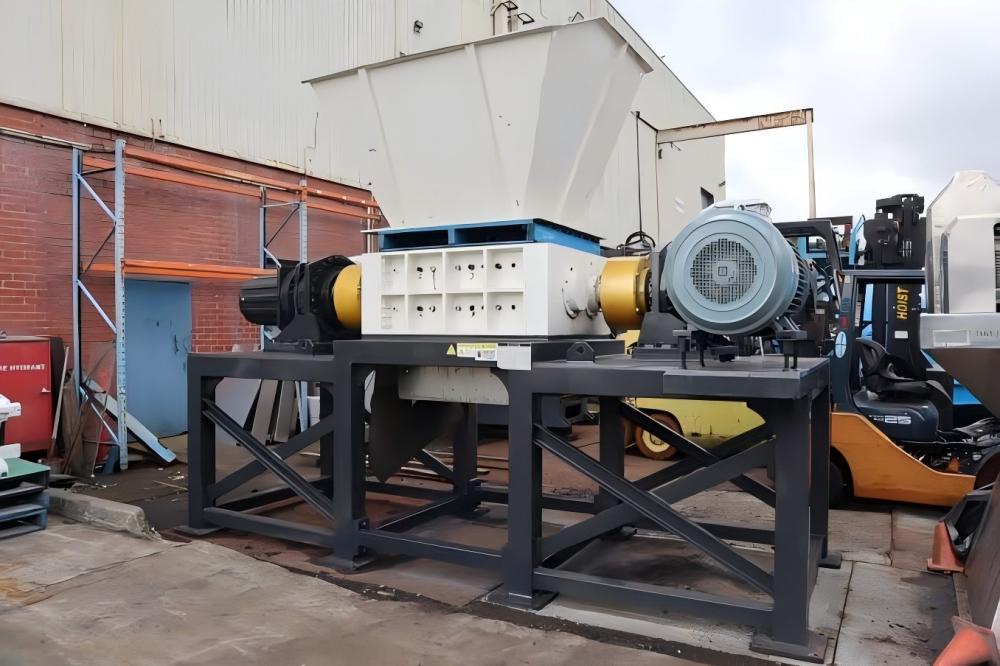
The daily inspection, often referred to as a ‘walk-around,’ is the most frequent and arguably the most important part of the Industrial Shredder Inspection Guide for Safer and More Reliable Operation. This routine should be performed at the start of every shift before the machine is energized. The goal is to catch obvious signs of distress that may have developed during the previous shift. Operators should begin by checking the area around the shredder for fluid leaks. Puddles of hydraulic oil or gear lubricant are immediate red flags indicating seal failure or cracked lines that must be addressed before startup.
Visual examination of the hopper and the cutting chamber is the next step. Operators must ensure that no ‘unshreddable’ materials—such as massive solid steel shafts or heavy engine blocks that exceed the machine’s rating—are lodged in the teeth. These foreign objects can cause immediate damage upon startup. Additionally, the condition of the hopper walls and the integrity of the safety curtains or splash guards should be verified. If safety guards are torn or missing, the machine should not be operated, as they prevent hazardous debris from being ejected at high velocities.
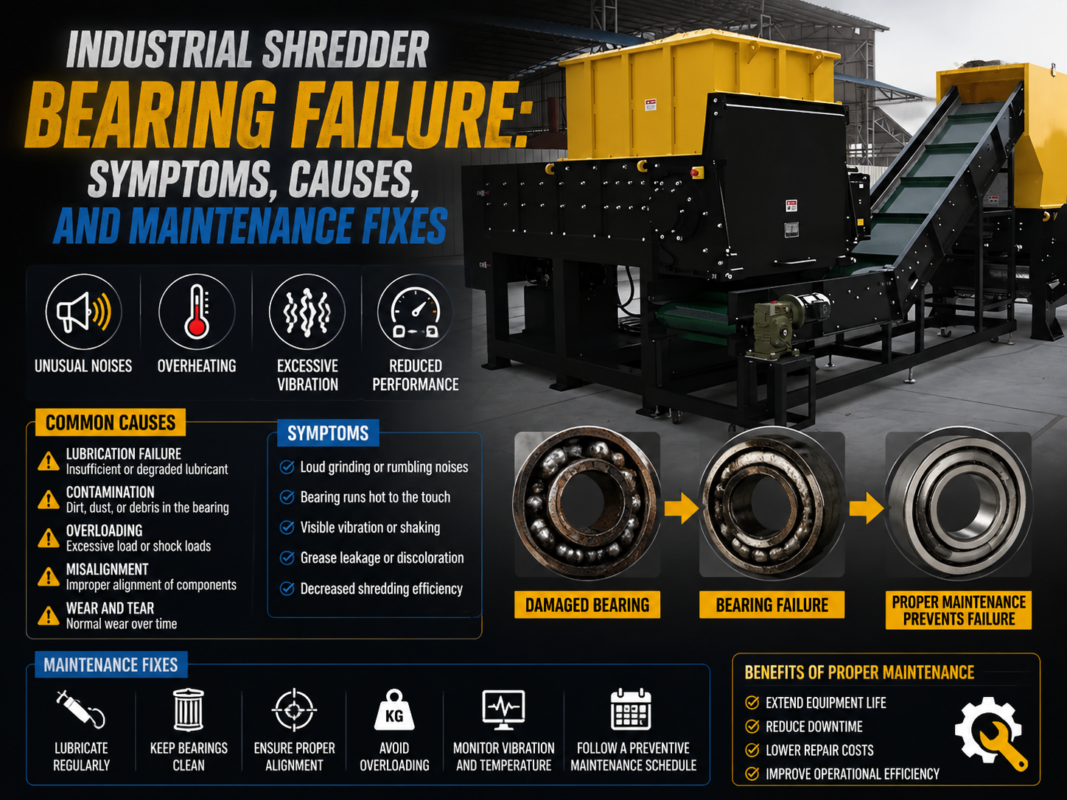
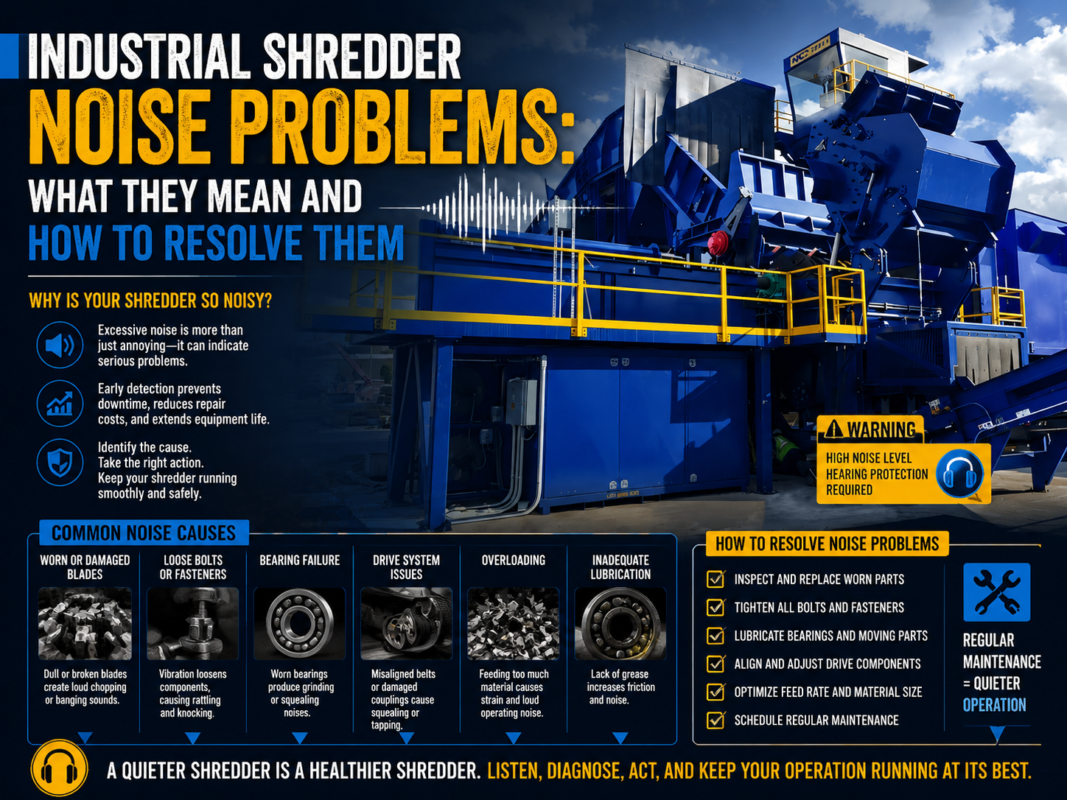
Listening is as important as looking. During the initial startup of the day, the operator should run the shredder empty for several minutes. This ‘dry run’ allows the operator to listen for unusual noises. Grinding, clicking, or heavy thumping sounds often indicate bearing wear or loose blade spacers. A healthy shredder should produce a consistent, rhythmic hum. Any deviation from this baseline should be logged and investigated. This daily habit builds an ‘operational intuition’ in the staff, allowing them to sense when the machine is not performing at its peak.
Finally, the daily check must include a verification of all emergency stop (E-stop) buttons and safety interlocks. In an emergency, there is no time to discover that a button is stuck or a circuit is bypassed. Testing these systems daily ensures that the ‘Safer’ part of the operation is always active. Documentation is key; a simple checklist signed by the operator creates a paper trail of accountability and helps maintenance teams track the progression of wear over time.
Hydraulic System Checks: The Lifeblood of the Shredder
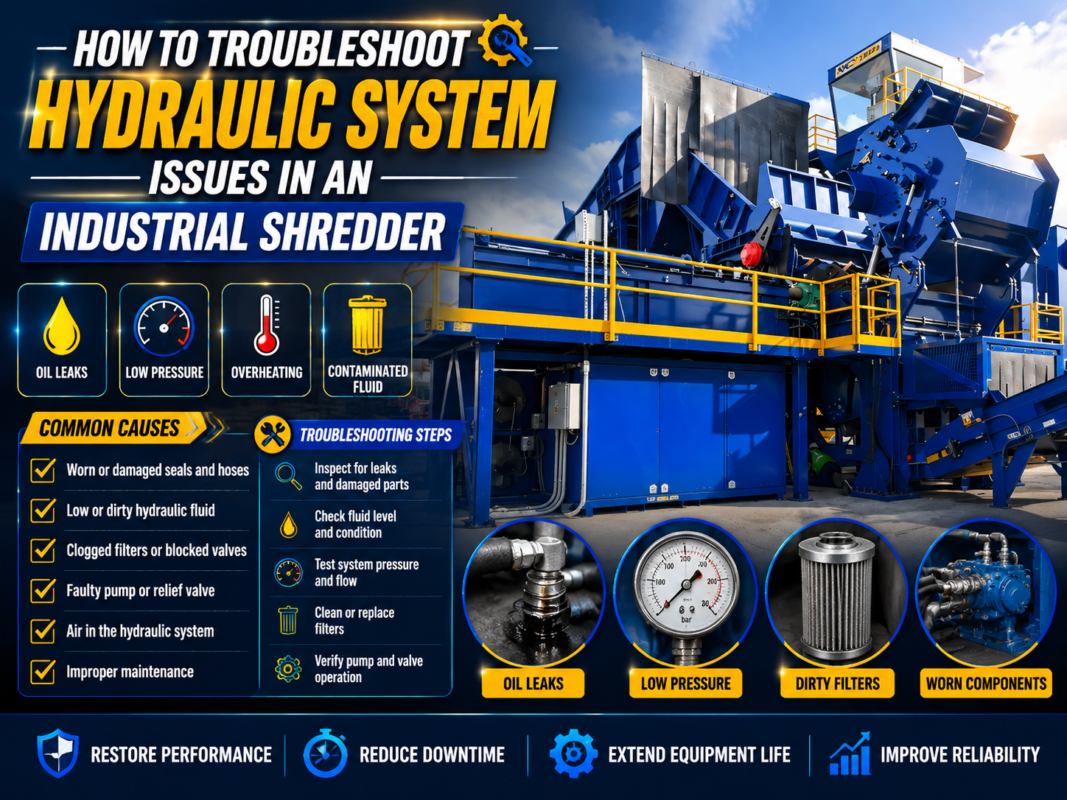
Many industrial shredders, particularly heavy-duty dual-shaft models, rely on hydraulic drive systems to provide the necessary torque. The hydraulic system is the ‘lifeblood’ of the machine, and its health is critical for Safer and More Reliable Operation. The first point of inspection is the hydraulic fluid itself. Operators should check the oil level in the reservoir and observe its color and clarity through the sight glass. Milky oil indicates water contamination, while dark, burnt-smelling oil suggests overheating. Both conditions require immediate oil replacement and filter changes to prevent damage to expensive hydraulic pumps and motors.
Temperature management is another vital aspect of hydraulic inspection. Most systems are designed to operate between 40°C and 60°C. If the oil temperature consistently exceeds this range, the cooling system (whether air-cooled or water-cooled) may be failing, or the pump may be experiencing internal bypass. High temperatures cause the oil to lose its lubricating properties and can lead to the hardening and failure of seals throughout the system. During inspection, the heat exchanger fins should be checked for dust and debris buildup, which is common in recycling environments and significantly hinders cooling efficiency.
Hoses and fittings require a tactile and visual inspection. Look for ‘weeping’ at the crimped ends of hoses and check for any signs of abrasion or kinking. Because shredders vibrate, hoses can rub against the frame, eventually wearing through the outer jacket and the wire reinforcement. A high-pressure hydraulic leak is not just a maintenance issue; it is a severe fire hazard and can cause injection injuries to personnel. Replacing a worn hose during a scheduled inspection is a minor task; replacing it after it bursts during production is a dangerous and messy ordeal.
Lastly, the hydraulic pressure settings should be verified periodically against the manufacturer’s specifications. If the pressure is set too high, it puts undue stress on the structural components of the shredder; if it is too low, the machine will frequently stall, reducing throughput. Pressure gauges should be checked for accuracy, and any fluctuations or ‘fluttering’ of the gauge needle should be investigated as it may indicate air in the system or a failing pump piston.
Electrical System and Control Logic Inspection
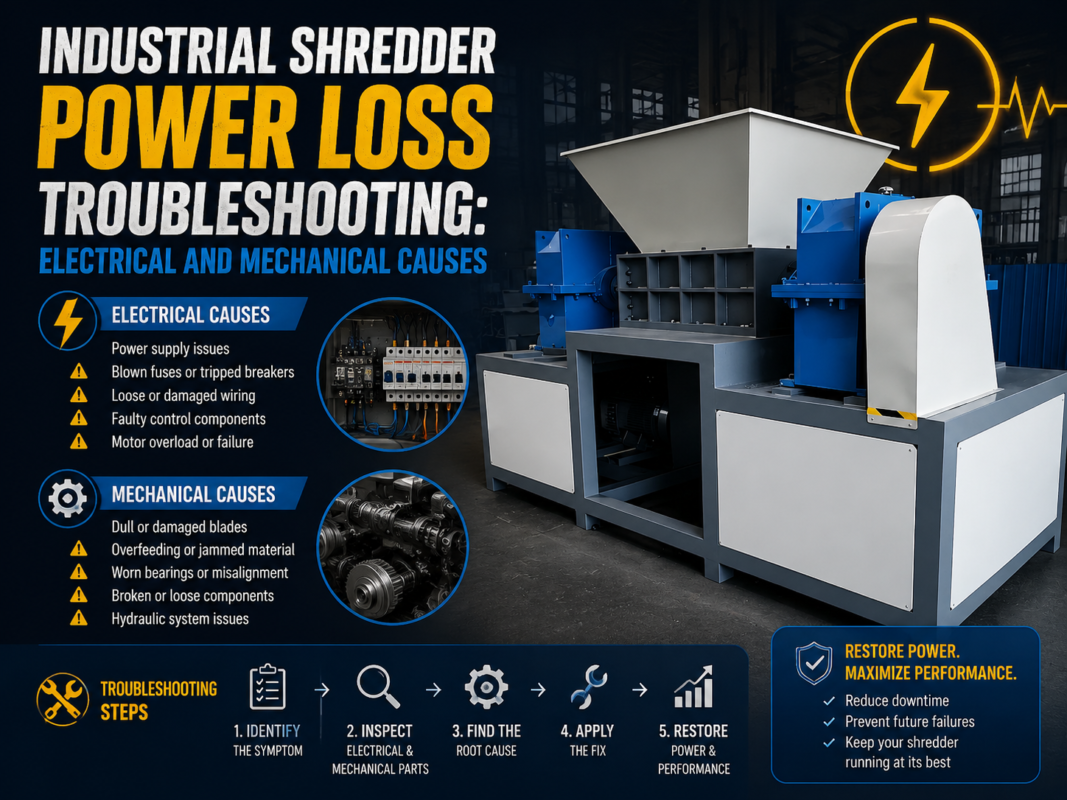
Modern industrial shredders are sophisticated machines controlled by Programmable Logic Controllers (PLCs) and Variable Frequency Drives (VFDs). The electrical inspection portion of the Industrial Shredder Inspection Guide for Safer and More Reliable Operation focuses on ensuring that these ‘brains’ of the machine are protected and functioning correctly. The control cabinet should be opened (by qualified personnel) to check for dust accumulation. In many recycling facilities, fine metallic or conductive dust can enter the cabinet, leading to short circuits or component overheating. Cleaning the cabinet with low-pressure compressed air or a vacuum is a critical preventive step.
Wiring integrity is paramount. Vibration can cause electrical terminals to loosen over time. A loose connection creates high resistance, which generates heat and can eventually melt the wire insulation or damage the terminal block. Technicians should perform a ‘tug test’ on critical power and control wires and look for any signs of discoloration on the insulation, which indicates localized overheating. Additionally, the condition of the conduit and cable trays should be checked to ensure that no wires are exposed to mechanical damage or sharp edges of the machine frame.
Sensors and limit switches play a vital role in the automated functions of the shredder, such as the auto-reverse feature. When the shredder senses a jam (usually via a spike in motor amperage), the PLC triggers a reverse cycle to clear the obstruction. During inspection, these sensors must be checked for alignment and cleanliness. If a sensor is covered in grime or knocked out of position, the auto-reverse may fail to trigger, leading to a catastrophic motor burnout or mechanical breakage. Testing the logic by simulating a load (where safe) ensures the software and hardware are communicating correctly.
Finally, the motor itself requires attention. Check the cooling fans on the back of the electric motors to ensure they are not clogged. Use an infrared thermometer to check the temperature of the motor housing during operation. If one motor in a dual-drive system is significantly hotter than the other, it may be taking on more of the load due to a mechanical misalignment or an electrical imbalance in the VFD settings. Addressing these imbalances early extends the life of the motors and ensures the shredder operates at its designed efficiency.
Mechanical Components: Blades, Shafts, and Bearings
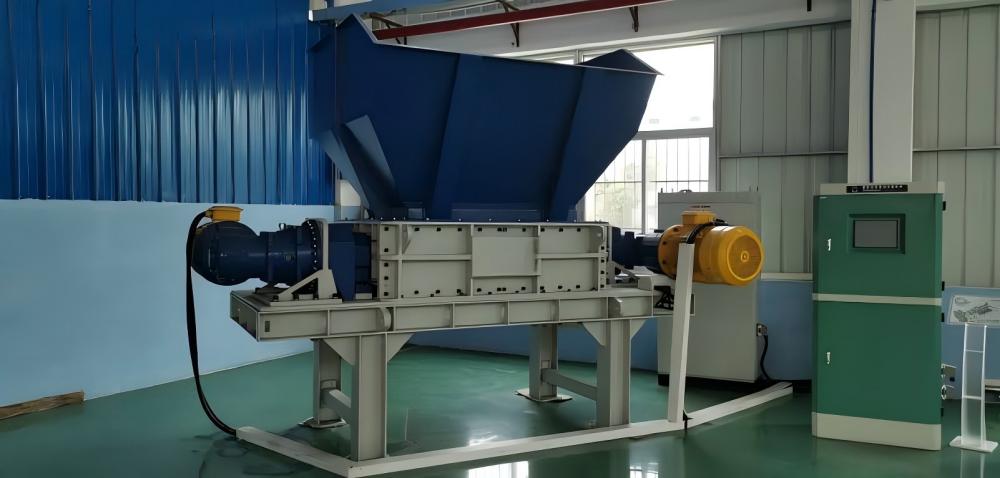
The mechanical heart of the machine—the cutting chamber—is where the most intense wear occurs. A thorough Industrial Shredder Inspection Guide for Safer and More Reliable Operation must prioritize the condition of the blades (or knives). Blades should be inspected for dullness, chipping, and cracking. Dull blades do not cut efficiently; they ‘grab’ and ‘tear,’ which requires significantly more torque and puts excessive strain on the shafts and bearings. If the cutting edges are rounded, they should be scheduled for sharpening or replacement. In many designs, blades can be rotated to a fresh edge, doubling their service life before a full replacement is needed.
Shaft alignment and ‘float’ are critical technical parameters. The shafts in a dual-shaft shredder are subjected to massive bending moments. Over time, the bearings that support these shafts can wear, leading to shaft deflection. During a deep inspection, technicians should use a dial indicator to measure the axial and radial play in the shafts. Excessive play is a sign that the bearings are nearing the end of their life. If a bearing fails completely, it can allow the shafts to move out of alignment, causing the blades to collide—a catastrophic event that can destroy the entire cutting chamber in seconds.
The spacers and cleaning fingers (or scrapers) also require attention. Spacers keep the blades at the correct distance, while cleaning fingers prevent material from wrapping around the shafts and building up behind the blades. If these fingers are bent or worn, material buildup can create immense friction, generating heat and potentially seizing the machine. Inspection should ensure that the gap between the cleaning fingers and the blades is within the manufacturer’s specified tolerance. This prevents ‘material packing,’ which is a leading cause of premature seal failure in the bearing housings.
Fasteners and structural integrity round out the mechanical check. Every bolt on the shredder, especially those securing the bearing housings and the gearbox to the frame, should be checked for tightness. The high-vibration environment of a shredder is a natural ‘bolt loosener.’ Using a torque wrench to verify that critical fasteners are at their specified tension is essential. Furthermore, the main frame of the shredder should be inspected for stress cracks, particularly around the corners of the cutting chamber and the motor mounts. Early detection of structural fatigue allows for reinforcing welds before the frame suffers a major failure.
Comprehensive Lubrication Plan
Lubrication is the single most effective way to reduce friction and wear, making it a pillar of Safer and More Reliable Operation. However, lubrication is only effective if the right lubricant is used in the right amount at the right time. An industrial shredder typically has several different lubrication needs. The main shaft bearings require high-pressure grease that can withstand heavy loads and resist being washed out by moisture or contaminants. The gearbox, on the other hand, requires a specific grade of gear oil, often with extreme pressure (EP) additives to protect the gear teeth during high-torque events.
A lubrication schedule should be strictly followed. Over-greasing can be just as damaging as under-greasing; excessive grease can destroy bearing seals and cause the bearing to overheat as it ‘churns’ the lubricant. Operators should look for the ‘purge’ of old grease from the seals, which often carries away contaminants. If the purged grease is filled with metal particles, it is a sign of internal bearing wear. For automated lubrication systems, the inspection involves checking the reservoir levels and ensuring that all distribution lines are intact and not blocked by hardened grease or debris.
The gearbox oil should be sampled and analyzed annually or semi-annually. Oil analysis can reveal the presence of wear metals (like copper or iron), which provides a ‘window’ into the internal condition of the gears without needing to disassemble the unit. During the regular inspection, the gearbox breather should be cleaned. A clogged breather can cause pressure to build up inside the gearbox as it heats up, forcing oil out through the seals. Maintaining a clean, well-lubricated system is the easiest way to ensure the longevity of the most expensive components of the shredder.
Troubleshooting Signals: Identifying Problems Early
Even with the best inspection routine, problems can arise. The key to Safer and More Reliable Operation is the ability to recognize troubleshooting signals early. One of the most common signals is excessive vibration. While all shredders vibrate, a change in the frequency or intensity of vibration is a warning. This could indicate a broken blade, a bent shaft, or an imbalanced load. If the vibration is accompanied by a rhythmic knocking, it often points to a problem with the drive coupling or a loose gear in the transmission.
Overheating is another critical signal. This applies to motors, bearings, and hydraulic oil. Using an infrared thermal imager during a routine inspection can help identify ‘hot spots’ that are not visible to the naked eye. For example, a bearing that is 20 degrees hotter than its counterpart on the opposite side of the shaft is likely failing. Similarly, a hot spot on an electrical breaker indicates a loose connection or an internal fault. Monitoring these temperatures allows for ‘predictive maintenance,’ where parts are replaced based on their actual condition rather than a fixed schedule.
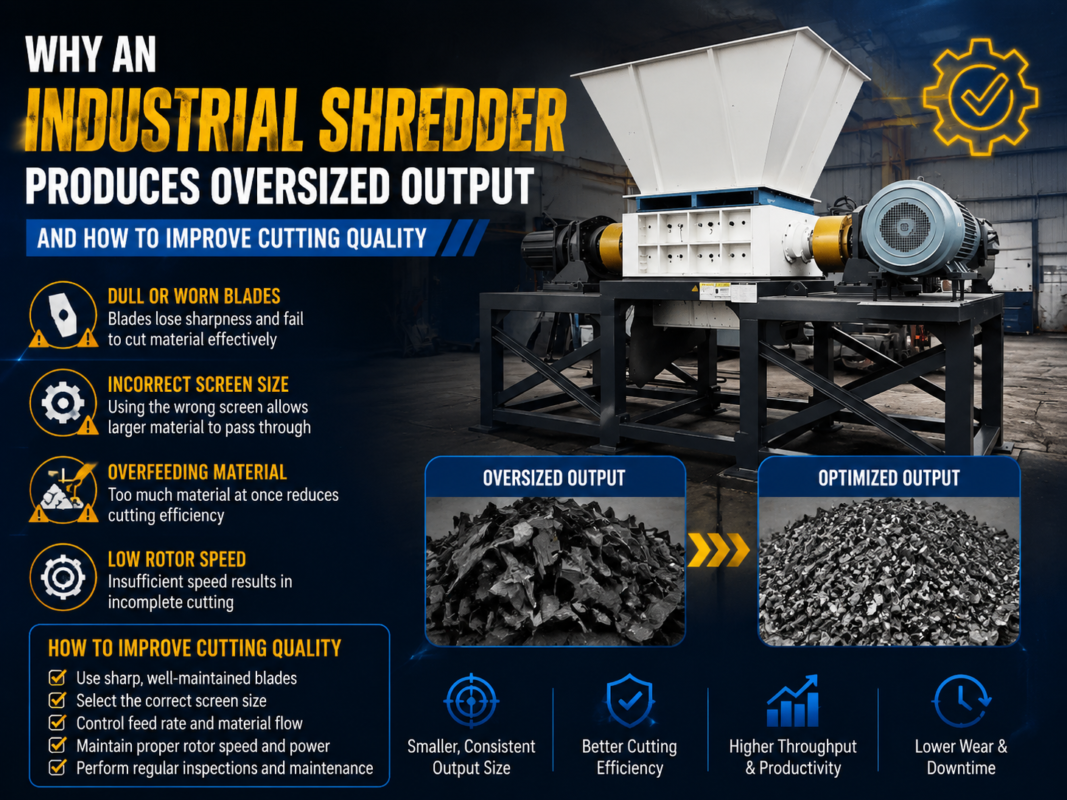
Changes in the output material can also be a troubleshooting signal. If the shredded pieces are becoming larger or more irregular, it usually indicates that the blade gap has increased or the blades have become excessively dull. If the shredder is frequently ‘stalling’ or reversing on material that it used to process easily, it may indicate a loss of hydraulic pressure or a failing electric motor. By training operators to notice these subtle changes in performance, the facility can move from a ‘reactive’ maintenance model to a ‘proactive’ one, significantly increasing the reliability of the entire operation.
Industrial Shredder Maintenance Schedule Table
To maintain a Safer and More Reliable Operation, use the following table as a baseline for your maintenance and inspection program. Note: Always refer to your specific HARSLE manual for model-specific intervals.
| Frequency | Component | Action Required |
|---|---|---|
| Daily | Safety Systems | Test E-stops, interlocks, and verify all guards are in place. |
| Daily | Hydraulic System | Check oil levels, look for leaks, and monitor operating temperature. |
| Daily | Cutting Chamber | Inspect for foreign objects and clear any significant material buildup. |
| Weekly | Blades/Knives | Check for chips, cracks, and dullness. Verify blade bolt torque. |
| Weekly | Drive Belts/Chains | Check tension and look for signs of wear or fraying. |
| Monthly | Bearings | Apply grease according to specs; check for unusual heat or noise. |
| Monthly | Electrical Cabinet | Clean dust, check for loose connections and burnt wires. |
| Quarterly | Gearbox | Check oil level and clean the breather. Inspect mounting bolts. |
| Quarterly | Structural Frame | Inspect for stress cracks and ensure all anchor bolts are tight. |
| Annually | Full System Audit | Oil analysis, shaft alignment check, and PLC logic verification. |
Frequently Asked Questions (FAQ)
1. How often should I sharpen the blades on my industrial shredder?
The frequency of sharpening depends entirely on the material being processed. Shredding abrasive materials like glass or contaminated plastics will dull blades much faster than clean wood or soft plastics. As a rule of thumb, inspect blades weekly and sharpen them when you notice a 10-15% decrease in throughput or an increase in the size of the output material.
2. What is the most common cause of industrial shredder failure?
The most common cause is ‘unshreddables’—materials that exceed the machine’s design capacity entering the cutting chamber. This is followed closely by poor lubrication and neglected bearing maintenance. Implementing a strict Industrial Shredder Inspection Guide is the best way to prevent these common failures.
3. Can I use any hydraulic oil in my shredder?
No. You must use the oil viscosity and type specified by the manufacturer. Using the wrong oil can lead to poor lubrication at high temperatures or excessive pump wear during cold starts. Most heavy-duty shredders require an anti-wear (AW) hydraulic oil with a specific ISO viscosity grade (usually ISO 46 or 68).
4. Why does my shredder keep reversing automatically?
The auto-reverse is a safety feature triggered when the motor reaches a certain amperage limit, indicating a jam. If it happens frequently, your blades may be dull, the material may be too tough for the machine’s current settings, or there may be a mechanical obstruction in the chamber. It could also indicate a faulty pressure sensor or current transformer in the control logic.
5. Is it safe to weld on the shredder frame?
Welding should only be done by certified professionals. It is critical to disconnect the PLC and all sensitive electronics before welding, as the electrical surge can destroy the machine’s control system. Always consult the manufacturer before making structural modifications or repairs to the frame.
6. How do I know if a bearing is failing before it breaks?
Look for three signs: increased heat (measured with an IR thermometer), increased noise (grinding or squealing), and increased vibration. If you see metallic flakes in the purged grease, the bearing is already in the process of failing and should be replaced immediately to avoid shaft damage.