Choosing A Car Body Baler Efficient Vehicle Scrap Compaction: The Ultimate Industrial Guide

Introduction to Efficient Vehicle Scrap Compaction
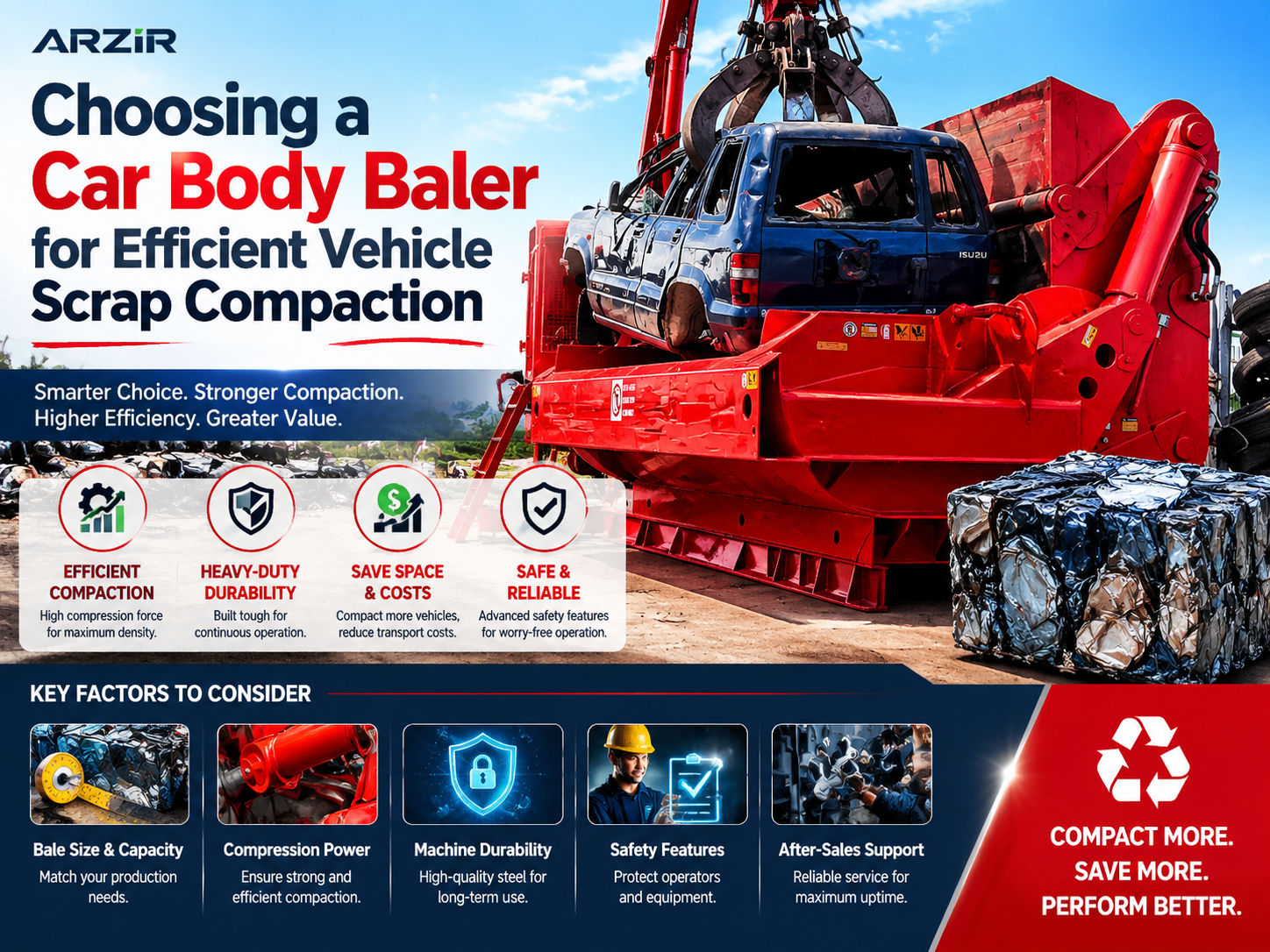
In the modern recycling landscape, the ability to process end-of-life vehicles (ELVs) quickly and efficiently is the difference between a profitable scrap yard and one that struggles with overhead. Choosing a car body baler for efficient vehicle scrap compaction is a strategic investment that impacts every facet of your operation, from logistics and storage to the final market value of your processed metal. As global steel demand fluctuates, the efficiency of your compaction process ensures that you can move high volumes of material when prices are favorable.
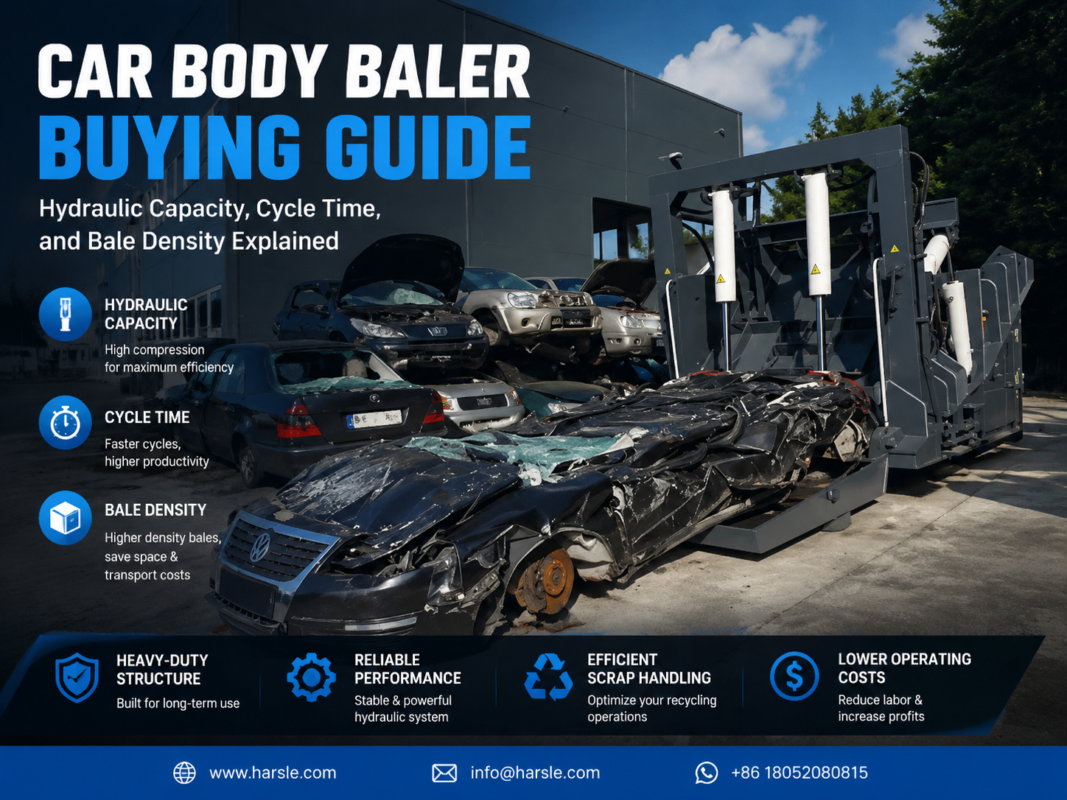
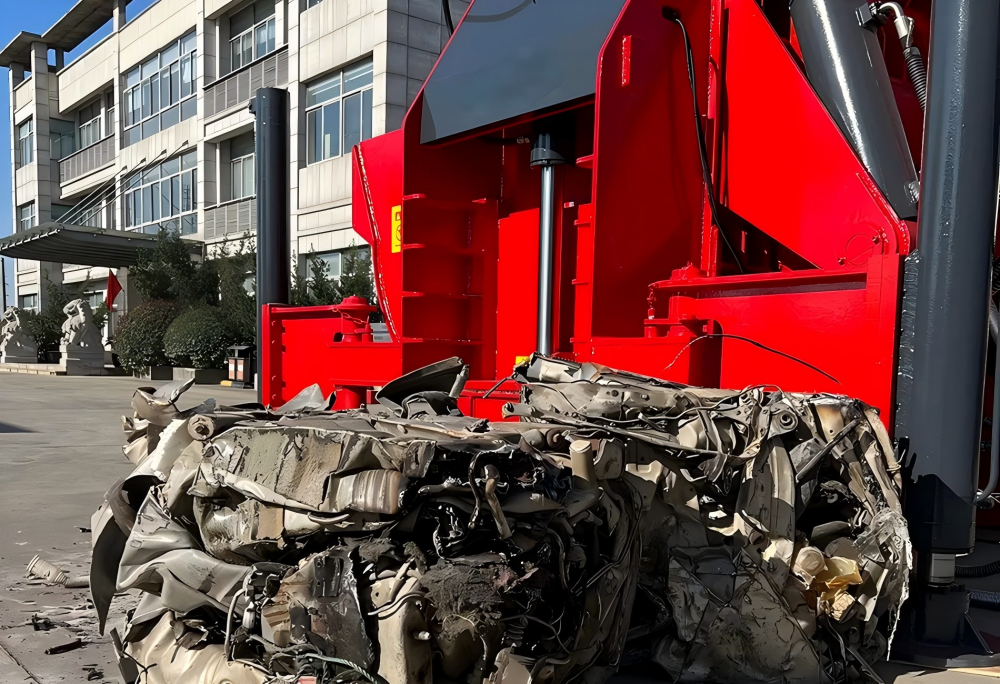
HARSLE has long been at the forefront of providing robust industrial solutions for metal fabrication and recycling. A car body baler is not merely a press; it is a sophisticated hydraulic system designed to reduce a bulky, hollow vehicle frame into a dense, stackable cube. This transformation is essential for maximizing transport loads. Without proper compaction, a standard flatbed truck might only carry a handful of loose car shells; with a high-performance baler, that same truck can carry its full weight capacity in dense bales, drastically reducing fuel and labor costs.
This guide is designed to walk you through the complexities of selecting the right machinery. We will explore the technical specifications that drive performance, the financial considerations that dictate your return on investment, and the practical operational factors that ensure long-term reliability. Whether you are upgrading an existing facility or starting a new recycling venture, understanding the nuances of car body balers is the first step toward operational excellence.
Price Range Overview: What to Expect
The market for car body balers is diverse, with prices ranging significantly based on capacity, mobility, and automation. Generally, an entry-level stationary car baler can start around $40,000 to $60,000. These machines are typically suited for smaller yards processing 5 to 10 cars per day. They often feature manual lever controls and slower cycle times, but they provide a reliable entry point for businesses transitioning from manual dismantling to mechanical compaction.
Mid-range balers, which are the most common choice for established recycling centers, typically fall between $80,000 and $150,000. In this price bracket, you begin to see features like semi-automatic PLC (Programmable Logic Controller) systems, faster hydraulic pumps, and larger chamber sizes that can accommodate SUVs and light trucks without extensive pre-cutting. These machines are built for durability, often featuring replaceable wear plates made of high-strength alloys like Hardox.
High-end, heavy-duty, or fully mobile car body balers can exceed $250,000. These units are designed for 24/7 operation or for contractors who move from site to site. Mobile units include integrated diesel engines and crane attachments, allowing for a completely self-contained recycling operation. While the initial capital expenditure is high, the throughput—often exceeding 20 tons per hour—justifies the cost for high-volume industrial players.
Main Cost Drivers in Car Body Baler Selection
When choosing a car body baler for efficient vehicle scrap compaction, several technical factors drive the final price tag. The most significant of these is the hydraulic system. The pressure (measured in tons) and the flow rate of the hydraulic pumps determine how quickly and forcefully the machine can crush a vehicle. A higher tonnage allows for denser bales, which are more valuable to steel mills, but requires more expensive cylinders and more robust frame construction.
Material quality is another primary cost driver. A baler is subjected to immense internal stress. Machines constructed with inferior steel will warp over time, leading to hydraulic leaks and structural failure. HARSLE emphasizes the use of reinforced steel frames and high-grade wear liners. These liners protect the main chamber from the abrasive action of the scrap metal. While high-quality liners increase the initial cost, they prevent the need for expensive structural repairs later in the machine’s life.
Automation and control systems also play a role. A basic manual valve system is inexpensive but relies heavily on operator skill and is slower. Modern PLC systems with remote control capabilities allow a single operator to manage the loading and baling process from the safety of a crane cab. This integration of technology increases the machine’s price but significantly lowers labor costs and improves safety, which are critical factors in modern industrial environments.
The Role of Chamber Size and Design
The dimensions of the charging box (the chamber where the car is placed) directly impact efficiency. If the chamber is too small, operators must spend time pre-processing vehicles—removing engines, cutting frames, or flattening roofs—before the car can even fit in the baler. A larger chamber that can accept a full-sized sedan or a small van in one piece saves minutes per cycle, which adds up to hours of saved labor every week.
Configuration Impact on Operational Efficiency
The configuration of your baler should match your specific business model. There are two primary configurations: stationary and mobile. Stationary balers are ideal for yards with a consistent flow of scrap and a centralized processing area. They are typically powered by electric motors, which are more energy-efficient and quieter than diesel engines. However, they require a dedicated concrete pad and heavy-duty electrical infrastructure.
Mobile car body balers, often mounted on trailers or tracks, offer unparalleled flexibility. They are the preferred choice for scrap processors who service multiple smaller yards or perform on-site cleanups. These units are usually diesel-powered, making them independent of the power grid. The trade-off is higher maintenance costs for the diesel engine and the added complexity of the transport mechanism. When choosing a car body baler for efficient vehicle scrap compaction, you must decide if the ability to move the machine outweighs the lower operating costs of a stationary unit.
Another configuration choice is the compression style. Some balers use a “lid” or “clamshell” design, where a heavy lid descends to crush the car before side rams compress it into a bale. Others use a “triple compression” method, applying force from three axes to create the highest possible density. Triple compression is generally more expensive but produces a superior product for the end-user (the steel mill), often fetching a premium price per ton.
Hidden Costs of Owning a Car Body Baler
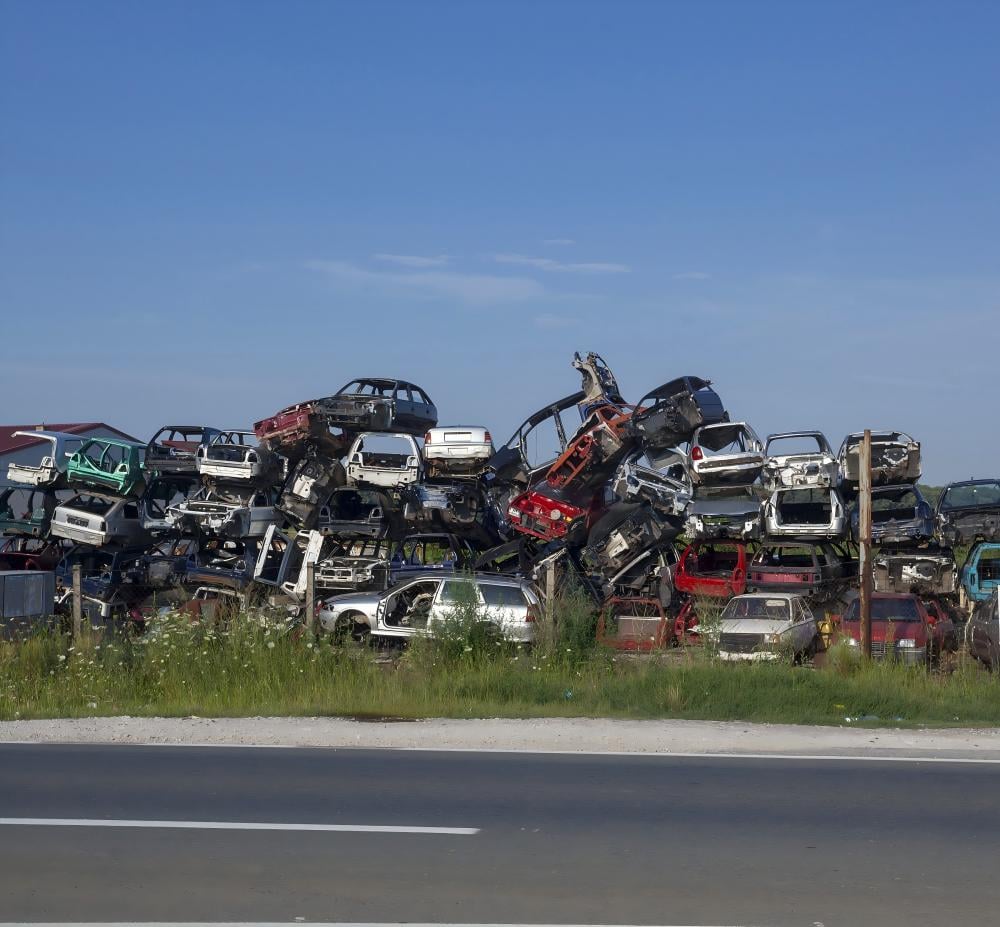
Beyond the purchase price, several hidden costs can affect your bottom line. Installation is the first. For stationary units, this includes site preparation, pouring a reinforced concrete foundation to handle the vibration and weight, and bringing high-voltage power to the site. These costs can easily add $5,000 to $15,000 to the total project budget.
Hydraulic oil is another significant ongoing expense. A large car baler can require hundreds of gallons of hydraulic fluid. This oil must be kept clean and cool; therefore, high-quality filters and cooling systems are essential. Neglecting oil maintenance can lead to pump failure, a repair that can cost thousands of dollars and result in weeks of downtime. Furthermore, the energy consumption of a 100HP+ motor is substantial, and buyers should calculate their local utility rates when estimating operating costs.
Wear parts are an inevitable expense in the scrap industry. No matter how well a machine is built, the constant grinding of metal against metal will wear down the chamber liners and the shearing blades. A proactive maintenance schedule that includes regular welding of wear plates and sharpening of blades is necessary. Buyers should inquire about the availability and cost of these replacement parts from the manufacturer before committing to a purchase.
ROI Calculation: Is the Investment Worth It?
Calculating the Return on Investment (ROI) for a car body baler involves looking at three main areas: logistics savings, labor reduction, and material value. Let’s consider a yard that processes 500 cars per month. Without a baler, transporting these cars to a secondary processor might require 50 truckloads. With a high-density baler, those 500 cars can be compressed into bales that fit on just 15 to 20 truckloads. The savings in freight alone can often cover the monthly financing payment of the machine.
Labor efficiency is the second pillar of ROI. A manual dismantling process is slow and dangerous. A car body baler allows a single operator with a grapple loader to process a vehicle in under three minutes. This frees up other staff to focus on high-value component recovery (like catalytic converters, engines, and aluminum rims), which further increases the yard’s profitability. By automating the compaction phase, you maximize the output per man-hour.
Finally, there is the “spread” in scrap value. Loose, un-prepped scrap often sells for a lower price than “No. 1 Bundle” or “Bonus Grade” scrap. By producing clean, dense, and uniform bales, you position your business as a preferred supplier to steel mills and foundries. This can result in a price premium of $10 to $30 per ton. When you multiply this premium by the hundreds of tons processed monthly, the machine’s ability to pay for itself becomes clear.
Buying Advice: Choosing the Right Partner
When you are ready to move forward with choosing a car body baler for efficient vehicle scrap compaction, the manufacturer you choose is as important as the machine itself. Look for a company like HARSLE that offers comprehensive technical support and a transparent warranty. Ask for references from other scrap yard owners and, if possible, visit a site where the machine is in operation. Seeing how a baler handles a real-world load of mixed automotive scrap is more valuable than any brochure.
Check the specifications of the hydraulic components. Are the pumps and valves from reputable international brands? This ensures that you can find replacement parts locally in an emergency. Furthermore, evaluate the safety features. Does the machine have emergency stop buttons in accessible locations? Are there safety interlocks on the chamber doors? In the high-risk environment of a scrap yard, safety is not just a legal requirement; it is a fundamental component of operational continuity.
Lastly, consider the future of your business. It is often better to buy a machine with slightly more capacity than you currently need. As your efficiency improves, your volume will likely grow. A machine that is at its limit on day one will wear out faster and become a bottleneck as your business expands. Investing in a slightly larger, more robust HARSLE baler today can save you from needing another upgrade in just two or three years.
Frequently Asked Questions (FAQ)
1. What is the average cycle time for a car body baler?
For a standard industrial car baler, the cycle time—from the moment the lid closes to the moment the bale is ejected—typically ranges between 120 and 240 seconds. High-speed units with twin pumps can reduce this to under 90 seconds, which is essential for high-volume operations.
2. Can a car body baler handle engines and transmissions?
While some heavy-duty balers can crush engines, it is generally not recommended. Engines and transmissions contain high-value cast aluminum and heavy steel that should be recovered separately. Furthermore, the fluids and hard alloys in engines can cause excessive wear on the baler’s hydraulic seals and liners.
3. What size bale does a car body baler produce?
Most car balers produce a bale that is approximately 40 inches by 24 inches by variable length (depending on the car’s mass), or a standard 60-inch cube. These dimensions are designed to fit perfectly on standard flatbed trailers and in shipping containers for export.
4. Do I need a special permit to operate a car baler?
Permit requirements vary by region. Generally, you will need an industrial operating permit and must comply with environmental regulations regarding fluid runoff (oil, coolant, and fuel). Most modern yards use a concrete pad with a drainage system to capture any residual fluids squeezed out during compaction.
5. How often should the hydraulic oil be changed?
Hydraulic oil should typically be tested every 1,000 hours of operation and changed every 2,000 to 4,000 hours, depending on the environment and oil quality. Using high-quality filtration can significantly extend the life of the oil and the hydraulic pumps.
6. Is a diesel or electric motor better for a stationary baler?
If you have the electrical capacity, an electric motor is almost always better for a stationary installation. It is quieter, requires less maintenance (no oil changes or air filters for the engine), and is generally cheaper to operate. Diesel is only preferred for mobile units or sites without stable power.
7. What is the difference between a baler and a logger?
A baler creates a dense, rectangular cube designed for melting in a furnace. A logger (or baler-logger) creates a less dense, larger “log” that is often intended for further processing in a large-scale industrial shredder. For most scrap yards, a baler provides more versatility.
8. How do I maintain the wear plates?
Wear plates should be inspected weekly. If you notice significant thinning or gouging, they should be built up with hard-facing welding wire or replaced entirely. Keeping the chamber surfaces smooth prevents scrap from getting jammed and reduces the strain on the hydraulic rams.
9. Can one person operate a car body baler?
Yes, with modern remote-control systems, a single operator can load the machine using a grapple crane and trigger the baling cycle from the crane’s cabin. This maximizes labor efficiency and keeps the operator away from the moving parts of the machine.
10. What is the lifespan of a HARSLE car body baler?
With proper maintenance, a high-quality car body baler can last 15 to 20 years or more. The key to longevity is regular lubrication, timely replacement of wear parts, and ensuring the hydraulic system is never operated beyond its rated pressure.