Industrial Shredder Maintenance Guide for Heavy-Duty Manufacturing Lines

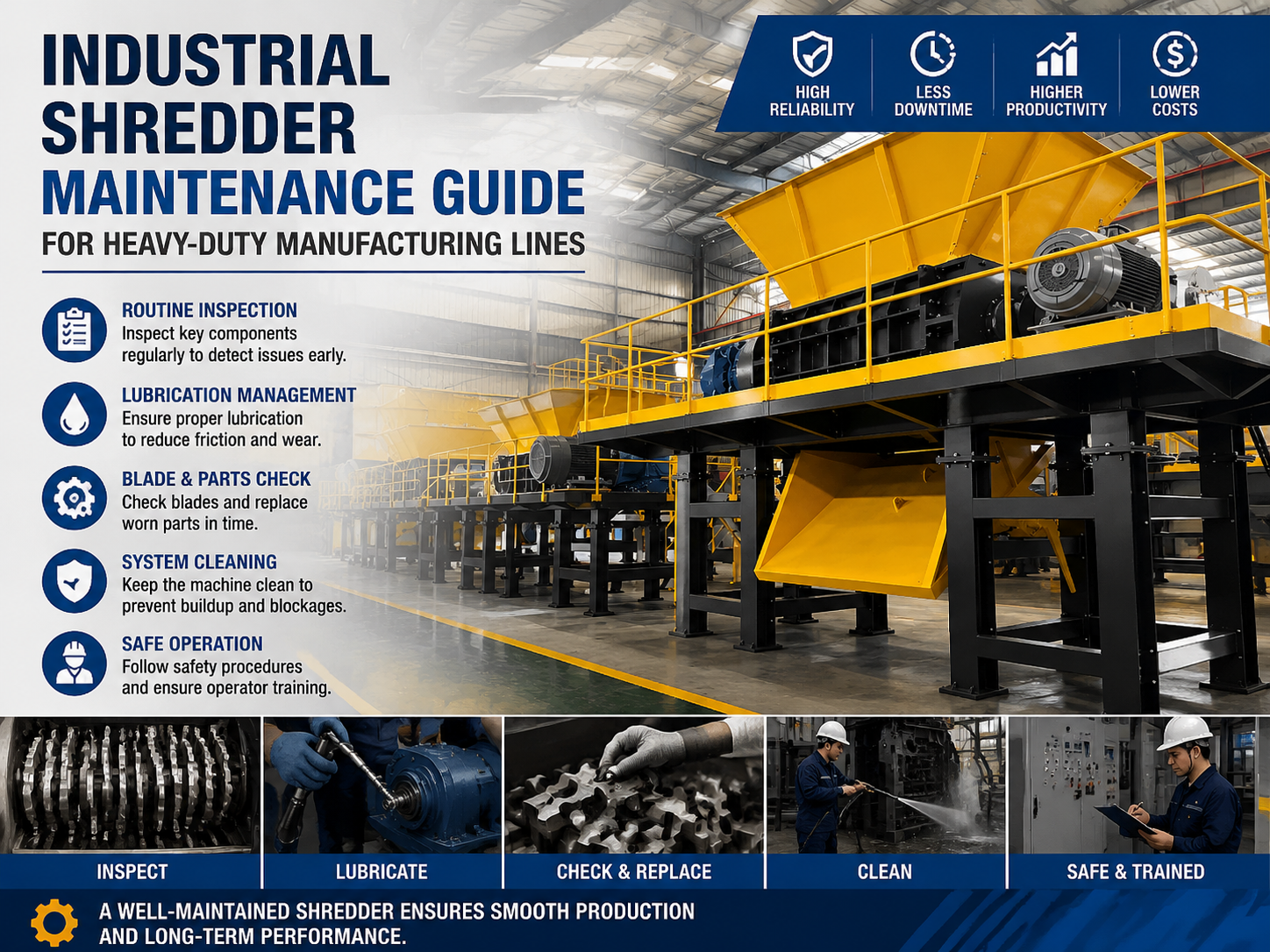
The Critical Role of Industrial Shredder Maintenance in Heavy-Duty Manufacturing Lines
In the high-stakes environment of modern industrial production, the efficiency of a facility often hinges on its ability to manage waste and process raw materials effectively. Industrial shredders are the workhorses of these operations, tasked with breaking down everything from metal scrap and plastics to rubber and electronic waste. However, because these machines operate under extreme stress, torque, and friction, a rigorous approach to Industrial Shredder Maintenance Heavy-Duty Manufacturing Lines is not just a recommendation—it is a financial necessity. Without a structured maintenance protocol, even the most robust HARSLE shredder can succumb to premature wear, leading to catastrophic failures that halt entire production chains.
Maintaining an industrial shredder involves more than just occasional oiling. It requires a holistic understanding of how mechanical, hydraulic, and electrical systems interact under load. In heavy-duty manufacturing, a shredder is often the primary stage of a recycling or reclamation process. If the shredder fails, the downstream processes—whether they involve smelting, pelletizing, or sorting—come to a grinding halt. This guide aims to provide plant managers and maintenance engineers with a comprehensive roadmap to ensuring their shredding equipment remains in peak condition, thereby maximizing Return on Investment (ROI) and ensuring workplace safety.

The cost of unplanned downtime in a heavy-duty manufacturing environment can reach thousands of dollars per hour. Beyond the immediate loss of production, there are the costs of emergency repairs, expedited shipping for replacement parts, and potential safety hazards for operators. By implementing a proactive maintenance strategy, facilities can transition from a reactive ‘break-fix’ mentality to a predictive model. This shift not only extends the lifespan of the equipment but also ensures that the output quality—the size and consistency of the shredded material—remains within the required specifications for the manufacturing line.
Daily Inspection Protocols for Maximum Uptime
The foundation of effective Industrial Shredder Maintenance Heavy-Duty Manufacturing Lines is the daily inspection. This routine should be performed at the start of every shift to identify potential issues before they escalate into major repairs. Operators should begin with a visual ‘walk-around’ of the machine, looking for any obvious signs of distress such as loose bolts, oil leaks, or structural cracks in the hopper or frame. Because shredders vibrate significantly during operation, fasteners can loosen over time, leading to misalignment of the shafts or cutting discs.
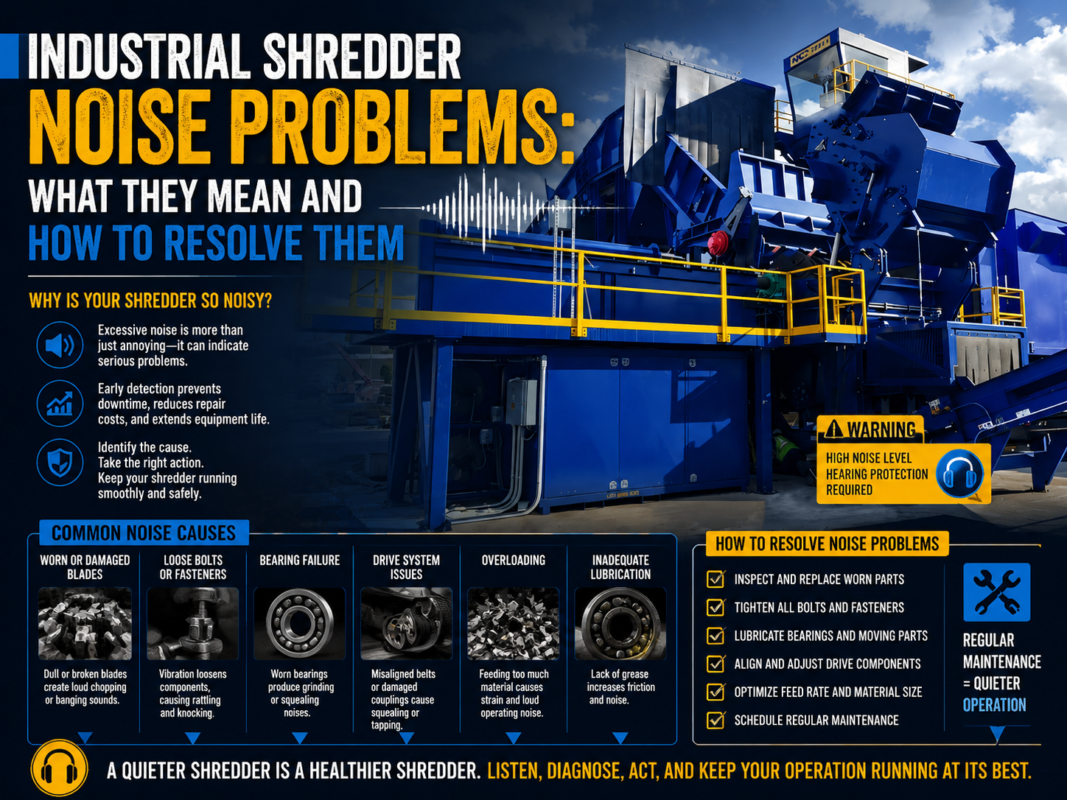
During the daily check, it is essential to inspect the cutting chamber for any ‘unshreddable’ items that may have been introduced accidentally. Large pieces of hardened steel or thick tramp metal can cause immediate damage to the knives. Furthermore, operators should listen for unusual noises during the startup sequence. Grinding, squealing, or excessive thumping often indicates a bearing issue or a foreign object lodged in the cutters. Monitoring the motor temperature and the color of the exhaust (for diesel-powered units) or the smell of the electrical cabinet (for electric units) can provide early warnings of overheating or electrical arcing.
Another critical aspect of daily maintenance is cleaning. Dust and debris accumulation can clog cooling fans, obscure sensor lenses, and create fire hazards, especially when processing flammable materials like plastics or certain metals. A clean machine is easier to inspect and runs cooler. Ensure that all safety guards are in place and that emergency stop buttons are fully functional. A daily log should be maintained to track these observations, providing a historical record that can be invaluable for identifying recurring patterns of wear or failure.
Mechanical, Hydraulic, and Electrical System Checks
Mechanical Integrity: Blades, Shafts, and Bearings
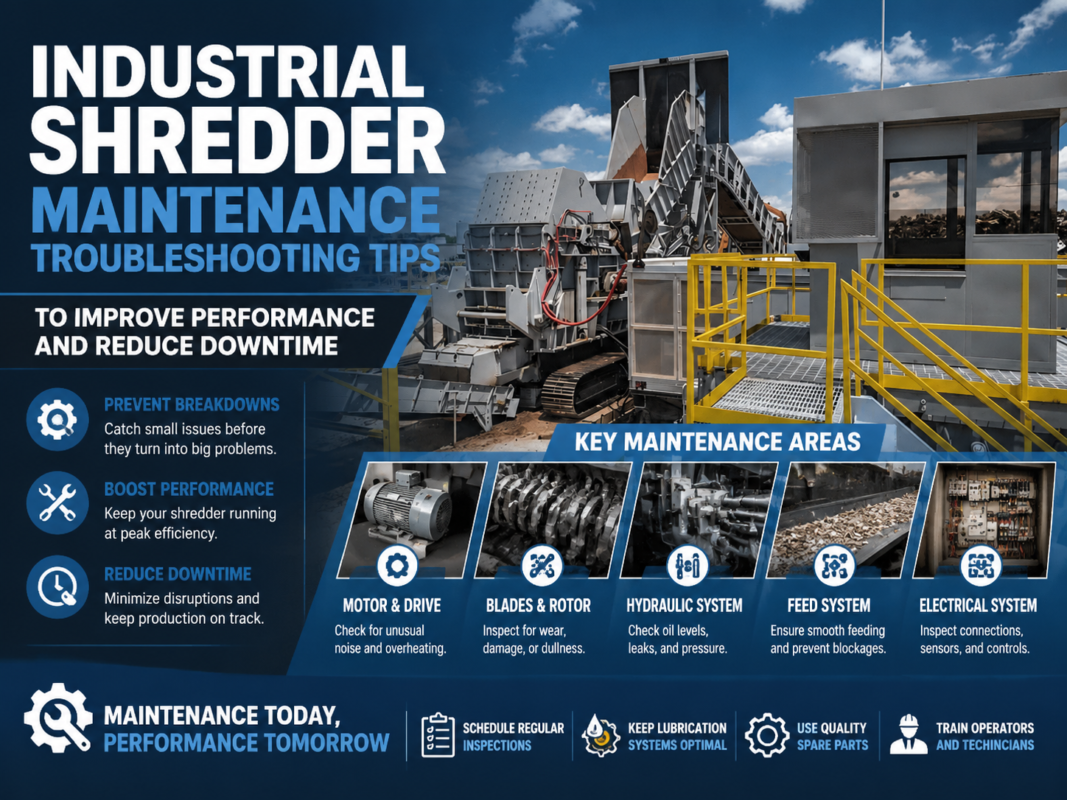
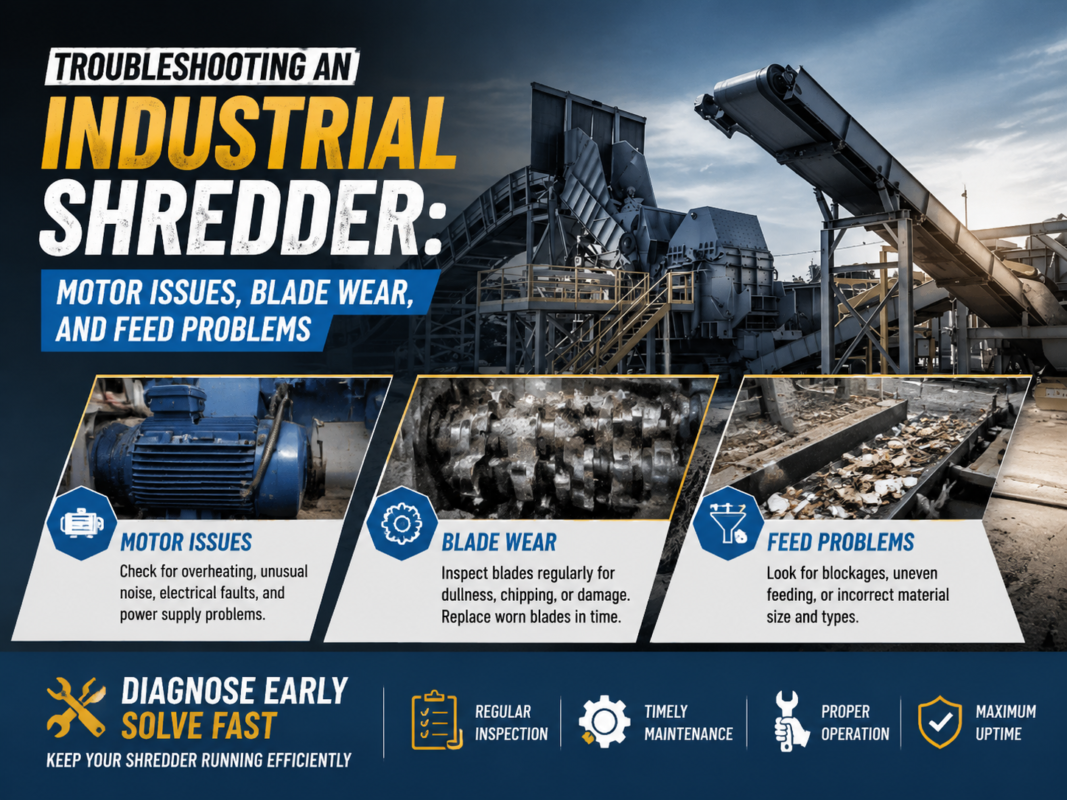
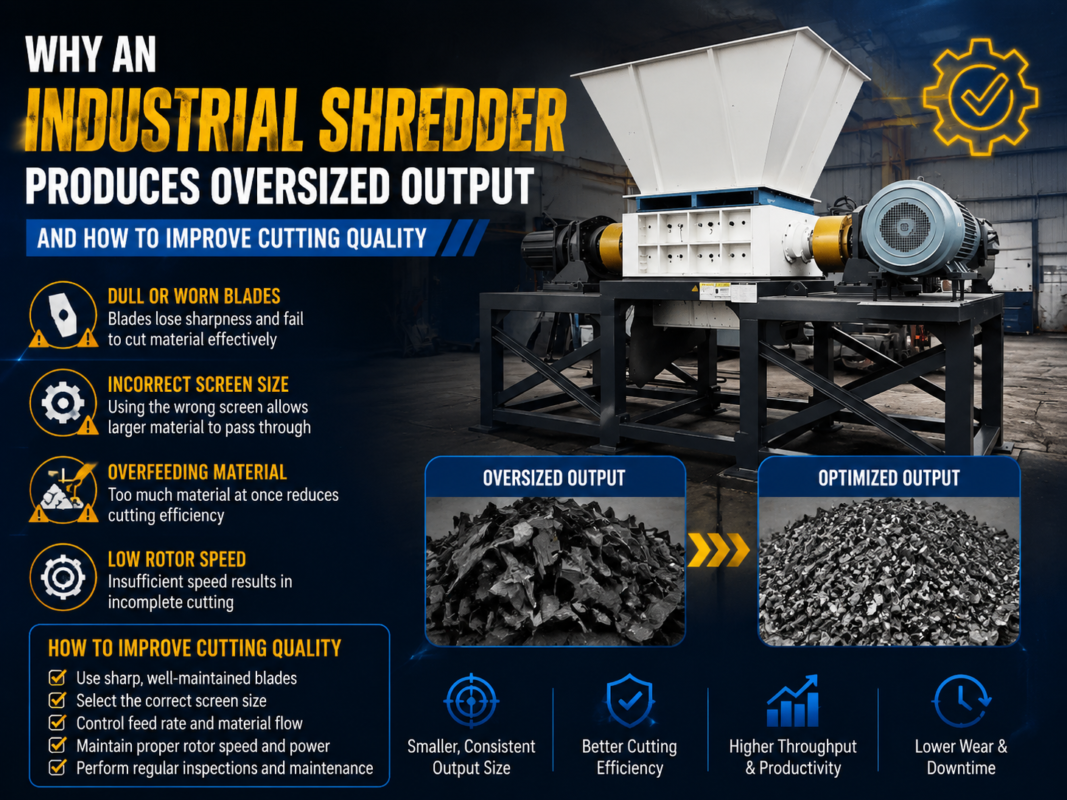
The mechanical heart of the shredder consists of the cutting shafts and blades. In heavy-duty applications, these components bear the brunt of the physical force. Maintenance teams must regularly check the ‘gap’ or clearance between the cutting knives. If the gap becomes too wide due to wear or shaft deflection, the shredder will begin to ‘tear’ rather than ‘cut’ the material, which significantly increases the load on the motor and reduces throughput. Sharpening or replacing blades according to the manufacturer’s specifications is vital for maintaining efficiency.
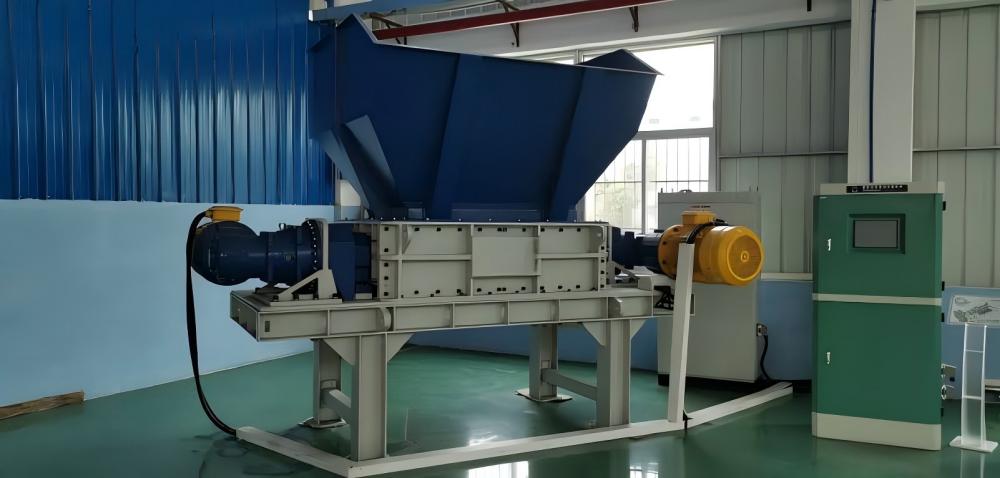
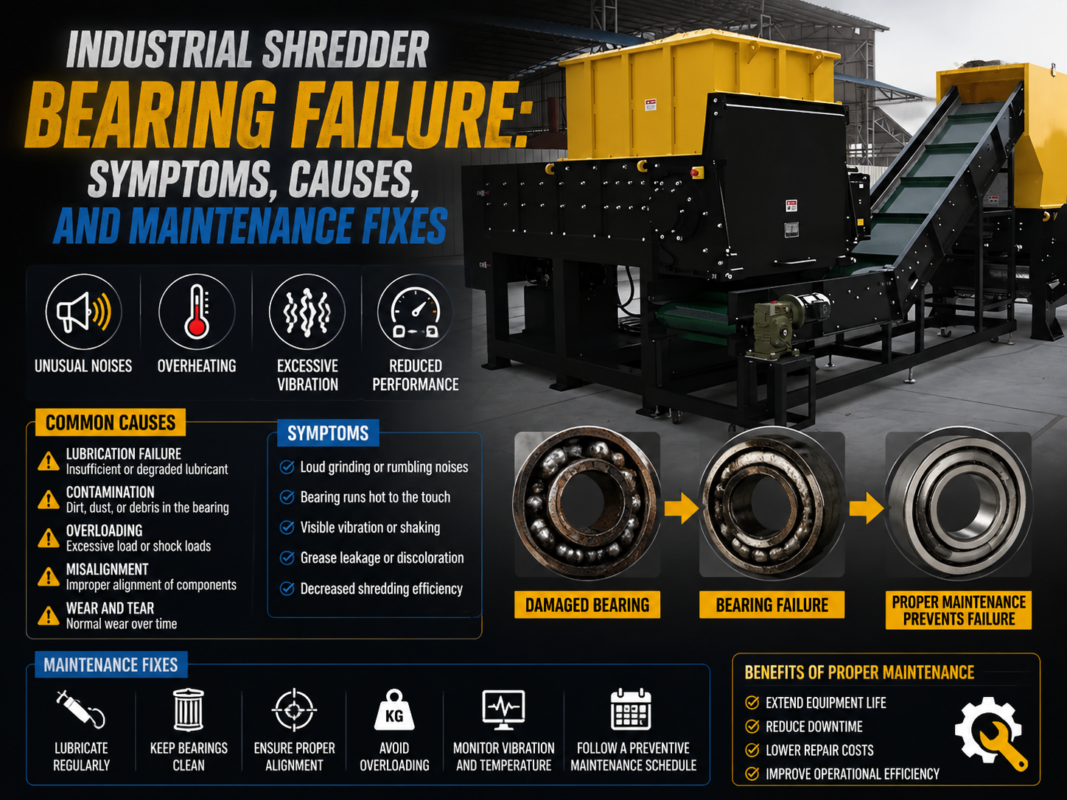
Bearings are another critical mechanical failure point. Given the high-torque nature of Industrial Shredder Maintenance Heavy-Duty Manufacturing Lines, bearings are subjected to intense radial and axial loads. They must be checked for excessive heat and vibration. If a bearing housing feels hot to the touch or shows signs of grease leakage, it may be nearing the end of its service life. Additionally, drive belts or chains should be inspected for proper tension and signs of fraying or cracking. A slipping belt not only loses power but also generates heat that can damage pulleys and shafts.
Hydraulic System Optimization
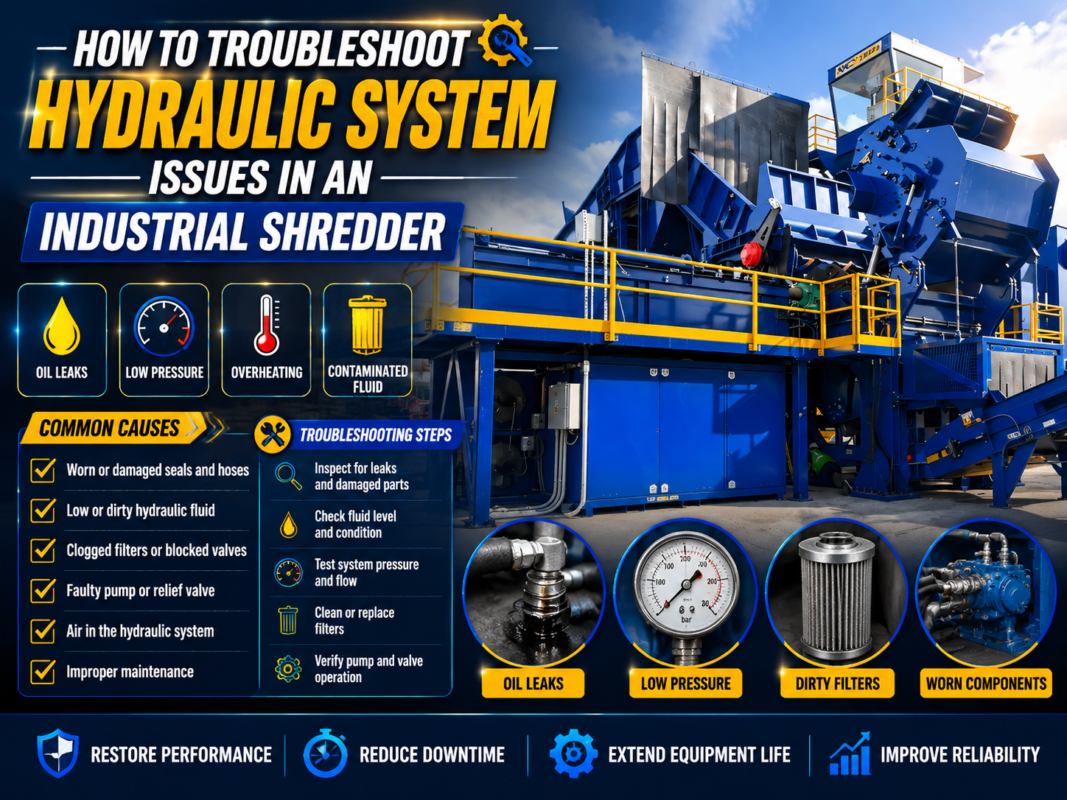
Many heavy-duty shredders utilize hydraulic drives to achieve the high torque necessary for processing tough materials. The hydraulic system is the lifeblood of these machines. Maintenance must focus on fluid cleanliness and temperature. Hydraulic oil should be sampled and analyzed periodically to check for metal particles or moisture, which can indicate internal component wear or seal failure. Filters must be replaced on a strict schedule; a clogged filter can cause a pressure drop, leading to sluggish performance and cavitation in the pump.
Check all hydraulic hoses for signs of ‘weeping’ or abrasion. In a manufacturing environment, hoses are often exposed to falling debris, which can cause external damage. Ensure that the cooling system—whether it is an air-cooled heat exchanger or a water-cooled system—is functioning correctly. If the hydraulic oil exceeds its recommended operating temperature, its viscosity drops, leading to poor lubrication and accelerated wear of the pump and motors. Always use the specific grade of hydraulic fluid recommended by HARSLE to ensure compatibility with seals and valves.
Electrical and Control Systems
Modern industrial shredders are controlled by sophisticated Programmable Logic Controllers (PLCs) and Variable Frequency Drives (VFDs). The electrical cabinet should be kept clean and pressurized if possible to prevent the ingress of conductive dust. Check all wiring connections for tightness; vibration can cause wires to vibrate loose, leading to intermittent faults or short circuits. Inspect the sensors that monitor shaft speed, motor load, and hopper levels. If a sensor fails, the shredder’s automated ‘auto-reverse’ function—which prevents jams—may not work, leading to a catastrophic motor stall.
Comprehensive Lubrication Plan for Heavy-Duty Shredders
Lubrication is the single most important factor in preventing friction-related wear in Industrial Shredder Maintenance Heavy-Duty Manufacturing Lines. A shredder has numerous moving parts that require specific types of lubricants. The main shaft bearings, gearbox, and drive chains all have different requirements. A lubrication plan should specify the type of lubricant (grease vs. oil), the quantity to be applied, and the frequency of application. Over-lubrication can be just as damaging as under-lubrication, as it can lead to seal failure and the buildup of heat.
For the main bearings, high-pressure grease is typically required to withstand the crushing forces of the shredding process. In many high-volume manufacturing lines, automated lubrication systems are installed to deliver small, precise amounts of grease at regular intervals. If your HARSLE shredder uses a manual system, ensure that the grease nipples are cleaned before application to prevent pumping dirt into the bearing. The gearbox oil should be changed after the initial ‘break-in’ period and then at regular intervals thereafter, typically every 2,000 to 4,000 operating hours, depending on the load and environment.
Environmental factors play a huge role in lubricant selection. If the shredder is operating in an unheated facility in a cold climate, a lower-viscosity oil may be needed for startup. Conversely, in high-heat environments, synthetic lubricants with high thermal stability are preferred. Always document every lubrication event in the maintenance log. This not only ensures accountability but also helps in diagnosing failures; for instance, if a bearing fails despite regular lubrication, it may point to a misalignment issue rather than a lubrication deficiency.
Troubleshooting Signals: Identifying Problems Early
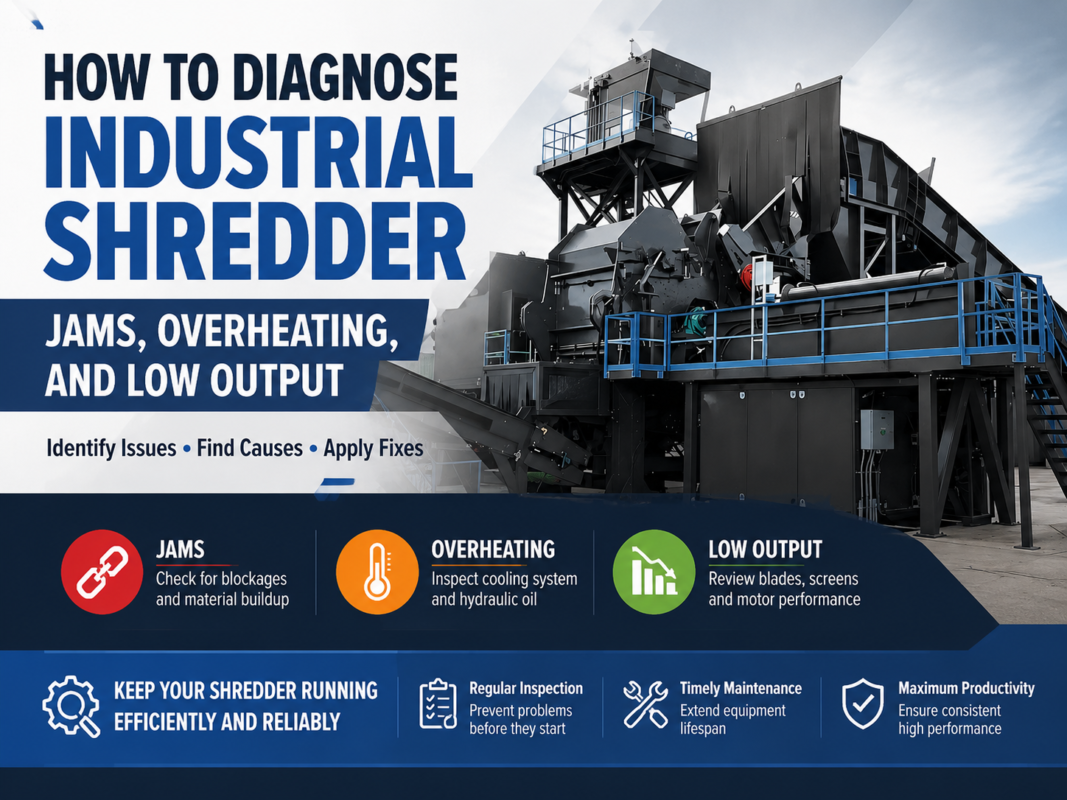
Recognizing the early warning signs of equipment failure can save a manufacturing facility from weeks of downtime. One of the most common signals is a change in the vibration profile of the machine. While shredders naturally vibrate, a new or rhythmic vibration often indicates a broken tooth on a gear, a bent shaft, or an unbalanced cutting rotor. Using handheld vibration analyzers can help maintenance teams quantify these changes and take action before a total breakdown occurs.
Heat is another primary indicator of trouble. Using an infrared thermometer, technicians can scan bearings, motors, and hydraulic manifolds. A significant temperature differential between two similar bearings usually indicates that one is failing. Similarly, if the motor is drawing more current (Amps) than usual to process the same amount of material, it suggests that the blades are dull or that there is internal mechanical resistance. Monitoring the PLC’s load meter is an excellent way for operators to gauge the ‘health’ of the cutting system in real-time.
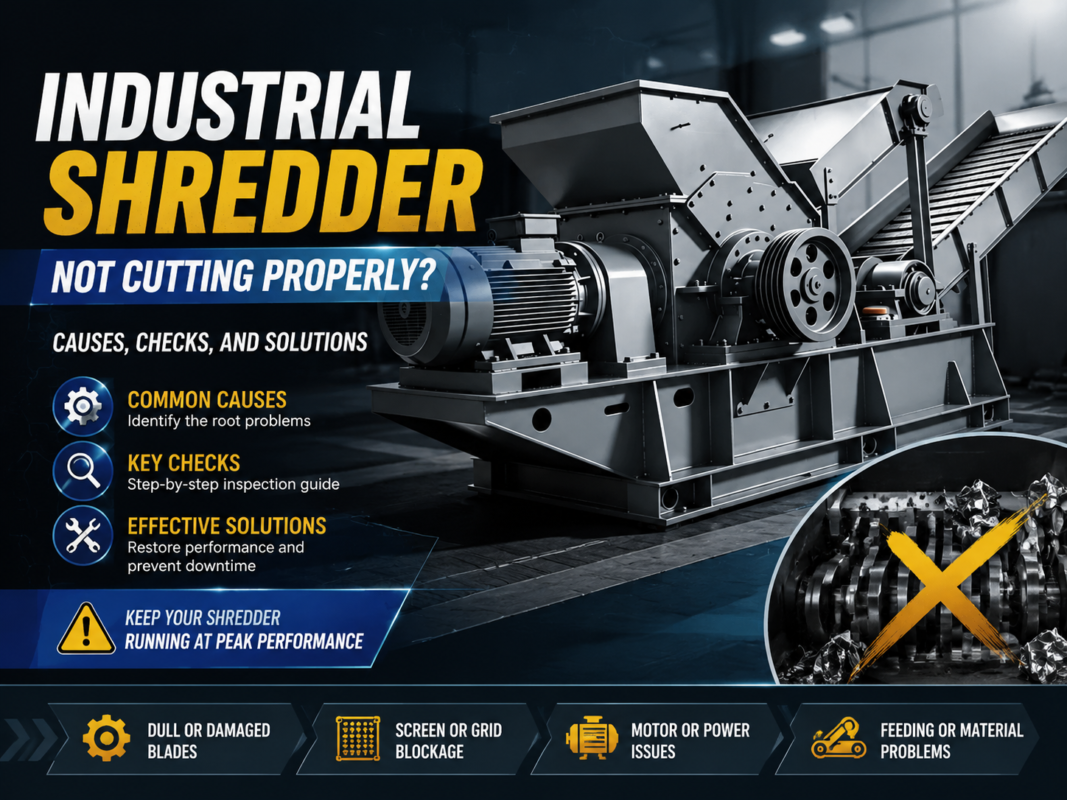
Finally, pay close attention to the output material. If the shredded pieces are becoming larger, or if the material is ‘wrapping’ around the shafts rather than falling through, it is a clear sign that the scrapers or the knives are worn. In Industrial Shredder Maintenance Heavy-Duty Manufacturing Lines, the quality of the output is often the first indicator that the machine requires adjustment. Don’t wait for the machine to stop; if the output quality drops, schedule a maintenance window immediately to inspect the cutting chamber.
Industrial Shredder Maintenance Schedule Table
| Frequency | Task Description | Component Focus |
|---|---|---|
| Daily | Visual inspection, noise check, and cleaning of debris. | Hopper, Cutting Chamber, Safety Guards |
| Weekly | Check bolt tightness and inspect blade sharpness/clearance. | Knives, Shafts, Fasteners |
| Monthly | Inspect hydraulic fluid levels and filter condition. Lubricate bearings. | Hydraulic Tank, Main Bearings, Drive Chain |
| Quarterly | Electrical cabinet cleaning and terminal tightening. Check VFD cooling. | PLC, VFD, Sensors, Wiring |
| Annually | Full system calibration, gearbox oil change, and structural NDT testing. | Gearbox, Frame, Motor Alignment |
Frequently Asked Questions (FAQ)
How often should I sharpen the blades on my industrial shredder?
The frequency of blade sharpening depends entirely on the material being processed. For abrasive materials like glass-filled plastics or contaminated metal scrap, blades may need attention every few hundred hours. For softer materials, they may last thousands of hours. The best indicator is the output quality and motor load; when the motor works harder to achieve the same result, it’s time to sharpen.
What is the most common cause of shredder failure in manufacturing lines?
The most common cause is ‘tramp metal’ or unshreddable objects entering the chamber, followed closely by lack of lubrication. While HARSLE shredders include protection mechanisms, repeated shocks from non-shreddable items will eventually fatigue the shafts and gears. Implementing a strict material pre-sorting process is the best way to prevent this.
Can I use any hydraulic oil in my shredder’s system?
No. You must use the oil viscosity and type specified in your HARSLE manual. Using the wrong oil can lead to seal degradation, poor pump performance, and overheating. In heavy-duty manufacturing, we recommend high-quality anti-wear (AW) hydraulic oils that can handle the thermal cycles of continuous operation.
Why is my shredder frequently going into ‘auto-reverse’?
Frequent auto-reversing usually means the machine is being overfed or the material is too tough for the current blade configuration. It can also indicate dull blades that are struggling to ‘bite’ into the material. Check your feed rate and inspect the cutting edges for wear. If the problem persists, the pressure settings on the hydraulic system or the current limits on the VFD may need adjustment by a qualified technician.
How do I minimize dust buildup in the electrical components?
Ensure the electrical cabinet door seals are intact and that the cabinet is located away from the primary shredding area if possible. For very dusty environments, consider installing a cabinet cooler that uses filtered air or a closed-loop heat exchanger to keep the internal components cool without drawing in contaminated outside air.
Is it necessary to keep a spare parts inventory on-site?
For heavy-duty manufacturing lines where downtime is critical, yes. We recommend keeping a set of blades, a spare set of bearings, hydraulic filters, and common sensors in stock. Having these parts on hand can turn a potential week-long shutdown into a few hours of scheduled repair time.