Comprehensive Guide to Monthly and Annual Maintenance Tasks for Industrial Shredders

The Critical Importance of Industrial Shredder Maintenance
In the high-intensity world of metal recycling and waste management, the industrial shredder stands as the workhorse of the facility. Whether you are processing scrap steel, aluminum extrusions, or electronic waste, the sheer force required to tear through these materials places immense stress on every component of the machine. Implementing a rigorous strategy for Monthly Annual Maintenance Tasks Industrial Shredders is not merely a recommendation; it is a fundamental requirement for operational viability. Without a structured maintenance plan, even the most robust HARSLE shredder can succumb to premature wear, leading to catastrophic failures that halt production and drain financial resources.
The primary goal of a maintenance program is to transition from reactive repairs to proactive prevention. Reactive maintenance—fixing things only when they break—is significantly more expensive due to emergency shipping costs for parts, specialized labor fees, and the opportunity cost of idle production lines. By focusing on monthly and annual tasks, operators can identify microscopic cracks in blades, slight deviations in hydraulic pressure, or minor electrical fluctuations before they escalate into total system shutdowns. Furthermore, a well-maintained machine retains a much higher resale value and ensures a safer working environment for the floor staff.
Safety is perhaps the most compelling reason for strict adherence to maintenance protocols. Industrial shredders operate with massive torque and sharp cutting surfaces. A loose bolt or a failing hydraulic hose can turn a routine shift into a hazardous situation. Regular inspections ensure that safety interlocks, emergency stops, and structural integrity remain uncompromised. As we delve into the specifics of monthly and annual tasks, remember that consistency is the key to longevity. A shredder that is cared for according to manufacturer specifications can easily outlast its projected service life by a decade or more.

Daily Inspection: The Foundation of Long-Term Health
While our focus is on monthly and annual tasks, these larger milestones are built upon the foundation of daily inspections. Every shift should begin with a visual walk-around. Operators should look for signs of fluid leaks under the machine, which could indicate a failing seal or a cracked hydraulic line. Checking the cutting chamber for any non-shreddable items that might have been introduced accidentally is also vital. Large chunks of unyielding tool steel or massive engine blocks can cause immediate damage if the machine is not specifically rated for them.
Daily checks should also include monitoring the sound of the machine during startup. Experienced operators develop an ear for the rhythmic hum of a healthy shredder. Any new grinding, squealing, or heavy vibration should be reported immediately. These sounds often point to bearing issues or blade interference. Additionally, checking the grease levels in automatic lubrication systems ensures that the machine isn’t running dry during the heat of production. Clearing away accumulated dust and debris from the motor cooling fins is another small task that prevents the electrical system from overheating.
Monthly Maintenance Tasks: Deep Dives into System Integrity
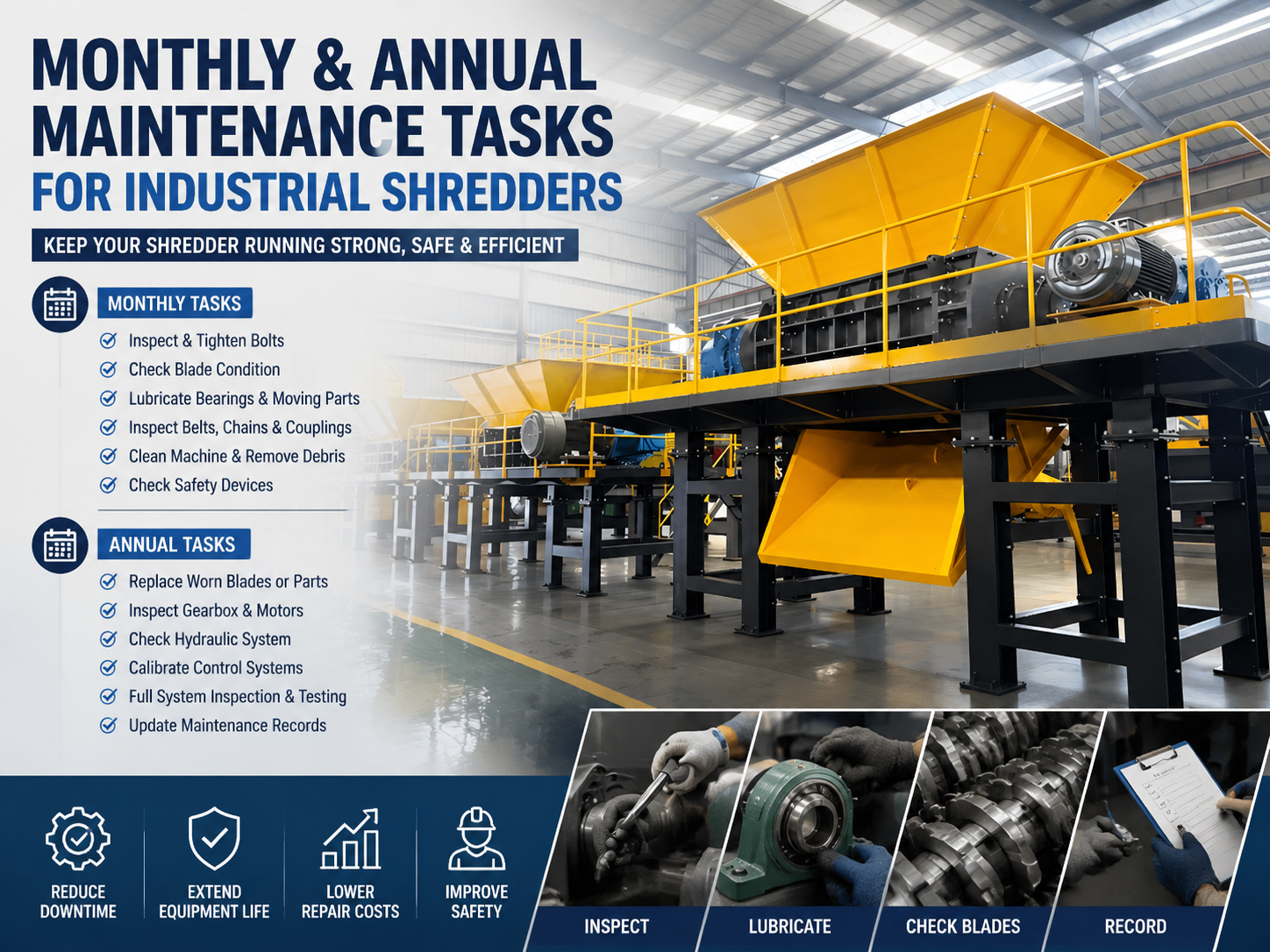
Monthly maintenance represents a deeper level of scrutiny than the daily walk-through. This is the time to open access panels and inspect the internal workings that are usually hidden from view. One of the most critical Monthly Annual Maintenance Tasks Industrial Shredders require is the inspection of the cutting blades or hammers. Depending on the material being processed, blades may show signs of rounding or chipping. Monthly measurements of the gap between the rotary and stationary blades are essential. If the tolerance exceeds the manufacturer’s specifications, the shredder will lose efficiency, consuming more power while producing a lower-quality output.
Hydraulic systems also require monthly attention. Check the hydraulic oil level and, more importantly, the quality of the oil. Look for signs of aeration (bubbles) or emulsification (milky appearance), which indicates water contamination. The hydraulic filters should be checked and replaced if the pressure differential indicators suggest a clog. A clogged filter allows unfiltered oil to bypass the system, sending contaminants directly into sensitive valves and pumps. Additionally, inspect all hydraulic hoses for “weeping” or outer jacket abrasions. A hose that fails under high pressure can be extremely dangerous.
Mechanical fasteners are another monthly priority. The vibration inherent in shredding operations can gradually loosen even the most secure bolts. Use a torque wrench to verify that the motor mounts, gearbox bolts, and bearing housing fasteners are tightened to the correct specifications. Pay close attention to the drive belts or couplings. Check for proper tension and signs of fraying or cracking. A belt that is too loose will slip and generate heat, while one that is too tight will put excessive radial load on the motor and gearbox bearings, leading to premature failure.
Annual Maintenance: The Comprehensive Overhaul
The annual maintenance cycle is a comprehensive event that often requires scheduled downtime of one to three days. This is the time for “top-to-bottom” servicing. A key component of the annual task list is a full hydraulic oil change. Over a year, hydraulic fluid undergoes thermal degradation and accumulates microscopic metal particles that filters might miss. Draining the tank, cleaning the interior of the reservoir, and refilling with high-quality, manufacturer-recommended fluid is vital for protecting the expensive hydraulic pumps.
Electrical systems demand a thorough audit during the annual check. An electrician should inspect the control cabinet, tightening all terminal connections which may have loosened due to thermal expansion and contraction. Using a thermal imaging camera to check for “hot spots” in the circuit breakers and contactors can reveal failing components before they cause a fire or a total power loss. The PLC (Programmable Logic Controller) should be checked for any error logs, and sensors—such as proximity switches and load sensors—should be recalibrated to ensure the machine’s automated safety and efficiency features are functioning correctly.
From a mechanical standpoint, the annual maintenance involves a detailed inspection of the main bearings and the gearbox. If possible, an oil analysis should be performed on the gearbox lubricant to check for excessive wear metals. The shafts should be checked for alignment and any signs of torsional fatigue. For shredders using replaceable wear plates in the cutting chamber, the annual shutdown is the ideal time to rotate or replace these plates to protect the main structural frame of the machine. Finally, the structural integrity of the entire chassis should be inspected for stress cracks, particularly around the motor mounts and the cutting chamber supports.
Lubrication Plan: The Lifeblood of the Shredder
Lubrication is the single most important factor in preventing mechanical wear. An effective lubrication plan for an industrial shredder must specify the type of lubricant, the frequency of application, and the exact points of entry. Most HARSLE shredders utilize high-pressure, extreme-pressure (EP) grease, often NLGI Grade 2, which is designed to stay in place under heavy shock loads. Monthly tasks should include verifying that all grease points—especially the main shaft bearings and the pivot points on hydraulic rams—are receiving adequate lubrication.
If the machine is equipped with an automatic lubrication system, the monthly check must include an inspection of the distribution blocks and lines. It is common for a single line to become blocked by debris; while the pump appears to be working, one specific bearing might be starving for grease. Manually “purging” each line during the monthly service ensures that fresh grease is reaching every critical surface. For the annual service, the entire lubrication system should be cleaned, and the pump should be tested for proper pressure delivery. Remember, over-greasing can be just as damaging as under-greasing, as it can blow out seals and allow contaminants to enter the bearing housing.
Troubleshooting Signals: What to Watch For
Effective maintenance also involves being a “machine whisperer.” There are several signals that indicate a shredder needs immediate attention outside of its scheduled Monthly Annual Maintenance Tasks Industrial Shredders cycle. Excessive heat is the most common warning sign. If a bearing housing is too hot to touch, or if the hydraulic oil temperature consistently exceeds 65°C (150°F), there is an underlying issue with friction or cooling efficiency. Monitoring these temperatures should be part of the monthly routine using an infrared thermometer.
Another signal is a change in the output material. If the shredded pieces are becoming larger, or if the material is being “torn” rather than cleanly cut, the blade tolerances are likely out of alignment. Increased power consumption is also a red flag. If the motor is drawing more Amps than usual to process the same volume of material, it indicates that the machine is working harder due to dull blades, poor lubrication, or internal mechanical resistance. Finally, any unusual vibration should be investigated immediately with vibration analysis tools if possible, as this often precedes a catastrophic bearing or shaft failure.
Detailed Maintenance Schedule Table
| Frequency | Component | Action Required |
|---|---|---|
| Monthly | Cutting Blades | Inspect for wear, chips, and measure gap tolerances. |
| Monthly | Hydraulic System | Check oil levels, inspect hoses for leaks, and check filter indicators. |
| Monthly | Fasteners | Torque motor mounts, gearbox bolts, and bearing housings. |
| Monthly | Drive System | Check belt tension and alignment; inspect couplings for wear. |
| Annual | Hydraulic Fluid | Complete drain, reservoir cleaning, and oil replacement. |
| Annual | Electrical Cabinet | Tighten terminals, thermal imaging check, and sensor calibration. |
| Annual | Gearbox | Change gear oil and perform wear metal analysis. |
| Annual | Structural Frame | Inspect for stress cracks and wear plate thickness. |
| Annual | Main Bearings | Deep inspection for play and seal integrity; replace if necessary. |
Frequently Asked Questions (FAQ)
1. How often should I sharpen the blades on my industrial shredder?
The frequency of blade sharpening or replacement depends entirely on the material being processed. For soft plastics, blades may last months. For scrap steel or abrasive materials like tires, you may need to perform hard-facing or blade rotation every few weeks. Monthly inspections are the best way to determine the exact timing for your specific application.
2. What type of hydraulic oil is best for HARSLE shredders?
Most industrial shredders require a high-quality anti-wear hydraulic oil, typically ISO VG 46 or 68, depending on the ambient operating temperature. Always consult your HARSLE manual, as using the wrong viscosity can lead to pump cavitation in cold weather or thinning and loss of lubrication in hot weather.
3. Can I skip the annual oil change if the oil looks clean?
No. Visual inspection is not enough to determine the health of hydraulic oil. Over time, the chemical additives that prevent oxidation and foaming break down. An annual oil change is a small investment compared to the cost of replacing a hydraulic pump or manifold block damaged by degraded fluid.
4. Why is my shredder vibrating more than usual?
Increased vibration is usually caused by one of three things: dull or broken blades creating an unbalanced load, a failing main shaft bearing, or a misalignment between the motor and the gearbox. You should stop the machine and perform a thorough mechanical check to identify the source before further damage occurs.
5. How do I know if my automatic lubrication system is working?
Check the grease reservoir level regularly; if the level doesn’t drop over a week of operation, the system is not pumping. Additionally, look for fresh grease “purging” from the bearing seals. If a seal looks dry and dusty, that specific point is likely blocked and requires manual intervention.
6. What are the signs of electrical component failure?
Common signs include frequent tripping of circuit breakers, erratic behavior of the PLC, or a “burnt” smell coming from the control cabinet. Monthly tightening of terminals and annual thermal inspections are the best ways to prevent these issues.