How to Diagnose Slow Cycle Problems in a Hydraulic Briquetting Machine

The Critical Importance of Cycle Time in Hydraulic Briquetting
In the world of metal recycling and scrap management, the efficiency of a hydraulic briquetting machine is measured by its cycle time. A slow cycle doesn’t just mean fewer briquettes per hour; it represents a significant drain on operational profitability, increased energy consumption per unit, and potential underlying mechanical stress that could lead to catastrophic failure. When you need to diagnose slow cycle problems in a hydraulic briquetting machine, you are essentially performing a health check on the entire ecosystem of the machine, from its hydraulic heart to its electrical brain.
Maintaining a consistent cycle speed ensures that the downstream processes, such as smelting or transport, remain synchronized. For industrial facilities using HARSLE equipment, understanding the nuances of cycle dynamics is essential for maximizing ROI. A delay of even two or three seconds per cycle can result in the loss of several tons of production over a month. Therefore, identifying the root cause of sluggishness is not merely a maintenance task—it is a core business necessity.
Slow cycles are rarely the result of a single catastrophic failure. Instead, they are often the cumulative effect of minor wear and tear, fluid degradation, or misaligned sensors. By adopting a systematic approach to diagnosis, operators can pinpoint whether the issue lies in the fluid power system, the mechanical linkages, or the electronic control logic. This guide provides a deep dive into the technical aspects of these systems to help you restore your machine to its peak performance.
Furthermore, ignoring a slow cycle can lead to overheating. As the hydraulic system struggles to complete a stroke, energy is converted into heat rather than mechanical work. This heat further degrades the hydraulic oil, creating a vicious cycle of declining performance. Early diagnosis is the only way to break this loop and protect your investment in high-quality metal fabrication machinery.
Daily Inspection: The First Line of Defense
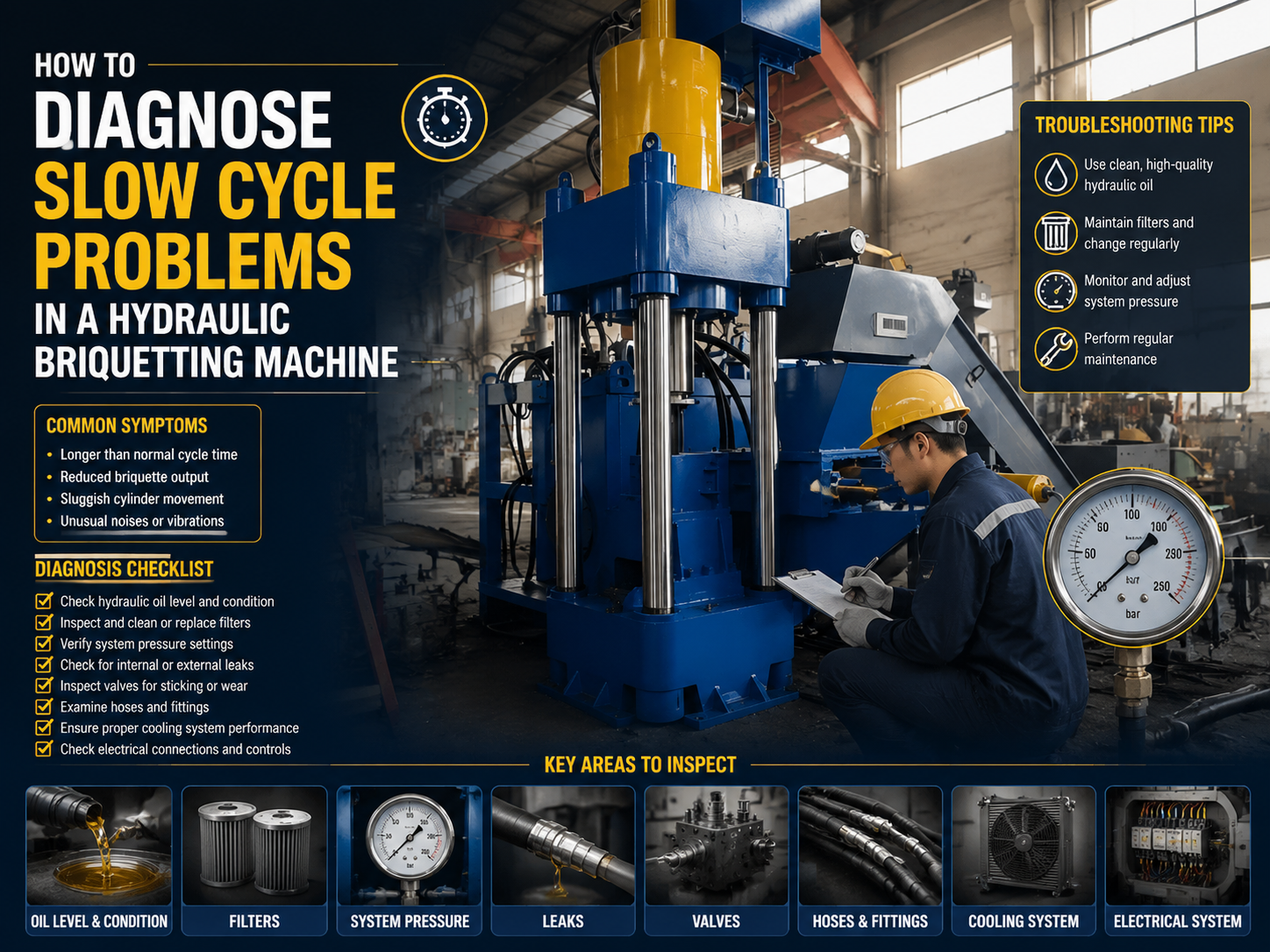
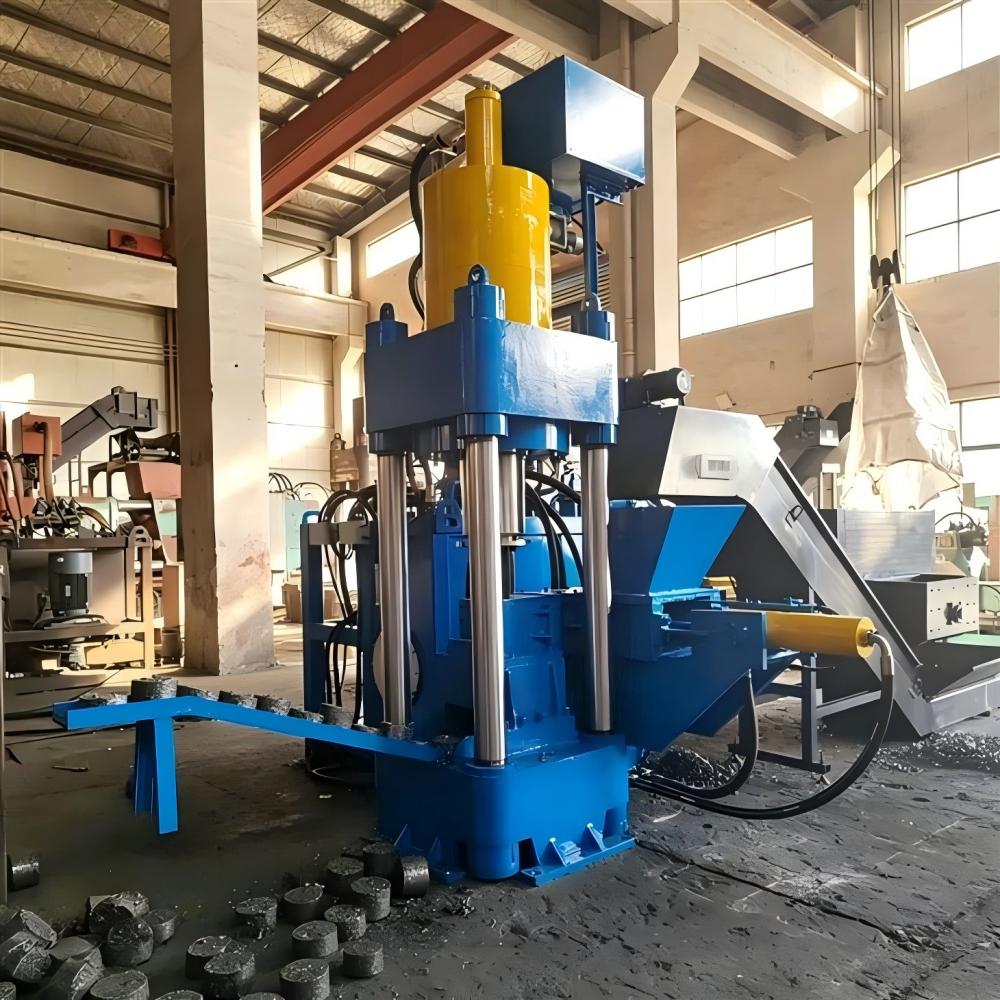
Before diving into complex teardowns, a thorough daily inspection is the most effective way to diagnose slow cycle problems in a hydraulic briquetting machine. This routine should begin with a visual sweep of the entire unit. Look for signs of external hydraulic leaks. Even a small weep at a fitting can indicate a loss of pressure or the introduction of air into the system, both of which significantly hamper the speed of the cylinder extension and retraction.
Check the hydraulic fluid level and its physical condition. Oil that appears milky suggests water contamination, while dark, burnt-smelling oil indicates thermal breakdown. Contaminated oil has different viscosity characteristics than fresh oil, which can lead to sluggish valve response and increased friction within the pump. Monitoring the oil temperature during the first hour of operation is also crucial; if the temperature rises too quickly, the cooling system or the relief valve may be at fault.
Listen to the machine. Unusual noises are often the first indicators of a problem. A high-pitched whining or shrieking sound often points to pump cavitation—a condition where the pump is starved of oil or is sucking in air. Cavitation not only slows down the cycle but can destroy a hydraulic pump in a matter of hours. Similarly, a metallic grinding sound might suggest that the mechanical guides are dry or misaligned, creating excessive drag on the briquetting ram.
Finally, inspect the material being processed. If the scrap metal is unusually wet, oily, or contains large chunks of uncrushed material, the machine may be struggling to compress the load, leading to a perceived slow cycle. Consistency in the feed material is just as important as the mechanical integrity of the machine itself. Ensure that the hopper and feeding mechanism are clear of obstructions that could delay the start of the compression stroke.
Hydraulic System Checks: Pressure, Flow, and Temperature
The hydraulic system is the most common culprit when cycle times begin to lag. To diagnose slow cycle problems in a hydraulic briquetting machine effectively, you must understand the relationship between flow (which determines speed) and pressure (which determines force). If the machine is slow but still reaches full compaction pressure, the issue is likely flow-related. If it is both slow and weak, the problem is likely pressure-related.
Start by checking the hydraulic pump. Over time, the internal tolerances of the pump (whether it is a vane, gear, or piston pump) increase due to wear. This allows oil to bypass the pumping chambers internally, reducing the volume of oil sent to the cylinders. A flow meter test can confirm if the pump is delivering its rated GPM (gallons per minute). If the flow drops significantly as the pressure increases, the pump is likely worn and needs refurbishment or replacement.
Next, examine the directional control valves and relief valves. A sticking valve spool can prevent the full flow of oil from reaching the cylinder, causing a slow stroke. Furthermore, if the main relief valve is set too low or is leaking internally, a portion of the pump’s output is constantly being dumped back to the tank instead of doing work. This not only slows the cycle but generates immense heat. Using an infrared thermometer to check the temperature of the relief valve housing can reveal if oil is constantly bypassing through it.
Don’t overlook the hydraulic cylinders. Internal leakage past the piston seals (bypass) allows oil to move from the high-pressure side to the low-pressure side without moving the piston. This is a common cause of slow movement, especially under load. A simple way to test this is to extend the cylinder to its limit and hold the pressure; if the cylinder slowly creeps back or if the return line feels hot, the internal seals are likely compromised.
Electrical and Control System Diagnostics
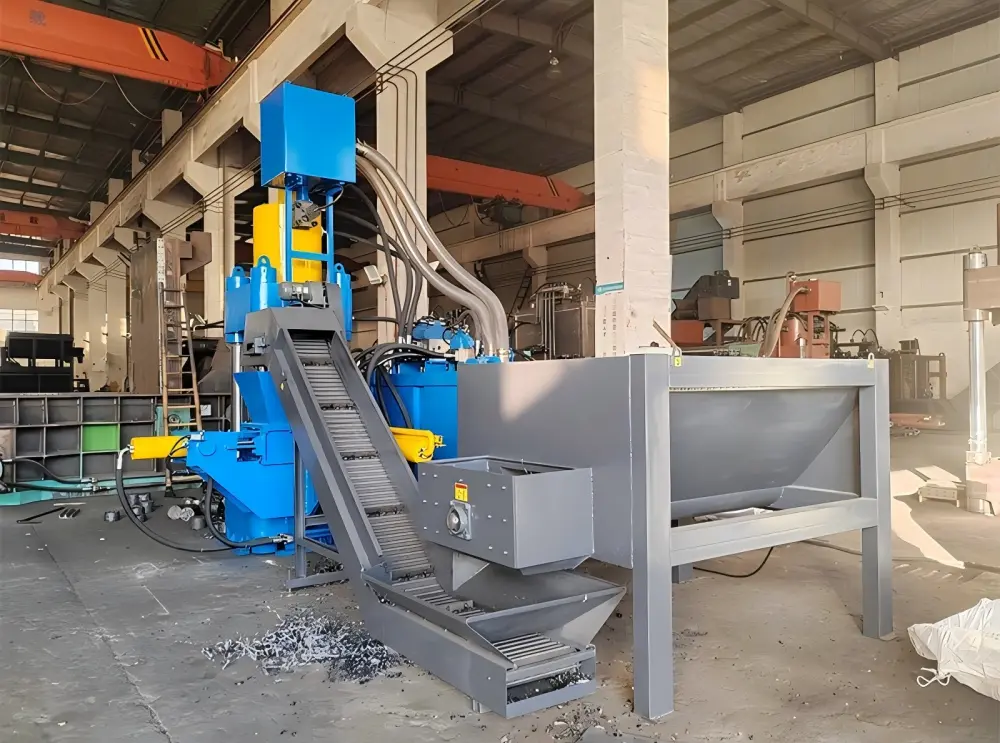
Modern hydraulic briquetting machines rely heavily on PLC (Programmable Logic Controller) systems and electronic sensors to manage the sequence of operations. When you diagnose slow cycle problems in a hydraulic briquetting machine, you must verify that the “commands” are being sent and received without delay. A lag in the electrical signal can manifest as a pause between the stages of the briquetting cycle (e.g., between the feeding and the compression stroke).
Check the proximity switches and limit sensors. These components tell the PLC when a cylinder has reached the end of its stroke. If a sensor is misaligned, dirty, or failing, it may take longer to trigger, or it may flicker, causing the PLC to hesitate before initiating the next step. Clean all sensor faces and ensure they are securely mounted at the correct distances. In some cases, the vibration of the machine can shift these sensors over time.
The solenoid valves, which translate electrical signals into hydraulic action, can also be a source of delay. Solenoid coils can weaken over time or become partially shorted, leading to a slow or incomplete shift of the valve spool. Use a multimeter to check the resistance of the coils and ensure they are receiving the correct voltage from the PLC. If the voltage is low, the problem might lie in the wiring harness or a failing relay in the control cabinet.
Lastly, review the PLC program settings if the machine allows for user adjustment. Sometimes, timers or pressure setpoints are inadvertently changed during maintenance or by unauthorized personnel. If the “dwell time” (the time the machine holds pressure at the end of a stroke) is set too high, the overall cycle time will increase. Ensure that all parameters are set according to the manufacturer’s specifications for the specific material you are processing.
Mechanical Integrity and Friction Reduction
While hydraulics provide the power, the mechanical structure of the briquetting machine guides that power. Excessive friction is a silent thief of cycle speed. To diagnose slow cycle problems in a hydraulic briquetting machine, inspect the guide rails, bushings, and wear plates. If these surfaces are scarred, dry, or misaligned, the hydraulic cylinder must work harder to overcome the friction, which slows down the movement.
Check the alignment of the main ram. If the ram is not perfectly centered, it will exert side-loading forces on the cylinder seals and the guide system. This not only slows the machine but causes rapid wear of the components. Look for uneven wear patterns on the guide slides. If one side is shinier or more worn than the other, an alignment correction is necessary. This often involves adjusting the gibs or replacing worn wear plates.
The feeding mechanism, whether it is a screw feeder or a secondary hydraulic pusher, must also be synchronized. If the feeder is slow to retract or extend, the main compression cycle cannot begin. Check for material buildup behind the pusher or around the screw. In metal briquetting, fine chips and dust can migrate into mechanical clearances, creating a “grinding paste” that increases resistance and slows down the moving parts.
Finally, inspect the structural integrity of the frame. While rare, a cracked frame or a loose mounting bolt can cause the machine to flex under pressure. This flex absorbs energy and can cause the moving parts to bind slightly during the high-pressure phase of the cycle. Ensuring that the machine is properly leveled and anchored to a solid foundation is a fundamental step in maintaining its mechanical efficiency and cycle speed.
Comprehensive Lubrication Plan
Lubrication is the lifeblood of any industrial machine. A lack of proper lubrication is a primary cause of increased friction and subsequent slow cycles. To diagnose slow cycle problems in a hydraulic briquetting machine, you must evaluate your current lubrication schedule and the type of lubricants being used. Different parts of the machine require different types of protection.
- Hydraulic Oil: Use only the high-quality anti-wear hydraulic oil recommended by HARSLE. The viscosity grade (e.g., ISO VG 46 or 68) must match your operating environment. Oil that is too thick will cause sluggishness in cold starts, while oil that is too thin will lose its lubricating properties as it heats up.
- Grease Points: The main pivot pins, guide rails, and feeder bearings require regular greasing. Use a lithium-based extreme pressure (EP) grease to withstand the high loads of the briquetting process. Automated lubrication systems should be checked daily to ensure all lines are clear and delivering grease.
- Filter Maintenance: Clogged filters restrict oil flow to the pump, leading to cavitation and slow performance. Replace hydraulic filters according to the schedule, or sooner if the indicator shows a bypass condition.
- Cooling System: If your machine uses an air or water cooler for the hydraulic oil, ensure it is clean. High oil temperatures reduce the efficiency of the entire system. Clean the fins of air coolers and check for scale buildup in water-cooled heat exchangers.
Troubleshooting Signals: What Your Machine is Telling You
Learning to interpret the signals your machine sends is key to a fast diagnosis. When you diagnose slow cycle problems in a hydraulic briquetting machine, pay attention to the “symptoms” that accompany the slowdown. For example, if the cycle is slow only when the machine is hot, the problem is likely related to oil viscosity or internal leakage in the pump or cylinders. If the cycle is slow from the moment you turn it on, look for mechanical binding or a restricted suction line.
Vibration is another critical signal. Excessive vibration during the compression stroke can indicate air trapped in the hydraulic lines or a pump that is struggling to maintain flow. Bleeding the air from the system and checking the suction hose for leaks or collapses can often resolve this. If the vibration is localized to the motor, it may indicate a coupling misalignment between the motor and the pump.
Observe the pressure gauge closely during a full cycle. The needle should move smoothly. If the needle jumps or oscillates, it indicates pressure fluctuations that could be caused by a faulty relief valve or a failing pump. If the pressure builds very slowly, it suggests a high volume of internal leakage. A machine that reaches pressure but takes too long to get there is usually suffering from a flow deficiency, whereas a machine that never reaches full pressure has a pressure-relief or seal issue.
Maintenance Schedule Table
| Frequency | Component | Action Required | Impact on Cycle Time |
|---|---|---|---|
| Daily | Oil Level & Temp | Check and top up; monitor for overheating. | Prevents pump cavitation and oil thinning. |
| Daily | Visual Leaks | Inspect fittings, hoses, and cylinder rods. | Maintains system pressure and prevents air entry. |
| Weekly | Guide Rails | Clean and apply fresh lubricant/grease. | Reduces mechanical friction and drag. |
| Weekly | Filters | Check pressure drop indicators. | Ensures unrestricted flow to the pump. |
| Monthly | Electrical Sensors | Clean and verify alignment/tightness. | Ensures rapid PLC signal processing. |
| Quarterly | Hydraulic Oil Analysis | Test for contamination and additive depletion. | Prevents internal wear of valves and pumps. |
| Bi-Annually | Pump & Valve Inspection | Check for internal wear and spool movement. | Restores original flow and pressure specs. |
Frequently Asked Questions (FAQ)
1. Why does my briquetting machine slow down after running for a few hours?
This is typically due to the hydraulic oil overheating. As the oil temperature rises, its viscosity decreases (it becomes thinner). Thinner oil is more likely to leak internally past pump vanes or cylinder seals, reducing the effective flow and slowing the cycle. Check your cooling system and the setting of your relief valve.
2. Can a dirty air breather on the hydraulic tank cause slow cycles?
Yes. If the air breather is clogged, a vacuum can form in the tank as the oil is drawn out by the pump. This restricts the flow of oil to the pump, leading to cavitation and a significant drop in cycle speed. Always ensure the breather is clean and functional.
3. How do I know if the problem is the pump or the cylinder?
If the machine is slow in both directions (extend and retract), the pump or a main relief valve is the likely culprit. If the machine is slow in only one direction, or if it fails to hold pressure at the end of a stroke, the problem is more likely a leaking seal inside that specific cylinder.
4. Does the type of metal scrap affect the cycle time?
Absolutely. Lighter, fluffier material (like aluminum turnings) takes more time to compress to a solid state than heavier material. If the material density changes, the machine may spend more time in the “low pressure, high flow” stage, which can change the perceived cycle time. Ensure your feed rate is optimized for the material type.
5. Can electrical interference cause slow cycles?
While rare, electromagnetic interference (EMI) can affect the signals from sensors to the PLC, causing erratic behavior or delays. Ensure that sensor cables are shielded and routed away from high-voltage power lines to prevent signal lag.
6. How often should I replace the hydraulic oil?
Generally, hydraulic oil should be changed every 2,000 to 4,000 operating hours, or once a year. However, this depends on the operating environment. Regular oil analysis is the best way to determine the exact time for a change to prevent slow cycles caused by fluid degradation.
7. What is the quickest way to diagnose a sticking valve?
You can often diagnose a sticking valve by manually overriding the solenoid (if the valve has a manual override button). If the machine moves at full speed when manually overridden but is slow when controlled by the PLC, the issue is likely electrical. If it is still slow, the valve spool is likely physically sticking or the pump flow is low.