
Common Industrial Shredder Problems and How Regular Maintenance Prevents Them

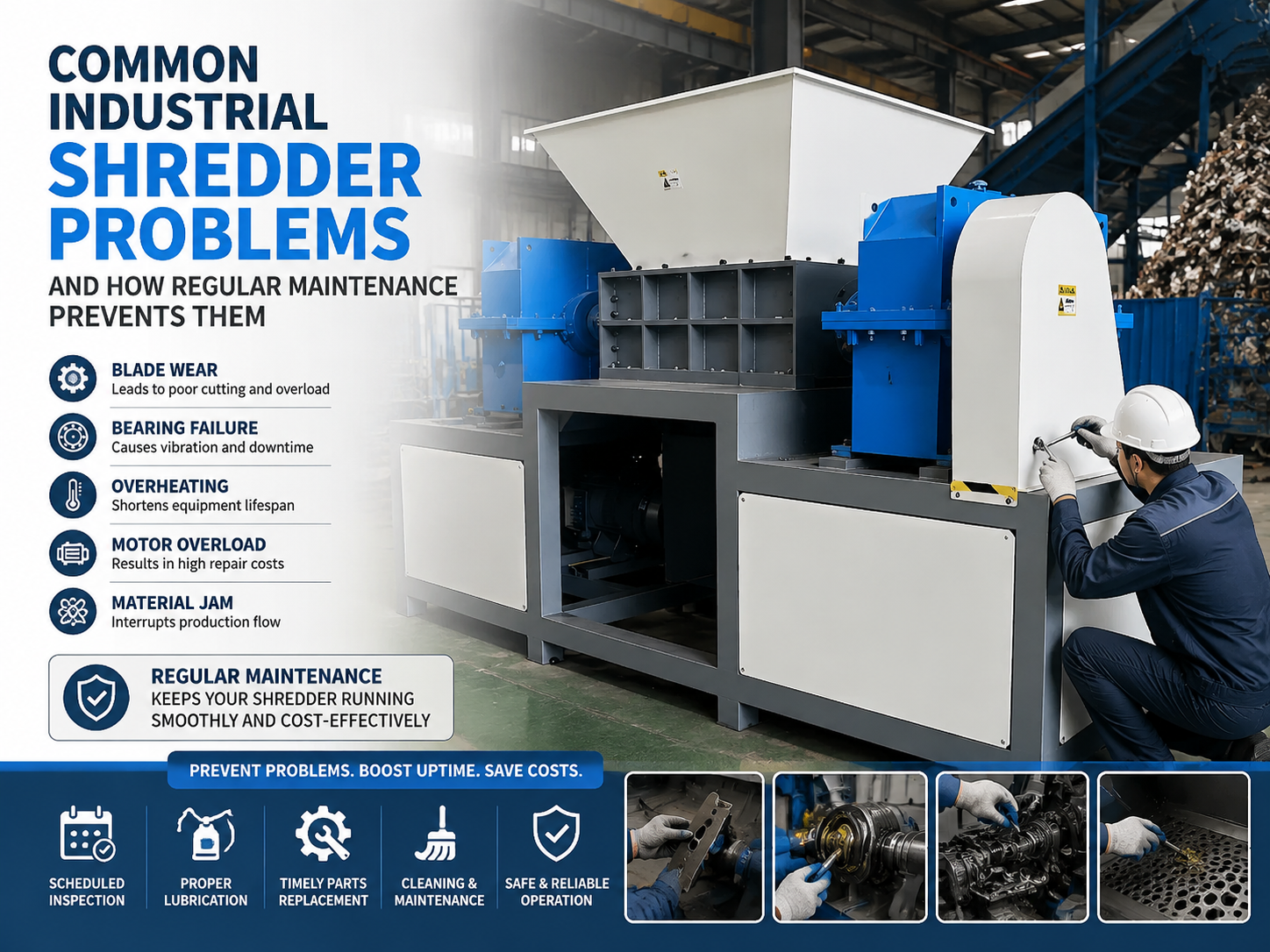
The Critical Importance of Industrial Shredder Maintenance
In the world of heavy-duty recycling and waste management, the industrial shredder stands as the workhorse of the facility. Whether processing scrap metal, plastics, or electronic waste, these machines are subjected to immense mechanical stress and abrasive forces. Understanding Common Industrial Shredder Problems Regular Maintenance Prevents Them is not just a matter of operational efficiency; it is a prerequisite for protecting a significant capital investment. When a shredder fails, the entire production line often grinds to a halt, leading to cascading delays and financial losses.
Regular maintenance serves as the first line of defense against the inevitable wear and tear associated with high-torque, low-speed shredding. By implementing a structured maintenance protocol, operators can identify minor issues—such as a loose fastener or a slightly dull blade—before they evolve into catastrophic failures like a snapped drive shaft or a burnt-out motor. HARSLE emphasizes that a well-maintained machine not only lasts longer but also operates with higher energy efficiency, reducing the overall cost per ton of processed material.
Furthermore, safety is a paramount concern. A neglected shredder is a dangerous shredder. Worn components can lead to unexpected material ejections, structural failures, or electrical fires. By prioritizing maintenance, facility managers ensure a safer working environment for their staff. This guide explores the specific technical areas where maintenance makes the most difference, providing a roadmap for keeping your HARSLE shredder in peak condition.
Ultimately, the goal of any maintenance program is to maximize uptime. In the competitive landscape of metal fabrication and recycling, the ability to process material consistently without unplanned interruptions is a major competitive advantage. By focusing on the preventative measures outlined in this article, you can ensure that your industrial shredder remains a reliable asset for years to come.
Daily Inspection: The Foundation of Machine Longevity
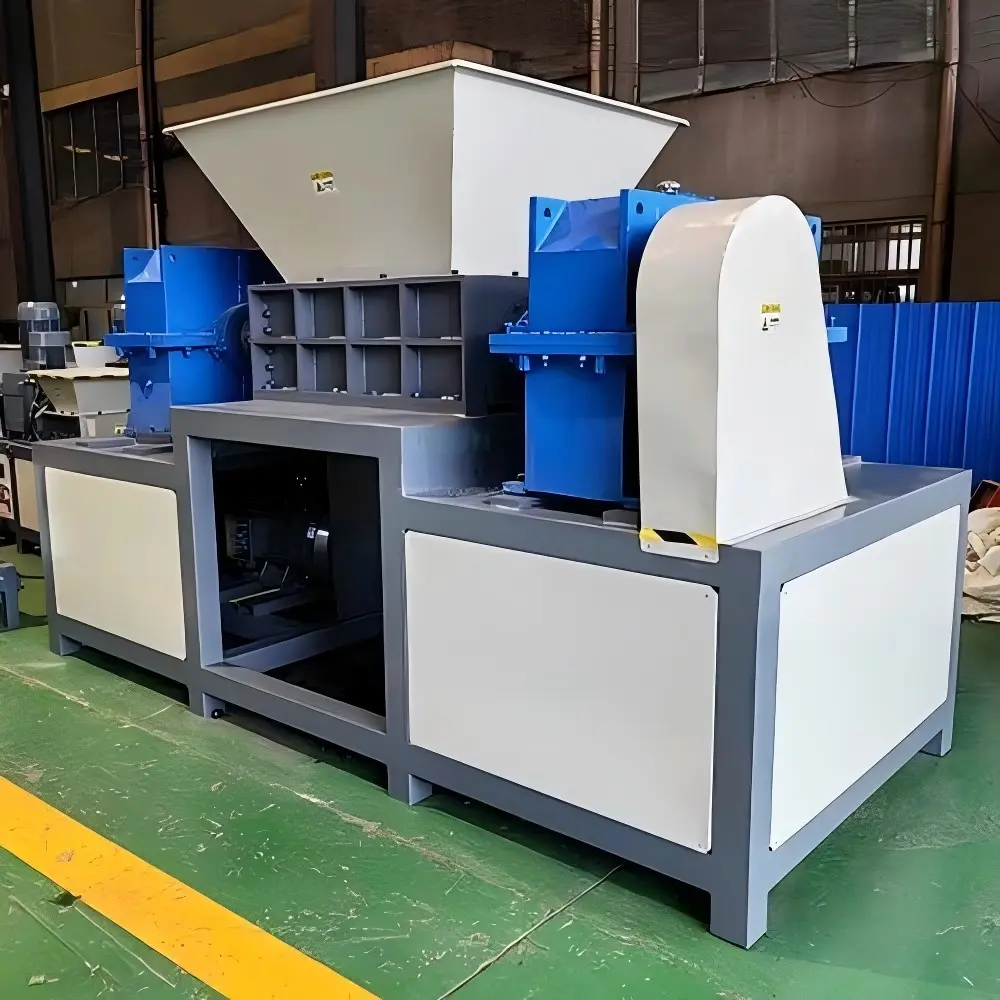
The daily inspection is perhaps the most underrated aspect of industrial machinery care. It requires no specialized tools, only a keen eye and a disciplined routine. Before the start of every shift, operators should perform a comprehensive walk-around of the shredder. This process helps in identifying Common Industrial Shredder Problems Regular Maintenance Prevents Them, such as fluid leaks or structural cracks that may have developed during the previous shift.
During the daily check, the primary focus should be on the shredding chamber. Operators must ensure that no foreign objects—specifically non-shreddable materials like heavy steel ingots in a light-duty plastic shredder—are lodged between the blades. Clearing out residual debris prevents the motor from starting under a heavy load, which can cause significant electrical strain and mechanical shock. Additionally, checking the tightness of visible bolts and fasteners is crucial, as the constant vibration of the shredding process can naturally loosen even the most secure connections.
Visual inspection of the hydraulic hoses and electrical conduits is also necessary. Look for signs of abrasion, bulging, or weeping at the fittings. In the electrical system, ensure that all emergency stop buttons are functional and that the control panel displays no error codes. These simple steps, taking no more than 15 to 20 minutes, can save hours of downtime later in the day. If an operator notices an unusual puddle of oil or a frayed wire, the machine should be locked out and tagged out immediately for repair.
Finally, the daily routine should include a brief “dry run.” Listen to the machine as it starts up without material. Any grinding, squealing, or rhythmic thumping sounds are immediate red flags. By documenting these daily checks in a logbook, the maintenance team can track the machine’s health over time, making it easier to predict when specific components might need replacement.
Hydraulic System Maintenance: Pressure and Purity
Many industrial shredders, especially heavy-duty models, rely on hydraulic systems to drive the shafts or operate the ram feeders. The hydraulic system is the “circulatory system” of the shredder, and its health is dependent on two factors: pressure and purity. Contaminated hydraulic fluid is a leading cause of pump failure and valve sticking. Over time, microscopic metal particles and moisture can enter the system, acting as an abrasive that wears down internal components.
To prevent these issues, regular oil analysis is recommended. This involves taking a sample of the hydraulic fluid and testing it for particulate count and chemical degradation. Beyond the oil itself, the filters must be changed according to the manufacturer’s schedule—or sooner if the machine operates in a particularly dusty environment. A clogged filter will cause a pressure drop, forcing the pump to work harder and generate more heat, which further degrades the oil.
Temperature management is another critical aspect of hydraulic maintenance. Most shredders are equipped with oil coolers or heat exchangers. If these become clogged with dust or debris, the oil temperature will spike, leading to a loss of viscosity and potential seal failure. Regularly cleaning the cooling fins and ensuring adequate airflow around the hydraulic unit is a simple but effective preventative measure. If the oil smells burnt or appears milky, it is a sign of severe overheating or water contamination, requiring an immediate flush and refill.
Lastly, check the hydraulic cylinders and hoses for leaks. Even a small “weep” can lead to a significant loss of pressure over time and create a slip hazard around the machine. Ensure that all hoses are routed correctly and are not rubbing against sharp edges or moving parts. By maintaining the hydraulic system’s integrity, you ensure that the shredder maintains its full cutting force, even when processing the toughest materials.
Electrical System Integrity and Control Logic
The electrical system of a modern industrial shredder is complex, involving high-voltage motors, Variable Frequency Drives (VFDs), and Programmable Logic Controllers (PLCs). Electrical failures are often the most difficult to diagnose, making preventative maintenance essential. One of the most Common Industrial Shredder Problems Regular Maintenance Prevents Them is the accumulation of conductive dust inside electrical cabinets. In a metal recycling facility, fine metallic dust can settle on circuit boards, causing short circuits and component failure.
Maintenance teams should regularly vacuum (not blow) the interior of electrical cabinets to remove dust. While the cabinet is open, inspect all wiring for signs of heat damage, such as discolored insulation or a “burnt” smell. Loose terminal connections are a frequent source of heat and can lead to intermittent faults or total system failure. Using an infrared thermography camera during operation can help identify “hot spots” in the electrical panel that indicate a loose connection or an overloaded circuit.
The motor itself requires specific attention. Check the cooling fans to ensure they are clear of debris and that the motor housing is clean to allow for proper heat dissipation. Periodically testing the insulation resistance of the motor windings (megger testing) can provide early warning of an impending motor failure. Additionally, ensure that the VFD parameters are correctly set and that the cooling fans on the drive itself are functioning. Overheating is the number one killer of electronic components in industrial environments.
Sensors and limit switches also play a vital role in the shredder’s operation and safety. These components are often located in harsh areas near the shredding chamber and can be knocked out of alignment or damaged by flying debris. Regularly cleaning and testing these sensors ensures that the PLC receives accurate data, allowing the machine to reverse automatically during a jam or shut down in an emergency. Keeping the software and firmware of the PLC updated, as recommended by HARSLE, can also improve the machine’s logic and responsiveness to load changes.
Mechanical Components: Blades, Shafts, and Bearings
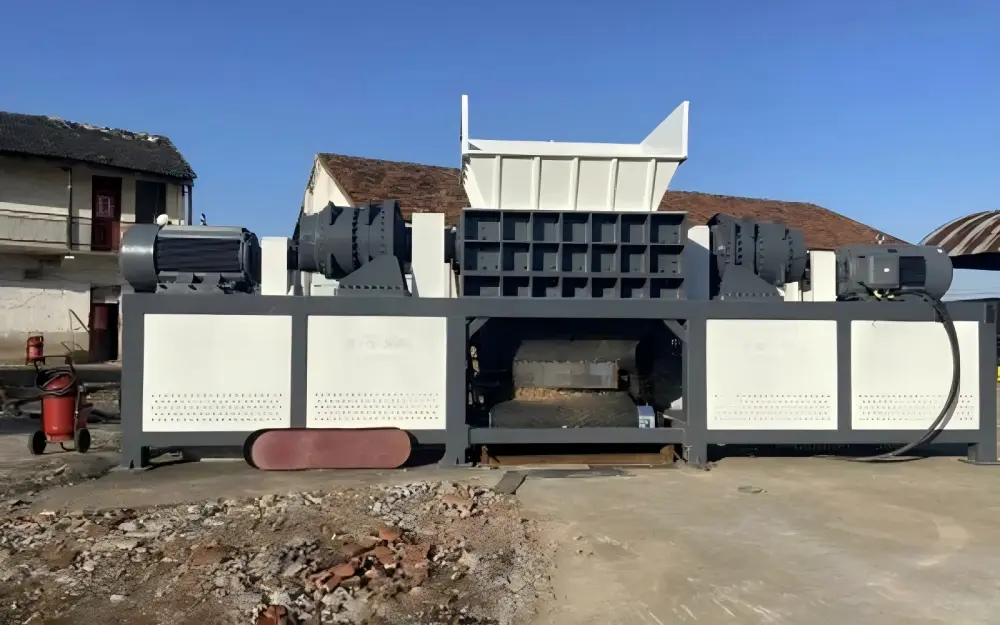
The mechanical heart of the shredder—the blades and shafts—is where the actual work happens. Consequently, this is where the most significant wear occurs. Blade maintenance is the most critical factor in determining the quality of the output and the efficiency of the machine. As blades dull, the shredder requires more power to cut through the same material, increasing the load on the motor and gearbox. Dull blades also tend to “tear” rather than “cut,” which can lead to material wrapping around the shafts and causing jams.
Regularly inspecting the blades for chips, cracks, and rounding of the cutting edges is essential. Depending on the material being processed, blades may need to be sharpened or hard-faced periodically. In dual-shaft shredders, maintaining the correct gap between the blades is vital. If the gap becomes too wide, material will bypass the cutting action; if it is too tight, the blades may clash, causing catastrophic damage. Adjusting the spacers and shims is a precision task that should be part of the quarterly maintenance routine.
The shafts themselves must be checked for alignment and signs of fatigue. A bent shaft, even if only slightly out of true, will cause excessive vibration and rapid bearing wear. Bearings are the silent heroes of the shredder, supporting the massive loads generated during operation. They must be kept free of contaminants and properly lubricated. Listen for any high-pitched squealing or low-frequency rumbling, which are classic signs of bearing failure. Replacing a bearing is a standard maintenance task; replacing a shaft damaged by a seized bearing is a major repair.
The gearbox is another critical mechanical component. It translates the high-speed rotation of the motor into the high-torque rotation needed for shredding. Check the gearbox oil level and look for any signs of metal shavings in the oil, which indicate internal gear wear. Ensure that the breather cap is clean to prevent pressure buildup inside the gearbox. By keeping the mechanical drive train in alignment and well-lubricated, you minimize the internal friction that steals power and generates heat.
Comprehensive Lubrication Plan
Lubrication is the single most effective way to reduce friction and wear in an industrial shredder. However, simply “applying grease” is not enough. A professional lubrication plan specifies the type of lubricant, the amount to be used, and the frequency of application for every moving part. Using the wrong type of grease—for example, a general-purpose grease in a high-temperature, high-pressure bearing—can be just as damaging as using no grease at all.
Main bearings, drive chains, and gear couplings all require regular lubrication. Many HARSLE shredders are equipped with automatic lubrication systems that deliver small, precise amounts of grease at set intervals. These systems must be monitored to ensure the reservoir is full and that the delivery lines are not blocked or broken. If your machine requires manual lubrication, it is best to perform this at the end of a shift while the components are still warm, as this allows the lubricant to flow more easily into the tight tolerances of the bearings.
Environmental factors play a large role in lubrication needs. If the shredder is located outdoors or in a very dusty environment, the grease can become contaminated, turning into an abrasive paste. In such cases, more frequent lubrication is necessary to “flush out” the old, contaminated grease with fresh material. Always wipe down grease fittings before attaching the grease gun to prevent pushing dirt into the bearing.
Don’t forget the smaller components. Pivot points on ram feeders, door hinges, and adjustment bolts all benefit from a light coating of oil or grease to prevent corrosion and ensure smooth operation. A well-documented lubrication schedule, signed off by the maintenance technician, ensures that no point is missed and provides a record of care that can be invaluable for warranty claims or resale value.
Troubleshooting Signals: Listening to Your Machine
An experienced operator can often tell if a shredder is having trouble just by the sound it makes. Learning to interpret these signals is a key part of preventing Common Industrial Shredder Problems Regular Maintenance Prevents Them. For instance, a sudden increase in the frequency of “auto-reverses” suggests that the blades are dull or that the material being fed is too tough for the current settings. Ignoring this signal will eventually lead to an overheated motor or a broken drive belt.
Vibration is another major indicator. While all shredders vibrate to some extent, a change in the vibration pattern often points to a mechanical imbalance. This could be caused by a broken blade, a loose motor mount, or a failing bearing. Using a handheld vibration meter can provide objective data to compare against the machine’s baseline performance. If vibration levels exceed the manufacturer’s specifications, the machine should be stopped and inspected immediately.
Heat is a universal sign of trouble. Use an infrared thermometer to check the temperature of bearings, motors, and gearboxes. A bearing that is significantly hotter than its counterpart on the other side of the shaft is likely failing. Similarly, if the motor housing is too hot to touch, it may be pulling too much current due to a mechanical bind or an electrical issue. Monitoring the amperage draw on the control panel is also a great way to gauge the machine’s health; a steady increase in idle amperage over several weeks is a clear sign of increasing internal friction.
Finally, pay attention to the output material. If the shredded pieces are becoming larger, inconsistent, or “stringy,” it indicates that the cutting tolerances have shifted. This could be due to blade wear or a change in the shaft spacing. By catching these signals early, you can schedule maintenance during a planned downtime rather than reacting to a sudden breakdown in the middle of a busy production run.
Industrial Shredder Maintenance Schedule Table
To help organize your maintenance efforts, use the following table as a general guideline for a HARSLE industrial shredder. Always refer to your specific model’s manual for exact intervals.
| Frequency | Component | Action Required |
|---|---|---|
| Daily | Shredding Chamber | Clear debris, check for foreign objects, inspect blades. |
| Daily | Hydraulic System | Check oil level, inspect hoses for leaks/abrasion. |
| Daily | Safety Systems | Test emergency stops and interlock switches. |
| Weekly | Main Bearings | Lubricate (if manual) or check auto-lube reservoir. |
| Weekly | Electrical Cabinet | Inspect for dust buildup and loose connections. |
| Monthly | Drive Belts/Chains | Check tension and look for signs of wear or cracking. |
| Monthly | Gearbox | Check oil level and inspect for leaks. |
| Quarterly | Blades & Spacers | Measure gaps, check for sharpness, tighten all bolts. |
| Quarterly | Hydraulic Filters | Replace return line and suction filters. |
| Yearly | Hydraulic Oil | Perform full oil analysis or complete oil change. |
| Yearly | Motor | Perform insulation resistance (megger) test. |
Frequently Asked Questions (FAQ)
How often should I sharpen my shredder blades?
The frequency of blade sharpening depends entirely on the material you are processing. Shredding abrasive materials like glass-filled plastics or sandy scrap metal will dull blades much faster than clean aluminum. As a rule of thumb, inspect blades weekly and plan for sharpening or replacement when you notice a 15-20% drop in throughput or a significant change in output quality.
What is the most common cause of shredder motor failure?
Overheating is the most common cause. This can result from several factors: operating with dull blades (which increases load), poor ventilation around the motor, or frequent jamming that causes high current spikes. Regular maintenance of the cutting system and keeping the motor clean are the best ways to prevent this.
Can I use any hydraulic oil in my HARSLE shredder?
No. You must use the oil viscosity and grade specified in your owner’s manual. Using the wrong oil can lead to poor lubrication at high temperatures or sluggish performance in cold weather. Additionally, ensure the oil has the necessary anti-wear (AW) additives required for high-pressure hydraulic systems.
Why does my shredder keep reversing automatically?
Auto-reversing is a safety feature triggered when the motor reaches a pre-set amperage limit, indicating a jam or overload. If this happens frequently with normal material, it usually means the blades are dull, the material is being fed too quickly, or there is a mechanical obstruction in the chamber.
How do I know if a bearing is failing before it seizes?
Look for three signs: increased noise (grinding or squealing), increased temperature (measured with an IR thermometer), and increased vibration. If you detect any of these, inspect the bearing immediately. It is much cheaper to replace a bearing than to repair the damage caused by a seized one.
Is it necessary to clean the electrical cabinet?
Yes, absolutely. In industrial environments, dust—especially metallic dust—is conductive. If it builds up on circuit boards or between terminals, it can cause short circuits, erratic behavior, or even fires. Use a vacuum with a non-conductive nozzle to clean the cabinet regularly.


