Single-Shaft Shredder Buying Guide: Common Problems to Check Before Purchase

Introduction to Single-Shaft Shredder Procurement
In the modern industrial landscape, the single-shaft shredder has become an indispensable tool for waste management, recycling, and material volume reduction. Whether you are processing plastics, wood, paper, or light metal scraps, selecting the right machinery is a high-stakes decision that impacts your facility’s operational efficiency for years. However, the market is flooded with various models, making the process of Single-Shaft Shredder Buying : Common Problems Check Before Purchase a critical exercise for any procurement manager or business owner.
A single-shaft shredder operates by using a large hydraulic pusher to force material against a rotating shaft equipped with multiple blades. This design is favored for its ability to produce a consistent output size and its versatility across different material densities. Despite its robust appearance, the internal mechanics are complex. Failing to identify potential issues during the pre-purchase phase can lead to frequent downtime, high maintenance costs, and a significantly lower return on investment (ROI). This guide aims to provide a comprehensive roadmap to navigating the complexities of shredder acquisition, focusing on technical nuances and common pitfalls.
Price Range Overview: What to Expect
The price of a single-shaft shredder varies significantly based on its capacity, motor power, and the sophistication of its control systems. Understanding the market tiers is the first step in budgeting. Entry-level machines, often designed for light plastics or small-scale wood processing, typically range from $8,000 to $18,000. These units usually feature smaller rotors (around 200mm to 300mm in diameter) and motors between 11kW and 22kW. While affordable, they may lack the structural reinforcement required for continuous 24/7 industrial operations.
Mid-range industrial shredders, which are the workhorses of the recycling industry, generally fall between $25,000 and $65,000. These machines are equipped with more powerful motors (37kW to 75kW), advanced PLC controls, and high-torque gearboxes. They are capable of handling tougher materials like thick-walled HDPE pipes or rubber. At the top end of the spectrum, heavy-duty custom-engineered shredders can exceed $150,000. These are often integrated into fully automated recycling lines and feature specialized rotor cooling systems, oversized hydraulic power packs, and wear-resistant hard-facing on the rotor surface.
| Category | Typical Price Range (USD) | Motor Power | Primary Application |
|---|---|---|---|
| Entry-Level | $8,000 – $18,000 | 11kW – 22kW | Light plastics, paper, small wood scraps |
| Mid-Range Industrial | $25,000 – $65,000 | 37kW – 75kW | HDPE pipes, purgings, solid timber |
| Heavy-Duty / Custom | $70,000 – $150,000+ | 90kW+ | Large-scale recycling, MSW, tough fibers |
Main Cost Drivers in Shredder Manufacturing
When evaluating the cost of a single-shaft shredder, it is essential to look beyond the sticker price and analyze the components that drive that cost. The most significant driver is the motor and drive system. High-quality motors from reputable brands like Siemens or WEG offer better energy efficiency and longevity. Similarly, the gearbox—the component that converts high-speed motor rotation into high-torque rotor movement—is a major cost factor. A premium planetary gearbox will cost significantly more than a standard spur gearbox but offers much higher torque density and shock resistance.
The blade material and rotor design also play a pivotal role. Shredder blades are typically made from D2 (1.2379) or SKD-11 tool steel. However, for abrasive materials, manufacturers might use DC53 or even tungsten carbide inserts. The process of vacuum heat treatment to ensure uniform hardness throughout the blade adds to the manufacturing cost. Furthermore, a rotor machined from a single solid piece of forged steel is more expensive than a hollow tube rotor but provides the structural integrity needed to prevent shaft warping under heavy loads.
Finally, the hydraulic system and electrical components contribute to the final price. A shredder with a proportional valve hydraulic system allows for smoother pusher movement and better control over material feeding, preventing motor overloads. On the electrical side, the inclusion of a high-end PLC (like Siemens S7-1200) and a user-friendly HMI (Human Machine Interface) increases the initial cost but simplifies troubleshooting and operation, which is a vital consideration in the Single-Shaft Shredder Buying : Common Problems Check Before Purchase process.
Configuration Impact: Matching Specs to Material
The configuration of a single-shaft shredder must be tailored to the specific material it will process. One of the most critical configurations is the rotor type. A “V-rotor” design is excellent for general-purpose shredding as it pulls material toward the center, reducing wear on the side walls. Conversely, a flat rotor might be better for thin films to prevent wrapping. The number of blades and their arrangement on the rotor determine the throughput and the size of the initial cut. More blades generally mean a higher frequency of cuts but require more power.
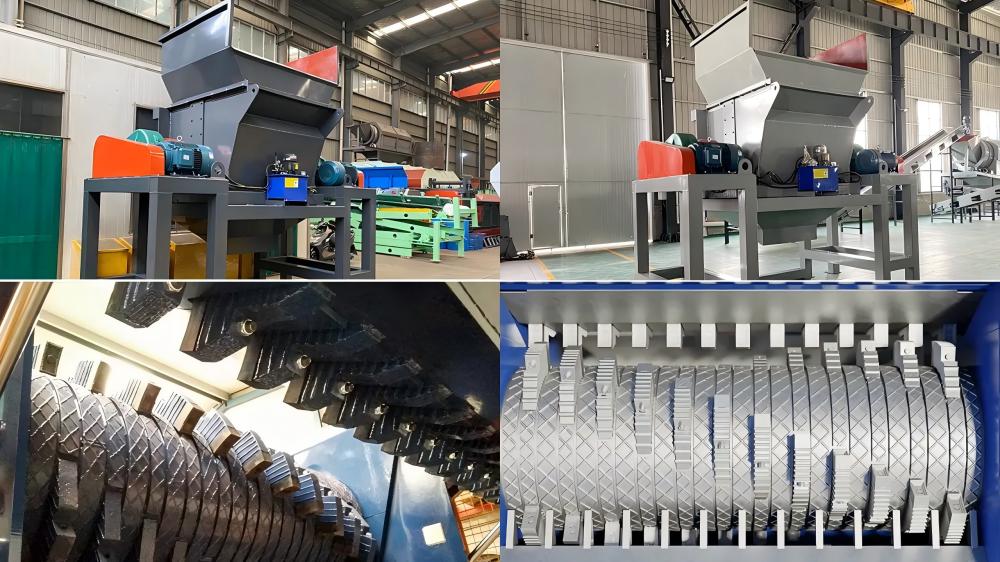
The screen size is another configuration variable. The screen, located beneath the rotor, determines the final particle size. While a smaller screen produces a finer output, it also significantly reduces throughput and increases heat generation due to friction. Buyers must balance the desired output size with the machine’s capacity. Some modern shredders offer quick-change screen brackets, which are essential if your facility processes different materials throughout the week.
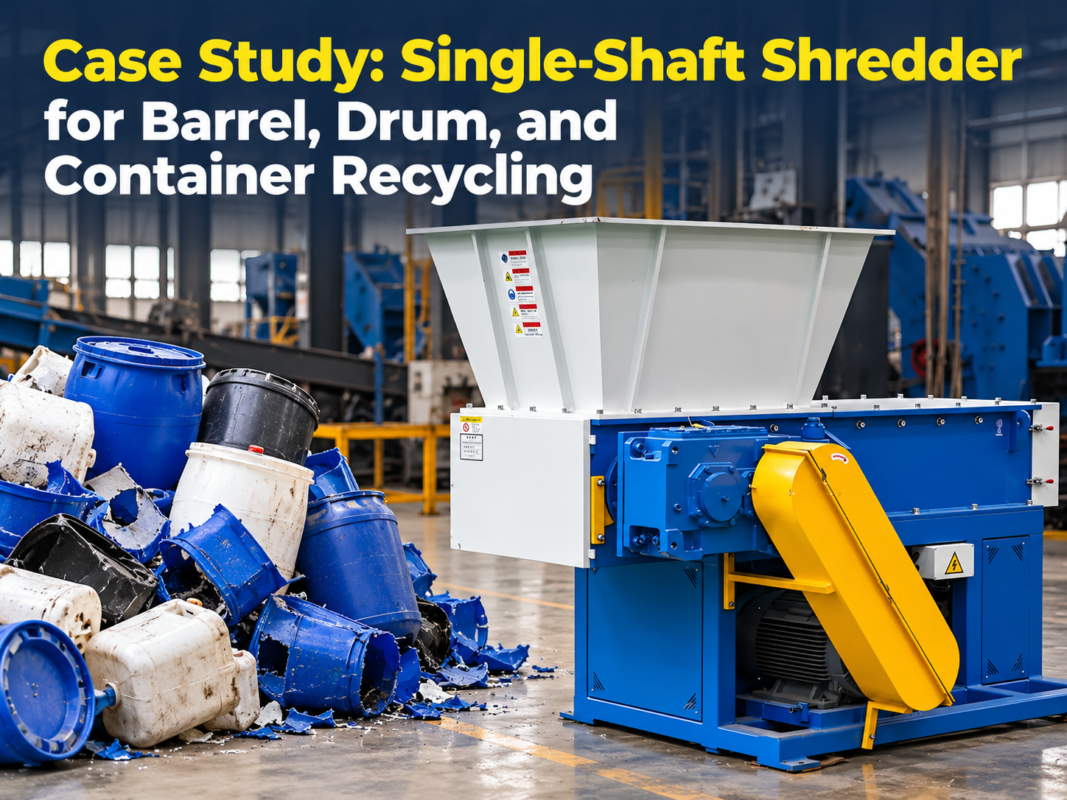
The pusher system (also known as the ram) is often overlooked. There are horizontal pushers and swing-arm pushers. Horizontal pushers are standard and effective for most solid objects. However, for bulky items like large drums or hollow containers, a swing-arm pusher can be more effective at forcing the material into the rotor. The guide rails for the pusher should be made of high-wear material and be easily replaceable, as they are subject to constant friction and dust accumulation.
Common Problems to Check Before Purchase
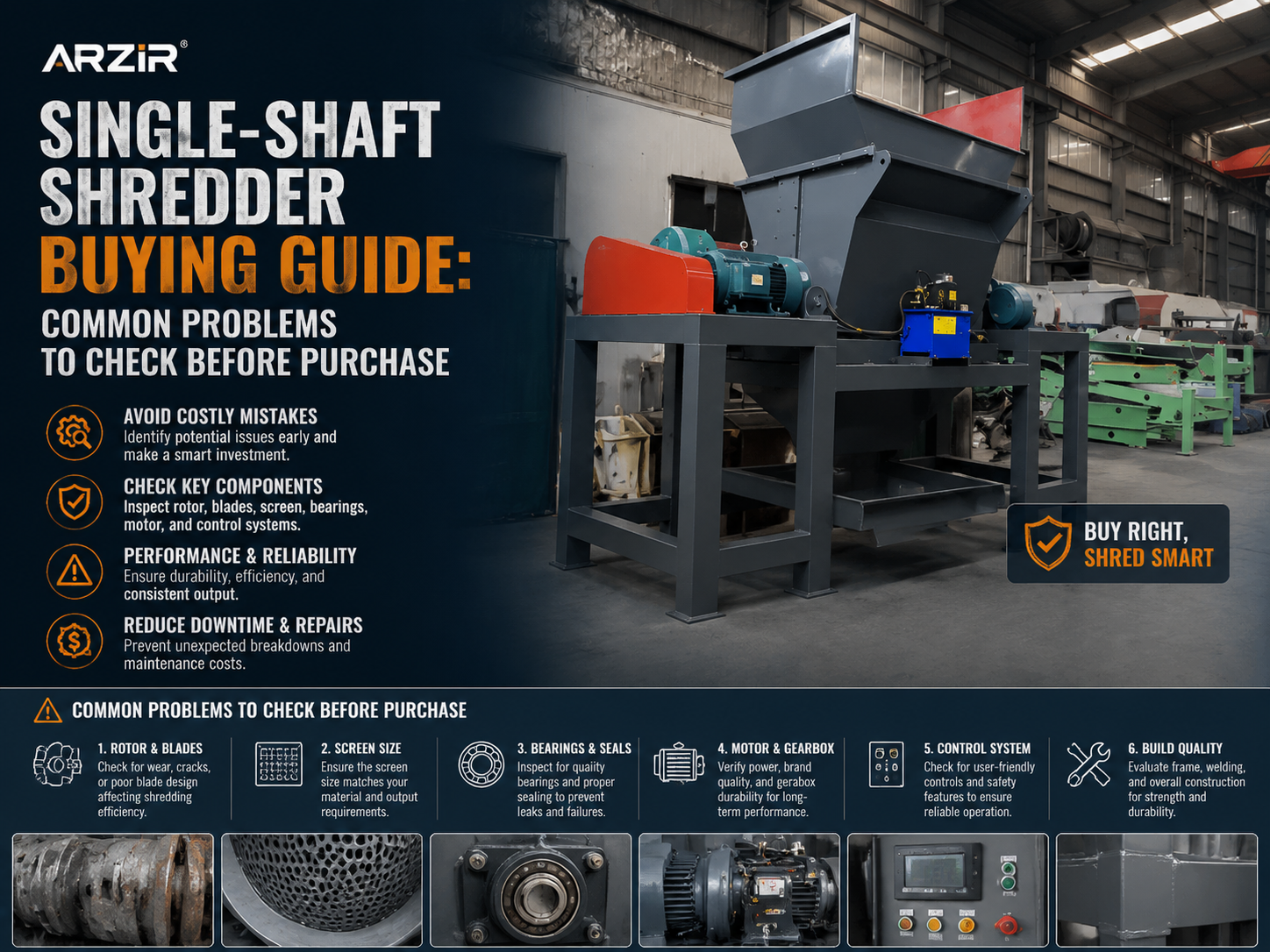
When conducting a Single-Shaft Shredder Buying : Common Problems Check Before Purchase inspection, the first thing to examine is the bearing housing and cooling. In many low-quality shredders, the bearings are mounted directly to the frame without sufficient isolation from the heat generated by the shredding chamber. This leads to premature bearing failure. Check if the bearings are mounted externally and if there is a thermal barrier or cooling system in place for heavy-duty applications.
Another common issue is structural vibration and frame rigidity. During a test run, observe the machine for excessive shaking. A poorly welded or lightweight frame will vibrate excessively, leading to loosened bolts, cracked welds, and misalignment of the drive train over time. The thickness of the steel plates used in the shredding chamber should be substantial—often 20mm to 50mm depending on the machine size—to absorb the immense forces generated during the shredding process.
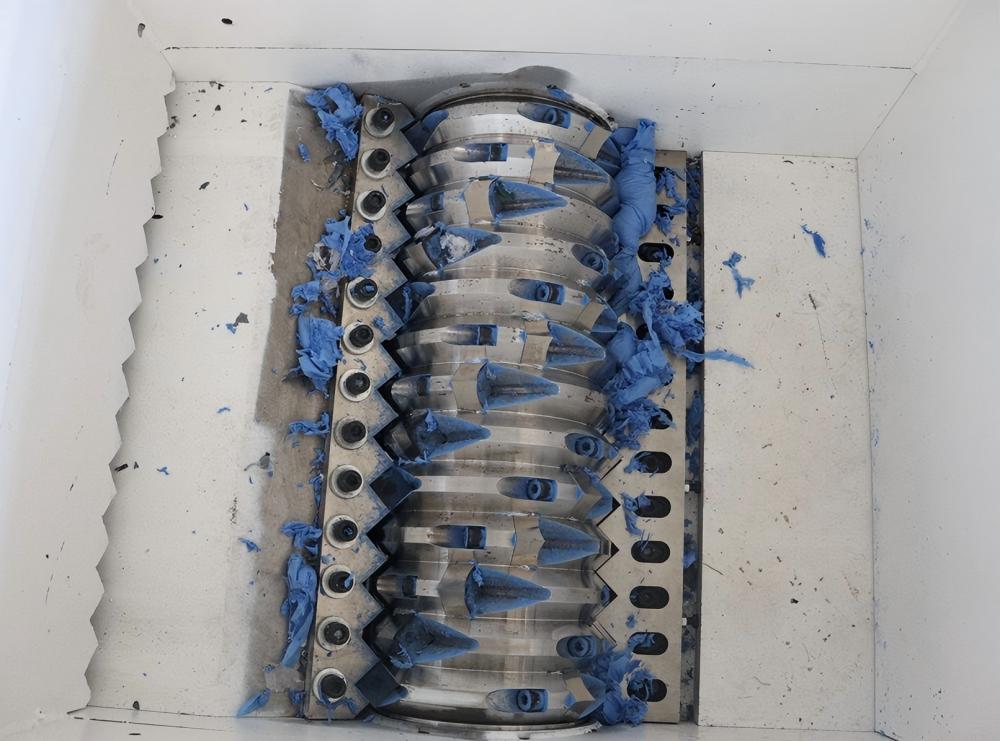
The blade fastening system is a frequent point of failure. Some designs use simple bolts that can shear off or loosen due to vibration. Look for a system that uses high-tensile bolts recessed into the blade holder to protect them from material impact. Additionally, check the gap between the rotating blades and the counter-blades (stator blades). This gap should be easily adjustable. If the gap is too wide, the machine will tear rather than cut, leading to increased power consumption and poor output quality.
Lastly, evaluate the electrical cabinet and safety features. Dust is the enemy of electrical components. Ensure the cabinet is IP54 or IP55 rated and has a proper cooling fan with a filter. Safety is paramount; the machine must have emergency stop buttons, safety interlocks on all access doors, and a reverse-rotation function that triggers automatically when a jam is detected. A shredder that lacks a sophisticated “anti-block” logic in its PLC is a liability in a busy production environment.
Hidden Costs of Ownership
The purchase price is only the beginning of the total cost of ownership (TCO). One of the most significant hidden costs is wear parts consumption. Shredder blades are consumables. Depending on the abrasiveness of your material (e.g., glass-filled plastics or contaminated wood), you may need to rotate or replace blades every few hundred hours. Calculate the cost of a full set of blades and the time required for a technician to change them. A machine that requires 8 hours to change blades versus one that takes 2 hours will have a vastly different operational cost.
Energy consumption is another major factor. A shredder running a 55kW motor for 10 hours a day consumes a significant amount of electricity. Machines equipped with VFDs (Variable Frequency Drives) can reduce energy costs by adjusting the motor speed to the load, but these drives add to the initial purchase price. Furthermore, consider the cost of hydraulic oil maintenance. Large shredders can hold hundreds of liters of hydraulic fluid, which needs to be filtered and replaced periodically to prevent valve damage.
Don’t forget installation and site preparation. A heavy industrial shredder requires a reinforced concrete floor to handle the static and dynamic loads. You may also need to invest in peripheral equipment like conveyor belts, magnetic separators (to remove metal contaminants), and dust extraction systems. If the manufacturer does not include commissioning and operator training in the quote, these services can add thousands of dollars to your startup costs.
ROI Calculation: Is the Investment Worth It?
To justify the purchase of a single-shaft shredder, you must perform a detailed ROI calculation. The primary return comes from material value enhancement or waste disposal savings. For example, if you are a plastic manufacturer, shredding your internal scrap allows you to re-introduce it into your production line (closed-loop recycling), saving the cost of buying virgin resin. If virgin resin costs $1,500 per ton and your shredder processes 500kg per hour, the savings are substantial.
The formula for ROI is: (Annual Savings – Annual Operating Costs) / Total Investment. Annual savings include the value of the processed material and the reduction in waste hauling fees. Operating costs include electricity, labor, spare parts (blades/screens), and insurance. Most well-utilized industrial shredders should achieve a payback period of 12 to 24 months. If your calculation shows a payback period exceeding 4 years, you may need to reconsider the machine’s scale or look for a more energy-efficient model.
Buying Advice: Final Checklist
Before signing a contract, follow this final checklist to ensure a successful Single-Shaft Shredder Buying : Common Problems Check Before Purchase experience:
- Material Testing: Always send samples of your actual waste material to the manufacturer for a test shred. Request a video of the test and a sample of the output.
- Factory Audit: If possible, visit the factory. Observe the quality of the welding, the organization of the assembly line, and the brands of components used in the warehouse.
- Reference Checks: Ask for contacts of existing customers who process similar materials. Ask them about the machine’s reliability and the manufacturer’s after-sales support.
- Spare Parts Availability: Ensure the manufacturer stocks critical spare parts (blades, bolts, seals) in your region or can ship them via express air freight.
- Warranty Terms: Look for a comprehensive warranty that covers the frame, rotor, and major drive components for at least 12-24 months. Clarify what constitutes “wear parts” which are usually excluded.
Choosing a partner like HARSLE ensures that you receive a machine built with precision engineering and high-quality components. HARSLE’s single-shaft shredders are designed with the operator in mind, featuring easy-access maintenance doors, robust hydraulic systems, and intelligent PLC controls that minimize downtime and maximize productivity.
Frequently Asked Questions (FAQ)
1. What is the main difference between a single-shaft and a double-shaft shredder?
A single-shaft shredder uses a high-speed rotor and a hydraulic pusher to cut material against a fixed blade, making it ideal for producing small, uniform particles. A double-shaft shredder uses two low-speed, high-torque shafts to shear and tear material, which is better for high-volume primary shredding of bulky items like tires or large metal drums.
2. How often do I need to sharpen or replace the blades?
Blade life depends entirely on the material. For clean plastics, blades may last 500-800 hours per edge (most blades have 4 edges that can be rotated). For abrasive materials like glass-filled nylon or dirty wood, life may be reduced to 100-200 hours. Regular inspection is key to preventing damage to the rotor.
3. Can a single-shaft shredder handle metal?
Standard single-shaft shredders are designed for plastics, wood, and paper. While they can handle light aluminum scraps or thin copper wiring, they are not intended for heavy steel. Processing thick metal in a standard shredder will cause immediate blade damage and potential rotor failure.
4. What should I do if the machine frequently jams?
Frequent jamming is usually caused by overfeeding, a dull set of blades, or an incorrect gap between the rotor and stator blades. Check the PLC settings to ensure the auto-reverse function is working correctly and consider reducing the pusher pressure for very dense materials.
5. Is a VFD (Variable Frequency Drive) necessary?
While not strictly necessary, a VFD is highly recommended. It allows for a soft start (reducing peak current draw), protects the motor from torque spikes, and allows you to fine-tune the rotor speed to match the material characteristics, which can improve cut quality and reduce heat.
6. How do I choose the right screen size?
The screen size should be slightly larger than the maximum particle size you can tolerate. For example, if you need 20mm flakes for an extruder, a 22mm or 25mm screen is often used. Smaller screens increase the “fines” (dust) and reduce throughput significantly.