
Four-Shaft Shredder Safety Guide: Essential Protections for Industrial Operators

Technical Overview of Four-Shaft Shredding Systems
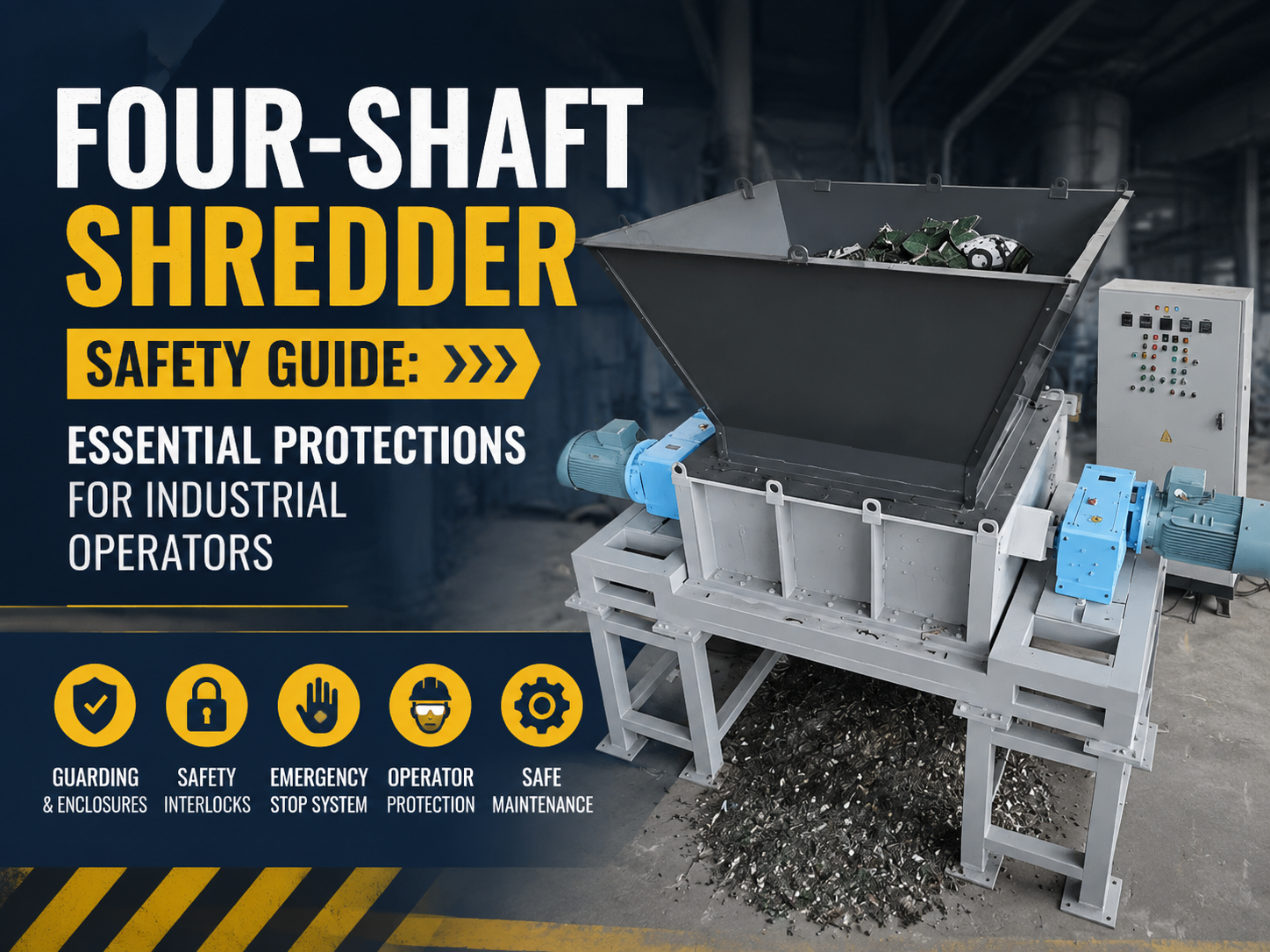
The four-shaft shredder represents the pinnacle of size reduction technology in the modern industrial landscape. Unlike its two-shaft counterparts, the four-shaft design incorporates two main cutting shafts and two auxiliary cleaning/feeding shafts. This configuration allows for superior material grabbing and consistent output sizing, as the material is continuously recirculated until it is small enough to pass through the integrated screen. However, the increased complexity and the immense torque generated by these machines necessitate a rigorous approach to Four-Shaft Shredder Safety : Essential Protections Industrial Operators must adhere to.
From a mechanical perspective, the four shafts operate at varying speeds and directions. The outer shafts act as feeders, pulling bulky materials into the center where the primary cutting shafts perform the heavy-duty shearing. This ‘active feeding’ mechanism is highly efficient but poses a significant risk of entanglement if safety protocols are ignored. HARSLE engineering focuses on minimizing these risks through structural integrity and intelligent control systems that monitor every rotation of the cutting discs.
In industrial environments, these machines are often used for processing electronic waste, plastics, tires, and metal scrap. The diversity of materials means the shredder must handle unpredictable resistance. A robust safety framework is not just about preventing accidents; it is about ensuring the longevity of the machine and the continuous productivity of the facility. Understanding the physics of the shearing action—where high torque meets sharp blade edges—is the first step for any operator in mastering safety.
Furthermore, the integration of a screen beneath the shafts adds another layer of technical consideration. While the screen ensures uniform output, it can also lead to heat buildup or material jams if not monitored. Safety systems must therefore account for thermal expansion and pressure spikes within the cutting chamber. By prioritizing Four-Shaft Shredder Safety : Essential Protections Industrial Operators can mitigate the inherent dangers of high-power recycling equipment.
Core Parameters Influencing Operator Safety
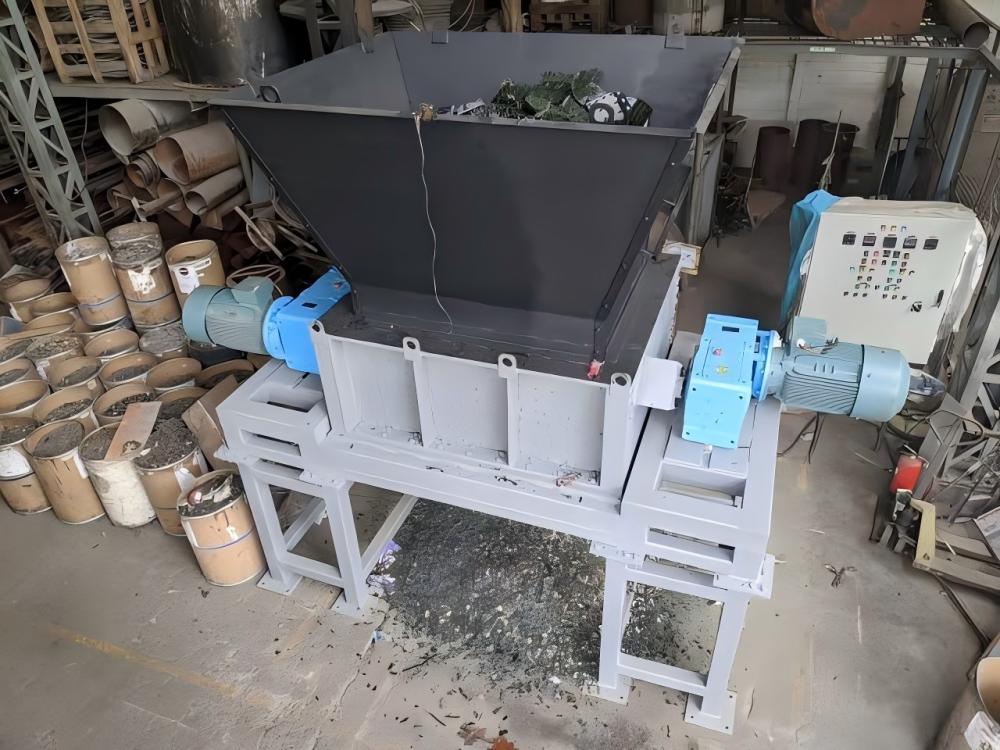
When discussing Four-Shaft Shredder Safety : Essential Protections Industrial Operators need to understand, we must look at the core technical parameters that define the machine’s behavior. The most critical parameter is torque. Four-shaft shredders are low-speed, high-torque machines. This means that once the shafts begin to rotate, they possess immense kinetic energy and force that cannot be easily stopped by physical obstruction. Safety systems must be designed to interrupt the power source instantly upon detecting an anomaly.
The rotational speed (RPM) is another vital factor. Typically, these machines operate between 10 and 40 RPM. While this seems slow, the peripheral speed of the blade tips is sufficient to cause catastrophic injury in milliseconds. The relationship between speed and torque is inverse; lower speeds allow for higher cutting forces, which are necessary for processing tough materials like steel-reinforced tires or thick-walled plastic drums. Operators must be trained to recognize how different materials affect the machine’s ‘rhythm’ and sound.
Blade geometry and material composition also play a role in safety. HARSLE utilizes high-strength alloy steels (such as D2 or SKD-11) that are heat-treated for maximum hardness. However, brittle blades can chip or shatter if they encounter non-shreddable ‘tramp’ metal. Ensuring that the blades are properly maintained and that the clearance between the cutting discs is within factory specifications prevents excessive vibration and potential mechanical failure, which are primary safety hazards.
Finally, the motor power and hydraulic drive systems (if applicable) dictate the overall energy potential of the unit. A 100kW motor provides enough force to shear through almost anything, making the emergency stop (E-stop) circuit the most important electrical component. The safety system must be ‘fail-safe,’ meaning any break in the circuit—whether from a button press or a damaged wire—immediately brings the machine to a controlled halt.
Calculation Methods for Shredder Safety Margins
To ensure Four-Shaft Shredder Safety : Essential Protections Industrial Operators are protected, engineers use specific calculation methods to define safety margins. One of the primary calculations is the Cutting Force (Fc). This is determined by the formula: Fc = (T × η) / r, where T is the input torque, η is the mechanical efficiency, and r is the radius of the cutting blade. By calculating the maximum cutting force, operators can understand the limits of the machine and avoid overloading the hopper, which could lead to structural failure.
Another essential calculation is the Shaft Deflection Limit. When heavy material is processed, the shafts experience significant bending moments. The deflection (δ) must not exceed a specific threshold to prevent the blades from colliding or the bearings from seizing. The formula used is typically derived from beam theory: δ = (F × L³) / (48 × E × I), where F is the load, L is the shaft length, E is the Modulus of Elasticity, and I is the Area Moment of Inertia. Keeping the load within these calculated limits is a fundamental safety practice.
Furthermore, throughput calculations help in maintaining a safe feeding rate. If the volume of material fed into the shredder exceeds the volumetric capacity of the shafts (calculated as V = A × L × RPM, where A is the cross-sectional area of the cutting zone), the machine will jam. Frequent jamming leads to operator frustration, which often results in dangerous ‘shortcuts’ like manual poking or clearing the chamber while the power is on. Calculating and adhering to the rated capacity is therefore a direct safety measure.
Lastly, the ‘Stop Time’ calculation is critical for the placement of safety barriers. If an E-stop is triggered, the machine takes a finite amount of time to come to a complete rest due to inertia. Safety distances for light curtains or physical guards are calculated using the formula: S = (K × T) + C, where K is the approach speed of a human limb, T is the total stopping time of the machine, and C is an additional safety distance. This ensures that an operator cannot reach the danger zone before the blades have stopped moving.
Technical Parameter Table for HARSLE Four-Shaft Shredders
The following table outlines the typical specifications for industrial-grade four-shaft shredders, highlighting the parameters that impact safety and operational efficiency.
| Model Series | Motor Power (kW) | Shaft Speed (RPM) | Cutting Chamber (mm) | Blade Thickness (mm) | Safety Features |
|---|---|---|---|---|---|
| H4S-800 | 37 – 45 | 12 / 18 | 800 x 700 | 20 – 40 | Auto-Reverse, E-Stop, Interlock |
| H4S-1000 | 55 – 75 | 10 / 15 | 1000 x 850 | 30 – 50 | Overload Protection, PLC Monitoring |
| H4S-1200 | 90 – 110 | 10 / 15 | 1200 x 1000 | 40 – 60 | Hydraulic Pusher, Vibration Sensor |
| H4S-1500 | 132 – 160 | 8 / 12 | 1500 x 1200 | 50 – 80 | Fire Suppression, Remote Diagnostics |
Note: These parameters are indicative. Always refer to the specific HARSLE machine manual for exact figures related to your equipment. The safety features listed are standard, but additional customizations are available for specific industrial needs.
Common Engineering and Operational Mistakes
One of the most frequent mistakes in the context of Four-Shaft Shredder Safety : Essential Protections Industrial Operators is the bypassing of safety interlocks. In a high-pressure production environment, operators may feel tempted to disable sensors on the hopper or access doors to speed up clearing a jam. This is a critical error that removes the primary line of defense between the operator and the high-torque cutting shafts. Modern HARSLE machines utilize coded magnetic switches that are difficult to bypass, but the culture of safety must start with the management.
Another common engineering mistake is improper hopper design. If the hopper is too shallow, it allows operators to reach down toward the blades. If it is too steep, it may cause material to ‘bridge,’ leading to manual intervention. A well-engineered hopper should be designed such that the distance from the top edge to the nearest moving part exceeds the reach of a human arm, following ISO 13857 standards. Furthermore, the lack of a ‘dead-man’ switch on remote control units can lead to accidental startups while maintenance is being performed.
Maintenance-related mistakes also contribute to safety hazards. Using non-OEM (Original Equipment Manufacturer) parts, particularly blades and bolts, can lead to catastrophic failure. A blade that is not properly hardened may shatter under the stress of shredding metal, turning into high-velocity shrapnel. Similarly, failing to check the torque on the shaft nuts can lead to the cutting discs becoming loose, causing them to clash and potentially destroy the entire gearbox assembly.
Finally, inadequate training on the PLC (Programmable Logic Controller) functions is a significant risk. Operators should know how to interpret error codes and understand the ‘Auto-Reverse’ logic. When the machine detects an overload, it reverses the shafts to clear the material. If an operator does not expect this movement, they may be caught off guard. Proper training ensures that the operator works in harmony with the machine’s automated safety responses.
Selection Checklist for Safe Industrial Shredding
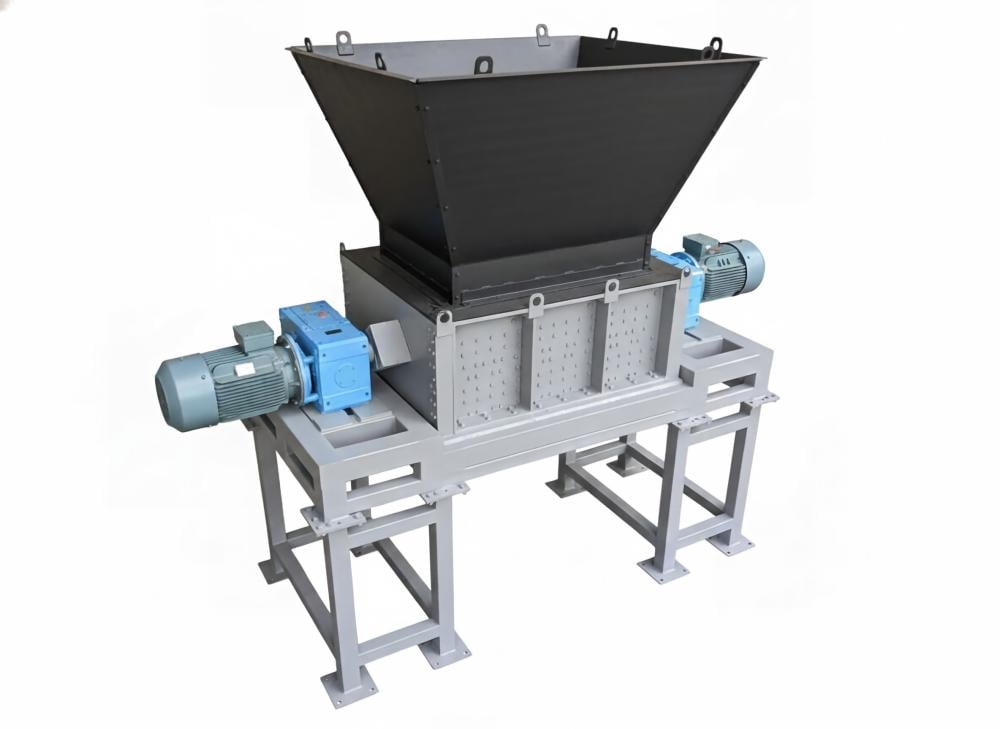
Choosing the right equipment is the foundation of Four-Shaft Shredder Safety : Essential Protections Industrial Operators rely on. Use this checklist when evaluating a four-shaft shredder for your facility:
- Compliance Standards: Does the machine meet CE, UL, or local safety certifications? Ensure all electrical components are housed in IP54 or higher rated enclosures.
- Emergency Stop Accessibility: Are E-stop buttons located at the main console, near the feed area, and at the discharge conveyor? They should be easily reachable from all operator stations.
- Automated Protection Systems: Does the PLC include an auto-reverse function for overloads? Does it have a high-temperature shut-off for the motor and gearbox?
- Material Feeding Safety: Is the machine equipped with a hydraulic pusher or a specialized hopper to prevent material fly-back? For dusty materials, is there an integrated dust extraction or misting system?
- Maintenance Access: Are there dedicated, interlocked access doors for blade inspection? Is there a Lock-Out Tag-Out (LOTO) point clearly marked on the main isolator?
- Structural Integrity: Check the thickness of the chamber walls and the diameter of the shafts. A more robust machine is less likely to suffer from metal fatigue and sudden failure.
- Noise and Vibration Control: Does the machine include anti-vibration mounts and sound-dampening enclosures? Long-term exposure to high decibel levels is a significant health and safety risk.
- Operator Training Program: Does the manufacturer provide comprehensive onsite training and a detailed safety manual in the local language?
Frequently Asked Questions (FAQ)
1. What is the most common cause of accidents with four-shaft shredders?
The most common cause is manual intervention during operation. This includes trying to clear a jam or push material into the blades by hand or with a handheld tool while the machine is running. Always follow LOTO procedures before touching the cutting chamber.
2. How often should the safety interlocks be tested?
Safety interlocks and E-stops should be tested at the start of every shift. A simple functional test ensures that the machine stops as expected and that the control system recognizes the open-gate or pressed-button state.
3. Can a four-shaft shredder handle ‘tramp’ metal?
While four-shaft shredders are powerful, large pieces of non-shreddable metal (like a solid steel shaft or a heavy engine block) can cause severe damage. Most machines have an ‘overload’ protection that stops the motor, but it is best to pre-sort material to remove large contaminants.
4. Why does the machine reverse automatically?
The auto-reverse function is a safety and operational feature. When the PLC detects a current spike (indicating the blades are struggling to cut), it reverses the shafts to reposition the material and then tries again. This prevents the motor from burning out and clears minor jams without operator intervention.
5. What PPE is required for operating a four-shaft shredder?
Standard PPE includes high-visibility clothing, steel-toed boots, safety glasses, and hearing protection. Depending on the material being shredded, a dust mask or full-face respirator may also be required to protect against airborne particulates.
6. How do I know when the blades need to be replaced for safety reasons?
Blades should be inspected weekly. Signs of wear include rounded edges, cracks, or missing teeth. Dull blades require more torque to cut, which increases the load on the motor and the heat in the chamber, potentially leading to mechanical failure.
7. Is a four-shaft shredder safer than a single-shaft shredder?
Neither is inherently ‘safer’; they have different risk profiles. A four-shaft shredder has more moving parts and a more aggressive ‘grab,’ but it often operates at lower speeds. The safety depends entirely on the implementation of guards, interlocks, and operator training.


