Single-Shaft Shredder Knife Replacement Guide: Timing, Alignment, and Setup

Technical Overview of Single-Shaft Shredder Knife Systems
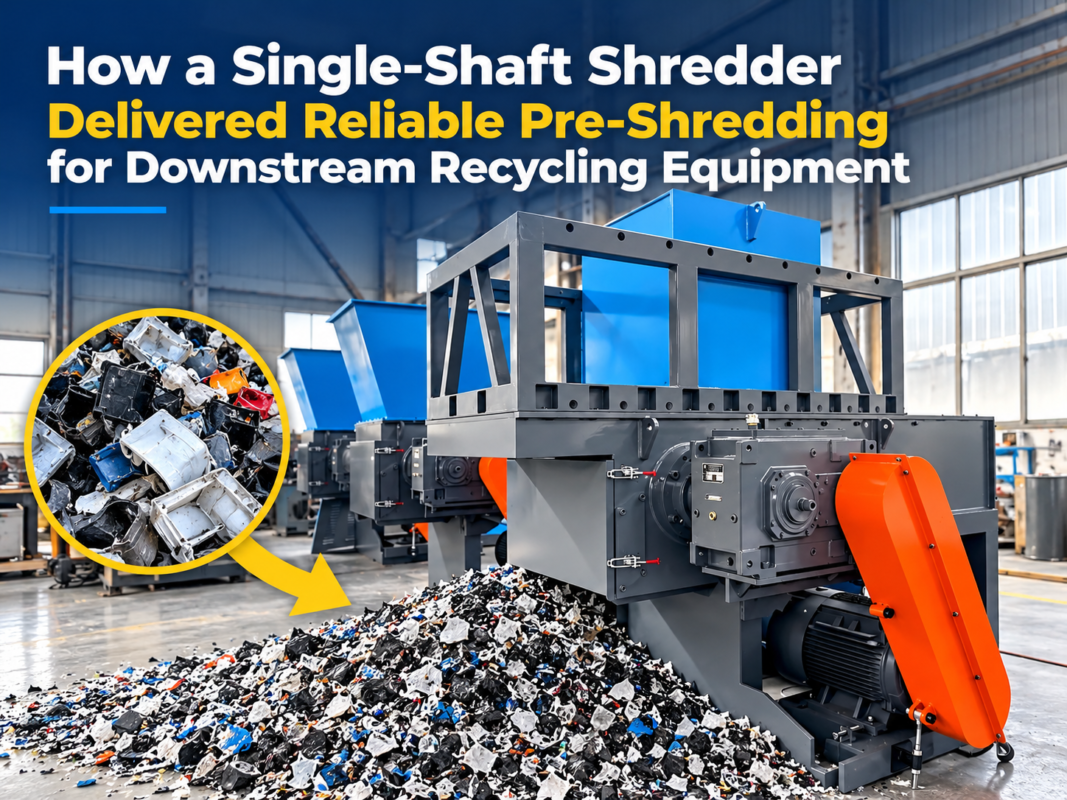
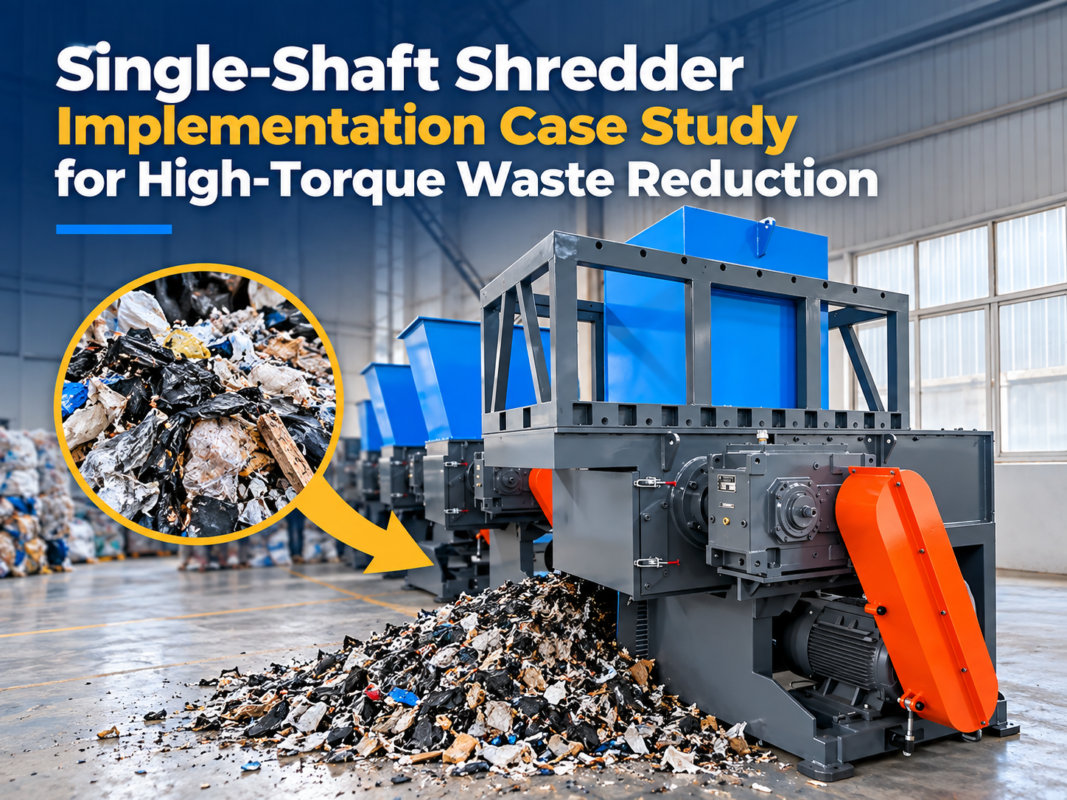
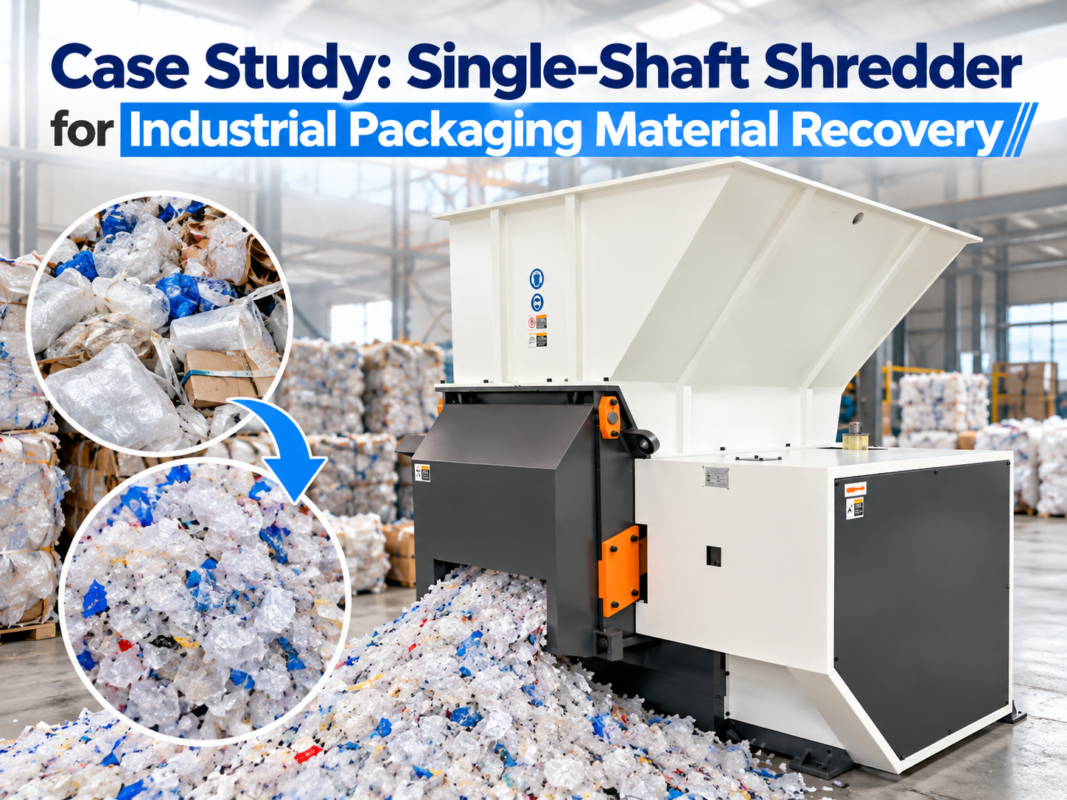
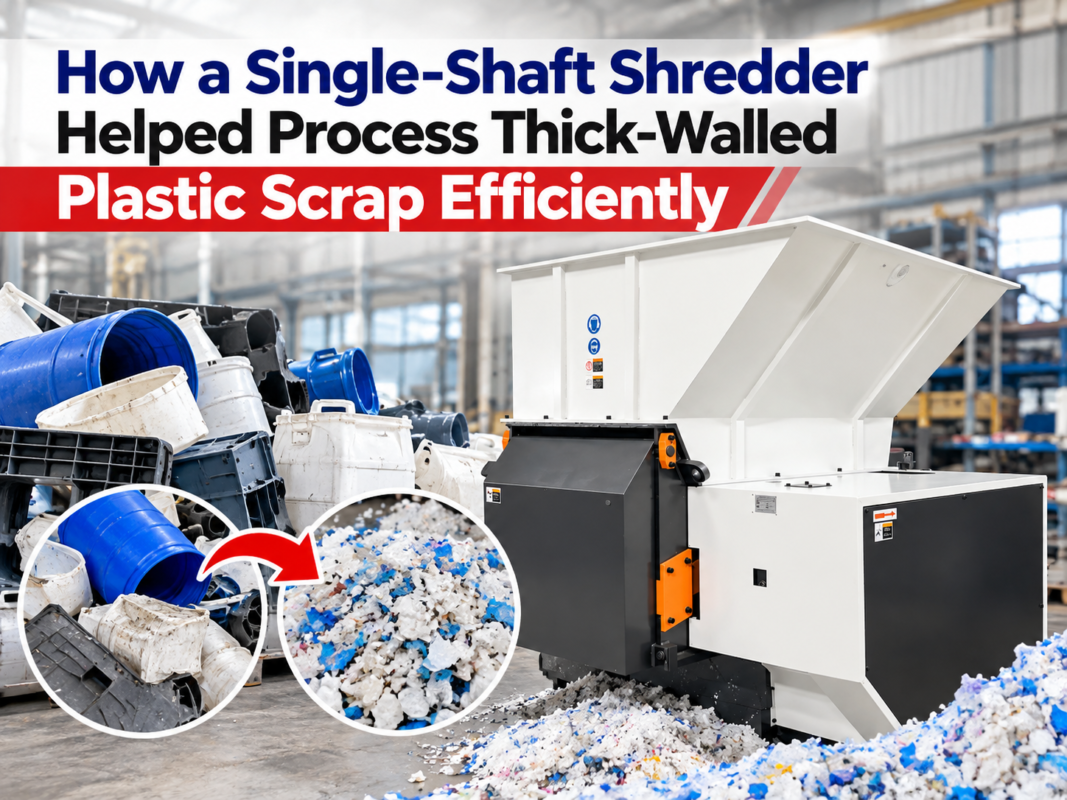
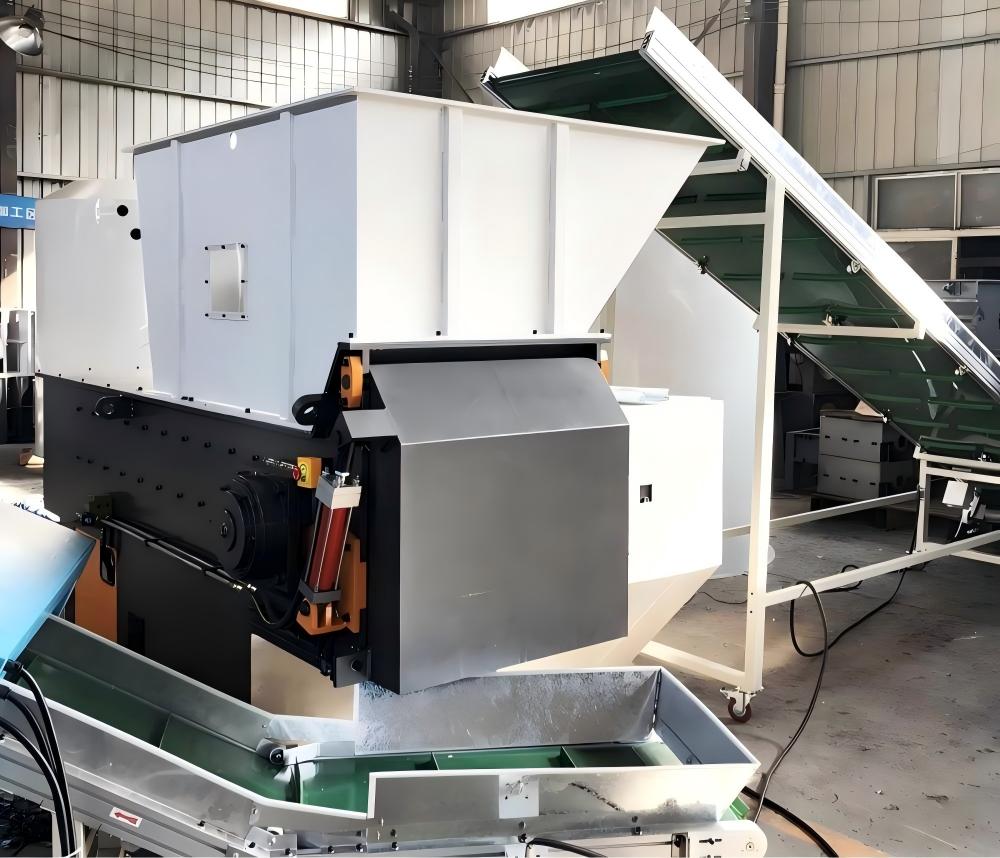
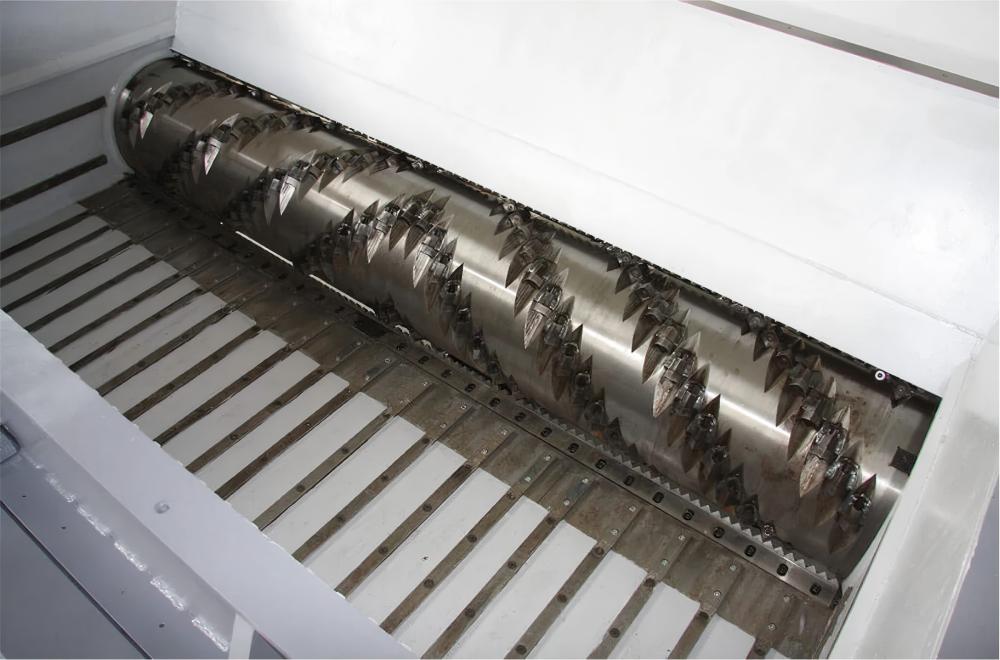
The single-shaft shredder is a cornerstone of modern recycling and size-reduction industries. Its efficiency relies almost entirely on the mechanical interaction between the rotary knives mounted on the main shaft and the stationary counter-knives (stator knives) fixed to the machine frame. Unlike dual-shaft shredders that rely on high-torque shearing between two shafts, the single-shaft design utilizes a high-speed or medium-speed rotor equipped with recessed knife seats. These seats hold square or circular cutters that pass through a comb-like counter-knife assembly, effectively shearing material against a screen to achieve a specific particle size.
Maintaining the integrity of these cutting edges is not merely a matter of aesthetics; it is a critical requirement for operational efficiency. When knives become dull or misaligned, the machine experiences increased friction, which translates directly into higher energy consumption and excessive heat generation. This heat can lead to the melting of plastics (causing ‘wrapping’ around the shaft) or the loss of temper in the blade steel itself. HARSLE engineering standards emphasize that a well-maintained cutting system can reduce power consumption by up to 30% compared to a system running with blunt or poorly gapped knives.
The geometry of the knife is typically concave or flat-faced, depending on the material being processed. For instance, concave knives are preferred for soft plastics and films as they provide a more aggressive ‘bite,’ while flat-faced knives are better suited for rigid materials like timber or light aluminum scrap. Understanding the metallurgy—usually D2 (DIN 1.2379), SKD11, or DC53 tool steels—is essential for determining the replacement cycle and the sharpening potential of the blades.
Core Parameters for Knife Performance
To achieve optimal shredding results, several core parameters must be monitored. The first is the Hardness (HRC). Most industrial shredder knives are heat-treated to a hardness of 55-62 HRC. While higher hardness increases wear resistance, it also increases brittleness. If the shredder frequently encounters ‘tramp metal’ or non-shreddable contaminants, a slightly lower HRC with higher toughness is preferable to prevent catastrophic blade chipping.
The second parameter is the Cutting Gap (Clearance). This is the distance between the rotary knife and the counter-knife as they pass each other. For thin films and fibers, this gap must be extremely tight (0.1mm to 0.2mm). For general plastic recycling, a gap of 0.5mm is standard. If the gap exceeds 1.0mm, the machine will stop ‘cutting’ and start ‘tearing,’ which significantly increases the load on the motor and reduces the quality of the output regrind.
Thirdly, Bolt Torque is a parameter often overlooked. The centrifugal forces acting on a rotor spinning at 80-120 RPM are substantial. If the bolts securing the knives are not torqued to the manufacturer’s specification (often using Grade 12.9 high-tensile bolts), the knives can shift, leading to rotor damage or a complete mechanical failure. Proper lubrication of the bolt threads with anti-seize compound is also necessary to ensure accurate torque readings and ease of future removal.
Calculation Method for Replacement Timing and Gaps
Determining exactly when to replace or rotate your knives involves both empirical observation and mathematical tracking. A common calculation used by plant managers is the Tonnage-to-Wear Ratio. By tracking the total tonnage processed against the increase in motor amperage, you can predict the end-of-life for a set of blades. For example, if a new set of blades draws 100A for a specific throughput, and that draw increases to 140A for the same throughput, the blades have likely reached their wear limit.
To calculate the optimal cutting gap for a new setup, engineers often use the Material Thickness Rule. For rigid materials, the gap should be approximately 5-10% of the material’s thickness. However, for flexible materials like LDPE film, the gap must be as small as mechanically possible without the knives touching. The formula for thermal expansion must also be considered: ΔL = α * L * ΔT. As the rotor heats up during a shift, the metal expands. If the gap is set too tight while the machine is cold, the knives may collide once the machine reaches its operating temperature (typically 50-70°C).
Furthermore, the Rotation Cycle calculation is vital. Most single-shaft shredder knives are four-way reversible. This means you can rotate the knife 90 degrees to expose a fresh cutting edge. If a knife edge lasts 200 hours, a single set of knives provides 800 hours of service before requiring a full replacement or professional regrinding. Scheduling these rotations during planned downtime prevents emergency shutdowns.
Technical Parameter Table
| Parameter | Standard Range | Application Note |
|---|---|---|
| Blade Material | D2 / SKD11 / DC53 | DC53 offers better toughness for heavy-duty scrap. |
| Hardness (HRC) | 55 – 62 HRC | Lower HRC for high-impact; higher HRC for abrasive wear. |
| Cutting Gap (Film) | 0.1mm – 0.25mm | Requires precision alignment of the counter-knife. |
| Cutting Gap (Rigid) | 0.3mm – 0.6mm | Standard for HDPE, PP, and wood waste. |
| Bolt Grade | 12.9 High Tensile | Never use lower grade bolts for rotor knives. |
| Tightening Torque | 180Nm – 450Nm | Depends on bolt size (M16 to M24 common). |
| Operating Temp | < 75°C | Excessive heat indicates dull blades or lack of cooling. |
Step-by-Step Alignment and Setup Procedure
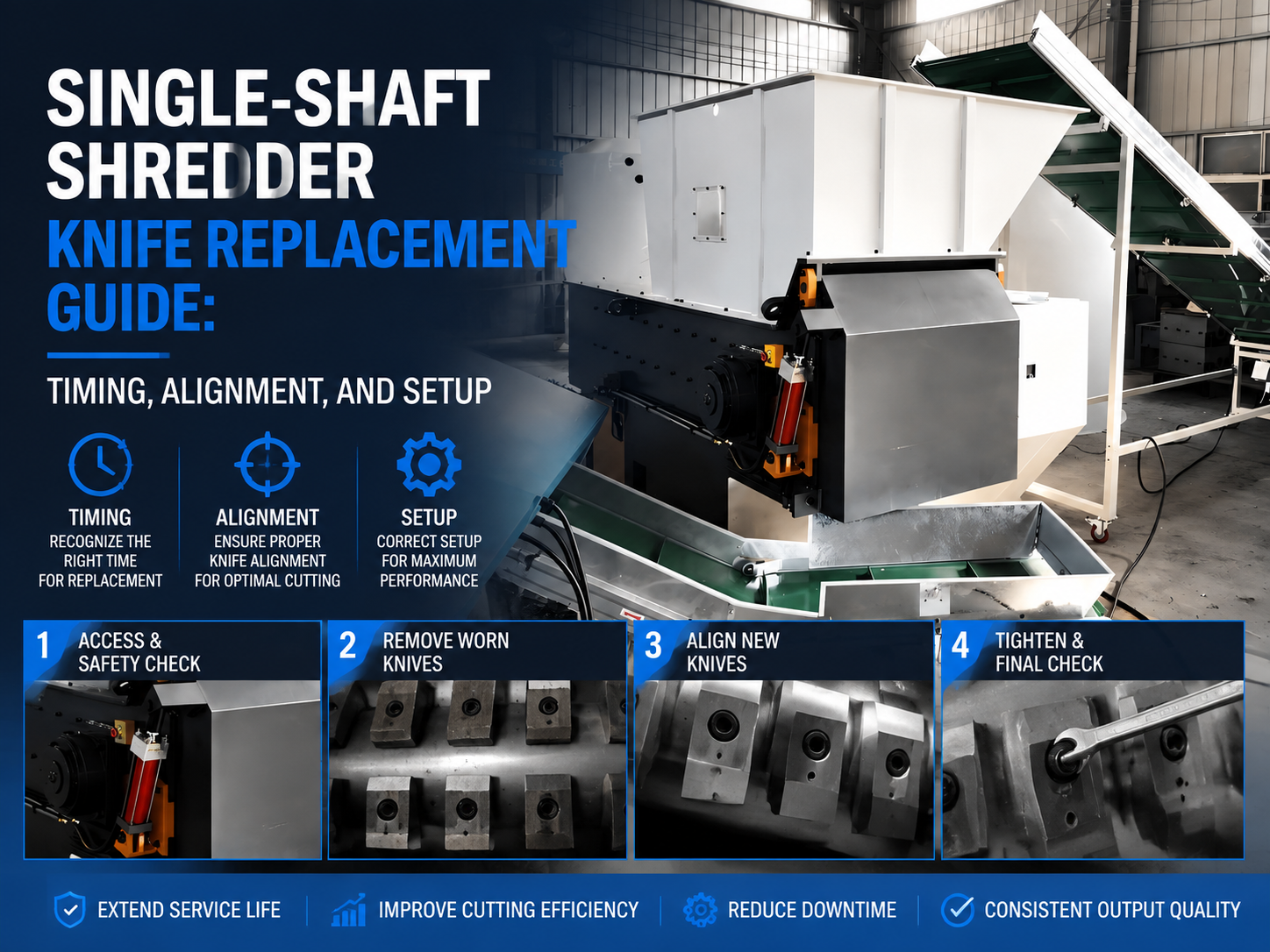
Replacing the knives on a single-shaft shredder is a precision task that requires a systematic approach. Follow these steps to ensure a safe and effective setup:
- Lock-Out Tag-Out (LOTO): Before any maintenance, ensure the main power is disconnected and the rotor is physically locked to prevent accidental rotation.
- Cleaning the Rotor Pockets: Once the old knives are removed, the knife seats (pockets) must be meticulously cleaned. Use a wire brush or compressed air to remove all debris. Even a 0.05mm piece of dust behind a knife can cause misalignment, leading to uneven wear or vibration.
- Inspecting the Knife Seats: Check for any deformation or ‘mushrooming’ of the rotor steel. If the seat is damaged, the new knife will not sit flat, which can lead to bolt breakage.
- Initial Seating: Place the new or rotated knives into the pockets. Apply a small amount of anti-seize to the bolts and thread them in by hand. Do not tighten them yet.
- Counter-Knife Adjustment: The counter-knives are usually mounted on an adjustable bed. Loosen the bed bolts and move the counter-knives toward the rotor. Use a feeler gauge to set the desired gap across the entire length of the shaft.
- The ‘Hand-Turn’ Test: With the gap set, manually rotate the shaft (if possible) to ensure there is no contact between the rotary and stationary knives at any point in the 360-degree rotation.
- Final Torquing: Tighten the rotor knife bolts using a calibrated torque wrench in a star or cross pattern. This ensures even pressure distribution across the rotor.
- Screen Re-installation: Check the clearance between the knives and the screen. While this gap is less critical than the cutting gap, it should be uniform to ensure consistent material discharge.
Common Engineering Mistakes to Avoid
One of the most frequent mistakes in shredder maintenance is uneven knife wear compensation. Operators often replace only the knives in the center of the rotor, where the most material falls. This creates a ‘valley’ in the cutting profile, causing the motor to work harder and the screen to clog at the edges. Always rotate or replace knives as a complete set, or at least in balanced rows, to maintain rotor equilibrium.
Another critical error is ignoring the counter-knife condition. The rotary knives get all the attention, but the counter-knife performs 50% of the work. If the counter-knife edge is rounded, the best rotary knives in the world won’t produce a clean cut. The material will simply be pushed past the edge, generating heat and fine dust rather than clean chips.
Finally, over-tightening bolts without a torque wrench is a recipe for disaster. Over-stressed bolts can undergo ‘necking,’ where the bolt stretches beyond its elastic limit. Under the high-impact conditions of shredding, these weakened bolts can snap, sending a hardened steel knife flying into the screen or the machine housing, causing thousands of dollars in damage.
Selection Checklist for Replacement Knives
- Material Compatibility: Are you shredding abrasive glass-filled plastics? If so, choose high-chrome D2 steel. For wood with potential nails, choose a tougher, shock-resistant steel.
- Dimensional Accuracy: Ensure the replacement knives are within +/- 0.02mm of the original specifications. Off-brand knives often have poor tolerances that make gap setting impossible.
- Coating Options: For high-wear applications, consider TiN (Titanium Nitride) or DLC (Diamond-Like Carbon) coatings to extend edge life.
- Supplier Reputation: Only source knives from reputable manufacturers like HARSLE who provide material certifications and heat-treatment logs.
- Bolt Replacement: Always replace the mounting bolts every 2-3 knife rotations. Bolts fatigue over time and are a cheap insurance policy against catastrophic failure.
Frequently Asked Questions (FAQ)
How often should I rotate my shredder knives?
Rotation frequency depends on the abrasiveness of the material. For clean plastic, every 150-200 operating hours is standard. For contaminated waste or abrasive materials like fiberglass, you may need to rotate every 40-80 hours. Monitor the motor load; a 15-20% increase in average amperage is a clear signal to rotate.
Can I sharpen my own shredder knives?
Yes, but it requires a precision surface grinder. Hand-grinding with a portable tool is not recommended as it creates uneven edges and destroys the cutting gap geometry. When grinding, ensure adequate coolant is used to prevent overheating the steel and ruining the temper (softening the HRC).
What causes the knives to chip frequently?
Chipping is usually caused by ‘tramp metal’ (bolts, tools, or heavy steel plates) entering the shredding chamber. It can also be caused by using knives with an HRC that is too high for the application, making them brittle. Check your magnetic separator and ensure the HRC is appropriate for your specific waste stream.
Why is my shredder producing too much ‘fines’ or dust?
Excessive dust is a classic symptom of a wide cutting gap or dull knives. Instead of a clean shear, the machine is ‘grinding’ the material. Tightening the gap to the recommended 0.2mm-0.5mm and ensuring sharp edges will significantly reduce dust production and improve product quality.
Is it necessary to use a torque wrench?
Absolutely. The vibration and impact loads in a single-shaft shredder are extreme. A torque wrench ensures that the bolts are stretched exactly to their design tension, providing the clamping force necessary to keep the knives seated during high-load events.