How to Choose the Right Gantry Shear for Efficient Plate Shearing Operations

Introduction to Gantry Shears in Modern Fabrication
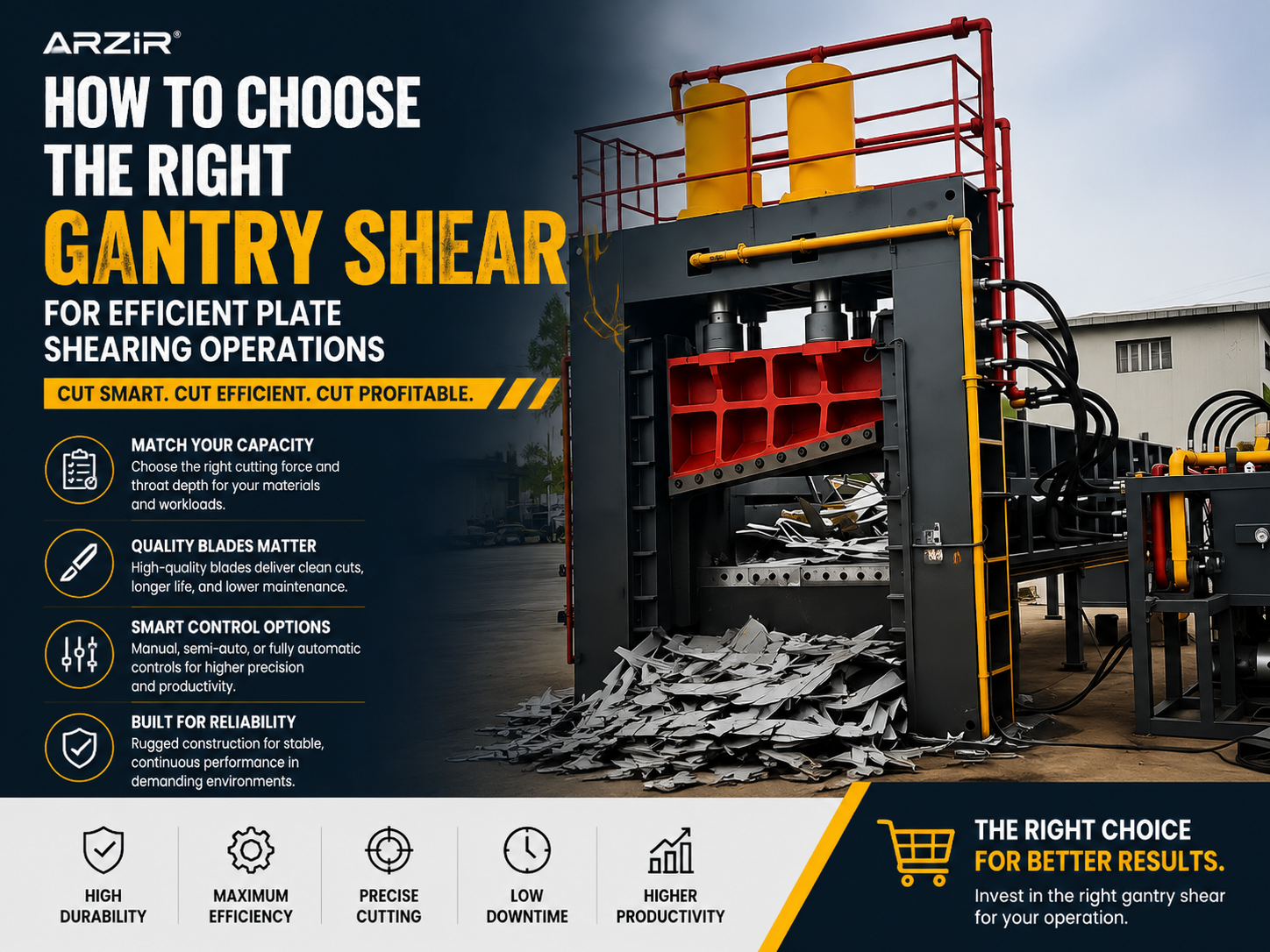
In the high-stakes world of metal recycling and heavy-duty plate processing, the ability to process large volumes of material quickly and accurately is the difference between profit and loss. To choose gantry shear efficient plate shearing operations, one must understand that these machines are the workhorses of the scrap yard and the fabrication shop. Unlike smaller alligator shears or swing-beam shears, gantry shears offer the structural rigidity and hydraulic force necessary to bite through thick steel plates, structural beams, and mixed scrap with ease.
HARSLE has long been at the forefront of developing gantry shears that balance raw power with precision engineering. As industries move toward more automated and sustainable practices, the demand for efficient shearing solutions has skyrocketed. A gantry shear operates by utilizing a vertical downward force, guided by a robust frame (the gantry), ensuring that the blade remains perfectly aligned even under hundreds of tons of pressure. This stability is crucial for maintaining edge quality and extending the lifespan of the cutting tools.
Choosing the right machine involves more than just looking at the maximum cutting force. It requires a deep dive into your specific operational needs, the types of materials you process daily, and your long-term growth projections. In this guide, we will break down every aspect of the purchasing process, from initial price points to the technical configurations that drive efficiency in plate shearing operations.
Price Range Overview: Investing in Power
When you look to choose gantry shear efficient plate shearing operations, the first hurdle is often the capital investment. Gantry shears are significant assets, and their pricing reflects the massive amount of steel and high-end hydraulics required for their construction. Generally, the market is divided into three primary tiers based on tonnage and automation levels.
Entry-level gantry shears, typically ranging from 400 to 600 tons of cutting force, are priced between $35,000 and $65,000. These machines are ideal for smaller recycling centers or fabrication shops that process medium-thickness plates (up to 20-30mm) and light structural scrap. While they may lack the rapid-cycle speeds of larger units, they provide a reliable entry point into automated shearing.
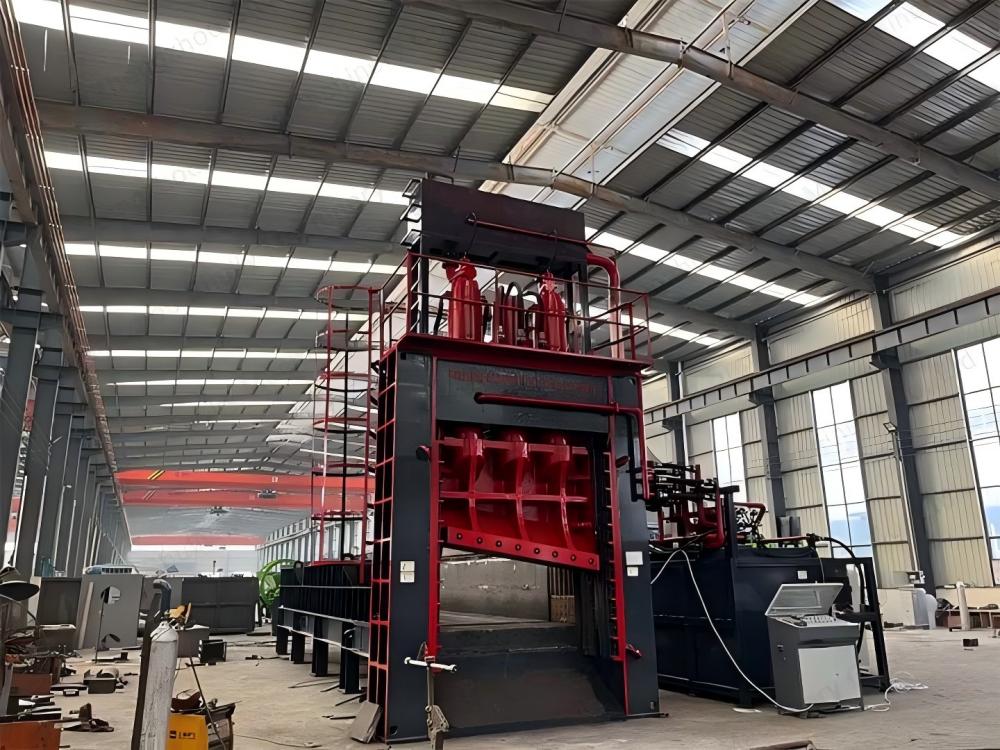
Mid-range machines, offering 800 to 1250 tons of force, typically fall within the $80,000 to $160,000 bracket. These are the industry standards for high-volume scrap processing. They often feature advanced PLC controls, faster hydraulic recovery times, and larger throat depths to accommodate wider plates. For a business looking to scale, this tier offers the best balance between cost and throughput.
High-capacity industrial gantry shears (1600 tons and above) can exceed $250,000. These behemoths are designed for 24/7 operations in steel mills or massive scrap processing hubs. They are capable of shearing heavy ship plates, thick-walled pipes, and large structural assemblies. At this level, the price includes not just the machine, but often integrated conveyor systems and sophisticated cooling units for continuous operation.
Main Cost Drivers in Gantry Shear Manufacturing
Understanding what drives the cost of a gantry shear helps buyers distinguish between a “cheap” machine and a “high-value” machine. The primary cost driver is the hydraulic system. High-quality pumps and valves from brands like Rexroth or Parker ensure consistent pressure and longevity. A cheaper hydraulic system might save money upfront but will lead to frequent leaks, pressure drops, and overheating during intensive plate shearing operations.
The second major driver is the frame construction. A gantry shear must withstand immense internal stresses. HARSLE utilizes high-tensile Q355B steel, often reinforced at critical stress points. The precision of the machining on the gantry guides is also vital; if the guides are not perfectly parallel, the blade will wear unevenly, leading to poor cuts and potential machine failure. The cost of heavy-duty steel and the specialized CNC machining required for these frames is a significant portion of the total price.
Blade material and quality also play a role. To choose gantry shear efficient plate shearing operations, you need blades that can stay sharp through thousands of cycles. Materials like 9CrSi or Cr12MoV are standard for high-quality shears. While these alloys are more expensive, they reduce the frequency of blade rotations and sharpening, which directly impacts operational uptime. Finally, the inclusion of advanced electronics, such as Siemens PLC systems and touchscreen interfaces, adds to the cost but significantly improves the ease of use and diagnostic capabilities.
Configuration Impact on Efficiency
The configuration of your gantry shear determines how well it fits into your workflow. One of the most critical configurations is the blade length. A wider blade allows for the processing of larger plates in a single stroke, reducing the need for pre-cutting. However, a wider blade also requires more tonnage to maintain the same cutting pressure per inch. Balancing blade width with tonnage is key to efficiency.
Another vital configuration is the feeding mechanism. Manual feeding is common in lower-tonnage machines, but for efficient plate shearing, an automatic chain conveyor or a hydraulic pusher is essential. These systems ensure a continuous flow of material into the cutting zone, minimizing idle time. HARSLE offers customizable hopper sizes and pusher speeds to match the specific scrap types of the client.
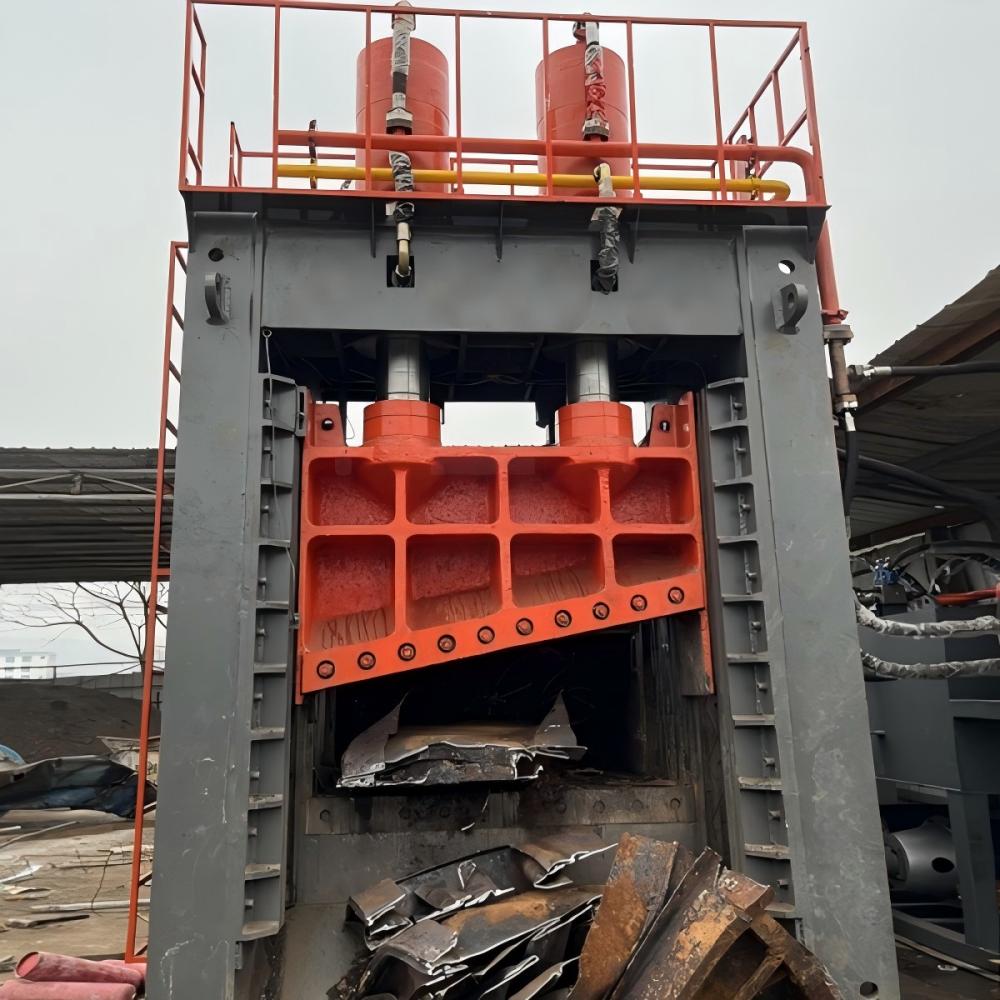
Stroke control is another feature that impacts efficiency. Modern gantry shears allow the operator to adjust the stroke length. If you are shearing thin plates, you don’t need the blade to retract to its full height every time. Shortening the stroke can increase the number of cuts per minute by 30-50%, drastically improving throughput. Additionally, the inclusion of a hydraulic oil cooling system (either air-cooled or water-cooled) is necessary for operations in warmer climates or for multi-shift environments to prevent oil degradation.
Hidden Costs of Owning a Gantry Shear
When you choose gantry shear efficient plate shearing operations, the sticker price is only part of the equation. Logistics and installation are the first hidden costs. These machines can weigh anywhere from 20 to 150 tons. Shipping such heavy equipment requires specialized flat-rack containers or break-bulk shipping, and the cost of crane rental for offloading and positioning at your facility can be substantial.
Foundation preparation is another often-overlooked expense. A gantry shear cannot simply sit on a standard factory floor. It requires a reinforced concrete pit or pad designed to absorb the vibrations and weight of the machine. Failure to provide a proper foundation can lead to the machine shifting, which ruins the alignment and can crack the frame over time.
Operational hidden costs include hydraulic oil and electricity. A large gantry shear may require 1,000 to 3,000 liters of high-grade hydraulic oil. Furthermore, the peak power draw during a cut is significant. You may need to upgrade your facility’s electrical transformer to handle the load. Regular maintenance, such as replacing seals, filtering oil, and sharpening blades, must also be factored into the annual budget to ensure the machine remains an asset rather than a liability.
ROI Calculation: When Does the Investment Pay Off?
Calculating the Return on Investment (ROI) for a gantry shear involves comparing the cost of the machine against the increased revenue from higher throughput and lower labor costs. For example, if a scrap yard currently uses manual oxygen-acetylene torches to cut plate, the labor cost per ton is high, and the material loss due to the kerf is significant. A gantry shear can replace 4-6 manual cutters, significantly reducing payroll and safety insurance premiums.
Consider a scenario where a HARSLE 800T gantry shear increases production by 5 tons per hour. If the margin on processed scrap is $50 per ton, that is an additional $250 per hour in gross profit. Over an 8-hour shift, that’s $2,000. In a 250-day work year, the increased revenue reaches $500,000. Even after accounting for electricity, maintenance, and financing, many businesses find that a well-chosen gantry shear pays for itself within 12 to 18 months.
Furthermore, the quality of the sheared material adds value. Cleanly sheared plates and beams fetch a higher price at steel mills compared to torch-cut scrap, which may have slag or irregular edges. The ability to process “oversized” scrap into “prepared” scrap instantly jumps the material into a higher price bracket, further accelerating the ROI. Efficiency in plate shearing operations isn’t just about speed; it’s about maximizing the value of every pound of metal that passes through the blades.
Buying Advice for Prospective Owners
To successfully choose gantry shear efficient plate shearing operations, start by auditing your current and future material flow. Don’t just buy for the scrap you have today; buy for the scrap you want to be able to handle next year. If you anticipate moving into heavier demolition scrap, opting for a higher tonnage than currently required is a wise move. It is much cheaper to buy a larger machine now than to trade in a small one later.
Always verify the reputation of the manufacturer. Look for companies like HARSLE that provide comprehensive after-sales support, including spare parts availability and technical guidance. Ask for videos of the machine in operation with materials similar to yours. If possible, visit a site where the machine is already in use. Pay attention to the cycle time—the time it takes from the start of one cut to the start of the next—as this is the truest measure of operational efficiency.
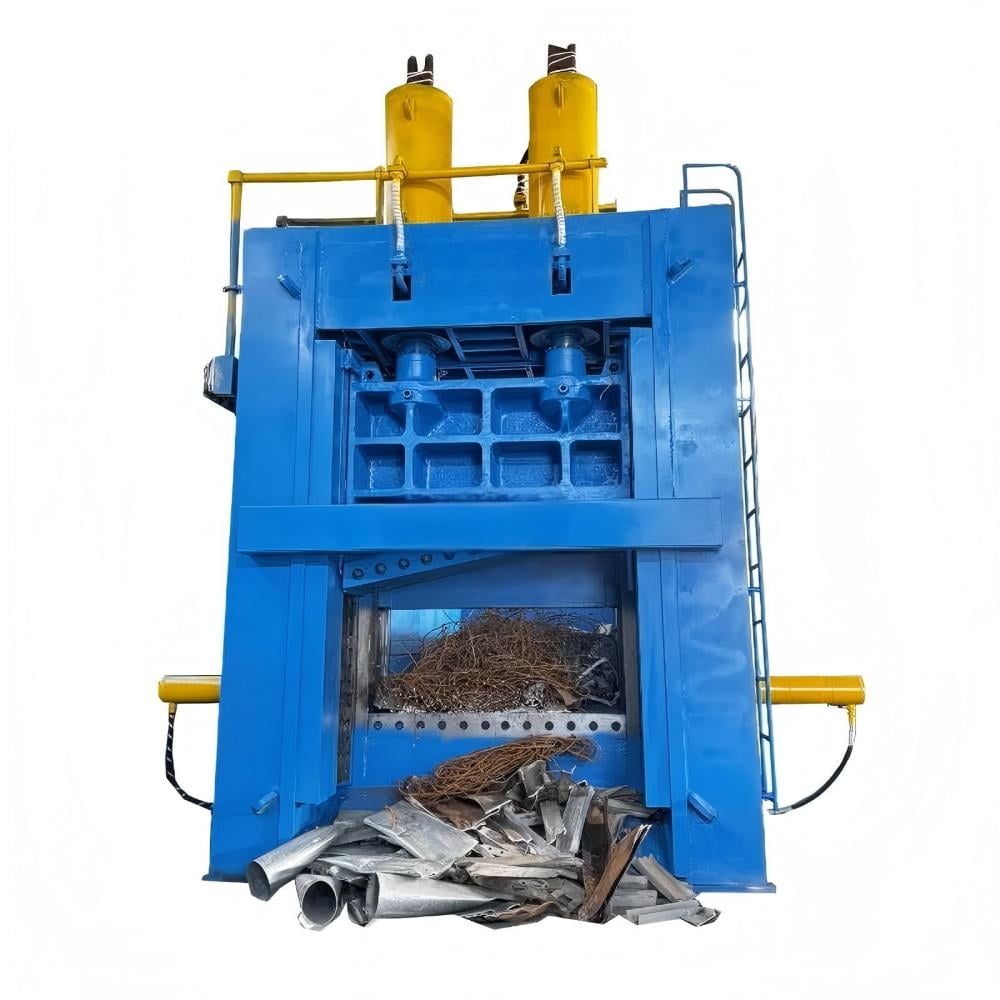
Check the “ease of maintenance” features. Are the grease points easily accessible? Is the PLC software user-friendly? Can the blades be rotated to use all four edges before needing sharpening? These small details significantly impact daily operations. Lastly, ensure that the machine complies with local safety standards, including emergency stop buttons, safety cages, and hydraulic overload protection. A safe machine is a productive machine.
Frequently Asked Questions (FAQ)
What is the maximum thickness a gantry shear can cut?
The maximum thickness depends on the tonnage and the tensile strength of the material. A 600-ton shear can typically handle mild steel plates up to 25-30mm, while a 1250-ton shear can cut through 50mm+ plates. Always consult the manufacturer’s capacity chart for specific materials like stainless steel or high-carbon alloys.
How often do the blades need to be sharpened?
Blade life varies based on the material being cut. For standard mild steel, you might rotate the blades every 500-1,000 hours of operation. Most gantry shear blades have four cutting edges, so you can rotate them three times before a full regrind is necessary. Cutting sandy or dirty scrap will dull blades much faster.
Can a gantry shear be used for non-ferrous metals?
Yes, gantry shears are excellent for processing large volumes of aluminum, copper, and brass. Because non-ferrous metals are generally softer than steel, the shear can often handle thicker sections or operate at faster cycle speeds when processing these materials.
What kind of maintenance does the hydraulic system require?
The most important maintenance task is keeping the hydraulic oil clean. This involves regular filter changes and periodic oil analysis. You should also check for leaks at fittings and inspect the cylinder rods for any scoring or damage. Keeping the oil temperature within the recommended range is also vital for seal longevity.
Is it better to choose a horizontal or vertical shear?
Gantry shears are vertical shears, which are generally preferred for heavy plates and structural scrap because they use gravity to help position the material and offer more stable cutting force. Horizontal shears (like some alligator shears) are better for long pipes or smaller profiles but lack the sheer power and stability of a gantry design for heavy plate operations.
How does HARSLE ensure the quality of its gantry shears?
HARSLE employs rigorous quality control measures, including ultrasonic testing of welds, precision boring of hydraulic cylinders, and a 24-hour dry-run test for every machine before shipment. We use globally recognized components to ensure that our customers can find replacement parts locally, minimizing downtime.